

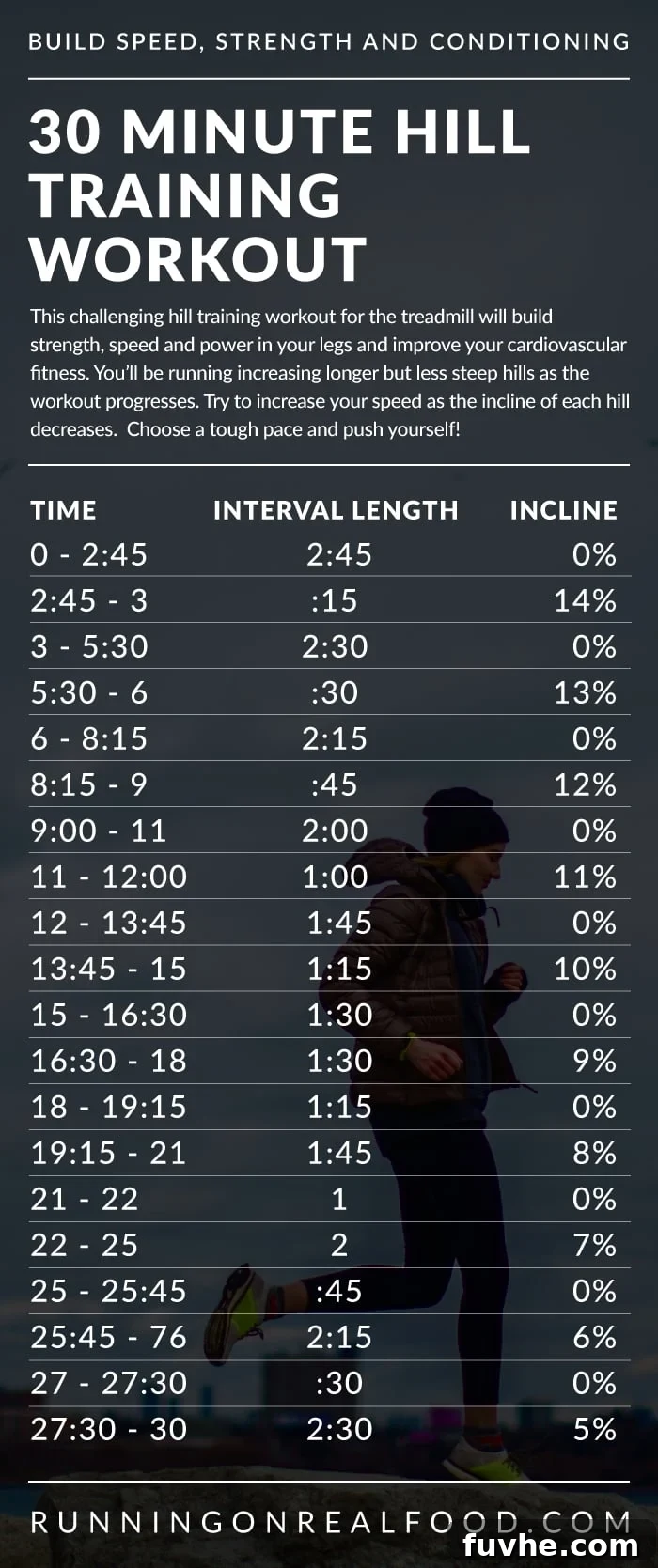
Embarking on a journey to enhance your running performance often involves pushing boundaries, and for many, that means embracing the challenge of hill training. A few months ago, my treadmill hill workouts were modest, typically involving inclines up to 6-8% at a conservative pace. The transformation since then has been remarkable: I now conquer 14% inclines at a blistering 7.0 mph, even if only for short bursts. This significant leap in speed and endurance is a testament to consistent, structured hill work. Today, I’m thrilled to share a powerful routine that has been instrumental in this progress: the 30-Minute Rolling Hills Treadmill Workout.
This dynamic workout, which I completed just yesterday, builds upon previous hill training methods but introduces a crucial, tougher element: you will be running through all rest intervals. This continuous effort is what truly sets it apart and makes it incredibly effective for building stamina and mental resilience. It’s an experience that can rapidly shift from feeling exhilarating—powering up a 10% incline at 7.0 mph—to becoming intensely demanding within a mere 20 seconds, leaving your legs burning and your will tested. But it’s precisely this challenge that forges stronger, faster, and more enduring runners.
Why Treadmill Hill Training is a Game-Changer for Runners
Incorporating regular treadmill hill workouts into your running regimen offers a multitude of benefits that extend far beyond simply improving your ability to tackle inclines. It’s a comprehensive approach to building a more robust and efficient running physique.
Unlocking Superior Strength and Power
Running uphill engages a wider array of muscle groups than flat running, particularly targeting your glutes, hamstrings, quadriceps, and calves with greater intensity. This increased muscular activation acts as a form of strength training, leading to significant gains in leg power. As these muscles become stronger, you’ll experience improved propulsion, making you faster and more powerful not only on hills but also on flat terrain and during sprints.
Boosting Cardiovascular Endurance
Hill intervals are excellent for elevating your heart rate and pushing your cardiovascular system. The fluctuating intensity of a rolling hills workout, transitioning between steep inclines and recovery flats, challenges your heart and lungs to adapt more quickly. This enhanced cardiorespiratory fitness translates into improved stamina, allowing you to sustain faster paces for longer durations and recover more efficiently during races or long training runs.
Enhancing Running Economy and Form
Running on an incline naturally encourages a more efficient running form. You’ll find yourself leaning slightly into the hill, engaging your core, and lifting your knees higher, which are all aspects of good running mechanics. By practicing this form regularly, you can improve your running economy, meaning you use less energy to maintain a given pace, making you a more efficient runner overall.
Mental Toughness and Resilience
There’s no denying that hill workouts are tough, both physically and mentally. Pushing through the burning sensation in your legs and maintaining focus during challenging intervals builds incredible mental fortitude. This resilience cultivated on the treadmill will serve you well during the demanding moments of a race or when facing unexpected obstacles in your training.
Reducing Injury Risk
While often perceived as demanding, hill training can actually be a great way to reduce injury risk compared to high-impact speed work on flat surfaces. The incline naturally reduces the impact on your joints by shortening your stride and forcing a higher knee lift, making it a safer option for building speed and power without overstressing your body.
Deciphering the 30-Minute Rolling Hills Treadmill Workout Structure
This specific workout is meticulously designed to maximize your gains in a concise 30-minute session. The genius lies in its progressive challenge and continuous nature. Unlike traditional interval workouts that might offer complete rest, the rolling hills concept means you maintain movement throughout, fluctuating between high-intensity inclines and active recovery flats.
Workout Breakdown: Descending Incline, Increasing Duration
The core principle of this workout is to tackle a series of hills where the incline gradually decreases (e.g., from 14% down to 7%), but crucially, the duration of each hill interval progressively increases. This creates a unique physiological stimulus, challenging your endurance as the workload extends, even if the peak intensity (incline) is slightly reduced over time.
Warm-Up (5 Minutes)
- 0-3 Minutes: Gentle walk or very easy jog at 0-1% incline. Focus on getting your muscles warm and heart rate slightly elevated.
- 3-5 Minutes: Light jog at 0-2% incline, gradually increasing pace to a comfortable running speed. Prepare your body for the main set.
Main Set: Rolling Hills Intervals (20 Minutes)
This section involves a continuous cycle of running on inclines followed by active recovery on flatter terrain. The exact number of hills will depend on your chosen durations, but a common structure might look like this:
- Hill 1: 15-30 seconds at 12-14% incline (challenging pace)
- Recovery 1: 60-90 seconds at 0-2% incline (moderate pace, faster than the hill, allowing for recovery)
- Hill 2: 30-45 seconds at 10-12% incline (challenging pace)
- Recovery 2: 90-120 seconds at 0-2% incline (moderate pace)
- Hill 3: 45-60 seconds at 8-10% incline (challenging pace)
- Recovery 3: 120-150 seconds at 0-2% incline (moderate pace)
- Hill 4: 60-75 seconds at 7-9% incline (challenging pace)
- Recovery 4: 150-180 seconds at 0-2% incline (moderate pace)
- (Continue this pattern, decreasing incline slightly and increasing duration for subsequent hills, for approximately 20 minutes)
Remember, the “recovery” isn’t a walk; it’s a significant drop in incline to allow you to actively recover while still running. This keeps your heart rate elevated and maximizes the cardiovascular benefits.
Cool-Down (5 Minutes)
- 0-3 Minutes: Gentle jog at 0-1% incline, gradually decreasing pace.
- 3-5 Minutes: Brisk walk, then a slow walk at 0% incline. Focus on bringing your heart rate down and allowing your body to cool.
Pace Suggestions: Mastering Your Rolling Hills Workout
Finding the right pace is crucial for maximizing the effectiveness and safety of your 30-Minute Rolling Hills Treadmill Workout. This isn’t about running at your absolute maximum for the entire duration; it’s about strategic effort and smart pacing.
Dynamic Pacing: Hills vs. Flats
As I experienced, you’ll likely start by running the flat portions at a significantly faster pace than your hill segments. For instance, I initially tackled my first five hills at 7.0 mph before needing to adjust down to 6.5 mph, and eventually 6.0 mph, to finish strong. The key is to select a flat pace that allows for active recovery. This isn’t a leisurely jog; it’s a chance to catch your breath, lower your heart rate slightly, and prepare for the next climb without coming to a complete stop.
Towards the end of the workout, as fatigue sets in, you might find yourself maintaining a similar pace on both the hills and the flats. This is perfectly normal and a sign that you’re pushing your endurance limits effectively.
Listen to Your Body: Perceived Exertion
Choose a pace that is sustainable yet challenging. On the hills, you should feel like you’re working hard—breathing heavily, muscles engaged, but not so hard that you feel like you’re going to “totally die.” Aim for an 8/10 on the Rate of Perceived Exertion (RPE) scale during the uphill segments. During the flat recovery periods, aim for a 6/10 RPE, where you can still speak in short sentences but are definitely still working.
The goal is to be able to maintain your chosen pace throughout each specific hill interval. If you find yourself having to significantly slow down or grab the handrails mid-hill, your initial pace might be too aggressive. Adjust accordingly for the next interval.
Form and Technique on the Incline
Maintaining good running form is paramount on the treadmill, especially during incline work. Focus on:
- Slight Forward Lean: Lean into the hill from your ankles, not your waist.
- Shorter Strides: Take quicker, shorter steps. This reduces impact and improves power.
- High Knees: Lift your knees actively to drive forward.
- Engage Core: Keep your core tight to maintain stability.
- Relaxed Upper Body: Avoid clenching your fists or shrugging your shoulders. Use your arms to drive forward, not side-to-side.
- Don’t Hold Handrails: Resist the urge to hold onto the treadmill handrails, as this compromises your form, reduces calorie burn, and diminishes the workout’s effectiveness.
Optimizing Your Treadmill Hill Training Experience
To truly get the most out of your 30-Minute Rolling Hills Treadmill Workout, consider these additional tips and strategies:
Proper Preparation and Recovery
- Hydration: Ensure you are well-hydrated before, during, and after your workout. Keep a water bottle easily accessible.
- Nutrition: Fuel your body appropriately. A light, easily digestible snack an hour or so before can provide the necessary energy. Post-workout, focus on protein and carbohydrates for muscle repair and replenishment.
- Dynamic Warm-up: Beyond the initial treadmill warm-up, consider a few minutes of dynamic stretches (leg swings, hip circles) to prepare your muscles and joints.
- Post-Workout Stretching: After your cool-down, spend 5-10 minutes on static stretches, focusing on your quads, hamstrings, glutes, and calves, which will be heavily engaged during the workout.
Mindset and Motivation
- Visualize Success: Before you even step on the treadmill, visualize yourself conquering each hill and maintaining your pace.
- Break It Down: Instead of thinking about the entire 30 minutes, focus on completing one hill and recovery interval at a time.
- Music or Podcasts: Curate an upbeat playlist or an engaging podcast to help keep your mind occupied and motivated during the tougher segments.
- Track Progress: Keep a running log to track your paces, inclines, and how you felt. Seeing your improvement over time is incredibly motivating.
Treadmill Specifics
- Familiarize Yourself: If you’re new to a particular treadmill, take a moment to understand its controls for speed and incline before starting your workout.
- Safety Clip: Always use the safety clip on the treadmill, especially when performing high-intensity incline work.
- Ventilation: Ensure you have adequate airflow around your treadmill to help keep you cool.
Integrating Hill Workouts into Your Running Schedule
For optimal benefits, aim to incorporate a rolling hills treadmill workout into your weekly routine 1-2 times. If you’re newer to running or hill training, start with one session per week and gradually increase as your fitness improves. This workout can replace a traditional speed work session or be part of a cross-training day. Ensure you balance these demanding sessions with easier runs and adequate rest days to prevent overtraining and allow for proper recovery.
The beauty of treadmill hill training is its consistency; you can always control the variables regardless of external weather conditions. This makes it an invaluable tool for building strength and endurance year-round, preparing you for any outdoor challenge.
More Running Workouts to Boost Your Performance
If you’re looking to diversify your training and continue building your running prowess, explore these other effective workouts:
- 30 Minute Treadmill Hill Workout
- Sprints and Burpee Cardio Workout
- 20-Minute Dumbbell and Running Workout