
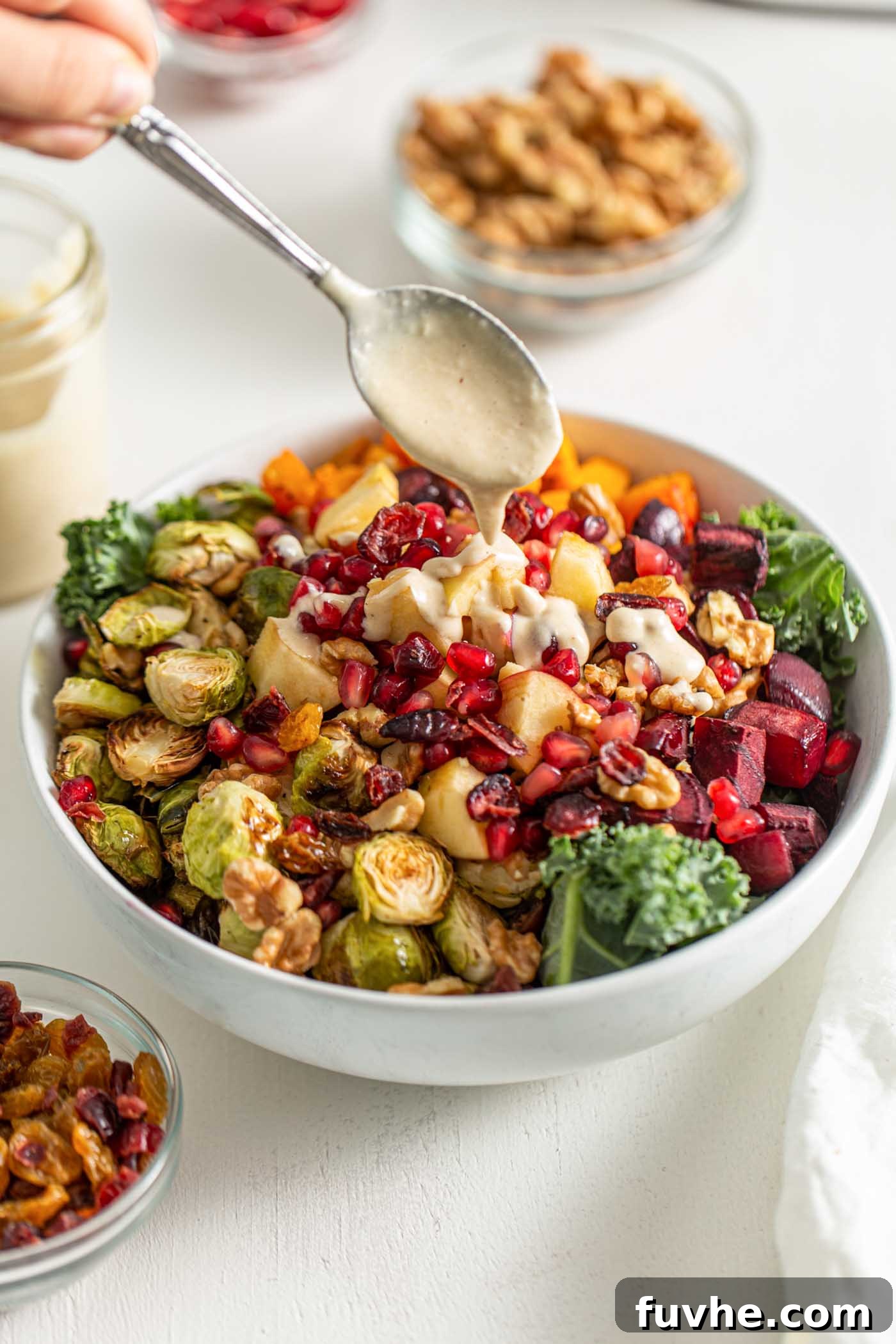
Embrace the vibrant flavors and wholesome goodness of autumn with this exquisite Fall Harvest Salad featuring a creamy Maple Tahini Dressing. This delightful recipe brings together the very best of seasonal produce, transforming simple ingredients like crisp apples, earthy beets, and sweet roasted squash into a culinary masterpiece that’s both nourishing and incredibly satisfying. Whether you’re seeking a nutritious option for healthy meal prep, a heartwarming centerpiece for family dinners, or a show-stopping dish to share at holiday gatherings, this salad is guaranteed to impress. Its rich textures, diverse flavors, and stunning colors make it a true standout during the fall season and an excellent choice year-round for anyone craving a taste of harvest.
The magic of this salad lies in its thoughtful combination of ingredients. Imagine a bed of robust, vitamin-rich kale, generously topped with tender, caramelized Brussels sprouts, oven-roasted butternut squash, and vibrant beets. Each bite offers a delightful contrast, with the sweetness of diced apples, the tartness of dried cranberries, and the juicy burst of pomegranate arils. For an added layer of crunch and healthy fats, toasted pecans or walnuts are sprinkled throughout, tying all the components together beautifully. But the true star that elevates this salad from delicious to extraordinary is the homemade dressing: a sweet, tangy, and irresistibly creamy maple tahini dressing that coats every ingredient in a luscious embrace, creating a harmonious symphony of flavors.
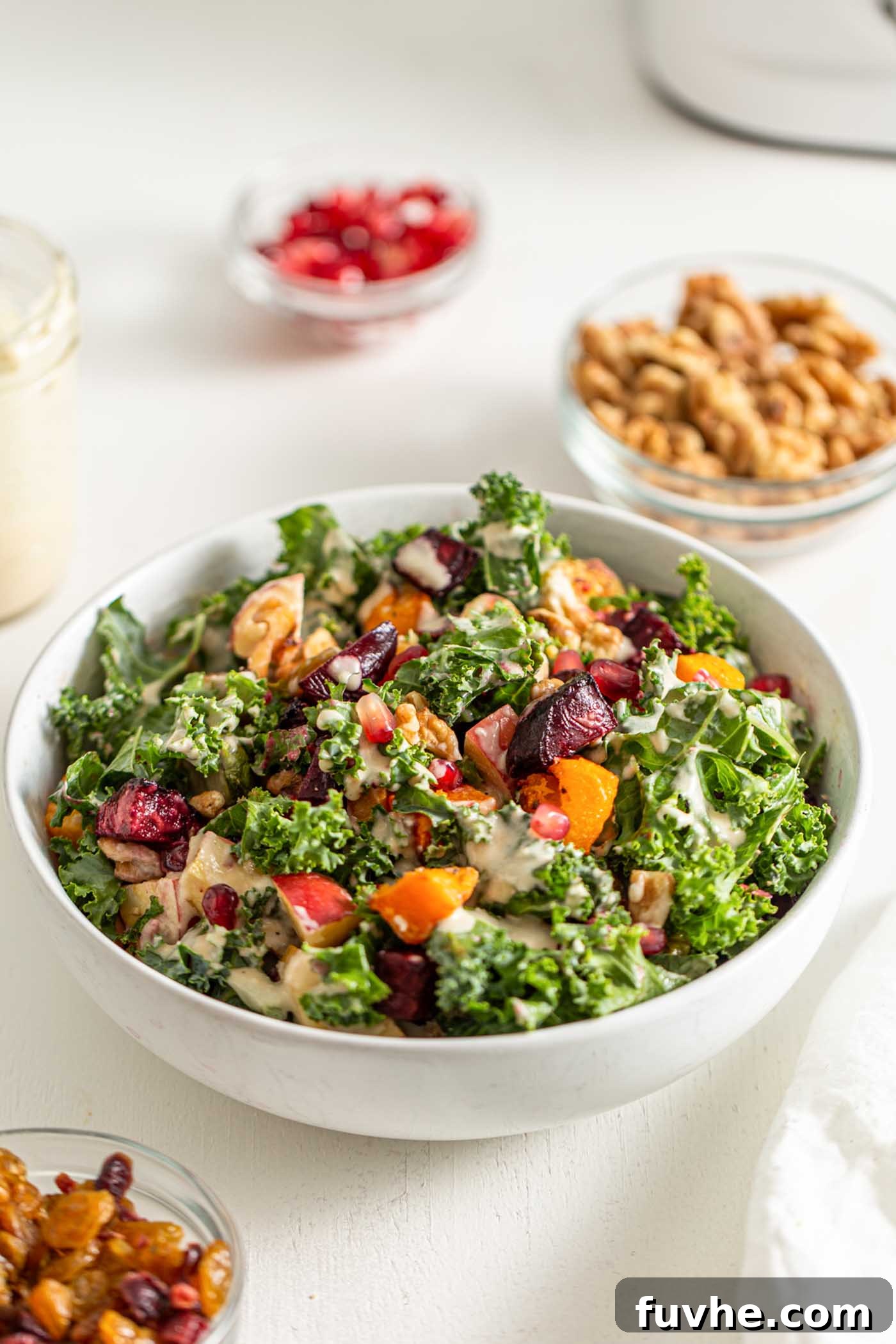
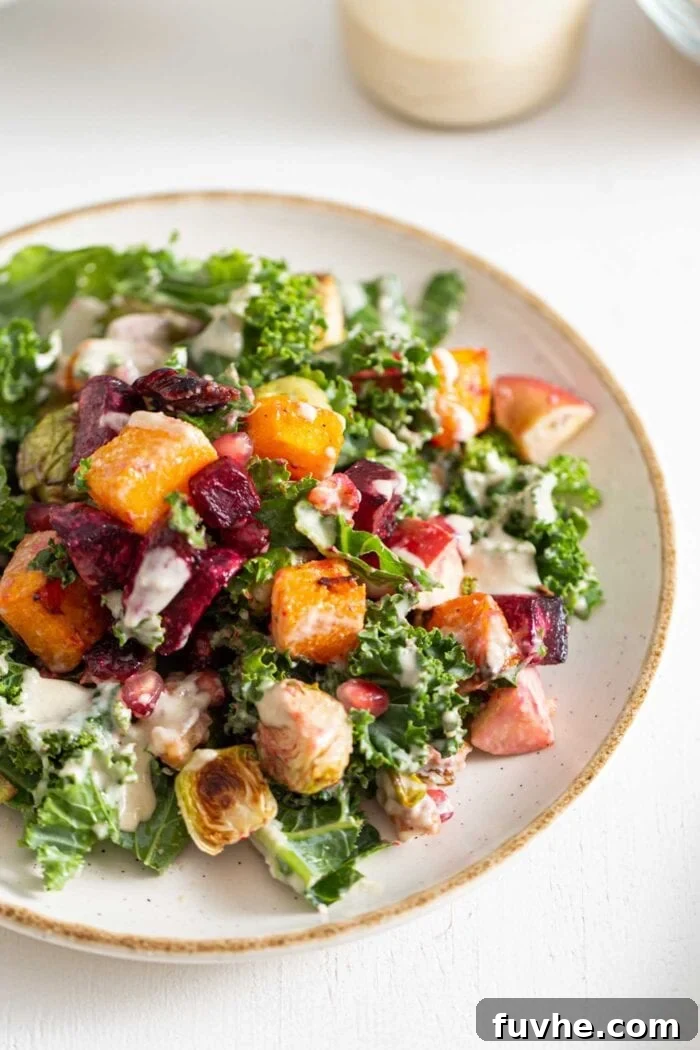
This vibrant medley of autumn produce truly shines, creating a dish that’s as beautiful to behold as it is delightful to eat. The foundation of hearty kale offers a robust base, perfectly complemented by the slightly bitter, earthy notes of roasted Brussels sprouts and sweet, tender butternut squash. Deep red beets add a touch of color and a subtly sweet, earthy flavor, while crisp apples introduce a refreshing sweetness and satisfying crunch. The addition of tangy cranberries and ruby-red pomegranate arils provides bursts of fruity flavor, making each spoonful an exciting experience. Finally, a scattering of crunchy pecans or walnuts rounds out the texture profile, adding healthy fats and a nutty depth.
Every ingredient in this exceptional combination is further enhanced by a generous drizzle of the sweet and tangy maple tahini dressing. Its creamy texture binds the salad components, while its balanced flavor profile — a blend of nutty tahini, sweet maple syrup, and bright apple cider vinegar — perfectly complements the natural sweetness and earthiness of the vegetables and fruits. This dressing isn’t just a topping; it’s an integral part of the salad’s character, transforming it into a truly unforgettable dish.
If you find yourself captivated by the flavors of fall and eager to explore more seasonal salad options, we have several other fantastic recipes that will surely inspire your culinary adventures. Consider trying our wholesome Wild Rice Salad, a hearty and flavorful dish perfect for colder days. For fans of popular healthy bowls, our Sweetgreen Copycat Harvest Bowl offers a delicious and customizable experience. Don’t miss the elegant and nutritious Vegan Roasted Beet Salad with Marinated Chickpeas, bursting with earthy flavors. And for something unique and utterly delicious, our Curried Roasted Cauliflower Salad presents an exciting blend of spices and textures. Each of these recipes offers a unique take on healthy, flavorful eating, ensuring your fall menu is diverse and exciting.
Why You’ll Love This Fall Harvest Salad: Recipe Highlights
This Fall Harvest Salad with Maple Tahini Dressing isn’t just a recipe; it’s a celebration of wholesome, delicious eating. Here are just a few reasons why this dish is poised to become a staple in your kitchen:
- Completely Vegan: Made entirely with plant-based ingredients, this salad is perfect for those following a vegan lifestyle or looking to incorporate more plant-forward meals into their diet. It proves that healthy eating can be incredibly flavorful and satisfying.
- Naturally Gluten-Free: All components of this salad are naturally free from gluten, making it a safe and delicious option for individuals with celiac disease or gluten sensitivities. No special substitutions are needed!
- The Perfect Thanksgiving Salad: With its stunning presentation, rich seasonal flavors, and comforting textures, this salad makes an ideal addition to any Thanksgiving or holiday feast. It offers a refreshing and lighter contrast to heavier traditional dishes.
- Incredibly Nutritious: Packed with an array of colorful vegetables, fruits, and healthy fats, this salad is a powerhouse of vitamins, minerals, and antioxidants. It’s a delicious way to fuel your body with wholesome ingredients.
- Versatile Main Course or Side Dish: Hearty enough to serve as a satisfying main meal, especially when paired with a side of grains, or light enough to complement other dishes as a vibrant side. Its adaptability makes it perfect for any occasion.
- Multi-Purpose Dressing: The luscious maple tahini dressing is so good, you’ll want to put it on everything! Use it as a dip for fresh vegetables, a spread for sandwiches, or a dressing for other salads, bowls, and roasted vegetables.
- Easy to Customize: This recipe is incredibly forgiving and open to creative adaptations. Feel free to swap ingredients based on what you have on hand or what’s in season, making it truly your own.
Detailed Ingredient Notes for a Perfect Harvest Salad
Crafting the perfect Fall Harvest Salad begins with understanding each ingredient and its role in the overall flavor and texture. Here’s a detailed look at the components, along with helpful tips and substitution ideas to ensure your salad is nothing short of spectacular.
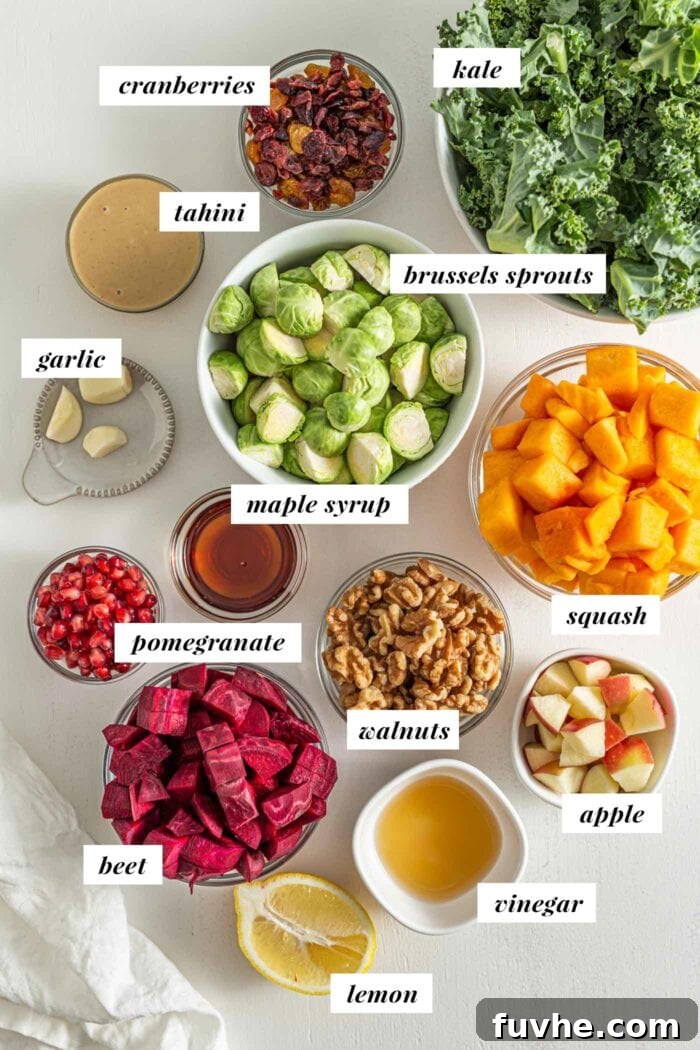
Salad Ingredients:
- Squash: The star of many fall dishes, roasted squash adds a wonderful sweetness and tender texture to this salad. While butternut squash is a popular choice for its creamy flesh and sweet flavor, acorn squash also works beautifully, offering a slightly nuttier taste. For convenience, feel free to use pre-cut or frozen butternut squash. If you’re looking for an alternative, roasted sweet potatoes make an excellent substitute, providing similar sweetness and texture.
- Oil: A minimal amount of oil is used for roasting the vegetables, helping them to caramelize and achieve that perfect tender-crisp texture. Extra virgin olive oil is always a great choice for its flavor and health benefits, but feel free to use any cooking oil you prefer, such as avocado oil or grapeseed oil. For an oil-free option, see the “Oil-Free Option” note below.
- Kale: The base of our hearty salad, kale provides a nutritional punch and a satisfying chew. Any variety of kale will work, though Lacinato kale (also known as Tuscan or dinosaur kale) is often preferred for salads due to its more tender leaves and slightly milder flavor compared to curly kale. Remember to remove the tough stems and finely chop the leaves. For a more tender texture, you can lightly massage the kale with a tiny bit of olive oil or lemon juice after chopping. If kale isn’t your preference, baby spinach is a fantastic, milder alternative that doesn’t require massaging.
- Apple: Crisp, sweet, and slightly tart apples are essential for balancing the earthiness of the roasted vegetables. Varieties like Pink Lady, Fuji, Granny Smith (for more tartness), or Honeycrisp are excellent choices, offering a firm texture that holds up well in a salad. To prevent browning, especially if preparing the salad in advance, you may wish to add the diced apples just before serving.
- Walnuts: These crunchy nuts contribute healthy omega-3 fatty acids and a rich, earthy flavor. Opt for plain, raw walnuts without any added oil or salt. If walnuts aren’t available or if you have a preference for other nuts, pecans, almonds, or even cashews can be used. For a nut-free version, pumpkin seeds (pepitas) or sunflower seeds are excellent alternatives, providing a similar crunch and nutritional boost.
- Cranberries: Dried cranberries add a delightful burst of tart-sweet flavor and a chewy texture. If possible, choose fruit-juice sweetened cranberries to avoid excessive added sugars. Other dried fruits like raisins, chopped dates, or dried cherries can be used as substitutes, each offering a unique sweetness.
- Pomegranate: While not strictly necessary, fresh pomegranate arils add a jewel-like appearance, a refreshing burst of juice, and a wonderful crunch that elevates the salad. Don’t worry if you can’t find them; the salad will still be delicious without them, but they certainly contribute to its gourmet appeal.
Dressing Ingredients:
The Maple Tahini Dressing is what ties all the diverse flavors of this salad together, creating a creamy and irresistible finish.
- Tahini: The quality of your tahini (sesame seed paste) significantly impacts the dressing. Look for a smooth, pale-colored tahini that isn’t overly bitter and has a pourable, runny consistency. Brands like Soom or Arz Fine Foods are often praised for their superior quality. A good tahini will yield a wonderfully creamy and silky dressing.
- Maple Syrup: This natural sweetener provides a rich, caramel-like sweetness that perfectly complements the nutty tahini. Use pure maple syrup for the best flavor. Honey or agave syrup can be substituted if you prefer, adjusting the quantity to your taste.
- Apple Cider Vinegar: Providing a crucial tang and brightness, apple cider vinegar cuts through the richness of the tahini and balances the sweetness of the maple syrup. White wine vinegar is a suitable substitute if needed.
- Garlic: Fresh garlic adds a pungent, aromatic kick to the dressing. For a smoother dressing, especially if not using a blender, finely grate the garlic or substitute with 1 teaspoon of garlic powder for a milder, more evenly distributed flavor.
A complete list of ingredients with precise measurements can be found in the recipe card at the conclusion of this article. This detailed guide ensures you have all the information needed to create this spectacular fall harvest salad with confidence and ease.
Get Creative: Exciting Variations & Additions for Your Fall Harvest Salad
One of the best aspects of this Fall Harvest Salad is its incredible versatility. It serves as a perfect canvas for culinary creativity, allowing you to easily customize it based on your preferences, what’s available, or even specific dietary needs. Don’t hesitate to experiment with these fantastic variations and additions to make this salad uniquely yours:
- Embrace Sweet & Tart Flavors: The combination of cranberries, apples, and pomegranate offers a delightful sweet and tart dynamic. If you happen to be missing one of these ingredients, don’t worry—the salad will still be delicious! For alternative sweet and tart notes, consider adding juicy mandarin orange segments, more raisins, or finely chopped dried cherries. These small additions can significantly impact the overall flavor profile.
- Introduce Savory Cheese Notes: For those who enjoy dairy, a sprinkle of cheese can add an extra layer of flavor and creaminess. Tangy crumbled feta cheese offers a salty bite, creamy goat cheese provides a luxurious texture, and a pungent blue cheese can introduce a bold, sophisticated dimension to the salad.
- Explore Different Nuts & Seeds: While walnuts provide a classic fall flavor, feel free to experiment with other nuts and seeds to change the texture and taste. Toasted almonds or cashews can add a different kind of crunch, while pecans offer a buttery richness. Pistachios lend a unique color and flavor, and for a nut-free option, pumpkin seeds (pepitas) or sunflower seeds are excellent choices, delivering healthy fats and a satisfying crispness.
- Boost Heartiness with Grains: To transform this salad into an even more substantial main course, stir in 1 to 2 cups of cooked wild rice or quinoa. These grains add complex carbohydrates, fiber, and protein, making the salad incredibly filling and satisfying. They also absorb the dressing beautifully, enhancing every bite.
- Swap Your Squash or Root Vegetables: The beauty of seasonal eating means flexibility. Feel free to use any variety of squash you prefer, such as delicata or kabocha, which offer slightly different flavors and textures when roasted. Alternatively, replace the squash entirely with roasted sweet potato, which offers a similar sweetness and creamy texture.
- Flexible Vegetable Quantities: Don’t stress about having exact amounts of squash, beets, or Brussels sprouts. If you’re missing one, simply increase the quantity of the others to compensate. The beauty of a harvest salad is its abundance and flexibility. Thinly sliced red onions can also be a wonderful addition or a flavorful substitute for one of the roasted vegetables, providing a sharp, piquant contrast.
- Oil-Free Option: For a lighter, oil-free version of the roasted vegetables, skip the olive oil. Instead, toss the chopped vegetables with 2-3 tablespoons of vegetable broth along with a pinch of salt and pepper before roasting. A splash of balsamic vinegar or a drizzle of maple syrup can also be added for extra flavor during roasting, caramelizing beautifully.
- Nut-Free Option: Ensuring this salad is accessible to everyone is important. If you need a completely nut-free version, simply replace the walnuts with a generous handful of sunflower seeds or pepitas (pumpkin seeds). These seeds offer a similar crunch and healthy fats without the allergen risk.
- Alternative Dressings: While the Maple Tahini Dressing is exceptional, this salad can also be paired with a variety of other delicious dressings. Consider our bright and herbaceous Cilantro Tahini Dressing, the umami-rich Miso Tahini Sauce, or the classic sweet and tangy Dijon Maple Dressing. For a classic vinaigrette, try the balsamic vinaigrette from this quinoa kale salad recipe or the zesty apple cider vinaigrette from this butternut squash quinoa salad recipe.
These variations ensure that you can enjoy this delicious Fall Harvest Salad time and time again, always discovering new flavor combinations and adapting it to your needs and preferences.
Crafting Your Fall Harvest Salad: Step-by-Step Instructions
Creating this impressive Fall Harvest Salad is a straightforward process, broken down into a few simple steps. Follow these instructions to bring together all the fresh flavors and textures into one magnificent dish.
Step 1. Prepare and Roast the Brussels Sprouts, Squash, and Beets.
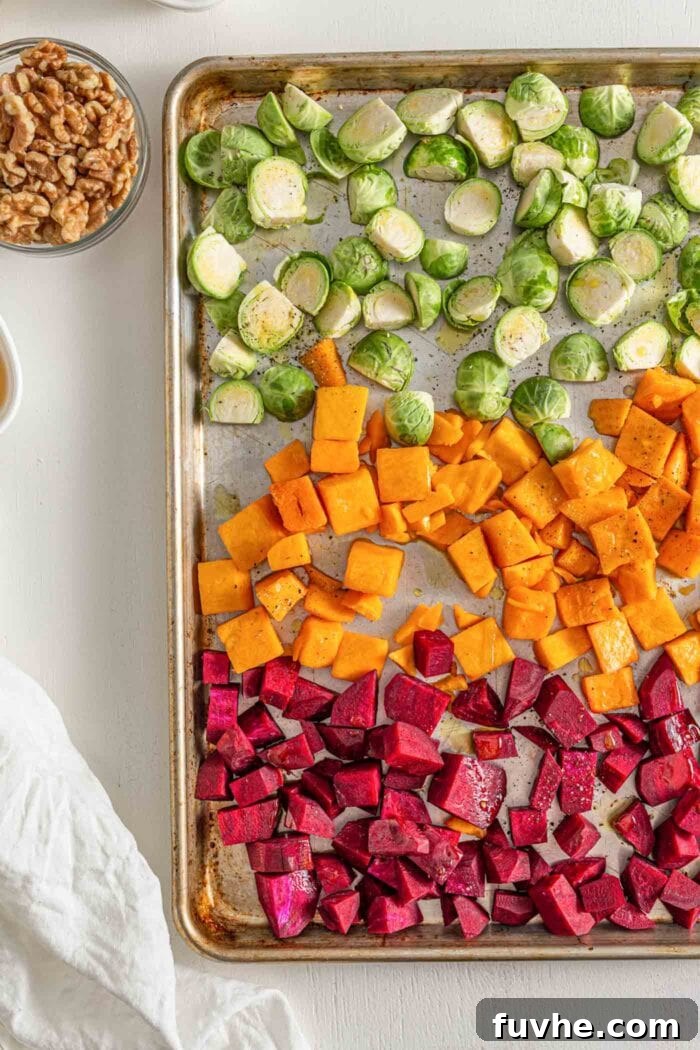
- Begin by preheating your oven to a robust 425°F (220°C). This high temperature is key to achieving beautifully caramelized and tender roasted vegetables. Line a large baking sheet with parchment paper to prevent sticking and make cleanup a breeze. Depending on the quantity of vegetables, you might need two baking sheets to ensure they roast evenly without crowding.
- Prepare the Brussels sprouts: Trim off the tough ends and then cut each sprout in half lengthwise. If you have particularly large Brussels sprouts, cut them into quarters for more even cooking.
- For the squash: Start by peeling the squash using a sturdy vegetable peeler. Then, carefully cut it in half, scoop out the seeds, and dice the flesh into roughly 1-inch cubes. Uniformly sized pieces will ensure consistent roasting.
- Handle the beets: Peel the beets and dice them into smaller, half-inch cubes. Beets take a little longer to soften than squash and Brussels sprouts, so cutting them smaller will help them cook at a similar rate. Be mindful that beets can stain, so you might want to wear gloves or work over a protected surface.
- Combine and season: Place all the prepared Brussels sprouts, diced squash, and beets onto your prepared baking sheet(s). Drizzle with 1 teaspoon of olive oil (or your chosen oil) and season generously with a pinch of salt and black pepper. Toss everything together thoroughly with your hands or a spatula to ensure all the vegetables are lightly coated.
Spread the seasoned vegetables in a single layer across the baking sheet(s). Avoid overcrowding, as this will steam the vegetables instead of roasting them, preventing that desirable caramelization. Roast in the preheated oven for approximately 30-45 minutes. The exact timing will depend on your oven and the size of your vegetable pieces. Flip the vegetables halfway through the cooking time to ensure even browning. They are ready when they are fork-tender and beautifully caramelized around the edges.
Quick Tip for Oil-Free Roasting: If you’re aiming for an oil-free approach, simply omit the olive oil. Instead, toss the vegetables with 2 tablespoons of vegetable broth and a pinch of salt and pepper before roasting. The broth will help prevent sticking and aid in the cooking process without adding any oil. For an extra layer of flavor, a dash of balsamic vinegar or a small drizzle of maple syrup can be added, which will caramelize deliciously in the oven!
Step 2. Prepare the Creamy Maple Tahini Dressing.
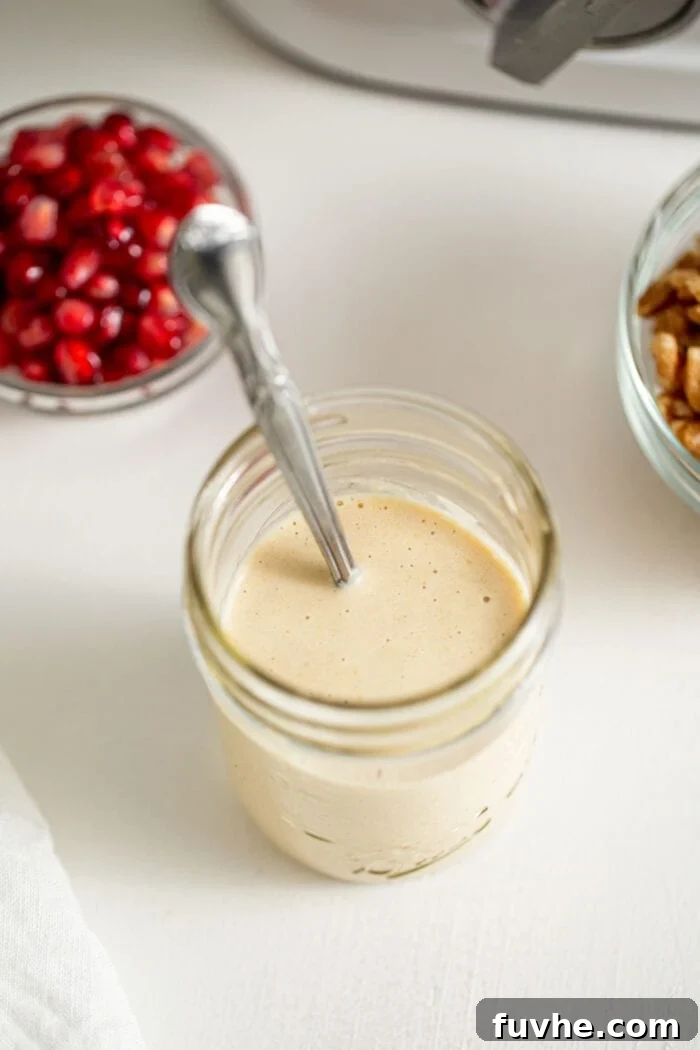
While your vegetables are roasting, you can swiftly prepare the star of the show – the creamy maple tahini dressing. Simply combine all the dressing ingredients in a blender or food processor. Blend until the mixture is completely smooth and lusciously creamy. If the dressing appears too thick, add water one tablespoon at a time until you reach your desired consistency. It should be thick enough to cling to the salad ingredients but still pourable.
No Blender? No Problem! If you don’t have a blender or food processor, you can still achieve a wonderfully smooth dressing. For the garlic, finely grate it using a microplane or mince it very, very finely to ensure no large chunks. Alternatively, use 1 teaspoon of garlic powder instead of fresh garlic. Combine all dressing ingredients in a bowl and whisk vigorously until smooth and emulsified. Or, for a fun and easy method, simply pour all ingredients into a mason jar, secure the lid tightly, and shake vigorously until well combined and smooth!
Step 3. Prepare the Fresh Salad Components.
This involves prepping the remaining fresh ingredients that add crispness and bursts of flavor to your harvest salad.
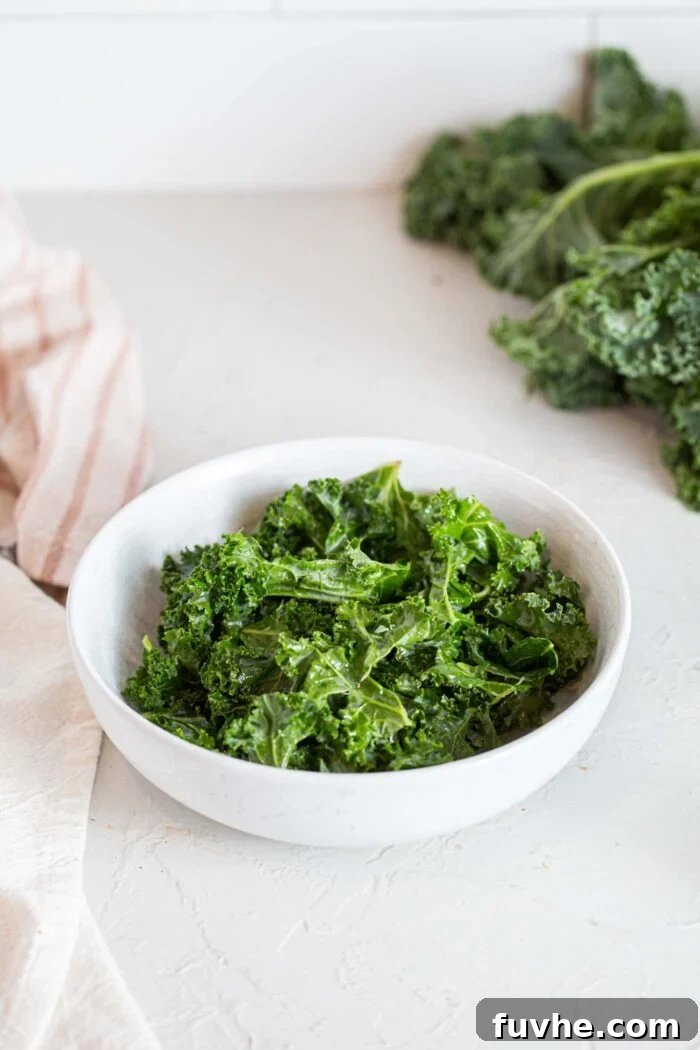
Prepare the kale: Begin by washing the kale leaves thoroughly under cold running water. Pat them dry or use a salad spinner. Next, remove the leaves from the thick, fibrous stems. The easiest way to do this is to hold the stem at the bottom with one hand and strip the leaves upwards with the other. Once destemmed, finely chop the kale into bite-sized pieces. For a more tender texture and to help it absorb the dressing better, you can lightly massage the chopped kale with a tiny drizzle of olive oil or lemon juice for about a minute. This step is optional but highly recommended, especially for curly kale.
You’ll also need to:
- Carefully dice the apple into small, uniform pieces. Remember, if you’re making the salad ahead of time, it’s best to add the apple just before serving to prevent browning.
- Get the walnuts (or your chosen nuts/seeds) and dried cranberries ready. If you prefer a more intense nutty flavor, you can lightly toast the walnuts in a dry pan for a few minutes until fragrant, then let them cool before adding to the salad.
- Prepare the beautiful pomegranate arils. These tiny gems add a burst of juicy, tart-sweet flavor and a delightful crunch.
Quick Tip for Pomegranate Preparation: Extracting pomegranate arils can seem daunting, but it’s quite simple with this method! First, cut the pomegranate in half horizontally, exposing the arils. Hold one half of the pomegranate, cut-side down, over a large bowl. Using a wooden spoon or sturdy spatula, firmly tap the back of the pomegranate all over. The arils will begin to fall out into the bowl. Don’t be shy with your tapping! Continue squeezing the fruit and tapping until most of the arils have released. Discard any bits of white pith that fall into the bowl. You may want to do this over a kitchen sink, as the juice can sometimes splatter a bit!
Step 4. Assemble and Serve Your Fall Harvest Salad.
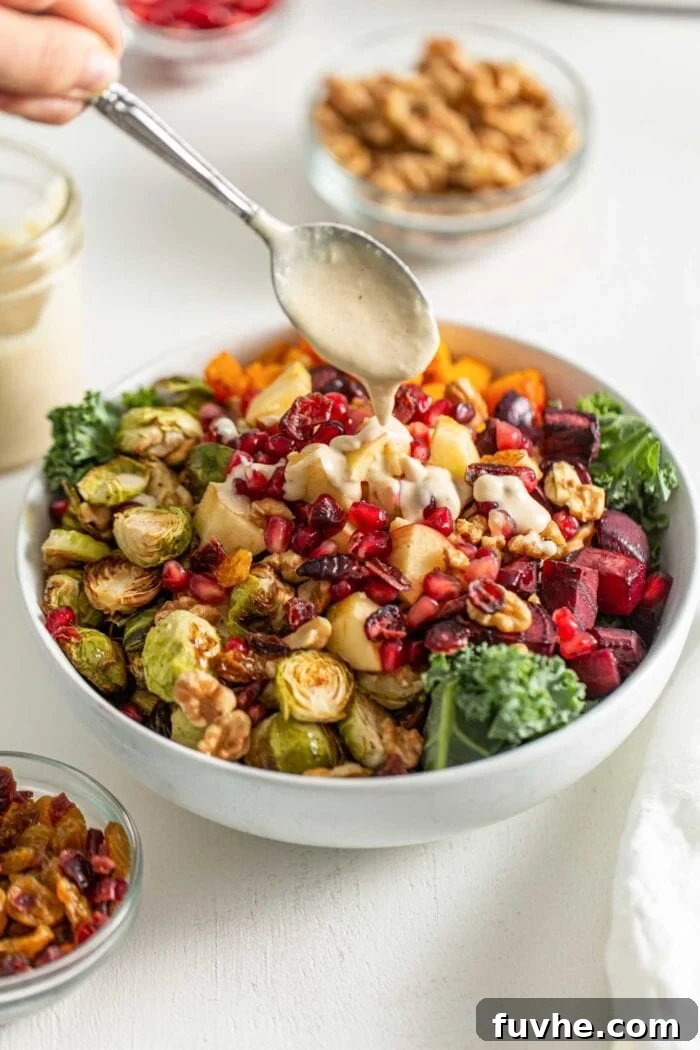
Now for the grand finale: assembling your magnificent salad! In a large serving bowl, begin by laying down the prepared kale as the base. Then, artfully arrange the roasted Brussels sprouts, squash, and beets over the kale. Next, sprinkle in the diced apple, chopped walnuts (or pecans), dried cranberries, and vibrant pomegranate arils. Once all the ingredients are in the bowl, generously drizzle the creamy maple tahini dressing over everything. You can either gently toss all the ingredients together in the large serving bowl to ensure every component is coated with the delicious dressing, or you can serve it in individual portions, letting each diner add their desired amount of dressing. Serve immediately to enjoy the warmth of the roasted vegetables contrasting with the fresh crispness of the raw ingredients. This salad is beautiful served as a warm main dish or a hearty side.
Common Questions About Your Fall Harvest Salad
Here are answers to some frequently asked questions about this delicious Fall Harvest Salad, helping you prepare, store, and enjoy it to its fullest potential.
One of the wonderful characteristics of this Fall Harvest Salad is its versatility in serving temperature. It is typically served as a warm salad, particularly delightful when the roasted vegetables are still slightly warm, offering a comforting and satisfying experience. The contrast between the warm, tender vegetables and the crisp, fresh components is truly lovely. However, leftovers can be equally delicious served cold straight from the fridge. If you prefer to enjoy it warm again, you can gently rewarm the roasted vegetables in the microwave or a skillet before combining them with the fresh ingredients and dressing.
Absolutely! This salad is an excellent candidate for meal prepping, allowing you to save time when you’re ready to serve. The key is to prepare the components separately and assemble just before serving to maintain freshness and texture.
The maple tahini dressing can be made up to 5 days in advance. Store it in an airtight container or jar in the refrigerator. If it thickens during storage, simply stir in a teaspoon or two of water until it reaches your desired pourable consistency.
The vegetables (Brussels sprouts, squash, and beets) can also be roasted ahead of time. Once roasted, let them cool completely to room temperature before transferring them to an airtight container. They will keep well in the refrigerator for up to 4 days. When you’re ready to enjoy, you can either add them cold or gently warm them. The kale and other fresh components like apples and pomegranate are best prepped closer to serving time.
Unfortunately, this recipe is generally not suitable for freezing. The high water content in most of the fresh ingredients (like kale, apples, and pomegranate) means they will become soggy and lose their appealing texture once thawed. While roasted vegetables can sometimes be frozen, they are best enjoyed fresh or simply refrigerated for this specific salad composition.
For the best quality and to prevent the greens from becoming soggy, it’s highly recommended to store the dressing separately until just before serving. If the salad is assembled without dressing, it will keep well in an airtight container in the refrigerator for 3-4 days. If the salad has already been dressed, it’s still delicious for 1-2 days, but the kale may soften a bit more. Always store any components or the assembled salad in a sealed container to maintain freshness and prevent spoilage.
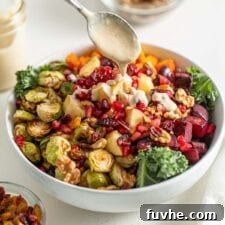
Fall Harvest Salad with Maple Tahini Dressing
Rate Recipe
Print Recipe
Ingredients
For the Salad
- 4 cups halved brussel sprouts
- 4 cups peeled and diced, butternut or acorn squash
- 4 small beets, diced
- 1 tsp olive oil for roasting
- 2 cups tightly packed, finely chopped kale
- 1 apple, diced
- 1/2 cup chopped walnuts or pecans
- 1/2 cup dried cranberries
- 1/2 cup pomegranate arils
For the Tahini Maple Dressing
- 5 tbsp 75 g tahini
- 2 tbsp maple syrup
- 2 tbsp apple cider vinegar
- 1 tbsp fresh lemon juice
- 3 cloves garlic
- 4-6 tbsp water, to reach desired consistency
- pinch of salt, to taste
Instructions
-
Preheat the oven to 425 F (220 C) and line a baking tray with parchment paper (you may need two trays to avoid overcrowding).
-
Cut the ends off the brussels sprouts and cut each in half lengthwise. If there are any very large sprouts, cut them into quarters to ensure even cooking.
-
There are a few effective ways you can prepare and roast the squash. My preferred method is to de-seed the squash, slice it into large chunks, roast it until tender, and then easily remove the skin and dice the flesh after it has cooled slightly. Alternatively, you can cut the squash in half, remove the seeds, and roast it face down on a baking pan until it can be easily pierced with a fork. Let it cool until you can comfortably handle it, then scoop out the flesh and dice it. For the quickest preparation, you can peel and dice the squash into 1-inch cubes before roasting it alongside the Brussels sprouts.
-
For the beets, you have options for preparation. You can peel and dice them into smaller cubes (about 1/2-inch) and roast them with the Brussels sprouts and squash. Due to their density, beets generally take a bit longer to cook than the other vegetables, so smaller pieces help them become tender faster. Alternatively, you can cut the beets into larger chunks and boil or steam them on the stovetop until they are easily pierced with a fork. Once tender, cool them under cold water, then peel and slice them for the salad.
-
Once all your chosen vegetables are chopped and ready, add them to a large sheet pan, ensuring they are spread in an even layer (use 2 pans if necessary to avoid overcrowding). Drizzle with 1 teaspoon of olive oil (or vegetable broth for an oil-free option) and season with a pinch of salt and pepper. Toss everything to coat evenly. Roast for 30-40 minutes, or until all vegetables are tender and slightly caramelized, flipping halfway through.
-
While the vegetables are roasting, wash the kale thoroughly, remove the leaves from their thick, tough stems, and finely chop them. Place the chopped kale into a large mixing bowl.
-
In a blender or food processor, combine all the ingredients for the maple tahini dressing. Blend until the dressing is completely smooth and creamy. If it’s too thick, add water gradually, 1 tablespoon at a time, until it reaches your desired consistency.
-
Once the roasted vegetables are ready and slightly cooled, add them to the bowl with the prepared kale. Incorporate the diced apple, chopped walnuts (or pecans), dried cranberries, and pomegranate arils. Pour the prepared dressing over all the ingredients and mix well, ensuring every component is lightly coated. Serve the salad immediately, enjoying the delightful blend of warm and fresh flavors.
Notes
Nut-Free Option: If you need to make this salad entirely nut-free, replace the walnuts with an equal amount of sunflower seeds or pepitas (pumpkin seeds). These seeds offer a similar satisfying crunch and healthy fats. While pecans are botanically fruits and not true nuts, for those with severe allergies, it’s safer to use seeds.
Storing Leftovers: Store any leftover assembled salad in an airtight container in the fridge for up to 3 days. For best results and to prevent the greens from becoming soggy, I highly recommend storing the dressing separately and only adding it to individual portions just before eating.
Make in Advance Tips: The creamy tahini dressing can be prepared ahead of time, up to 6 days in advance. Store it in a sealed container in the refrigerator; if it becomes too thick, simply thin it with a little water before serving. The roasted vegetables (squash, beets, and Brussels sprouts) can also be cooked up to 4 days in advance. Allow them to cool completely, then store them in an airtight container in the fridge until you are ready to assemble your salad. This makes for quick and easy meal prep!
Nutrition
Enjoyed this recipe? Your feedback means a lot! Please take a moment to rate and comment below!
Originally published on November 15, 2017, this recipe has been updated and expanded to provide even more value and delicious insights.