
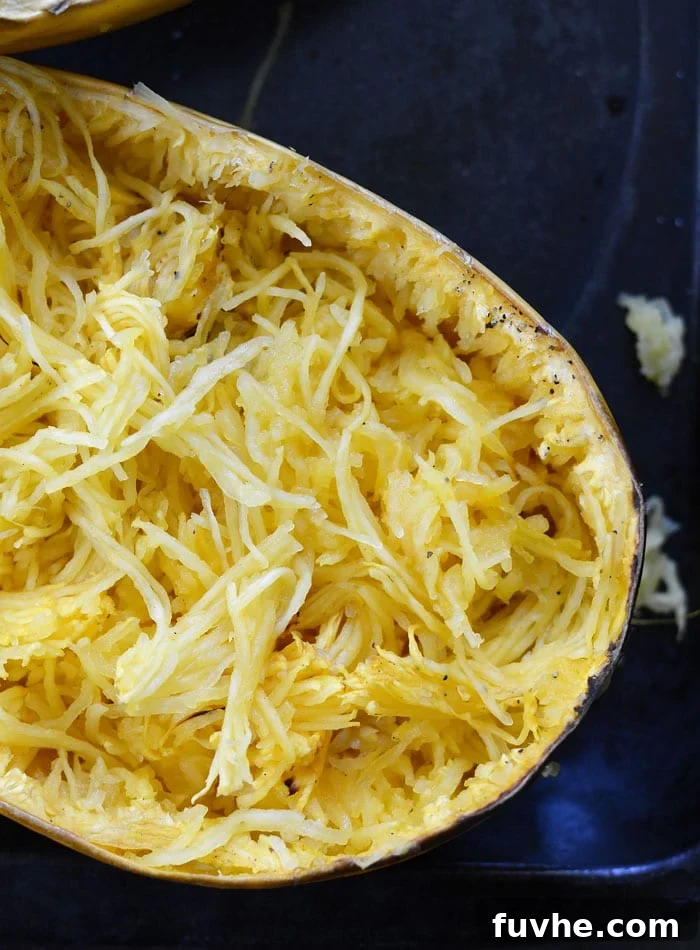
Welcome to the ultimate guide on cooking spaghetti squash – a versatile, nutritious, and incredibly delicious vegetable that can revolutionize your meal prep. If you’re looking for a healthy, low-carb alternative to traditional pasta, or simply seeking an easy way to incorporate more vegetables into your diet, spaghetti squash is your answer. This method for roasting spaghetti squash in the oven is not only simple but guarantees perfect results every single time, yielding tender, spaghetti-like strands with a delightful texture and rich flavor.
I personally integrate spaghetti squash into my weekly routine, typically preparing one every Sunday. This ensures I have a readily available base for a variety of meals throughout the week. Its adaptability is truly remarkable: enjoy it as a simple side dish seasoned with just salt and pepper, top it with your favorite marinara or pesto, or use it as a foundation for elaborate pasta dishes, stir-fries, and vibrant salads. For a quick, satisfying snack, especially before workouts, a bowl of warm spaghetti squash with minimal seasoning is a go-to choice.
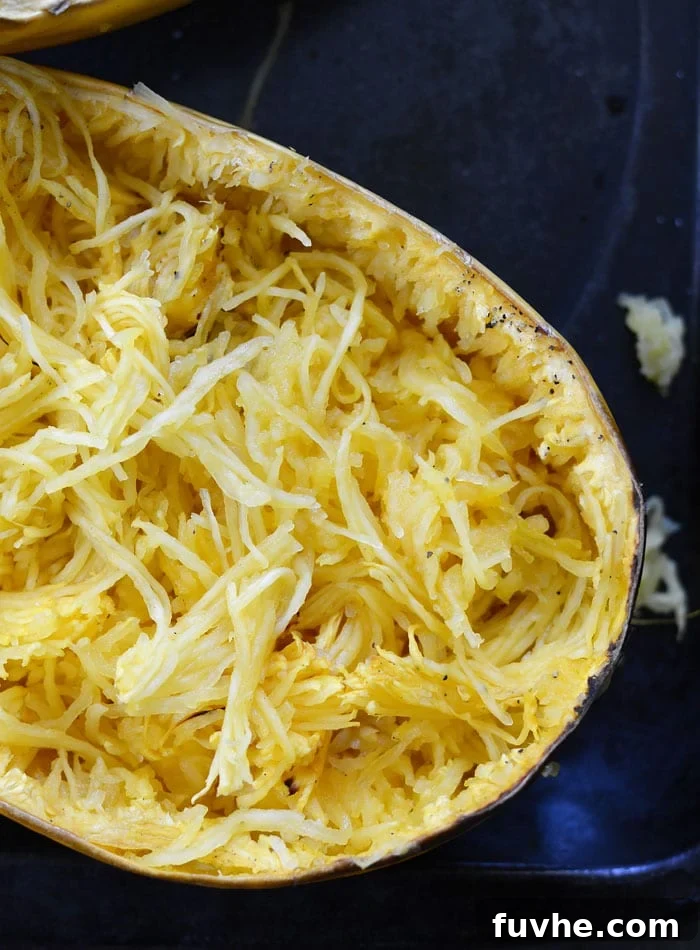
Why Spaghetti Squash? A Nutritional Powerhouse
Beyond its culinary versatility, spaghetti squash shines brightly in its nutritional profile, making it a fantastic choice for health-conscious eaters. It serves as an excellent low-calorie, low-fat, and low-carbohydrate alternative to wheat pasta, fitting seamlessly into various dietary plans including keto, paleo, gluten-free, and vegan lifestyles. A single cup of cooked spaghetti squash provides approximately 42 calories, about 10 grams of carbohydrates, and a significant 9% of your daily recommended fiber intake.
But its benefits don’t stop there. Spaghetti squash is also packed with essential vitamins and minerals crucial for overall well-being. It’s a good source of Vitamin A, vital for healthy vision, immune function, and skin health. Vitamin C contributes to a robust immune system and acts as an antioxidant, protecting your cells from damage. Furthermore, it contains important minerals like calcium, essential for bone health, and potassium, which plays a key role in maintaining healthy blood pressure and fluid balance. Its high fiber content aids digestion, promotes satiety, and helps regulate blood sugar levels, making it a smart choice for sustained energy and digestive health.
Choosing the Perfect Spaghetti Squash
Before you even begin cooking, selecting the right spaghetti squash is paramount to achieving the best results. Look for a squash that feels firm and heavy for its size, indicating it’s fresh and full of moisture. The skin should be smooth, blemish-free, and possess a vibrant, uniform yellow color. Avoid squashes with soft spots, cracks, or any signs of mold, as these indicate spoilage. A healthy squash will also have a dry, intact stem. Trust your instincts – a good quality squash is the first step to a delicious meal.
The Simple Guide to Oven-Roasted Spaghetti Squash
This method focuses on oven roasting at a higher temperature, face up, which I find yields superior flavor and texture compared to baking it face down. The direct heat allows for a slight caramelization on the cut surface, enhancing its natural sweetness and creating those perfectly tender strands.
Step One: Preheat Your Oven for Optimal Roasting
Begin by preheating your oven to 450 degrees Fahrenheit (230 degrees Celsius). A hot oven is key to achieving that ideal roasted texture and helping the squash cook evenly and thoroughly in a reasonable amount of time. This high temperature helps to tenderize the flesh while preventing it from becoming overly watery.
Step Two: Safely Halve the Spaghetti Squash

Place the spaghetti squash on a sturdy cutting board. Using a large, sharp chef’s knife, carefully chop the squash in half lengthwise, from stem to blossom end. Spaghetti squash can be quite firm, so use caution and a stable surface. You might find it easier to pierce the skin first and then cut through. If the squash wobbles, cut a small slice off the bottom to create a flat, stable surface.
Step Three: Efficiently Scoop Out Seeds and Pulp
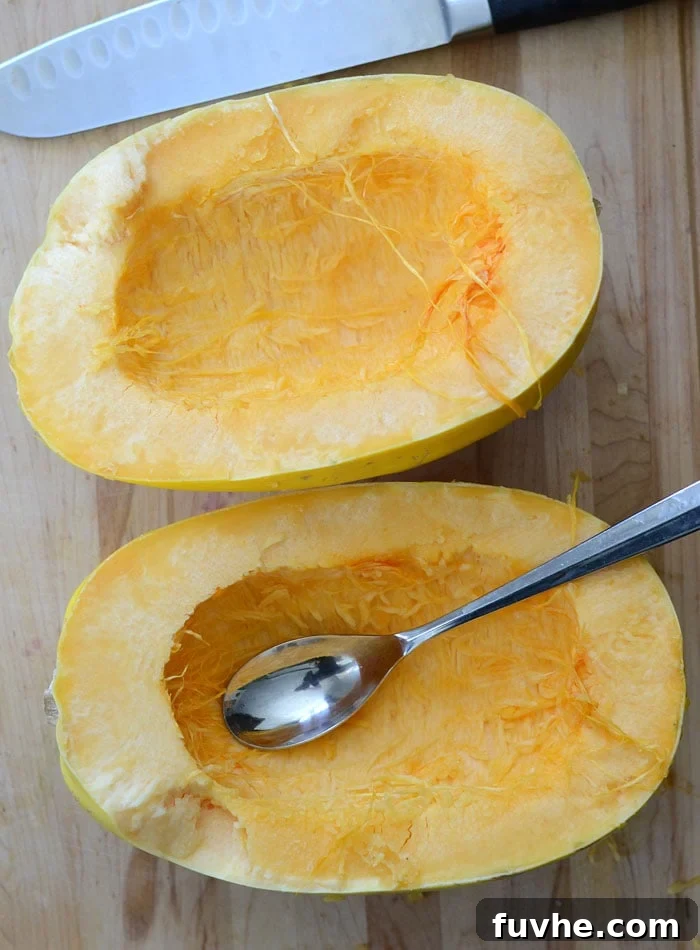
Once halved, use a sturdy spoon (an ice cream scoop works wonderfully) to scrape out all the seeds and the stringy, fibrous pulp from the center of each squash half. You want to ensure the cavity is clean, as this ensures even cooking and prevents any bitterness from the seeds from transferring to the cooked flesh. Discard the seeds or consider roasting them separately for a crunchy snack!
Step Four: Prepare for Roasting on a Baking Tray
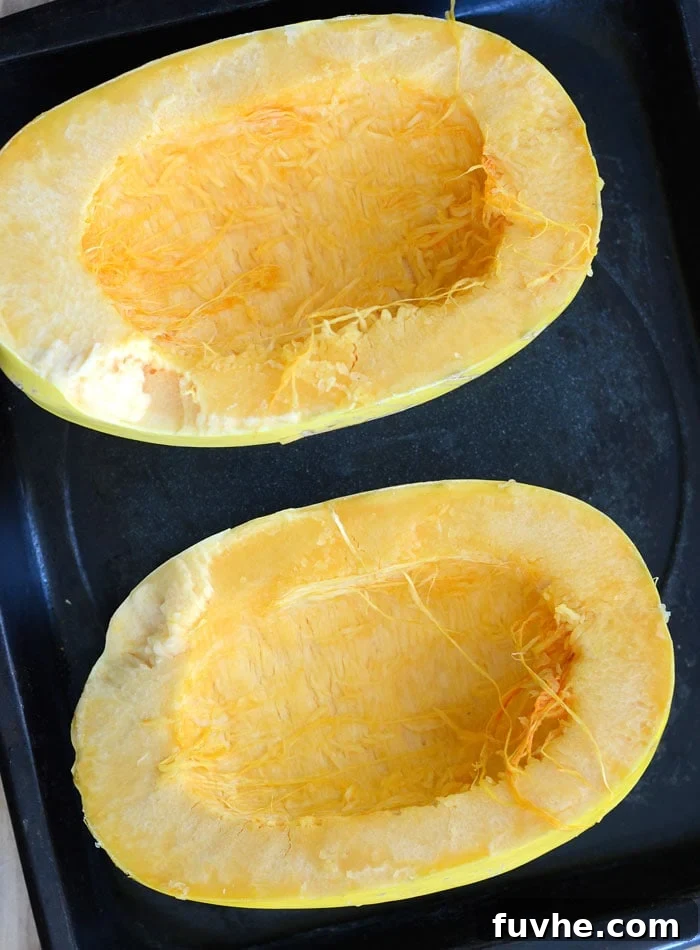
Place the cleaned spaghetti squash halves face up on a baking tray. This “face up” orientation is crucial for my preferred method, as it allows the hot air to circulate directly around the exposed flesh, promoting a slightly crisp exterior and tender interior, while allowing any excess moisture to evaporate. You may line your baking tray with parchment paper or a silicone mat for easier cleanup.
Step Five: Season to Perfection (Optional, Yet Recommended)
While spaghetti squash tastes delicious simply on its own, a touch of seasoning can elevate its flavor profile significantly. This step is entirely optional and can be adjusted based on how you plan to use the cooked squash. For a straightforward side dish or snack, a generous sprinkle of sea salt and freshly ground black pepper across the cut surface of each half is usually sufficient. Consider adding other flavors like garlic powder, onion powder, a pinch of smoked paprika, or dried herbs such as oregano or thyme for more depth.
Regarding oil: I personally find that roasting spaghetti squash at this high temperature, face up, doesn’t require oil to prevent it from drying out. The natural moisture content is usually enough, and the resulting texture is wonderfully tender. However, if you prefer a slightly richer flavor or an extra layer of protection against drying, you can brush each half with about ½ teaspoon of olive oil or avocado oil before seasoning. Experiment with both methods to discover your personal preference; I often skip the oil without compromising on quality.
Step Six: Roast Until Tender and Flavorful
Carefully transfer the baking tray with the seasoned spaghetti squash to your preheated 450°F (230°C) oven. Roast for 30 to 50 minutes. The cooking time will vary depending on the size of your spaghetti squash; smaller squashes may be ready in 20-30 minutes, while larger ones might take closer to an hour. For an average-sized squash, anticipate around 40 minutes.
To check for doneness, carefully remove a squash half from the oven (use oven mitts!) and try dragging a fork across the flesh. If it’s ready, the flesh will easily pull away from the skin in long, distinct strands, resembling spaghetti noodles. If it still feels firm and resistant to the fork, return it to the oven for another 5-10 minutes and check again. The goal is tender, easily shredded strands, not mushy or overly hard flesh.
Step Seven: Create Your Spaghetti Squash Noodles
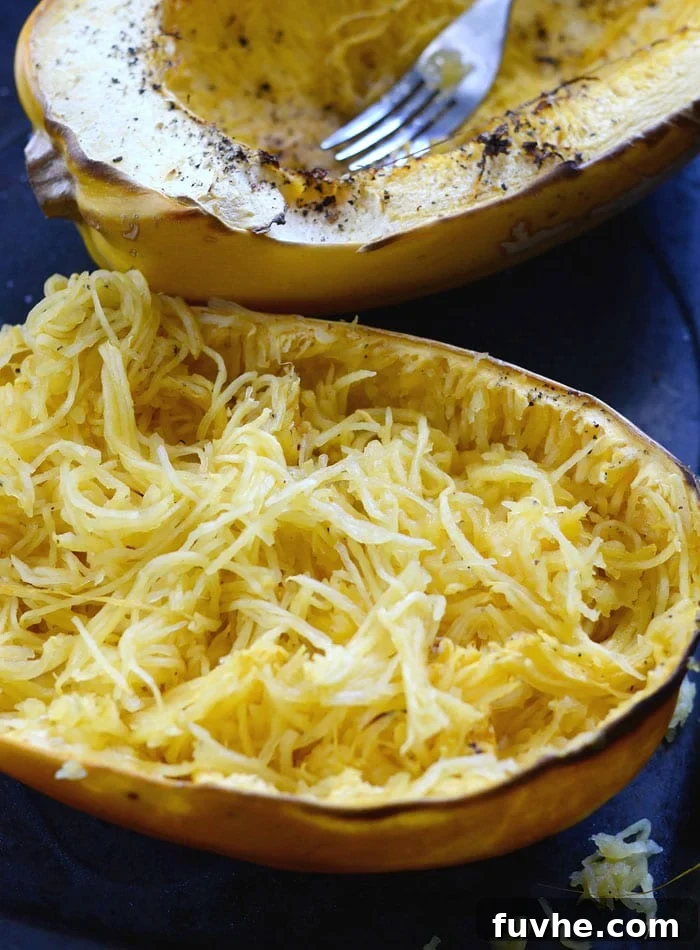
Once cooked and slightly cooled (this makes handling much easier and prevents burnt fingers!), use a fork to gently scrape the cooked squash flesh from the skin. Work your way around the edges and move inwards. As you scrape, the tender flesh will naturally separate into beautiful, spaghetti-like strands. Collect these strands in a bowl. Your perfectly cooked spaghetti squash “noodles” are now ready to be enjoyed as is, or incorporated into your favorite recipes!
Storing and Reheating Cooked Spaghetti Squash
One of the many advantages of spaghetti squash is its excellent shelf life after cooking, making it ideal for meal prepping. Once cooled, transfer the spaghetti squash noodles to an airtight container. It will keep fresh in the refrigerator for up to 3-5 days. For longer storage, cooked spaghetti squash can be frozen for up to 3 months. To freeze, spread the noodles in a single layer on a baking sheet and freeze until solid, then transfer to a freezer-safe bag or container to prevent clumping.
To reheat, simply warm the noodles in a microwave for 1-2 minutes, or sauté them in a pan over medium heat until heated through. If reheating from frozen, allow it to thaw in the refrigerator overnight before warming for best results, or reheat directly from frozen in a pan, stirring frequently.
What to Do with Spaghetti Squash: Endless Culinary Possibilities
The culinary applications for spaghetti squash are truly limitless. Its mild flavor and pasta-like texture make it a fantastic canvas for a wide array of dishes:
- **Simple & Satisfying:** Enjoy spaghetti squash noodles on their own with just a sprinkle of sea salt and freshly ground black pepper for a light and healthy meal or snack.
- **Classic Pasta Alternative:** For a super quick and wholesome meal, top cooked spaghetti squash with your favorite pasta sauce – think classic marinara, creamy alfredo, vibrant pesto, or even a spicy arrabbiata. Add a dusting of nutritional yeast for a cheesy flavor without dairy.
- **Stuffed Squash Elegance:** Transform the squash halves into elegant stuffed dishes. Fill the noodled squash with a medley of other roasted vegetables (like bell peppers, zucchini, onions), hearty beans or lentils, and a savory sauce, then bake until warmed through.
- **Mexican-Inspired Bowls:** Toss the delicate strands with black beans, diced avocado, corn, and a squeeze of lime juice for a refreshing and vibrant salad or bowl.
- **Asian Fusion Delight:** Mix the noodles with steamed broccoli florets and chickpeas, then drizzle generously with a homemade satay sauce for a nutrient-packed and flavorful meal.
- **Protein Power-Up:** Combine spaghetti squash with baked tofu for a balanced and satisfying plant-based protein meal. Try a Sriracha-baked tofu for an extra kick!
- **Hearty Stuffed Varieties:** Create flavorful stuffed squash with a vibrant mix of corn, black beans, diced bell pepper, fresh cilantro, and finely chopped onion. Top it off with a creamy chipotle sauce for a smoky, spicy finish.
- **Taco Night Twist:** Use spaghetti squash as the base for a lighter take on taco night. Mix it with a savory lentil taco filling for a wholesome and satisfying alternative to traditional tortillas.
- **Versatile Bowl Booster:** Add a generous serving of spaghetti squash to any “Buddha bowl” or grain bowl to increase vegetable intake, add texture, and create a more filling meal without heavy carbs.
- **Casseroles and Bakes:** Integrate the strands into casseroles as a low-carb binder or base, replacing pasta or rice for lighter versions of your favorite comfort foods.
- **Fritters and Pancakes:** Mix shredded spaghetti squash with eggs, flour (or a gluten-free alternative), and seasonings to create savory fritters or vegetable pancakes.
Spaghetti Squash Recipes to Inspire You
Ready to dive deeper into the world of spaghetti squash cuisine? Here are a couple of my favorite recipes that showcase its incredible versatility:
- Easy Vegan Spaghetti Squash Noodles: A simple yet flavorful dish that highlights the natural goodness of spaghetti squash.
- Low Fat Pesto Spaghetti Squash: A vibrant and healthy take on a classic, perfect for a quick weeknight dinner.

This comprehensive guide covers everything you need to know about preparing delicious, perfectly cooked spaghetti squash. By embracing this oven-roasting method – at a higher temperature, with the squash facing up – you’ll unlock a depth of flavor and achieve a consistently ideal texture that sets it apart. Say goodbye to watery or bland spaghetti squash and hello to an easy, healthy, and incredibly satisfying vegetable staple that will elevate your meals and simplify your food prep. Happy cooking!