
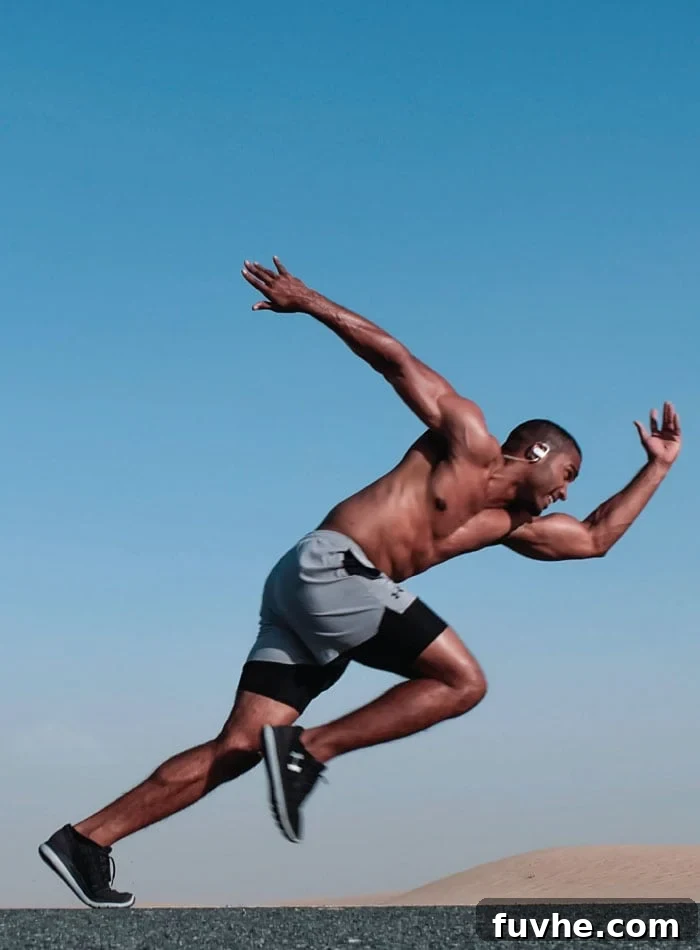
Prepare to revolutionize your lower body training with this ultimate leg builder and conditioning workout, meticulously crafted to sculpt powerful, resilient legs and glutes. This dynamic routine masterfully blends high-intensity circuit training, featuring an array of potent strength exercises, with strategic five-minute hill climbs on the treadmill. Hill running isn’t just a cardiovascular challenge; it’s a phenomenal tool for building unparalleled strength, endurance, and explosive power in your legs and glutes, contributing significantly to your all-around fitness and athletic performance. If you’re looking to elevate your leg day from routine to revolutionary, this comprehensive guide is designed for you.
Mastering Leg Strength and Endurance: The Ultimate Workout
This “Leg Killer Workout” is more than just a collection of exercises; it’s a strategically designed program to push your limits and foster significant gains in lower body strength, muscular endurance, and cardiovascular health. We’ve structured it to ensure maximum muscle engagement and metabolic conditioning, leading to superior results. By integrating high-intensity intervals with focused strength circuits, you’ll challenge your body in new ways, breaking through plateaus and unlocking your true potential.
Why This Workout is a Game Changer
Unlike traditional leg workouts that often isolate muscle groups, this routine adopts a holistic approach. The alternating periods of strength training and hill running create a powerful synergy:
- Enhanced Muscle Activation: Hill climbs recruit more muscle fibers in your glutes, hamstrings, and calves compared to flat running, significantly boosting strength and power.
- Superior Cardiovascular Conditioning: The integrated treadmill intervals elevate your heart rate, improving your aerobic capacity and overall stamina.
- Functional Strength Development: Exercises like deadlifts, squats, and lunges mimic real-life movements, building practical strength that translates into better athletic performance and daily function.
- Fat Burning Efficiency: The high-intensity nature of both the circuits and hill runs keeps your metabolism firing long after your workout, aiding in fat loss and lean muscle development.
- Mental Toughness: Pushing through challenging wall sits and inclined runs builds incredible mental resilience, a vital component for any fitness journey.
The Ultimate Leg Builder Workout Breakdown
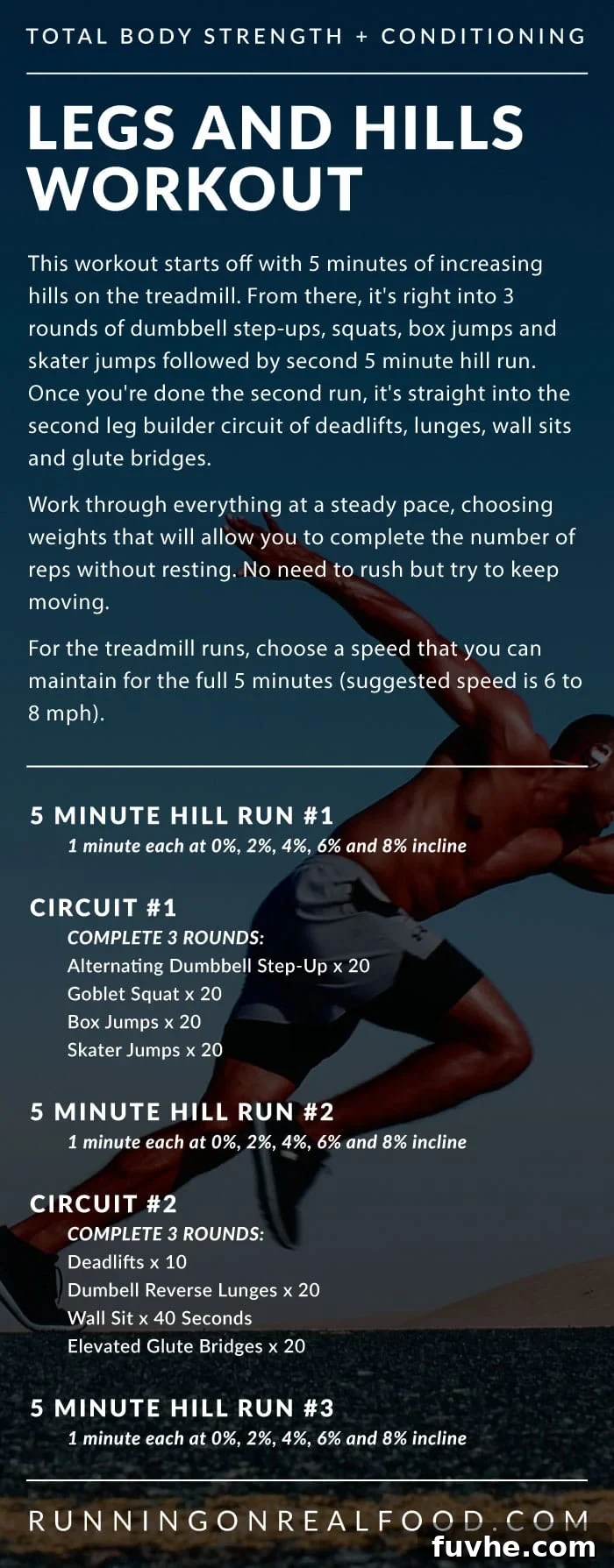
This workout begins with a dynamic warm-up, then immediately dives into the intensity with five minutes of incline running on the treadmill. From there, you’ll transition into three gruelling rounds of our first leg-building circuit, incorporating dumbbell step-ups, goblet squats, box jumps, and skater jumps. Just when your legs start to fatigue, we’ll reintroduce another five-minute hill run to keep your heart rate soaring and muscles engaged. Once you’ve conquered the second run, it’s straight into the second powerful leg builder circuit, featuring deadlifts, dumbbell reverse lunges, wall sits, and elevated glute bridges. You’ll finish things off with a final, victorious five-minute run, leaving you feeling accomplished and incredibly strong.
Work through everything at a steady, controlled pace, prioritizing proper form over speed. Rest only as needed between sets and circuits to maintain intensity. Be warned: those wall sits combined with the relentless 8% hill incline will test your resolve, but the incredible strength and endurance you’ll gain will be your ultimate reward. Embrace the challenge; your future self will thank you!
Warm-Up: Essential Preparation (5-10 Minutes)
Before you attack this demanding workout, a proper warm-up is crucial to prepare your muscles, increase blood flow, and prevent injury. Focus on dynamic movements that activate your lower body and elevate your heart rate gradually.
- Light Cardio: 2-3 minutes of brisk walking or light jogging on the treadmill (0% incline).
- Leg Swings: 10-15 per leg, forward/backward and side-to-side.
- Dynamic Lunges: 10 per leg (forward and lateral lunges without weight).
- Bodyweight Squats: 10-15 repetitions, focusing on full range of motion.
- Glute Bridges (Bodyweight): 10-15 repetitions to activate the glutes.
Phase 1: Dynamic Hill Conditioning (5 Minutes)
Kick off your workout with an invigorating hill run. This isn’t just about speed; it’s about sustained effort against increasing resistance, which effectively pre-fatigues your leg muscles and boosts cardiovascular endurance right from the start. Choose a speed that feels challenging but maintainable for the full minute at an 8% incline. It will feel deceptively easy at first, but the cumulative effect of the incline will quickly elevate the difficulty. The primary goal is to maintain your chosen speed for the entire five minutes, pushing through the discomfort as the incline climbs.
- 1 minute each at the following inclines: 0%, 2%, 4%, 6%, 8%
For reference, I typically run at 7 mph for this segment. Depending on your current fitness level, a speed between 6 and 8 mph is generally a good starting point. Adjust as necessary to ensure you’re challenged but can complete the entire segment without stopping.
Phase 2: Leg Circuit #1 – Power and Agility (3 Rounds)
Immediately following your first hill climb, transition into the first circuit. This circuit is designed to build explosive power, unilateral strength, and muscular endurance. Focus on controlled movements for the strength exercises and dynamic execution for the plyometrics.
- Complete 3 Rounds of the following:
Alternating Dumbbell Step-Up x 20 (10 per leg)
The dumbbell step-up is an exceptional exercise for targeting the glutes, hamstrings, and quads, while also improving balance and unilateral leg strength. Hold a dumbbell in each hand, standing tall in front of a sturdy box or bench. Step onto the box with one foot, driving through your heel to stand up, bringing the other leg up to meet it on the box. Control the descent back to the starting position, alternating legs with each repetition. Focus on driving through the heel of the working leg to maximize glute engagement, keeping your core tight and avoiding pushing off with the trailing leg. Aim for a controlled movement both up and down, ensuring the knee tracks in line with your toes.
Goblet Squat x 20
The goblet squat is a fantastic full-body exercise that emphasizes core stability and teaches proper squat mechanics. It’s particularly effective for targeting the quads and glutes. Hold one slightly heavier dumbbell or kettlebell vertically against your chest, cupping the top of the weight with both hands. Stand with feet slightly wider than shoulder-width apart, toes pointed slightly out. Initiate the squat by pushing your hips back and down, keeping your chest up and back straight. Descend until your elbows are between your knees, or as deep as your mobility allows without compromising form. Drive through your heels to return to the starting position. Maintain a neutral spine and resist the urge to round your back.
Box Jumps x 20
Box jumps are a powerful plyometric exercise that builds explosive power, speed, and agility. Stand facing a sturdy box at a comfortable distance. Lower into a quarter squat, then powerfully swing your arms and explode upwards, driving through your hips to land softly and fully on top of the box. Step or jump back down, resetting for each rep. Focus on a soft landing to absorb the impact and protect your joints. If you’re new to box jumps, start with a lower box height and gradually increase as your confidence and power improve. Ensure your box is stable and won’t slip.
Skater Jumps x 20 (10 per side)
Skater jumps are an excellent lateral plyometric exercise that enhances agility, balance, and strengthens the muscles responsible for side-to-side movement, including the glutes and outer thighs. Start in a slight squat position. Push off powerfully from one foot, jumping laterally to land softly on the opposite foot, allowing the trailing leg to sweep behind you. Immediately absorb the impact and explode off that foot to jump back to the other side. Think of it as mimicking a speed skater’s motion. Maintain a low, athletic stance throughout the movement. Focus on controlled landings and quick transitions to maximize the cardio and agility benefits.
— Repeat the 5 Minute Hill Run: Re-energize and refocus —
After completing all three rounds of Circuit #1, it’s time to re-engage your cardiovascular system and further fatigue your leg muscles with another round of hill climbing. This second five-minute run will be more challenging due to pre-fatigue, so focus on mental resilience and maintaining your chosen speed and form.
Phase 3: Leg Circuit #2 – Strength and Stability (3 Rounds)
Having pushed your endurance and agility, this second circuit shifts focus to raw strength, stability, and posterior chain development. These exercises are crucial for building foundational power and improving overall functional strength.
- Complete 3 Rounds of the following:
Deadlifts x 10
The deadlift is one of the most effective full-body strength exercises, building immense power in the posterior chain (glutes, hamstrings, lower back) and core. Using a barbell (or dumbbells/kettlebells), stand with your feet hip-width apart, shins close to the bar. Hinge at your hips and bend your knees to grip the bar with an overhand or mixed grip, hands slightly wider than shoulder-width. Keep your back straight, chest up, and core braced. Drive through your heels, extending your hips and knees simultaneously to stand up, pulling the bar close to your body. Squeeze your glutes at the top. Control the descent by reversing the movement, hinging at the hips first. Prioritize impeccable form to prevent injury; if you’re unsure, practice with lighter weights or get guidance from a professional. These can be a little bit heavier since you’re only doing 10 reps, allowing you to focus on strength.
Dumbbell Reverse Lunges x 20 (10 per leg)
Reverse lunges are excellent for building unilateral leg strength, improving balance, and targeting the glutes and hamstrings with less strain on the knees compared to forward lunges. Hold a dumbbell in each hand, standing tall. Step backward with one foot, lowering your hips until both knees are bent at approximately a 90-degree angle. Ensure your front knee is directly above your ankle and your back knee hovers just above the floor. Drive through the heel of your front foot to return to the starting position. Alternate legs for each repetition, maintaining a stable core throughout the movement. Focus on controlled, smooth movements rather than speed.
Wall Sit x 40 Seconds
The wall sit is an isometric exercise that builds incredible quad and glute endurance, as well as mental toughness. Stand with your back flat against a wall, then slide down until your knees are bent at a 90-degree angle, as if sitting in an invisible chair. Ensure your thighs are parallel to the floor and your core is engaged. Hold this position for the prescribed duration. This exercise will burn, but pushing through the discomfort significantly enhances muscular endurance and mental fortitude. Breathe deeply and focus on maintaining perfect form throughout the hold.
Elevated Glute Bridges x 20 (feet on box or bench)
Elevated glute bridges are fantastic for isolating and strengthening the glutes and hamstrings, improving hip extension, and alleviating lower back pain. Lie on your back with your feet elevated on a sturdy box or bench, knees bent. Keep your arms flat on the floor beside you for stability. Drive through your heels, squeezing your glutes to lift your hips off the floor until your body forms a straight line from your shoulders to your knees. Hold briefly at the top, focusing on the glute contraction, then slowly lower your hips back down. Ensure the movement comes from your glutes and not your lower back. Control the entire movement.
— Final Push: Conquer the last 5-Minute Hill Run —
You’re almost there! This final five-minute hill run is your last test of endurance and willpower. Dig deep, maintain your pace, and visualize the strength you’re building with every stride. This final push will solidify your gains and leave you with a tremendous sense of accomplishment. You’ve earned this finish!
Cool-Down and Stretching (5-10 Minutes)
After such an intense workout, a proper cool-down is vital for recovery, flexibility, and reducing muscle soreness. Don’t skip this crucial step!
- Light Cardio: 2-3 minutes of walking at a slow pace on the treadmill (0% incline).
- Static Stretching: Hold each stretch for 20-30 seconds, focusing on deep breathing.
- Hamstring stretch (seated or standing)
- Quad stretch (standing or lying)
- Glute stretch (figure-four stretch)
- Calf stretch (against a wall)
- Hip flexor stretch (kneeling lunge)
Essential Equipment for Success
While this workout is intense, it requires only a few key pieces of equipment, making it accessible for most gyms or even a well-equipped home gym. Choosing the right weights is paramount for both safety and effectiveness; always prioritize form over lifting heavy.
- Treadmill for the Hill Runs: An obvious necessity for the core conditioning element of this workout. Ensure it’s in good working order and you’re comfortable adjusting inclines and speeds quickly.
- 1 Moderate Set of Dumbbells for Step-Ups and Reverse Lunges: Select dumbbells that provide a significant challenge by the end of your reps but do not force you to break form or stop prematurely. They should be challenging but allow you to complete all 20 repetitions without needing to “break up” the set. For reference, I found 25 lb. dumbbells to be effective for this.
- 1 Slightly Heavier Dumbbell or Kettlebell for Goblet Squats: For goblet squats, you’ll want a single, heavier weight that allows you to perform 20 reps with excellent form while feeling the burn. Again, choose a weight you can complete for 20 reps without resting excessively. A 16 kg (approximately 35 lbs) kettlebell worked well for me, but adjust based on your strength.
- Box or Bench for Box Jumps and Glute Bridges: A sturdy box or bench is crucial. For box jumps, select a height that is challenging but safe, allowing for a full, soft landing without straining. For glute bridges, any stable elevated surface will work. I personally used a 20-inch box, which offered a good balance of challenge for both exercises.
- Barbell for Deadlifts: For the deadlifts, since you’re only performing 10 repetitions, you can opt for a heavier weight to focus on raw strength. I utilized 155 lbs. However, if you don’t have access to a barbell or heavier weights, there are excellent alternatives: you can perform 10 single-leg heavier deadlifts per leg (for a total of 20 reps), or simply do 20 dumbbell or kettlebell deadlifts, focusing on impeccable form and maximizing the muscle contraction.
Discover More Workouts to Elevate Your Fitness
If you’ve loved the intensity and effectiveness of this leg strength and conditioning workout, we’ve got plenty more where that came from to keep your fitness journey exciting and progressive. Explore these other challenging routines designed to push your limits and help you achieve your fitness goals:
High-Intensity Lower Body Circuit Workout // Leg and Core Strength Workout // Push, Pull, Legs and Core Superset Workout // 30 Minute Full-Body Superset Workout // 35 Minute Treadmill and Barbell Workout
Remember, consistency is key, and listening to your body is paramount. Always consult with a healthcare professional or certified fitness trainer before starting any new workout program, especially if you have underlying health conditions. Now go forth and build those powerful legs!