
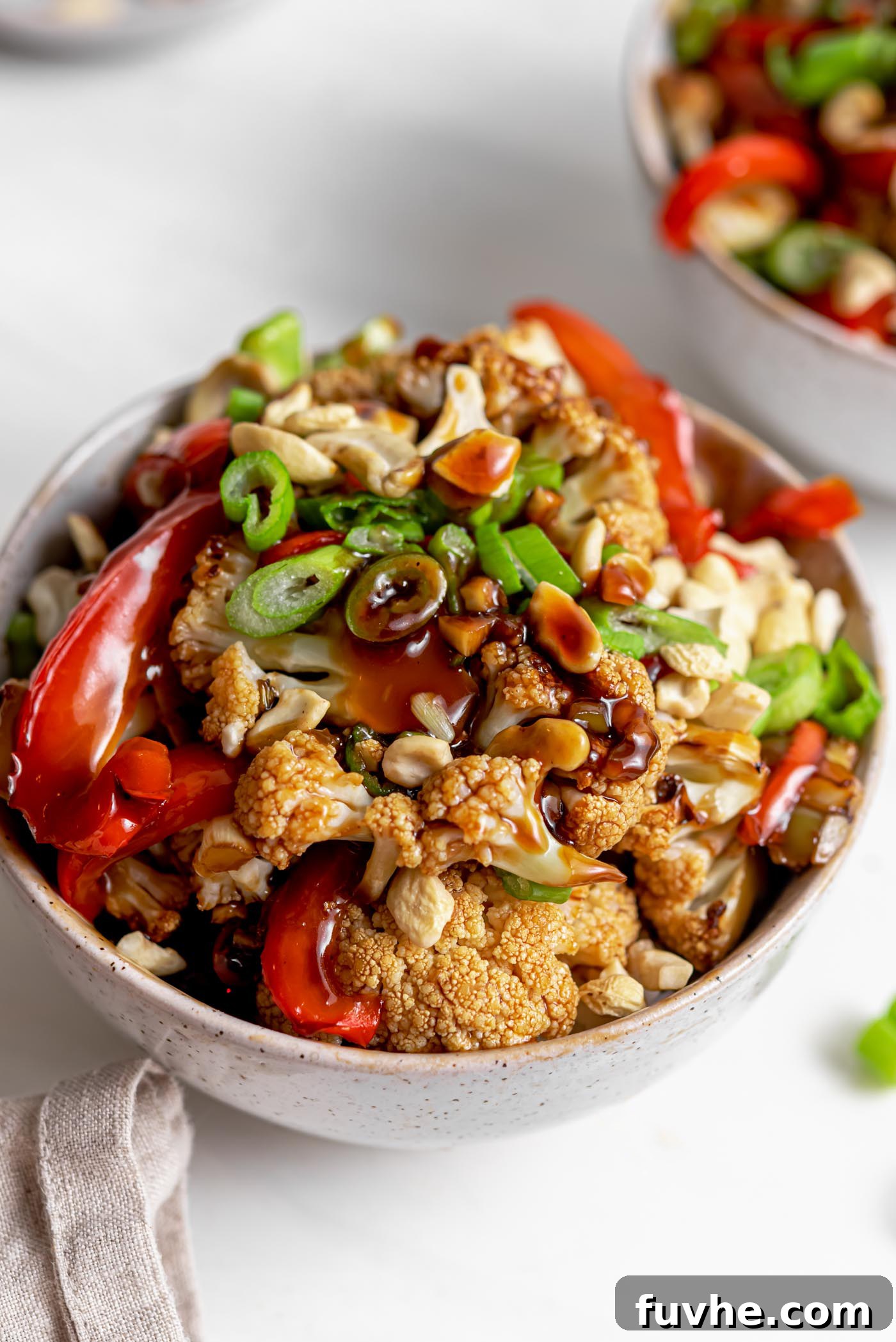
Prepare your taste buds for an explosion of flavor with this incredible sweet and spicy Kung Pao Cauliflower recipe! This plant-based twist on a classic takeout favorite is not only packed with irresistible taste but is also incredibly easy to make, hitting your table in under 35 minutes. Perfect for busy weeknights or when you’re craving something hearty, comforting, and utterly delicious, this dish is guaranteed to become a new staple in your culinary repertoire.
Say goodbye to greasy takeout and hello to a vibrant, satisfying meal that truly hits the spot. Our Kung Pao Cauliflower brings together tender, roasted cauliflower and crisp bell peppers, all drenched in a sticky, glossy sauce that balances sweet, savory, and spicy notes with a delightful tang. Topped with crunchy peanuts and fresh green onions, it’s a symphony of textures and flavors that will have everyone asking for seconds. Get ready to elevate your home cooking with this quick, healthy, and outrageously tasty vegan delight!
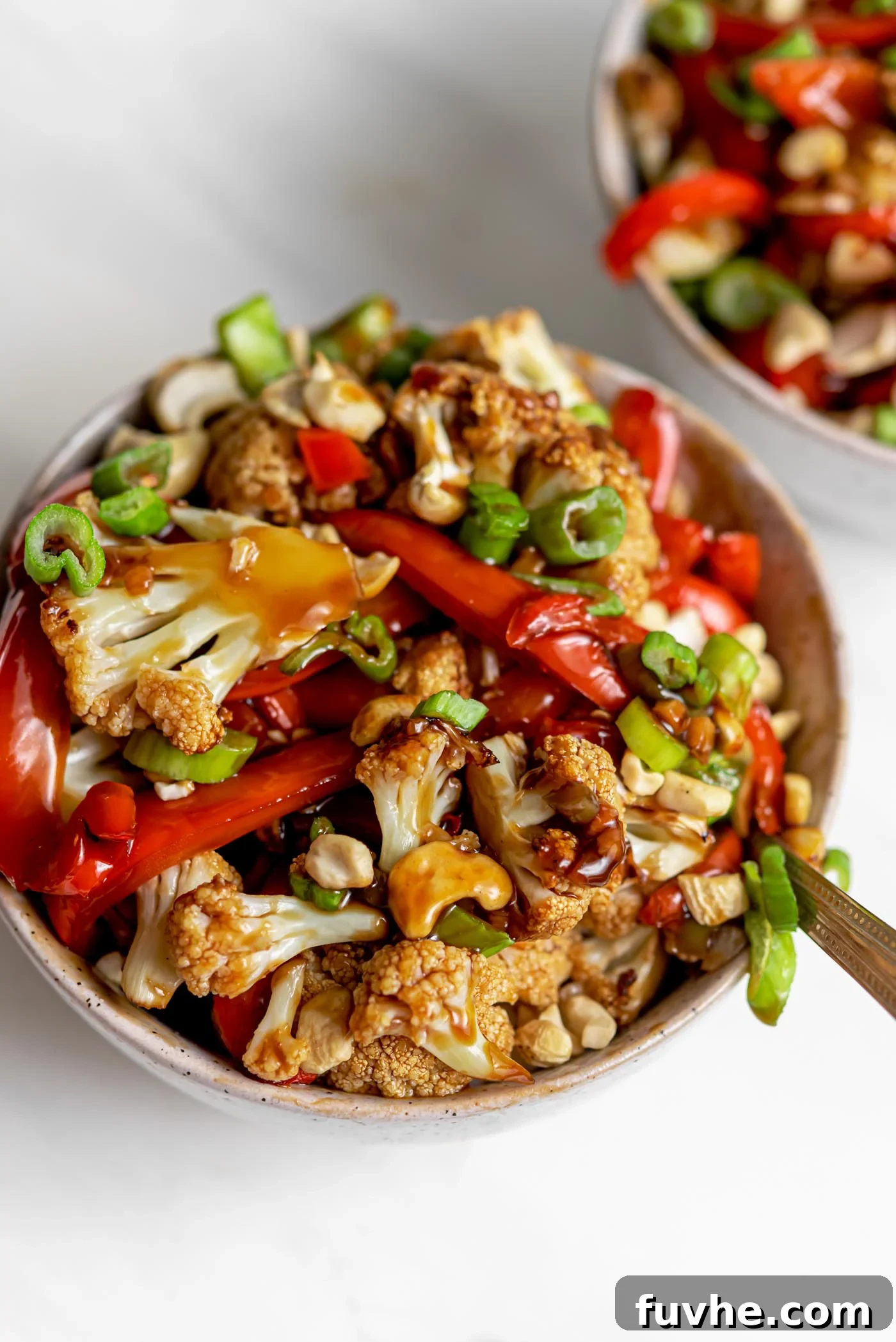
Why You’ll Love This Kung Pao Cauliflower
This recipe isn’t just another meal; it’s a culinary experience designed for convenience, health, and incredible flavor. Here’s why this Sweet and Spicy Kung Pao Cauliflower will quickly become a favorite:
- Dietary Inclusivity: This recipe is naturally vegan, making it a fantastic choice for plant-based eaters or anyone looking to incorporate more vegetables into their diet. For those with gluten sensitivities, simply swap out the soy sauce for tamari, and it becomes a delicious gluten-free option too.
- Irresistibly Flavorful Sauce: The heart of this dish is its sauce – an addictive blend of sweet, sour, and savory with a perfect kick of heat. It’s wonderfully sticky, coating every floret of cauliflower and slice of bell pepper, ensuring a burst of flavor in every bite.
- Lightning-Fast Preparation: In today’s fast-paced world, quick meals are essential. This Kung Pao Cauliflower comes together in under 35 minutes from start to finish. This makes it an ideal solution for a healthy, homemade dinner on even the busiest weeknights, far quicker than ordering takeout.
- Comforting & Satisfying: Served over warm, fluffy rice and garnished with crunchy scallions and roasted peanuts or cashews, this dish is both deeply comforting and incredibly satisfying. It’s the kind of meal that fills you up without weighing you down.
- Versatile and Customizable: While cauliflower shines here, the robust sauce and simple cooking method make this recipe highly adaptable. You can easily switch up the vegetables or add plant-based proteins to suit your preference, offering endless possibilities for delicious variations.
- Healthier Takeout Alternative: Enjoy all the beloved flavors of your favorite Chinese takeout without the excess oil or questionable ingredients. This homemade version is fresh, wholesome, and packed with nutrient-rich vegetables.
Looking for a similar dish with a protein boost? Don’t miss our Easy Vegan Kung Pao Tofu, another fantastic plant-based option that delivers on flavor and satisfaction!
What is Kung Pao? History and Flavor Profile
Kung Pao, or Gong Bao, is a quintessential dish in Sichuan cuisine, a culinary tradition renowned for its bold, complex flavors, particularly its characteristic “mala” (numbing and spicy) sensation. Traditionally, Kung Pao Chicken (Gong Bao Ji Ding) is made with diced chicken, peanuts, vegetables (like bell peppers and green onions), and a generous amount of dried chili peppers and Sichuan peppercorns, which contribute to its distinctive heat and numbing effect.
The original dish is believed to have been named after Ding Baozhen, a late Qing Dynasty official who served as governor of Sichuan province. “Gong Bao” (宫保) was his official title, meaning “palace guardian.” Over time, the recipe evolved, becoming a beloved dish both within China and internationally.
The flavor profile of authentic Kung Pao is a masterful balance of sweet, sour, salty, and spicy, often with a subtle fermented note from broad bean paste. The heat is layered, featuring both the sharp spice of chilies and the unique, tingling numbness of Sichuan peppercorns. It’s a dish designed to excite the palate and leave a lasting impression.
This particular recipe, however, takes its inspiration from the Westernized versions of Kung Pao that became popular outside of China. These adaptations often temper the “mala” intensity, focusing more on a universally appealing sweet and sour sauce with a less aggressive spice level. While our Kung Pao Cauliflower might not be authentic in the traditional Sichuan sense, it perfectly captures the spirit of the flavorful, sticky, and slightly spicy stir-fries many have come to love from their local Chinese restaurants. It’s a delicious, plant-based homage to a global favorite.
If you’re eager to explore more Asian-inspired vegan dishes, consider trying our Thai Basil Eggplant, a savory and aromatic Eggplant Stir-Fry, the delightfully citrusy Orange Tofu, or the classic tangy goodness of Sweet and Sour Tofu.
Ingredient Notes and Smart Substitutions
Crafting the perfect Kung Pao Cauliflower begins with understanding the role of each ingredient. Here’s a detailed look at what you’ll need and how to make smart substitutions:
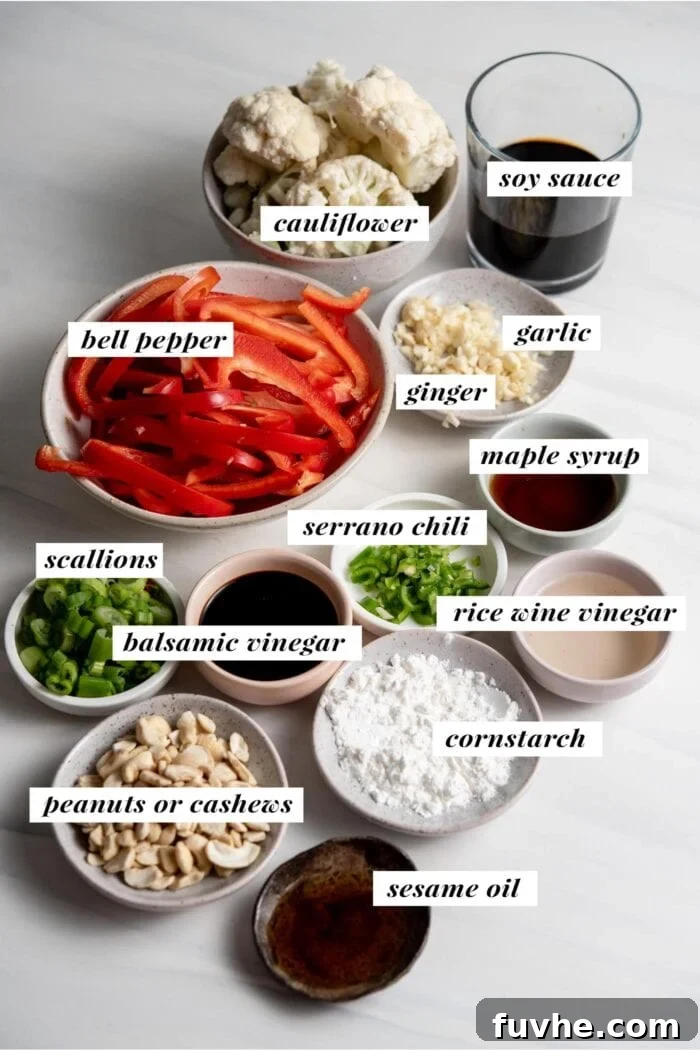
For the Vegetables:
- Cauliflower: You’ll need two small to medium-sized heads, cut into bite-sized florets. The key is to ensure uniform pieces for even roasting. Cauliflower is the star here, offering a fantastic texture that soaks up the sauce beautifully. You can also use frozen cauliflower florets if fresh isn’t available; just make sure to thaw and pat them dry thoroughly before roasting to achieve crispiness.
- Bell Peppers: The recipe calls for red bell peppers, which add a lovely sweetness and vibrant color. However, any color bell pepper will work interchangeably – green, yellow, or orange are all great options. Feel free to use a mix for an even more colorful dish.
- Sesame Oil: This is a non-negotiable ingredient for authentic Asian flavor. Toasted sesame oil provides a deep, nutty aroma that truly enhances the sauce. Do not skip it! It’s used for sautéing the aromatics.
- Serrano Chili: This fresh chili provides a bright, medium heat. If you prefer more or less spice, adjust the quantity or substitute. You can use traditional Sichuan peppers for an authentic numbing heat, or a jalapeño if Serranos are hard to find. For a milder dish, remove more seeds; for extra heat, leave them in.
- Garlic and Fresh Ginger: These aromatic powerhouses form the backbone of the sauce’s flavor. Always opt for fresh garlic and ginger for the best taste. Finely chopping them helps release their essential oils during sautéing.
For the Kung Pao Sauce:
- Low-Sodium Soy Sauce: It’s crucial to use a low-sodium variety to prevent the sauce from becoming excessively salty. If you need a gluten-free alternative, low-sodium tamari is an excellent 1:1 substitute.
- Maple Syrup: This provides the perfect touch of sweetness to balance the savory and spicy notes. Agave syrup is a great vegan alternative, or if you’re not strictly vegan, honey can also be used. Adjust the amount to your preferred sweetness level.
- Rice Wine Vinegar (Unseasoned): Adds a subtle tang and brightens the overall flavor profile. Both seasoned and unseasoned varieties work, but unseasoned is preferred for better control over the final sweetness.
- Balsamic Vinegar: While not traditional, a touch of balsamic vinegar adds a wonderful depth and richness to the sauce, contributing to the complex sweet and sour profile. Don’t worry, it won’t make the dish taste Italian!
- Cornstarch and Water Slurry: This mixture is essential for thickening the sauce, giving it that desirable glossy, sticky consistency. Ensure it’s mixed thoroughly until smooth before adding to the pan to avoid lumps.
For Serving:
- Green Onions (Scallions): Freshly sliced green onions add a mild, oniony bite and a beautiful pop of color as a garnish.
- Roasted Peanuts or Cashews: These provide a crucial crunch and nutty flavor that complements the dish perfectly. Make sure they are roasted for maximum flavor.
- Cooked Rice: Basmati, jasmine, or brown rice makes a perfect base for soaking up all that delicious sauce. Quinoa or noodles are also great alternatives.
This detailed guide covers the main ingredients. For precise measurements and step-by-step instructions, please refer to the complete recipe card found further down the page.
Mastering the Method: Step-by-Step Instructions
Before You Start: Prepping for Success
Efficiency is key for this quick recipe. Begin by chopping all your vegetables and aromatics: the cauliflower into florets, bell peppers into thin slices, garlic and ginger finely chopped, and the Serrano pepper deseeded and finely minced. Also, measure out all your sauce ingredients and have them ready to go. This “mise en place” will make the cooking process smooth and enjoyable.
Step 1: Roast the Cauliflower and Bell Peppers
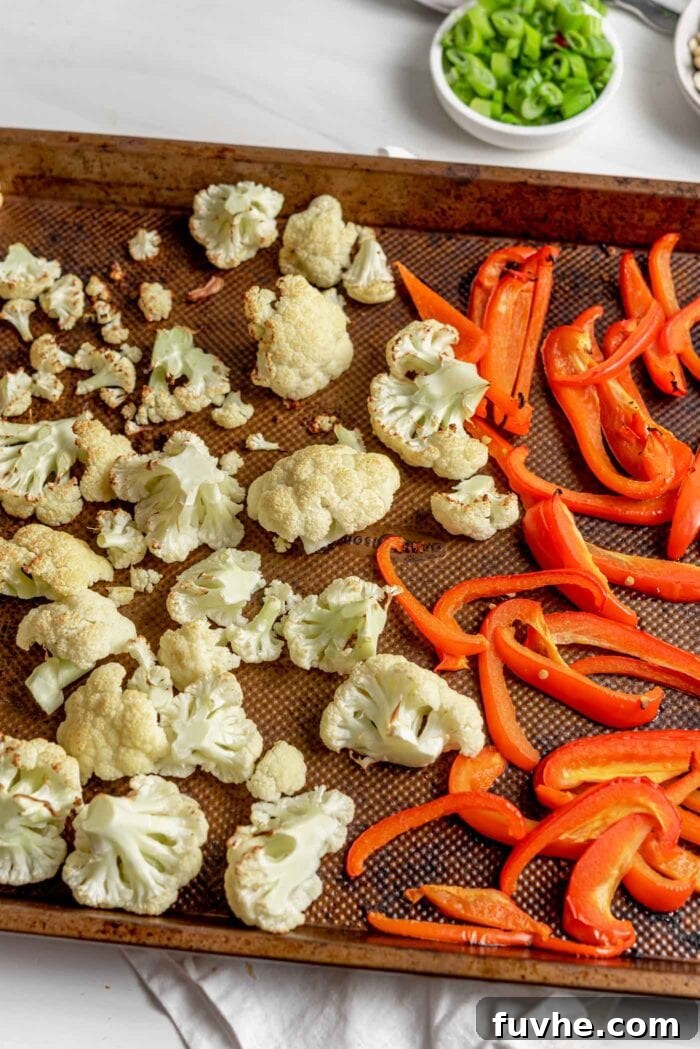
Preheat your oven to a high temperature of 450°F (232°C). Arrange the cauliflower florets and sliced bell peppers in a single layer on a large baking tray. Avoid overcrowding the tray, as this can steam the vegetables instead of roasting them, preventing them from browning. Roast for approximately 15-20 minutes, or until the cauliflower is tender-crisp with slightly browned edges and the bell peppers are softened. Roasting brings out their natural sweetness and gives them a wonderful texture, creating a fantastic base for our Kung Pao.
Step 2: Prepare the Irresistible Kung Pao Sauce
While your vegetables are roasting, it’s time to create the magic: the sweet and spicy Kung Pao sauce.
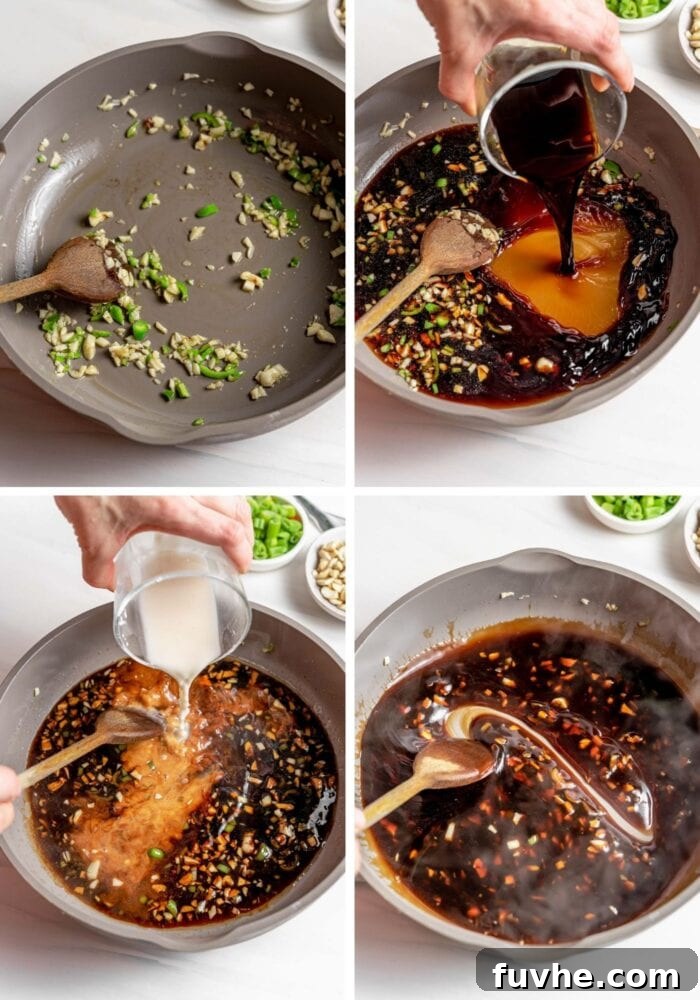
- Sauté the Aromatics: In a large skillet or wok, heat the sesame oil over medium heat. Add the finely chopped garlic, fresh ginger, and Serrano pepper. Sauté for 2-3 minutes, stirring constantly, until the garlic is golden brown and fragrant. Be mindful of the chili’s heat – avoid touching your eyes after handling!
- Combine Liquid Ingredients: In a small bowl, whisk together the low-sodium soy sauce, maple syrup, rice wine vinegar, and balsamic vinegar until well combined. This is your flavorful liquid base.
- Introduce the Sauce to the Pan: Pour the prepared sauce mixture into the skillet with the sautéed aromatics. Bring the mixture to a gentle boil, then immediately reduce the heat to a simmer. Let it cook for a couple of minutes, allowing the flavors to meld and the sauce to slightly reduce.
- Thicken the Sauce: In the same bowl you used for the liquid ingredients (no need to wash!), combine the water and cornstarch, whisking until no lumps remain and you have a smooth slurry. Pour this slurry into the simmering sauce in the pan. Stir continuously for 1-2 minutes until the sauce thickens to a glossy, sticky consistency that clings to a spoon. This step is crucial for achieving that authentic Kung Pao texture.
Step 3: Combine and Serve
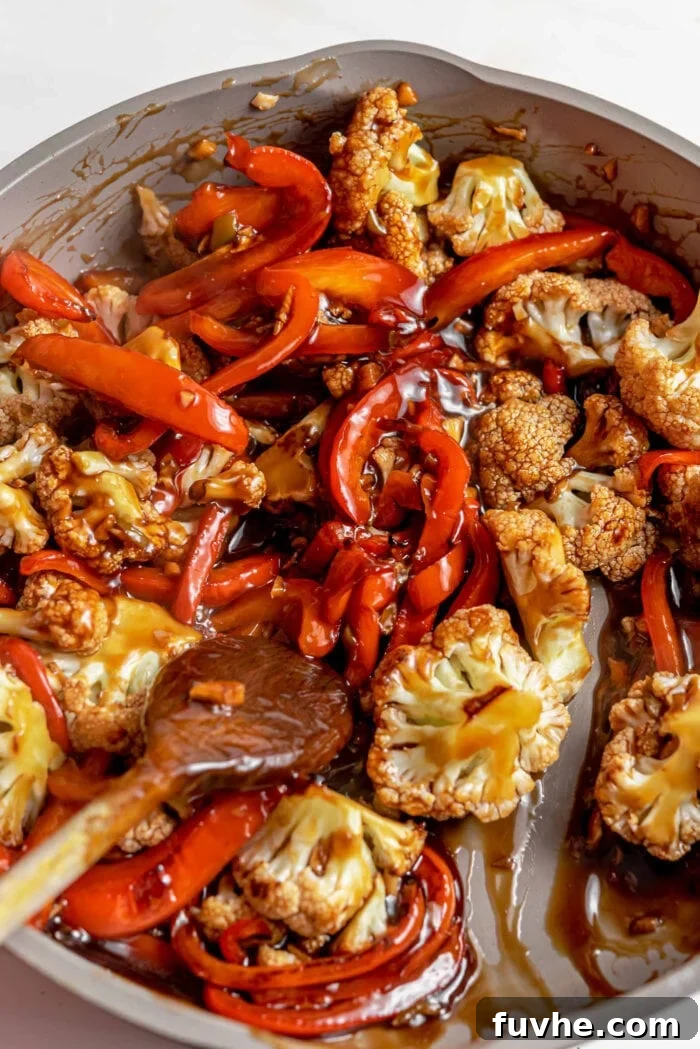
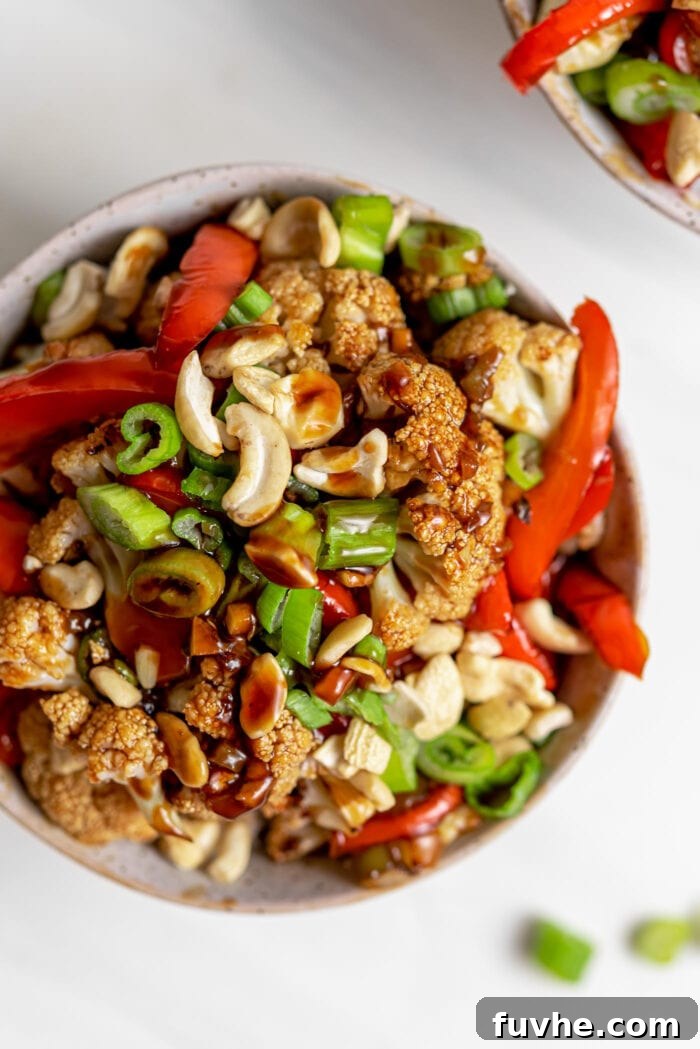
Once your roasted cauliflower and bell peppers are ready, remove them from the oven and carefully add them directly into the skillet with the thickened Kung Pao sauce. Toss gently but thoroughly, ensuring every piece of vegetable is beautifully coated in the sticky, flavorful sauce. Serve immediately over a bed of warm basmati or jasmine rice, and garnish generously with sliced green onions and a sprinkle of roasted peanuts or cashews for that essential crunch. Enjoy your homemade, healthier take on a classic!
Serving Suggestions and Customization Tips
This Kung Pao Cauliflower is incredibly versatile, making it easy to adapt to your taste preferences and what you have on hand. Here are some ideas for serving and customization:
Perfect Pairings & Serving Ideas:
- Classic Rice Base: Serve over fluffy basmati, jasmine, or brown rice to soak up every drop of that irresistible sauce.
- Noodle Bowls: For a different texture, serve it over rice noodles, lo mein noodles, or even spiralized zucchini noodles for a low-carb option.
- Lettuce Wraps: For a lighter meal, spoon the Kung Pao Cauliflower into crisp lettuce cups (like butter lettuce or iceberg) and enjoy the fresh crunch.
- Added Crunch: Don’t forget the garnishes! Roasted peanuts or cashews are a must for texture, along with fresh sliced green onions for a mild oniony bite. A sprinkle of sesame seeds also adds visual appeal and a subtle nutty flavor.
- Side Salad: Complement your meal with a simple side salad dressed with a light vinaigrette to add freshness.
Customization & Variation Ideas:
The beauty of this sauce is its adaptability. Feel free to experiment with different vegetables and protein sources to create your perfect meal.
- Other Vegetables: Broccoli florets, snap peas, shredded carrots, zucchini, mushrooms, or even a mix of Asian greens can be roasted or stir-fried alongside or instead of the cauliflower and bell peppers.
- Protein Power-Ups: The Kung Pao sauce is fantastic with various plant-based proteins. Try it with crispy baked tofu, pan-fried tempeh, seitan, or a can of drained and rinsed chickpeas. For an even heartier dish, you could incorporate plant-based chicken strips.
- Amp Up the Spice: If you love heat, add extra Serrano chili, a pinch of red pepper flakes to the sauce, or a dash of chili oil when serving. For a truly authentic Kung Pao experience, consider adding a teaspoon of toasted Sichuan peppercorns (whole or ground) to the oil when sautéing the aromatics.
- Nutty Variations: If you have a peanut allergy, cashews are an excellent alternative. Sunflower seeds or toasted almonds can also provide a satisfying crunch.
- Citrusy Twist: A squeeze of fresh lime juice just before serving can add an extra layer of brightness and zest.
Cauliflower Batter Variation for Extra Crunch
While this recipe keeps things simple with roasted cauliflower for a lighter, quicker approach, we understand that sometimes you crave that extra crispy, indulgent texture that only a light batter can provide. Adding a batter truly elevates the cauliflower, giving it a delightful crunch that perfectly contrasts the sticky, flavorful sauce.
The good news is, achieving this extra crunch is surprisingly easy and requires just a couple of additional ingredients and a simple step. It’s a small effort for a big flavor and texture payoff.
If you’re ready to take your Kung Pao Cauliflower to the next level with a crispy coating, we recommend using a variation of the batter from our popular Vegan Buffalo Cauliflower Wraps (just the batter part, not the buffalo sauce itself!). You will need:
- 3/4 cup brown rice flour: This flour creates a light, crisp coating. You can also use all-purpose flour or a gluten-free all-purpose blend.
- 3/4 cup unsweetened almond milk: Or any other plant-based milk of your choice. Adjust the amount as needed to reach a pancake-like consistency.
- A pinch of salt and pepper: For seasoning the batter.
To prepare the battered cauliflower:
- In a medium bowl, whisk together the brown rice flour, almond milk, salt, and pepper until you have a smooth batter, similar to pancake batter.
- Dip each cauliflower floret into the batter, ensuring it’s evenly coated, allowing any excess to drip off.
- Instead of simply roasting, you can then either:
- Bake: Place the battered florets on a parchment-lined baking sheet and bake at 400°F (200°C) for 20-25 minutes, flipping halfway, until golden brown and crispy.
- Air Fry: For extra crispiness, air fry at 375°F (190°C) for 15-20 minutes, shaking the basket occasionally, until golden and crunchy.
- Once cooked, proceed with Step 3 of the main recipe, adding the crispy battered cauliflower to the pan with the Kung Pao sauce and tossing to coat.
All other steps and ingredients in the recipe remain the same. This optional batter technique truly transforms the dish, offering an exciting textural dimension.
Storing and Meal Prep Tips
This Kung Pao Cauliflower is so delicious, you might not have leftovers! But if you do, or if you’re planning to make it ahead for meal prep, here’s how to properly store and reheat it to maintain its delicious flavor and texture:
- Refrigeration: Let the finished dish cool completely to room temperature before transferring it to an airtight container. Store it in the refrigerator for up to 4-5 days. You can store it on its own or mixed with cooked rice.
- Reheating:
- Stovetop: For best results, reheat leftovers in a skillet over medium-low heat. Add a splash of water or vegetable broth to prevent sticking and help loosen the sauce. Stir occasionally until thoroughly heated through. This method helps maintain some of the cauliflower’s texture.
- Microwave: For a quicker option, reheat individual portions in the microwave. Place the cauliflower in a microwave-safe dish, cover loosely, and heat in 1-minute intervals, stirring in between, until warmed to your preference. Be aware that microwave reheating might soften the cauliflower more.
- Freezing: This recipe is generally not ideal for freezing. Cooked cauliflower tends to become very soft and watery upon thawing, losing its desirable texture. While the sauce itself freezes well, the combination doesn’t hold up as nicely. It’s best enjoyed fresh or from the fridge within a few days.
- Meal Prep Strategy:
- Pre-chop Veggies: Chop your cauliflower, bell peppers, garlic, ginger, and Serrano chili ahead of time and store them in separate airtight containers in the fridge for 2-3 days.
- Make the Sauce Base: You can prepare the liquid components of the Kung Pao sauce (soy sauce, maple syrup, vinegars) and store them in a sealed jar in the fridge for up to a week. When ready to cook, simply make the cornstarch slurry and proceed with the recipe.
- Cooked Rice: Cook a batch of rice at the beginning of the week to have ready. This significantly speeds up assembly.
By following these storage and meal prep tips, you can enjoy this flavorful Kung Pao Cauliflower with minimal fuss, even on your busiest days.
More Delicious Vegan Recipes to Try
- Cold Asian Noodle Salad with Spicy Peanut Sauce
- Cauliflower Chickpea Curry
- Crispy Buffalo Cauliflower Wraps
- Creamy Vegetable Korma
- Coconut Cauliflower Rice Buddha Bowl
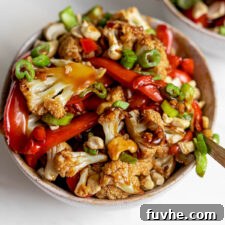
Kung Pao Cauliflower
By: Deryn Macey
Love kung pao takeout? Try this delicious sweet and sour sticky sauce with cauliflower for a veggie alternative to kung pao chicken.
Prep: 15 mins | Cook: 20 mins | Total: 35 mins | Servings: 6
Ingredients
For the Vegetables
- 2 small to medium-sized heads cauliflower, cut into florets (1900 g)
- 2 red peppers, thinly sliced (275 g)
- 1 tbsp sesame oil, 15 ml
- 5 cloves garlic, finely chopped (20 g)
- 2 tbsp peeled and finely chopped fresh ginger, 20 g
- 1 Serrano chilli, seeds removed and finely chopped (20 g)
For the Kung Pao Sauce
- 2/3 cup low sodium soy sauce, 160 ml (use tamari for gluten-free)
- 2 tbsp maple syrup, 30 ml (or agave syrup)
- 3 tbsp rice wine vinegar, unseasoned (45 ml)
- 3 tbsp balsamic vinegar, 45 ml
- 2 tbsp corn starch, 15 g
- 1/3 cup water, 80 ml
For Serving
- 1 bunch green onion, sliced (50 g)
- 1/2 cup roasted peanuts, 125 g (or cashews)
- Cooked rice (basmati or jasmine recommended)
Instructions
- Preheat oven to 450°F (232°C).
- Place cauliflower florets and sliced red pepper in a single layer on a baking sheet and roast for 15-20 minutes, until slightly golden brown and tender-crisp.
- While vegetables are roasting, prepare the sauce. In a medium bowl, whisk together the soy sauce, maple syrup, rice wine vinegar, and balsamic vinegar; set aside.
- In a large sauté pan or wok, heat the sesame oil over medium heat. Sauté the finely chopped garlic, ginger, and Serrano chili. Cook until garlic is golden brown and fragrant, roughly 2 minutes. Be careful when handling chilies and wash your hands thoroughly afterward.
- Pour the prepared sauce mixture into the pan with sautéed aromatics. Bring to a gentle boil, then reduce heat and simmer for a few minutes to slightly reduce.
- In the same bowl used for the soy sauce mixture, whisk together the water and cornstarch until smooth. Pour this slurry into the simmering sauce in the pan. Stir continuously until the sauce thickens to a glossy, sticky consistency, about 1-2 minutes.
- Remove roasted cauliflower and red peppers from the oven and add them to the pan with the sauce. Toss until all vegetables are fully coated.
- Serve immediately over a bed of cooked rice, topped generously with roasted peanuts and sliced green onions.
Notes
Optional Crispy Batter: To add an extra crunch, you can batter the cauliflower before roasting. In a bowl, mix 3/4 cup brown rice flour with 3/4 cup unsweetened almond milk and a pinch of salt and pepper until smooth. Dip cauliflower florets in the batter, then bake at 400°F (200°C) for 20-25 minutes (flipping halfway) or air fry at 375°F (190°C) for 15-20 minutes until golden and crispy. Then, proceed with the sauce steps.
Storing: Store cooled leftovers in an airtight container in the fridge for up to 4-5 days. Reheat on the stovetop or in the microwave. Freezing is not recommended as cauliflower may become watery.
Nutrition
Calories: 301kcal,
Carbohydrates: 31g,
Protein: 14g,
Fat: 15g,
Fiber: 8g