
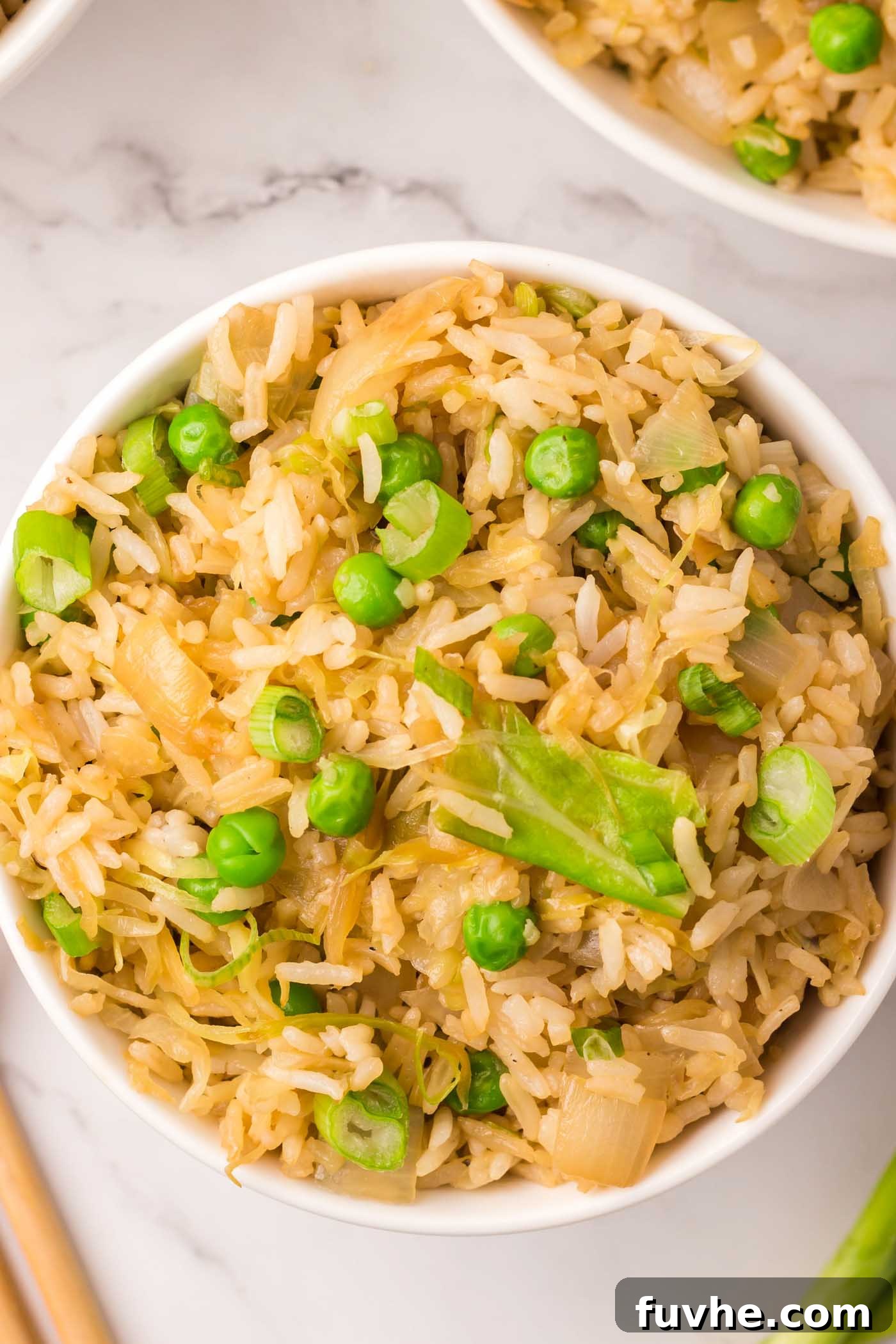
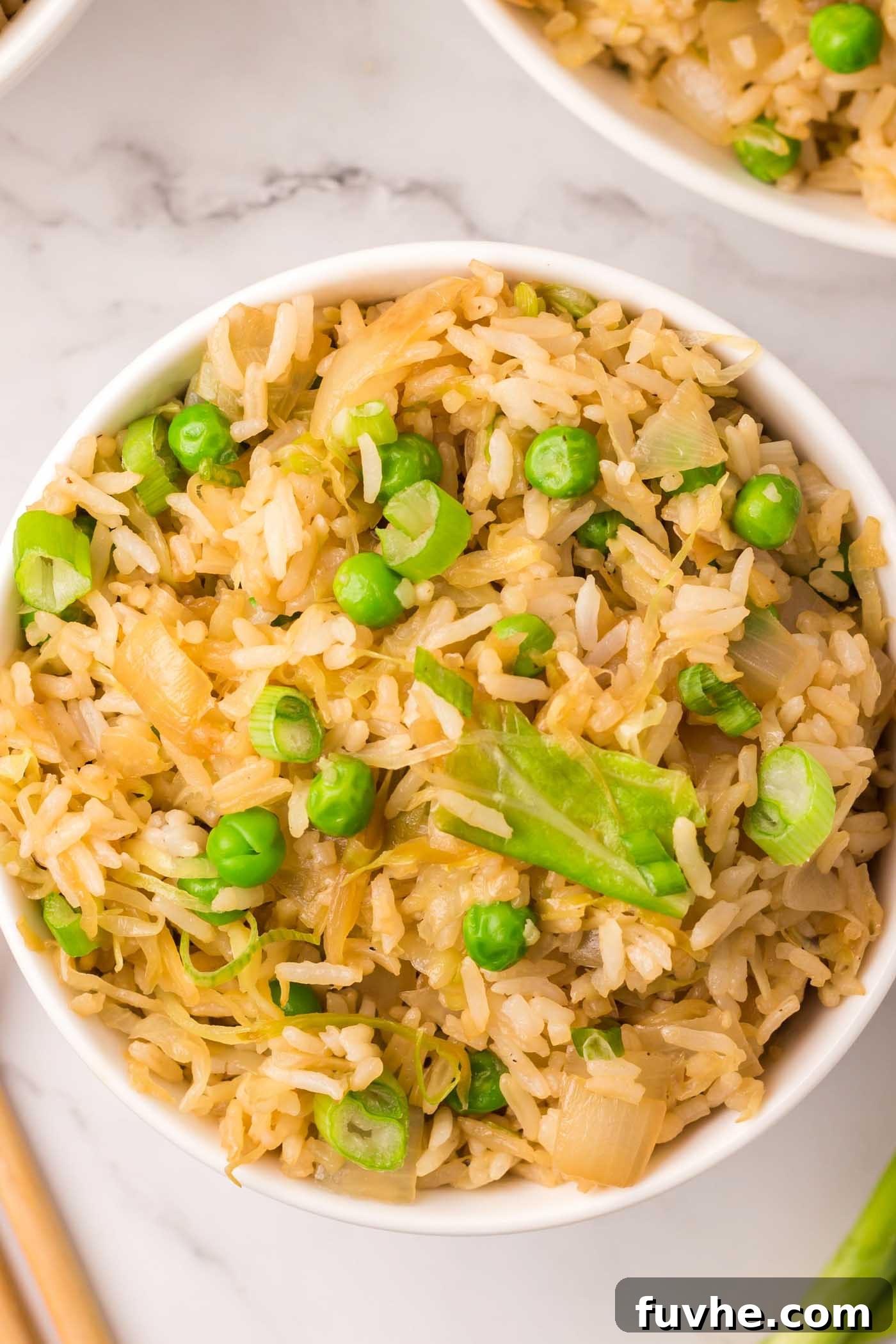
Welcome to your new favorite weeknight dinner: this incredibly flavorful and easy vegan cabbage fried rice! Ready in just 25 minutes, this recipe is not only a delicious way to enjoy a wholesome meal but also an ingenious method to transform any leftover rice into a culinary delight. It’s a versatile, budget-friendly dish that brings vibrant flavors and essential nutrients to your table with minimal effort.
Cabbage, often underestimated, is a nutritional powerhouse packed with vitamins, minerals, and fiber. Incorporating it into this delightful fried rice recipe is an excellent and tasty strategy to boost your daily vegetable intake. Whether you’re a seasoned chef or a kitchen novice, this recipe is designed for simplicity and speed, making it an ideal choice for busy evenings. Especially when using pre-shredded coleslaw mix, the preparation becomes astonishingly quick and straightforward, letting you whip up a satisfying meal in no time!
Featured 5-Star Review
Loved this super easy and tasty recipe! A true game-changer for quick meals.
— Tracy
Why You’ll Fall in Love with This Cabbage Fried Rice
This recipe transforms humble ingredients like leftover rice, crisp green cabbage, aromatic green onion, sweet green peas, pungent garlic, nutty sesame oil, and savory soy sauce into a symphony of flavors that promises to be a hit with everyone. Beyond its incredible taste, here are a multitude of reasons why this easy cabbage fried rice will become a staple in your kitchen:
- Wholly Plant-Based: This is a completely vegan recipe, meaning it’s naturally dairy-free and requires no eggs, making it suitable for a wide range of dietary preferences.
- Lightning Fast Preparation: From start to finish, this dish is ready to serve in just about 25 minutes, perfect for those evenings when time is of the essence.
- Budget-Friendly Ingredients: Utilizing common pantry staples and affordable fresh vegetables, this recipe is kind to your wallet without compromising on flavor or nutrition.
- Smart Use of Leftovers: It’s an excellent way to repurpose leftover cooked rice and any extra cabbage you might have in your fridge, minimizing food waste.
- Versatile Side or Main Dish: Enjoy it as a light, flavorful side dish, or easily elevate it into a complete meal by adding your favorite plant-based protein.
- Highly Customizable: The base recipe is simple yet robust, providing a perfect canvas for you to experiment with different vegetables, spices, and protein additions to suit your taste.
- Ideal for Meal Prep: Cook a larger batch and portion it out for quick and healthy lunches or dinners throughout the week. It reheats beautifully!
- Nutrient-Dense: Loaded with fresh cabbage, this dish provides a healthy dose of vitamins K and C, fiber, and other beneficial compounds, making it a truly wholesome option.
- Satisfying & Flavorful: The combination of textures and umami flavors ensures a deeply satisfying eating experience that will leave you feeling full and happy.
Craving more fantastic fried rice creations? Don’t miss out on exploring other delicious variations such as our Vegan Mushroom Fried Rice, the aromatic Basil Fried Rice, or the protein-packed Cashew Tofu Fried Rice for even more plant-based inspiration.
The Nutritional Power of Cabbage
Before we dive into the cooking, let’s appreciate the star ingredient: cabbage. This humble vegetable is a nutritional superstar, offering a fantastic array of health benefits. Cabbage is an excellent source of Vitamin C, a powerful antioxidant that supports immune function and skin health. It’s also rich in Vitamin K, crucial for blood clotting and bone health. Beyond vitamins, cabbage provides a significant amount of dietary fiber, which aids digestion, promotes gut health, and helps maintain stable blood sugar levels.
Furthermore, cabbage contains potent antioxidants and anti-inflammatory compounds, including sulforaphane, which has been studied for its potential anti-cancer properties. Its low-calorie and high-fiber content make it an excellent choice for weight management, helping you feel full and satisfied. Adding cabbage to your diet, especially in a delicious and accessible way like this fried rice, is a simple yet impactful step towards a healthier lifestyle.
Essential Ingredients and Clever Substitutions
Crafting the perfect vegan cabbage fried rice begins with understanding its core components and the flexibility they offer. Below is a detailed look at what you’ll need and smart substitutions to tailor the recipe to your pantry and preferences. For precise measurements, refer to the full recipe card at the very bottom of this post when you’re ready to cook.
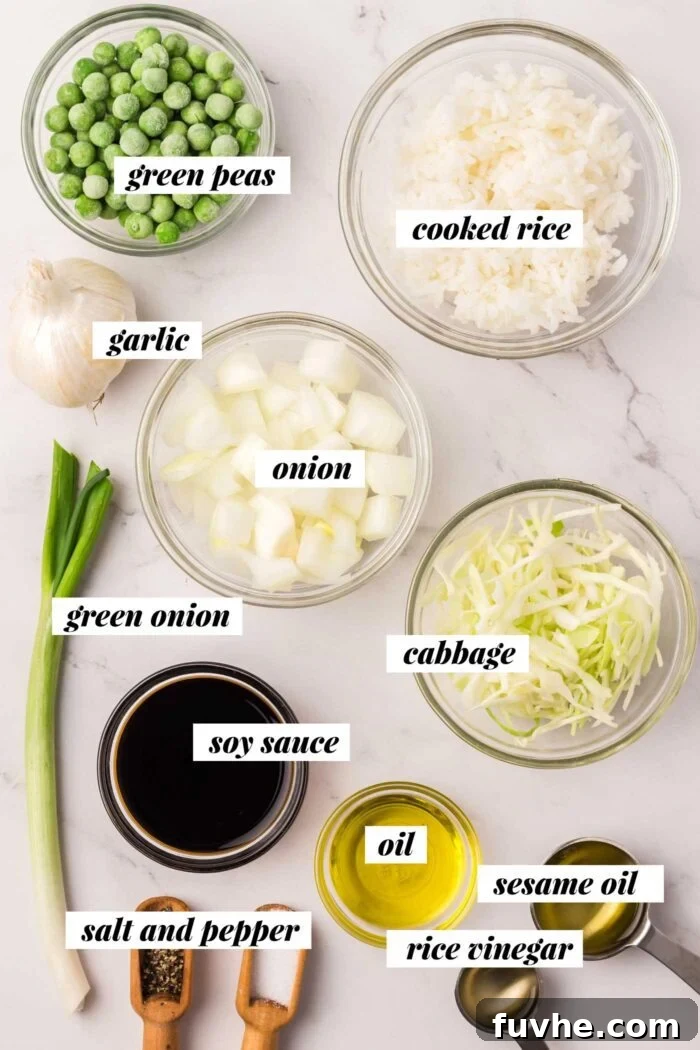
- Cooking Oil: Any neutral cooking oil with a high smoke point will work beautifully. Olive oil or avocado oil are excellent choices for their mild flavor and health benefits. If you’re not strictly vegan, a knob of butter can also add richness.
- Onion: A medium white onion provides a sweet and savory base. For a milder, more delicate flavor, shallots can be used as a fantastic alternative.
- Cabbage: Green cabbage is the classic choice for its crisp texture and mild flavor. However, Napa cabbage or savoy cabbage also work wonderfully. For ultimate convenience, a bag of pre-shredded coleslaw mix is a brilliant shortcut, making this recipe even quicker. While red cabbage is an option, it can sometimes bleed color into the dish, so green varieties are generally preferred for aesthetic appeal in this recipe.
- Garlic: Fresh garlic is indispensable for authentic fried rice flavor! Its pungent aroma and taste truly elevate the dish. Garlic powder, while convenient, simply cannot replicate the depth of fresh minced garlic, so it’s highly recommended to use fresh cloves.
- Rice: The secret to perfect fried rice lies in using pre-cooked rice, ideally day-old or at least cooked several hours in advance and thoroughly chilled. This allows the grains to dry out and firm up, preventing a mushy texture. Jasmine or basmati rice are excellent choices, offering a fluffy texture and aromatic qualities. For a whole grain option, cooked brown rice can be substituted, adding a nutty flavor and extra fiber.
- Frozen Green Peas: These add a pop of color and subtle sweetness. Any variety of frozen peas will do. Canned and drained green peas can be used in a pinch. For a different flavor and added protein, edamame (shelled) makes a great substitution or addition.
- Soy Sauce: This staple brings essential umami and saltiness. For a gluten-free version, readily substitute with gluten-free tamari or coconut aminos, which offer a similar savory profile.
- Sesame Oil: A drizzle of toasted sesame oil at the end imparts a distinctive nutty aroma and depth of flavor that is characteristic of many Asian-inspired dishes.
- Rice Vinegar: Adds a touch of tanginess that brightens the overall flavor profile. Unseasoned or seasoned rice vinegar will work.
- Salt and Black Pepper: Essential for seasoning the vegetables and balancing the flavors. Adjust to your personal preference.
Creative Variations and Delicious Additions
One of the best aspects of cabbage fried rice is its incredible adaptability. This recipe serves as a fantastic foundation, inviting you to customize it with your favorite vegetables, proteins, and flavor profiles. Here are some ideas to inspire your culinary creativity:
- Enhanced Vegetable Medley: Elevate the nutrient content and visual appeal with additional vegetables. Consider adding grated ginger for a warm spice, finely diced or grated carrots for sweetness and crunch, corn kernels, thinly sliced bok choy, crisp snap peas, fresh bean sprouts, colorful bell peppers, or earthy mushrooms. Add harder vegetables like carrots with the cabbage, and softer ones like spinach or bean sprouts at the very end.
- Alternative Grains: While rice is traditional, you can easily swap it out for other cooked and cooled grains. Quinoa offers a protein boost and unique texture, while farro provides a heartier, chewier bite. Just ensure they are cooked and thoroughly chilled like the rice for best results.
- Fresh Herb Infusion: Incorporate fresh herbs at the end of cooking for a burst of vibrant flavor. Fresh Thai basil adds a sweet, peppery note, while cilantro offers a bright, citrusy finish. Stir in about 1 cup of freshly chopped herbs just before serving.
- Kick of Spice: For those who love a bit of heat, transform your fried rice into a spicy sensation. Add 2 teaspoons of sambal oelek or sriracha alongside the soy sauce for an even distribution of spice. Alternatively, up to 1 teaspoon of red chili flakes or cayenne pepper can be stirred in. For a fresh kick, mince a jalapeño and sauté it with the other vegetables. You can also simply serve the finished dish with a generous drizzle of your favorite hot sauce.
- Green Boost with Spinach: For an extra dose of greens, stir in a few handfuls of baby spinach at the very end. Its delicate leaves will wilt quickly into the hot rice, adding both nutrition and color without altering the flavor significantly.
- Protein Power-Ups (Vegan):
- Crispy Tofu or Tempeh: Pan-fry or bake cubes of extra-firm tofu or tempeh separately until golden and crispy, then fold them into the fried rice at the very end. Marinade them in a little soy sauce for extra flavor.
- Edamame: In addition to peas, shelled edamame can be added for a boost of plant-based protein and a slightly firmer texture.
- Chickpeas: Roasted or pan-fried chickpeas can provide a delightful texture and protein punch.
- Vegan ‘Egg’ Scramble: For a twist, mix in a tofu scramble as an alternative to scrambled egg, mimicking the classic fried rice texture.
- Global Flavor Adventures:
- Indian-Inspired: For a completely different culinary journey, omit the sesame oil and rice vinegar. Instead, add 2 teaspoons of yellow curry powder or a blend of 1/2 teaspoon garam masala, 1/2 teaspoon cumin, 1/4 teaspoon turmeric powder, and 1/4 teaspoon coriander powder with the garlic. This transforms the dish with warm, aromatic Indian spices.
- Tangy Pineapple: For a touch of sweetness and acidity, add diced fresh or canned pineapple chunks (drained) along with the peas.
How to Make the Best Cabbage Fried Rice: Step-by-Step
Creating this delicious vegan cabbage fried rice is a straightforward process, relying on proper technique to achieve that signature fried rice texture and flavor. Follow these simple steps for a perfect result every time:
Step 1: Sauté the Aromatics and Cabbage
Begin by heating 1 tablespoon of your chosen cooking oil in a large saucepan or wok over medium-high heat. A hot pan is crucial for achieving that desirable stir-fry sizzle. Once the oil is shimmering, add the finely chopped onion, shredded cabbage, and the white parts of your green onions (saving the green tops for later). Season these vegetables with a generous pinch of salt and freshly ground black pepper to enhance their natural flavors.
Sauté the vegetables for 5-7 minutes, stirring occasionally, until the cabbage starts to soften and turn a tender-crisp, and the onions become translucent and slightly golden. This initial sautéing step is important for developing the base flavors of your fried rice.
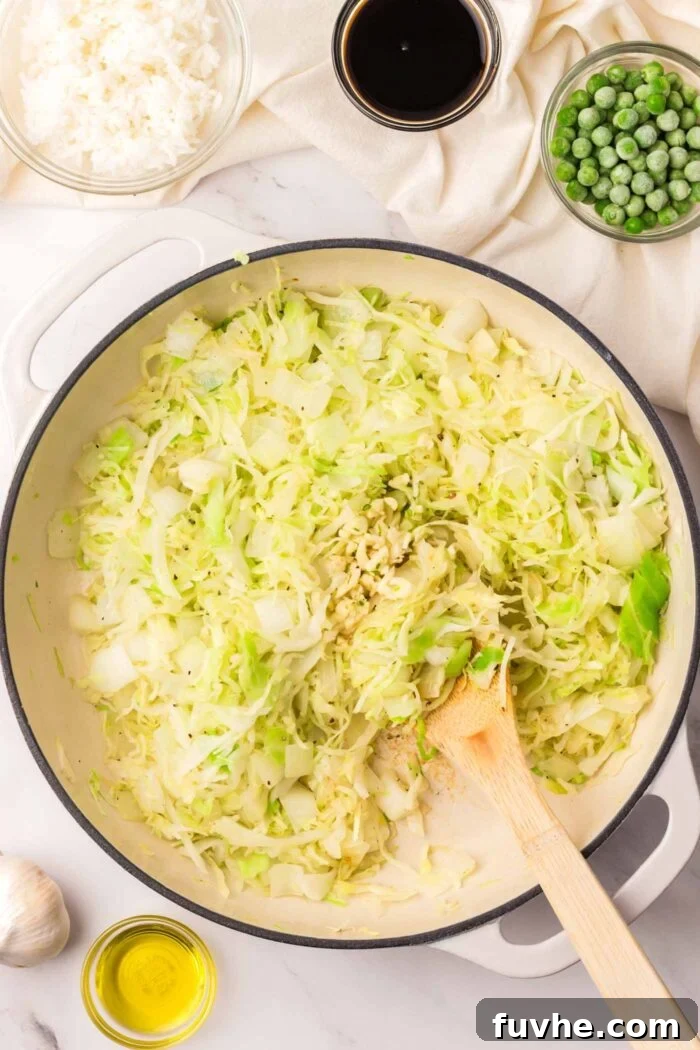
Next, add the minced garlic to the pan. Continue to cook for just another minute, stirring constantly, until the garlic becomes wonderfully fragrant. Be careful not to burn the garlic, as it can turn bitter quickly.
Step 2: Introduce the Rice and Flavorings
Push the cooked vegetables to one side of the pan or, if necessary, temporarily remove them to a separate bowl. Add the remaining 1 tablespoon of oil to the empty side of the pan. Once hot, add your pre-cooked (and preferably day-old) rice to the pan, along with the frozen green peas, soy sauce (or tamari), sesame oil, and rice vinegar.
Spread the rice mixture in an even layer across the bottom of the pan and let it cook undisturbed for 1-2 minutes. This critical step allows the rice to get some direct contact with the hot surface, developing crispy, browned edges that are characteristic of excellent fried rice.
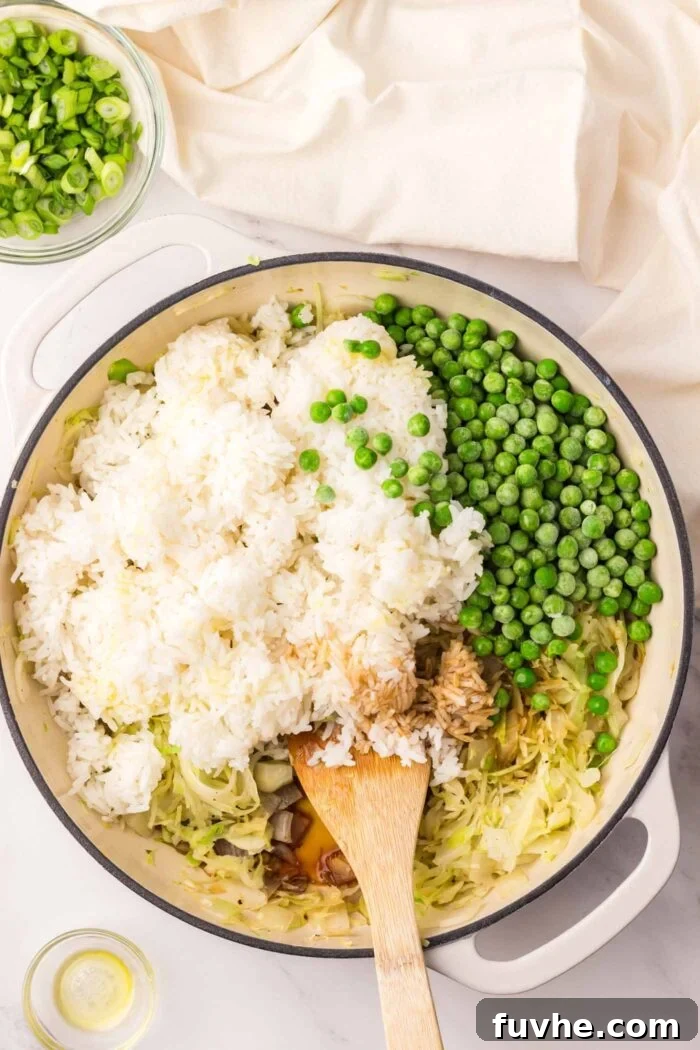
After the initial fry, give everything a good stir, scraping any delicious browned bits off the bottom of the pan. Spread the rice mixture into an even layer once more and continue to cook for another 2-3 minutes, stirring occasionally, until the rice is thoroughly heated through, beautifully browned, and crisped to your liking. The goal is to achieve distinct, slightly chewy grains with some crispy edges.
Step 3: Finish and Serve
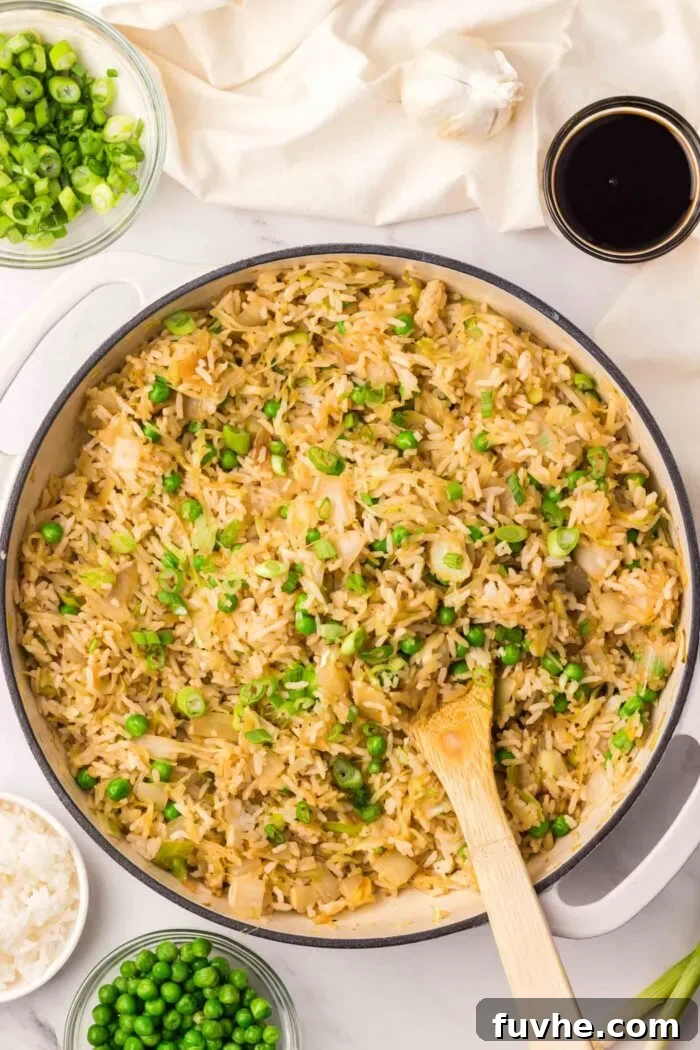
Finally, stir in the remaining green parts of the green onions. Give the entire dish a final taste and adjust the seasoning with additional salt and pepper if needed. Your vibrant, aromatic, and deeply satisfying vegan cabbage fried rice is now ready to be enjoyed!
Expert Tips for Fried Rice Perfection
- Achieve Crispy Rice: The key to irresistible fried rice lies in getting those crispy bits. After adding the rice and seasonings, spread it evenly across the hot pan and resist the urge to stir it constantly. Let it sit undisturbed for a few minutes to brown and crisp on the bottom before stirring and repeating the process. This technique builds layers of texture.
- Hot Pan is Essential: Ensure your pan or wok is thoroughly heated before adding any ingredients. A hot surface prevents sticking and promotes quick cooking and browning, which is crucial for fried rice.
- Don’t Overcrowd the Pan: Cook in batches if necessary, especially if you’re doubling the recipe or using a smaller pan. Overcrowding lowers the pan’s temperature, steaming the ingredients instead of frying them, which can lead to a soggy dish.
- Add Veggies in Stages: If you’re incorporating extra vegetables beyond cabbage and peas, add them according to their cooking time. Harder vegetables (like carrots or bell peppers) should go in with the cabbage, while softer, quick-cooking veggies (like spinach or bean sprouts) should be added towards the end.
- Separate Protein Cooking: If adding any vegan proteins (like tofu, tempeh, or edamame), it’s often best to cook them separately until they are perfectly browned and textured, then stir them into the fried rice in the final minutes of cooking. This prevents them from becoming mushy and ensures even cooking.
- Season as You Go: Taste your rice throughout the cooking process. Add a pinch of salt and pepper when you add the vegetables and again at the end, ensuring the flavors are perfectly balanced.
- Use a Wok if Possible: While a large skillet works well, a wok’s sloped sides and even heat distribution are ideal for stir-frying, allowing for efficient tossing and cooking.
Recipe FAQs: All Your Questions Answered
Is cabbage fried rice gluten-free?
As written, this recipe is not gluten-free due to the use of traditional soy sauce. To make it completely gluten-free, simply substitute regular soy sauce with gluten-free tamari or coconut aminos. Both alternatives provide a similar savory depth without the gluten.
Can you freeze cabbage fried rice?
Yes, this fried rice freezes wonderfully! Once the cabbage fried rice has cooled completely, transfer it to an airtight container or a freezer-safe bag. It can be stored in the freezer for up to 3 months. For best results, thaw it in the refrigerator overnight before reheating.
How long does cabbage fried rice keep?
Leftover fried rice can be safely stored in an airtight container in the refrigerator for 4-5 days. To reheat, you can warm it in a pan over medium heat, stirring occasionally until heated through, or use a microwave for a quicker option. Adding a splash of water or broth can help prevent it from drying out during reheating.
Why should I use leftover rice? Can I use freshly cooked rice?
Using pre-cooked, chilled, and preferably day-old rice is the golden rule for fried rice. Freshly cooked rice retains too much moisture, making it soft and fluffy, which can result in a mushy, clumpy fried rice. Leftover rice, having dried out and firmed up in the fridge, allows the grains to separate and fry beautifully, achieving that ideal chewy-crispy texture. While you can use freshly cooked rice, be aware that the final dish will likely have a softer, stickier consistency compared to classic fried rice. If you must use fresh rice, spread it on a baking sheet and let it air dry for an hour or two, or even briefly in a low oven, to remove excess moisture.
How should I serve cabbage fried rice?
Cabbage fried rice is incredibly versatile! If serving it as a delightful side dish, it pairs exceptionally well with other Asian-inspired mains like Thai basil eggplant, a comforting coconut red lentil dahl, or crispy Kung Pao cauliflower.
It also serves as a fantastic base for building hearty and healthy bowls, such as a teriyaki chickpea rice bowl, a savory peanut tofu bowl, or a vibrant tofu edamame buddha bowl. Alternatively, serve it alongside a rich curry like a cauliflower chickpea curry or a creamy butternut squash curry.
For an added layer of flavor and probiotic benefits, I love mixing this fried rice with kimchi or sauerkraut. You can also simply enjoy it as a satisfying standalone side dish or enhance it into a complete meal by pairing it with your choice of protein. Vegan options include crispy baked tofu, pan-fried tempeh, or even a flavorful tofu scramble mixed right in for a delightful egg-alternative texture.
What kind of pan is best for making fried rice?
A large, heavy-bottomed skillet or a wok is ideal for making fried rice. The key is to have enough surface area for the ingredients to spread out and fry rather than steam. A wok is traditionally preferred because its high, sloped sides allow for easy tossing and even heat distribution, but a good quality non-stick or cast-iron skillet will also yield excellent results.
The Ultimate Vegan Cabbage Fried Rice Recipe

Vegan Cabbage Fried Rice
Deryn Macey
10 mins
15 mins
25 mins
6
Ingredients
- 2 tbsp oil, divided (olive, avocado, or sesame oil)
- 1 medium onion, finely chopped (about 1½ cups or 190g)
- 4 cups shredded green cabbage or coleslaw mix (about 280g)
- 6 green onions (scallions), thinly sliced, green and white parts separated (about 30g)
- 3 cloves garlic, minced or grated (about 20g)
- 4 cups cooked and cooled white rice, preferably day-old Jasmine or Basmati (about 600g)
- 1 cup frozen green peas (about 170g)
- 3 tbsp soy sauce or gluten-free tamari (45mL)
- 2 tsp sesame oil (10g)
- 2 tsp rice vinegar (10mL)
- Salt and black pepper, to taste
Instructions
-
1. Sauté Veggies: In a large skillet or wok, heat 1 tablespoon of the oil over medium-high heat until shimmering. Add the chopped onion, shredded cabbage, and the white parts of the green onions. Season with a pinch of salt and pepper. Cook for 5-7 minutes, stirring occasionally, until the vegetables are tender-crisp and slightly golden.
-
2. Add Garlic: Add the minced garlic to the pan. Cook for another 1 minute, stirring constantly, until fragrant. Be careful not to burn the garlic.
-
3. Fry Rice: Add the remaining 1 tablespoon of oil to the pan. Then, add the cooked rice, frozen green peas, soy sauce (or tamari), sesame oil, and rice vinegar. Spread the rice mixture in an even layer across the bottom of the pan and cook for 1-2 minutes without disturbing it. Stir well, scraping any browned bits from the bottom, then spread evenly again. Cook for another 3-4 minutes, stirring occasionally, until the rice is heated through, slightly browned, and crisped to your preference.
-
4. Serve: Stir in the remaining green parts of the green onions. Taste and adjust seasoning with additional salt and pepper as needed. Serve immediately and enjoy your delicious vegan cabbage fried rice!
Notes
Store any leftover fried rice in an airtight container in the fridge for up to 4 days. Reheat in a wok, skillet, or microwave until piping hot.
Nutrition Information (Approximate)
Serving Size: 1/6 of recipe (approx. 200g)
Calories: 268 kcal
Carbohydrates: 46g
Protein: 6g
Fat: 7g
Sodium: 253mg
Fiber: 3g
Sugar: 5g
We hope you thoroughly enjoy this delicious Vegan Cabbage Fried Rice recipe! If you try this, or any other recipe from our collection, please consider leaving a comment and a ⭐⭐⭐⭐⭐ rating in the section below. Your feedback is incredibly valuable, helping other home cooks discover and enjoy these dishes. And don’t forget to tag us on Instagram @runningonrealfood so we can see your wonderful creations! Thank you for cooking with us! – Deryn