
Unlock superior lower body power and unwavering core stability with this comprehensive leg and core strength workout. Designed to sculpt your hamstrings, quads, and glutes, while simultaneously fortifying your back, obliques, and abs, this session is a powerhouse for full-body functional fitness. Whether you’re an athlete aiming for peak performance, a runner seeking to prevent injuries, or simply looking to enhance your overall strength and physique, this circuit-based routine offers a dynamic and efficient approach. You’ll need a barbell for heavy lifts, a box or bench for dynamic step-ups, and a dumbbell or kettlebell for targeted goblet exercises to maximize your results. Prepare to challenge your endurance, build explosive power, and develop a rock-solid foundation that translates into every movement you make. This isn’t just a workout; it’s an investment in a stronger, more resilient you.
Mastering Your Workout: Structure and Strategy
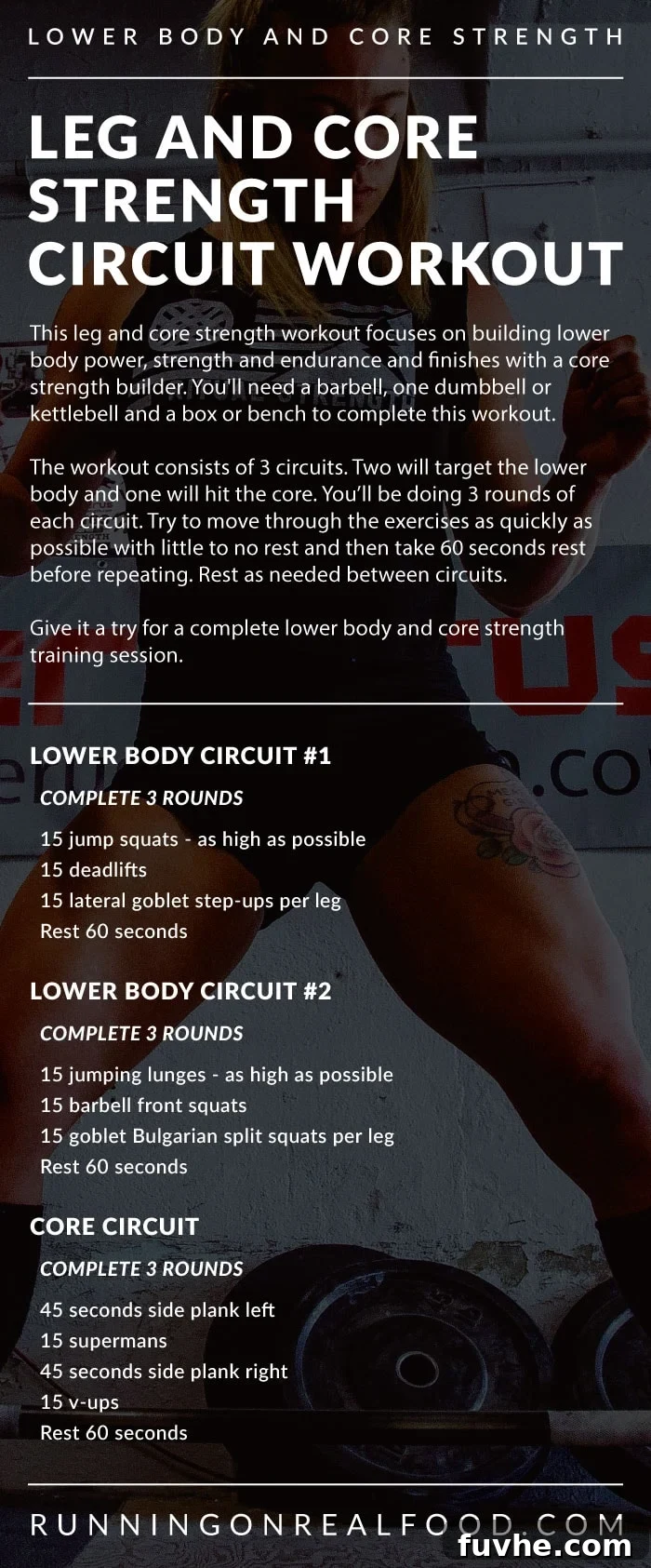
This meticulously structured workout is divided into three potent circuits, each designed to target specific muscle groups with precision and intensity. The first two circuits are dedicated to building formidable lower body strength, engaging your hamstrings, quads, and glutes through a series of compound and isolation movements. The final circuit shifts its focus to your core, ensuring a balanced development of your back, obliques, and abdominal muscles. For optimal results, you will complete three exhilarating rounds of each circuit. The key to maximizing the effectiveness of this session lies in minimizing rest between exercises within a circuit, fostering muscular endurance and a cardiovascular challenge. Aim for a quick transition, allowing little to no rest, before taking a strategic 60-second recovery period at the end of each round. This brief rest allows for partial recovery while keeping your heart rate elevated and muscles primed for the next set. Listen to your body and adjust rest as needed between entire circuits to maintain proper form and intensity throughout.
The Power of Circuit Training for Leg and Core Development
Circuit training is an incredibly efficient method for boosting both strength and cardiovascular fitness simultaneously. By moving from one exercise to the next with minimal rest, you keep your heart rate elevated, transforming your strength session into a dynamic metabolic conditioning workout. This approach not only saves time but also enhances muscular endurance, preparing your body for sustained effort in daily activities or athletic pursuits. For leg and core strength, circuit training is particularly effective because it allows for a diverse range of movements that hit all angles of these crucial muscle groups. From explosive jumps to heavy compound lifts and targeted core exercises, the variety prevents plateaus and ensures comprehensive development. Remember, maintaining impeccable form is paramount. Prioritize controlled movements over speed, especially when handling weights, to prevent injury and ensure maximum muscle engagement.
Lower Body Circuit 1: Building Foundational Power
This first lower body circuit is engineered to ignite your leg muscles, focusing on explosive power, overall strength, and muscular endurance. You’ll engage your glutes, quads, and hamstrings through a combination of dynamic and heavy lifting exercises. Complete 3 intense rounds of the following:
- 15 Jump Squats – As High As Possible: The jump squat is a powerful plyometric exercise that develops explosive leg power and improves vertical jump height. Start in a standard squat position, with feet shoulder-width apart and chest up. Descend into a deep squat, then powerfully explode upwards, pushing through your heels and extending your hips, knees, and ankles. Land softly back into a squat position, absorbing the impact through your legs to protect your joints and prepare for the next repetition. Focus on maximizing your height with each jump, ensuring a controlled landing. This exercise is fantastic for building fast-twitch muscle fibers crucial for speed and agility.
- 15 Deadlifts: The deadlift is arguably one of the most effective full-body strength exercises, with a primary focus on the posterior chain – your hamstrings, glutes, and lower back. Approach the barbell with your mid-foot under the bar. Hinge at your hips, keeping your back straight and chest up, and grip the bar with hands just outside your shins. Drive through your heels, pulling the bar off the floor by extending your hips and knees simultaneously. Keep the bar close to your body throughout the lift. At the top, stand tall without hyperextending your back. Lower the bar with control by reversing the movement, hinging at the hips first. Proper form is crucial for safety and effectiveness; start with a lighter weight to perfect your technique before progressing.
- 15 Lateral Goblet Step-Ups per Leg (use a kettlebell or dumbbell): This exercise targets your glutes, quads, and hip stabilizers, emphasizing unilateral strength and balance. Hold a kettlebell or dumbbell at your chest in a goblet position. Stand to the side of a sturdy box or bench. Step up laterally onto the box with one foot, driving through your heel to lift your entire body up. Bring your trailing leg up to meet the lead leg on the box, maintaining balance. Step back down with the same leading leg, controlling the descent. Complete all repetitions on one leg before switching to the other. Ensure the box is a suitable height – challenging but safe. This movement significantly improves hip strength and stability, which is vital for injury prevention and athletic performance.
- Rest 60 seconds
Lower Body Circuit 2: Dynamic Strength and Balance
Circuit 2 continues to build upon your lower body strength, incorporating more dynamic movements and unilateral exercises to enhance balance, stability, and muscle symmetry. This circuit will further challenge your quads, glutes, and hamstrings while also engaging your core for stabilization. Complete 3 focused rounds of the following:
- 15 Jumping Lunges – As High As Possible: Jumping lunges are an excellent plyometric exercise for developing explosive power in each leg, improving coordination, and increasing cardiovascular endurance. Begin in a lunge position with one leg forward and the other back, both knees bent at 90 degrees. Explode upwards, switching the position of your legs in mid-air so that you land with the opposite leg forward. Land softly, absorbing the impact, and immediately descend into the next lunge. Maintain an upright torso and engage your core throughout the movement to control your balance. Aim to jump as high as possible with each switch, ensuring a smooth transition between reps. This exercise is demanding but incredibly effective for building powerful, resilient legs.
- 15 Barbell Front Squats: The barbell front squat places a greater emphasis on your quadriceps and challenges your core stability significantly more than a back squat. Rack the barbell across the front of your shoulders, resting it gently on your deltoids with your elbows high, forming a shelf. Keep your chest proud and core tight. Descend into a squat by pushing your hips back and down, keeping your torso as upright as possible. Your elbows should remain high throughout the movement. Go as deep as your mobility allows while maintaining a neutral spine. Drive back up through your heels, extending your hips and knees to return to the starting position. This squat variation demands excellent mobility in the ankles, hips, and thoracic spine, making it a fantastic test and builder of overall functional strength.
- 15 Goblet Bulgarian Split Squats per Leg: The Bulgarian split squat is a unilateral exercise that deeply targets your quads, glutes, and hamstrings, while also significantly challenging your balance and hip mobility. Hold a dumbbell or kettlebell in a goblet position at your chest. Place the top of one foot on a box or bench behind you. Hop your front foot forward until you can comfortably descend into a lunge without your front knee going past your toes. Descend by bending both knees, lowering your body straight down until your front thigh is parallel to the ground and your back knee is hovering just above the floor. Drive back up through the heel of your front foot, extending your hip and knee. Maintain an upright posture and keep your core engaged. Complete all repetitions on one leg before switching to the other. This exercise is exceptional for identifying and correcting muscle imbalances between your legs.
- Rest 60 seconds
Core Strength Circuit: Fortifying Your Midsection
A strong core is the bedrock of all movement, providing stability, power, and protection for your spine. This circuit is designed to hit your core from all angles, engaging your obliques, lower back, and rectus abdominis. It’s crucial for improving posture, preventing injuries, and enhancing performance in all other exercises. Complete 3 robust rounds of the following:
- 45 seconds Side Plank Left: The side plank is an outstanding exercise for strengthening your obliques and improving lateral core stability. Lie on your left side with your left forearm on the ground, elbow directly under your shoulder, and your body in a straight line from head to heels. Stack your feet or place one in front of the other for increased stability. Engage your core, lift your hips off the ground, and hold this position, ensuring your body remains rigid and hips don’t sag. Keep your neck in a neutral position, looking straight ahead. This static hold builds incredible endurance in the muscles that protect your spine from rotational forces.
- 15 Supermans: Supermans are excellent for strengthening the erector spinae muscles along your lower back, glutes, and hamstrings, promoting spinal health and improving posture. Lie face down on the floor with your arms extended forward and legs straight. Simultaneously lift your arms, chest, and legs off the ground, squeezing your glutes and lower back muscles. Keep your head in a neutral position, looking down at the floor to avoid neck strain. Hold briefly at the top, feeling the contraction in your posterior chain, then slowly lower back down with control. Focus on a smooth, controlled movement rather than using momentum.
- 45 seconds Side Plank Right: Just as with the left side, execute the side plank on your right side. Lie on your right side with your right forearm on the ground, elbow directly under your shoulder, and your body in a straight line. Engage your core, lift your hips, and hold for 45 seconds. Pay attention to any imbalances you might feel between your left and right sides and focus on maintaining equal stability. Consistent practice of side planks on both sides helps ensure symmetrical core strength, which is vital for preventing injuries and enhancing athletic performance.
- 15 V-Ups: V-ups are an advanced core exercise that effectively targets your entire rectus abdominis, promoting strong, defined abs. Lie on your back with your legs straight and arms extended overhead. Keeping your legs straight and arms extended, simultaneously lift your torso and legs off the ground, reaching your hands towards your toes to form a ‘V’ shape with your body. Try to touch your toes at the peak of the movement. Control the descent, slowly lowering your arms and legs back to the starting position without letting them fully rest on the floor between reps to maintain tension. If full V-ups are too challenging, start with tuck-ups (bending your knees) or alternate leg raises.
- Rest 60 seconds
Essential Equipment for Your Strength Journey
To effectively perform this leg and core strength workout, a few key pieces of equipment are highly recommended. These tools will enable you to challenge your muscles sufficiently and progress over time. However, flexibility is key, and we’ll also suggest alternatives if you don’t have access to all items.
- One Barbell and Weight Plates: This is crucial for exercises like deadlifts and front squats, which are foundational for building significant lower body strength. Ideally, you’ll use a heavier weight for deadlifts, focusing on maximal strength, and a slightly lighter, more manageable weight for front squats, which demand more core stability and mobility.
- Alternatives: If a barbell isn’t available, you can substitute with two heavy dumbbells or kettlebells held in each hand for deadlifts. For front squats, two dumbbells can be held at shoulder height, or a single heavy dumbbell can be held in a goblet position. Resistance bands can also offer a challenging alternative for squats and deadlifts, though the loading mechanism is different.
- One Sturdy Box or Bench: This equipment is essential for exercises like step-ups and Bulgarian split squats, which focus on unilateral (one-sided) leg strength and balance. Ensure the box or bench is stable and can safely support your weight and movement. The height should be challenging but allow for proper form without excessive strain on your knees.
- Alternatives: A stable chair, a sturdy low wall, or even stairs can serve as alternatives for step-ups and Bulgarian split squats, provided they are secure and at an appropriate height.
- One Dumbbell or Kettlebell: This will be used specifically for the goblet step-ups and goblet Bulgarian split squats. The goblet hold helps maintain an upright torso, which is beneficial for form and engages the core.
- Alternatives: If you don’t have a kettlebell or dumbbell, a heavy book, a jug of water, or any other weighted object that can be safely held at your chest can be used. The key is to find something that provides adequate resistance while allowing you to maintain good form.
Remember, starting with lighter weights and perfecting your form is always more beneficial than attempting to lift too heavy too soon. As you get stronger, you can gradually increase the weight or resistance to continue challenging your muscles and promoting growth.
Expand Your Fitness Horizons: More Strength Training Workouts
If you thoroughly enjoyed this leg and core strength circuit and are eager to explore more ways to build a robust and functional physique, we encourage you to integrate these additional strength training workouts into your routine. Consistent and varied training is key to continuous progress and preventing plateaus. Diversifying your workouts ensures that you challenge your body in new ways, promoting holistic development and keeping your fitness journey exciting.
Consider incorporating these complementary routines to target different muscle groups, enhance cardiovascular endurance, or focus on specific training methodologies:
- 30 Minute Full-Body Strength Training Workout: Perfect for busy days, this efficient routine hits all major muscle groups, ensuring balanced development from head to toe.
- Cardio and Strength Circuit Training Workout: Combine the benefits of cardiovascular conditioning with strength building in one dynamic session, boosting both your endurance and muscular power.
- HIIT Strength and Conditioning Workout: Elevate your metabolism and challenge your anaerobic capacity with this high-intensity interval training session that blends strength exercises with short, explosive bursts of effort.
- Leg and Core Superset Workout: Dive deeper into lower body and core development with supersets that maximize time under tension and intensity, pushing your endurance to the next level.
- Push, Pull, Legs and Core Superset Workout: A classic split that ensures comprehensive muscle coverage. This variant focuses on push exercises (chest, shoulders, triceps), pull exercises (back, biceps), followed by a dedicated legs and core day, perfect for a structured weekly plan.
By experimenting with these diverse workouts, you can create a well-rounded fitness regimen that addresses all your strength and conditioning needs. Remember to listen to your body, prioritize proper form, and enjoy the journey of becoming stronger and healthier with every session. Your commitment to consistency will yield impressive results!