
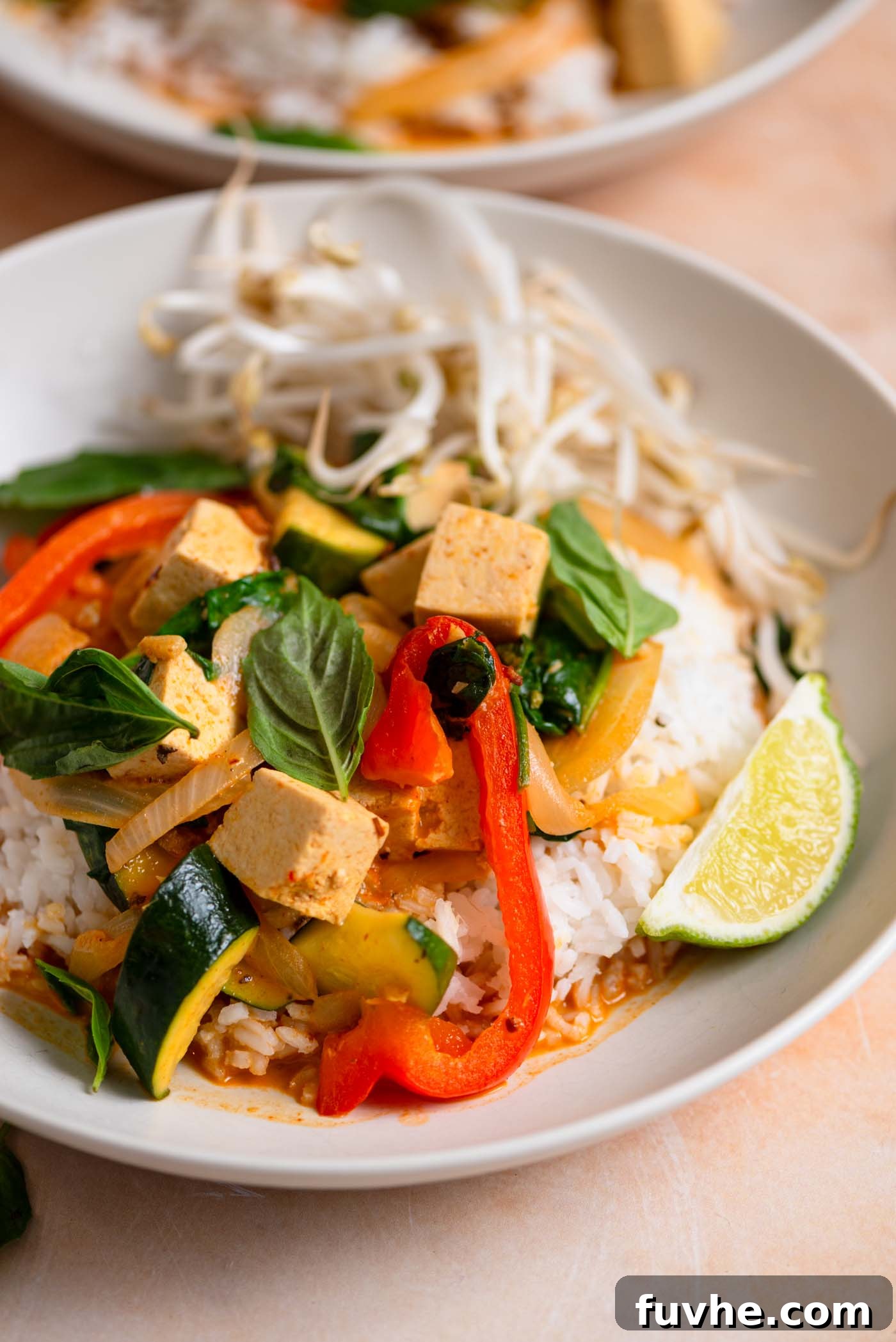
Embark on a culinary journey to the vibrant streets of Thailand right from your kitchen with this incredibly easy and utterly delicious Vegan Thai Red Curry with Tofu and Vegetables. This plant-based masterpiece is designed for busy weeknights, coming together in a single pan in under 30 minutes, yet delivering authentic, rich Thai flavors that will leave you craving more. Whether you’re a seasoned chef or a beginner in the kitchen, this recipe is your gateway to exploring the magic of Thai cuisine at home.
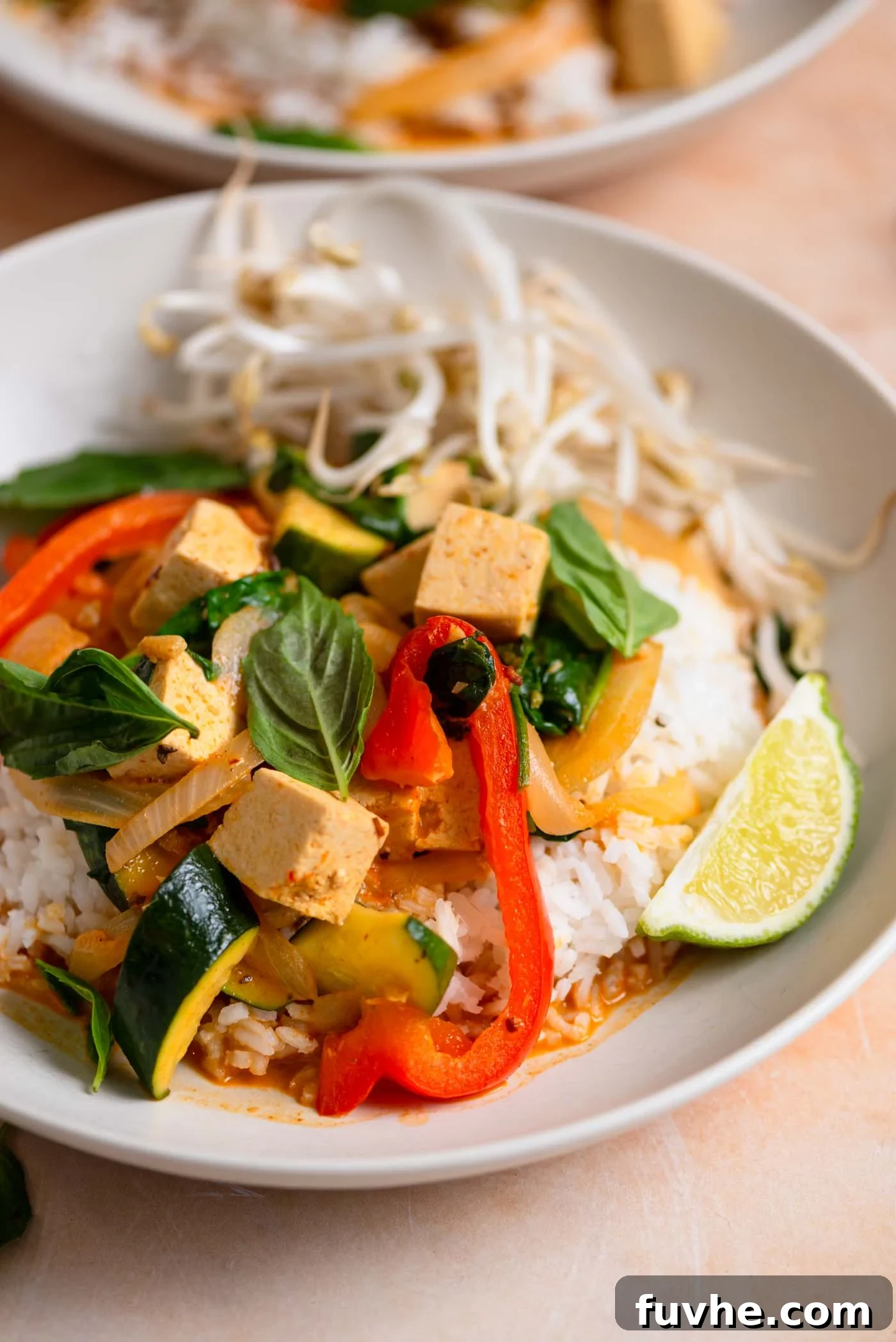
Our recipe champions simplicity without compromising on taste, relying on readily available ingredients like high-quality store-bought red curry paste and creamy coconut milk. The beauty of this dish lies in its versatility; you can effortlessly incorporate your favorite seasonal vegetables or utilize whatever fresh produce you have on hand, making it a perfect solution for a flexible, healthy, and satisfying dinner. Served piping hot over a bed of fluffy rice, the aromatic and creamy coconut curry sauce is perfectly absorbed, creating a harmonious and comforting meal.
For those eager to dive deeper into the world of plant-based Thai cooking, explore our other fantastic recipes:
- Exotic Thai Basil Eggplant
- Flavorful Red Curry Rice Noodles
- Easy Vegan Tofu Pad Thai Recipe
- Hearty Vegan Cashew Tofu Stir Fry with Broccoli
Combine these recipes for an unforgettable, complete Thai feast!
Why You’ll Love This Vegan Thai Red Curry
This Thai red curry recipe isn’t just a meal; it’s a lifestyle enhancer. Here’s why it deserves a permanent spot in your weekly rotation:
- Lightning Fast: Ready in just 30 minutes, it’s perfect for busy evenings when you need a wholesome meal without the wait.
- One-Pan Wonder: Minimize cleanup with this single-pan dish, making post-dinner tidying a breeze.
- Customizable Veggies: Adapt the recipe to your preferences or what’s available in your fridge, reducing food waste and embracing seasonal produce.
- Protein Powerhouse: While tofu is our star, feel free to experiment with other plant-based proteins like chickpeas or tempeh.
- Ideal for Meal Prep: This curry tastes even better the next day, making it an excellent choice for batch cooking and healthy lunches throughout the week.
- Wholly Vegan: A delicious and compassionate meal free from animal products, perfect for vegans and those looking to incorporate more plant-based dishes into their diet.
- Naturally Gluten-Free Adaptable: With simple substitutions, this recipe easily becomes a safe and delicious option for those with gluten sensitivities.
- Simple, Accessible Ingredients: Crafted with common pantry staples and fresh produce, ensuring it’s easy to source everything you need.
Ingredient Notes and Smart Substitutions
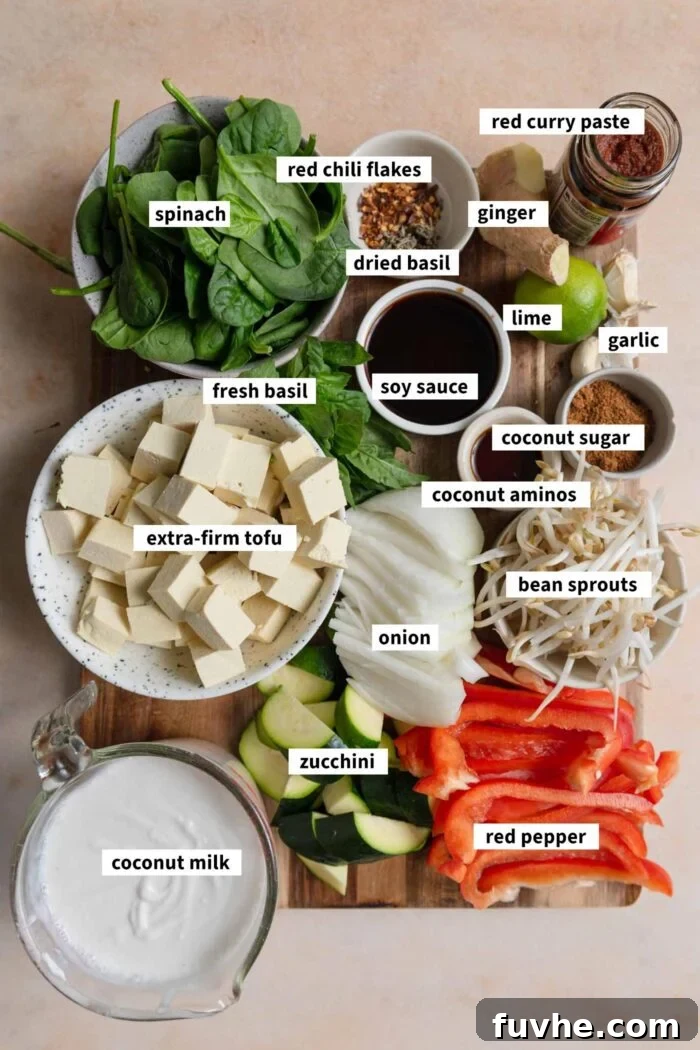
- Cooking Oil: For sautéing the aromatics, we recommend a neutral oil like olive oil or avocado oil. If you’re aiming for an oil-free dish, you can easily substitute a splash of water or vegetable broth to prevent sticking and still achieve that lovely sautéed flavor.
- Onion: White onion offers a subtly sweet and sharp flavor that perfectly complements Thai cuisine. However, feel free to use red or yellow onion if that’s what you have on hand; they will also provide a delicious aromatic base.
- Fresh Ginger & Garlic: These two are the heart and soul of this curry’s aromatic profile. Freshly minced ginger and garlic provide an unparalleled depth of flavor that is truly essential. While we strongly recommend using fresh, if absolutely necessary, you may substitute with 1 teaspoon each of garlic powder and ground ginger, though the flavor will be less vibrant.
- Thai Red Curry Paste: The quality of your curry paste will significantly impact the final taste. We love Thai Kitchen brand for its robust flavor and accessibility. A crucial tip for vegans: always check the label, as some brands contain anchovies, shrimp paste, or fish sauce. You can typically find quality curry paste in the international aisle of most well-stocked grocery stores, Asian specialty markets, or online.
- Versatile Vegetables: Our base recipe calls for bell pepper, baby spinach, and zucchini, offering a great mix of textures and nutrients. But don’t stop there! This curry is a fantastic way to use up any vegetables in your crisper. Consider adding kale, broccoli florets, cauliflower, carrots, mushrooms, bok choy, eggplant, snap peas, green beans, or even sweet potatoes for a heartier meal. Aim for about 3-4 cups of mixed vegetables for best results.
- Coconut Milk: For a truly rich and creamy Thai curry, full-fat coconut milk is highly recommended. It provides that luxurious texture and mouthfeel characteristic of authentic Thai dishes. If you’re looking to reduce fat and calories, light coconut milk can be used, but the curry will be slightly less creamy.
- Soy Sauce: Low-sodium soy sauce helps control the saltiness of the dish while adding essential umami. For a gluten-free version of this curry, simply swap the soy sauce for gluten-free tamari.
- Coconut Aminos: This ingredient adds an extra layer of savory, slightly sweet flavor. If you don’t have it available, don’t worry – you can simply omit it, or add a little extra soy sauce (or tamari) to taste.
- Coconut Palm Sugar: A touch of sweetness helps balance the heat and savory notes in Thai curry. Coconut sugar is our preferred choice, but brown sugar or maple syrup work equally well as substitutes.
- Tofu: Extra-firm tofu is ideal for this recipe as it holds its shape beautifully and absorbs the flavors of the curry sauce. There’s no need to press the tofu beforehand, making prep even quicker.
- Chili Flakes: For those who enjoy a kick, red chili flakes add a delightful warmth. If you’re sensitive to spice, feel free to reduce the amount to 1 teaspoon or omit it entirely. Alternatively, for a more intense and fresh heat, you can incorporate fresh whole Thai chilies, adjusting to your desired spice level.
For a complete and precise list of ingredients with measurements and detailed instructions, please refer to the comprehensive recipe card located at the end of this post.
Delicious Variations & Serving Suggestions
This vegan Thai red curry is incredibly adaptable. Here are some ideas to customize it and enhance your dining experience:
- Explore Other Thai Curries: The beauty of Thai curry lies in its paste variations. Easily transform this into a vibrant Thai green curry or a mellow yellow curry by simply substituting the red curry paste with green curry paste or yellow curry paste, respectively. You can also experiment with homemade curry pastes for a truly artisanal touch.
- Crispy Tofu Upgrade: Elevate your curry with a delightful textural contrast by adding crispy tofu. You can achieve this by pan-frying the tofu cubes in a separate pan until golden and firm, or by baking them in the oven following a method similar to our Crispy Baked Tofu recipe. Crispy tofu can be gently mixed into the curry sauce at the very end or served artfully on top as a garnish.
- Serving Possibilities: The classic way to enjoy Thai red curry is over a generous portion of cooked brown rice or fragrant Jasmine rice, which perfectly soaks up every drop of the creamy, flavorful sauce. For a lower-carb option, serve it over cauliflower rice or zucchini noodles. Enhance your serving with fresh toppings like crunchy bean sprouts, a zesty lime wedge or a sprinkle of lime zest, aromatic kaffir lime leaves, fresh Thai basil leaves, or a handful of chopped fresh cilantro for an explosion of freshness and aroma.
- Making it Gluten-Free: To ensure your Thai red curry is completely gluten-free, remember two key steps: always substitute regular soy sauce with gluten-free tamari, and diligently review the ingredient label of your chosen red curry paste to confirm it does not contain any hidden gluten.
Step-by-Step Guide to Your Perfect Vegan Thai Red Curry
Creating this flavorful curry is simpler than you think! Follow these easy steps for a delicious meal:
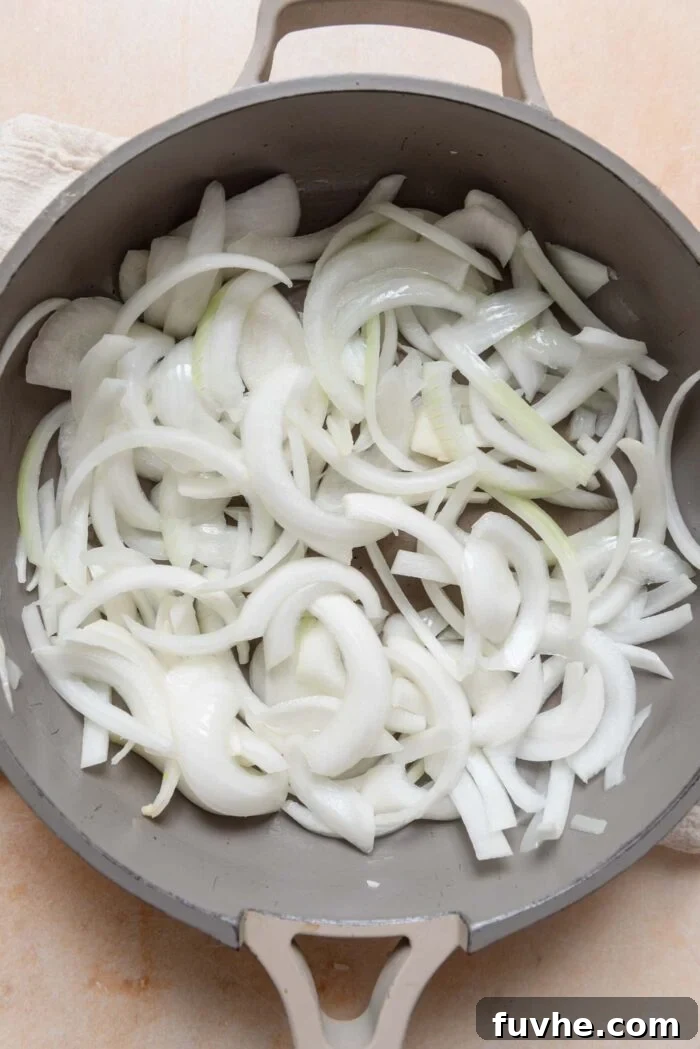
Step 1: Sauté the Aromatics. Heat the olive oil in a large, deep skillet or wok over medium heat. Add the sliced white onion and cook for 3-4 minutes, stirring frequently, until the onion softens and becomes wonderfully fragrant, releasing its sweet aroma.

Step 2: Bloom the Curry Paste. Add the minced fresh garlic, ginger, and the Thai red curry paste to the pan with the softened onions. Stir well to combine all ingredients, and cook for another 1-2 minutes. This crucial step helps to toast the spices in the paste, intensifying their flavors and releasing their aromatic oils.

Step 3: Build the Sauce and Add Vegetables. Pour in the full-fat coconut milk, and add the sliced red bell peppers, zucchini, low-sodium soy sauce, coconut aminos (if using), and coconut sugar. Stir all ingredients thoroughly until well combined. Bring the curry mixture to a gentle simmer over medium heat, allowing the flavors to meld beautifully.
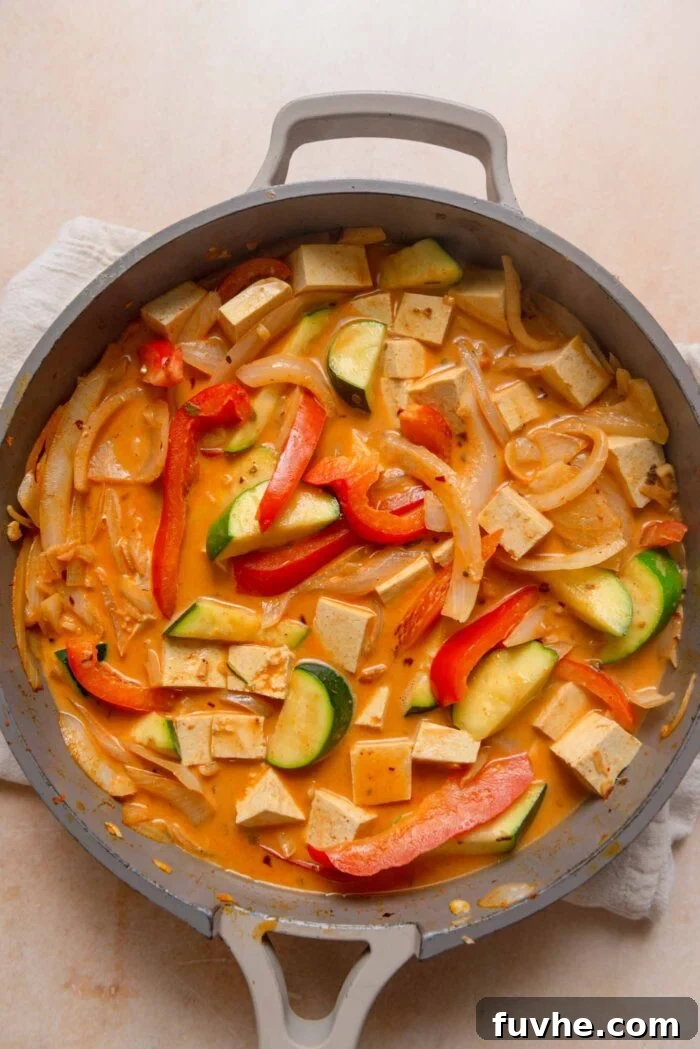
Step 4: Incorporate Tofu and Seasonings. Once the curry is simmering, gently add the cubed extra-firm tofu, a fresh squeeze of lime juice, red chili flakes (adjust to your spice preference), and dried basil. Stir gently to ensure the tofu is coated in the flavorful sauce. Continue to cook for another 3-4 minutes, allowing the tofu to heat through and absorb some of the curry’s richness.
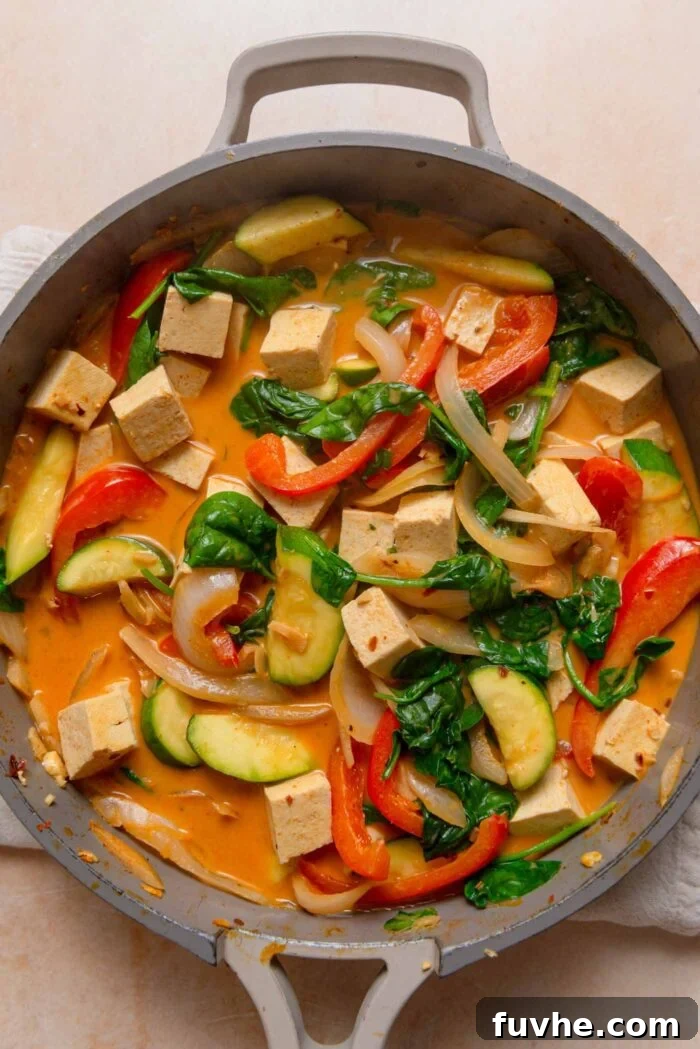
Step 5: Wilt the Spinach. Turn off the heat. Add the fresh baby spinach to the pan. Stir it into the hot curry until it has completely wilted and is evenly combined. The residual heat from the curry will be enough to perfectly cook the spinach without overdoing it, preserving its nutrients and vibrant color.
Step 6: Serve and Enjoy! Ladle your delicious vegan Thai red curry over a generous serving of freshly cooked white or brown rice. Garnish with additional fresh basil leaves, crunchy bean sprouts, and a lime wedge for a burst of freshness. Serve immediately and savor the incredible flavors of your homemade Thai masterpiece!
Frequently Asked Questions About Vegan Thai Red Curry
Can I make this Thai red curry oil-free?
Absolutely! To prepare this dish completely oil-free, simply omit the olive oil when sautéing the onion. Instead, add a small amount of water or vegetable broth to the pan. This allows the onions and aromatics to soften and release their flavors without any added fat, maintaining the integrity and taste of the curry while adhering to oil-free dietary preferences.
What vegetables are best for red curry, and how much should I use?
One of the most appealing aspects of this recipe is its incredible flexibility when it comes to vegetables. It’s a fantastic way to utilize any produce you have on hand, making it an ideal “clean out the fridge” meal at the end of the week. While the recipe suggests red bell pepper and zucchini for their color and texture, you can also incorporate a wide array of other vegetables. Consider adding mushrooms (cremini or shiitake), broccoli florets, bok choy, thinly sliced carrots, eggplant, snap peas or snow peas, green beans, bamboo shoots, potato cubes, baby corn, or cauliflower. For optimal balance in the curry, we recommend sticking to a selection of 3-4 different vegetables, totaling approximately 3 cups. This ensures a good variety without overcrowding the pan or diluting the rich curry flavor.
Can I use light coconut milk instead of full-fat?
While we highly recommend using full-fat coconut milk to achieve the signature rich and creamy consistency that is characteristic of an authentic Thai curry, you can certainly substitute light coconut milk. Opting for light coconut milk will reduce the overall fat and calorie content of the dish. However, be aware that the curry’s texture will be slightly thinner and less luxurious. The flavor will still be delicious, but for that truly indulgent experience, full-fat is the way to go.
How long does leftover Thai red curry last?
Leftover Thai red curry is fantastic for meal prep! Store any remaining curry in an airtight container in the refrigerator for up to 5 days. The flavors often deepen and meld even more overnight. To reheat, simply warm it gently in a pan on the stovetop over medium-low heat until heated through, or use a microwave. You might want to add a splash of water or vegetable broth if the sauce has thickened too much upon cooling.
Rating: 5 from 3 votes
Vegan Thai Red Curry with Tofu and Vegetables
By: Deryn Macey
This vegan Thai red curry with tofu and vegetables is incredibly easy to make, highly customizable with your favorite veggies, and absolutely perfect for a quick and satisfying weeknight dinner. Serve it over fluffy rice to truly enjoy every drop of the creamy coconut sauce.
Prep Time: 10 mins
Cook Time: 20 mins
Total Time: 30 mins
Servings: 6
Ingredients
- 1 tbsp extra-virgin olive oil
- 1 white onion, sliced
- 2 tbsp fresh ginger, peeled and minced
- 2 tbsp fresh garlic, crushed or minced
- 3 tbsp Thai red curry paste (ensure vegan)
- 1 red bell pepper, sliced
- 1 cup sliced zucchini
- 14 oz can of full-fat coconut milk
- 2 tbsp low sodium soy sauce (or tamari for gluten-free)
- 1 tbsp coconut aminos (optional)
- 1 tbsp coconut sugar (or brown sugar/maple syrup)
- 400 g package extra-firm tofu, cubed
- 2 tbsp fresh lime juice
- 2 tsp red chili flakes (adjust to taste)
- 1 tsp dried basil
- 1 5 oz container baby spinach
- Bean sprouts, for serving
- Fresh basil, for serving
- Cooked white or brown rice, for serving
Instructions
- Heat Oil and Cook Onion: Heat the olive oil in a large pan over medium heat. Add the onion and cook for 3-4 minutes, stirring often, until softened and fragrant.
- Add Curry Paste and Aromatics: Add the ginger, garlic, and red curry paste. Mix well and cook for another 1-2 minutes, stirring frequently, allowing the curry paste to bloom and its aromas to deepen.
- Bring to Simmer: Add the red pepper, zucchini, coconut milk, soy sauce, coconut aminos (if using), and coconut sugar. Mix well to combine all ingredients and bring the curry mixture to a gentle simmer.
- Add Tofu and Seasonings: Add the cubed tofu, fresh lime juice, red chili flakes, and dried basil. Cook for 4-5 minutes, stirring occasionally, allowing the tofu to absorb the rich flavors.
- Add Spinach: Turn off the heat. Stir in the baby spinach until it has completely wilted and is evenly combined into the curry sauce.
- Serve: Serve your vibrant red curry immediately over freshly cooked white rice, brown rice, or quinoa. Garnish generously with fresh lime wedges, a sprinkle of fresh basil, and crunchy bean sprouts for an extra touch of flavor and texture.
Nutrition
Serving: 1/6th of recipe
Calories: 187kcal
Carbohydrates: 29g
Protein: 6g
Fat: 6g
Sodium: 398mg
Fiber: 8.5g
Sugar: 15g
Enjoying this recipe? Your feedback helps! Please rate and leave a comment below.