
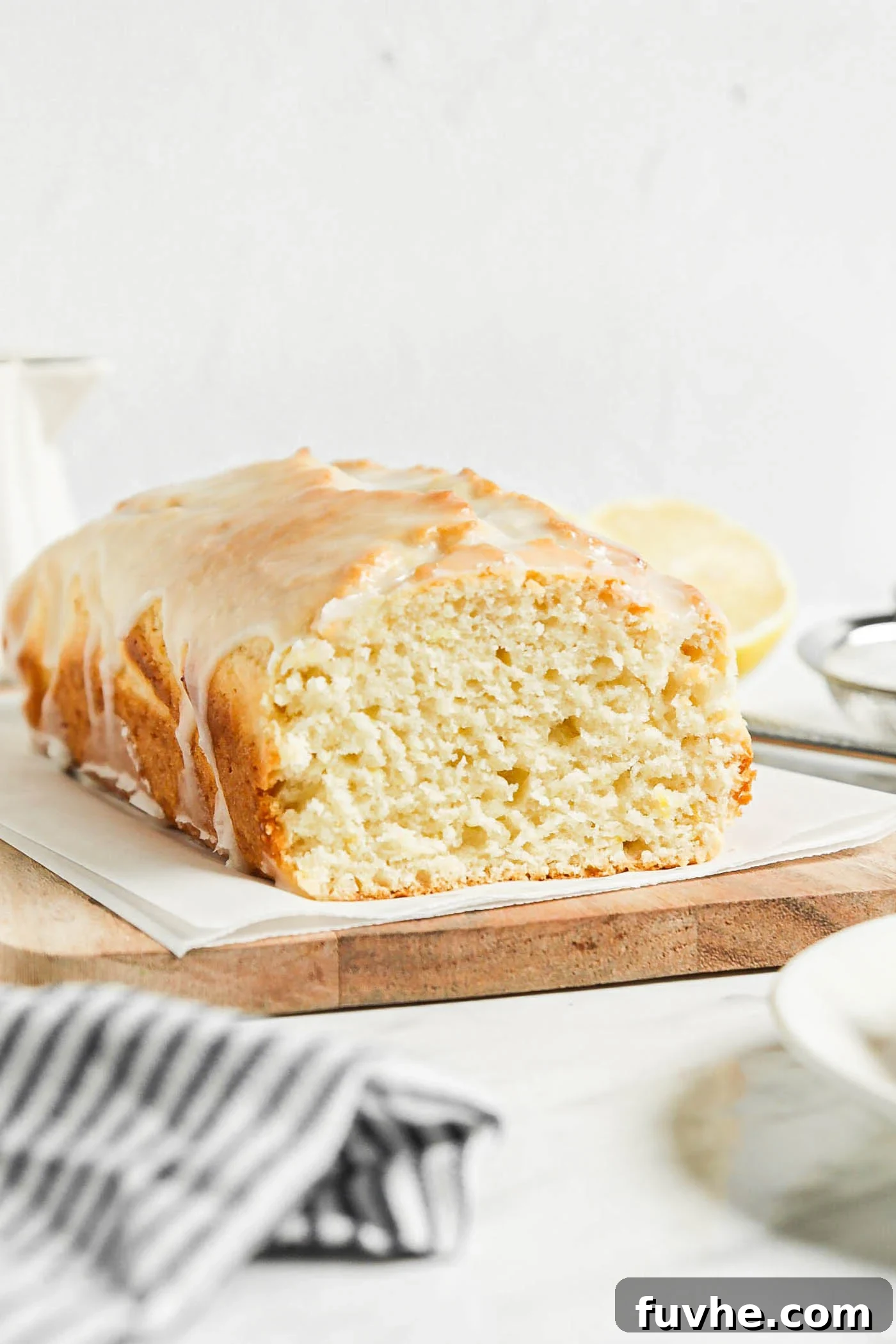
Welcome to your new favorite dessert! This incredibly light, delightfully moist, and wonderfully zesty vegan lemon loaf is designed to captivate your taste buds from the very first bite. Forget complicated recipes or hard-to-find ingredients; this easy-to-follow guide will help you create a truly spectacular plant-based lemon cake that rivals any bakery classic.
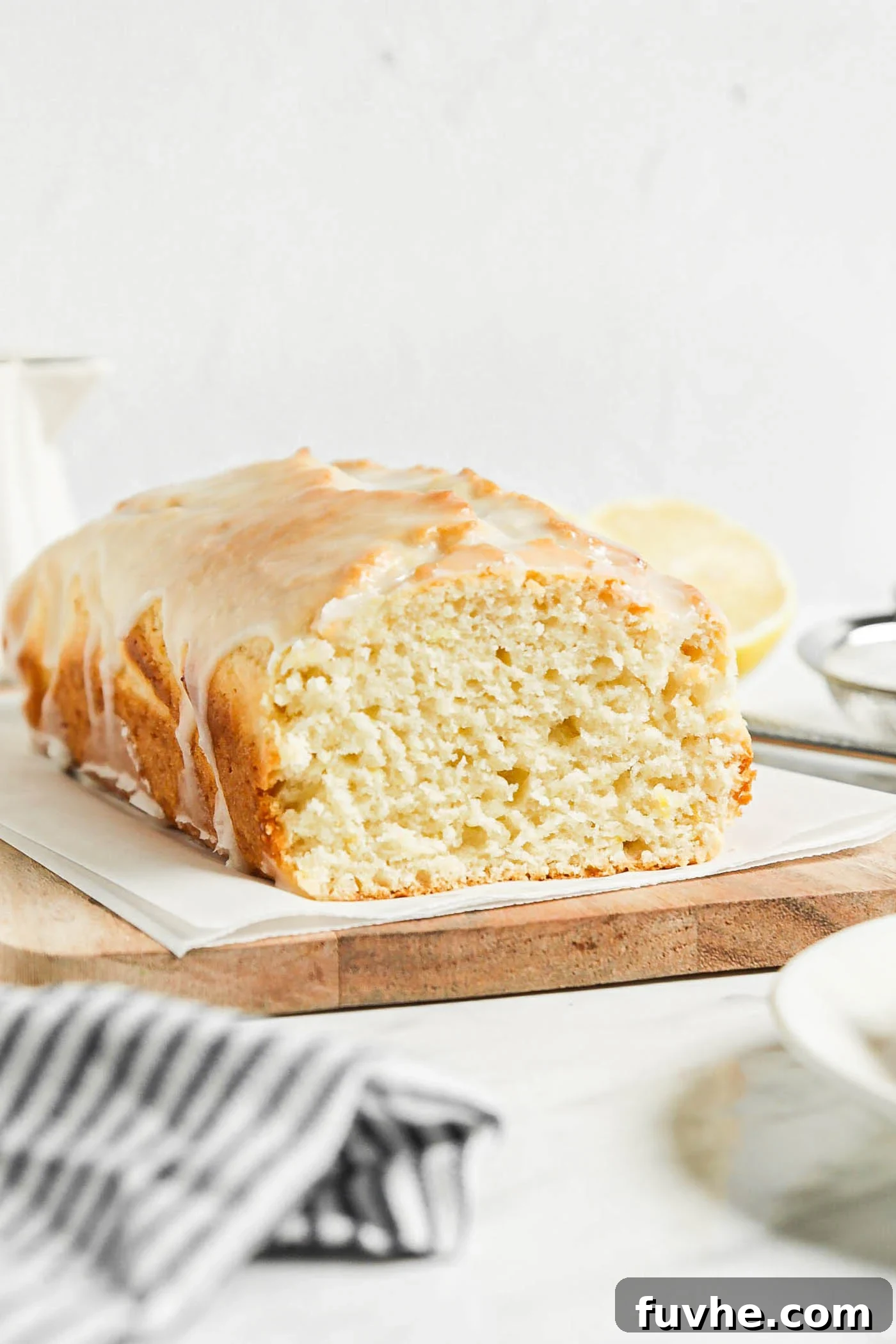
Infused with bright, tangy lemon flavor and boasting an irresistibly soft crumb, this easy vegan lemon cake is seriously addictive. It strikes the perfect balance between the beloved Starbucks lemon loaf and a rich lemon pound cake, yet it achieves this luxurious texture and taste entirely without eggs or dairy. For an extra touch of sweetness and a beautiful presentation, a simple lemon glaze can be added, transforming it into a classic lemon drizzle cake that’s truly a showstopper.
While this vibrant loaf is undoubtedly a highlight for Spring, Summer, and special occasions like Easter and Mother’s Day, its refreshing taste makes it a delightful treat year-round. Imagine enjoying a slice with your morning coffee, as a sophisticated addition to brunch, or during a leisurely afternoon tea. This versatile sweet bread is perfect anytime you crave a sweet, citrusy pick-me-up. It’s more than just a cake; it’s an experience that brings a little sunshine into your day.
Craving more lemony delights? Be sure to explore our other fantastic recipes, including Vegan Lemon Shortbread Cookies for a buttery, crisp bite, and Creamy Vegan Lemon Bars for a rich, tangy indulgence.
Why You’ll Love This Vegan Lemon Loaf
This vegan lemon loaf isn’t just a recipe; it’s a testament to how delicious and accessible plant-based baking can be. Here’s why this recipe is destined to become a staple in your kitchen:
- Incredibly Versatile for Flavor Variations: This recipe provides a fantastic foundation for culinary creativity. Easily adapt it to become a delightful lemon blueberry loaf, a festive lemon cranberry loaf, a refreshing lime drizzle cake, or even a sunny orange-infused bread. The possibilities are endless, making it perfect for every season and preference.
- Diet-Friendly and Allergen-Aware: Crafted entirely without animal products, this loaf is 100% vegan, meaning it’s free from eggs and dairy. We’ve also ensured it’s a nut-free recipe, making it a wonderful option for those with common allergies or dietary restrictions, allowing more people to enjoy a delicious homemade treat.
- Remarkably Simple Ingredients & Process: You don’t need a pantry full of exotic items to create this masterpiece. Made with just 6 core ingredients that are likely already in your kitchen, this recipe is straightforward and designed for baking success, even for beginners. The simple steps ensure a stress-free baking experience.
- Achieves Perfect Sweet-Tart Harmony and Texture: This loaf masterfully balances the vibrant tang of lemon with just the right amount of sweetness, creating a flavor profile that is both invigorating and comforting. Its texture is consistently soft, moist, and tender – never dry or crumbly – promising a truly satisfying bite every time.
Key Ingredients for Your Vegan Lemon Loaf & Smart Substitutions
Creating the perfect vegan lemon loaf starts with understanding the role of each ingredient. Here’s a detailed look at what you’ll need and how to make the best choices for a truly exceptional cake.
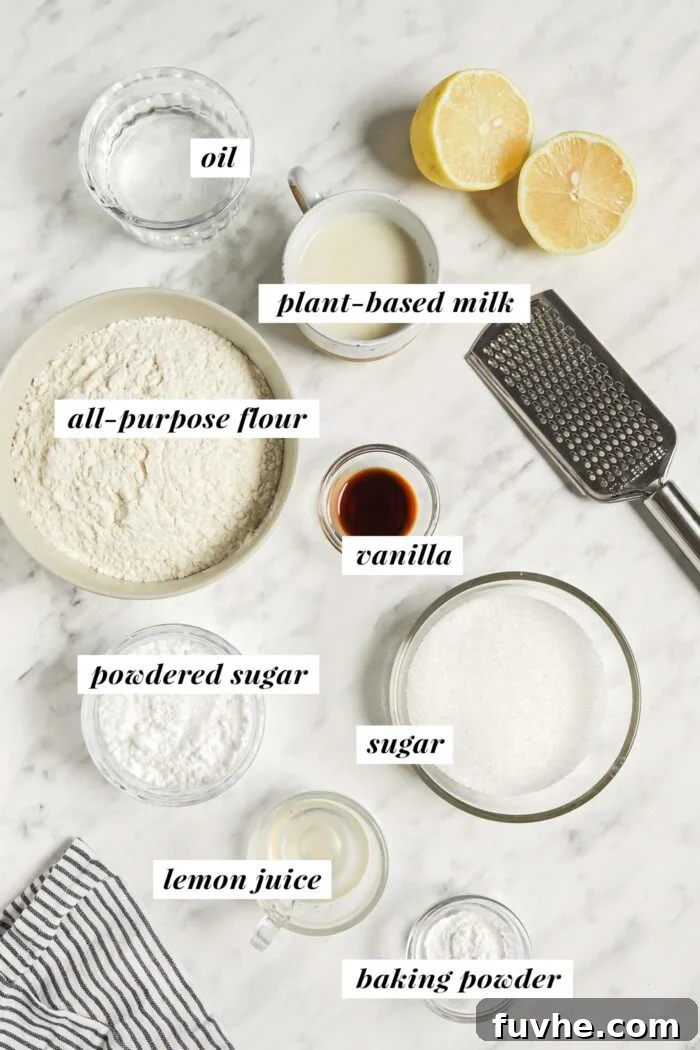
- All-Purpose Flour: The backbone of our loaf, providing structure and texture. This recipe was meticulously developed using standard all-purpose flour, yielding consistent results. For optimal accuracy and best baking outcomes, we strongly recommend using a kitchen scale to measure the flour in grams, as listed in the full recipe card. While other flours may work, they have not been tested and could alter the final texture.
- Granulated Sugar: Not just for sweetness, sugar also contributes to the loaf’s moisture and tender crumb. We used organic cane sugar, but you have flexibility here. Feel free to substitute with light brown sugar for a slightly deeper, caramel-like note, or regular white granulated sugar. If you’re looking for a sugar-free alternative, monk fruit sweetener can be used in the loaf itself; however, you would need to skip the lemon glaze as it relies on powdered sugar.
- Oil: This is crucial for achieving that characteristic moist and tender texture without dairy butter. You can choose between melted coconut oil, light olive oil, or canola oil. Each will impart a slightly different nuance, but all will work effectively. Important note: If you opt for coconut oil, ensure that your plant-based milk and lemon juice are at room temperature. Cold liquids will cause the coconut oil to solidify, leading to a lumpy batter and potentially a denser loaf.
- Fresh Lemon Juice: The star of the show, delivering that essential zesty flavor. You’ll need about 1/3 cup of fresh lemon juice, which typically requires 2-3 whole lemons, depending on their juiciness. Freshly squeezed lemon juice offers the brightest, most vibrant flavor, but for convenience, store-bought lemon juice can also be used without significantly compromising the taste.
- Plant-Based Milk: This recipe calls for unsweetened plant-based milk to maintain its vegan integrity. Unsweetened almond milk or cashew milk are highly recommended due to their neutral flavor profiles, which allow the lemon to shine. Ensure your chosen milk is unsweetened to control the overall sweetness of the loaf. Oat milk or soy milk can also be used.
- Lemon Zest: The secret weapon for intensifying that glorious lemon aroma and flavor. The zest contains concentrated lemon oils that truly elevate the loaf beyond just the juice. If you don’t own a citrus zester or microplane, a fine grater can work, or you can carefully slice thin strips of peel and finely mince them with a sharp knife. Just be sure to avoid the bitter white pith.
- Vanilla Extract: A touch of vanilla helps to round out the flavors, adding warmth and depth that complements the bright lemon without overpowering it.
- Baking Powder & Salt: These leavening agents and flavor enhancers are vital for the loaf’s rise and overall taste. Ensure your baking powder is fresh for the best lift.
This list provides a comprehensive overview of the main components. For precise measurements and step-by-step instructions, please refer to the complete recipe card found further down the page.
Exciting Variations for Your Lemon Loaf
One of the best aspects of this vegan lemon loaf recipe is its adaptability. It serves as a fantastic blank canvas for you to experiment with different flavors and textures. Here are a few delightful ways to switch up your lemon loaf:
- Blueberry and Lemon Loaf: A classic pairing that adds a burst of sweetness and juiciness. Gently fold in up to 1 cup of fresh blueberries with the wet ingredients before mixing into the dry. You can also use frozen blueberries, but don’t thaw them first – just toss them in a little flour to prevent sinking.
- Lemon Cranberry Loaf: Perfect for a festive touch or a tart counterpoint to the lemon. Incorporate up to 1 cup of fresh or frozen whole cranberries into the batter. This is particularly lovely during the autumn and winter months.
- Lemon Zucchini Loaf: A wonderful way to add extra moisture and a subtle vegetal note. Fold in 1/2 cup of finely grated fresh zucchini that has been thoroughly drained of excess moisture. The zucchini disappears into the loaf, leaving only tenderness behind.
- Raspberry Lemon Loaf: The delicate sweetness and slight tartness of raspberries create a beautiful balance with the lemon. Gently fold in up to 1 cup of fresh raspberries, being careful not to crush them too much.
- Lime Drizzle Cake: For a tropical twist, simply substitute lime juice and lime zest for the lemon juice and zest. The lime offers a slightly different, equally refreshing citrus profile.
- Lemon Poppy Seed Cake: Add a delightful crunch and visual appeal by mixing in 2 tablespoons of poppy seeds with the dry ingredients. This classic combination is always a crowd-pleaser.
- Orange Loaf: Swap out the lemon juice and zest for fresh orange juice and orange zest. This creates a sweeter, milder citrus flavor. For a truly festive combination, try an orange cranberry loaf, especially perfect for holiday seasons like Christmas.
How to Make the Perfect Vegan Lemon Loaf (Step-by-Step)
Before You Begin: Precision in baking is key for the best results. Preheat your oven to 350°F (180°C) to ensure it’s at the correct temperature when your batter is ready. Prepare a standard-size loaf pan by lining it with parchment paper, allowing the paper to extend over at least two sides. This creates convenient “handles” that will make it incredibly easy to lift the finished loaf out of the pan once it’s baked and cooled.
Step 1: Combine the Dry Ingredients. In a spacious mixing bowl, thoroughly whisk together the all-purpose flour, granulated sugar, baking powder, and salt. It’s crucial to mix these dry ingredients well to ensure that the baking powder and salt are evenly distributed throughout the flour. This prevents uneven rising and ensures consistent flavor in every slice.
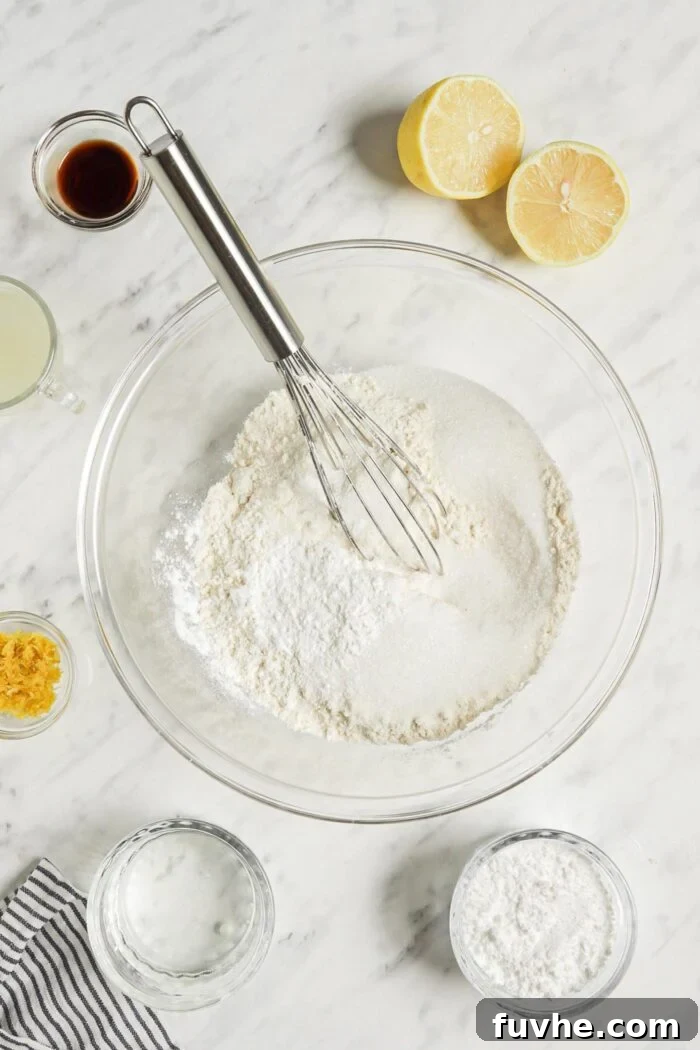
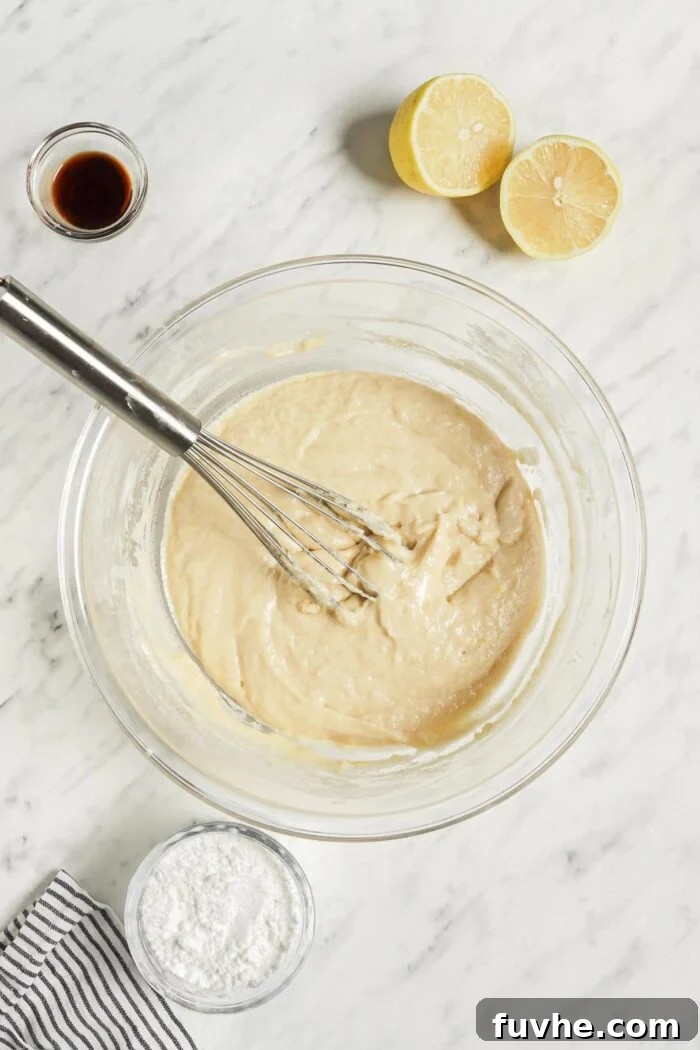
Step 2: Incorporate the Wet Ingredients. Add the melted oil (coconut, olive, or canola), plant-based milk, fresh lemon juice, lemon zest, and vanilla extract to the dry ingredient mixture. Using a spatula or whisk, gently fold everything together. Mix just until all the dry ingredients are moistened and a smooth batter forms. Avoid over-mixing at all costs; excessive mixing can develop the gluten in the flour too much, leading to a tough, dense, and chewy cake rather than the desired soft and moist texture. Stop mixing as soon as the flour streaks disappear.
Quick Note on Temperature: If you are using coconut oil, it is absolutely essential that your lemon juice and plant-based milk are at room temperature. If these liquids are cold, they will cause the melted coconut oil to seize up and solidify, resulting in a lumpy batter that won’t bake properly. If your milk or juice is chilled from the fridge, simply warm them briefly in the microwave for 15-30 seconds until they reach room temperature.
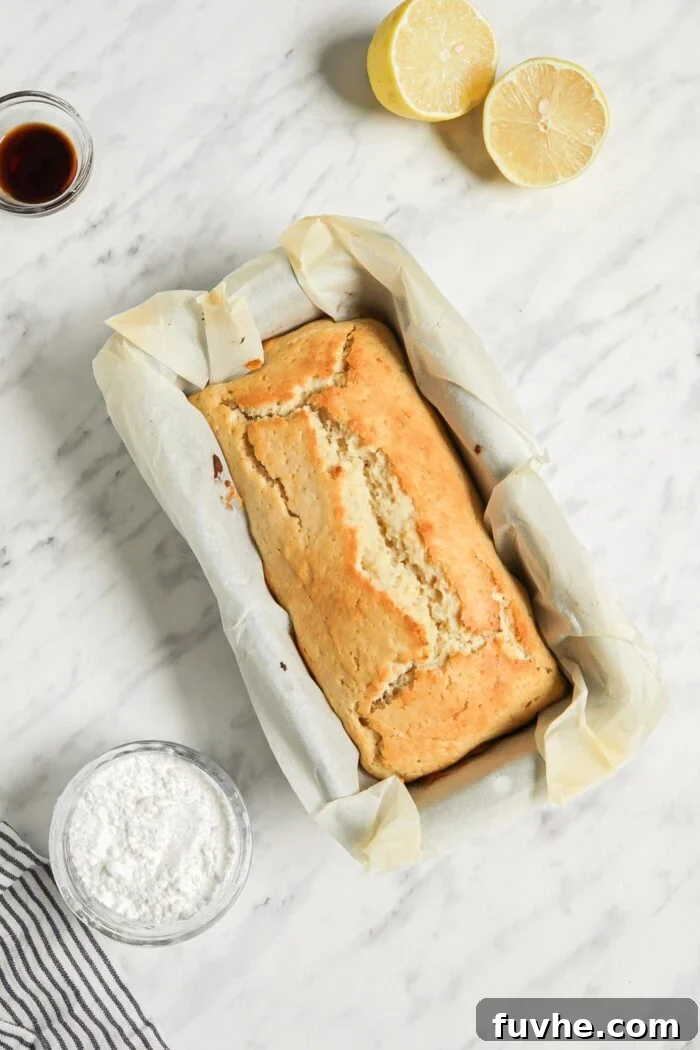
Step 3: Bake to Golden Perfection. Carefully transfer the prepared batter into your parchment-lined loaf pan. Use a spatula to gently smooth the top of the batter, ensuring an even bake. Place the pan in the preheated oven and bake for approximately 35 minutes. The exact baking time can vary slightly depending on your oven, so keep an eye on it. To test for doneness, insert a toothpick into the center of the loaf. If it comes out clean or with a few moist crumbs attached (no wet batter), your loaf is perfectly baked. Allow the loaf to cool in the pan for about 10-15 minutes before carefully transferring it to a wire cooling rack to cool completely. This crucial cooling time in the pan helps it set properly and prevents it from crumbling.
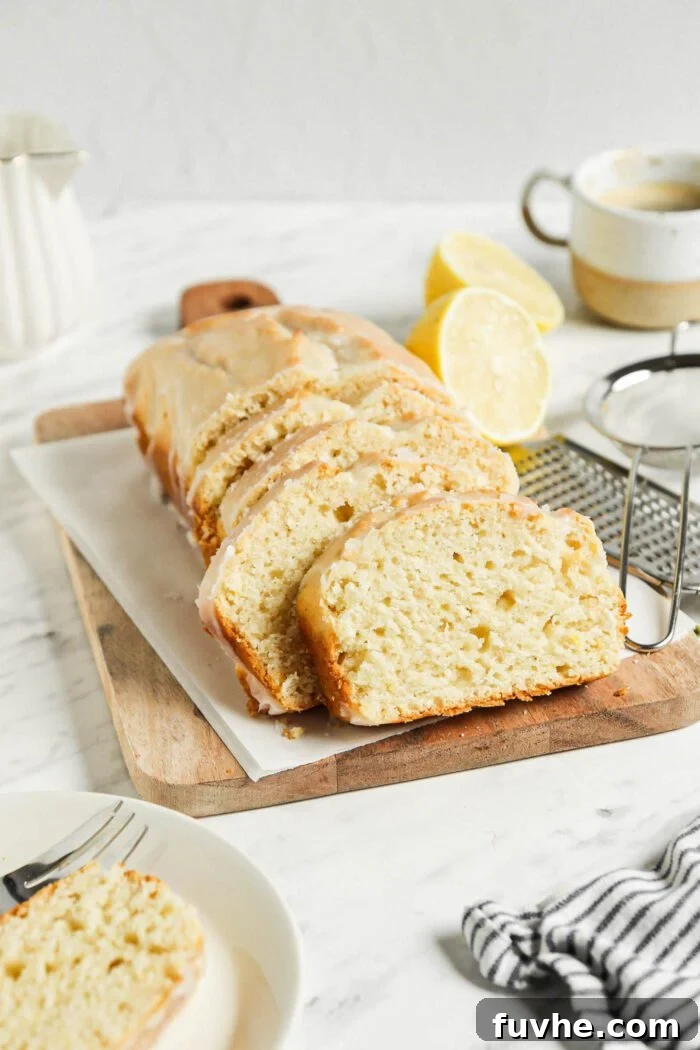
Step 4 (Optional): The Zesty Lemon Glaze. If you desire that classic lemon drizzle finish, prepare the glaze while your loaf cools. In a small bowl, combine the powdered sugar, a tablespoon of lemon juice, and a tablespoon of plant-based milk. Whisk these ingredients together until the mixture is completely smooth and free of lumps. The consistency should be pourable but thick enough to cling to the loaf. Once your loaf has fully cooled to room temperature (this is very important to prevent the glaze from melting and running off), slowly pour the glaze evenly over the top. Allow the glaze to set for a few minutes before slicing and serving. This creates a beautiful, sweet, and tangy crust that complements the moist interior.
Recipe FAQs: Your Vegan Lemon Loaf Questions Answered
This particular recipe relies on oil for its light, moist, and tender texture, and has not been tested with oil-free baking substitutes like applesauce or mashed banana. Oil helps create the rich mouthfeel often associated with traditional pound cakes. For successful oil-free baking, we recommend trying recipes specifically developed for that purpose. You might enjoy our carrot cake banana bread, easy banana bread or blueberry muffins, all of which are designed to be delicious without added oil.
Absolutely! Both fresh lemon juice and good quality store-bought carton lemon juice will work well in this recipe for the liquid component. However, for the vibrant flavor and aromatic punch of lemon zest, you will still need whole lemons. While lemon extract can sometimes be used, fresh lemon zest is undeniably superior for capturing that bright, authentic lemon taste in my opinion!
Overmixing wheat flour develops the gluten too much, which can lead to a tough, rubbery, and dense texture in your baked goods. For a tender and moist loaf, mix the wet and dry ingredients together just until combined, meaning no visible dry flour streaks remain. A few small lumps are perfectly fine!
This recipe has not been tested with gluten-free flour blends. Gluten-free baking often requires specific ratios and additional ingredients (like xanthan gum) to achieve the right texture. While it might be possible, substitutions would need careful experimentation. We recommend seeking out a recipe specifically developed for gluten-free vegan lemon loaf for the best results.
Expert Baking Tips for a Flawless Vegan Lemon Loaf
Achieving bakery-quality results at home is easier than you think with these expert tips:
- Embrace Your Digital Scale: For consistent and professional baking results, I cannot emphasize enough the importance of using a digital kitchen scale to measure your ingredients, especially flour. This recipe relies on precise ratios for its success, and it’s incredibly easy to accidentally over or under-measure flour when using volume cups, which can drastically alter the texture of your loaf. Gram measurements offer unparalleled accuracy.
- The Trusty Toothpick Trick: Since oven temperatures can vary widely, relying solely on baking time isn’t always foolproof. The toothpick test is your best friend to confirm the loaf is perfectly baked through. Simply insert a clean wooden toothpick into the very center of the cake. If it comes out clean or with only a few moist crumbs clinging to it, your loaf is ready! If there’s wet batter, continue baking for a few more minutes and retest.
- Resist the Urge to Peek: Opening the oven door prematurely, especially during the first 30 minutes of baking, can cause a sudden drop in temperature. This can disrupt the delicate rising process, potentially causing your loaf to sink in the middle. Be patient and wait until at least 30 minutes have passed before checking on its progress.
- Effortless Pan Removal: To ensure your beautiful loaf can be easily lifted out of the pan without sticking or breaking, always line your loaf pan with parchment paper. Position the parchment so that it hangs over at least two sides, creating convenient “slings” to lift the cooled loaf out with ease.
- Patience is Key for Glazing: It’s absolutely crucial to wait until your vegan lemon loaf has completely cooled to room temperature before attempting to apply the glaze. If you pour the glaze over a warm loaf, it will simply melt, soak into the cake, and disappear, leaving you with a soggy mess rather than a beautiful, defined glaze.
- Customize Your Icing Intensity: If you’re someone who loves a thick, generous layer of glaze, feel free to adjust! You can easily double the amount of powdered sugar for the glaze, keeping the lemon juice and plant-based milk amounts the same initially. If the consistency is too thick after adding the extra sugar, you can add a tiny bit more milk, a quarter teaspoon at a time, until you reach your desired pourable yet opaque consistency.
Storing Your Vegan Lemon Loaf for Maximum Freshness
Proper storage is essential to keep your delicious vegan lemon loaf fresh, moist, and enjoyable for as long as possible:
- At Room Temperature: Once the loaf has cooled completely (this is key!), store it in a sealed, airtight container. It will remain fresh and moist at room temperature for up to 4 days. Keep it away from direct sunlight or heat sources.
- In the Refrigerator: For extended freshness, especially in warmer climates or if you prefer a chilled treat, transfer the cooled loaf to an airtight container and store it in the fridge. It will stay delicious for up to 1 week. Bring it to room temperature or warm slightly before serving for the best texture.
- Freezing for Later Enjoyment: This loaf freezes beautifully! Allow the loaf to cool completely. You can freeze it whole or slice it first for convenient individual servings. For whole loaves, wrap it tightly in aluminum foil, then place it in a freezer-safe bag or container. For slices, wrap each slice individually in plastic wrap or foil, then store them together in a freezer bag. Frozen loaf will maintain its quality for 3-4 months. Thaw individual slices at room temperature or in the microwave, or a whole loaf overnight in the fridge.
Discover More Vegan Baking Delights
If you loved this vegan lemon loaf, you’re sure to enjoy these other plant-based baking recipes from our collection:
- Carrot Cake Banana Bread: Can’t decide between the spiced goodness of carrot cake and the comforting sweetness of banana bread? Why not have both in one amazing loaf!
- Vegan Zucchini Bread: Surprisingly light, perfectly sweetened, and incredibly moist, this zucchini loaf is a fantastic way to enjoy a wholesome treat.
- Applesauce Muffins: These tender, perfectly spiced, and wonderfully easy-to-make muffins are a perennial fan-favorite for a quick breakfast or snack.
- Vegan Monkey Bread: Decadent, impressive, and surprisingly fun and easy to assemble, this pull-apart bread is awesome for holidays like Christmas or any celebratory occasion.
- Vegan Apple Cake: A fragrant and warmly spiced apple cake, complete with a luscious caramel glaze, perfect for autumn evenings or any time of year.

★★★★☆
Vegan Lemon Loaf
Rate Recipe
Print Recipe
Ingredients
- 2 cups all-purpose flour, 270 g
- 3/4 cup granulated sugar, 120 g
- 2 1/2 tsp baking powder, 10 g
- 1 tsp salt
- 1/2 cup melted coconut oil or canola oil, 70 g
- 1/3 cup lemon juice, 55 g
- 2 tbsp lemon zest
- 1/2 cup + 6 tablespoons plant-based milk, 210 ml
- 1 teaspoon vanilla extract
For the Glaze
- 1/2 cup powdered sugar, 50 g
- 1 tbsp lemon juice
- 1 tbsp plant-based milk
Instructions
-
Preheat oven to 350 F (180 C) and line a standard-sized loaf pan with parchment paper so it sticks out over at least 2 sides of the pan. This will make it easier to lift the loaf out once baked.
-
Mix the flour, sugar, baking powder and salt together in a mixing bowl until well combined and the baking power is thoroughly distributed.
-
Add the oil, milk, lemon juice, lemon zest and vanilla and gently fold everything together just until all of the dry ingredients have been wetted. Avoid over-mixing. Note that if you’re using coconut oil, be sure the lemon juice and milk are at room temperature to prevent the oil from hardening. If your milk is cold, you can briefly warm in the microwave until it’s at room temperature.
-
Transfer the batter to the loaf pan and bake for about 35 minutes or until a toothpick inserted into the centre comes out clean. Avoid opening the open door to check the loaf before 30 minutes.
-
Let the loaf cool in the pan for 15 minutes then lift it out of the pan and onto a cooling rack to cool completely. Do not slice before cooling completely.
-
If you’d like to add the glaze, mix together the powdered sugar, milk and lemon juice until completely smooth. Once the loaf has fully cooled, pour the glaze over the cake and allow to set for a few minutes. Slice and enjoy!
Notes
Storing: Let cool completely before storing. Store in a sealed container at room temperature for up to 4 days or in the fridge for up to 1 week. To freeze, wrap in foil or saran then store in a sealed container or freezer-bag, or slice beforehand and store individual slices in a good freezer bag. It will keep for 3-4 months in the freezer.
Nutrition