
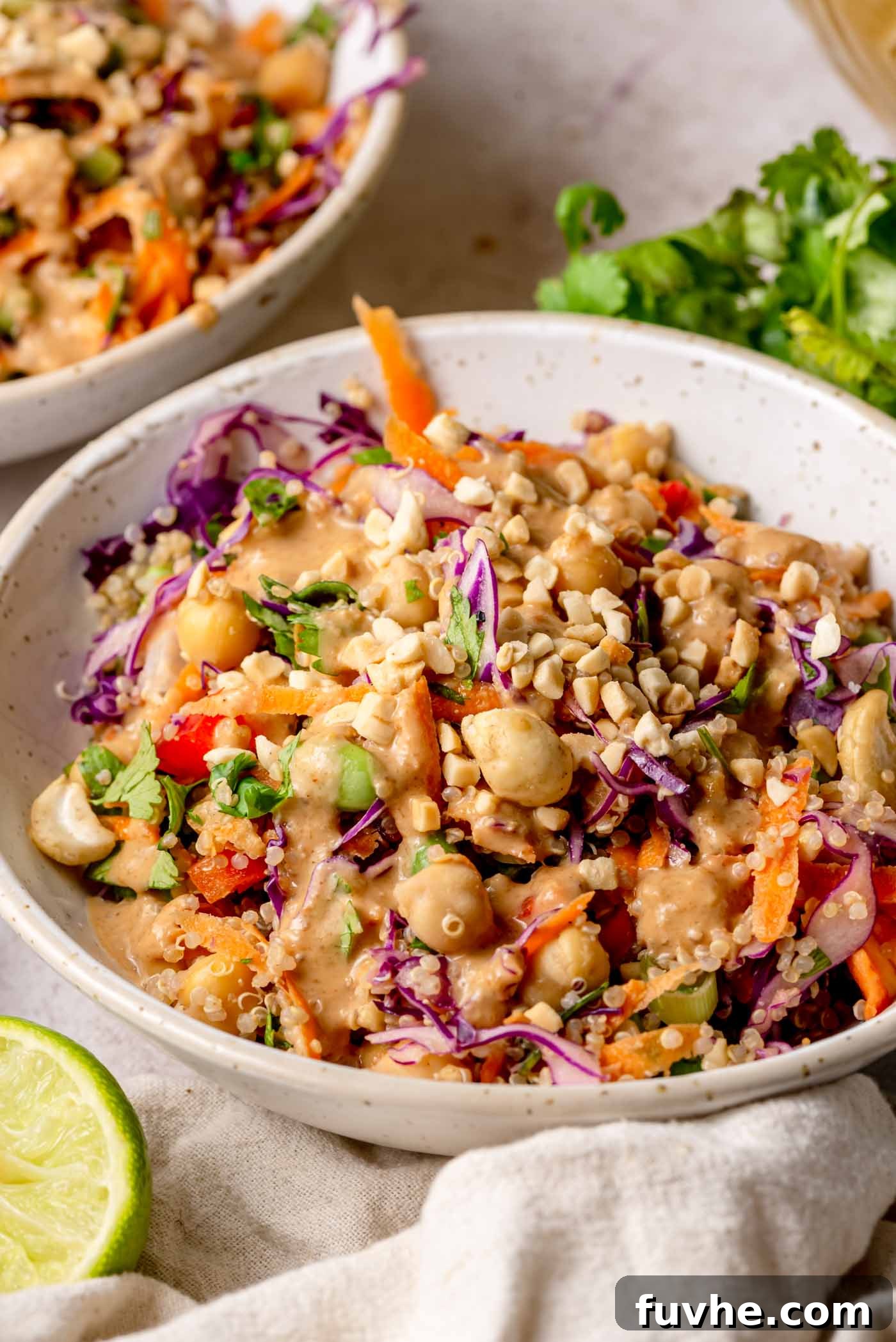
Welcome to your new go-to recipe for a truly satisfying and flavorful meal: the Thai Peanut Quinoa Salad. Far from a light side dish that leaves you craving more, this salad is a complete culinary experience, thoughtfully designed to be balanced, filling, and incredibly satisfying. It perfectly marries the hearty goodness of quinoa with a medley of crunchy, fresh vegetables and a show-stopping peanut dressing that ties every element together with exquisite flavor.
In today’s fast-paced world, finding meals that are both nutritious and exciting can be a challenge. This Thai Peanut Quinoa Salad rises to the occasion, offering a vibrant burst of flavors and textures that will invigorate your palate. With every forkful, you’ll encounter the tender chewiness of quinoa, the crisp freshness of seasonal vegetables, and the rich, creamy embrace of a perfectly balanced peanut sauce. This isn’t just a salad; it’s a testament to healthy eating being utterly delicious and deeply fulfilling. Whether you’re a seasoned chef or a beginner in the kitchen, this recipe promises ease of preparation and a delightful reward.
The secret to this salad’s appeal lies in its meticulously crafted peanut dressing. It strikes that elusive perfect balance of salty, sweet, and acidic notes, ensuring a fresh and vibrant taste that complements rather than overpowers the other ingredients. This dressing is so good, you might find yourself making extra just to have on hand! Beyond its incredible taste, this salad is also a champion for meal prep, holding up beautifully for days in the fridge. It’s incredibly adaptable, allowing you to easily adjust ingredients based on what’s available or to suit your dietary preferences. Add more protein, keep it strictly plant-based, or enjoy it cold or even slightly warmed – the possibilities are endless. If you’re searching for a healthy lunch or dinner that’s truly filling, packed with nutrients, and bursting with bold flavors, this Thai Peanut Quinoa Salad deserves a permanent spot in your recipe rotation.
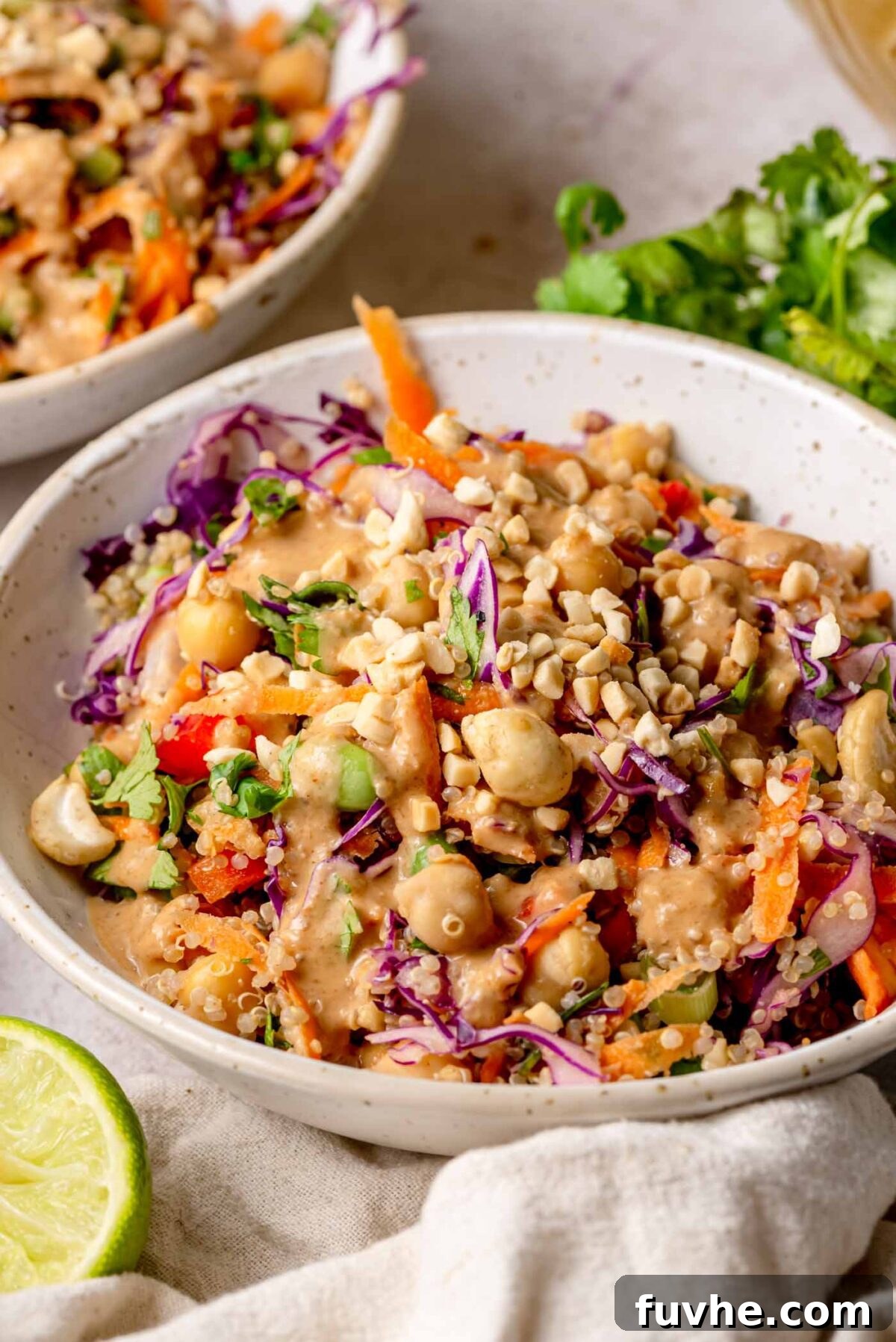
Why This Thai Peanut Quinoa Salad Will Become Your New Favorite
Beyond its striking visual appeal, the Thai Peanut Quinoa Salad offers a multitude of compelling reasons to make it a regular feature in your diet. It’s a culinary experience designed for both convenience and profound satisfaction, catering to a range of palates and nutritional needs.
- A Complete and Wholesome Meal: Forget flimsy salads. This recipe is engineered as a standalone meal, providing a robust blend of complex carbohydrates, ample fiber, healthy fats, and plant-based protein. It’s designed to nourish your body and keep you feeling full and energized, eliminating that post-meal hunger pang often associated with lighter options.
- Nutrient-Dense Powerhouse: Each ingredient contributes significantly to the salad’s nutritional profile. Quinoa offers complete protein and essential amino acids, while the vibrant array of fresh vegetables delivers a spectrum of vitamins, minerals, and antioxidants. Chickpeas and edamame boost the fiber content, supporting digestive health and sustained energy release. This salad is truly a celebration of wholesome, real food.
- Irresistibly Bold & Balanced Peanut Sauce: The heart of this salad is undoubtedly its creamy, luscious peanut sauce. Crafted to perfection, it achieves an exquisite harmony of savory, sweet, and tangy notes, with a hint of spice. This homemade dressing elevates simple ingredients into an extraordinary dish, providing that signature Thai-inspired flavor that is both comforting and exhilarating. Its depth of flavor transforms every bite into a delightful experience.
- Ideal for Effortless Meal Prep: One of the standout features of this Thai Peanut Quinoa Salad is its exceptional meal prep friendliness. It holds up beautifully in the refrigerator for several days, making it perfect for busy individuals seeking healthy, ready-to-eat lunches or quick dinners. Preparing a large batch on the weekend ensures you have nutritious meals readily available throughout the week, saving time and reducing the temptation for less healthy options.
- Endlessly Customizable and Adaptable: This recipe is a fantastic canvas for culinary creativity. It easily accommodates various dietary preferences and what you have on hand. Want more protein? Add grilled chicken, crispy tofu, or savory tempeh. Need it nut-free? Swap the peanut butter for an alternative. Craving extra greens? Toss in spinach or kale. Its versatility makes it a joyful recipe to experiment with and truly make your own.
If you appreciate the convenience and deliciousness of this recipe, you’ll surely enjoy exploring other meal prep-friendly salads and bowls. Consider trying our Cold Asian Noodle Salad for another exciting flavor profile, or delve into the satisfying textures of our Peanut Tofu Bowls. For a different twist on a healthy side or light meal, our Edamame Bean Salad with Ginger Miso Dressing offers a refreshing and equally nutritious option.
Recipe at a Glance
Prep Time: 15 min
Cook Time: 15 min
Servings: 6
Nutrition: 417 calories | 18g protein | 10g fibre per serving
Diet: Vegan and gluten-free.
Difficulty: Easy
Essential Ingredients for Your Thai Peanut Quinoa Salad
Creating this magnificent salad begins with selecting the right ingredients. Each component plays a crucial role in delivering the distinct flavors, textures, and nutritional benefits that make this dish truly special. Below, we’ve broken down the key ingredients for both the salad base and the incredible peanut sauce, along with helpful notes and substitution ideas.
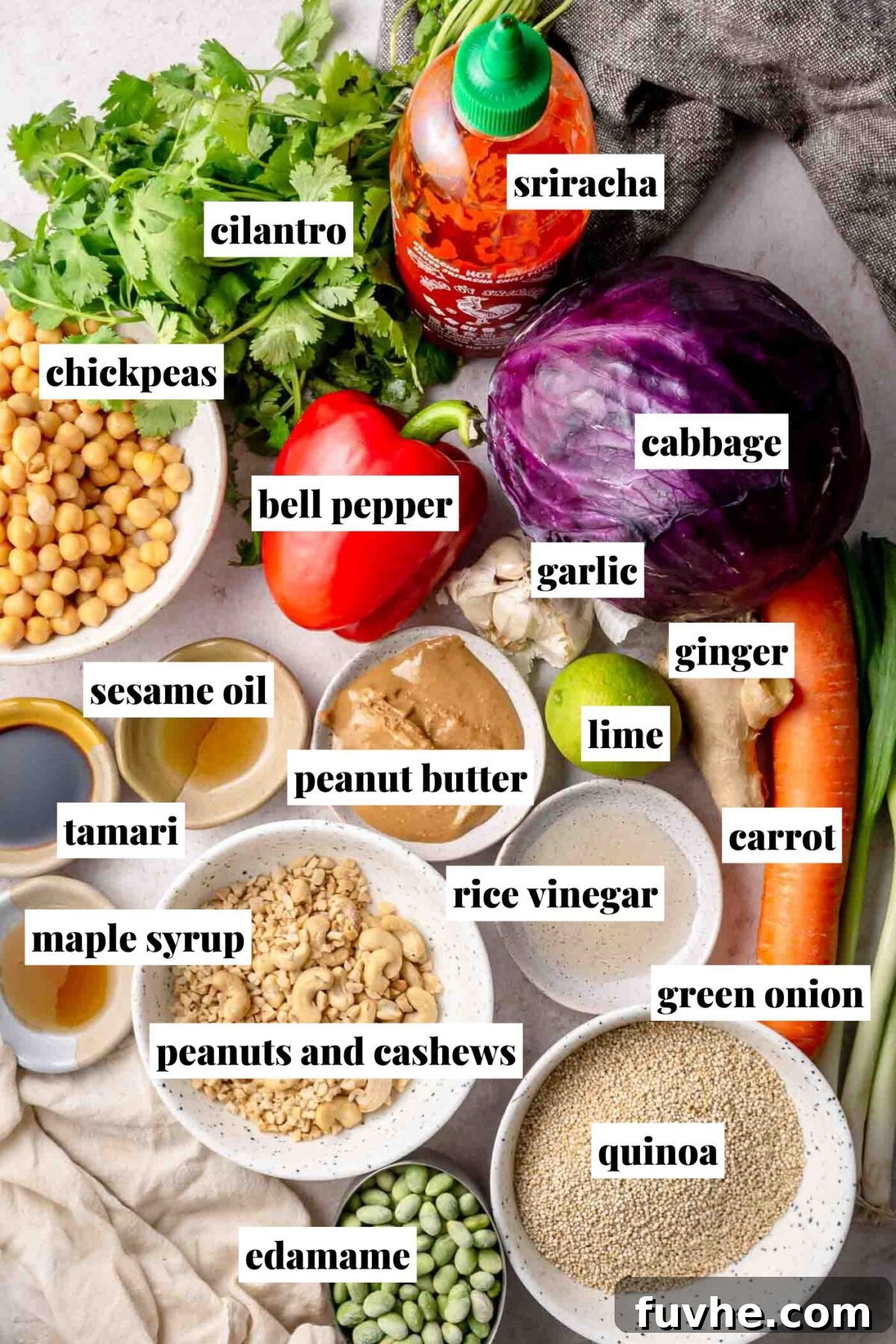
For the Quinoa Salad Base
- Quinoa: The wholesome foundation of this salad. Any variety—white, red, or tricolor—will work perfectly. Rinsing quinoa thoroughly before cooking is highly recommended to remove saponins, which can impart a bitter taste. For a delicious alternative, cooked brown rice can be used to achieve a similar hearty texture.
- Red Cabbage: Adds a delightful crunch and a vibrant pop of color, making the salad visually appealing. Green cabbage can be used as a substitute, or you can use a mix of both for varied texture and hue. Its subtle peppery notes also complement the dressing beautifully.
- Carrots: One large carrot, grated or finely julienned, provides natural sweetness and an additional layer of crunch, along with a boost of beta-carotene.
- Bell Pepper: We recommend a red bell pepper for its sweetness and bright color, but feel free to use any color you have on hand. Green bell pepper will offer a slightly more savory, crisp flavor.
- Cilantro: Fresh cilantro is essential for that authentic Thai-inspired aroma and flavor. If you’re not a fan of cilantro, or have the “soap gene,” feel free to omit it. Fresh mint or Thai basil would be excellent alternative fresh herb additions, offering different yet complementary flavor profiles.
- Green Onion: Adds a mild oniony bite and a hint of freshness. About 3 green onions, thinly sliced, will suffice, but don’t hesitate to add more if you love the flavor.
- Chickpeas: A fantastic source of plant-based protein and fiber, chickpeas add substance and a creamy texture to the salad. Ensure they are well-drained and rinsed before adding. While a 19 oz can is specified, a standard 15 oz can will work just as well.
- Edamame: Frozen shelled edamame is a convenient and nutritious addition, offering more protein and a pleasant slightly sweet, buttery flavor. Simply thaw them before adding to the salad.
- Cashews and Peanuts: These provide a wonderful textural contrast and nutty richness. Using both offers a complex flavor, but if you only have one, that’s perfectly fine. For a nut-free version, simply omit them or substitute with roasted sunflower seeds or pumpkin seeds.
For the Irresistible Peanut Sauce
The dressing is truly the star of this Thai Peanut Quinoa Salad, bringing all the diverse elements into a harmonious whole. Crafting it from scratch allows for the freshest flavors and control over ingredients.
- Peanut Butter: Opt for all-natural peanut butter, ideally one without added oils or sugars, for the purest flavor and best consistency. If you need a peanut-free recipe, sunflower seed butter (like SunButter) or almond butter are excellent alternatives, though the flavor profile will shift slightly.
- Tamari: A gluten-free soy sauce alternative that provides a deep umami and salty foundation. Regular soy sauce works if you don’t require gluten-free, or coconut aminos for a soy-free option.
- Maple Syrup: Adds a touch of natural sweetness to balance the savory and acidic notes. Honey is a good substitute if you prefer.
- Lime: Freshly squeezed lime juice is crucial for brightness and acidity, cutting through the richness of the peanut butter and adding a vital tangy zest. Use the juice from 1 whole lime.
- Rice Vinegar: Contributes a subtle, delicate acidity. Both seasoned and unseasoned rice vinegar will work; if using seasoned, you might slightly reduce the maple syrup.
- Sesame Oil: Toasted sesame oil lends a distinct nutty, aromatic depth that is characteristic of many Asian-inspired dressings. While it adds richness, it can be omitted if you prefer an oil-free dressing, or if you’re trying to keep fat content lower.
- Fresh Garlic and Ginger: These aromatics are indispensable for building a complex and fresh flavor base. Finely grated fresh garlic and ginger provide a pungent warmth. In a pinch, you can substitute with 1/2 tsp each of garlic powder and ground ginger, but fresh is always preferred for superior taste.
- Sambal Oelek or Chili Garlic Paste (Optional): For those who enjoy a little heat, a teaspoon or two of sambal oelek or chili garlic paste will add a delightful kick, elevating the Thai experience. Adjust to your personal spice preference.
- Warm Water: Used to thin the sauce to the desired pourable consistency. Start with a small amount and add gradually until it reaches your preferred thickness.
Creative Variations & Customizations for Your Quinoa Salad
One of the many joys of this Thai Peanut Quinoa Salad is its incredible adaptability. It serves as a fantastic base recipe that you can easily modify to suit your tastes, dietary needs, or whatever ingredients you have on hand. Here are some inspiring ideas to make this salad uniquely yours:
- Boost the Protein Content: For an even more substantial and muscle-supporting meal, consider adding extra protein. Grilled or baked tofu cubes, pan-fried tempeh, sautéed shrimp (prawns), or shredded grilled chicken are all excellent choices that integrate seamlessly with the Thai flavors. Roast the tofu/tempeh with a little tamari and sriracha for an extra flavor kick.
- Make it Nut-Free: If you have a peanut allergy or prefer to avoid nuts, don’t worry! You can easily swap the peanut butter in the dressing for sunflower seed butter (like SunButter) or almond butter. While the flavor profile will naturally shift, these alternatives still create a wonderfully creamy and delicious dressing. Just remember to omit the whole peanuts and cashews from the salad mix.
- Grain-Free Option: For a lighter, grain-free version of this vibrant salad, simply omit the quinoa. Increase the amount of vegetables, chickpeas, or edamame to maintain a satisfying volume. This option transforms it into a robust, fresh vegetable and legume salad, perfect for lower-carb diets.
- Turn it into a Wrap or Bowl: Get creative with how you serve it! Spoon the salad into large, crisp lettuce cups for a refreshing, low-carb wrap. Alternatively, roll it up in a whole grain tortilla or wrap for a portable and filling lunch option. It also makes an excellent base for a Buddha bowl, topped with avocado slices or extra roasted veggies.
- Load Up on Extra Veggies: This salad is a perfect vehicle for incorporating more fresh produce. Consider adding thinly sliced cucumber for a cooling crunch, a finely diced jalapeño for a subtle heat, or a handful of fresh spinach or kale (massaged lightly) for added greens and nutrients. Other great additions include shredded broccoli slaw, bell peppers of different colors, or even thinly sliced radishes for a peppery bite.
- Spicy Kick: If you love heat, increase the amount of sambal oelek or chili garlic paste in the dressing. You can also drizzle extra sriracha or add a pinch of red pepper flakes directly into your individual serving.
- Citrus Burst: A squeeze of fresh lime juice over the finished salad just before serving can brighten all the flavors. You could also try a dash of orange zest in the dressing for a different citrus note.
Crafting Your Thai Peanut Quinoa Salad: A Step-by-Step Guide
Bringing this vibrant and flavorful salad to life is surprisingly simple, requiring just a few straightforward steps. Follow these instructions to create a truly delicious and satisfying meal:
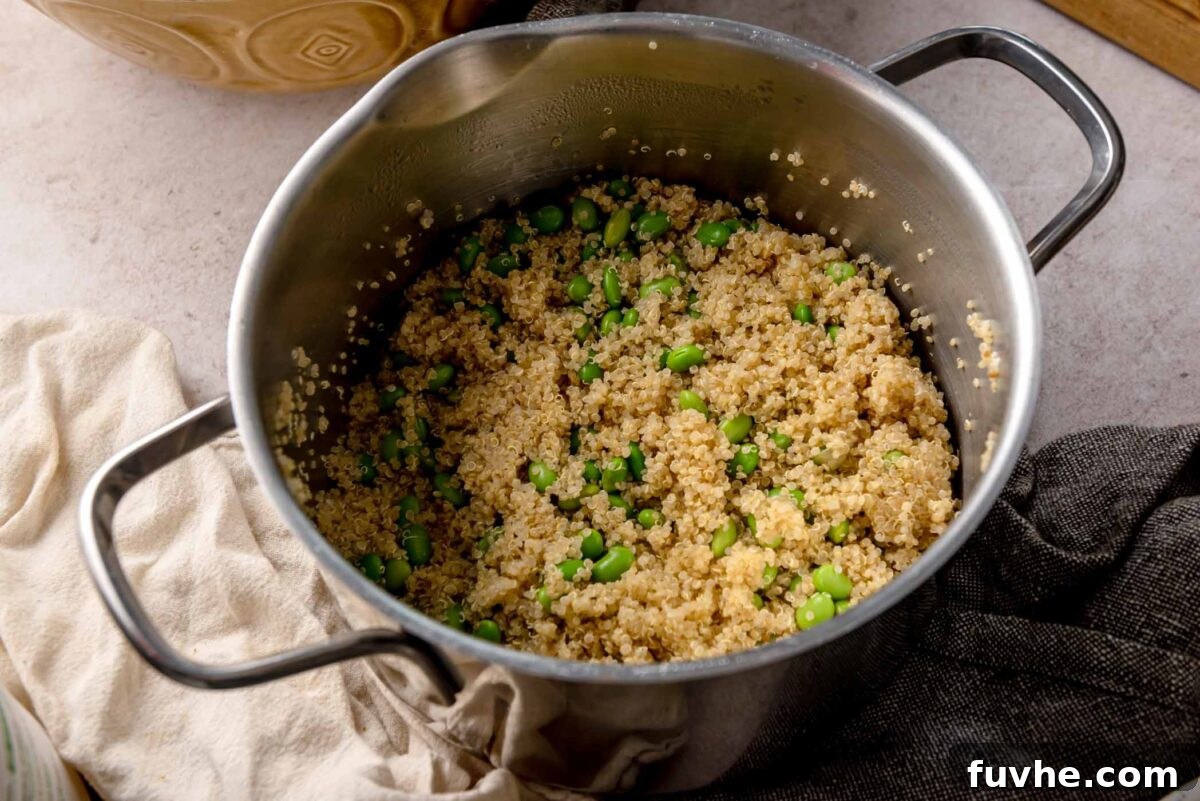
- Prepare the Quinoa and Edamame: Begin by adding your rinsed quinoa and 2 cups of water to a medium-sized pot. Season with a pinch of salt. Bring the mixture to a rapid boil over high heat. Once boiling, reduce the heat to its lowest setting, cover the pot tightly, and let it simmer for approximately 15 minutes, or until all the water has been absorbed and the quinoa appears tender and fluffy. Remove the pot from the heat. Carefully lift the lid, add the shelled edamame to the hot quinoa, and immediately replace the lid. Allow it to sit, still covered, for at least 5 more minutes. This steam-cooks the edamame and helps the quinoa finish fluffing. Afterwards, remove the lid and let the quinoa and edamame cool briefly to room temperature before adding them to your salad.
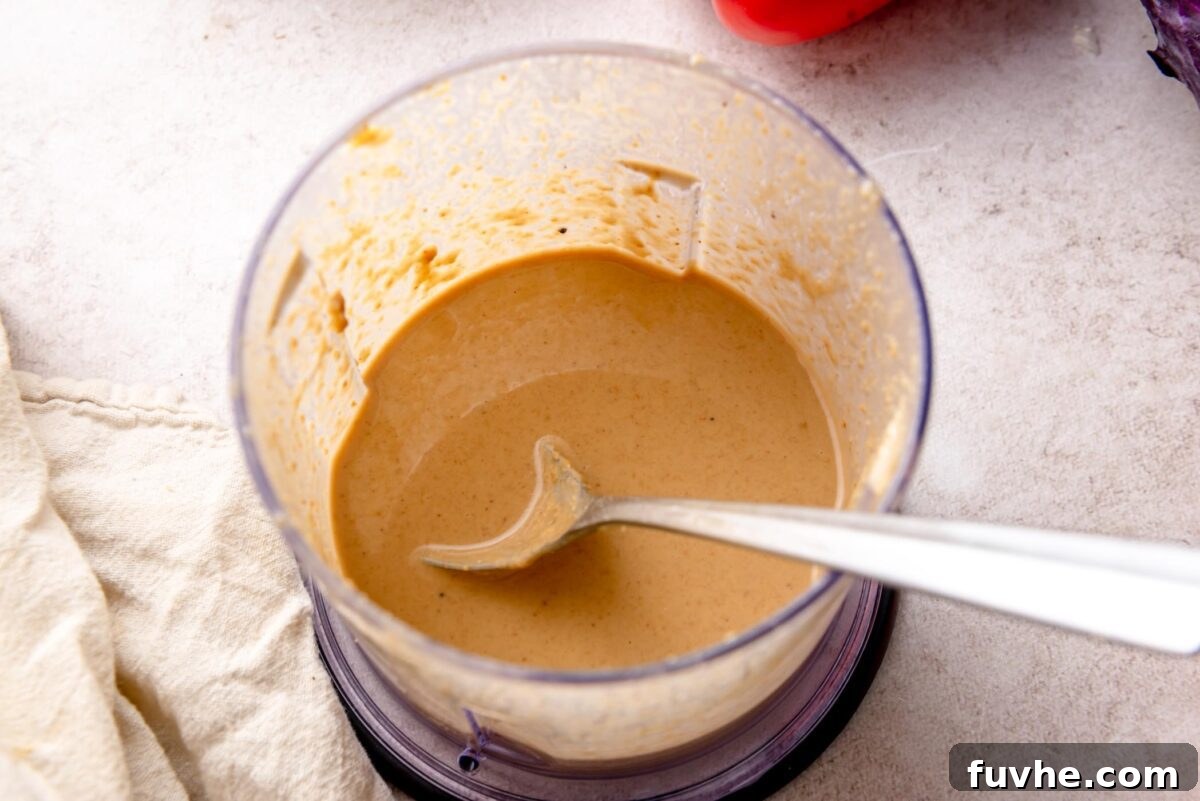
- Whip Up the Peanut Sauce: While the quinoa is cooking, prepare your luscious peanut dressing. Combine all the peanut sauce ingredients – peanut butter, tamari, grated fresh ginger, grated garlic, rice vinegar, sesame oil, maple syrup, lime juice, and your initial 2 tablespoons of warm water – in a small blender or a mini food processor. Blend until the sauce is completely smooth and creamy. If the sauce is too thick, add more warm water, one tablespoon at a time, blending after each addition, until it reaches your desired pourable consistency. Taste the sauce and adjust seasonings as needed, adding a pinch more salt or a dash of maple syrup if desired.
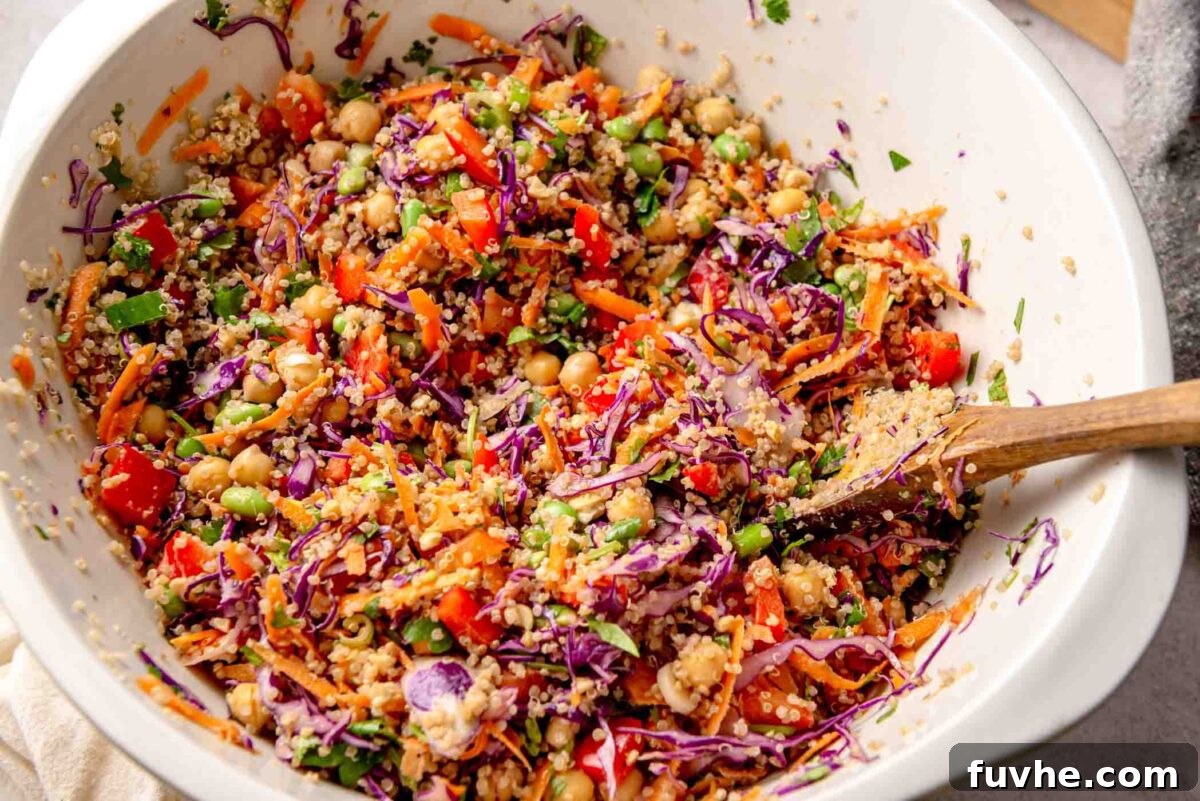
- Assemble and Toss the Salad: In a generously sized mixing bowl, combine the cooled quinoa and edamame with all the prepared fresh vegetables: shredded red cabbage, diced bell peppers, grated carrots, fresh cilantro, thinly sliced green onions, and drained chickpeas. Season the mixture lightly with salt and freshly ground black pepper to taste. Now, add about half of the chopped peanuts and cashews, and about half of your freshly prepared peanut dressing to the bowl. Using a large spoon or salad tongs, gently toss all the ingredients together until everything is thoroughly combined and coated in the delicious dressing.
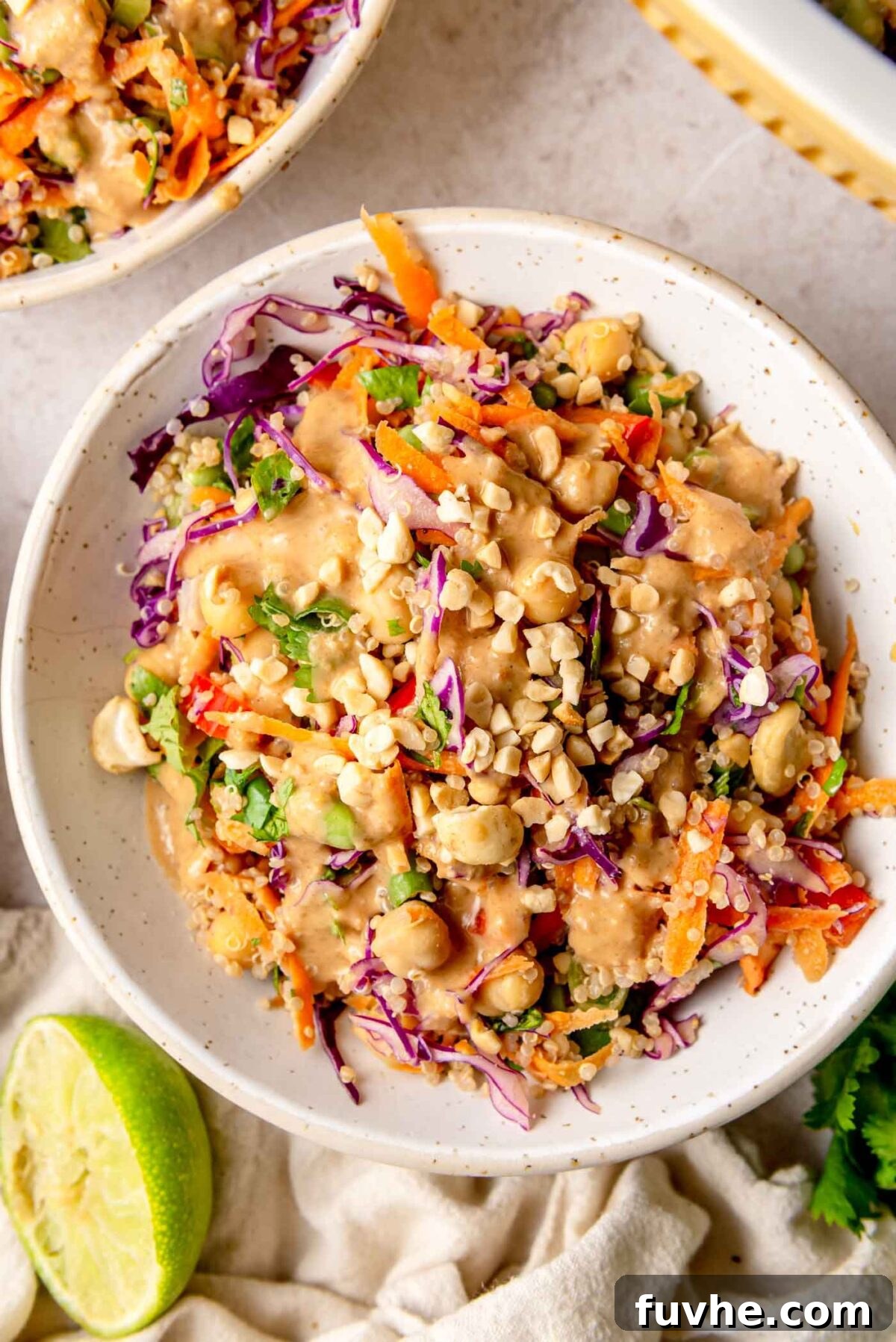
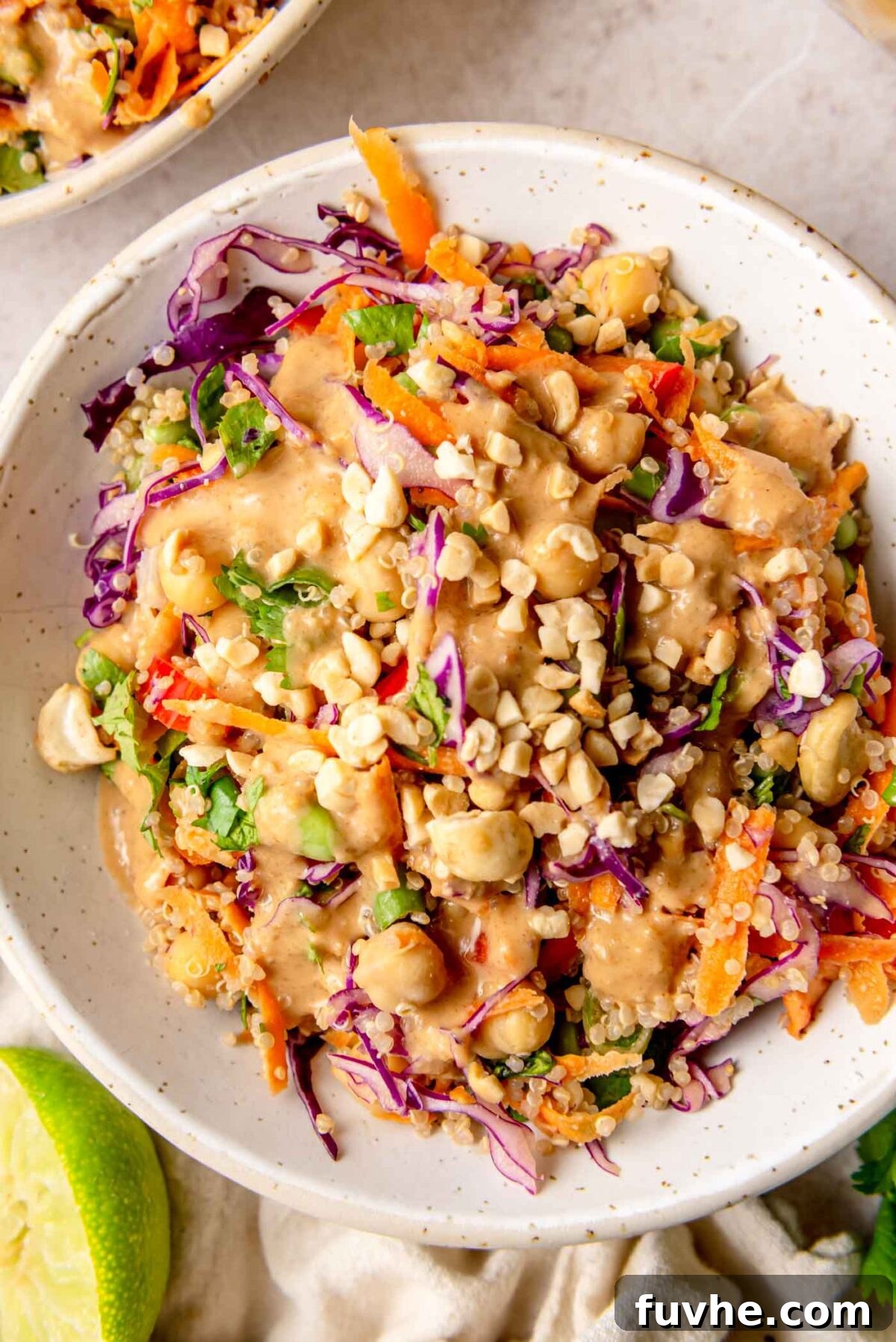
- Serve and Garnish: Divide the vibrant Thai Peanut Quinoa Salad among individual serving bowls. For an extra touch of flavor, texture, and visual appeal, drizzle each serving with some of the remaining peanut dressing. Finish by sprinkling the reserved chopped peanuts and cashews over the top. A final squeeze of fresh lime juice or an extra sprinkle of fresh cilantro can elevate the dish even further. Serve immediately and enjoy!
Expert Tips for the Most Delicious Thai Peanut Quinoa Salad
Achieving the perfect Thai Peanut Quinoa Salad is all about attention to detail. These expert tips will help you elevate your salad from great to truly exceptional, ensuring every bite is a burst of fresh, balanced flavor and delightful texture.
- Cool Your Quinoa Properly: It’s crucial to allow the cooked quinoa to cool down briefly before incorporating it into the salad. Hot quinoa can wilt the fresh vegetables and make the dressing too thin. Let it sit uncovered for a few minutes until it stops steaming. For faster cooling, spread it out on a baking sheet. This ensures your salad remains crisp and vibrant.
- Reserve Dressing & Toppings for Maximum Freshness: For the best texture and most potent flavor, especially if you’re meal prepping, reserve half of the peanut dressing and chopped nuts. Add these to each individual serving just before eating. This keeps the nuts crunchy and the dressing vibrant, preventing the salad from becoming soggy.
- Master the Art of Chopping: The size of your chopped vegetables significantly impacts the eating experience. Aim for small, uniform pieces (think bite-sized) for all your vegetables. This ensures you get a harmonious blend of every ingredient – quinoa, crunch, and dressing – in each delightful bite, creating a balanced flavor and texture profile.
- Adjust the Heat to Your Liking: The beauty of homemade dressing is customization. If you enjoy a fiery kick, don’t hesitate to drizzle extra sriracha or add more sambal oelek to your individual serving. For a milder version, simply reduce or omit the spicy elements from the dressing recipe.
- Garnish for Flair and Flavor: Fresh garnishes not only make your salad look more appealing but also add bursts of flavor. If you have extra fresh cilantro, a few lime wedges for a final squeeze, or additional thinly sliced green onion, these all make excellent toppings. A sprinkle of toasted sesame seeds or a few chili flakes can also enhance the presentation and taste.
- Taste and Adjust: Always taste your peanut dressing before mixing it into the entire salad. This allows you to adjust the saltiness, sweetness, or acidity to your preference. A little extra lime juice can brighten it, while a touch more maple syrup can mellow it out.
- Don’t Skimp on the Rinse: As mentioned, rinsing your quinoa thoroughly before cooking is a small step that makes a big difference. It removes the bitter saponin coating, ensuring a clean and pleasant flavor for your salad base.
Unpacking the Health Benefits: Is Thai Peanut Quinoa Salad Truly Healthy?
The short answer is a resounding yes! This Thai Peanut Quinoa Salad is not just delicious; it’s a powerhouse of nutrition, thoughtfully designed to provide a well-balanced, nutrient-dense meal that supports overall well-being. Unlike many takeout options that can be loaded with excessive sugars and unhealthy fats, this homemade version prioritizes whole, unprocessed ingredients. Let’s delve into why this salad is such a healthy choice:
- Complex Carbohydrates for Sustained Energy: Quinoa, the star grain of this salad, is a complete protein and an excellent source of complex carbohydrates. These carbs are digested slowly, providing a steady and sustained release of energy throughout your day, preventing the energy crashes often associated with simple sugars. This means you’ll feel full and energized for longer periods.
- Abundant Fiber for Digestive Health: This salad is packed with dietary fiber from multiple sources: quinoa, a vibrant array of fresh vegetables (red cabbage, carrots, bell pepper), chickpeas, and edamame. Fiber is essential for a healthy digestive system, aiding in regularity, promoting gut health, and helping to regulate blood sugar levels. The high fiber content also contributes significantly to satiety, helping you feel fuller on fewer calories.
- Healthy Fats for Satiety and Nutrient Absorption: The natural peanut butter and added nuts (cashews and peanuts) provide a good dose of healthy monounsaturated and polyunsaturated fats. These fats are crucial for hormone production, brain health, and the absorption of fat-soluble vitamins (A, D, E, K). Critically, healthy fats are highly satiating, meaning they contribute significantly to feeling full and satisfied after your meal, helping to manage cravings and prevent overeating.
- Rich in Plant-Based Protein: With quinoa, chickpeas, and edamame as core ingredients, this salad is an exceptional source of plant-based protein. Protein is vital for muscle repair and growth, satiety, and numerous bodily functions. For those following a vegetarian or vegan diet, this salad offers a complete and diverse protein profile, ensuring you meet your nutritional needs without relying on animal products.
- Micronutrient Marvel: Beyond macronutrients, this salad is brimming with essential vitamins and minerals. The colorful vegetables contribute Vitamin A (from carrots), Vitamin C (from bell peppers and lime), Vitamin K (from cabbage), and various B vitamins. You’ll also benefit from minerals like potassium, iron (from quinoa and chickpeas), magnesium, and zinc, all crucial for optimal health.
Compared to typical takeout-style peanut dishes, which can often be laden with excessive sodium, refined sugars, and inflammatory oils, this homemade Thai Peanut Quinoa Salad is a far superior choice. Our version is meticulously balanced, significantly higher in fiber, and thoughtfully designed to keep you feeling satisfied and nourished without any hidden unhealthy surprises.
Frequently Asked Questions About Thai Peanut Quinoa Salad
Absolutely! This Thai Peanut Quinoa Salad is specifically designed to be enjoyed cold or at room temperature. This makes it an ideal option for packed lunches, picnics, or a refreshing light dinner on a warm evening. Its flavors meld beautifully when chilled.
When stored in an airtight container in the refrigerator, this salad will maintain its freshness and delicious flavor for approximately 3-4 days. For optimal texture, especially if you plan to enjoy it over several days, consider storing the dressing separately until just before serving.
Yes, you certainly can! If you have a peanut allergy or simply prefer a different nut butter, almond butter or sunflower seed butter (like SunButter) make excellent substitutes for peanut butter in the dressing. While the flavor will naturally be different, these alternatives still create a wonderfully creamy and delicious sauce that pairs well with the salad ingredients.
No problem at all! You can still make the sauce by hand in a bowl. The key is to ensure your garlic and ginger are very finely grated or minced so they blend smoothly into the sauce. Whisk all the ingredients vigorously with a fork or a small whisk until thoroughly combined and smooth. It might take a little more effort, but the result will still be fantastic.
Absolutely! This salad is incredibly versatile. Feel free to add thinly sliced cucumber, finely diced red onion, blanched broccoli florets, or even some fresh spinach or kale. The more variety of colorful vegetables, the more nutrients and textures you’ll get!
Yes, this recipe is naturally gluten-free. Quinoa is a gluten-free grain, and by using tamari instead of regular soy sauce (which often contains wheat), you ensure the dressing is also gluten-free. Always double-check ingredient labels to confirm they are certified gluten-free, especially for tamari and peanut butter.
Smart Storage and Meal Prep Strategies for Your Quinoa Salad
The Thai Peanut Quinoa Salad is a true champion for meal preparation, making it an excellent choice for busy weeks. Its robust ingredients and flavorful dressing hold up remarkably well, allowing you to enjoy healthy, delicious meals without daily cooking. Here’s how to maximize its freshness and convenience:
- Storing Leftovers: Any leftover salad should be transferred to an airtight container and stored in the refrigerator. It will keep beautifully for up to 3-4 days. The flavors tend to meld and deepen over time, often tasting even better the next day!
- Optimizing for Freshness (Dressing Separation): For the absolute best texture and brightest flavor, particularly if you’re preparing a large batch for meal prep, we highly recommend storing the peanut sauce separately from the salad components. This prevents the vegetables from becoming too soft and the nuts from losing their crunch. When you’re ready to eat, simply add a portion of the salad to a bowl, drizzle with the reserved dressing, and sprinkle with any extra crunchy toppings.
- Storing Already Mixed Salad: If you’ve already mixed the entire salad with the dressing, it will still store well in an airtight container in the fridge for 3-4 days. Just be aware that the texture of the vegetables may soften slightly over time, and the nuts will lose some of their initial crispness. It will still be delicious and perfectly safe to eat.
- Streamlined Meal Prep: To set yourself up for success, portion the cooked quinoa, vegetables, and legumes into individual meal prep containers at the beginning of the week. Store your homemade peanut dressing in small, separate jars or mini containers. This method ensures each serving is as fresh as possible. Add any delicate fresh herbs (like extra cilantro) or crunchy toppings (like peanuts and cashews) right before serving to maintain their vibrancy and texture.
- Freezing Is Not Recommended: Due to the high water content of many fresh vegetables and the texture of cooked quinoa, freezing this salad is not recommended. It will likely result in a mushy texture upon thawing. This salad is best enjoyed fresh or refrigerated.
By following these simple storage and meal prep guidelines, you can ensure that your delicious Thai Peanut Quinoa Salad remains a convenient and satisfying option throughout your busy week, making healthy eating both easy and enjoyable.
If you create this vibrant recipe, we’d love to hear from you! Please consider leaving a comment and a ⭐⭐⭐⭐⭐ rating in the section below. Your feedback helps other home cooks discover and enjoy this recipe, and it brings us so much joy to hear about your culinary successes. Thank you for choosing and trying our recipes! – Deryn
Thai Peanut Quinoa Salad Recipe Card
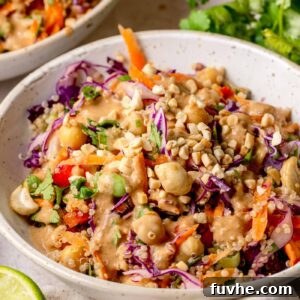
Thai Peanut Quinoa Salad
By: Deryn Macey
A fresh, flavor-packed Thai peanut quinoa salad made with fresh vegetables, quinoa, and a creamy peanut sauce. This healthy, meal prep-friendly salad is perfect for lunches or quick dinners and can be easily customized with your favorite protein or extra veggies.
Prep: 15 mins
Cook: 15 mins
Total: 30 mins
Servings: 6
Ingredients
For the Quinoa Salad
- 1 cup quinoa, rinsed
- 2 cups water
- 2 cups red cabbage, shredded or thinly sliced
- 1 red bell pepper, diced
- 2 cups grated carrot
- 1 cup edamame, shelled
- 1 can chickpeas, drained and rinsed (approx. 540 mL or 19 oz)
- 1 cup cilantro, roughly chopped
- 3 green onions, thinly sliced
- ⅓ cup peanuts, chopped
- ⅓ cup cashews, chopped
- Salt and pepper, to taste
For the Peanut Sauce
- ¼ cup all-natural peanut butter (approx. 60 g)
- 2 tbsp tamari (15 mL)
- 1 tbsp fresh ginger, grated
- 2 cloves garlic, grated
- 1 tbsp rice vinegar (15 mL)
- 2 tsp sesame oil (10 mL)
- 1 tbsp maple syrup (15 mL)
- 1-2 tsp sambal oelek or chili garlic paste, optional, for heat
- 1 lime, juiced
- 2-3 tbsp warm water, as needed for consistency
- Pinch of salt, if needed
Instructions
- Cook Quinoa and Edamame: To a medium pot, add rinsed quinoa and 2 cups water. Season with a pinch of salt. Bring to a simmer over high heat. Once simmering, reduce heat to low, cover, and cook for 15 minutes, until quinoa is tender and water is absorbed. Remove the pot from the heat. Lift the lid, add shelled edamame, and then cover again. Let it sit, still covered, for at least 5 more minutes. Remove lid and let cool briefly.
- Make Peanut Sauce: Combine all ingredients for the peanut sauce (peanut butter, tamari, ginger, garlic, rice vinegar, sesame oil, maple syrup, sambal oelek/chili garlic paste (if using), lime juice, and 2 tbsp warm water) in a small blender or mini food processor. Blend until smooth. Start with 2 tbsp water, blend, then slowly add more water as needed to adjust to a pourable consistency. Taste and season with salt, if needed.
- Toss Salad: To a large bowl, add the cooled cooked quinoa and edamame, shredded cabbage, diced bell peppers, grated carrots, chopped cilantro, and sliced green onions. Add the drained chickpeas. Season with salt and pepper to taste. Add about half of the chopped peanuts and cashews and about half of the prepared peanut dressing. Stir until all ingredients are well combined and coated.
- Serve: Divide the salad among serving bowls. Top each serving with more of the reserved dressing and the remaining nuts. Enjoy immediately.
Notes
This recipe yields approximately 6 servings, or about 10 cups of total salad volume. Each serving is roughly 1.5 heaping cups.
If preparing the salad ahead of time for meal prep, it is highly recommended to store the peanut dressing separately. This practice helps maintain the crisp texture of the vegetables and the crunch of the nuts, ensuring the best flavor and consistency when you’re ready to eat. The salad (without dressing) will keep for 3-4 days in the fridge, and the dressing can be stored separately for up to 5 days. If the salad is already mixed with dressing, it will still store well for 3-4 days in the refrigerator, but expect the texture to soften slightly over time.
Nutrition
Like this recipe? Rate and comment below!