

Irresistible Vegan Lemon Shortbread Cookies with Zesty Glaze
Prepare to delight your taste buds with these incredibly **easy vegan lemon shortbread cookies**, complete with a vibrant, tangy lemon icing. These delightful treats are an absolute dream come true for any lemon aficionado, offering a perfect balance of rich flavor and delightful texture.
Shortbread cookies, renowned for their tender, buttery crumble, effortlessly elevate any occasion, especially during the festive holiday season. Our vegan rendition captures that classic charm, delivering a sublime combination of crisp edges, a melt-in-your-mouth interior, and that invigorating sweet-tart lemon kick. They are truly a testament to how delicious and satisfying plant-based baking can be.

Beyond their exquisite taste, these **vegan lemon shortbread cookies** are wonderfully versatile. Feel free to unleash your creativity by using your favorite cookie cutters to shape them for specific celebrations, whether it’s charming bunnies and eggs for Easter, festive stars and trees for Christmas, or elegant flowers for Mother’s Day. If simplicity is your preference, a standard drinking glass will perfectly create those timeless, classic circular cookies that always impress.
You’ll fall in love with the **melt-in-your-mouth texture** of these delicious cookies, a hallmark of excellent shortbread. And with their simple, bright lemon glaze, generously sprinkled with fresh lemon zest, they become miniature works of art – almost too pretty to eat, but too delicious to resist!
For those who can’t get enough of that refreshing lemon flavor, be sure to explore more of our delightful lemon desserts. Our Vegan Olive Oil Cake with Lemon Glaze offers a sophisticated citrus experience, while the Vegan Lemon Bars deliver a classic, creamy tang. And for a delightful breakfast or afternoon treat, our Vegan Lemon Loaf is simply perfect. All these recipes boast a bright, invigorating lemon flavor that makes them ideal for warm weather, holiday gatherings, or any special occasion you wish to brighten.
If you’re a devoted fan of shortbread cookies in general, don’t miss out on these other fantastic recipes that capture similar tender textures and rich flavors: our delightful Pecan Snowball Cookies and the indulgent Chocolate Snowball Cookies are equally worth trying for their irresistible charm.
Why You’ll Adore These Lemon Shortbread Cookies: Recipe Highlights
These vegan lemon shortbread cookies aren’t just a treat; they’re a celebration! Here’s what makes this recipe truly stand out and why it’s poised to become a staple in your baking repertoire:
- A Citrus Lover’s Dream: Perfectly infused with bright, fresh lemon, these cookies offer an unparalleled zestiness that lemon enthusiasts will adore.
- Celebration-Ready: Their delightful flavor and adaptable shapes make them ideal for a wide range of festivities, including **Christmas, Easter, Mother’s Day**, birthdays, baby showers, or simply as a thoughtful edible gift.
- Remarkably Simple Ingredients: Crafted with **just 5 essential ingredients** for the cookies themselves, proving that extraordinary flavor doesn’t require a complex pantry.
- Completely Vegan: Mindfully made without any dairy or eggs, these cookies are a **dairy-free and egg-free** delight, perfect for those with dietary restrictions or anyone embracing a plant-based lifestyle.
- Effortless to Prepare: Designed with simplicity in mind, this recipe is **easy to make**, even for beginner bakers, ensuring a rewarding and stress-free baking experience.
- Prepare Ahead Convenience: The dough is incredibly forgiving and can be **made in advance**, allowing you to split your baking process and enjoy fresh cookies with minimal fuss when guests arrive.
- Freezer-Friendly: Bake a big batch and store them for later! These cookies are **freezer-friendly**, meaning you can enjoy their fresh taste whenever a craving strikes.
- Perfect Edible Gift: Beautifully presented and undeniably delicious, they make a fantastic **edible gift** for friends, family, or neighbors, spreading joy with every bite.
Essential Ingredients for Perfect Vegan Lemon Shortbread
Creating the perfect batch of vegan lemon shortbread starts with understanding each ingredient’s role. While the list is short, quality matters for that signature melt-in-your-mouth texture and bright flavor.
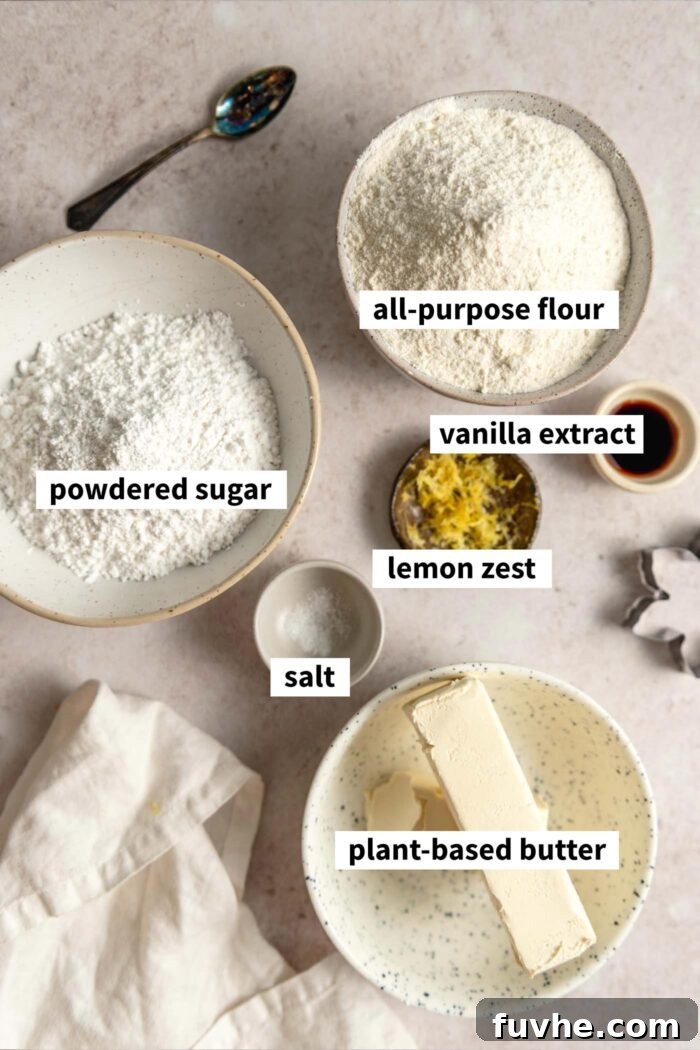
- Plant-Based Butter: This is the foundation of our “buttery” shortbread. For the best results, I highly recommend using **plant-based butter sticks** rather than tub margarine. Brands like Earth Balance, Melt Organic, or Country Crock offer the right fat content and consistency, which is crucial for achieving that authentic shortbread texture. Ensure it’s softened, but not melted, for optimal creaming.
- Powdered Sugar: Also known as confectioners’ sugar or icing sugar, this finely milled sugar is key to both the cookie’s tender texture and the smooth glaze. Its fine particles dissolve beautifully into the butter, preventing a grainy mouthfeel and contributing to the delicate crumb of the shortbread. It will be used for both the cookie dough and the optional lemon glaze.
- Vanilla Extract: While lemon is the star, a good quality **pure vanilla extract** adds a subtle warmth and depth that complements the bright citrus without overpowering it. If you only have artificial vanilla, that will work, but pure extract truly enhances the overall flavor profile.
- All-Purpose Flour: Standard **all-purpose flour** provides the necessary structure for these cookies. Make sure to measure it correctly (preferably by weight) to avoid a tough or crumbly dough. This recipe is specifically designed for all-purpose flour.
- Lemon: The essence of these cookies! You’ll need **fresh lemons** to extract both the bright, fragrant zest and the tangy juice. Fresh lemon zest provides an unparalleled aromatic intensity that lemon extract often can’t replicate. While lemon extract can be substituted, using fresh zest will always yield the best, most authentic lemon flavor and aroma. Don’t skip the zest – it’s where most of the lemon magic happens!
- Salt: Just a pinch of salt helps to balance the sweetness and enhance all the other flavors, particularly the lemon. It’s a small addition that makes a big difference.
This list provides an overview of the key ingredients. For precise measurements and comprehensive step-by-step instructions, please refer to the complete recipe card located at the end of this post.
Creative Variations to Elevate Your Shortbread
While these vegan lemon shortbread cookies are perfect as they are, they also serve as a fantastic base for culinary experimentation. Don’t be afraid to get creative and personalize your batch with these delightful variations:
- Almond Shortbread: For a nutty, sweet flavor profile, simply omit the lemon zest from the dough and instead add **1 teaspoon of almond extract**. The almond extract beautifully complements the rich, buttery texture of the shortbread.
- Add Nuts: Introduce a delightful crunch and extra flavor by folding in chopped nuts to the dough. Finely chopped **almonds, pecans, or pistachios** would all be excellent choices, adding a lovely textural contrast.
- Orange Shortbread: If you’re looking for a different citrus twist, swap the lemon zest for **fresh orange zest** to create vibrant and fragrant orange shortbread cookies. You can also make an orange glaze using orange juice instead of lemon.
- Dip in Chocolate: For an indulgent treat, omit the lemon zest from the cookies entirely and, once baked and cooled, dip them in melted **dark chocolate**. The richness of the chocolate pairs wonderfully with the simple shortbread base. You could even add a sprinkle of flaky sea salt on top of the chocolate.
- Rosemary Lemon Shortbread: This is a sophisticated and unique flavor combination that truly shines. Try adding **2 tablespoons of finely minced fresh rosemary leaves** to the dough along with the lemon zest. The herbaceous notes of rosemary offer a delightful counterpoint to the bright lemon.
- Lemon Lime Shortbread: Amplify the citrus symphony by adding **1 tablespoon of fresh lime zest** alongside the lemon zest. This creates an even brighter, more complex citrus flavor that’s wonderfully refreshing.
- Spice It Up: For a warming touch, consider adding a pinch of ground cinnamon or cardamom to the dough, especially lovely for fall or winter baking.
Step-by-Step Guide to Baking Your Vegan Lemon Shortbread
Making these delightful vegan lemon shortbread cookies is a straightforward process, but following these detailed steps carefully will ensure perfect results every time. Get ready to enjoy the aroma of fresh lemon filling your kitchen!

Step 1: Cream the Butter and Sugar. In a large mixing bowl, combine the softened plant-based butter and powdered sugar. Using a hand-held electric mixer (or a stand mixer with the paddle attachment), beat these ingredients together for 1-2 minutes. The mixture should transform into a light, pale, and fluffy consistency. This creaming process incorporates air, which is crucial for tender shortbread. Once fluffy, add the vanilla extract and beat again briefly until just combined.
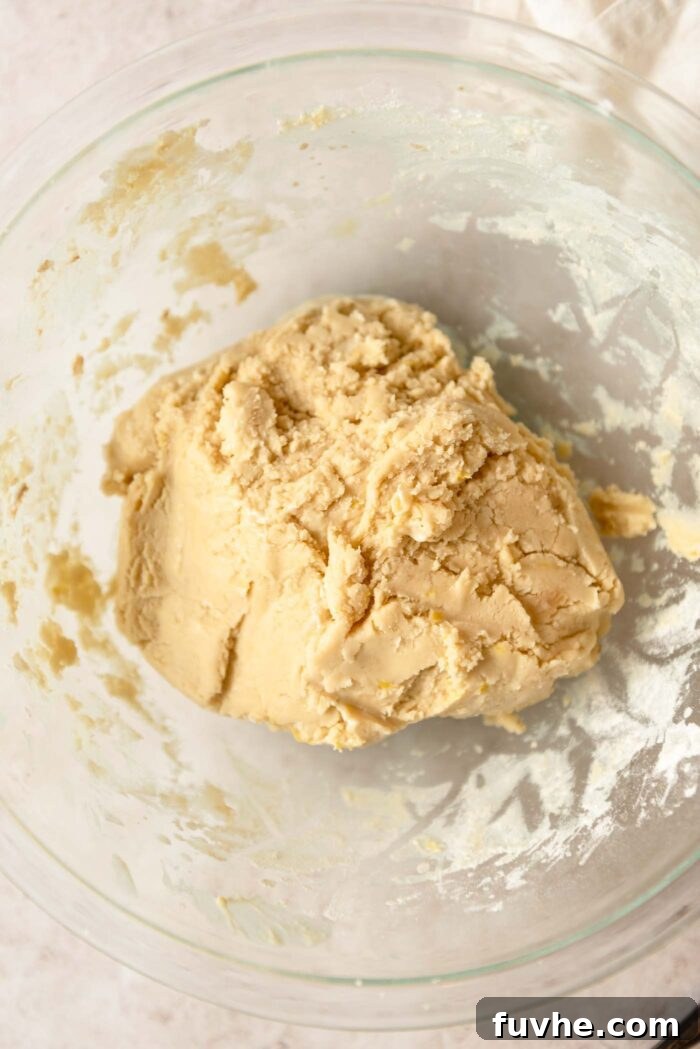
Step 2: Combine Dry Ingredients and Chill the Dough. To the creamed butter mixture, add the all-purpose flour, a pinch of salt, and the fresh lemon zest. Begin mixing on a low speed to prevent flour from flying out, then gradually increase to medium-high. Mix until a uniform, cohesive dough forms. You might need to pause and scrape down the sides of the bowl with a spatula to ensure all ingredients are fully incorporated. Once the dough is formed, gather it into a ball, wrap the bowl tightly in plastic wrap, or transfer the dough to a zip-top bag. Chill the dough in the refrigerator for at least 30 minutes. This chilling period is vital for preventing the cookies from spreading too much during baking. While the dough chills, preheat your oven to 325°F (160°C) and prepare a baking sheet by lining it with parchment paper.
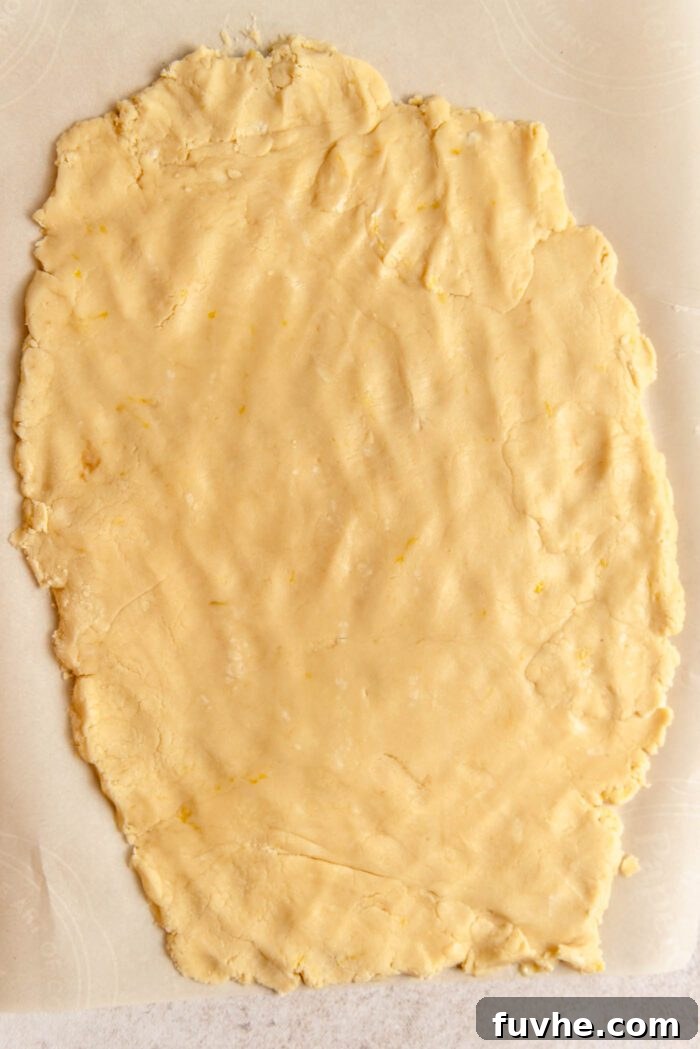
Step 3: Roll the Dough. Remove half of the chilled dough from the fridge (keeping the other half chilled until ready to use). Place this portion of dough between two sheets of parchment paper or on a lightly floured surface. Using a rolling pin, roll the dough evenly until it is approximately **1/4-inch (0.6 cm) thick**. Aim for consistent thickness across the entire sheet of dough to ensure even baking. The parchment paper helps prevent sticking and makes transfer easier.

Step 4: Cut and Arrange Cookies. Using your chosen cookie cutters or a small drinking glass, cut out the desired shapes from the rolled dough. Carefully transfer the cut-out cookies to the prepared baking sheet, leaving about an inch between each cookie. Once you’ve cut as many cookies as possible from the first roll, gather the remaining dough scraps, gently press them together, roll them out again, and cut out an additional 1-2 cookies. Repeat this process until you’ve used up all of the dough from that half. You should yield around 17-20 cookies from the entire batch, depending on their size and thickness.
Pro Tip for Batch Baking: As your first batch of cookies goes into the oven, retrieve the second half of the dough from the fridge. Roll and cut out these cookies, placing them on a second parchment-lined baking sheet. Place these cut-out cookies back into the refrigerator until the first batch is finished baking and ready to be removed from the oven. This ensures the dough stays cold, preventing excess spreading.

Step 5: Bake and Cool. Bake the cookies for 12-14 minutes in your preheated oven. Keep a close eye on them; you’ll know they’re ready when the edges are just beginning to turn a delicate golden brown. The tops of the cookies will typically remain pale, which is characteristic of perfect shortbread. Avoid over-baking, as this can make them too hard. Once baked, carefully transfer the hot cookies to a wire rack using a thin spatula. Allow them to cool completely before proceeding to the glazing step.

Step 6: Prepare and Glaze. While the cookies are cooling, prepare your lemon glaze. In a small bowl, combine the powdered sugar with 1-2 tablespoons of fresh lemon juice. Start with 1 tablespoon of juice and mix thoroughly. Add more lemon juice, half a teaspoon at a time, until you achieve a thick, smooth, and spreadable consistency. It should be thick enough to coat a spoon but thin enough to spread easily. Once the cookies are completely cool to the touch, spread the bright lemon glaze evenly over the top of each cookie using a small knife or offset spatula.
For an extra flourish and an intensified burst of citrus flavor, immediately sprinkle a little more fresh lemon zest over the iced cookies while the glaze is still wet. This not only enhances the taste but also makes for a beautifully elegant presentation!

Master Baker Tips for Flawless Vegan Lemon Shortbread
Achieving bakery-quality shortbread at home is entirely possible with a few expert insights. Keep these tips in mind to ensure your vegan lemon shortbread cookies turn out perfectly every time:
- Weigh Your Ingredients for Precision: For consistently best results, especially in baking, always use a **digital kitchen scale to measure your ingredients**. Flour, in particular, can be easily over-measured by volume. Accurate ratios of flour, butter, and sugar are paramount for the perfect shortbread texture, and a scale guarantees precision and success.
- Butter Temperature is Key: Ensure your plant-based butter is truly softened, but not melted or greasy. It should be pliable enough to leave an indentation when pressed, but still cool to the touch. This ideal temperature allows it to cream beautifully with the sugar, creating that airy, light base.
- Don’t Overwork the Dough: Once the flour is added, mix just until the ingredients are combined and a uniform dough forms. Over-mixing can develop the gluten in the flour, leading to tough rather than tender shortbread.
- Chill Thoroughly: The chilling step is not optional! It helps the butter solidify and prevents the cookies from spreading too much in the oven, ensuring they hold their shape and maintain a delicate crumb. Don’t rush this part.
- Even Thickness for Even Baking: When rolling out the dough, strive for a consistent 1/4-inch thickness across the entire surface. Uneven thickness will result in some cookies baking faster or slower than others, leading to burnt edges or underbaked centers.
- Listen to Your Oven (and Your Nose!): Oven temperatures can vary. Pay attention to the visual cues – golden edges and pale tops – rather than strictly adhering to the timer. The delightful aroma of freshly baked shortbread is also a great indicator.
- Perfecting the Glaze: Achieving the right glaze consistency is important. It should be thick enough to cling to the cookies but still pourable or spreadable. If it’s too thin, add a little more powdered sugar; if too thick, add a tiny drop of lemon juice (or water) at a time until perfect.
- Cool Completely Before Glazing: Always allow your cookies to cool entirely on a wire rack before applying the glaze. Glazing warm cookies will cause the glaze to melt and run off, resulting in a messy, uneven finish.
Frequently Asked Questions (FAQs) About Vegan Lemon Shortbread
Got questions about baking these delightful vegan lemon shortbread cookies? We’ve got answers to help you achieve perfect results every time.
Absolutely! This is one of the fantastic advantages of shortbread dough. You can prepare the dough up to 24 hours in advance. Simply wrap it well in plastic wrap or place it in an airtight container and store it in the fridge until you’re ready to roll and bake. This makes it a perfect make-ahead option for entertaining or busy schedules.
The key to perfectly baked shortbread is paying attention to the edges. Your cookies are baked when they are light in color, with their bottoms and edges turning a delicate, light golden brown. The tops will typically remain pale, which is desirable for shortbread. If you prefer a slightly crispier, more golden brown shortbread, you can bake them for a few extra minutes, but be cautious not to over-bake. Over-baking will lead to cookies that are too hard and overly crispy, losing that signature tender shortbread texture.
Generally, it doesn’t matter too much for shortbread, as the amount of salt in salted butter is usually minimal. However, if you opt for unsalted plant-based butter, remember to adjust the pinch of salt in the recipe accordingly. You might want to add a slightly larger pinch (around 1/4 teaspoon) to ensure the flavors are well-balanced. If using salted butter, stick to the recipe’s recommended pinch.
Yes, absolutely! Chilling the dough is a crucial step for achieving the best results with shortbread. For optimal texture and to prevent excessive spreading during baking, chill the dough for at least 30-60 minutes. When you’re ready to bake, remove half of the dough from the fridge, roll it out, and cut your cookies. Once that first batch is in the oven, prepare the second batch of dough, place the cut cookies on a baking sheet, and return them to the fridge until the oven is ready for them. This staggered chilling ensures your cookies maintain their shape and delicate crumb.
Cookies typically spread too much if the butter was too warm when mixed, or if the dough wasn’t sufficiently chilled before baking. Ensure your plant-based butter is softened but still cool, and always chill the dough for the recommended time (or even longer if your kitchen is warm) before rolling and baking.
While this recipe uses all-purpose flour, you can often adapt shortbread recipes to be gluten-free. Try substituting the all-purpose flour with a 1:1 gluten-free baking flour blend that contains xanthan gum. Results may vary slightly in texture, but many readers have had success with this modification. Always ensure your chosen blend is suitable for cut-out cookies.

Storage and Freezing Instructions for Freshness
Proper storage is essential to keep your delicious vegan lemon shortbread cookies fresh and flavorful for as long as possible. Here’s how to best store them:
- Cool Completely First: Before storing, ensure your cookies are **completely cooled** down to room temperature. Storing warm cookies will create condensation, making them soft and potentially soggy.
- Room Temperature Storage: Once cooled, store the cookies in an **airtight container** at room temperature for up to **5-7 days**. Place a piece of parchment paper between layers to prevent them from sticking, especially if they are iced.
- Refrigerated for Longer Freshness: For an extended shelf life, or if you prefer a chilled treat, store the cookies in an airtight container in the fridge for up to **10 days**. The cool temperature can sometimes make the shortbread slightly firmer, which some people enjoy.
- Freezing for Long-Term Enjoyment: These cookies are wonderfully freezer-friendly, allowing you to enjoy fresh-tasting shortbread for months!
- To Freeze Baked Cookies: Arrange the completely cooled, unfrosted cookies in a single layer on a baking tray and freeze until solid. Once frozen, transfer them to a freezer bag or an airtight freezer-safe container, layering with pieces of parchment or wax paper between layers to prevent sticking. They can be frozen for up to **4 months**.
- To Freeze Dough: The unbaked dough can also be frozen. Wrap the dough tightly in plastic wrap, then place it in a freezer bag. Freeze for up to 3 months. Thaw in the refrigerator overnight before rolling and baking as usual.
- Thawing Frozen Cookies: To enjoy frozen cookies, simply remove them from the freezer and let them thaw at room temperature for about 30-60 minutes, or enjoy them chilled straight from the freezer for a different texture.

★
★
★
★
Lemon Shortbread Cookies
Deryn Macey
40
14
20
Rate Recipe
Print Recipe
Ingredients
For the Shortbread Cookies
-
¾ cup plant-based butter, softened (175 g) -
¾ cup powdered sugar, 120 g -
1 tsp vanilla extract -
pinch of salt -
2 cups all-purpose flour, 280 g -
1 lemon, zested, about 1 tbsp
For the Glaze (Optional)
-
1-2 tbsp fresh lemon juice -
1 cup sifted powdered sugar
Instructions
-
Beat Butter and Sugar: In a large mixing bowl, combine the softened plant-based butter and powdered sugar. Use a hand-held electric mixer or a stand mixer with the paddle attachment to beat for 1-2 minutes until the mixture is light, airy, and fluffy. This creaming step is crucial for the tender texture of shortbread. Add the vanilla extract and beat again briefly until well combined.
-
Add Dry Ingredients & Form Dough: To the creamed mixture, add the all-purpose flour, a pinch of salt, and the fresh lemon zest. Begin mixing on a low speed, then increase to medium-high. Continue beating until a uniform, cohesive dough forms. You may need to stop the mixer and scrape down the sides of the bowl to ensure all ingredients are fully incorporated. Avoid over-mixing once the flour is added.
-
Chill Dough: Gather the dough into a ball. Wrap it tightly in plastic wrap or transfer it to a zip-top bag, ensuring it’s well sealed. Place the dough in the refrigerator and chill for at least 30 minutes. This chilling period is essential to prevent the cookies from spreading excessively during baking. The dough can also be prepared up to 1 day in advance and stored in the fridge until ready to roll out and bake.
-
Prepare to Bake: While the dough is chilling or just before you begin rolling, preheat your oven to 325°F (160°C). Line two large baking sheets with parchment paper; this will prevent sticking and make cleanup easier.
-
Roll and Cut Dough: Remove half of the chilled dough from the fridge, keeping the remaining half chilled. Place the dough between two sheets of parchment paper or on a lightly floured surface. Use a rolling pin to roll the dough out to an even 1/4-inch (0.6 cm) thickness. Use your preferred cookie cutters or a small drinking glass to cut the dough into desired shapes (or simply cut into squares or rectangles with a knife). Carefully transfer the cut-out cookies to one of the prepared baking sheets, leaving about 1 inch (2.5 cm) of space between each. Gather any dough scraps, gently press them together, re-roll, and cut more cookies until all the dough from that half is used. You should yield approximately 17-20 cookies from the entire batch, depending on their size.
-
Bake Cookies: Place the baking sheet with the first batch of cookies into the preheated oven. Bake for 12-14 minutes, or until the edges and bottoms are just lightly golden brown. The tops of the cookies should remain pale. While the first batch bakes, repeat the rolling and cutting process with the second half of the dough. Place these cut cookies on the second baking sheet and keep them in the fridge until the first batch is out of the oven.
-
Cool Cookies: Once baked, carefully transfer the cookies from the baking sheet to a wire rack. Allow them to cool completely to room temperature before applying any glaze.
-
Prepare Glaze: In a small bowl, whisk together the powdered sugar and 1-2 tablespoons of fresh lemon juice until smooth. Begin with 1 tablespoon of lemon juice, then add more incrementally (a half teaspoon at a time) until you achieve your desired consistency. The glaze should be creamy and spreadable but still thick enough to coat the cookies without being too runny.
-
Glaze Cookies: Once the cookies are completely cool, dip, drizzle, or spread the prepared lemon glaze over the top of each one. For an additional decorative touch and a burst of extra lemon flavor, sprinkle more fresh lemon zest over the glazed cookies before the glaze has a chance to set. If you choose to dip the cookies, place a cooling rack over a baking sheet to catch any excess glaze.
Notes
Sugar Terminology: Powdered sugar is also commonly known as confectioners’ sugar or icing sugar. They are all the same finely milled sugar.
Storage Tips: After the cookies have cooled completely, store them in a sealed, airtight container at room temperature for up to 5 days. For longer freshness, they can be kept in the fridge for up to 10 days. To freeze, arrange layers in an airtight container with a piece of parchment or wax paper between each layer. They can be safely frozen for up to 4 months.
Nutrition Information: The provided nutrition facts are calculated for a batch yielding 20 cookies and include the lemon glaze. If you choose to make the cookies without the glaze, each cookie would be approximately 124 calories for a batch of 20.
Nutrition
Serving:
1
cookie
,
Calories:
147
kcal
,
Carbohydrates:
20
g
,
Protein:
1.5
g
,
Fat:
7
g
,
Sodium:
117
mg
,
Fiber:
0.5
g
,
Sugar:
10
g
Like this recipe? Rate and comment below!