
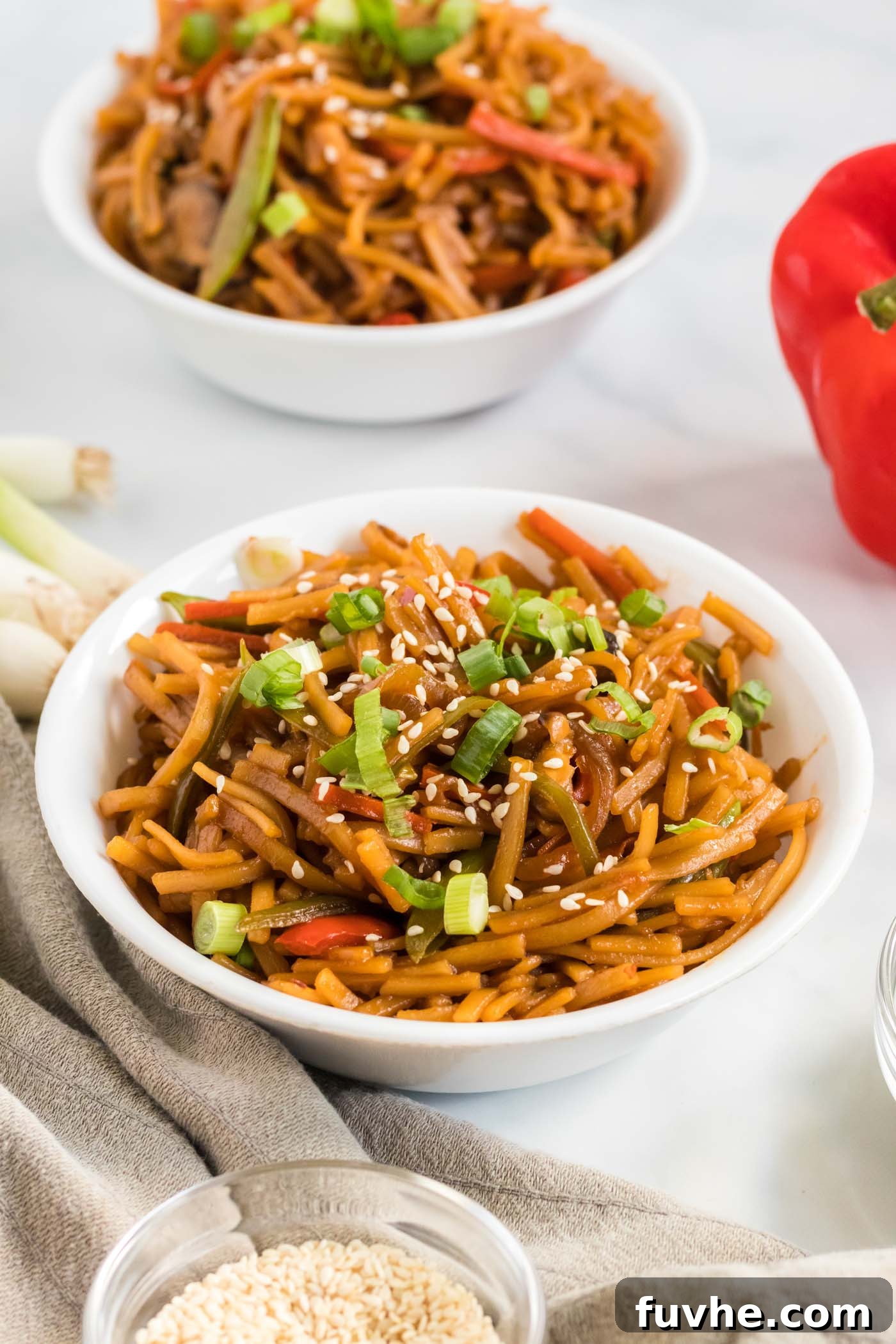
Delightful & Easy Vegan Lo Mein: Your Go-To 30-Minute Plant-Based Noodle Stir-Fry
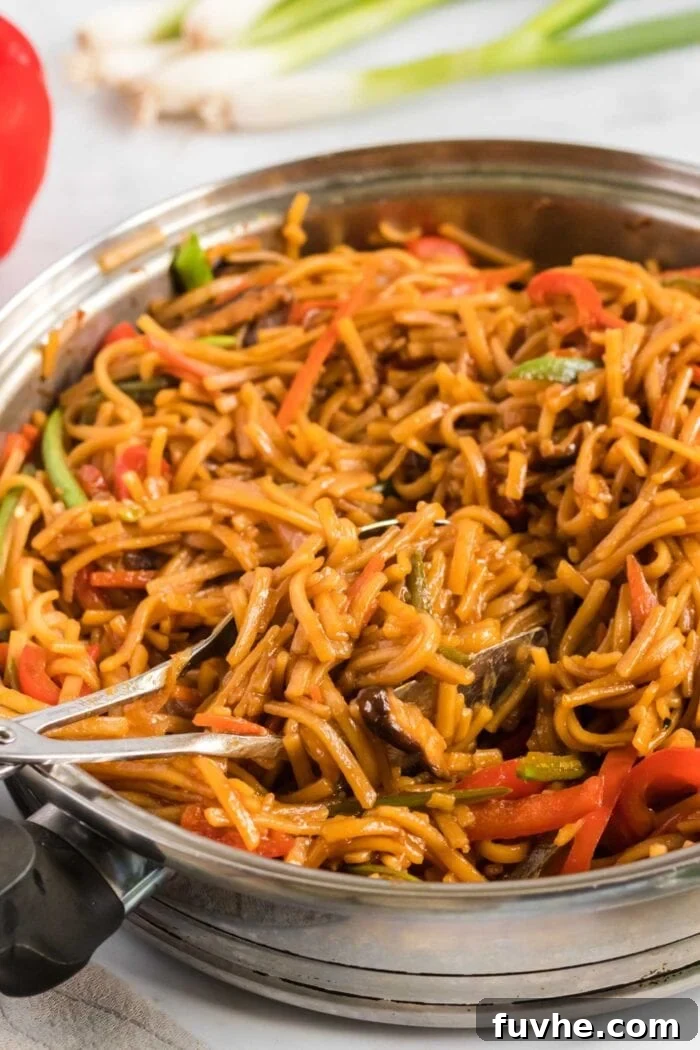
Craving a restaurant-quality meal that’s both quick and incredibly satisfying? This vegan lo mein recipe delivers a vibrant, flavorful, and easy-to-make stir-fry in just 30 minutes, perfect for a busy weeknight dinner or a delightful weekend treat. Bursting with fresh vegetables and coated in a savory, umami-rich sauce, it’s a wholesome dish that proves plant-based eating can be utterly delicious and convenient.
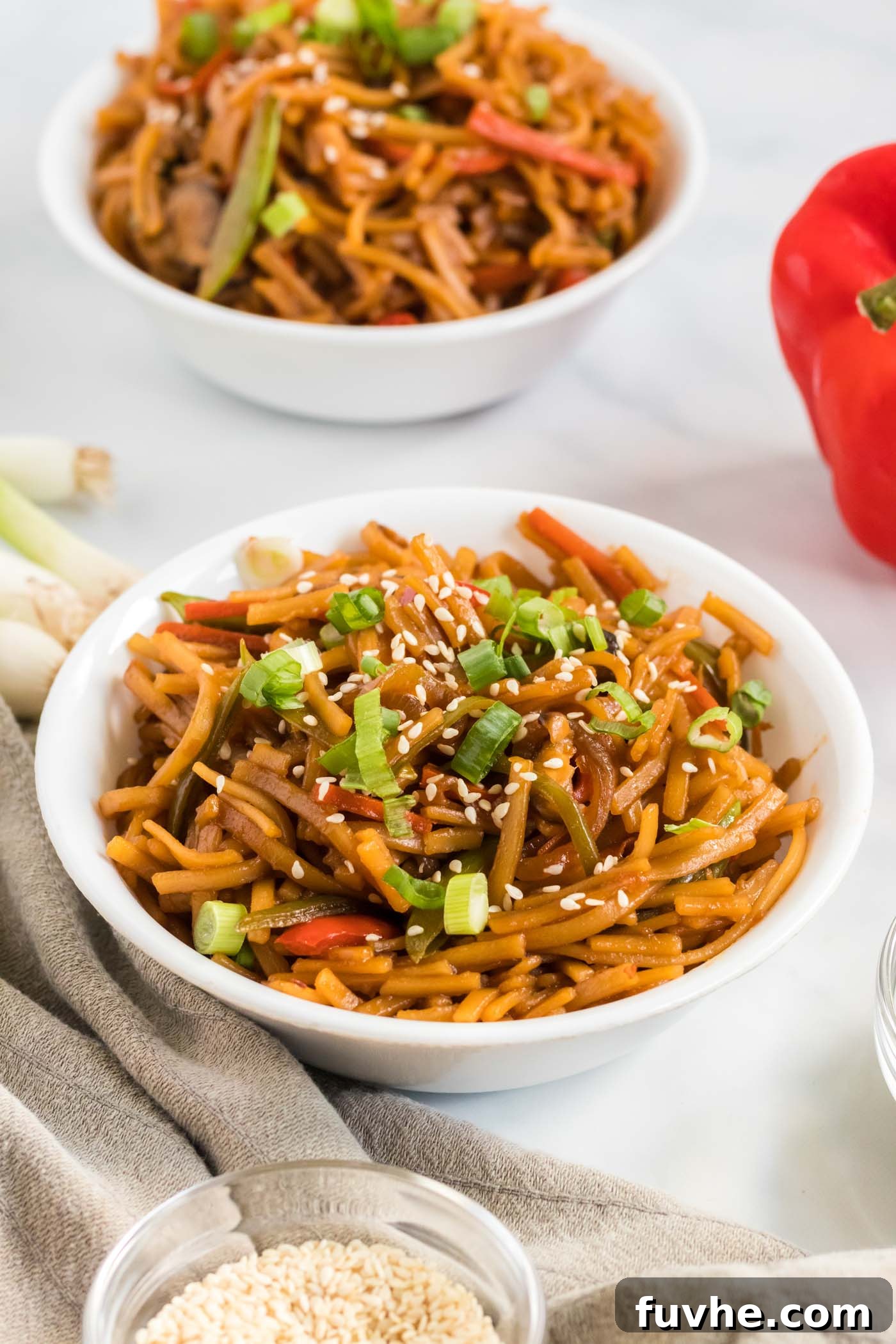
Understanding Lo Mein: The Art of Tossed Noodles
Lo mein is a celebrated classic of Chinese cuisine, known for its luscious, sauce-coated noodles. The term “lo mein” literally translates to “tossed noodles,” which perfectly describes its preparation method. Unlike its close cousin, chow mein, which means “stir-fried noodles” and often involves frying the noodles until they are crispy and drier, lo mein focuses on gently tossing already cooked, soft noodles with a flavorful sauce and tender-crisp vegetables.
Traditionally, lo mein features egg-based noodles. However, this innovative recipe embraces a plant-based approach by utilizing versatile rice noodles, making it suitable for vegans and those with egg allergies. The result is a wonderfully satisfying dish that retains all the beloved textures and flavors of authentic lo mein while being entirely free from animal products.
If you’re a noodle enthusiast always on the hunt for delicious plant-based options, you absolutely must try these other fantastic recipes: Vegan Drunken Noodles Recipe for a spicy kick, Vegan Tofu Pad Thai for a taste of Thailand, or the Quick and Easy Spicy Miso Noodles for a comforting bowl.
Why You’ll Love This Vegan Lo Mein Recipe
This vegan lo mein isn’t just a meal; it’s a delightful culinary experience packed with benefits that make it a perfect addition to your weekly rotation:
- Effortlessly Quick & Easy: Designed for convenience, this recipe comes together in roughly 30 minutes, making it an ideal choice for busy weeknights when you need a wholesome, homemade meal without spending hours in the kitchen.
- Flavorful Stir-Fried Perfection: Enjoy tender noodles and crisp-tender vegetables bathed in a rich, savory sauce that balances sweet, salty, and umami notes perfectly. Every bite is an explosion of authentic Asian-inspired flavors.
- Wholly Plant-Based & Adaptable: This recipe is 100% vegan, making it a fantastic option for plant-based eaters or anyone looking to incorporate more vegetables into their diet. It can also be easily made gluten-free by simply substituting tamari or coconut aminos for traditional soy sauce.
- Highly Customizable: Get creative in the kitchen! This dish is incredibly versatile. Experiment with various types of noodles (rice, wheat, or even spaghetti), and mix and match your favorite vegetables such as broccoli florets, bok choy, bell peppers (red, yellow, orange), carrots, snap peas, snow peas, water chestnuts, or mushrooms. For an extra boost of protein, consider adding crispy baked tofu, tempeh, or edamame.
- Health-Conscious Choice: Loaded with colorful vegetables, this lo mein is a great source of fiber and essential nutrients. By controlling the ingredients, you can manage sodium levels and enjoy a fresh meal free from excessive oils and artificial additives often found in takeout versions.
Essential Ingredient Notes for a Perfect Lo Mein
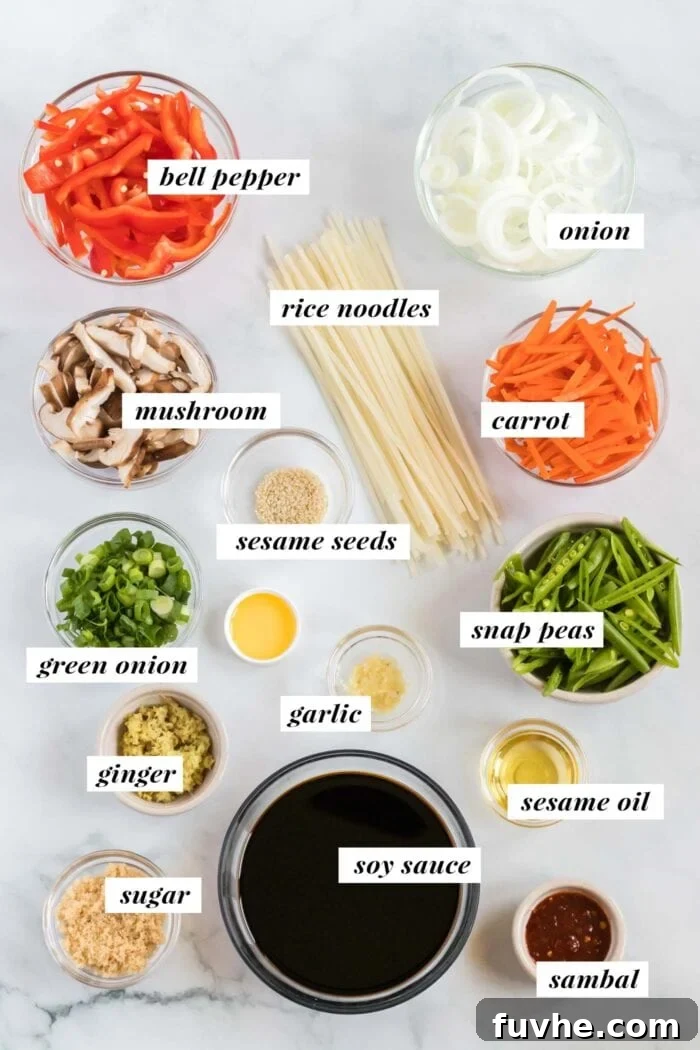
The magic of this vegan lo mein lies in its simple yet powerful ingredients. Here’s a closer look at what you’ll need and how to make the best choices:
- Soy Sauce (or Tamari/Coconut Aminos): This forms the savory backbone of our sauce. For a healthier option, we strongly recommend using low-sodium soy sauce to keep the salt content in check without sacrificing flavor. If you’re following a gluten-free diet, opt for gluten-free tamari, which offers a similar taste profile, or coconut aminos for a soy-free alternative with a slightly sweeter, milder flavor.
- Sugar: A touch of sweetness helps to balance the savory notes in the sauce. Brown sugar is often preferred for its subtle caramel notes, but you can also use coconut sugar for a more unrefined option or regular cane sugar. Adjust the quantity to your personal preference for sweetness.
- Sesame Oil: A non-negotiable ingredient for authentic Asian-inspired dishes! Toasted sesame oil provides a distinct, nutty aroma and deepens the overall flavor profile of the lo mein. Use it generously in the sauce and for stir-frying your vegetables.
- Fresh Garlic & Ginger: These aromatic powerhouses are crucial for building a complex flavor base. Freshly grated garlic and ginger will elevate your lo mein from good to extraordinary. Don’t be tempted to use powdered versions if you can help it; the fresh ingredients make a significant difference.
- Sambal Oelek (or Chili Garlic Sauce): For those who love a bit of heat and a touch of tangy sweetness, sambal oelek is your secret weapon. This fresh chili paste adds a fantastic zing. It’s widely available in the Asian food section of most well-stocked grocery stores or online. Always check the ingredients if you’re vegan or have shellfish allergies, as some brands might contain shrimp paste. Adjust the amount to suit your spice preference.
- Rice Noodles: These are the star of our vegan lo mein! Look for medium-thickness rice noodles, similar to what you might use for Pad Thai or labeled as “stir-fry noodles.” They absorb the sauce beautifully and provide that perfect chewy texture. While rice noodles are naturally gluten-free, always check the packaging to ensure no cross-contamination if gluten is a concern.
- Assorted Veggies: This recipe is incredibly flexible when it comes to vegetables. Our suggested combination includes red bell pepper (for sweetness and color), onion (for aromatic depth), mushrooms (shiitake or cremini work great for umami), carrots (for crunch and color), and snap peas (for their tender-crisp texture). Feel free to customize this selection based on what’s in season or your family’s preferences. Any color of bell pepper works, and you can swap snap peas for snow peas. Not a fan of mushrooms? Simply omit them or replace them with another veggie!
This list highlights key ingredients, but for the complete, precise measurements and detailed instructions, please refer to the comprehensive recipe card that will follow.
Step-by-Step Guide to Crafting Perfect Vegan Lo Mein
Before You Begin: Efficiency is key for stir-fries! Prepare all your ingredients in advance. Get a large pot of water heating to a rolling boil for your noodles, and wash, peel, and chop all your vegetables so they are ready to go when you start cooking.
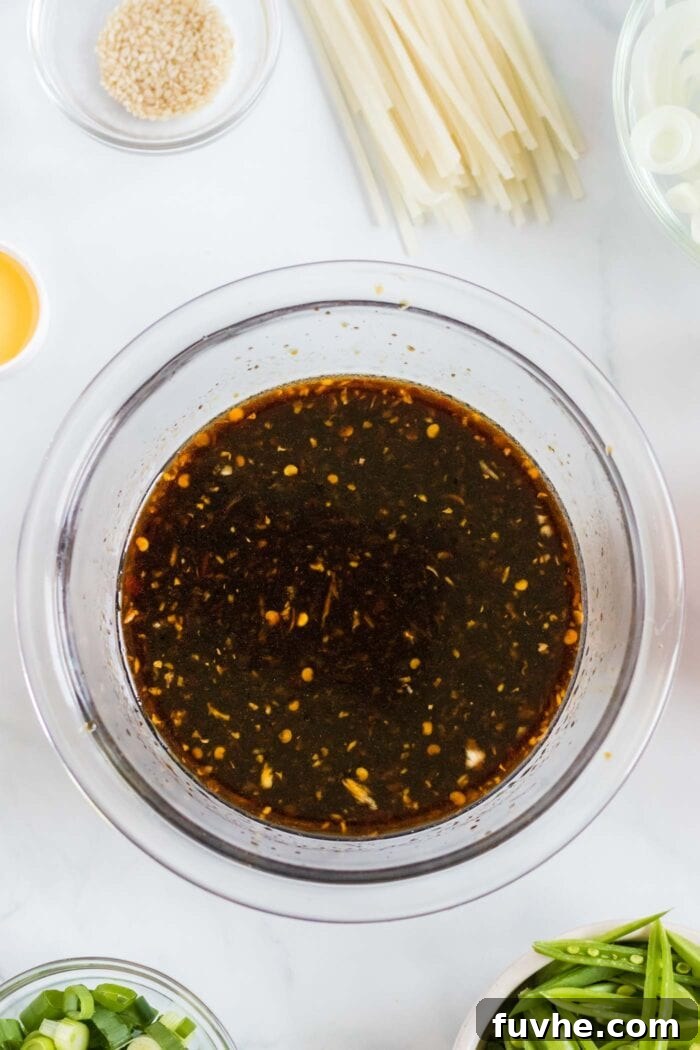
Step 1: Whisk Together Your Flavorful Sauce. In a medium-sized bowl, combine all the sauce ingredients: low-sodium soy sauce (or tamari), brown sugar, sesame oil, grated garlic, grated fresh ginger, and sambal oelek. Whisk thoroughly until the sugar is dissolved and all ingredients are well combined. Set this aside; it’s the liquid gold that will bring your lo mein to life!
Step 2: Cook the Noodles to Al Dente Perfection. Once your water is boiling rapidly, add the rice noodles and cook them strictly according to the package instructions. Pay close attention to the suggested cooking time to ensure they are al dente – firm to the bite but not mushy. As soon as they are cooked, drain them immediately and rinse them thoroughly under cold running water. This crucial step stops the cooking process and prevents them from sticking together. Set the rinsed noodles aside in a colander.
Step 3: Begin the Stir-Fry with Onions. Heat 1 teaspoon of sesame oil in a large frying pan or wok over medium-high heat. Once the oil is shimmering, add the sliced onions. Cook them for approximately 3 minutes, stirring frequently, until they have softened and become translucent. This releases their natural sweetness and forms a foundational layer of flavor.
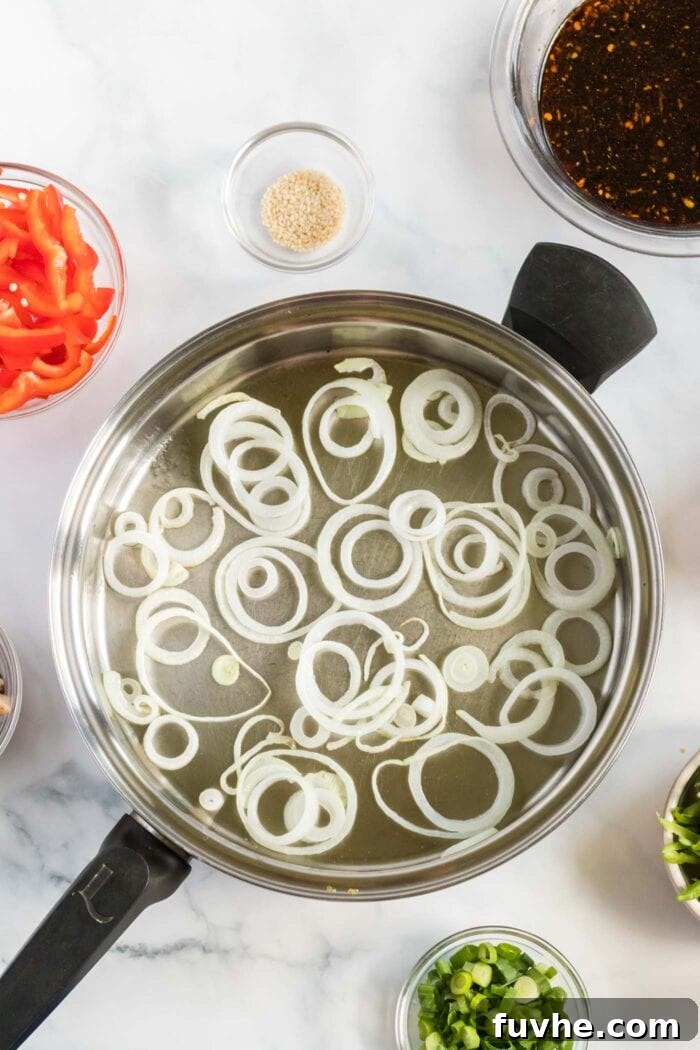
Step 4: Introduce More Vegetables. Add the thinly sliced bell peppers, mushrooms, and carrots to the pan with the softened onions. Continue to cook for another 4-5 minutes, stirring often. The goal here is to get the vegetables tender-crisp – cooked through but still retaining a pleasant bite and vibrant color. Avoid overcooking them to maintain their texture.
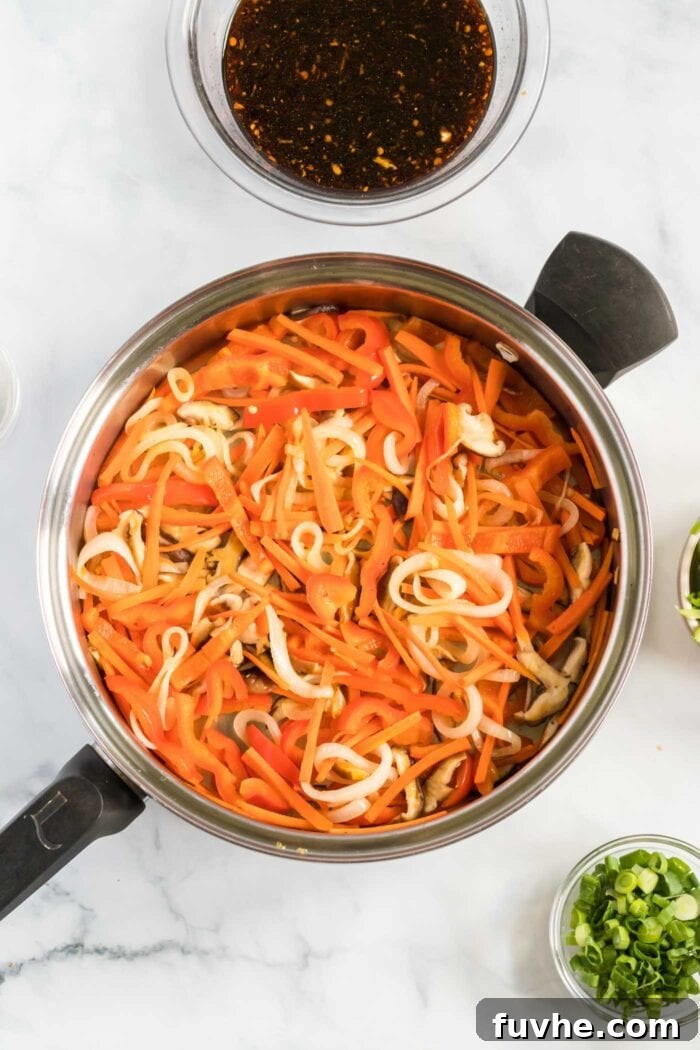
Step 5: Add the Snap Peas and Sauce. Now, add the snap peas to the pan. Give your prepared sauce another quick whisk to ensure all ingredients are well mixed, then pour the entire sauce mixture into the pan with the vegetables. Bring the sauce to a gentle boil, stirring constantly to ensure all vegetables are coated. Let it simmer for a minute or two, allowing the flavors to meld and the sauce to slightly thicken.
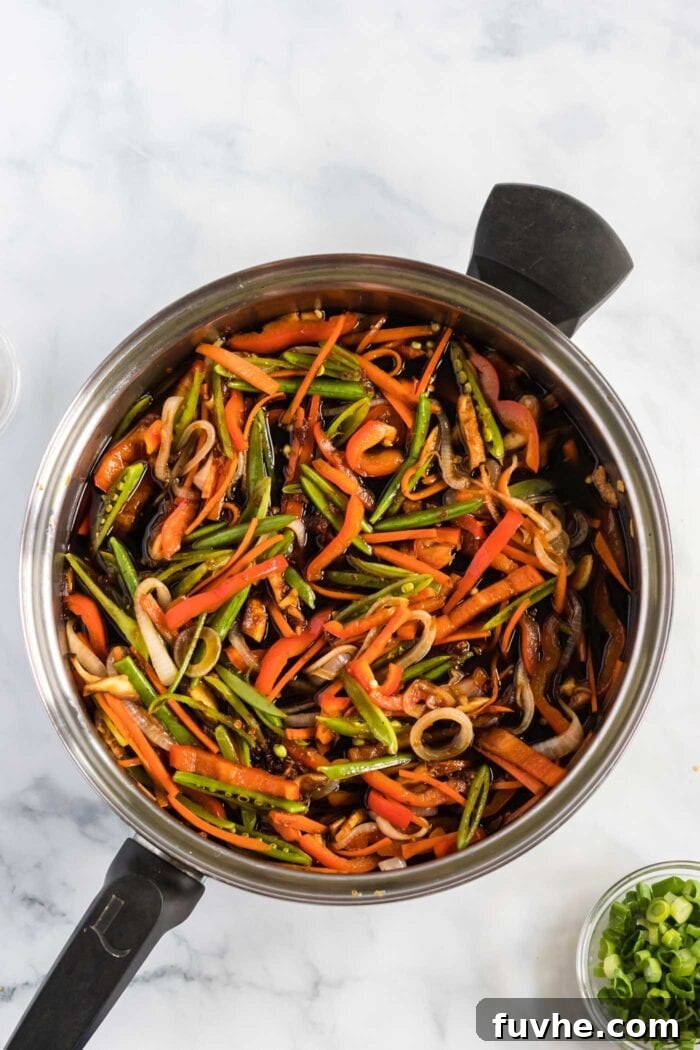
Step 6: Toss in the Cooked Noodles. Finally, add your cooked and rinsed rice noodles directly into the pan with the saucy vegetables. Using tongs, gently but thoroughly toss everything together. Ensure the noodles are completely coated in the delicious sauce and evenly distributed among the vegetables. Continue to toss for 1-2 minutes, just until the noodles are heated through and have fully absorbed the flavors of the sauce.
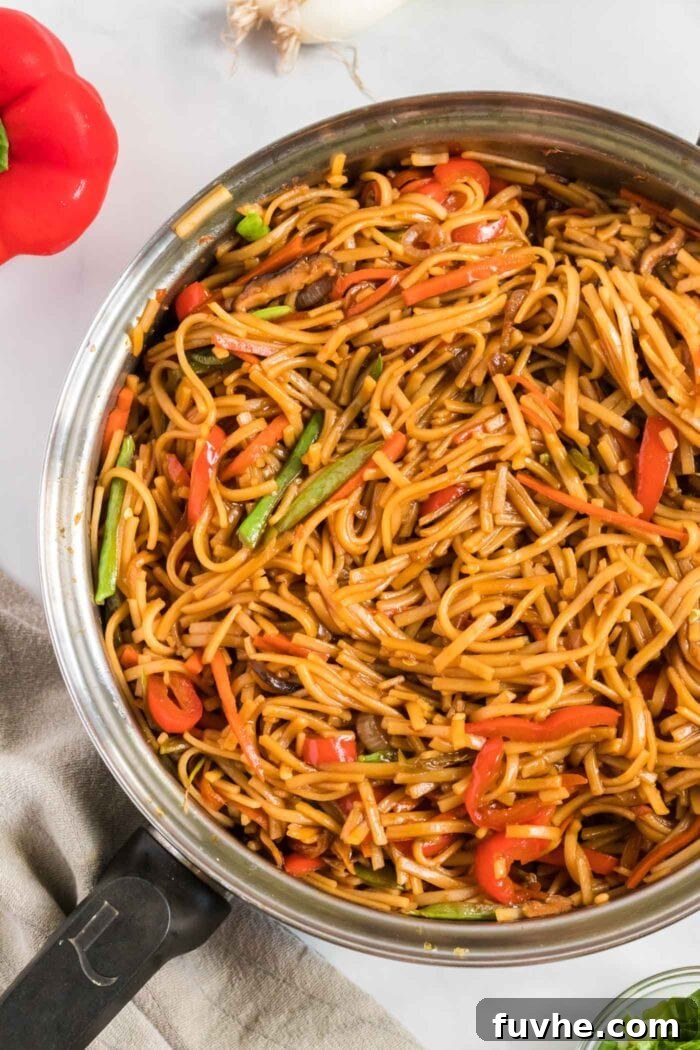
Serve your delicious vegan lo mein immediately! Garnish generously with freshly sliced scallions (green onions) and a sprinkle of toasted sesame seeds for an added layer of flavor and a beautiful presentation. Enjoy your homemade, healthier take on a classic!
Recipe FAQs: Your Vegan Lo Mein Questions Answered
What if I can’t find lo mein or rice noodles? Are there good alternatives?
Absolutely! Don’t let noodle availability stop you. While rice noodles are excellent for this vegan recipe, common pasta like spaghetti or angel hair pasta makes a surprisingly good substitute. Simply cook your chosen pasta al dente according to the package instructions, then rinse under cold water and add it to the recipe as you would the rice noodles. The texture might be slightly different, but the flavor will still be fantastic!
Is vegetable lo mein considered healthy?
This homemade vegetable lo mein can certainly be a healthy and balanced meal! The primary factor to watch out for in many lo mein recipes is sodium content, often high due to soy sauce. We strongly recommend using a low-sodium soy sauce or tamari to mitigate this. Nutritionally, while rice noodles primarily provide carbohydrates, they are a good gluten-free option. The real nutritional stars are the abundant vegetables, which pack this dish with fiber, vitamins, and minerals. At approximately 295 calories per serving, with 8g of protein and 4g of fat, it’s a moderately caloric and nutrient-dense option. Feel free to amplify the health benefits even further by adding more nutrient-rich vegetables like broccoli, bok choy, spinach, or edamame for extra fiber and volume.
Is all veggie lo mein vegan?
No, not all “veggie lo mein” is vegan by default. Traditional lo mein recipes typically use egg noodles, which contain animal products. Additionally, some restaurant sauces might contain fish sauce, oyster sauce, or chicken broth. This specific recipe, however, is consciously crafted to be 100% vegan, utilizing rice noodles and a plant-based sauce. When ordering out, always confirm with the restaurant that their vegetable lo mein is free from egg noodles and any animal-derived sauces or broths.
Tips for Storing & Reheating Your Vegan Lo Mein
This vegan lo mein is fantastic as leftovers, making it a great meal prep option! Here’s how to store and reheat it effectively:
- Cooling: Always allow the lo mein to cool down to room temperature before transferring it to storage containers. This helps prevent condensation and maintains freshness.
- Refrigerator Storage: Store any leftovers in an airtight container in the refrigerator for up to 5 days. It makes for an excellent quick lunch or dinner.
- Freezer Storage: For longer storage, transfer the cooled lo mein into an airtight, freezer-safe container or individual freezer-safe bags. It can be kept in the freezer for up to 3 months. When ready to enjoy, simply thaw it overnight in the refrigerator.
- Reheating: You can enjoy this lo mein cold, directly from the fridge, or reheat it. To reheat, warm it in the microwave in 1-2 minute intervals, stirring in between, until heated through. Alternatively, you can reheat it in a pan on the stovetop over medium heat, adding a splash of water or vegetable broth if it seems too dry, until warmed through. Note that after storage, the noodles tend to absorb more of the sauce, so it may appear a bit drier than when freshly made.
Vegan Lo Mein

By: Deryn
Saucy and delicious veggie lo mein that’s perfect for a quick and easy 30-minute dinner any night of the week. This recipe is vegan and can be made gluten-free. Easy to customize with different veggies and can be made in advance.
- Prep Time: 10 mins
- Cook Time: 15 mins
- Total Time: 25 mins
- Servings: 6
Ingredients
For the Sauce:
- 1 cup low-sodium soy sauce or gluten-free tamari (250 ml)
- 2 tbsp brown sugar (30 g)
- 2 tsp sesame oil (10 ml)
- 2 clove garlic, grated (10 g)
- 1/2 inch piece fresh ginger, peeled and grated (10 g)
- 2 tsp sambal oelek (10 g, adjust to suit spice preference)
For the Noodles:
- 1 package medium rice noodles (455 g)
- 1 tsp sesame oil (5 ml)
- 1 small onion, sliced (150 g)
- 1 medium red bell pepper, thinly sliced (165 g)
- 1 cup shitake mushrooms, stems removed and sliced thin (50 g)
- 1 cup thinly sliced carrots or store-bought julienned carrots (100 g)
- 1 cup snap peas or snow peas, sliced thin (100 g)
For Serving:
- Sliced green onions
- Sesame seeds
Instructions
- Start boiling water for the noodles and wash and chop all of the vegetables so you’re prepared.
- In a medium bowl, whisk together the sauce ingredients and set aside for later.
- Cook noodles as per package instructions. Rinse thoroughly with cold water once cooked and reserve for later.
- Heat the sesame oil in a large frying pan over medium heat. Add the onions and cook for about 3 minutes until softened.
- Add the bell peppers, mushrooms and carrots and continue to cook for an additional 4-5 minutes.
- Add the snap peas. Give the sauce another quick stir then pour it into the pan and bring to a boil.
- Add the cooked noodles and toss to coat in the sauce and mix the vegetables throughout.
- Serve immediately topped with green onions and sesame seeds.
Notes
Storing: Let cool then store in a sealed container in the fridge for up to 5 days. Enjoy leftovers cold or reheat as needed in the microwave or in a pan on the stovetop. Lo mein can be frozen in an airtight container or individual freezer-safe bags for up to 3 months. Thaw in the fridge and reheat as needed.
Nutrition
- Serving: 1/6th of recipe
- Calories: 295 kcal
- Carbohydrates: 73 g
- Protein: 8 g
- Fat: 4 g
- Fiber: 2 g
We hope you enjoy this vibrant and satisfying vegan lo mein as much as we do! It’s a testament to how quick, easy, and incredibly delicious plant-based cooking can be. Don’t hesitate to experiment with your favorite vegetables and make it your own. Happy cooking!