
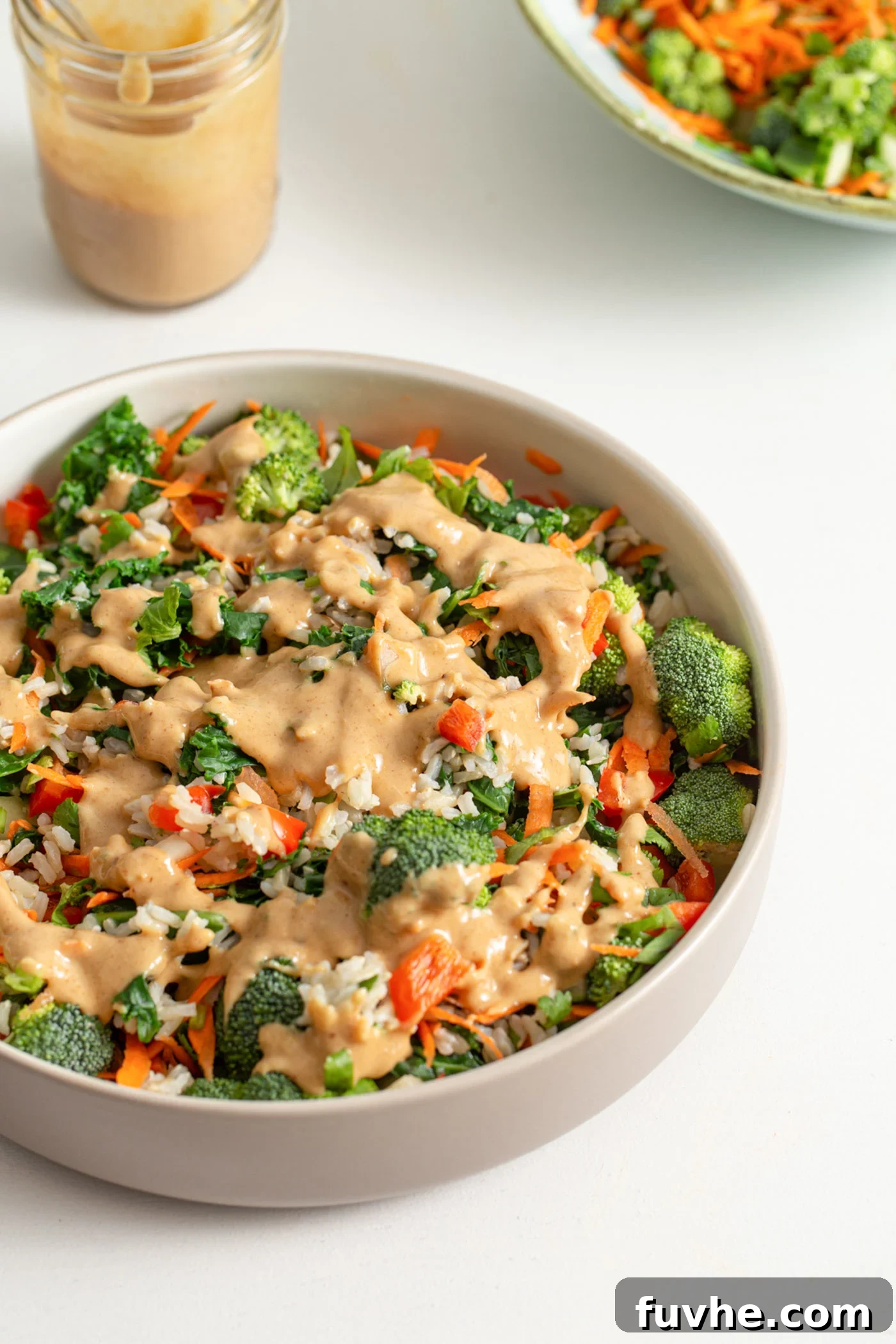
Discover a remarkably delicious and effortlessly prepared vegan salad that promises to revolutionize your approach to healthy eating: the Kale Peanut Brown Rice Salad with Broccoli. This vibrant dish isn’t just easy to assemble; it’s a nutritional powerhouse, brimming with ingredients designed to fuel your body and delight your palate. Whether you’re seeking a fresh, satisfying meal to enjoy immediately or a convenient option for your weekly meal prep, this salad is perfectly suited to your needs. Its robust flavors and wholesome components make it an indispensable addition for anyone keen to integrate more plant-based meals into their diet without ever compromising on taste or satisfaction.
At its heart, this salad embodies the perfect fusion of health and flavor. Each ingredient is carefully selected to contribute a wealth of nutrients, ensuring that every bite is not only enjoyable but also incredibly beneficial. The combination of tender kale, hearty brown rice, crisp broccoli, and other fresh vegetables creates a symphony of textures and tastes, all harmoniously brought together by a lusciously creamy peanut dressing. This isn’t merely a side dish; it’s a complete, well-rounded meal that stands tall on its own, providing sustained energy and essential nourishment.
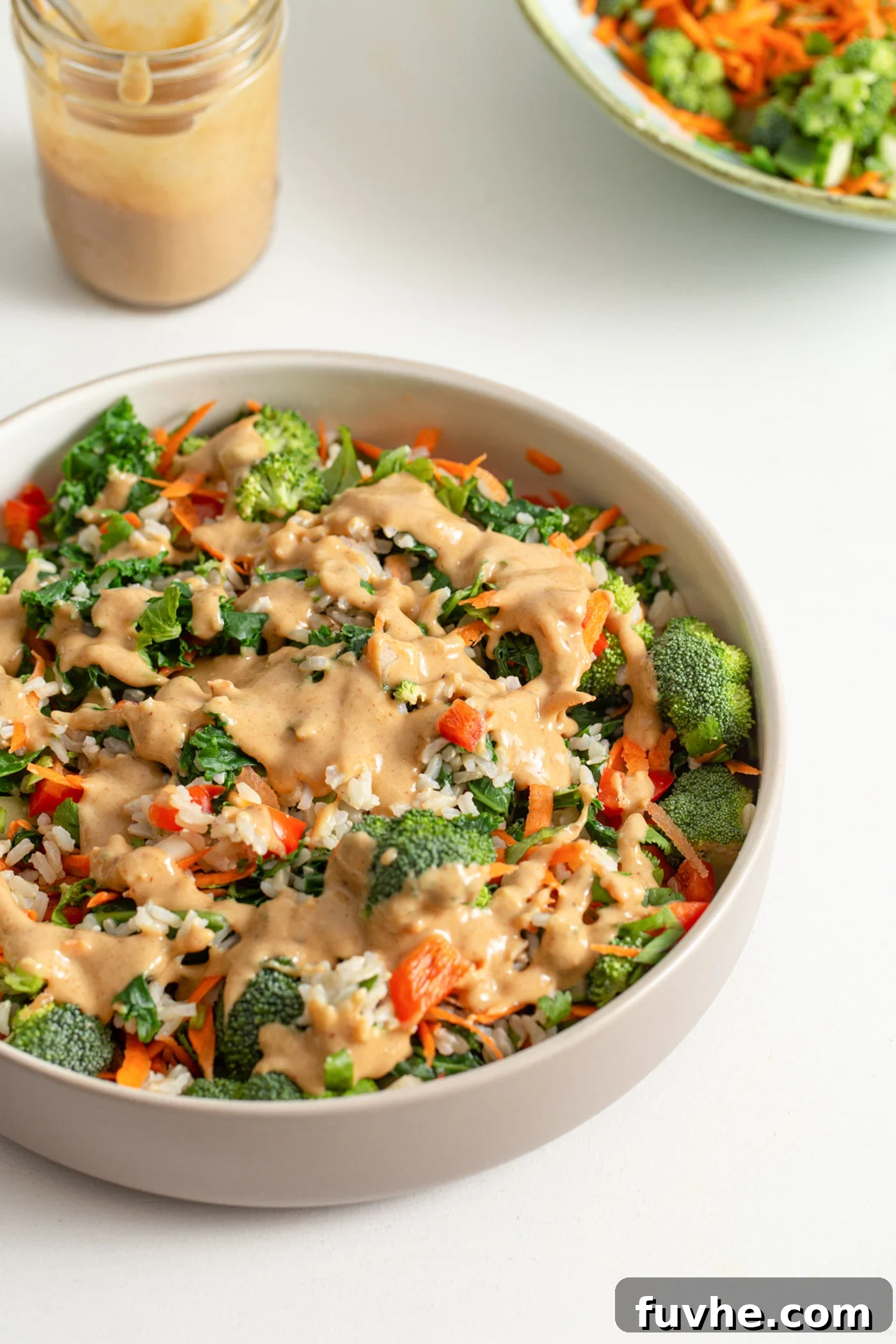
Crafting the Perfect Plant-Based Powerhouse: About This Salad
This recipe goes beyond mere deliciousness; it’s designed with dietary flexibility and maximum nutritional impact in mind. The Kale Peanut Brown Rice Salad is inherently vegan, oil-free, and gluten-free, making it suitable for a wide range of dietary preferences and restrictions. For those with nut allergies, it can even be easily adapted to be completely nut-free without sacrificing flavor. Its foundation rests upon a trio of exceptionally healthy ingredients: nutrient-dense kale, wholesome brown rice, and an array of fresh, vibrant vegetables.
Beyond its impressive profile of micronutrients and abundant fiber, this salad offers a perfectly balanced blend of macronutrients – complex carbohydrates for sustained energy, plant-based protein for muscle support, and healthy fats from the star of the show: the rich, creamy peanut dressing. This dressing doesn’t just bind the ingredients; it elevates them, infusing the entire dish with an irresistible depth of flavor that makes healthy eating an absolute pleasure.
One of the most appealing aspects of this salad is its incredible suitability for meal preparation. Imagine crafting a generous batch on a quiet Sunday afternoon, then effortlessly enjoying healthy, flavorful meals throughout your busy week. This foresight in preparation saves valuable time, reduces stress, and ensures you always have a nutritious option at your fingertips, discouraging less healthy impulse choices. It’s the ultimate solution for maintaining a balanced diet with minimal daily effort.
For those who appreciate diverse and flavorful salads, we highly recommend exploring other delightful creations such as this Crispy Rice Salad, the refreshing Cold Soba Noodle Salad, and the tantalizing Cold Asian Noodle Salad with Peanut Dressing. Each offers a unique culinary journey, promising deliciousness in every bite.
Essential Ingredients for a Flavorful Journey
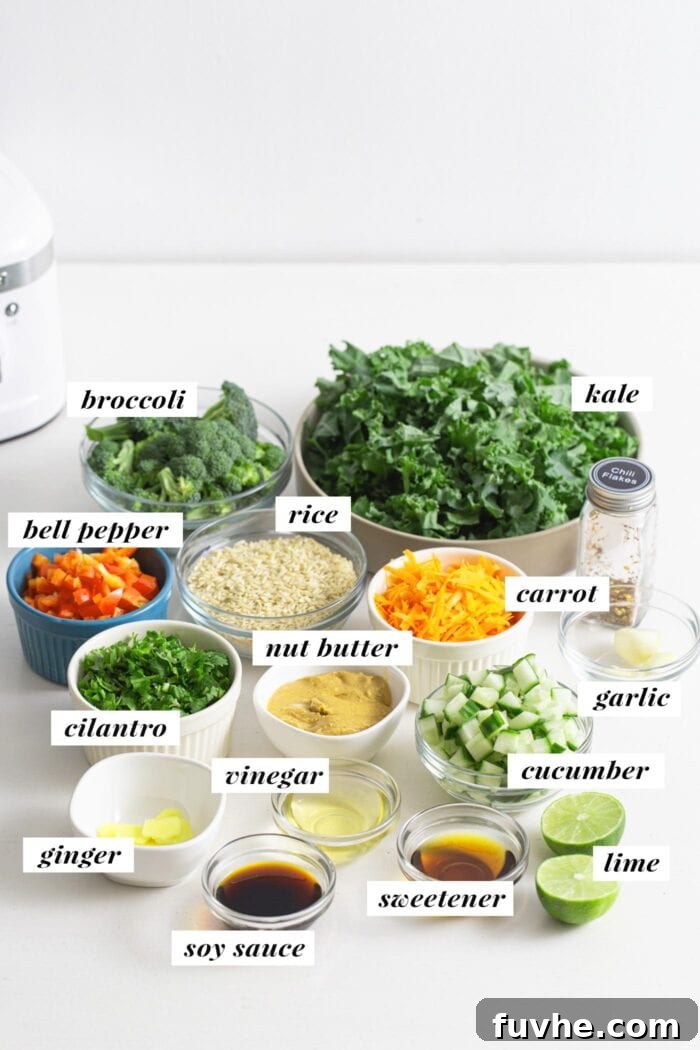
Creating an exceptional salad begins with understanding each component’s role. Below, we delve into the key ingredients, offering insights and flexible substitutions to ensure your salad perfectly meets your preferences and dietary needs.
The comprehensive list of ingredients and their precise measurements can be found in the detailed recipe card at the end of this article.
- Brown Rice: The foundation of this hearty salad, brown rice provides complex carbohydrates and a satisfying texture. As a whole grain, it’s rich in fiber, manganese, and selenium, contributing to digestive health and sustained energy. If brown rice isn’t available, long-grain white rice or a wild rice blend can be used. For a change in texture and nutritional profile, quinoa is an excellent alternative, offering a complete protein source. For those seeking a lower-carb option, cauliflower rice offers a light yet satisfying base.
- Kale: A true superfood, kale is packed with vitamins A, C, and K, as well as potent antioxidants. Its slightly bitter, earthy flavor perfectly complements the creamy peanut dressing. Any variety of kale will work beautifully in this salad, though Tuscan (lacinato) kale is often favored for its tender texture when massaged or lightly cooked. If kale isn’t your preference, fresh spinach makes for a milder, equally nutritious substitute. Remember to remove the tough stems and finely chop your kale for the best texture in a salad.
- Cilantro: This herb adds a burst of fresh, vibrant flavor that brightens the entire salad. Its distinctive taste is a hallmark of many Asian-inspired dishes. If you’re not a fan of cilantro, which some find polarizing, feel free to omit it entirely. Fresh basil, with its sweet and peppery notes, would offer a delightful alternative, lending a different but equally appealing aromatic quality.
- Bell Pepper: Adding a wonderful crunch and a touch of sweetness, bell peppers are rich in Vitamin C and antioxidants. Any color bell pepper – red, yellow, or orange – will work perfectly, contributing both flavor and visual appeal to your salad. Each color offers slightly different flavor profiles and nutrient compositions.
- Peanut Butter: The cornerstone of our incredibly flavorful dressing, natural peanut butter brings healthy fats, protein, and a rich, nutty creaminess. Opt for natural varieties without added sugars or oils for the purest taste and health benefits. For a peanut-free version, almond butter or cashew butter can be used. If a completely nut-free recipe is required, sunflower seed butter is an excellent choice, providing a similar creamy texture and rich flavor.
- Rice Wine Vinegar: This ingredient provides the essential tang and acidity that brightens the peanut dressing, balancing its richness. Both seasoned and unseasoned rice vinegar will work; if using seasoned, you might adjust the maple syrup slightly. Apple cider vinegar can be used in a pinch, though it will impart a slightly different flavor profile.
- Maple Syrup: A natural sweetener, maple syrup balances the savory and tangy notes in the dressing, adding a subtle depth. Pure maple syrup is preferred for its natural origins and unique flavor. Agave syrup is a suitable vegan alternative, or for a sugar-free option, consider using a high-quality sugar-free sweetener such as stevia or monk fruit sweetener.
- Soy Sauce: This umami-rich ingredient is crucial for the savory depth of the peanut dressing. For a gluten-free recipe, it’s imperative to use gluten-free tamari, which offers the same rich flavor without the wheat. Alternatively, for both soy-free and gluten-free requirements, coconut aminos serve as an excellent substitute, providing a similar savory depth with a hint of natural sweetness.
Elevate Your Salad: Creative Variations & Additions
This Kale Peanut Brown Rice Salad is wonderfully versatile, serving as an excellent canvas for culinary creativity. Feel free to experiment with these additions and variations to customize it to your taste, adding more protein, different textures, or unique flavor twists.
- Alternate Dressings: While our peanut dressing is a star, this salad pairs beautifully with other flavor profiles. Consider trying a bright sesame dressing for an Asian-inspired twist, a zesty cilantro lime dressing for a fresh, vibrant kick, or for a spicier take, a robust spicy peanut sauce. A rich coconut peanut sauce or an umami-packed miso tahini dressing also make fantastic choices. For a truly unique flavor, an almond satay sauce offers a slightly different nutty profile.
- Boost Your Protein: Transform this salad into an even more substantial meal by incorporating additional plant-based proteins. Add some savory crispy tofu, fiery Sriracha tofu, or earthy marinated tempeh for a fulfilling and protein-rich experience. These additions not only boost the nutritional value but also add delightful textures.
- Legume Power: For extra plant-based protein and a significant fiber boost, consider mixing in chickpeas, black beans, or edamame. These legumes add substance and a satisfying heartiness to the salad, contributing to prolonged satiety.
- Root Vegetable Sweetness: The natural sweetness and soft texture of roasted sweet potato cubes would make a delicious and comforting addition, especially during cooler months. Their complex carbohydrates and vitamins perfectly complement the salad’s profile.
- Cauliflower Alternatives: If you’re looking to switch up the vegetables or add another cruciferous element, roasted cauliflower (which adds a caramelized depth of flavor) or simply steamed cauliflower can be an excellent addition or a direct alternative to broccoli.
- Add Crunch & Nutrients: Enhance the texture and nutritional content with shredded purple or green cabbage, which provides a satisfying crunch and a good dose of vitamins. Alternatively, chopped snow peas offer a delicate crispness and a touch of sweetness.
- Toppings for Texture and Flavor: Don’t underestimate the power of a good topping! A sprinkle of toasted sesame seeds adds an aromatic depth, while chopped cashews or peanuts provide an extra layer of crunch and reinforce the nutty flavor profile, especially if using a peanut-based dressing.
Effortless Assembly: Step-by-Step Instructions
Crafting this vibrant Kale Peanut Brown Rice Salad is a straightforward process, designed for efficiency without compromising on flavor. Follow these simple steps to bring your delicious meal to life.
Step 1: Prepare the Grains & Soften the Kale
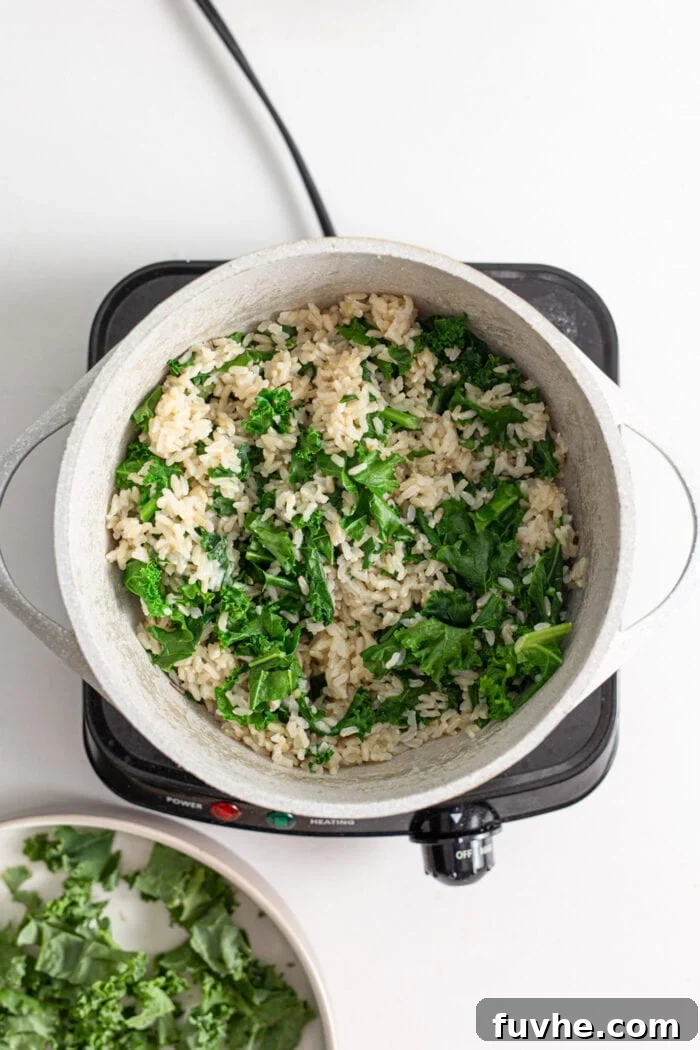
Begin by cooking your brown rice according to the package directions. It’s advisable to use a pot that is sufficiently large, as you will be stirring in the chopped kale once the rice is fully cooked. This initial step ensures your rice is perfectly tender and ready. Once the brown rice is done and still warm, carefully stir in the finely chopped kale. The residual heat from the rice will gently soften the kale, making it more palatable and easier to digest for a salad. If you happen to have pre-cooked brown rice on hand, you can simply mix the kale directly with the rest of your prepared vegetables in a later step.
Quick Tip: Prefer quinoa for its protein and lighter texture? Quinoa works exceptionally well as a substitute for brown rice in this recipe, offering a complete protein and a slightly different, equally delicious, grain base. Feel free to use it following its package instructions.
Step 2: Perfectly Steam the Broccoli
Next, meticulously chop the broccoli into florets, ensuring they are roughly uniform in size for even cooking. Steam the broccoli on the stovetop, or using your preferred method, for a brief 3-4 minutes. The goal is to cook the broccoli al dente – meaning it should be a vibrant, bright green and still retain a pleasant crunch. Avoid overcooking, as mushy broccoli will detract from the salad’s appealing texture.
Quick Tip: Should you not have fresh broccoli available, or simply wish for a change, both roasted or steamed cauliflower make excellent substitutes, contributing a similar nutritional profile and satisfying texture to the salad.
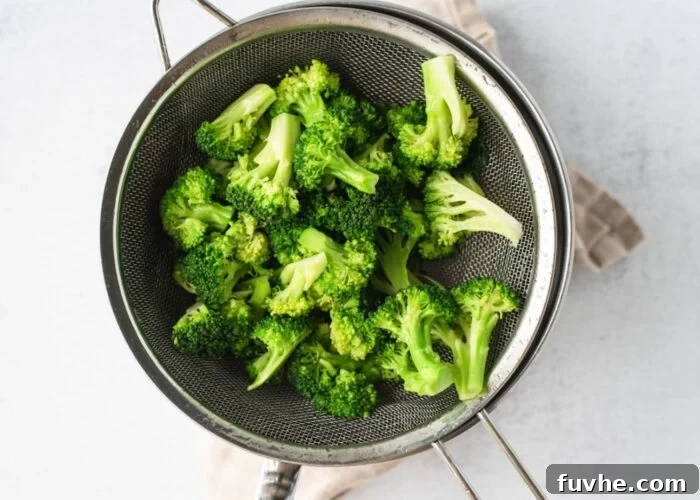
Step 3. Prepare the Fresh Vegetables & Herbs
While your rice cools slightly and your broccoli finishes steaming, take this time to chop up the remaining fresh vegetables and the cilantro. Ensure all vegetables are cut into bite-sized pieces for easy eating and even distribution throughout the salad. Once chopped, combine all these fresh components along with the lightly steamed broccoli in a large mixing bowl. This prepares your vibrant salad base for the grains and dressing.
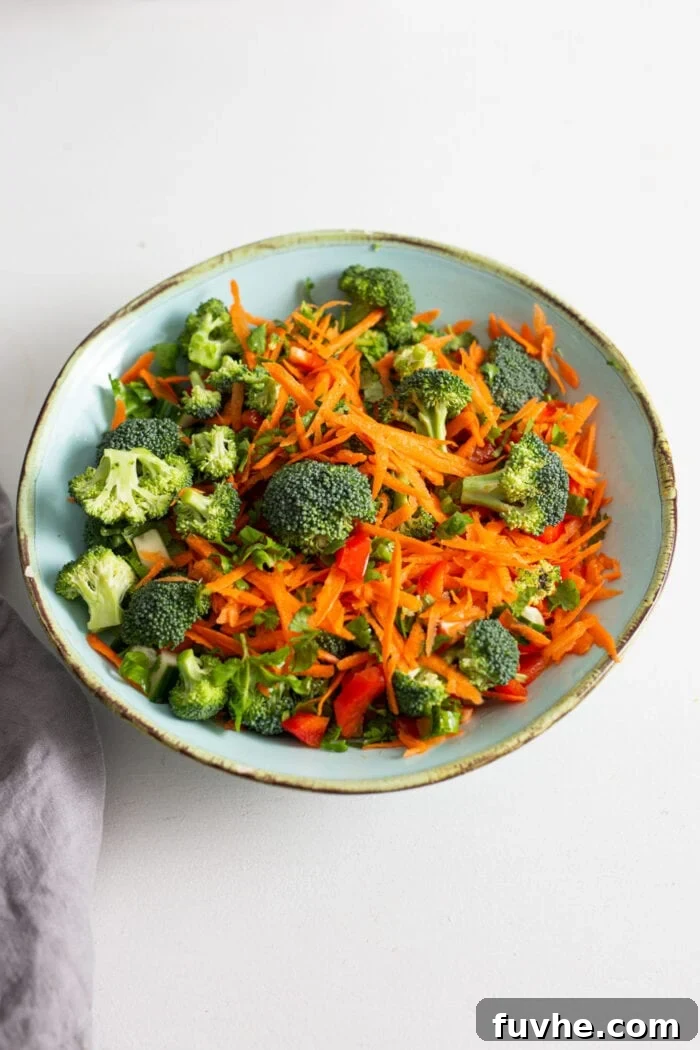
Step 4: Create the Creamy Peanut Dressing
The dressing is the heart of this salad’s flavor. Combine all the peanut sauce ingredients into a blender. Blend thoroughly until the mixture is completely smooth and lusciously creamy. If the dressing appears too thick, add water one teaspoon at a time until it reaches a thick yet pourable consistency that will perfectly coat your salad.
Quick Tip: If you don’t have access to a blender, you can still achieve a fantastic dressing. Omit the fresh garlic cloves and ginger root. Instead, substitute with 1 teaspoon of garlic powder and 1/2 teaspoon of ground ginger. If you prefer to use fresh garlic and ginger without blending, grate them very finely using a microplane or a fine grater to ensure a smooth texture. Whisk all the dressing ingredients vigorously in a bowl until well combined and smooth.
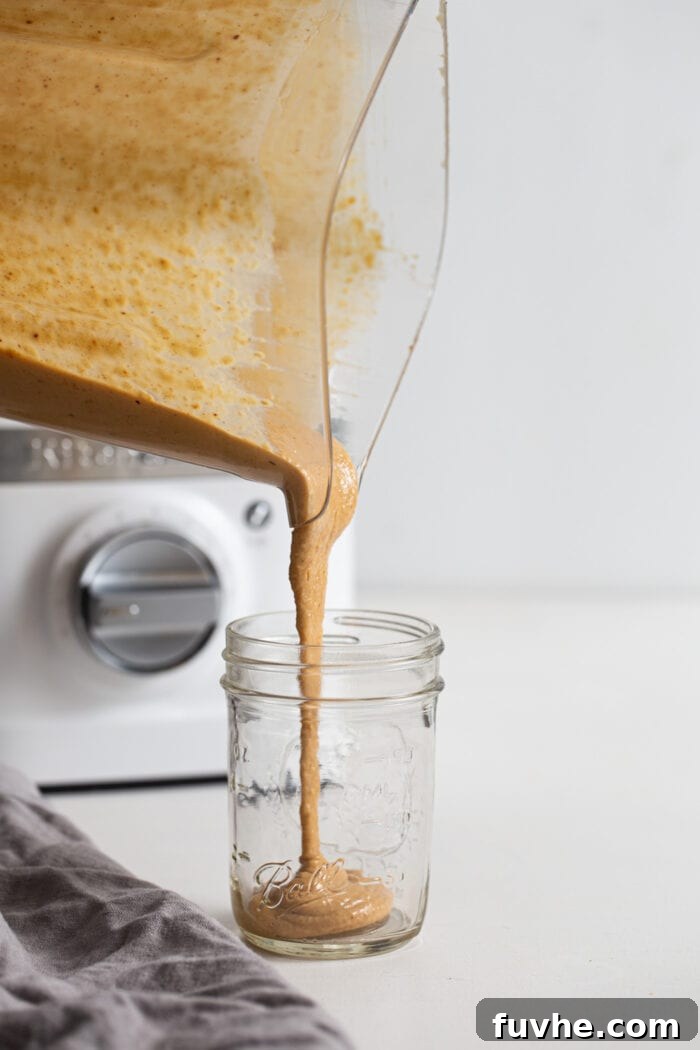
Step 5: Combine & Serve Your Masterpiece
Now, bring all the elements together. Add the prepared cooked brown rice (with its softened kale) to the large bowl containing all the fresh, chopped vegetables. You have two options for dressing: either pour the creamy peanut sauce over the entire salad and toss thoroughly to ensure every ingredient is evenly coated, or divide the salad into individual serving bowls and then drizzle each portion generously with the delicious sauce. Season with sea salt and black pepper to taste. For an extra burst of freshness and a touch of brightness, consider adding a squeeze of fresh lime juice just before serving. A final sprinkle of chopped cashews or peanuts will add a delightful crunch, elevating both texture and flavor.
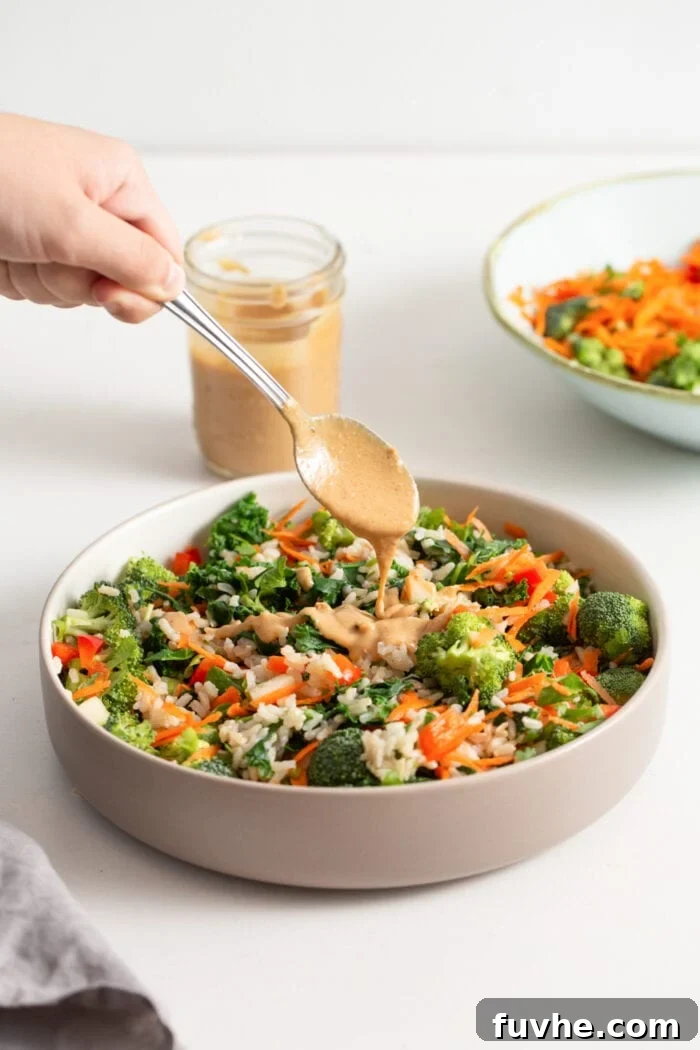
Frequently Asked Questions About This Salad
Absolutely! This salad is an ideal candidate for meal preparation. You can easily make a batch ahead of time and store it in an airtight container in the refrigerator for up to 4 days. The flavors often meld and deepen over time, making it even more delicious. For best results when meal prepping, you can store the dressing separately and add it just before serving to maintain the freshest texture of the vegetables.
Yes, this salad is meticulously crafted to be both vegan and gluten-free. It contains no animal products and uses naturally gluten-free ingredients. However, it’s crucial to ensure that when preparing the peanut sauce, you specifically use gluten-free tamari as a substitute for regular soy sauce, which typically contains wheat. This small substitution guarantees the entire dish remains completely gluten-free.
If you need to avoid peanut butter, several excellent alternatives can achieve a similar creamy, nutty texture and flavor in the dressing. You can successfully use almond butter, cashew butter, or even sunflower seed butter. Each will impart a slightly different flavor profile, but all work wonderfully. For a completely nut-free dressing option that still offers a rich, savory depth, this miso tahini sauce would be an outstanding and flavorful choice for this recipe.
If you enjoy a bit of heat, there are several ways to enhance the spice level of this salad. You can increase the amount of red pepper flakes in the peanut sauce to 1/2 teaspoon or even 1 full teaspoon, depending on your preference. Alternatively, adding 1 to 2 tablespoons of sriracha or sambal oelek directly into the dressing will provide a fiery kick. For an extra burst of heat, a dash of your favorite hot sauce stirred into the final salad can also do the trick.
Certainly! While kale is a robust and nutritious choice, this salad is adaptable to other greens. Spinach, as mentioned in the ingredient notes, is a great milder alternative. Mixed greens, romaine lettuce, or even shredded cabbage (purple or green) would also work well, offering different textures and nutrient profiles. If using softer greens like spinach or mixed greens, you might want to add them just before serving to prevent them from becoming too wilted by the dressing.
Mastering the Salad: Expert Tips for Success
Achieving a truly exceptional Kale Peanut Brown Rice Salad involves a few key techniques. These expert tips will help you maximize flavor, texture, and overall enjoyment of your dish.
- Finely Prepare the Kale for Optimal Texture: The way you prepare your kale significantly impacts the salad’s texture. Always ensure you remove the tough, fibrous stems before proceeding. Then, finely chop the kale into small, manageable pieces. This finer chop allows the kale to soften more effectively when mixed with warm rice or massaged with dressing, making it far more tender and enjoyable to eat. It also allows for better absorption of the dressing, ensuring every bite is flavorful.
- Steam Broccoli to Perfect Al Dente Doneness: The secret to delicious broccoli in this salad is preventing it from becoming mushy and overcooked. Steam your broccoli florets just until they are tender-crisp, achieving an “al dente” texture. When ready, the broccoli should be a vibrant, bright green color and still offer a slight bite or crunch when tasted. This preserves its nutrients, maintains its appealing texture, and contributes positively to the overall crispness of the salad.
- Don’t Hesitate to Make Extra Peanut Sauce: This creamy peanut dressing is incredibly versatile and utterly delicious, so consider doubling the recipe! Making a larger batch ensures you have plenty to generously coat your salad, guaranteeing maximum flavor in every forkful. Any leftover sauce can be stored in an airtight container in the fridge for several days. It’s fantastic as a dip for fresh vegetables, a savory topping for other grain bowls or roasted vegetables, or as a rich sauce for tofu. It pairs wonderfully with dishes like this peanut tofu bowl or a hearty teriyaki chickpea bowl.
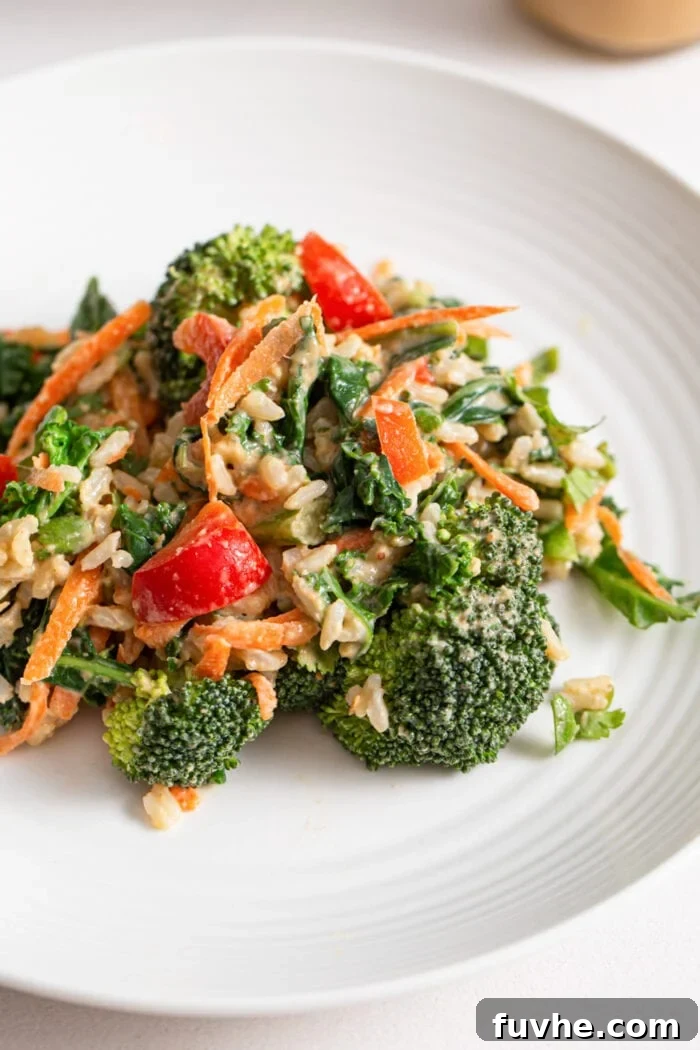
Storing Your Kale Peanut Brown Rice Salad
Proper storage is key to maintaining the freshness and flavor of your salad, especially if you’re enjoying it as part of your meal prep routine.
- Cool Before Storing: If you’ve just prepared the salad and the brown rice is still warm, allow the entire salad to cool completely to room temperature before transferring it to storage. This prevents condensation from forming inside the container, which can lead to sogginess and faster spoilage.
- Refrigeration: Store the cooled salad in an airtight container in the fridge for up to 4 days. An airtight seal is crucial to prevent the absorption of odors from other foods and to maintain the salad’s fresh quality. The flavors tend to deepen beautifully over this period, making it an excellent meal prep option.
- Freezing Not Recommended: Due to the fresh vegetables and the cooked brown rice, this recipe is not suitable for freezing. Freezing and thawing would significantly alter the texture of the vegetables, making them mushy, and the rice could become grainy. This salad is best enjoyed fresh or after a few days of refrigeration.
Explore More Healthy & Delicious Salads
If you’ve enjoyed the vibrant flavors and nutritional benefits of this Kale Peanut Brown Rice Salad, you’ll love these other wholesome and satisfying salad recipes from our collection:
- Edamame Broccoli Wild Rice Salad: A textural delight with nutty wild rice and sweet edamame.
- Vegan Thai Chopped Salad: Bursting with authentic Thai flavors and a spicy kick.
- Broccoli Brown Rice Bowl: A simple yet fulfilling bowl for a quick, nutritious meal.
- Tofu Kale Salad: Featuring tender tofu and a rich coconut peanut dressing.
- Edamame Mango Salad: A refreshing and sweet-savory combination perfect for warmer days.
- Edamame Quinoa Salad: A protein-packed and fiber-rich salad that’s both light and satisfying.
★
★
★
★
Kale Peanut Brown Rice Salad
Ingredients
For the Brown Rice Salad
- 1 cup uncooked brown rice, 180 g, approx. 2.5-3 cups cooked
- 3 cups packed, finely chopped de-stemmed kale (1 large bunch)
- 1 cup diced cucumber, 1/2 a cucumber
- 1 heaping cup peeled and grated carrot, 2 carrots
- 2 cups broccoli florets, 1 large crown broccoli, lightly steamed
- 1 cup finely chopped cilantro
- 1 diced red pepper
- sea salt and black pepper, to taste (I used about 1/2 tsp each)
- fresh lime juice, optional for serving
- chopped cashews or peanuts, optional for topping
For the Peanut Sauce
- 5 tbsp natural peanut butter, 75 g
- 3 tbsp wine vinegar
- 1 tbsp soy sauce or gluten-free tamari
- 2 tbsp water, plus more if needed to adjust consistency
- 2 tbsp pure maple syrup
- 1 tbsp fresh ginger root
- 3 cloves garlic
- 1/4 tsp red pepper flakes or up to 1 tbsp sriracha or sambal oelek, optional
Instructions
-
Cook the brown rice according to package directions. Use a pot that will be large enough to stir the kale in once the rice is cooked. Once the rice is cooked, stir in the chopped kale so it softens. If you already have cooked rice on hand, just mix the kale with the rest of the veggies.
-
Chop and steam the broccoli on the stovetop for 4 minutes or cook al dente using another method of choice.
-
Chop up the rest of the vegetables and the cilantro and add to a large serving or mixing bowl.
-
Add all of the sauce ingredients to a blender and mix until smooth and creamy. If needed, add water 1 tsp at a time to adjust the consistency. The sauce should be thick but pourable.
-
Add the cooked rice and kale to the bowl with the vegetables and mix to combine.
-
Top with the dressing and mix If needed, season with salt and pepper. If desired, serve topped with a squeeze of fresh lime juice and a few chopped peanuts or cashews.
Notes
Nutrition
Originally published on February 12, 2013, this recipe has been refined and expanded to continue bringing healthy, flavorful meals to your table.