
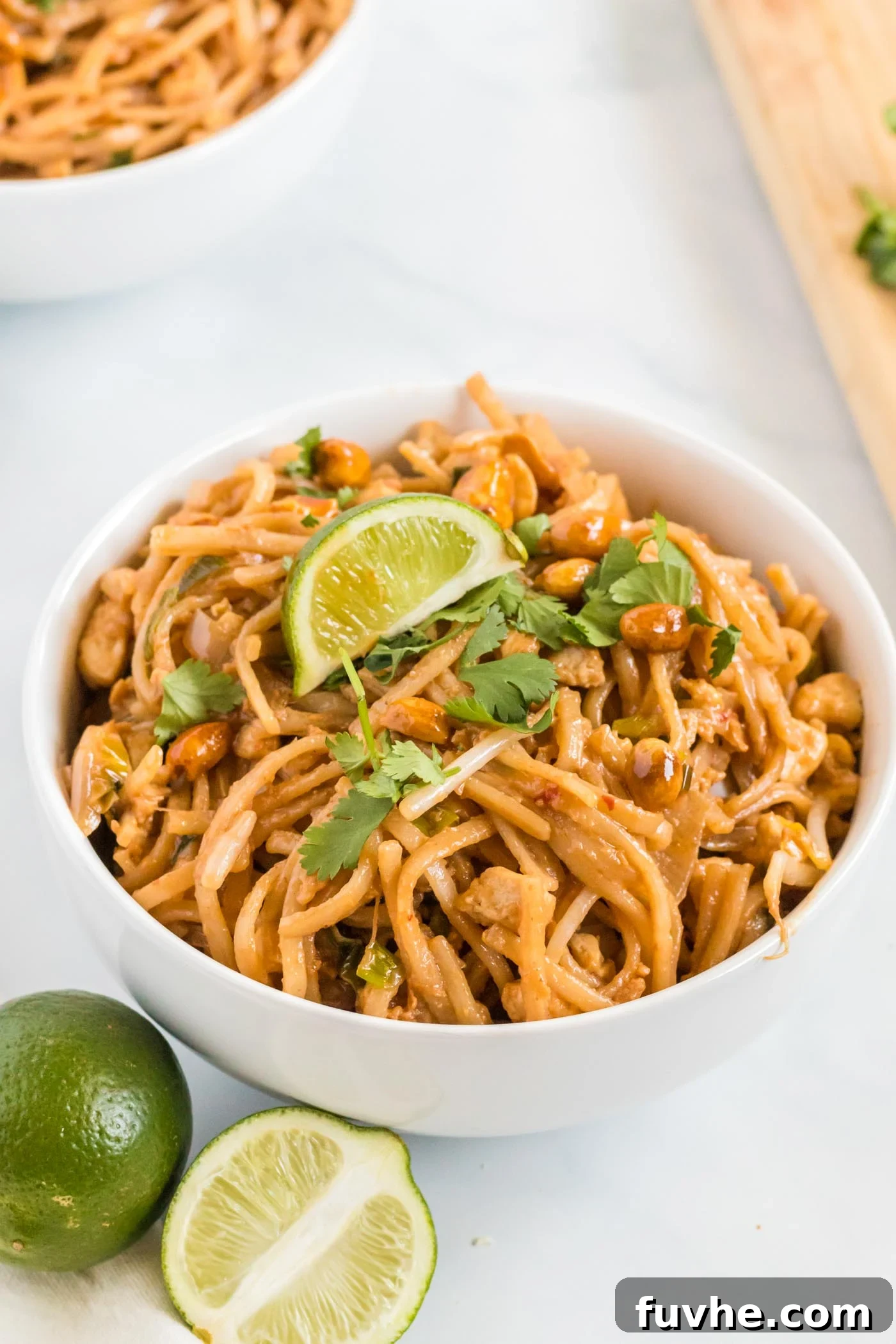
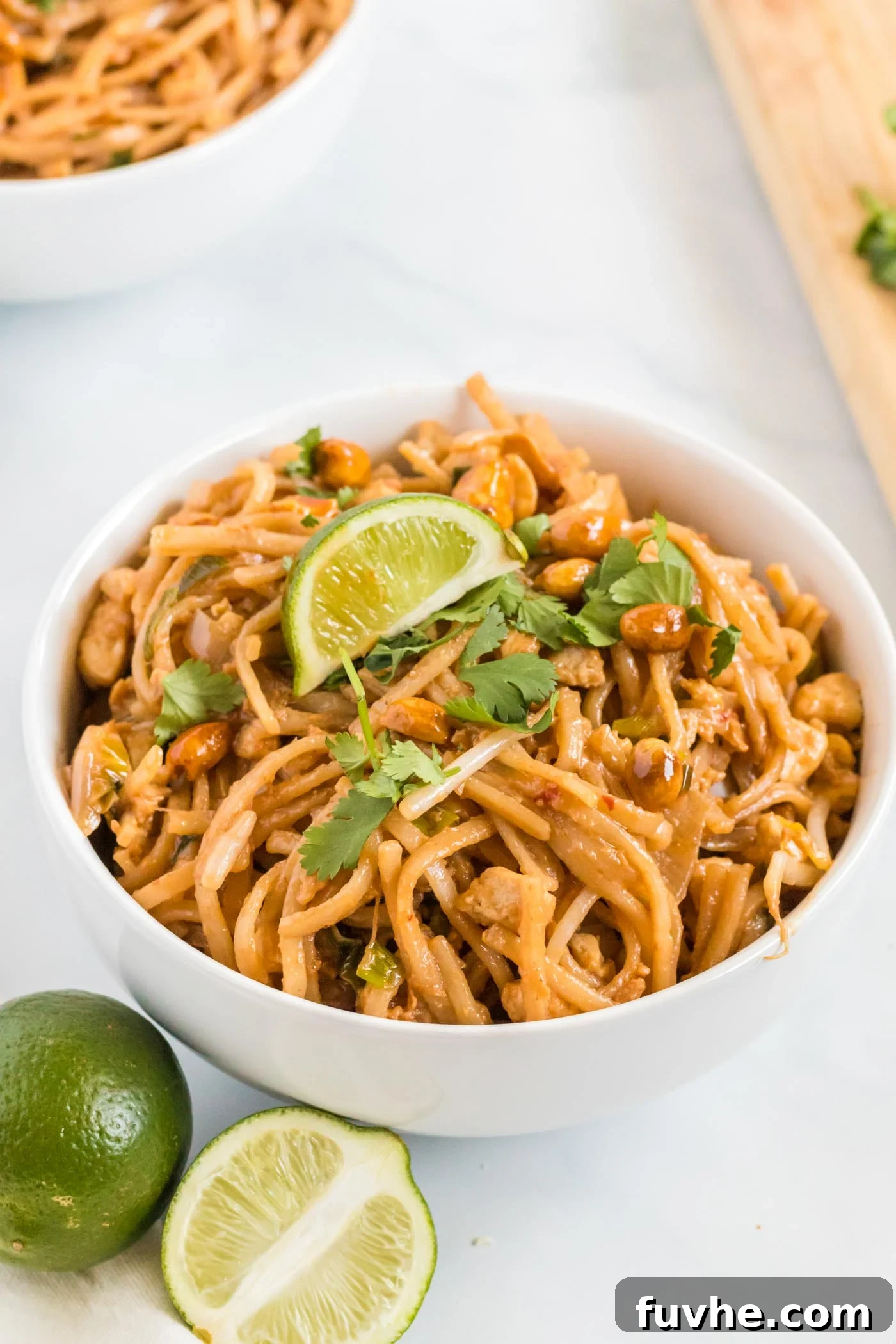
Embark on a culinary journey to Thailand from your very own kitchen with this vibrant and utterly delicious vegan tofu Pad Thai. This recipe transforms humble rice noodles into a masterpiece, perfectly tossed in a rich, homemade peanut-tamarind sauce, complemented by wonderfully crispy pan-fried tofu and a medley of fresh, crisp vegetables. Designed for both speed and flavor, this authentic-tasting, plant-based dish can be prepared and served in under 30 minutes, making it an ideal choice for busy weeknights or an impressive, healthy meal to share with family and friends.
Featured Review
⭐⭐⭐⭐⭐
“This recipe was amazing! It was delicious and quick to make and very filling! Very family friendly too. It will be added to my recipe collection. Thanks Deryn!”Carmen
Why This Vegan Tofu Pad Thai Will Be Your New Favorite
If you’ve ever dreamt of recreating the magic of authentic Pad Thai in your own kitchen, this is the recipe you’ve been searching for. Our vegan tofu Pad Thai is a testament to how simple ingredients can yield extraordinary flavors, featuring firm tofu, delicate rice noodles, and an array of garden-fresh vegetables. The secret to its irresistible taste lies in our signature homemade Pad Thai sauce, a harmonious blend of tangy tamarind, savory soy sauce, and sweet coconut sugar.
Here are several compelling reasons why this recipe is about to become a cherished addition to your recipe collection:
- Exquisite, Balanced Flavor: This Pad Thai delivers a perfectly balanced profile of sweet, sour, salty, and umami, characteristic of the best Thai cuisine. It’s deeply satisfying without being overly sweet, offering a truly comforting and complex taste.
- Readily Available Ingredients: You won’t need to hunt for obscure items. All the components for this recipe are typically found in any well-stocked grocery store, making authentic Thai cooking accessible to everyone.
- Dietary Inclusivity: This recipe is 100% vegan and can easily be made gluten-free by swapping out soy sauce for tamari or coconut aminos, ensuring everyone can enjoy a taste of Thailand.
- Perfect for Any Occasion: Whether you’re cooking for a small family dinner or planning to feed a larger crowd, this recipe is incredibly easy to scale up, making entertaining a breeze.
- Nutritious Plant-Based Protein: Tofu is a star here, providing a substantial and satisfying protein source. When prepared correctly, it achieves a delightful “eggy” texture and absorbs flavors beautifully, all without using actual eggs.
- Master the Art of Homemade Sauce: Gain confidence in making your own authentic Pad Thai sauce from scratch. This skill not only elevates this dish but empowers you to experiment with other Thai-inspired creations.
- Speedy Meal Solution: From prepping to plating, dinner can be ready and on the table in under 30 minutes. This makes it a fantastic option for busy weeknights when you crave something wholesome, homemade, and delicious without the long wait.
This dish is not only delicious and surprisingly straightforward to prepare, but its wholesome ingredients and customizable nature also make it a healthy and satisfying option for any meal. It will undoubtedly become a much-loved family favorite!
To create a truly spectacular Thai-inspired banquet, consider pairing this delightful tofu Pad Thai with other complementary plant-based dishes. Excellent companions include a vibrant Thai Basil Eggplant, a savory and comforting Vegan Cabbage Fried Rice Recipe, a nutty and flavorful Vegan Cashew Tofu Stir Fry, or the rich and creamy Vegan Panang Curry. Each dish enhances the dining experience, making for an unforgettable meal.
Essential Ingredients & Smart Substitutions for Perfect Vegan Pad Thai
Creating an exceptional vegan Pad Thai hinges on a few crucial ingredients that define its signature flavor and texture. Below, we provide a detailed look at what you’ll need, along with adaptable substitutions to suit various dietary needs or ingredient availability. For precise measurements and the complete method, please refer to the comprehensive recipe card located at the end of this article.
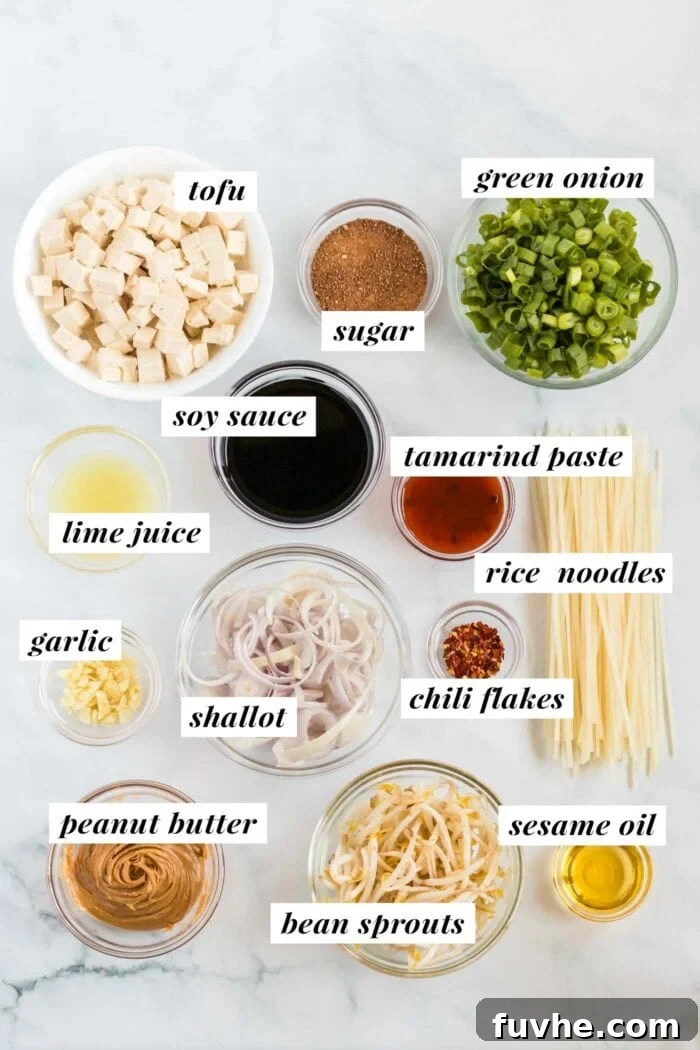
- Rice Noodles: The cornerstone of any great Pad Thai! Seek out flat, wide rice noodles, typically sold in clear packages in the international or Asian food aisle of your grocery store. Sometimes, they are even explicitly labeled as “Pad Thai noodles.” For the best results, cook them to a perfect al dente – tender yet with a slight chew – to prevent them from becoming mushy. While not ideal, thinner rice vermicelli or even linguine can serve as an alternative if wide rice noodles are unavailable.
- Tamarind Paste: This is the unparalleled secret ingredient that infuses Pad Thai with its distinctive tangy, sweet, and subtly sour depth. It usually comes in a jar and can be found in the international or Asian food section. We strongly recommend not skipping this ingredient, as it is truly what imparts the authentic, complex flavor to the sauce.
- Soy Sauce: For optimal flavor control, we suggest using a low-sodium soy sauce. This allows you to adjust the saltiness to your preference. If you follow a gluten-free diet, a simple and effective substitution is gluten-free tamari sauce or coconut aminos, both of which offer a comparable savory depth.
- Coconut Palm Sugar: This natural sweetener contributes a unique caramel note and a pleasant sweetness that beautifully balances the tamarind’s tartness. If coconut sugar isn’t on hand, light brown sugar or pure maple syrup are suitable alternatives, though coconut sugar provides the most traditional flavor profile.
- Peanut Butter: Opt for a natural, creamy peanut butter that contains no added oils or sugars to ensure the best texture and authentic flavor for your sauce. For those with a peanut allergy, creamy almond butter or cashew butter can be used interchangeably. If you need a completely nut-free option, sunflower seed butter or Wowbutter are excellent choices that deliver a similar richness.
- Sesame Oil: This ingredient is crucial for imparting the characteristic nutty, aromatic “stir-fry” flavor that defines Pad Thai. We highly recommend using toasted sesame oil for its robust aroma. While it can be omitted for an oil-free recipe, be aware that the flavor profile will be slightly altered. For an added layer of warmth and heat, consider using chili sesame oil.
- Tofu: Firm or extra-firm tofu is ideal for this Pad Thai recipe due to its ability to hold shape and crisp up beautifully. Pressing the tofu beforehand is highly recommended, as it removes excess water, allowing the tofu to absorb more of the delicious sauce and achieve a delightfully crispy exterior when cooked. Refer to our detailed pressing instructions below for best results.
- Fresh Vegetables: The foundational aromatics for the stir-fry include fresh garlic, finely sliced shallots, and vibrant green onion. Beyond these essentials, Pad Thai is incredibly versatile! Feel free to incorporate other vegetables like thinly sliced bell peppers, zucchini, carrots, tender broccoli florets, or even bamboo shoots and baby corn for added texture, color, and nutritional value.
- Optional Toppings: While the Pad Thai is wonderfully flavorful on its own, toppings elevate the dish to another level. Fresh cilantro adds a burst of herbaceous freshness, crushed roasted peanuts provide a satisfying crunch, and fresh lime wedges offer an essential citrusy zest that brightens the entire meal. For those who enjoy a little heat, a drizzle of chili garlic sauce or an extra sprinkle of chili flakes can add a delightful kick.
Chef’s Tip for Time-Saving
If you find yourself truly pressed for time, a good quality store-bought Pad Thai sauce can be a convenient shortcut to significantly reduce your cooking duration. However, it is paramount to scrutinize the ingredient list to ensure it aligns with your dietary needs, especially if maintaining a vegan diet is important to you. While store-bought options offer convenience, we wholeheartedly encourage you to try our homemade sauce at least once; its depth of flavor and freshness are truly unmatched.
Mastering Homemade Vegan Tofu Pad Thai: A Step-by-Step Guide
Creating an authentic and incredibly flavorful vegan Pad Thai at home is much simpler than you might imagine. Follow these clear, detailed steps to achieve a perfectly balanced and utterly delicious meal that will rival your favorite take-out.
Step 1: Expert Tofu Preparation for Optimal Flavor and Texture
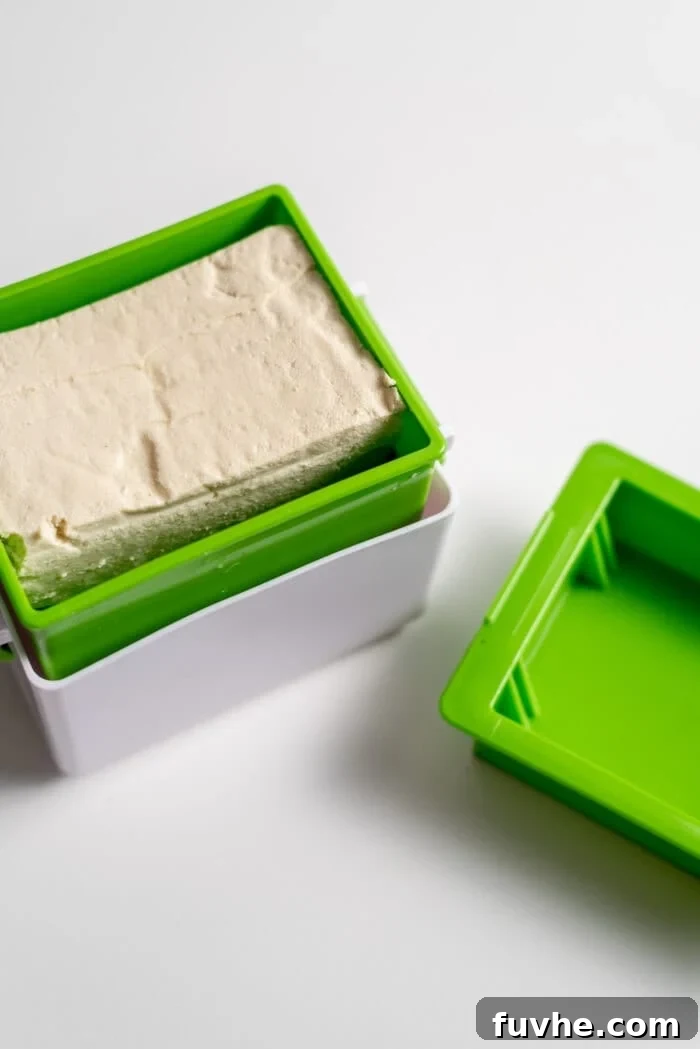
The foundation of wonderfully crispy and flavorful tofu in your Pad Thai begins with proper pressing. This vital step removes excess moisture, which not only prevents the tofu from becoming soggy but also allows it to better absorb the rich Pad Thai sauce and develop a delightful texture when pan-fried.
To effectively press your tofu, choose one of these convenient methods:
- Using a Tofu Press: If you own a dedicated tofu press, simply follow the manufacturer’s instructions. This is often the most efficient way to extract water.
- DIY Press Method: No specialized press? No problem! Wrap the block of tofu securely in a clean dishcloth or several layers of paper towels. Place it on a flat, sturdy surface, then position a heavy object on top – a cast-iron skillet, a stack of heavy books, or even a few canned goods work perfectly.
Allow the tofu to press for a minimum of 20 minutes. While it’s possible to skip this step if you’re extremely short on time, we highly recommend it, as it significantly enhances the tofu’s ability to crisp up and soak in all the wonderful flavors of the dish. Once pressed, cube the tofu into bite-sized pieces.
Step 2: Perfectly Cooking Your Rice Noodles
The key to an outstanding Pad Thai is perfectly cooked rice noodles – tender, yet with a satisfying bite, and never mushy. Begin by bringing a large pot of unsalted water to a rapid boil over high heat on your stovetop. Once boiling, add the rice noodles and cook them strictly according to the package instructions, aiming for an al dente consistency. It’s important to avoid overcooking them, as they will continue to cook briefly in the sauce.
As soon as the noodles reach the desired al dente texture, immediately drain them in a colander and rinse thoroughly with cold water. This crucial step halts the cooking process and effectively prevents the noodles from sticking together. After rinsing, gently drizzle the noodles with about 1/4 teaspoon of sesame oil and toss them well to ensure each strand remains separate and ready for the stir-fry.
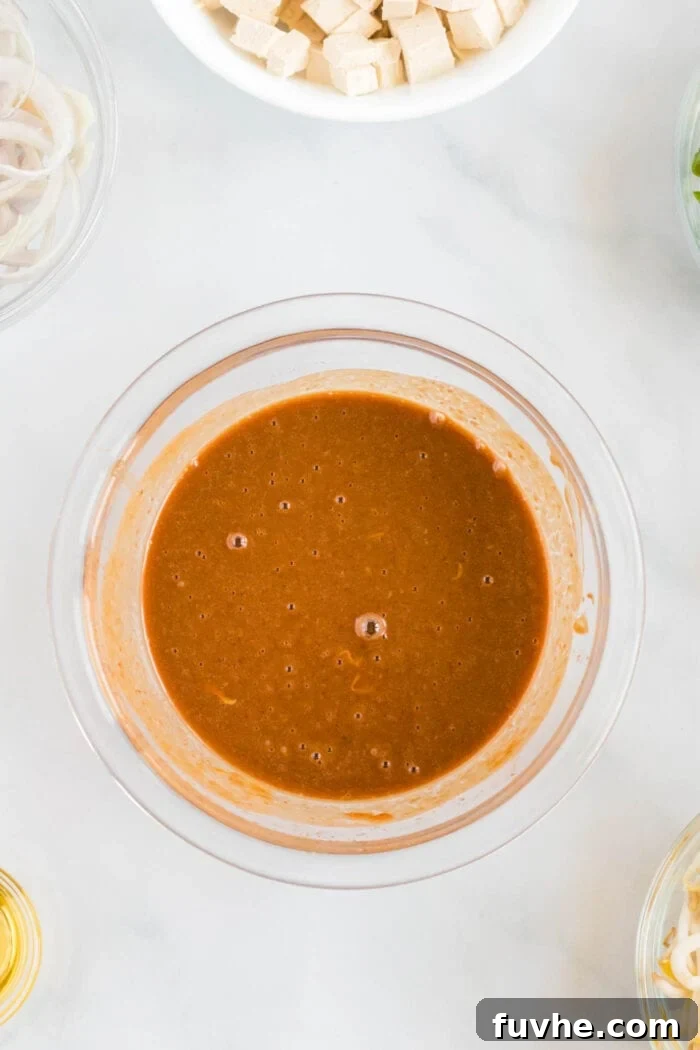
Step 3: Crafting the Irresistible Homemade Pad Thai Sauce
While your noodles are cooking, it’s the ideal moment to prepare the flavorful heart of your Pad Thai – the sauce. In a medium-sized bowl, combine all the designated ingredients for the homemade Pad Thai sauce. Use a whisk to thoroughly mix everything together until the sauce is smooth and all components are well-integrated. Once prepared, set this rich and aromatic mixture aside; it will be ready to infuse your dish with authentic Thai taste when the time comes.
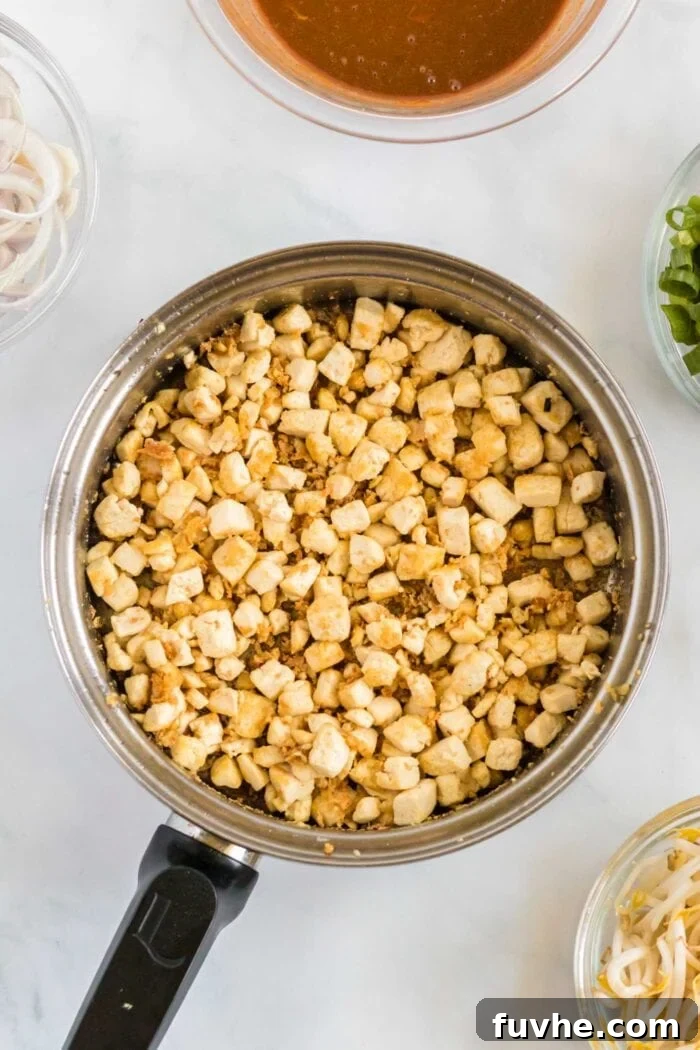
Step 4: Pan-Frying Your Tofu to Golden Perfection
Heat a large non-stick skillet or a wok over medium to medium-high heat for about 1-2 minutes until it’s adequately hot. Add 1-2 tablespoons of sesame oil to the pan; it should quickly shimmer. Carefully add your pressed and diced tofu pieces to the hot pan, ensuring not to overcrowd it (cook in batches if necessary). Cook for approximately 2-3 minutes without disturbing, allowing a beautiful golden-brown crust to form.
Then, using tongs or a spatula, flip the tofu pieces and continue cooking, turning them until every side is delightfully golden brown and wonderfully crispy. This crisp exterior adds a fantastic textural contrast to the tender noodles. Once cooked to your liking, remove the tofu from the pan and transfer it to a plate lined with paper towels to absorb any excess oil, helping to maintain its crispness.
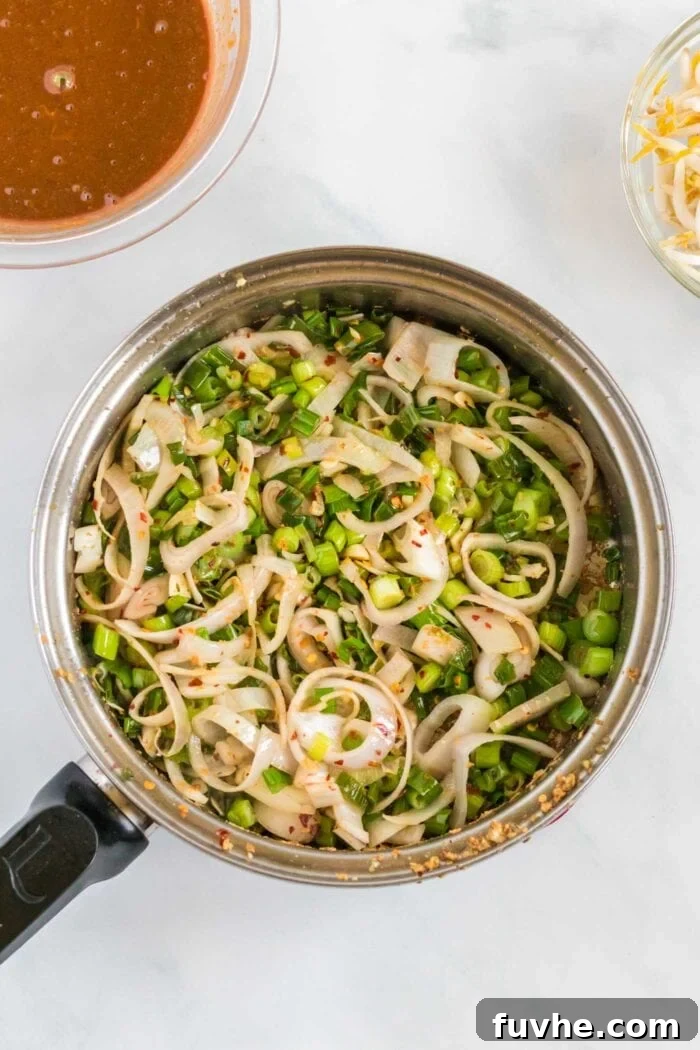
Step 5: Building Flavor with Aromatics and Spices
Using the same pan (or wok) where you cooked the tofu, add a small amount of additional sesame oil if necessary. Introduce the minced garlic, thinly sliced shallots, the white parts of the green onion, and the chili flakes (if you desire a touch of heat). Sauté these aromatics for about 2 minutes, stirring frequently, until they become wonderfully fragrant and slightly softened. Be vigilant not to burn the garlic, as this can impart a bitter taste.
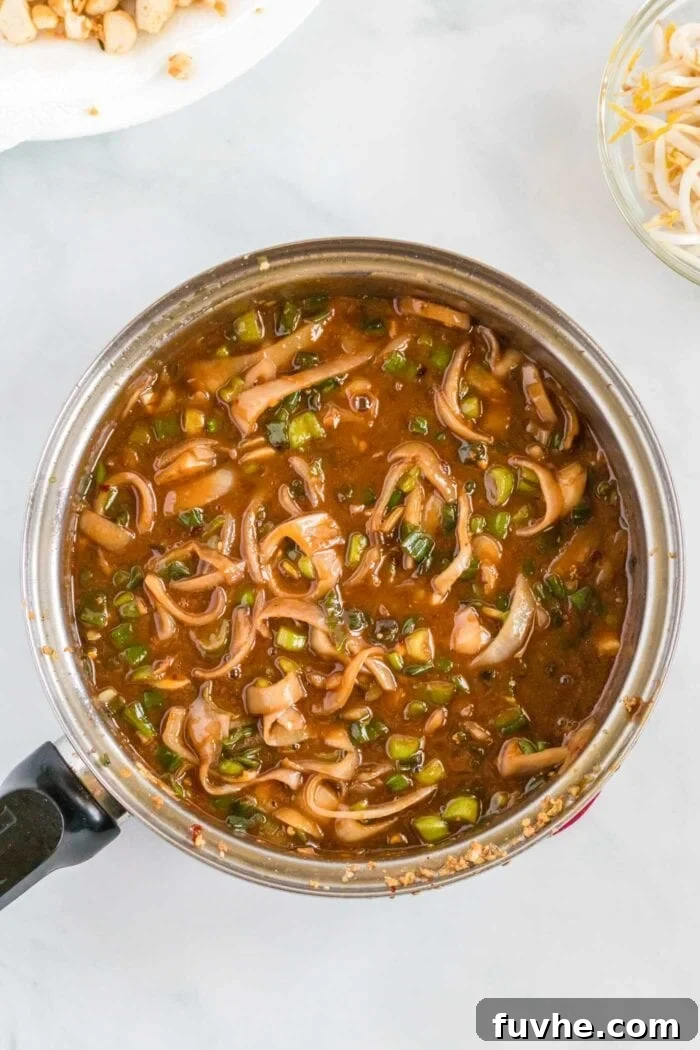
Step 6: Incorporating and Simmering the Pad Thai Sauce
Once your aromatics are fragrant and translucent, slowly and carefully pour your previously prepared homemade Pad Thai sauce into the pan, stirring continuously to thoroughly combine it with the sautéed ingredients. Bring the sauce to a gentle boil, then reduce the heat slightly and allow it to simmer for a minute or two. This brief simmer helps the flavors meld together beautifully and allows the sauce to thicken slightly, achieving the perfect consistency for coating your noodles.
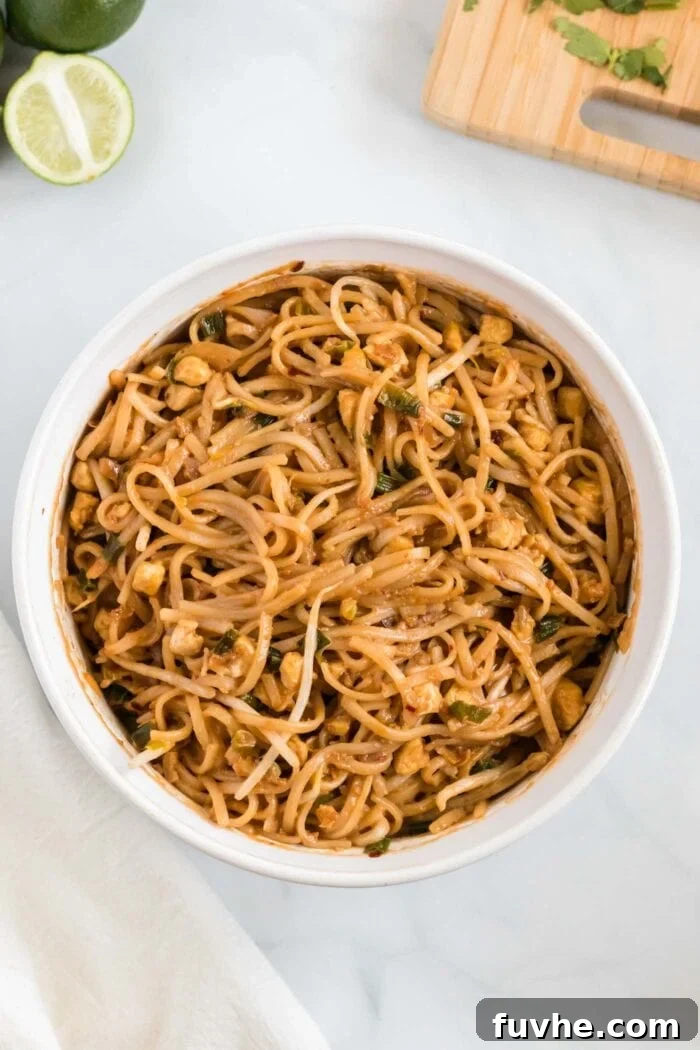
Step 7: Combining Noodles, Tofu, and Fresh Sprouts
The moment the sauce reaches a gentle boil and has thickened slightly, it’s time to introduce your cooked and rinsed rice noodles into the pan. Using a pair of tongs, toss the noodles vigorously and thoroughly with the Pad Thai sauce until every single strand is beautifully and evenly coated. This step is essential for ensuring maximum flavor in every bite. Next, gently fold in the crispy pan-fried tofu and the fresh bean sprouts. Continue to toss everything together until all ingredients are nicely mixed and heated through. The bean sprouts add a wonderful, fresh crunch that contrasts perfectly with the soft noodles.
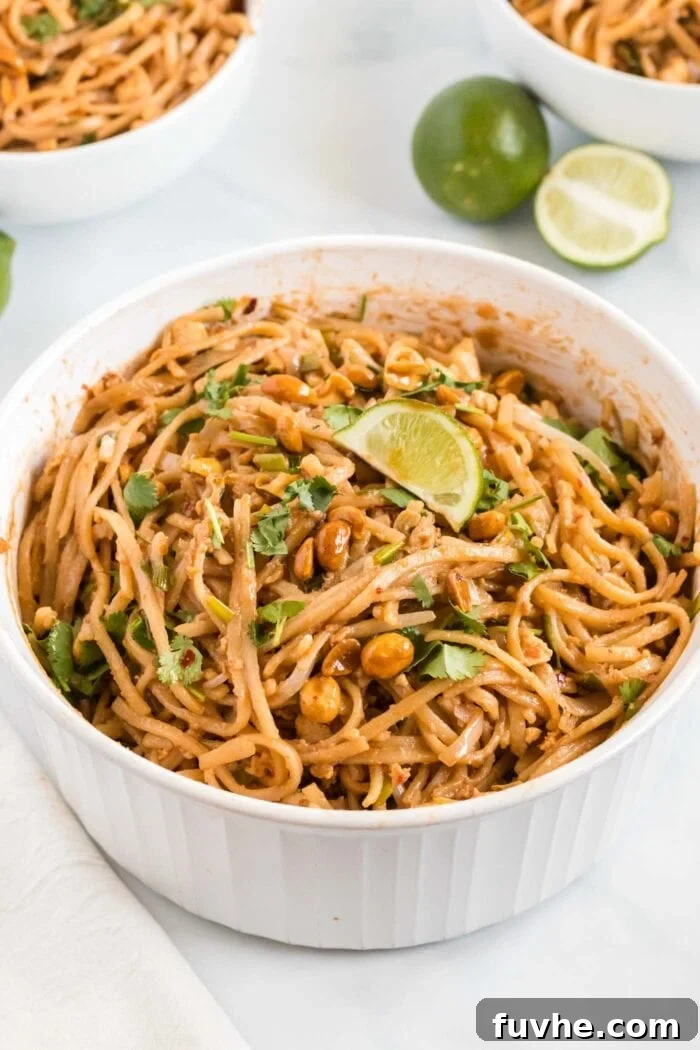
Step 8: Serving Your Masterpiece with Fresh Garnishes
Once all the ingredients are perfectly combined and warmed through, your homemade vegan tofu Pad Thai is ready to be savored! Transfer generous portions into your favorite serving bowls. To elevate the experience and introduce authentic Thai flavors and textures, generously top each serving with a sprinkle of chopped roasted peanuts for a satisfying crunch, a handful of fresh cilantro for its vibrant, herbaceous brightness, and a fresh lime wedge for that essential zesty finish. A final squeeze of fresh lime juice just before eating truly awakens and harmonizes all the incredible flavors.
Frequently Asked Questions About Vegan Tofu Pad Thai
Absolutely! This Pad Thai recipe is meticulously crafted to be 100% plant-based. It contains no eggs, chicken, fish sauce (a common ingredient in traditional Pad Thai), or any other animal products, making it a delicious, ethical, and satisfying choice for vegans and anyone looking to enjoy more plant-forward meals.
Yes, adapting this recipe to be completely gluten-free is very straightforward! The primary ingredient to be mindful of is soy sauce. To ensure your Pad Thai is free of gluten, simply substitute regular soy sauce with an equal amount of gluten-free tamari sauce or coconut aminos. All other ingredients listed in this recipe are naturally gluten-free.
While tofu is an excellent plant-based protein that beautifully absorbs flavors and adds fantastic texture, its inclusion is entirely optional. If tofu isn’t to your taste, you can certainly omit it. Alternatively, consider using other plant-based proteins like tempeh, edamame, or simply enhance the dish with a greater variety of vegetables. For those not strictly vegan, traditional proteins such as shrimp or chicken could also be substituted.
While wide flat rice noodles are the traditional and recommended choice for authentic Pad Thai, you do have alternatives. Thinner rice vermicelli can work well. Soba noodles (buckwheat noodles) offer a distinct nutty flavor, or in a pinch, even standard linguine or spaghetti can be used, although they will alter the dish’s classic character. Regardless of your choice, always cook substitute noodles to an al dente consistency according to their package instructions.
If you enjoy a bit of heat, there are several simple ways to dial up the spice in your Pad Thai! You can easily incorporate more chili flakes (red pepper flakes) during the aromatic stir-fry step. Another excellent option is to use chili-infused sesame oil instead of regular sesame oil. For a fresh, fiery burst at the very end, drizzle some sriracha, sambal oelek, or another favorite chili garlic sauce directly over your finished dish before serving.
Leftover tofu Pad Thai makes for wonderful next-day meals! Once completely cooled, transfer your leftovers to an airtight container and store them in the refrigerator for up to 5 days. To reheat, you can gently warm the dish in a pan on the stovetop, adding a splash of water or vegetable broth to help loosen the noodles, or simply use a microwave-safe bowl in the microwave until it’s heated through. The flavors often deepen beautifully overnight!
Absolutely! This recipe is well-suited for partial meal prepping, which can significantly streamline your cooking process. You can press and cube your tofu ahead of time and store it in an airtight container in the refrigerator for up to 2 days. The homemade Pad Thai sauce can also be mixed and kept in the refrigerator for up to a week. Chopping your aromatics (garlic, shallots, green onions) a day in advance will also save you valuable time. Having these components ready will make assembling your Pad Thai quick and effortless.
Achieving wonderfully crispy tofu relies on two primary factors: effective pressing and proper cooking technique. First, ensure your tofu is pressed thoroughly to remove as much excess moisture as possible; this is crucial. Second, cook the tofu in a hot pan (medium-high heat) with a sufficient amount of oil (like sesame oil or another neutral high-heat oil). Avoid overcrowding the pan; cook the tofu in a single layer, allowing it to develop a golden-brown crust on one side before flipping. Resist the urge to stir it constantly, giving each side ample time to crisp up beautifully.
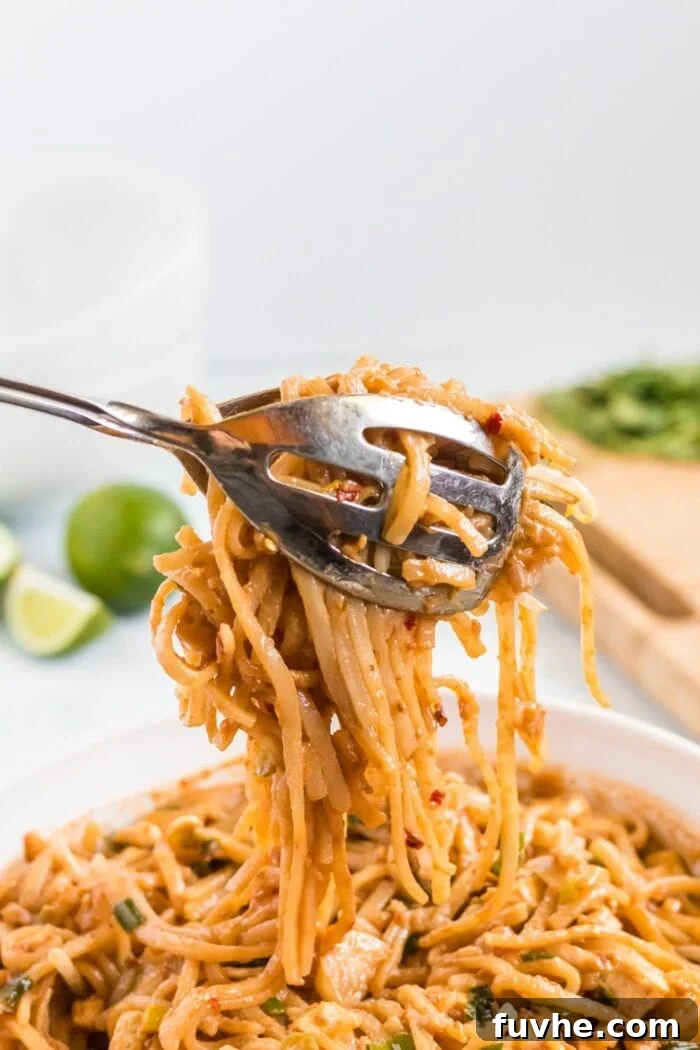
If you try this Vegan Tofu Pad Thai recipe or any other recipe on our blog, don’t forget to leave a comment and a ⭐⭐⭐⭐⭐ rating in the comment section below. Your feedback is invaluable, helping other aspiring cooks who are considering making the recipe, and we truly love hearing from you! Also, remember to tag us on Instagram @runningonrealfood so we can see your incredible culinary creations! Thank you for trying our recipes! – Deryn
Vegan Tofu Pad Thai
By: Deryn Macey
This incredible vegan tofu Pad Thai recipe empowers you to create an authentic-tasting Thai dish right in your own kitchen using simple, everyday ingredients. It comes together quickly, often in under 30 minutes, for a delicious, healthy, and satisfying meal that you can effortlessly enjoy any night of the week.
⭐⭐⭐⭐⭐ (5 from 4 votes)
- Prep Time: 15 mins
- Cook Time: 10 mins
- Total Time: 25 mins
- Servings: 6
Ingredients
For the Pad Thai
- 350 g wide rice noodles
- 2 tbsp sesame oil (30 ml)
- 1 package extra firm tofu, pressed and cubed (454 g)
- 4 large cloves of garlic, minced (30 g)
- 1 large shallot, sliced (60 g)
- 1 bunch green onions, thinly sliced (110 g)
- 1 tsp chili flakes (optional, for heat)
- 1 cup fresh bean sprouts (110 g)
- 1 cup roasted peanuts (115 g), optional for serving
- Finely chopped cilantro, optional for serving
- Fresh lime wedges, optional for serving
For the Pad Thai Sauce
- 2 tbsp tamarind paste (30 g)
- 1/2 cup light soy sauce (120 ml) (use gluten-free tamari for GF)
- 1/4 cup coconut sugar (60 g) (or brown sugar/maple syrup)
- 1/4 cup creamy natural peanut butter (60 g) (or almond/sunflower seed butter)
- 1/4 cup lime juice (60 ml)
Instructions
- Prepare Noodles: Cook rice noodles according to package directions until al dente. Drain immediately, rinse thoroughly with cold water to stop cooking, and toss with 1/4 tsp oil to prevent sticking. Set aside.
- Mix Sauce: In a medium bowl, combine all ingredients for the Pad Thai sauce. Whisk thoroughly until smooth and well-combined. Set aside.
- Cook Tofu: Heat a large skillet or wok over medium-high heat for 1-2 minutes. Add 2 tbsp sesame oil. Add the diced, pressed tofu and cook for 2-3 minutes until golden brown on one side. Flip with tongs and cook until all sides are crispy and golden. Remove tofu and place on a paper towel-lined plate.
- Sauté Aromatics: In the same pan, add a little more sesame oil if needed, then add the minced garlic, sliced shallots, sliced green onion (white parts), and chili flakes. Sauté for about 2 minutes until fragrant and softened.
- Add Sauce: Slowly pour the prepared Pad Thai sauce into the pan, stirring constantly. Bring the sauce to a gentle boil and let it simmer for about 1 minute to slightly thicken.
- Combine Noodles: Add the cooked rice noodles to the pan with the simmering sauce. Using tongs, toss continuously until the noodles are fully and evenly coated in the sauce.
- Add Tofu & Sprouts: Gently fold in the crispy cooked tofu and fresh bean sprouts. Toss everything together until thoroughly mixed and heated through.
- Serve: Immediately transfer the Pad Thai to serving bowls. Garnish generously with roasted peanuts, fresh chopped cilantro, and fresh lime wedges. Serve hot and enjoy!
Recipe Video
Watch this video to see how easily this delicious Vegan Tofu Pad Thai comes together:
Notes
- Tofu Pressing: For the best texture and flavor absorption, pressing your tofu is highly recommended. Wrap the block in a clean dishcloth, place it on a plate, and top it with a heavy object (like a skillet or a stack of books) for at least 20 minutes to remove excess water. More detailed guidance on how to properly press tofu can be found here.
- Storage & Reheating: Store any leftover Pad Thai in an airtight container in the refrigerator for up to 5 days. Ensure the dish is completely cooled before storing. To reheat, gently warm it in a pan on the stovetop with a splash of water or vegetable broth to loosen the noodles, or simply use a microwave-safe bowl in the microwave until warmed through.
- Gluten-Free & Nut-Free Options: To make this Pad Thai entirely gluten-free, simply substitute regular soy sauce with an equal amount of gluten-free tamari or coconut aminos. For a peanut-free version, use almond butter, cashew butter, or sunflower seed butter in the sauce, and substitute chopped cashews or toasted sesame seeds for the peanut topping. For a completely nut-free option, ensure all substitutions are made, and omit any nut-based garnishes.
Nutrition Information (per serving)
- Serving: 1 serving
- Calories: 558 kcal
- Carbohydrates: 69 g
- Protein: 20 g
- Fat: 21 g
- Sodium: 104 mg
- Fiber: 6 g