
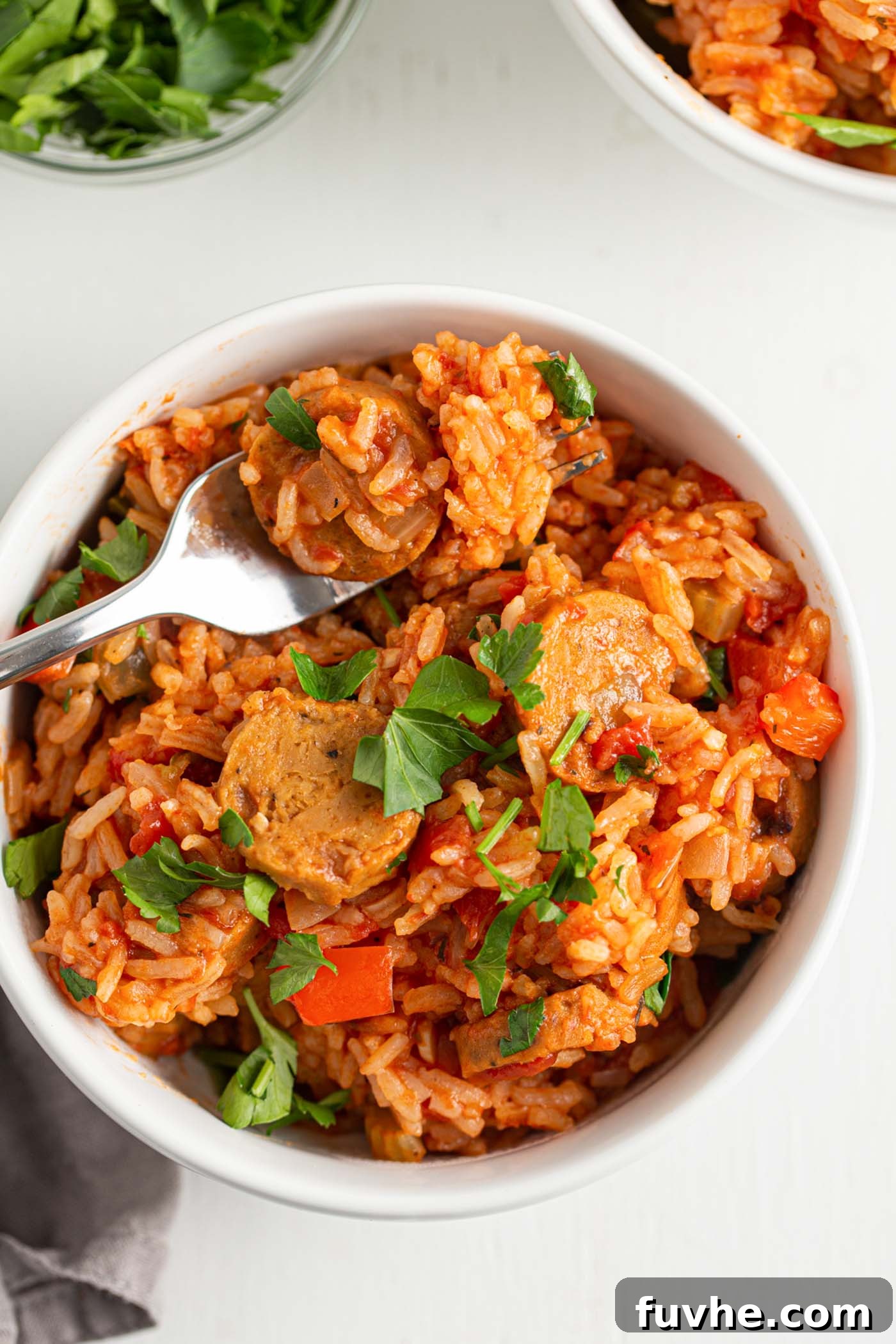
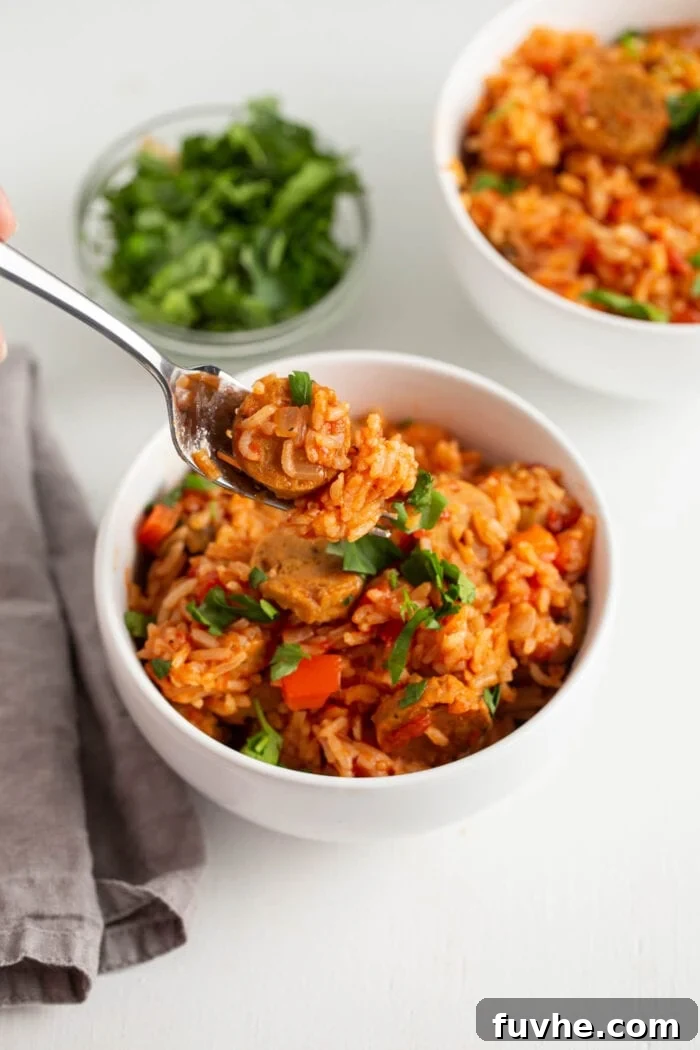
Discover the rich, vibrant flavors of the American South with our easy-to-follow, one-pot Vegan Jambalaya recipe. This delightful plant-based rendition of the classic Southern dish is not only simple to prepare but also packs a healthy, satisfying, and utterly delicious punch. Perfect for busy weeknights or as a wholesome meal prep option, it brings a taste of Louisiana right to your kitchen.
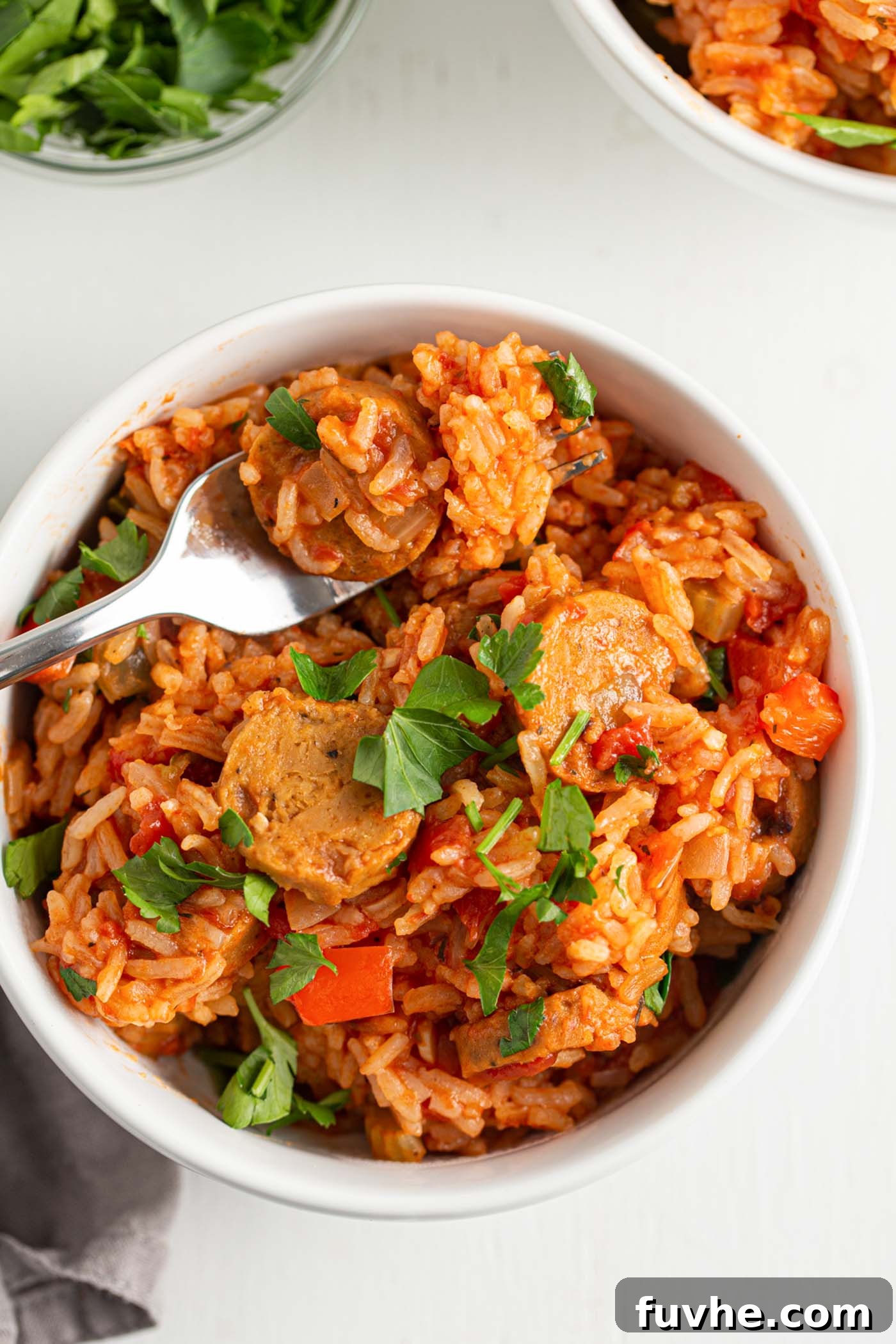
Unveiling Vegan Jambalaya: A Plant-Based Southern Sensation
Jambalaya, a celebrated culinary staple from Louisiana, traditionally features a savory mix of meat, seafood, vegetables, and rice cooked together in a single pot. Our vegan interpretation honors the soulful essence of this dish while making it accessible to plant-based eaters, health enthusiasts, and anyone looking for a hearty, flavor-packed meal without the meat.
This recipe is crafted with readily available simple pantry ingredients like long-grain rice, robust vegetable broth, and canned crushed tomatoes, making it incredibly convenient to whip up even when your grocery stock is low. Beyond its ease, this vegan jambalaya is inherently nutritious, incredibly budget-friendly, and wonderfully filling, ensuring everyone at the table leaves satisfied.
Why You’ll Love This Recipe
You’ll quickly fall in love with this vegan jambalaya for its versatility and sheer deliciousness. It’s an ideal choice for a low-fuss weeknight meal, requiring minimal hands-on time, or as a healthy meal prep option for the week ahead. It stores beautifully and reheats exceptionally well, making it perfect for lunches or quick dinners. Plus, it serves as an excellent base for adding extra vegetables or beans, allowing for endless customization. Here’s a snapshot of its many benefits:
- Completely Vegetarian and Vegan (dairy-free, egg-free), catering to plant-based diets.
- Soy-free, provided you select a soy-free vegan sausage alternative.
- Adaptable to be gluten-free and oil-free, with simple ingredient swaps.
- Naturally high in plant-based protein and low in fat, contributing to a balanced diet.
- Excellent for meal prep, offering convenient and healthy meals throughout the week.
- A true one-pot recipe, significantly reducing cleanup time.
- Ready to serve in approximately 50 minutes, including cooking time.
- Features minimal prep time, perfect for busy schedules.
- Includes instructions for both oven-baked and stovetop methods for flexibility.
If you’re eager to explore more delightful vegan main dishes, be sure to try our Vegan Lentil Shepherd’s Pie, Chickpea Meatloaf, and Vegan Stuffed Butternut Squash. For those who appreciate the convenience of one-pot meals, our Vegan One Pot Pasta and Vegan Coconut Red Lentil Dahl are equally super easy and incredibly tasty additions to your recipe repertoire!
The Heart of the Dish: Essential Ingredients & Savvy Swaps
Crafting the perfect vegan jambalaya begins with selecting quality ingredients that build layers of authentic flavor. While the ingredient list below provides precise measurements, this section delves into the role of each component and offers helpful substitution options to customize the dish to your preference and what you have on hand.
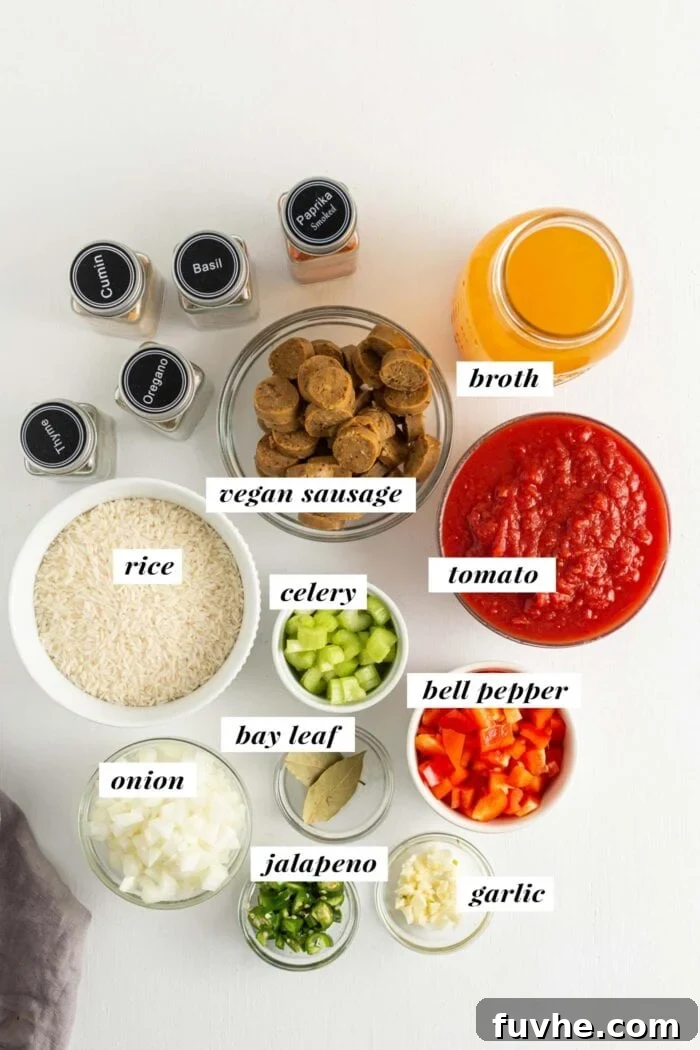
- Olive Oil: This serves as the foundation for sautéing our aromatics, developing the initial layer of flavor. You can opt for extra virgin olive oil for its rich taste, avocado oil, or another neutral cooking oil. For an oil-free version, simply substitute water or vegetable broth to sauté your vegetables.
- Vegan Sausage: A crucial element for replicating the hearty, savory depth of traditional jambalaya. I highly recommend brands like Field Roast sausage or Beyond Sausage for their excellent texture and flavor, but any type of vegan sausage you enjoy will work. If you need the recipe to be gluten-free, carefully check the ingredient list of store-bought sausages or consider using a homemade vegan sausage or substituting with robust beans like kidney or black beans.
- Onion: A fundamental aromatic that provides a sweet and pungent base. Both white or yellow onions work perfectly in this recipe, contributing to the “holy trinity” of Creole and Cajun cooking.
- Tomatoes: You’ll need a can of crushed tomatoes to achieve the rich, saucy consistency characteristic of jambalaya. While diced tomatoes can be used in a pinch, I find crushed tomatoes deliver a smoother, more integrated sauce.
- Serrano Pepper: This adds a welcome kick of heat. If serrano peppers are unavailable or if you prefer a milder spice level, a jalapeño pepper is an excellent substitute. Adjust to your heat preference!
- Bell Peppers: Essential for both flavor and color, red bell peppers are specified in the recipe. Feel free to use other colors, such as green, yellow, or orange bell peppers, to add visual appeal and a slightly different sweetness profile.
- Rice: The backbone of any jambalaya, requiring a long or short-grain white rice. Basmati or Jasmine rice are popular choices that cook up beautifully, ensuring distinct grains that don’t become overly sticky.
- Vegetable Stock/Broth: Any homemade or high-quality store-bought vegetable broth you enjoy will work wonderfully. Opt for a low-sodium variety to control the overall saltiness of the dish.
- Spices: A blend of dried oregano, dried basil, thyme, cumin, smoked paprika, salt, and black pepper creates the signature warm, earthy, and slightly smoky flavor profile that defines jambalaya. A touch of cayenne pepper is optional for an extra fiery kick.
The complete ingredient list with precise amounts can be found in the recipe section below. This comprehensive overview provides specific notes and ample substitution options to help you tailor this vegan jambalaya to your taste and dietary needs.
Crafting Your One-Pot Vegan Jambalaya: A Step-by-Step Culinary Journey
This recipe guides you through creating a delicious vegan jambalaya primarily using an oven-baked method, which results in perfectly cooked rice and a beautifully integrated dish with minimal fuss. A stovetop alternative is also provided for convenience.
Before You Begin: Preheat your oven to 350°F (175°C). Ensure you have a large, oven-safe pot or skillet with a tight-fitting lid for this method. If an oven-safe pot is not available, refer to the “Stovetop Instructions” in the recipe notes below.
Step 1. Sauté the Aromatics: Begin by heating the olive oil in your large oven-safe pot or skillet over medium heat. Once shimmering, add the diced onions, celery, and minced garlic. Cook for 3-4 minutes, stirring occasionally, until the vegetables become fragrant and have softened to a translucent texture. This step builds the crucial aromatic base for your jambalaya.
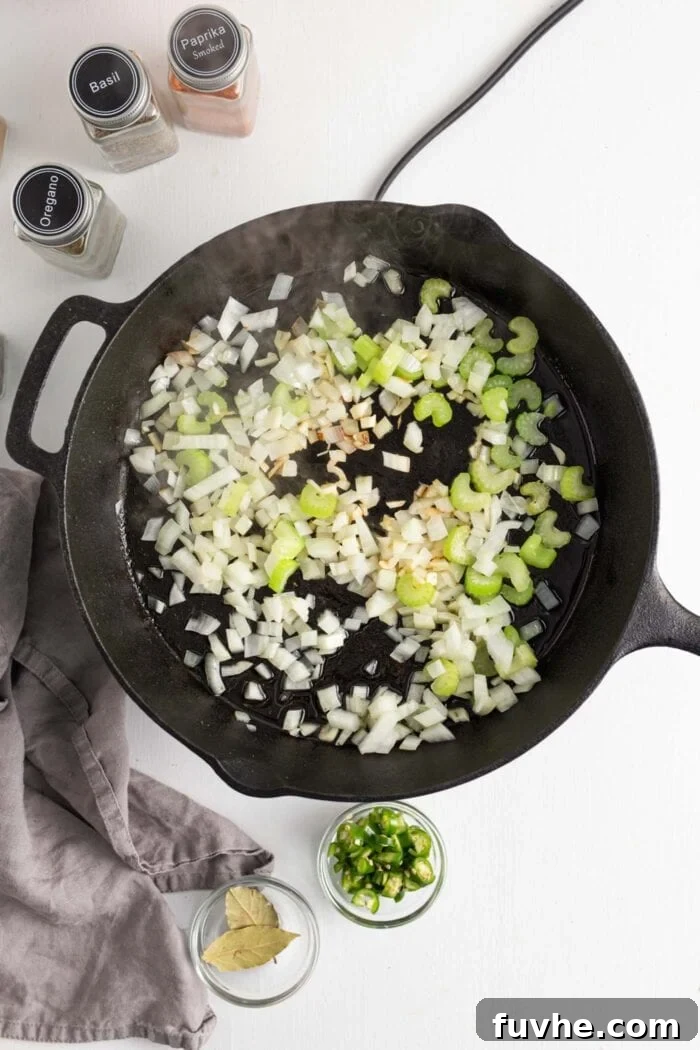
Step 2. Brown the Sausage and Peppers: Next, add the sliced vegan sausage and chopped bell peppers to the pot. Continue to cook for 6-7 minutes, stirring or shaking the pan every 1-2 minutes, until the sausage begins to brown and the peppers start to soften. This step develops savory flavors from the sausage and introduces the vibrant sweetness of the bell peppers.
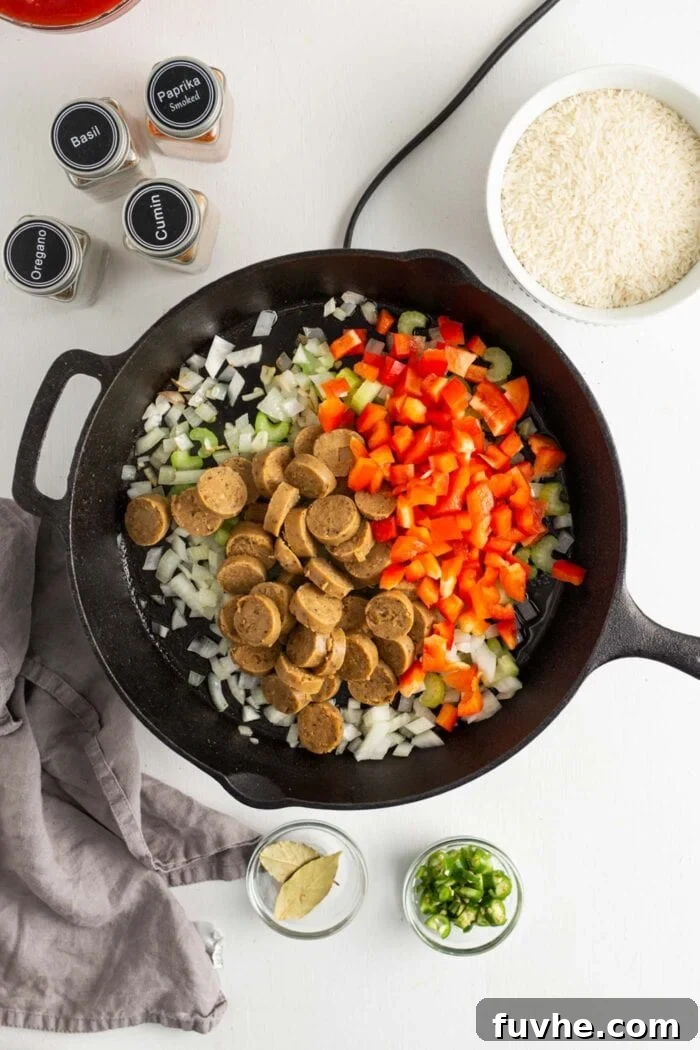
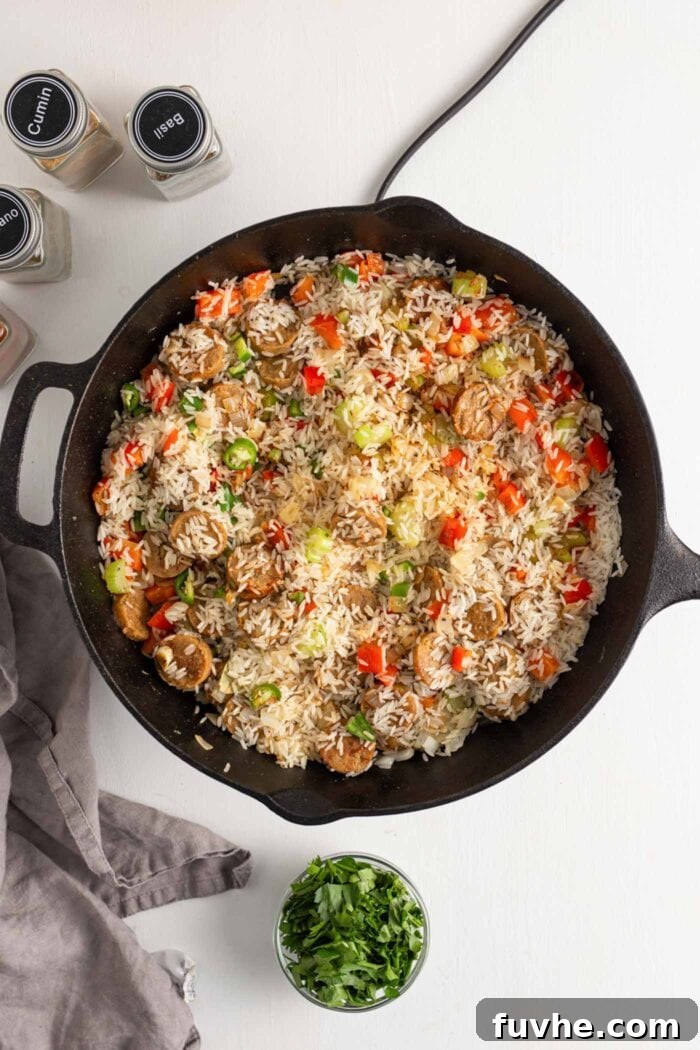
Step 3. Toast the Rice and Spices: Now, add all the dried spices (salt, black pepper, oregano, basil, thyme, cumin, smoked paprika, and optional cayenne pepper) along with the uncooked rice to the pot. Stir well to coat the rice and spices evenly with the oil and juices from the pan. Cook for another 2 minutes, stirring frequently, until the rice appears lightly toasted and the spices become fragrant. This crucial step helps prevent the rice from becoming mushy and enhances its nutty flavor.
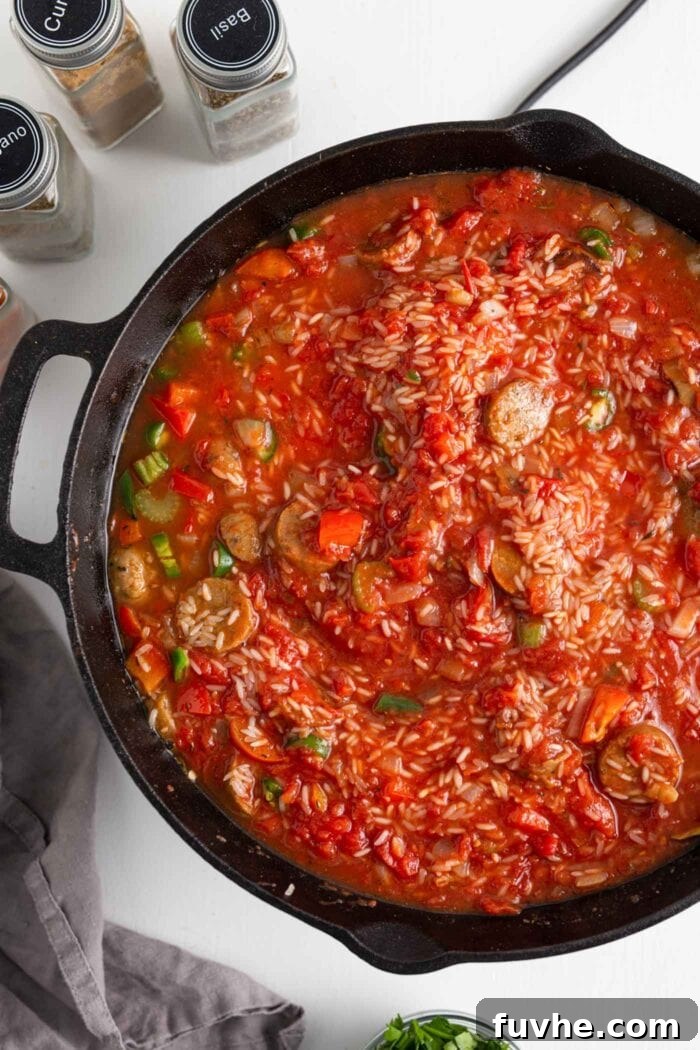
Step 4. Add Liquids and Bring to a Boil: Pour in the crushed tomatoes and vegetable broth, then add the bay leaf. If you plan to incorporate beans into your jambalaya, now is the perfect time to stir in drained and rinsed kidney, black, or pinto beans. Bring the entire mixture to a rapid boil over medium-high heat. Once boiling, turn off the heat and secure the lid tightly onto the pot.
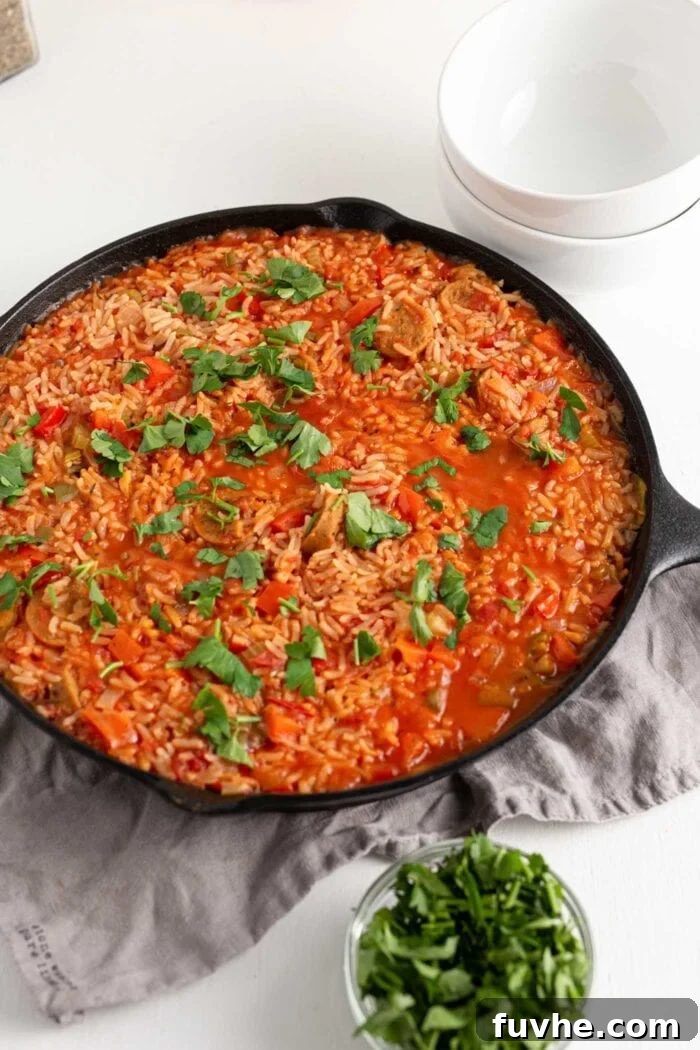
Step 5. Bake and Serve: Carefully transfer the covered pot from the stovetop directly into your preheated oven. Allow the jambalaya to bake undisturbed until the rice is perfectly cooked and tender, which typically takes about 20-25 minutes. Once done, remove the pot from the oven, keep it covered, and let it rest for 5 minutes. This resting period allows the flavors to meld and the rice to absorb any remaining liquid, resulting in a fluffier texture.
Finally, uncover your delicious vegan jambalaya, fluff the rice with a fork, and serve immediately. Garnish generously with a sprinkle of fresh chopped parsley for a burst of freshness and color. For those who crave extra heat, serve alongside your favorite hot sauce. Enjoy this satisfying and flavorful plant-based meal!
Your Top Questions Answered: Vegan Jambalaya FAQs
Here are answers to some of the most common questions about making this delightful vegan jambalaya:
Can I add red kidney beans to this recipe?
Absolutely! Adding beans is a fantastic way to boost protein and fiber in your jambalaya. To incorporate them, simply drain and rinse a 15-19 oz can of red kidney beans (or black beans, pinto beans, or black-eyed peas) and add them to the pot in Step 4, alongside the vegetable broth and crushed tomatoes, just before the mixture goes into the oven.
What kind of vegan sausage should I use?
The choice of vegan sausage can significantly impact the final flavor and texture. Brands like Field Roast sausage, Beyond Sausage, or Yves are popular and work very well in this recipe due to their robust flavor and satisfying texture. When selecting, be aware that many store-bought vegan sausages contain gluten, so if you require a gluten-free dish, be sure to choose a certified gluten-free option or opt for a bean-based substitute instead. If you prefer not to use vegan sausage at all, a can of kidney beans added at the very end to heat through can make a good replacement.
What type of rice is best for jambalaya?
For an authentic jambalaya texture, a long-grain white rice such as basmati or jasmine is traditionally used. These types of rice are preferred because they produce distinct, separate grains after cooking, rather than clumping together, which is ideal for jambalaya.
What if I don’t have an oven-safe pot for jambalaya?
No oven-safe pot? No problem! You can easily make this jambalaya entirely on the stovetop. Simply skip preheating the oven. In Step 4, instead of transferring the pot to the oven, continue simmering the mixture gently on the stovetop over low heat with the lid on until the rice is tender. This typically takes about 15-20 minutes, or until all the liquid has been absorbed and the rice is cooked through. Keep an eye on it to prevent sticking and stir occasionally if needed.
Can I use brown rice for jambalaya?
Yes, you can certainly use brown rice for a whole-grain alternative! However, keep in mind that brown rice requires a longer cooking time and may need more liquid. If you opt for brown rice, increase the cooking time to approximately 40-45 minutes in the oven or on the stovetop. You might also need to add an additional ½ to 1 cup of vegetable broth during cooking to ensure the rice becomes fully tender.
Storing Your Delicious Leftovers
One of the many advantages of this vegan jambalaya is how well it stores, making it an excellent candidate for meal prep or enjoying leftovers throughout the week.
- Fridge: Allow the jambalaya to cool completely to room temperature before transferring it to an airtight container. It can be stored safely in the refrigerator for up to 5 days, making it perfect for grab-and-go lunches.
- Freezer: For longer storage, once cooled, place the jambalaya in a freezer-safe, sealed container. It will keep well in the freezer for up to 3 months. When you’re ready to enjoy it, thaw overnight in the refrigerator before reheating.
- Reheating: To reheat, simply warm portions in a pan on the stovetop over medium heat, adding a splash of water or broth if it seems too dry, until heated through to your preference. Alternatively, you can reheat it quickly in the microwave. Leftovers are also surprisingly delicious enjoyed cold or wrapped up in your favorite tortilla for a different twist!
Explore More Plant-Based Culinary Adventures
If you loved this hearty vegan jambalaya, you’re sure to enjoy these other comforting and flavorful plant-based stew recipes:
- Vegan Chickpea Curry Stew
- Vegan Lentil Stew
- Vegan Sweet Potato Lentil Stew
- Vegan Chickpea Quinoa Stew
- Chickpea Potato Curry Stew
Vegan Jambalaya Recipe Summary
This healthy and delicious vegan jambalaya recipe offers a satisfying and nutritious take on the classic Southern dish. It’s a fantastic one-pot meal that’s easy to customize with your favorite plant-based additions. Prepare it for a delightful weeknight dinner or a convenient meal prep option that’s bursting with flavor.
Recipe Details:
- Author: Deryn Macey
- Prep Time: Approximately 15 minutes
- Cook Time: Approximately 40 minutes
- Total Time: Approximately 55 minutes
- Yields: 6 servings
Ingredients (for 6 servings):
- 2 tbsp olive oil (or water/broth for oil-free), 30 mL
- 1 medium onion, diced (1 cup, 150 g)
- 2 stalks celery, washed and diced (1 cup, 130 g)
- 4 cloves garlic, minced (2 tbsp, 15 g)
- ½ lb. vegan sausage of choice, sliced into ¼ inch rounds
- 2 serrano peppers, minced (2 tbsp, 10 g)
- 2 red bell peppers, chopped (2 cups, 300 g)
- 1 yellow bell pepper chopped, (1 cup, 150 g)
- 2 tsp salt
- 1 tsp black pepper
- 1 tsp dried oregano
- 1 tsp dried basil
- 1 tsp thyme
- ½ tsp cumin
- 2 tsp smoked paprika
- ½ tsp cayenne pepper or red chili flakes, optional (for extra heat)
- 2 cups uncooked long or short-grain white rice, (400 g)
- 1 (28 oz) can crushed tomatoes, (796 ml)
- 1 cup vegetable stock, (250 ml)
- 1 bay leaf
- Fresh chopped parsley, optional garnish
Instructions:
- Preheat your oven to 350°F (175°C).
- Heat the olive oil (or water/broth) in a large oven-safe pot or skillet with a lid over medium heat. Add the diced onions, celery, and minced garlic with a pinch of salt and pepper. Cook for 3-4 minutes until fragrant and soft.
- Add the sliced vegan sausage, minced serrano pepper, and chopped bell peppers. Cook for an additional 6-7 minutes, stirring frequently, until the sausage begins to brown and the peppers soften.
- Stir in all the dried spices (salt, black pepper, oregano, basil, thyme, cumin, smoked paprika, and optional cayenne pepper) along with the uncooked rice. Cook for about 2 minutes, stirring often, until the rice is lightly toasted and the spices are fragrant. For more heat, you can add up to ½ tsp of cayenne pepper or red chili flakes with the other spices.
- Add the crushed tomatoes, vegetable stock, and bay leaf. Bring the mixture to a rapid boil. Once boiling, remove the pot from the heat and cover it tightly with its lid.
- Carefully transfer the covered pot to the preheated oven and bake for approximately 20-25 minutes, or until the rice is tender and has absorbed all the liquid. Remove the pot from the oven, keep it covered, and let it rest for 5 minutes before serving.
- Serve your vegan jambalaya immediately, garnished with fresh chopped parsley and hot sauce, if desired. Enjoy!
Notes:
- Bean Additions: If you’d like to include kidney beans, black beans, or pinto beans, drain and rinse a 15-19 oz can and add them when you add the broth and tomato (Step 4).
- Seasoning Alternative: For a quick seasoning, you can substitute the listed spice blend with 2 tsp of store-bought Cajun or Creole seasoning.
- Storing: Store cooled leftovers in a sealed container in the fridge for 5-6 days or in the freezer for up to 3 months.
- Stovetop Instructions: If you do not have an oven-safe pot or skillet, there’s no need to preheat the oven. Instead of transferring the pot to the oven in Step 5, continue simmering the jambalaya gently on the stovetop over low heat with the lid on until the rice is tender, approximately 15-20 minutes. Stir occasionally to prevent sticking.
Nutrition Information (per 1/6th of recipe):
Calories: 440kcal | Carbohydrates: 60g | Protein: 24g | Fat: 11g
Embrace the Flavor: Your Vegan Jambalaya Awaits!
We hope this comprehensive guide inspires you to create your own delicious and healthy vegan jambalaya. It’s a dish that truly embodies comfort food, offering a symphony of flavors and textures in every spoonful. Whether you’re a seasoned vegan cook or just exploring plant-based options, this recipe promises an easy, rewarding culinary experience. Don’t hesitate to experiment with additional vegetables or adjust the spice level to make it truly your own. Share your creations and enjoy the incredible satisfaction of a homemade, soulful meal!