

The Ultimate Vegan Cauliflower Potato Curry (Aloo Gobi): Flavorful, Healthy & Easy
Embark on a culinary journey with this incredibly delicious and remarkably easy vegan cauliflower potato curry recipe. Inspired by the classic Indian dish Aloo Gobi, this plant-based rendition can be on your table in under an hour, offering a satisfying and nutritious meal brimming with vibrant flavors and aromatic spices. Perfect for a busy weeknight or a cozy weekend dinner, this curry promises a comforting experience that delights the senses.
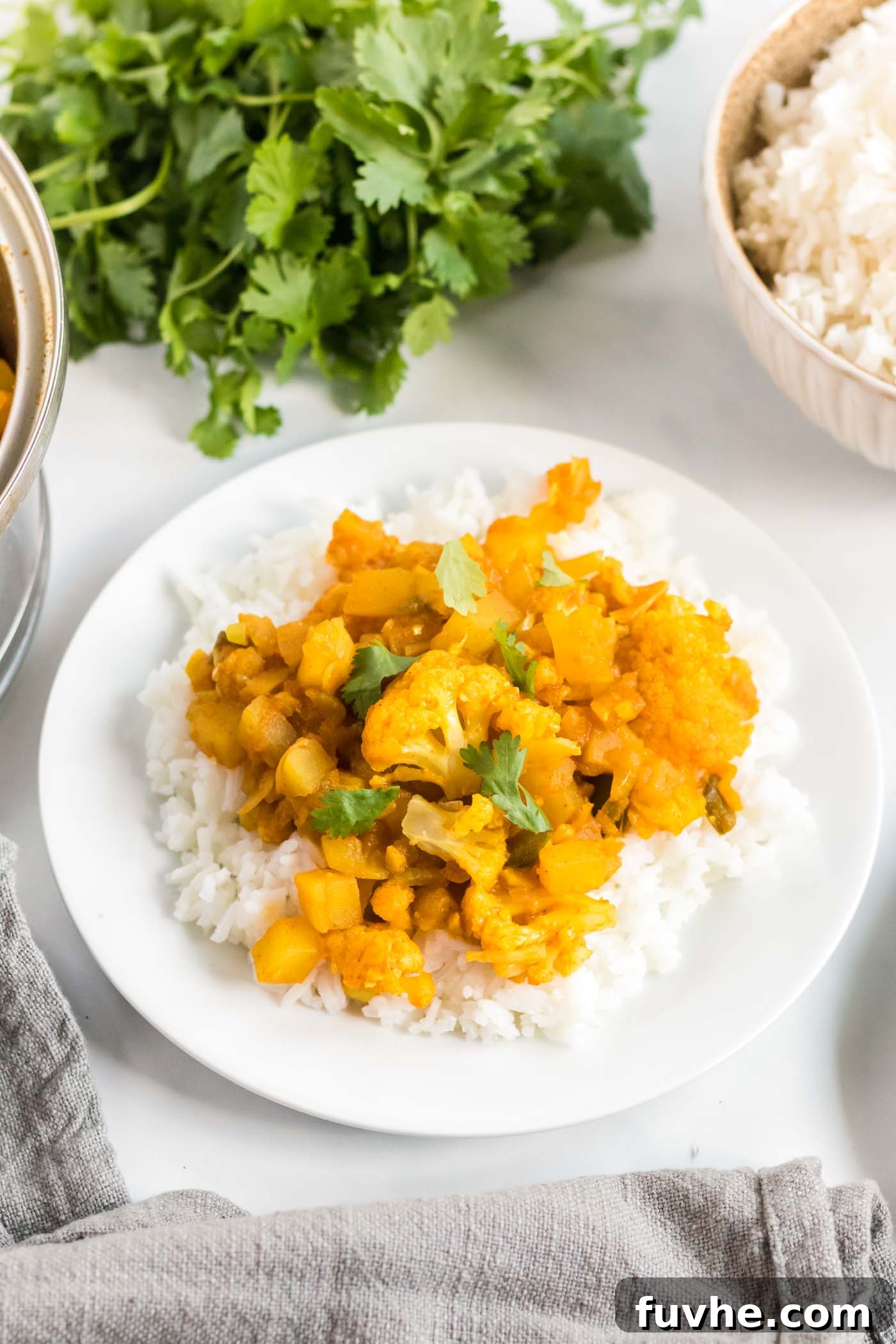
Discovering Aloo Gobi: A Timeless Indian Classic
This recipe draws its inspiration from Aloo Gobi, a beloved vegetarian staple in Indian and Pakistani cuisine. “Aloo” translates to potato, and “Gobi” means cauliflower, creating a simple yet profoundly flavorful combination. Traditionally, Aloo Gobi is prepared in various ways; some versions feature a rich, creamy, tomato-based gravy, while others, like the one we’re exploring today, are ‘dry’ preparations. This dry style focuses on the natural sweetness of the vegetables enhanced by a medley of fragrant spices, offering a more rustic and intense flavor profile without a thick sauce.
Our vegan interpretation of dry Aloo Gobi focuses on highlighting the beautiful textures and robust flavors of the potatoes and cauliflower. It’s a testament to how simple, wholesome ingredients, when combined with the right blend of spices, can create an extraordinary culinary experience. This dish is versatile enough to be served as a hearty main course, or as an exquisite side dish alongside other Indian-inspired delights.
If you’re eager to explore more vibrant plant-based Indian-inspired recipes, I highly recommend trying our Vegan Butter Chicken (Butter Tofu), the creamy and delightful Vegan Vegetable Korma, or the warming and nutritious Vegan Coconut Red Lentil Dahl. Each offers a unique taste of plant-based Indian cooking.
Essential Ingredients for a Perfect Curry
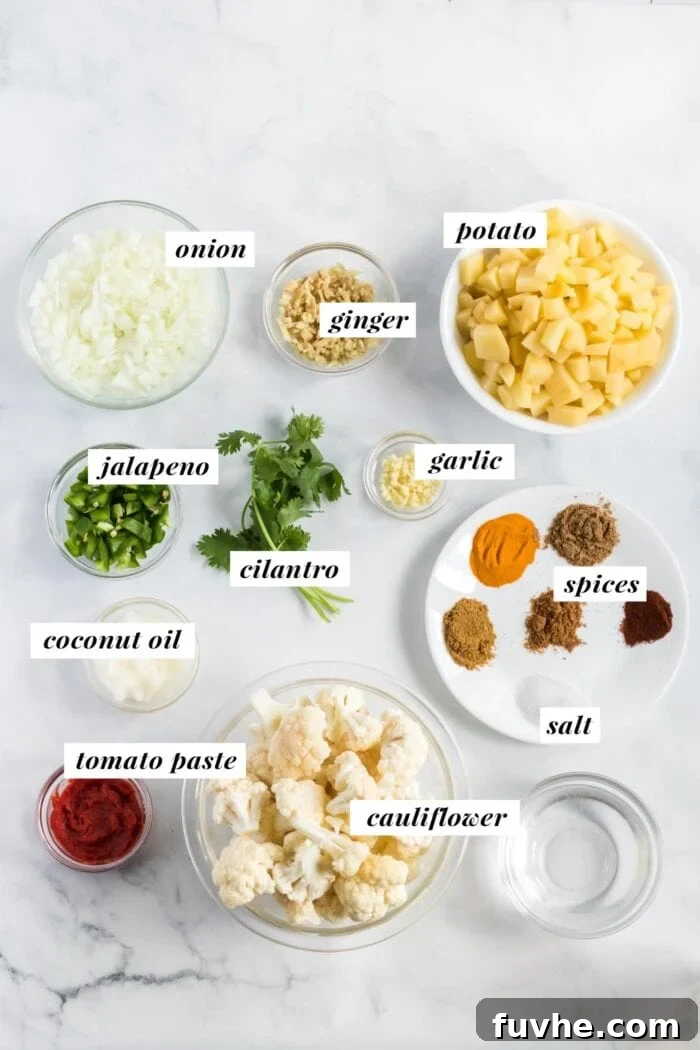
Crafting this flavorful curry relies on a handful of readily available ingredients, each playing a crucial role in building its distinctive taste profile. Here’s a closer look at what you’ll need and why they’re important:
- Coconut Oil: This provides a wonderful base for sautéing, infusing a subtle richness. If you prefer, olive oil or avocado oil can be used. For an oil-free alternative, simply use vegetable broth to sauté your aromatics, ensuring the flavors still develop beautifully.
- Aromatics: Onion, Garlic, and Ginger: These three form the foundational flavor trifecta of many Indian dishes. Don’t even think about skipping them! They create a deeply fragrant and savory base that is essential for a truly authentic taste. Minced fresh ginger and garlic, combined with finely diced onion, release their incredible aromas as they cook, building layers of flavor.
- Jalapeño: Adds a gentle kick of heat that complements the spices. For a milder curry, make sure to remove all the seeds and the white pith; for more heat, you can leave a few seeds in. Adjust to your personal spice preference.
- Spices: Turmeric, Cumin, Coriander, Garam Masala, and Chili Powder: This carefully selected blend of ground spices is the heart and soul of our Aloo Gobi. Turmeric provides its characteristic golden hue and earthy notes, while cumin and coriander offer warm, citrusy undertones. Garam Masala, a blend of ground spices, provides a warm, sweet, and pungent finish. Chili powder contributes heat and depth. Using all of these together is key to achieving the complex, balanced flavor profile that makes this curry so special.
- Potatoes: Yukon Gold potatoes are ideal for this recipe due to their creamy texture and ability to hold their shape without becoming mushy. Other yellow varieties also work well. For a unique twist, you could experiment with sweet potatoes, which would add a touch of sweetness and vibrant color. Ensure they are peeled and diced into even pieces for uniform cooking.
- Cauliflower: You’ll need one whole head of cauliflower. The florets should be cut into roughly 1-2 inch pieces. Don’t fret too much about exact sizing, but consistency helps with even cooking. Cauliflower absorbs the spices wonderfully and adds a delightful texture contrast to the soft potatoes.
- Tomato Paste: While some Aloo Gobi recipes use fresh tomatoes or a lot of tomato puree, our dry version benefits from a small amount of tomato paste. It adds a concentrated burst of umami and helps to create a rich, glossy coating for the vegetables, binding the spices beautifully.
- Water: Essential for gently steaming the vegetables and allowing the spices to meld. It creates just enough moisture for cooking without turning the curry into a gravy.
- Salt: Crucial for enhancing all the flavors. Always taste and adjust as you go.
This list provides a detailed overview; for precise measurements and comprehensive cooking instructions, please refer to the complete recipe card included further down.
Crafting Your Curry: A Step-by-Step Guide
Follow these simple steps to create a wonderfully aromatic and flavorful vegan cauliflower potato curry that will impress every palate. We’ve included photos to guide you through each stage of the process.
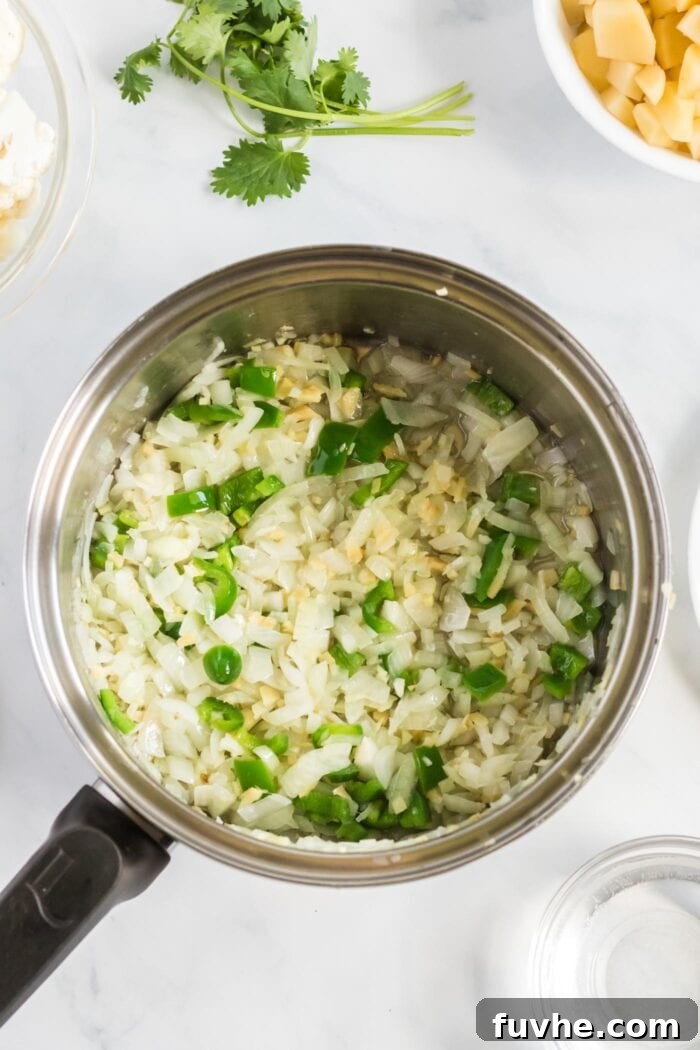
Step 1: Build Your Aromatic Base. Begin by heating the coconut oil in a large, heavy-bottomed pot or Dutch oven over medium heat. Once shimmering, add the diced onion, minced garlic, grated ginger, and chopped jalapeño. Sauté these aromatics for about 5-7 minutes, stirring occasionally, until the onion softens and becomes translucent, and the mixture is wonderfully fragrant and lightly golden. This step is crucial for developing deep flavor.
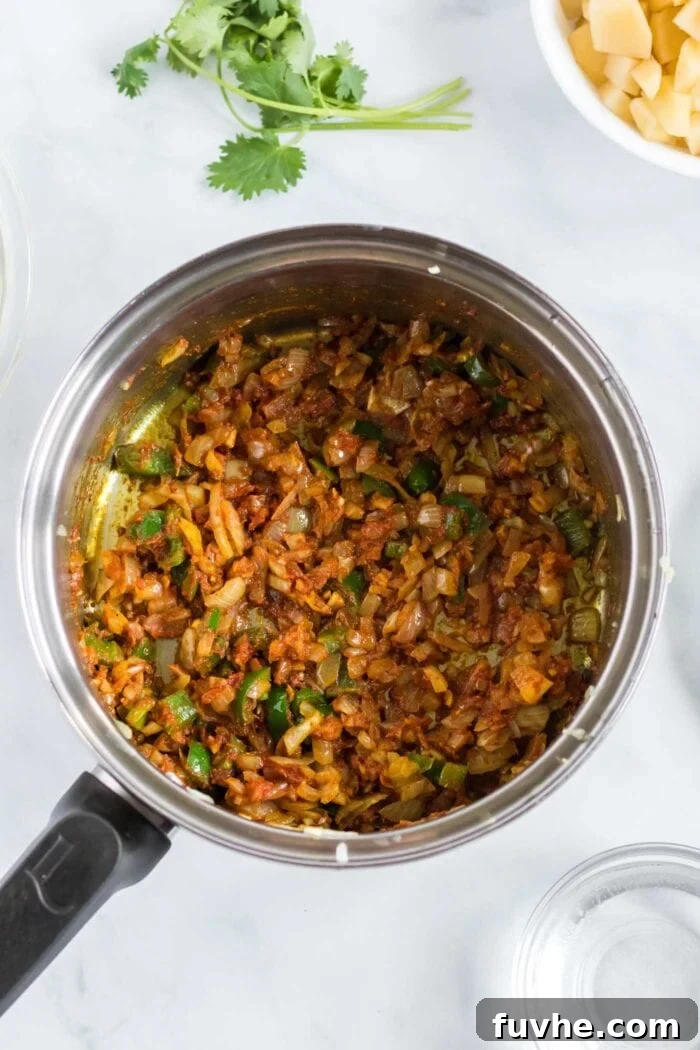
Step 2: Infuse with Spices and Tomato Paste. Reduce the heat to low. Add all the dry spices (turmeric, cumin, coriander, garam masala, chili powder), salt, and tomato paste to the pot. Stir continuously for 2-3 minutes, allowing the spices to toast gently and release their full aroma. The tomato paste, combined with the natural liquids released from the onions, garlic, and ginger, will create a fragrant, thick paste that coats everything beautifully.
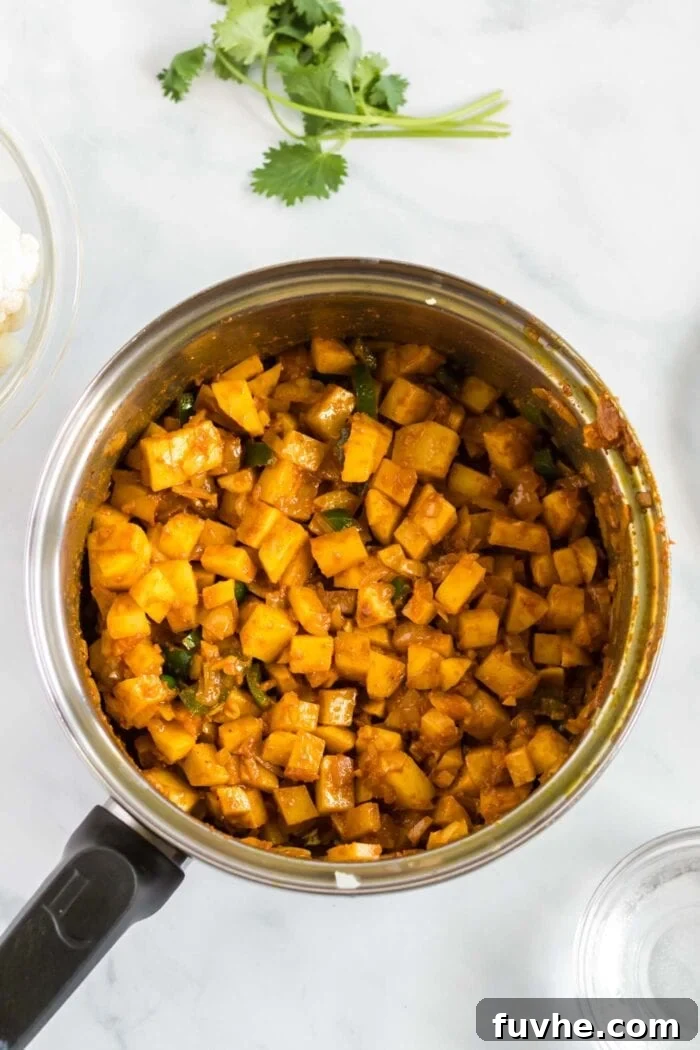
Step 3: Introduce the Potatoes. Add the diced potatoes to the pot. Toss them thoroughly with the spice paste, ensuring each piece is well coated. Sauté over low heat for another 5 minutes, allowing the potatoes to begin to absorb the incredible flavors of the spices. This initial sauté helps to build a delicious crust and prevents them from becoming too soft too quickly.

Step 4: Add the Cauliflower. Now, add the cauliflower florets to the pot. Gently mix them with the potatoes and spices until everything is evenly distributed and coated. Be careful not to mash the potatoes at this stage.
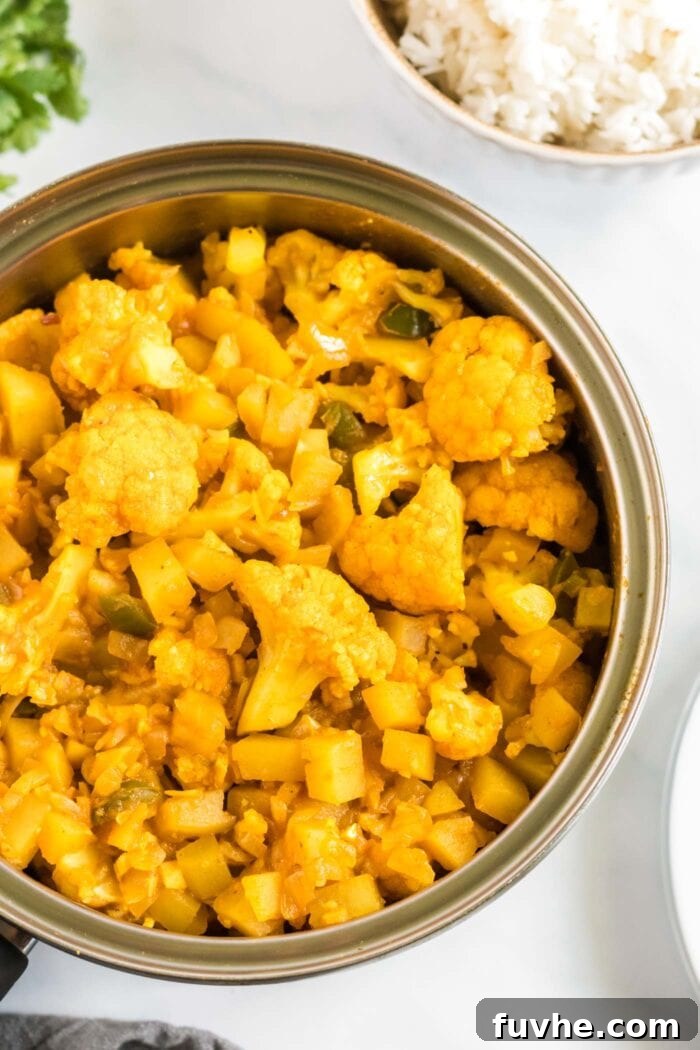
Step 5: Simmer to Perfection. Pour in the water and bring the mixture to a light simmer. Once simmering, cover the pot with a lid and cook for 8-10 minutes. The steam trapped inside will help to tenderize both the potatoes and the cauliflower. After this initial cooking time, remove the lid and continue to cook, stirring occasionally, until most of the water has evaporated and the vegetables are fork-tender. If your potatoes are cut larger, they might require a few extra minutes of cooking. The curry should have a ‘dry’ consistency, with the spices clinging to the vegetables, rather than sitting in a liquid sauce.
Once cooked, serve your delightful cauliflower potato curry immediately! It’s fantastic on its own, but truly shines when paired with fluffy basmati or jasmine rice, warm naan bread, or a simple side salad. Garnish generously with fresh cilantro leaves for a burst of color and freshness.

Why You’ll Love This Vegan Cauliflower Potato Curry
This Aloo Gobi inspired dish is more than just a meal; it’s an experience. Here’s why it’s destined to become a staple in your kitchen:
- Incredibly Flavorful: The combination of toasted spices, aromatic ginger, garlic, and onion creates a depth of flavor that is truly remarkable for such a simple dish. Every bite is a burst of warmth and savory goodness.
- Nutritious & Wholesome: Packed with nutrient-dense vegetables like cauliflower and potatoes, this curry is a powerhouse of vitamins, minerals, and fiber. It’s a fantastic way to enjoy a healthy, plant-forward meal.
- Quick & Easy: Ready in just 45 minutes, this recipe is perfect for busy weeknights when you crave something homemade and comforting but don’t have hours to spend in the kitchen. The straightforward steps make it accessible for cooks of all skill levels.
- Budget-Friendly: Made with common, affordable ingredients, this curry is a delicious way to eat well without breaking the bank.
- Versatile: Enjoy it as a standalone meal, a hearty side dish, or part of a larger Indian-inspired feast. It pairs wonderfully with grains, flatbreads, or even a fresh green salad.
Health Benefits of Key Ingredients
Beyond its incredible taste, this cauliflower potato curry offers numerous health benefits, thanks to its wholesome ingredients:
- Cauliflower: A cruciferous vegetable rich in Vitamin C, Vitamin K, and folate. It’s also a great source of fiber and contains powerful antioxidants.
- Potatoes: Often misunderstood, potatoes (especially with the skin on, though peeled in this recipe) are a good source of Vitamin C, Vitamin B6, potassium, and dietary fiber. They provide complex carbohydrates for sustained energy.
- Turmeric: Famous for its active compound curcumin, turmeric is a potent anti-inflammatory and antioxidant. It’s often associated with various health benefits, including improved brain function and reduced risk of chronic diseases.
- Cumin & Coriander: These spices aid digestion, are rich in antioxidants, and have anti-inflammatory properties.
- Ginger & Garlic: Known for their immune-boosting and anti-inflammatory effects, ginger and garlic also add significant flavor depth and warmth to the dish.
Storage and Meal Prep Tips
This curry is excellent for meal prepping and tastes even better the next day as the flavors have more time to meld. Here’s how to store it effectively:
- Cool Down: Always allow the curry to cool completely to room temperature before storing.
- Fridge: Transfer the cooled curry to an airtight container and store it in the refrigerator for up to 5 days.
- Freezer: For longer storage, portion the curry into freezer-safe containers or heavy-duty freezer bags. It can be stored in the freezer for up to 3 months. Thaw overnight in the fridge before reheating.
- Reheating: Reheat leftovers gently in the microwave or on the stovetop over medium-low heat, stirring occasionally, until heated through. If it seems a little dry, you can add a tablespoon or two of water or vegetable broth to loosen it up.
Variations and Customizations
Feel free to get creative with your Aloo Gobi! Here are a few ideas to customize this recipe:
- Add Protein: Stir in a can of drained and rinsed chickpeas along with the potatoes for added protein and fiber. Cubed tofu or tempeh could also be pan-fried separately and folded in at the end.
- Make it Creamier: For a slightly richer curry, you can stir in a quarter cup of full-fat coconut milk or a dollop of vegan yogurt at the very end of cooking.
- Greens Power: Wilt in a handful of fresh spinach or kale during the last few minutes of cooking for an extra boost of nutrients.
- Different Vegetables: While potatoes and cauliflower are classic, you could add green peas, bell peppers, or even carrots for extra color and nutrition.
- Spice Level: Increase the amount of jalapeño or add a pinch of cayenne pepper for more heat. Conversely, omit the jalapeño entirely for a milder version.
- Garnish: Beyond cilantro, try fresh mint, a squeeze of lime juice, or toasted cashews for added crunch and flavor.
Explore More Delicious Vegan Curries
If you’ve enjoyed this delightful cauliflower potato curry, be sure to check out some of our other fantastic plant-based curry recipes:
- Hearty Cauliflower Chickpea Curry
- Creamy Kabocha Squash Red Curry
- Easy Vegetable Curry with Tofu
- Vibrant Thai Red Curry Vegetables with Tofu

Cauliflower Potato Curry
By: Deryn
Fragrant and flavorful curried potato and cauliflower that tastes amazing served on its own or with warm naan bread for a delicious, wholesome meal.
Ingredients
- 2 tbsp coconut oil (20 g)
- 1 medium onion, diced (250 g)
- 3 cloves garlic, minced (15 g)
- 2 inch piece ginger, minced (25 g)
- 1 medium jalapeño, diced (35 g, remove seeds for less heat)
- 1 tsp turmeric
- 1 tsp cumin
- 1 tsp coriander
- 1/2 tsp garam masala
- 1/4 tsp chili powder
- 1 tbsp tomato paste (15 g)
- 1 tsp salt
- 3 Yukon gold potatoes, peeled and diced (450 g)
- 1 head cauliflower, cut into 1-2” pieces (650 g)
- 1/2 cup water
- Fresh cilantro leaves, for topping (optional)
- Rice or naan bread, for serving (optional)
Instructions
- Heat coconut oil in a large pan or Dutch oven over medium heat. Add the onions, garlic, ginger, and jalapeño. Sauté until fragrant and slightly golden in color, about 5-7 minutes.
- Reduce heat to low and add all of the spices, salt, and tomato paste. Continue to cook for 2-3 minutes, stirring constantly. The spices will begin to form a rich paste with the liquids from the sautéed aromatics.
- Add the diced potatoes to the pan and sauté over low heat for 5 minutes, ensuring they are well coated with the spice mixture.
- Once 5 minutes has passed, add the cauliflower florets to the pan and gently toss with the potatoes and spices until well mixed.
- Add water and bring to a light simmer. Once simmering, cover with a lid and cook for 8-10 minutes. After 8-10 minutes, remove the lid and continue cooking, uncovered, until most of the water has evaporated and the potatoes and cauliflower are fork-tender. Cooking time may vary slightly depending on the size of your vegetable pieces.
- Serve hot over rice or on its own with warm naan bread, garnished with fresh cilantro leaves.
Notes
Storing: Let the curry cool completely before storing. It can be kept in an airtight container in the fridge for up to 5 days, or in the freezer for up to 3 months. Reheat gently on the stovetop or in the microwave until heated through. Add a splash of water or broth if needed when reheating.
Nutrition
Serving: 1/4 of recipe
- Calories: 211 kcal
- Carbohydrates: 33 g
- Protein: 6 g
- Fat: 8 g
- Sodium: 55 mg
- Fiber: 8 g
(Nutritional information is an estimate and may vary based on specific ingredients and preparation methods.)
Like this recipe? We’d love to hear from you! Please rate and leave a comment below with your thoughts and any delicious variations you tried.