
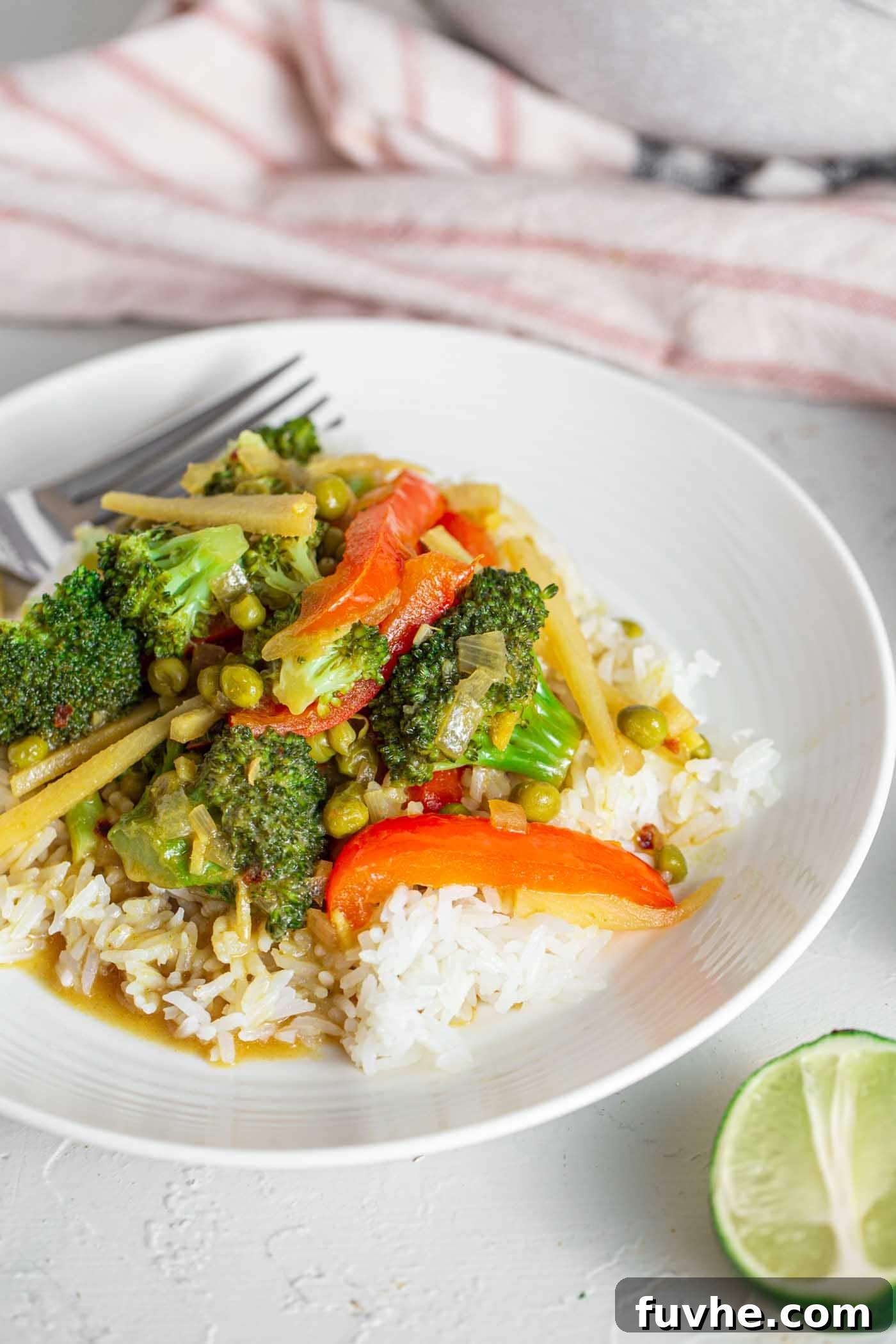
Easy Vegan Thai Green Curry: A Quick, Flavorful & Healthy Meal
Embark on a culinary journey to Thailand from the comfort of your kitchen with this incredibly easy and unbelievably delicious vegan Thai green curry recipe. Perfect for weeknight dinners, this vibrant dish comes together in just 20 minutes, proving that wholesome, flavorful meals don’t have to be complicated or time-consuming. Crafted with readily available ingredients, this recipe celebrates the versatility of plant-based cooking and allows for endless customization with whatever fresh vegetables you have on hand.
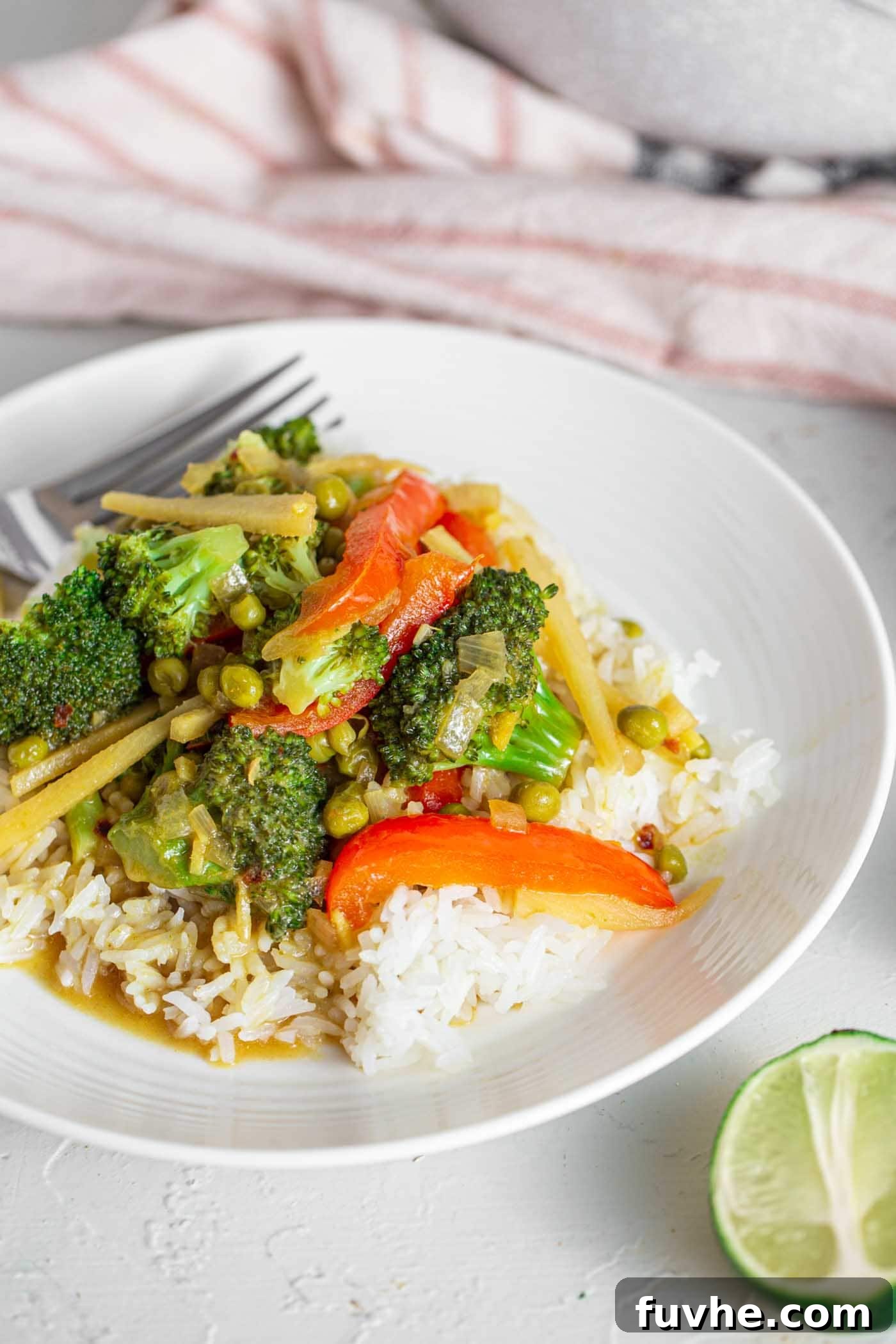
Why You’ll Love This Easy Vegan Thai Green Curry Recipe
This isn’t just another curry recipe; it’s a game-changer for anyone looking for quick, healthy, and satisfying plant-based meals. Here’s why this vegan Thai green curry will become a staple in your kitchen:
- Super Quick & Convenient: From chopping board to dinner table in approximately 20-30 minutes, this recipe is perfect for busy evenings when you crave something nutritious without spending hours in the kitchen. Its straightforward steps make it accessible for even novice cooks.
- Infinitely Customizable: This recipe is a fantastic way to utilize leftover vegetables or whatever fresh produce is seasonal. The foundation of the curry paste and coconut milk provides a robust base that welcomes almost any vegetable, allowing you to tailor it to your preferences or what’s available.
- Dietary-Friendly: Naturally vegan and easily made gluten-free (by using tamari or coconut aminos instead of soy sauce), this curry caters to various dietary restrictions without compromising on taste or texture. It’s a wholesome meal that everyone can enjoy.
- Bursting with Authentic Flavors: Despite its simplicity, this green curry delivers a complex profile of flavors characteristic of Thai cuisine – a harmonious balance of spicy, savory, sweet, and tangy notes that will tantalize your taste buds.
Essential Ingredients for Your Vegan Thai Green Curry
Creating a truly exceptional Thai green curry starts with a thoughtful selection of fresh, high-quality ingredients. While the recipe is adaptable, these core components ensure a rich and authentic flavor base.
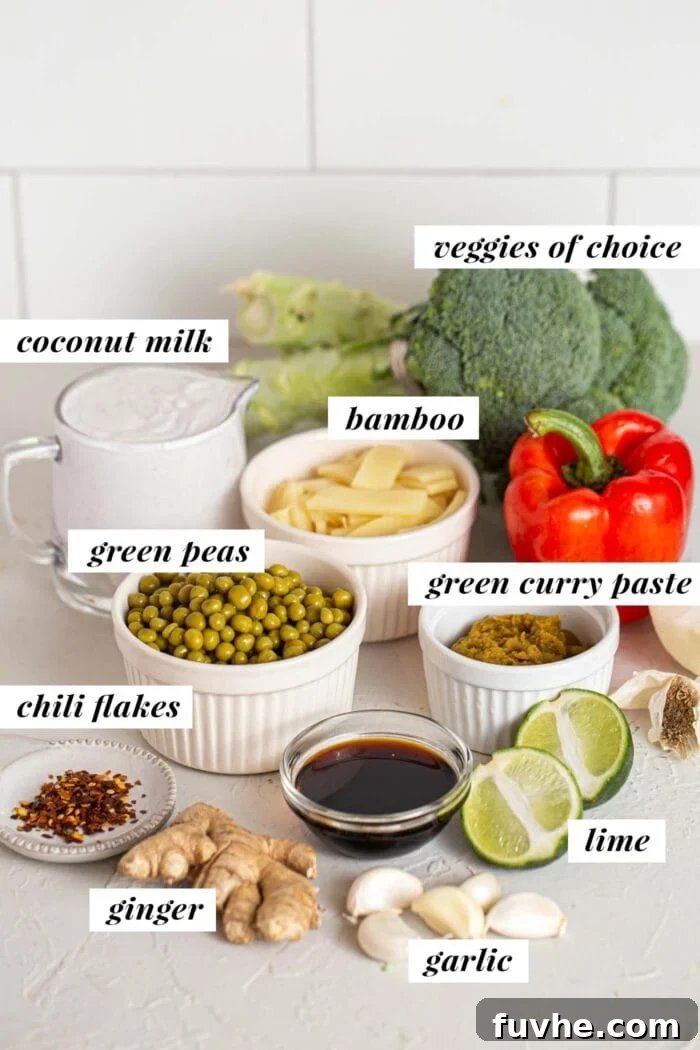
- Aromatics: Ginger, Garlic, and Onion: These fundamental ingredients form the aromatic base of the curry, infusing it with depth and warmth right from the start. Sautéing them until softened releases their pungent flavors, setting the stage for the spices. You can sauté them in a touch of coconut oil, olive oil, or for an oil-free option, use water or vegetable stock.
- Green Curry Paste: The Flavor Star: This is the heart and soul of your green curry. Whether you opt for a high-quality store-bought paste (ensure it’s vegan, as some contain shrimp paste) or embark on making your own from scratch, a good curry paste is crucial for that authentic Thai taste. It combines a myriad of herbs and spices like green chilies, lemongrass, galangal, kaffir lime zest, and more.
- Creamy Coconut Milk: Full-fat coconut milk is highly recommended for its luxurious creaminess and rich flavor, which helps to mellow the spice of the curry paste and provide a velvety texture. While light coconut milk can be used for a lower-fat version, it will result in a thinner consistency and less richness.
- Natural Sweetener (Optional, but Recommended): A touch of sweetener, such as coconut sugar, maple syrup, or agave nectar, is often added to balance the heat and acidity of the curry. It rounds out the flavors beautifully, creating a more harmonious and complex profile. Adjust to your taste preferences.
- Bamboo Shoots: These add a delightful, slightly crunchy texture and a subtle, earthy flavor to the curry. Available canned in most well-stocked grocery stores or Asian markets, they are a traditional addition. If you can’t find them or don’t have them on hand, feel free to omit them or substitute with water chestnuts.
- Your Choice of Fresh Vegetables: This recipe is incredibly versatile for incorporating a variety of vegetables. Our suggested combination includes broccoli florets, sweet red bell pepper, and green peas for color, texture, and nutrition. Other fantastic additions include carrots, mushrooms, baby corn, snap peas, zucchini, eggplant, or sweet potatoes.
- Soy Sauce (or Gluten-Free Alternative): Adds a savory, umami depth to the curry. For a gluten-free version, swap regular soy sauce for tamari or coconut aminos.
- Fresh Lime Juice: A squeeze of fresh lime juice at the end brightens the entire dish, adding a zesty, tangy finish that lifts all the other flavors. Don’t skip this crucial step!
Step-by-Step Instructions: Crafting Your Perfect Green Curry
Follow these simple steps to create a fragrant and flavorful vegan Thai green curry that will impress your family and friends:
Step 1: Building the Aromatic Foundation
Begin by heating a large pot or Dutch oven over medium heat. Add a teaspoon of coconut oil, a splash of water, or vegetable stock. Once warm, add the minced garlic, fresh ginger, and diced onion. Sauté these aromatics for about 5-6 minutes, stirring frequently, until they become soft and fragrant, releasing their delightful aromas. This step is crucial for developing the foundational flavors of your curry.
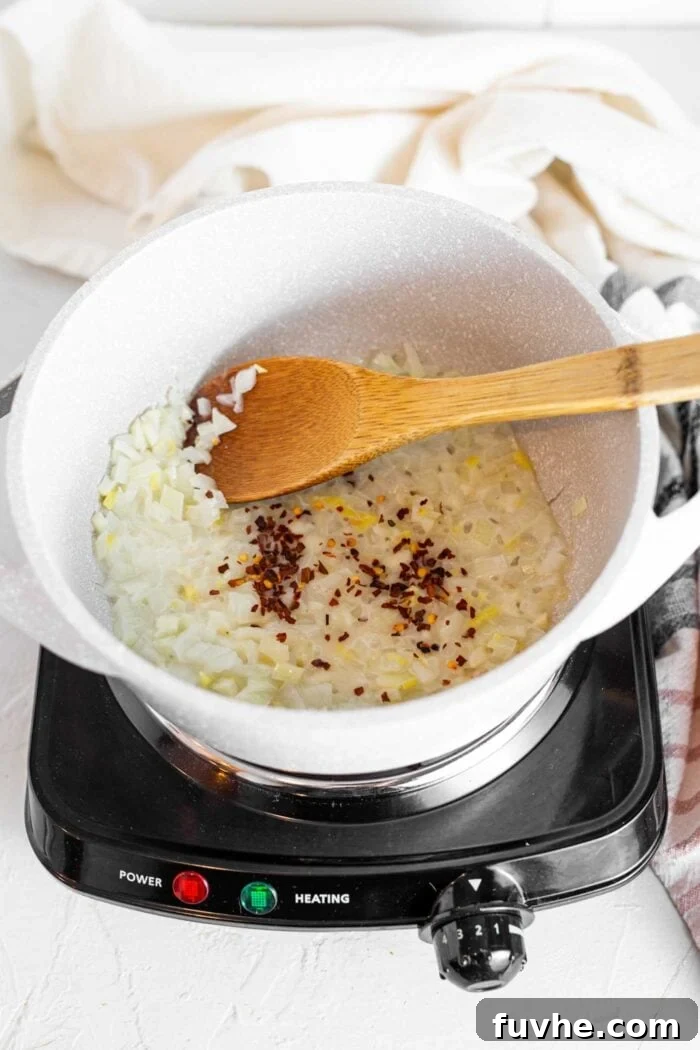
Step 2: Unleashing the Curry Paste’s Flavor
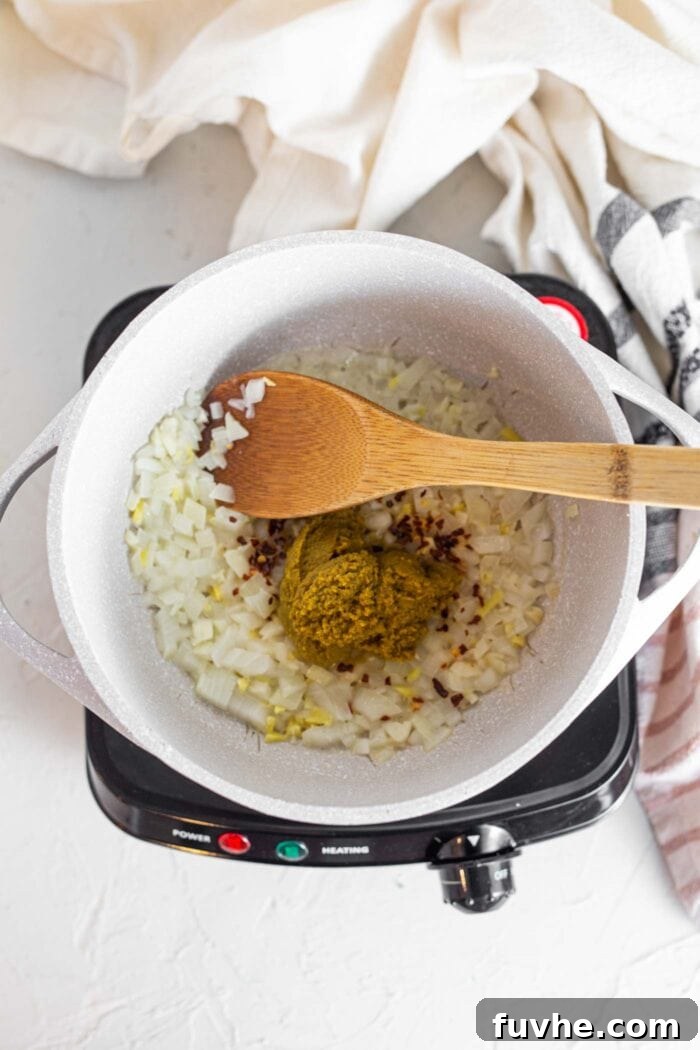
Once the aromatics are softened, stir in the red pepper flakes (if using for extra heat) and the green curry paste. Cook this mixture for another 3-4 minutes, stirring continuously. This allows the curry paste to toast slightly, deepening its flavor and releasing its complex spices. If the pan seems too dry, add a small splash of vegetable broth or water to prevent sticking.
Step 3: Simmering to Perfection with Vegetables
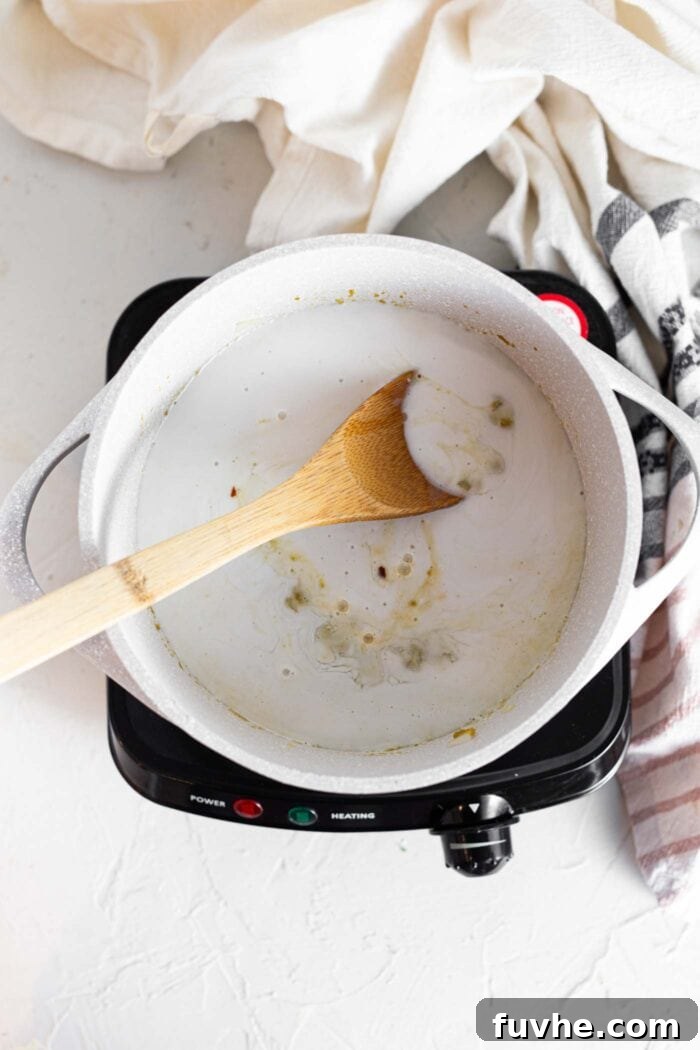
Pour in the full-fat coconut milk and soy sauce (or gluten-free alternative). Add your chosen main vegetables, such as chopped broccoli and sliced red bell peppers. Bring the mixture to a gentle simmer and let it cook for approximately 10 minutes. The cooking time may vary based on the type and size of your vegetables; aim for them to be tender-crisp or al dente, retaining some bite and vibrant color.
Step 4: The Final Touches for a Burst of Freshness
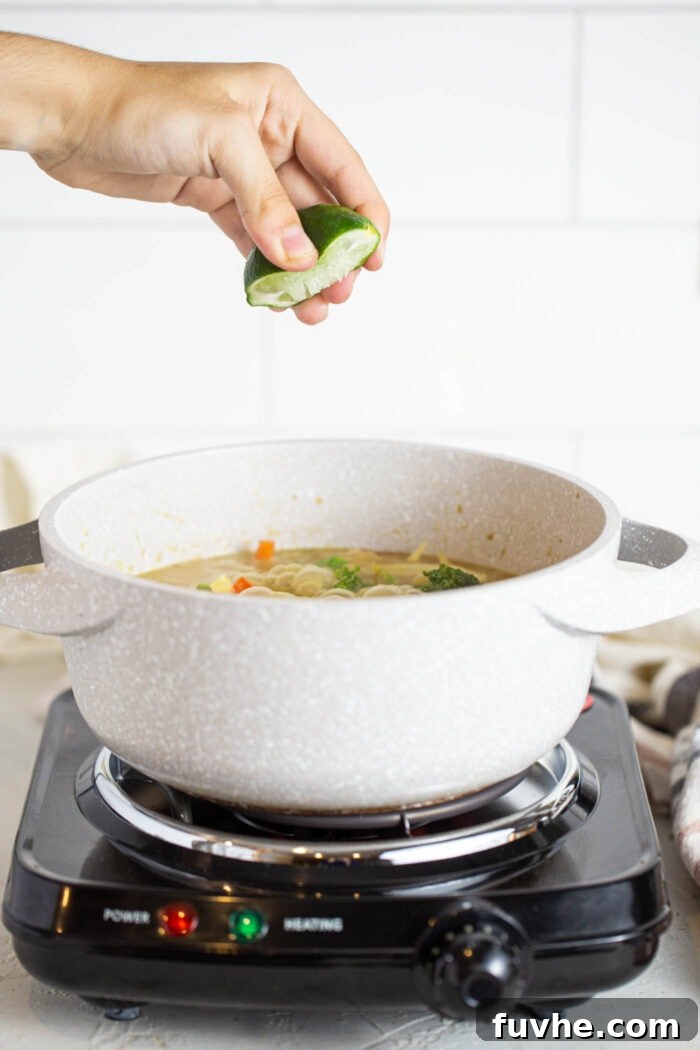
Now, add the canned bamboo shoots and green peas (fresh or frozen) to the simmering curry. Stir well to combine and continue to simmer for about 5 more minutes, just long enough for these additions to heat through. Remove the pot from the heat and stir in the fresh lime juice and coconut sugar (or your chosen sweetener). Taste and adjust seasoning as needed, adding a pinch of salt and pepper if desired.
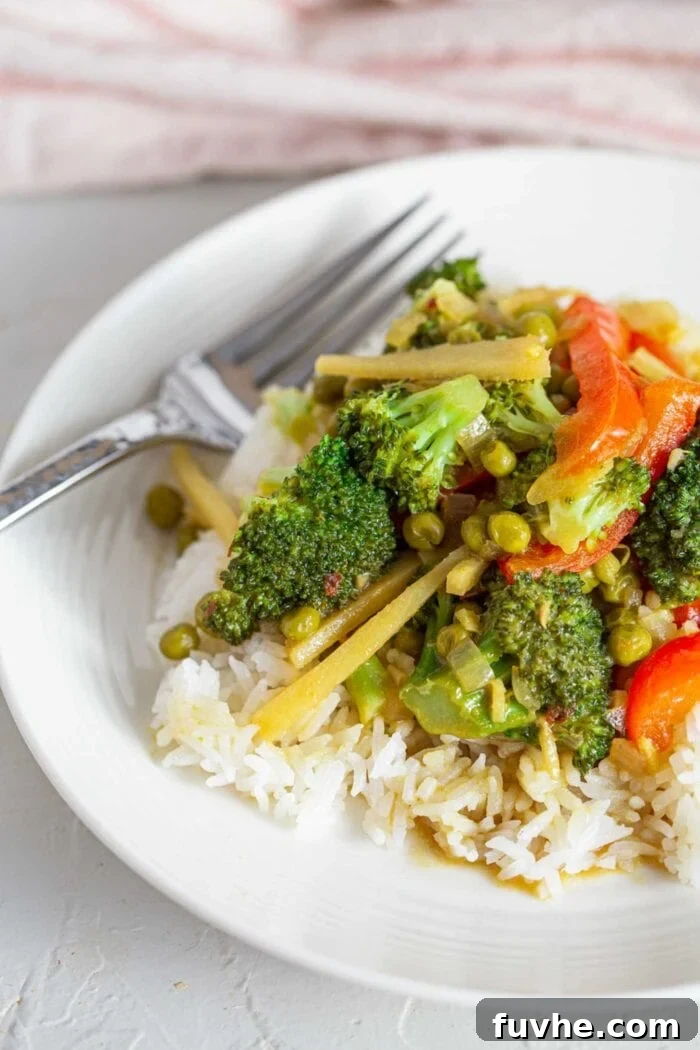
Serve this glorious vegan Thai green curry piping hot over a bed of fluffy jasmine or brown rice. Garnish generously with fresh cilantro leaves for an added burst of freshness and aroma. Enjoy your homemade, quick, and flavorful Thai feast!
Expert Tips for the Best Vegan Thai Green Curry
Elevate your vegan Thai green curry from good to extraordinary with these helpful tips and insights:
Customizing the Spice Level
The heat in your curry can be entirely tailored to your preference. Our recipe uses red pepper flakes for a convenient kick, which is great if you don’t have fresh chilies on hand. If you prefer a more authentic Thai heat, consider adding 1-3 fresh Thai red or green chilies, minced, along with the curry paste. For a milder curry, simply omit both the chilies and the red pepper flakes. Always taste as you go and adjust accordingly.
Choosing Your Curry Paste
The quality and freshness of your green curry paste significantly impact the final flavor. Many store-bought brands are now vegan, but always double-check the ingredient list for hidden fish or shrimp paste. Brands like Mae Ploy, Maesri, or Aroy-D often offer vegan options. For the freshest flavor, consider making your own green curry paste if you have the time and access to the necessary ingredients.
Maximizing Creaminess (or Lightness)
For a truly rich and decadent curry, full-fat coconut milk is your best friend. Its high fat content contributes to a thicker, creamier sauce and a more satisfying mouthfeel. If you’re aiming for a lighter version or are mindful of calories, you can opt for light coconut milk. Just be aware that the curry will have a thinner consistency and a less intense coconut flavor.
The Art of Vegetable Selection
Don’t be afraid to experiment with your vegetable choices! The key is to add harder vegetables (like carrots, sweet potatoes, or winter squash) earlier in the simmering process to ensure they cook through. Softer vegetables (like zucchini, spinach, or snap peas) should be added later, typically in the last 5 minutes, to prevent them from becoming mushy. Spinach or bok choy can be stirred in right at the very end until just wilted.
Boosting Protein Content
To make this curry an even more substantial and protein-packed meal, consider adding your favorite plant-based proteins. Cubed extra-firm tofu (pressed and pan-fried or baked until golden for best texture), chickpeas, lentils, or shelled edamame are excellent choices. Add them during the last few minutes of simmering, or along with the bamboo shoots and peas, to ensure they are heated through without overcooking.
Meal Prep and Storage Solutions
This vegan green curry is an excellent candidate for meal prepping! It tastes even better the next day as the flavors meld and deepen. Store leftovers in an airtight container in the refrigerator for up to 5 days. To reheat, gently warm on the stovetop over medium-low heat, stirring occasionally, or use a microwave. If the curry thickens too much upon cooling, add a splash of vegetable broth or water when reheating to achieve your desired consistency. Freezing is also an option; store in freezer-safe containers for up to 2-3 months. Thaw overnight in the fridge before reheating.
Frequently Asked Questions (FAQs)
What vegetables are best for this curry?
This recipe is incredibly flexible with vegetables. Aim for about 3-4 cups of fresh or frozen vegetables. Excellent choices include: carrots (sliced), any color of bell pepper (sliced), baby corn, snap or snow peas, zucchini (cubed), broccoli florets, asparagus (trimmed and chopped), eggplant (cubed), spinach (stir in at the end until just wilted), or peeled and cubed sweet potato or regular potato.
Can I add protein sources like tofu or chickpeas?
Absolutely! Adding protein is a great way to make this curry even more filling and nutritious. Cubed extra-firm tofu (pressed and lightly pan-fried or baked for a better texture) is a fantastic choice; simply stir it in during the last few minutes of cooking to heat through. Canned chickpeas, rinsed and drained, or shelled edamame also work wonderfully and can be added along with the bamboo shoots and peas.
Is this recipe truly gluten-free?
Yes, this recipe can easily be made 100% gluten-free. The main component to watch is the soy sauce; simply substitute it with tamari (which is gluten-free soy sauce) or coconut aminos. Always ensure your green curry paste is also certified gluten-free, as some brands may contain wheat-derived ingredients.
How long can I store leftovers?
Leftover vegan Thai green curry can be stored in an airtight container in the refrigerator for up to 5 days. The flavors often deepen and improve overnight, making it a perfect dish for meal prepping throughout the week.
Can I freeze vegan green curry?
Yes, this curry freezes well. Allow it to cool completely before transferring it to freezer-safe containers or bags. It can be stored in the freezer for up to 2-3 months. When ready to enjoy, thaw overnight in the refrigerator and reheat gently on the stovetop or in the microwave, adding a splash of water or vegetable broth if needed to thin the sauce.
The Complete Easy Vegan Thai Green Curry Recipe
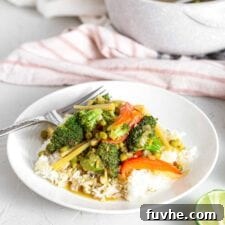
Easy Vegetable Green Curry
By: Deryn Macey
This easy vegetable green curry comes together in about 20 minutes and is packed with delicious flavor. It’s vegan, can be made gluten-free and low-fat if needed and pairs perfectly with jasmine or basmati rice.
Prep Time: 10 mins
Cook Time: 20 mins
Total Time: 30 mins
Servings: 4
Ingredients
- 1 (400 mL) can light or full-fat coconut milk
- 5 average-sized cloves garlic, minced (about 2 tbsp)
- 1 tbsp minced fresh ginger
- 1/2 a medium-sized white onion, diced
- 1/2 tsp red pepper flakes (optional, for extra heat)
- 4 tbsp green curry paste (ensure vegan)
- 3 tbsp soy sauce (use coconut aminos or tamari for gluten-free)
- 2 red bell peppers, thinly sliced (or any color bell pepper)
- 3 cups (450 g) chopped broccoli florets
- 1 cup green peas, fresh or frozen
- 1 (8 oz.) can bamboo shoots, drained (optional)
- 1 tbsp coconut sugar (sub brown sugar, agave, or maple syrup)
- 1 tbsp fresh lime juice
Instructions
- Add the garlic, ginger, and onion to a large pan or pot with 1 tsp of coconut oil or a splash of water/vegetable stock. Sauté until soft, about 5-6 minutes, stirring often.
- Add the chili flakes (if using) and green curry paste. Cook for 3-4 minutes, stirring frequently, allowing the paste to bloom. Add a bit more broth or water if the pan is drying out.
- Pour in the coconut milk and soy sauce. Add the broccoli and red peppers (or your preferred main veggies) and bring to a light simmer. Cook for about 10 minutes, or until vegetables are tender-crisp. Cooking time will vary depending on veggies used.
- Stir in the bamboo shoots and green peas. Simmer for about another 5 minutes to heat through.
- Remove from heat. Stir in the fresh lime juice and coconut sugar. Season with salt and pepper to taste, if needed.
- Serve immediately over white or brown rice, topped with fresh cilantro. Enjoy!
Notes
- You can use light coconut milk to reduce the fat content, but for the best thick and creamy curry, full-fat coconut milk is recommended.
- Leftovers can be stored in an airtight container in the fridge for up to 5 days. Reheat on the stovetop or in the microwave.
- Feel free to replace the broccoli and red bell pepper with 3-4 cups of any fresh or frozen vegetables of your choice. Options include carrots, zucchini, eggplant, squash, sweet potato, baby corn, snap or snow peas, bok choy, or spinach. If using spinach or other soft greens, stir them in at the very end until just wilted.
Nutrition Information (per serving)
Serving: 1/4 of recipe
- Calories: 224 kcal
- Carbohydrates: 28g
- Protein: 9g
- Fat: 10g
- Fiber: 7g
- Sugar: 12g
More Delicious Vegan Curry Recipes
If you loved this vegan Thai green curry, you might enjoy exploring more plant-based curry creations from our collection:
- Sweet Potato Curry
- Curried Coconut Chickpeas
- Curried Vegetable and Chickpea Stew
- Vegan Panang Curry
- Vegetable Korma
Originally published on November 1, 2015, this recipe has been a long-time favorite for its simplicity and incredible flavor.