
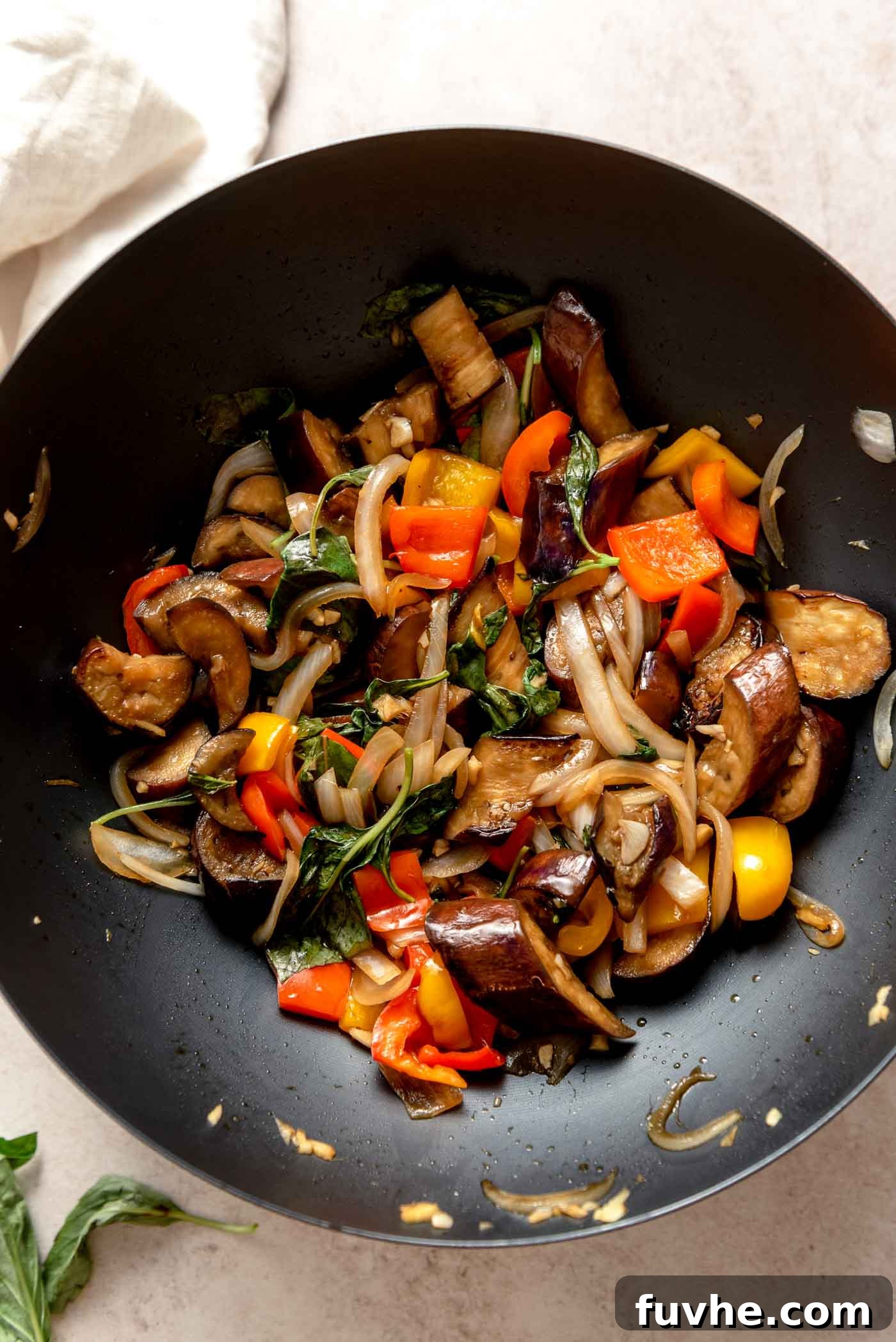
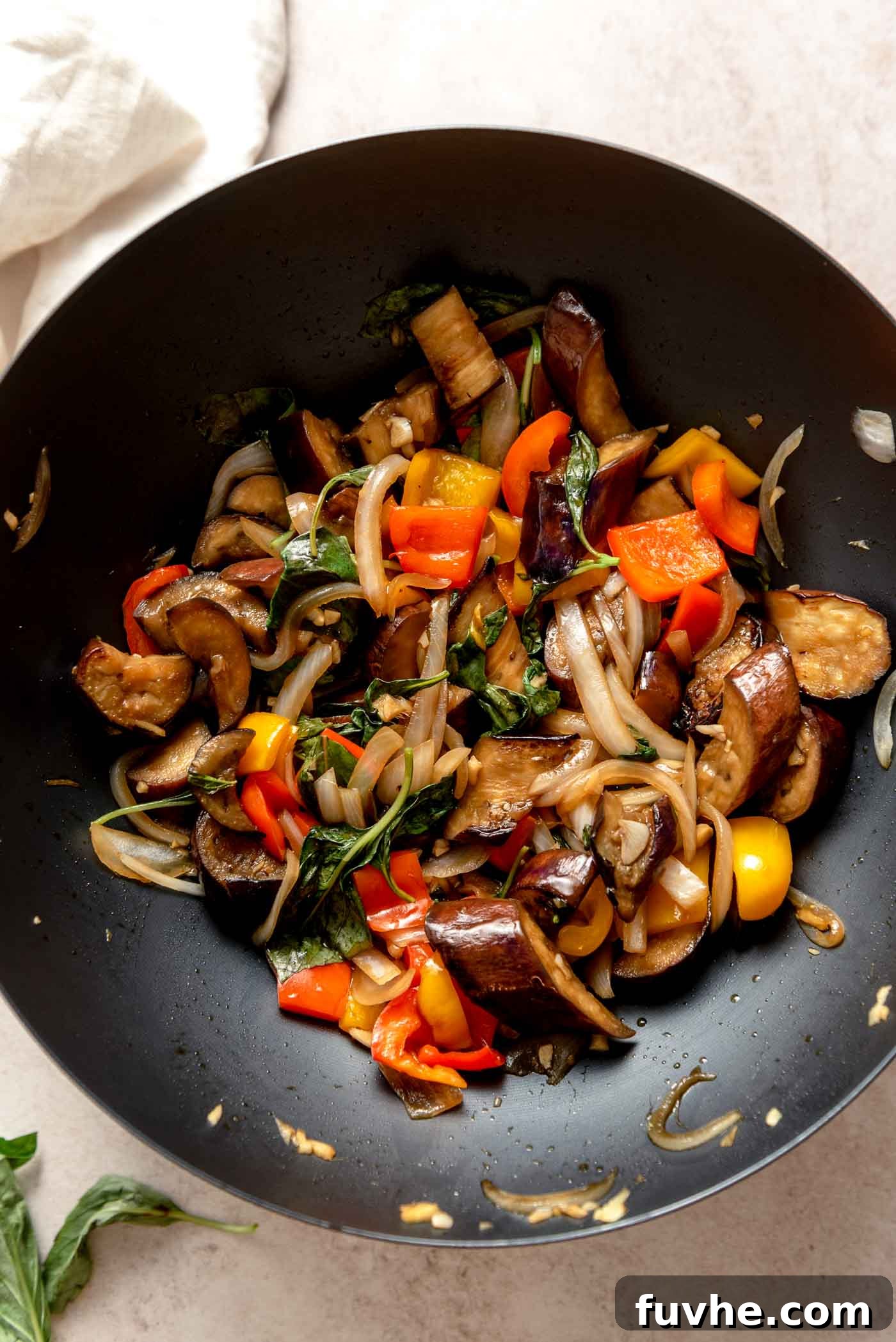
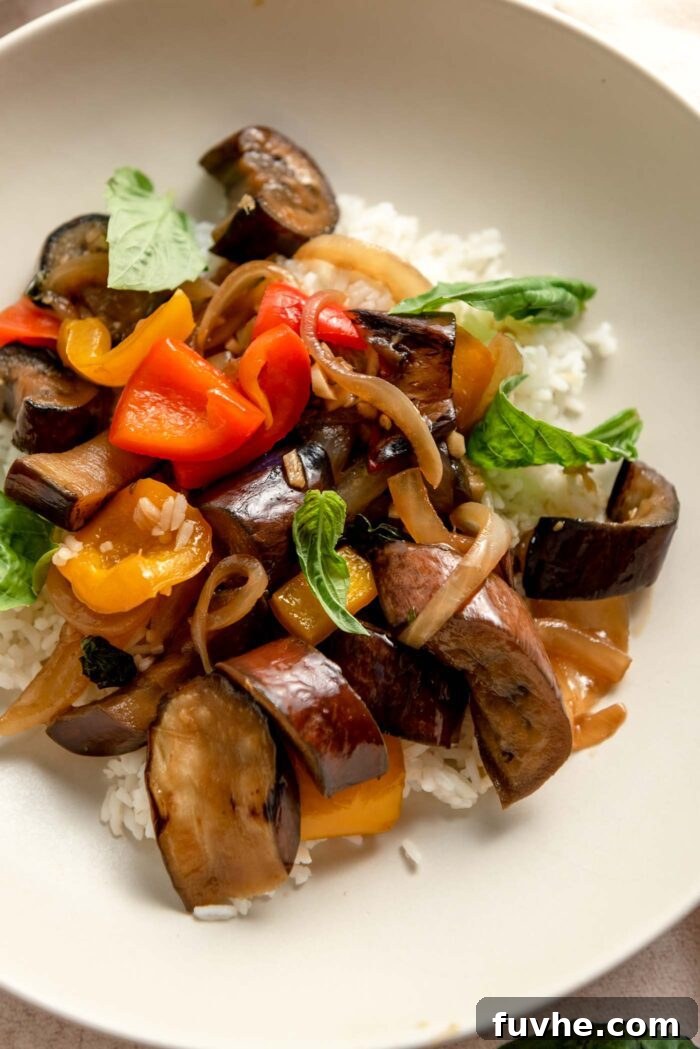
Discover the vibrant flavors of Thailand with this incredible Thai Basil Eggplant recipe, a dish that masterfully blends sweet, savory, and spicy notes into a truly unforgettable experience. Inspired by classic Thai culinary traditions, this stir-fry features tender eggplant, crisp bell peppers, and fragrant onions, all generously coated in a luscious, sticky sauce that will tantalize your taste buds. It’s an ideal choice for both seasoned enthusiasts of Thai cuisine and newcomers eager to explore its rich tapestry of flavors.
Whether served as a comforting weeknight meal or an impressive centerpiece for a special occasion, Thai basil eggplant is remarkably versatile. Its speedy preparation – ready in just about 30 minutes – makes it a perfect solution for busy evenings when you crave something exotic yet simple. Pair it with a steaming bowl of jasmine rice or your favorite noodles for a complete, satisfying dish that promises to transport you straight to the bustling street food stalls of Bangkok.
Featured Review
“My garden is overflowing with eggplant, peppers, and basil, so this recipe is a perfect fit! So easy, and I love the sauce! I omitted chilies and added tofu and a little sriracha. Will definitely make again and again. Thank you!”Wendy
Why You’ll Adore This Thai Basil Eggplant Recipe
If you’ve been searching for a truly exceptional and straightforward way to enjoy eggplant, your quest ends here. This Thai Basil Eggplant recipe is not only simple to prepare but also bursts with incredible flavor, making it a standout dish. Here are several compelling reasons why this recipe is destined to become a staple in your kitchen:
- Effortlessly Vegan & Easily Gluten-Free: Catering to diverse dietary needs, this recipe is naturally vegan. For those adhering to a gluten-free diet, simple substitutions like tamari for soy sauce and a certified gluten-free vegetarian oyster sauce make it entirely safe and equally delicious.
- Quick & Convenient One-Pan Meal: Designed for efficiency, this dish comes together in just one pan (or wok) and is table-ready in a mere 30 minutes. This makes it an ideal solution for busy weeknights when you desire a homemade, flavorful meal without the extensive cleanup.
- Bursting with Flavor & Perfectly Saucy: Prepare for an explosion of taste! The stir-fry boasts a complex profile of sweet, salty, tangy, and spicy, all harmoniously balanced within a rich, glossy sauce. Each piece of eggplant and vegetable is coated in this delightful concoction, ensuring every bite is utterly satisfying.
- Versatile Serving Options: Whether you need a vibrant side dish, a hearty main course, or a complementary component to another protein, this recipe delivers. It pairs beautifully with a side of fluffy rice, a bed of stir-fried noodles, or even alongside grilled tofu or tempeh for an extra protein boost.
- A Delicious Introduction to Eggplant: For those new to cooking with eggplant or seeking fresh ways to prepare it, this recipe is a revelation. It transforms humble eggplant into a star ingredient, showcasing its tender texture and ability to absorb bold flavors, making it irresistible even to skeptics.
Elevate your dining experience by pairing this exquisite dish with other Thai-inspired favorites. Consider complementing it with Vegan Tofu Pad Thai, savory Vegan Drunken Noodles, or a fragrant Vegan Thai Green Curry to create an authentic Thai feast. If you’re captivated by the versatility of eggplant, explore our other easy eggplant creations like this Eggplant Stir Fry, which is equally quick, simple, and wonderfully tasty.
Essential Ingredient Insights
Crafting the perfect Thai Basil Eggplant stir-fry begins with understanding your ingredients. Below is a detailed overview of what you’ll need and thoughtful suggestions for substitutions to ensure your dish is both authentic and adaptable. For precise quantities, refer to the comprehensive recipe card located at the bottom of this article when you’re ready to start cooking.
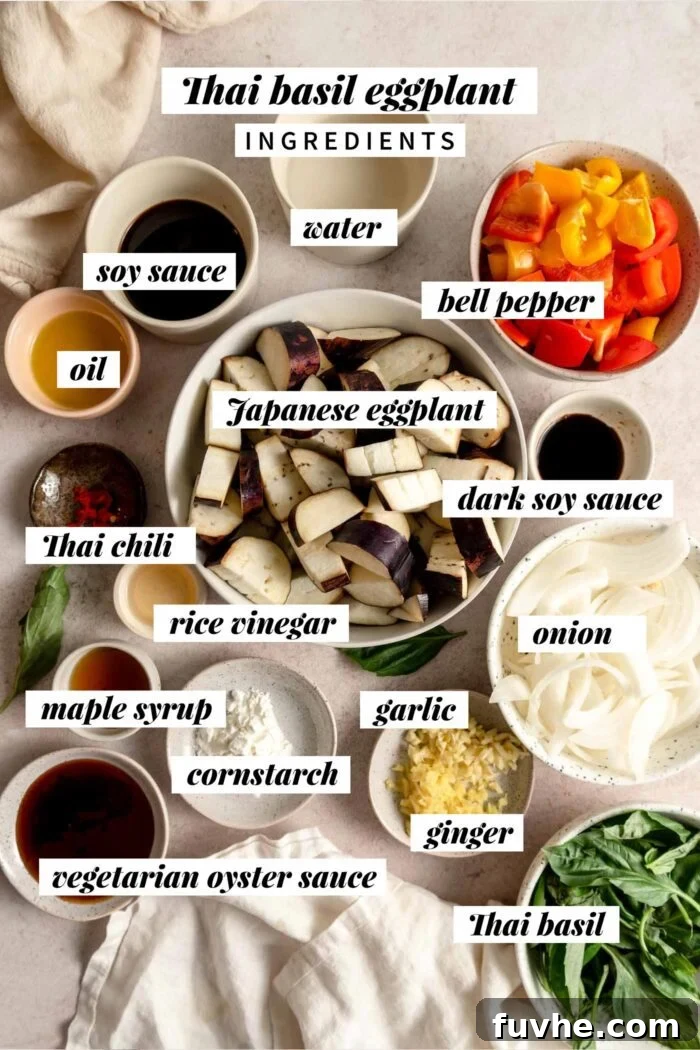
- Soy Sauce (or Tamari): This forms the savory backbone of our sauce. The recipe calls for 3 tablespoons of regular soy sauce and 1 tablespoon of dark soy sauce for a deeper color and richer umami. If dark soy sauce isn’t available, simply use 4 tablespoons of regular soy sauce or tamari for a gluten-free option. Tamari is an excellent gluten-free alternative that delivers a similar depth of flavor.
- Vegetarian Oyster Sauce: A critical component for that authentic sweet and savory Thai stir-fry flavor. Ensure you use a vegetarian or vegan oyster sauce to keep this recipe entirely plant-based. These are typically made from mushrooms and offer a wonderfully rich, umami-packed sweetness.
- Rice Vinegar: Adds a crucial touch of acidity and tang, balancing the sweetness and richness of the sauce. You can use either seasoned or unseasoned rice vinegar; both will work beautifully. Avoid other vinegars as their flavor profiles might be too strong or different.
- Maple Syrup (or Coconut/Brown Sugar): Provides the essential sweetness that is characteristic of Thai cuisine. Maple syrup is a fantastic natural sweetener, but coconut sugar or brown sugar can be used as direct substitutes, offering a similar caramel-like depth. Adjust to your preferred sweetness level.
- Cornstarch (or Arrowroot Powder): This is your secret ingredient for achieving that desired thick, glossy sauce. When mixed with water to create a slurry, cornstarch effectively thickens the stir-fry sauce. Arrowroot powder is a suitable alternative for those seeking a corn-free option.
- Neutral Oil: For stir-frying, a neutral-flavored oil with a high smoke point is key. Avocado oil and grape seed oil are excellent choices as they won’t impart unwanted flavors and can withstand high heat. Other suitable options include canola oil or refined coconut oil.
- Eggplant: The star of the dish! Japanese or Chinese eggplants are highly recommended. These long, slender varieties are much more tender and less bitter than larger globe eggplants, making them ideal for stir-fries where they quickly cook to a creamy texture without becoming mushy. Look for firm, shiny eggplants without blemishes.
- Onion: White or yellow onions work equally well in this recipe, providing a foundational aromatic sweetness when sautéed. Their subtle sharpness mellows into a delightful sweetness during cooking, complementing the other flavors.
- Fresh Garlic and Ginger: The aromatic powerhouses of Thai cooking. Always opt for fresh garlic, minced, and fresh ginger, grated, for the most potent and authentic flavor. Powders simply cannot replicate the vibrant taste of fresh aromatics. If absolutely necessary, 1 teaspoon of ground ginger can replace fresh ginger, but mix it into the sauce to hydrate.
- Thai Chili: These small red chilies are responsible for the dish’s signature heat. Your spice tolerance will dictate the quantity; 1-2 chilies are typically sufficient. For a milder dish, remove the seeds and membranes, as this is where most of the heat resides (I usually remove them). For more fire, leave some seeds in!
- Thai Basil (Holy Basil): Crucial for an authentic flavor profile. Thai basil, often called holy basil, has a distinct anise-like, peppery, slightly spicy flavor that is uniquely different from Italian sweet basil. While Italian basil can be used in a pinch, we highly recommend sourcing genuine Thai basil for the most authentic and aromatic result.
Exciting Variations & Creative Additions
This Thai Basil Eggplant recipe is wonderfully adaptable, allowing for numerous variations and additions to suit your taste preferences or whatever ingredients you have on hand. Don’t be afraid to experiment and make it your own!
- Add More Greens: Boost the nutritional value and visual appeal by incorporating leafy greens. Baby bok choy, fresh spinach, or sliced green onions (scallions) all integrate beautifully. If using, add them to the pan along with the bell peppers and onions during the stir-frying process.
- Alternate Vegetables: While bell peppers and onions are classic, feel free to add or substitute other vegetables. Sliced mushrooms (shiitake or cremini), crisp snow peas or snap peas, tender broccoli florets, or matchstick carrots are excellent choices. We suggest retaining the onion in the recipe for its foundational flavor, but other vegetables can easily swap in for the bell peppers.
- Protein Boost: For an even heartier meal, consider adding a protein source. Cubed firm tofu or tempeh, marinated and pan-fried until golden, would be a fantastic addition. Simply stir them in at the end with the eggplant and sauce.
- Serving Suggestions: While jasmine or basmati rice are traditional, don’t limit yourself! This Thai eggplant stir-fry is also delicious served over various noodles like hearty soba noodles, thick udon noodles, or thin rice vermicelli. For a low-carb option, consider cauliflower rice or zucchini noodles.
- Garnish for Freshness: Enhance both flavor and presentation with fresh garnishes. A sprinkle of extra torn Thai basil leaves, thinly sliced scallions (green onions), a squeeze of fresh lime juice, or a scattering of toasted sesame seeds can add a final flourish before serving.
Step-by-Step Guide: Crafting Your Thai Basil Eggplant
Follow these detailed instructions to create a perfectly balanced and incredibly flavorful Thai Basil Eggplant stir-fry. Proper preparation and timing are key to achieving the best texture and taste.
Step 1: Prepare the Flavorful Sauce & Thickening Slurry
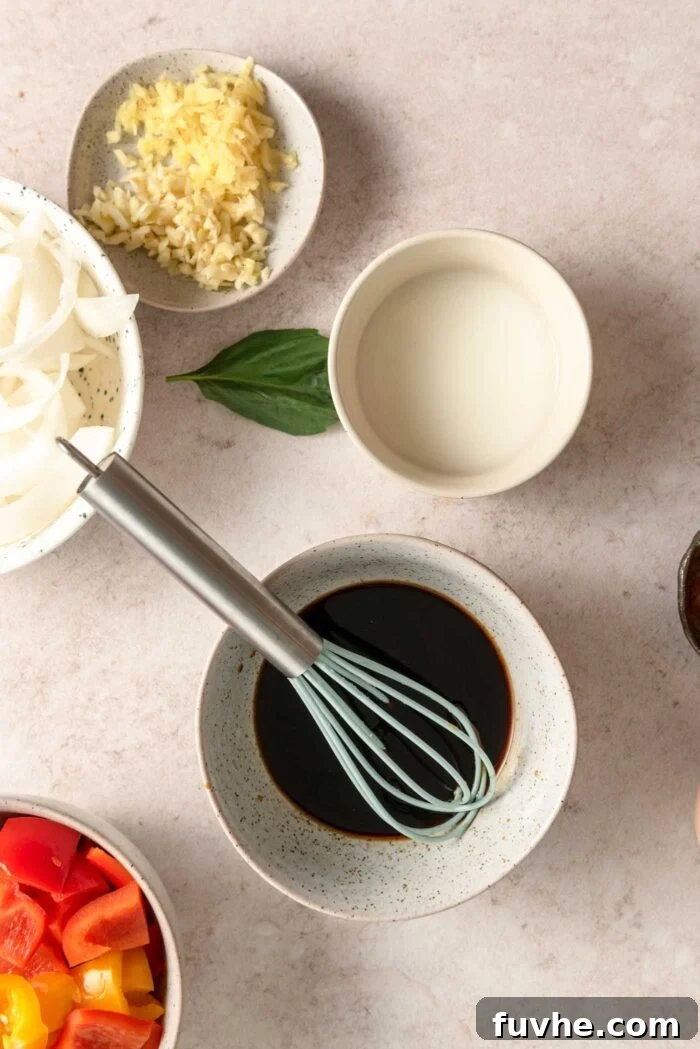
In a small mixing bowl, combine the soy sauce (or tamari), dark soy sauce (if using), vegetarian oyster sauce, rice vinegar, and maple syrup. Whisk thoroughly until all ingredients are well incorporated and the mixture is smooth. Set this savory sauce aside. In a separate, even smaller bowl, prepare your cornstarch slurry by mixing the cornstarch with cold water until no lumps remain. This slurry is essential for thickening the stir-fry sauce later, so ensure it’s smooth. Having these prepped in advance is crucial for the fast-paced nature of stir-frying.
Step 2: Perfectly Cook the Eggplant
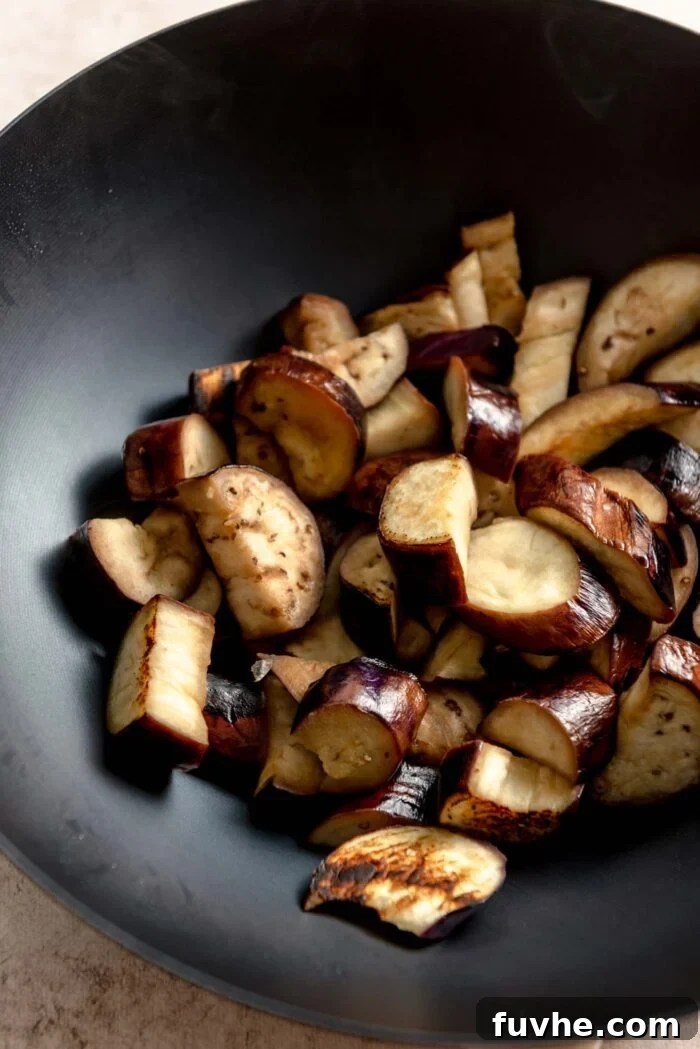
Heat 1 tablespoon of your neutral oil in a large skillet or wok over medium-high heat. Allow the pan to get adequately hot – you should see a slight shimmer in the oil. Once hot, add your prepared eggplant pieces to the pan. Toss them well to ensure each piece is lightly coated in oil, then spread them out into a single, even layer across the pan. This promotes even cooking and browning. Sprinkle a small amount of water over the eggplant, then immediately cover the pan with a lid. Cook for approximately 2-3 minutes; the steam created will help tenderize the eggplant. Carefully lift the lid, flip the eggplant pieces, sprinkle with a little more water, cover again, and cook for another 2 minutes. This steaming method ensures the eggplant cooks through without excessive oil. Finally, remove the lid and continue to stir-fry the eggplant, stirring occasionally, until it turns a beautiful golden brown and achieves a tender, creamy texture while still retaining its shape. We are aiming for tender, not mushy, as it will cook a bit more in the final step. Once cooked, remove the eggplant from the pan and set it aside in a bowl for later.
Step 3: Stir-Fry the Bell Peppers and Onions
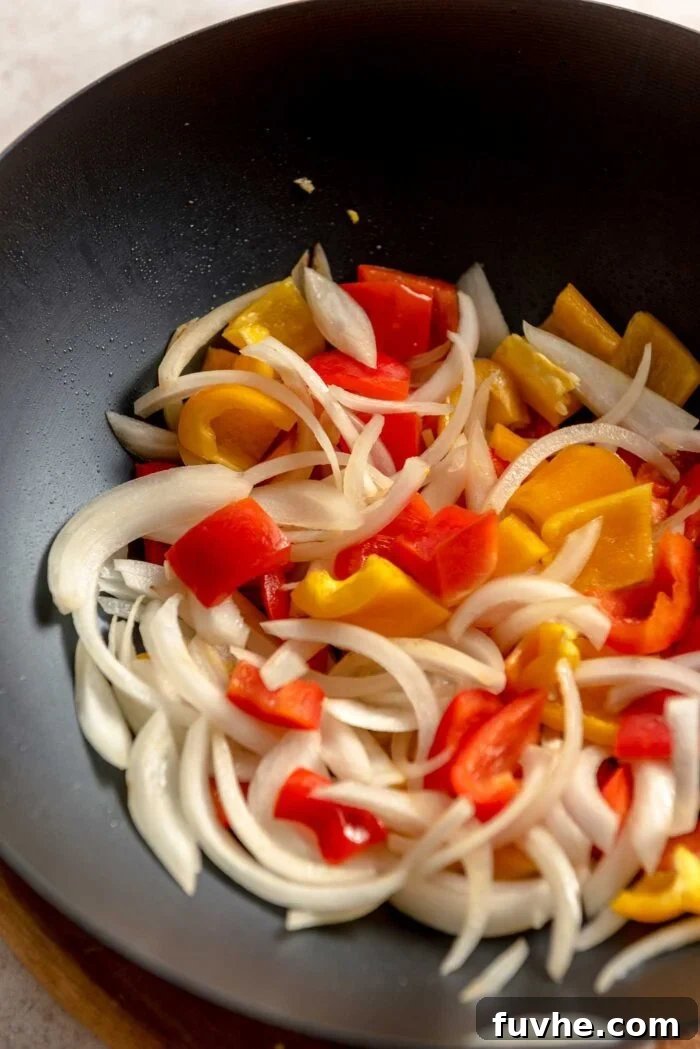
Using the same pan (no need to clean it!), add the remaining 1 tablespoon of neutral oil and heat it over medium-high heat. Once hot, add the thinly sliced onions and bell peppers. Stir-fry these vegetables for 5-6 minutes, stirring frequently, until they become tender-crisp. You want them softened but still with a slight bite, adding textural contrast to the dish.
Step 4: Infuse with Aromatics and Heat
Reduce the heat slightly if needed, then add the minced garlic, grated ginger, and thinly sliced Thai chili to the pan with the vegetables. Cook these aromatics for just 1 minute, stirring constantly. This quick sauté allows them to release their incredible fragrance and flavor without burning. For the Thai chilies, remember that one chili with seeds removed provides a pleasant level of heat for many; if you prefer more spice, you can leave some seeds in or even use two chilies, adjusting to your personal preference. Keep a close eye on the garlic to prevent it from burning, which can turn bitter.
Step 5: Incorporate the Signature Stir-Fry Sauce
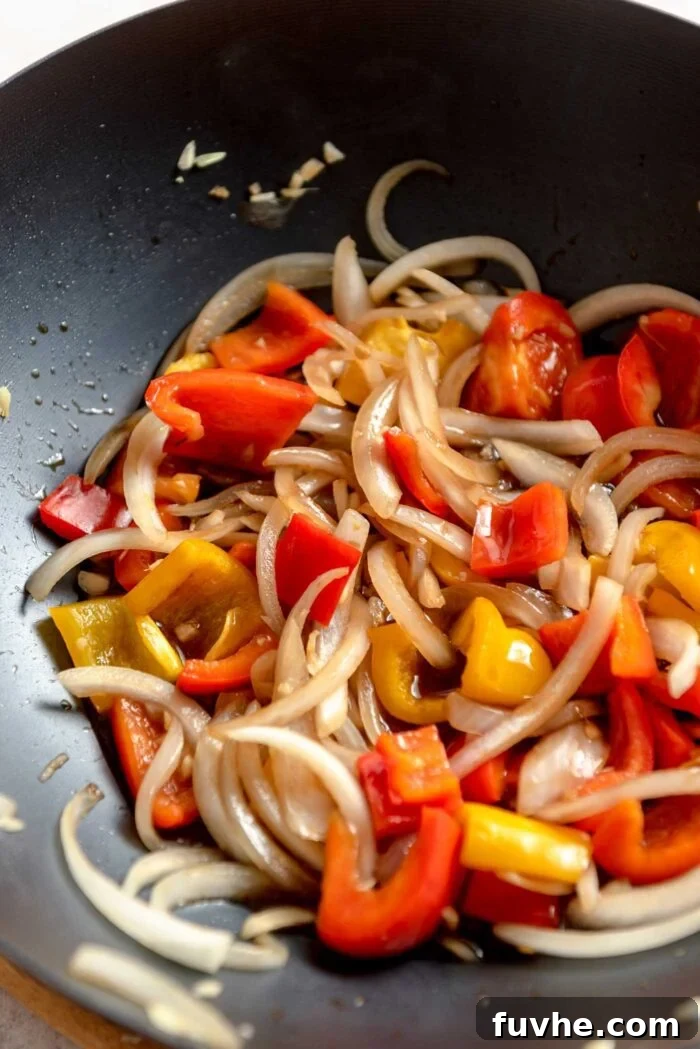
Now, it’s time to bring the dish together. Add the previously prepared sauce mixture to the pan. Crucially, give your cornstarch slurry a vigorous stir right before adding it, as the cornstarch will have settled to the bottom. Pour the re-mixed slurry into the pan as well. Stir everything together continuously, allowing the sauce to coat the vegetables evenly. The sauce will begin to thicken almost immediately.
Step 6: Final Simmer and Fresh Basil Infusion
Once the sauce begins to simmer and thickens to your desired consistency, return the cooked eggplant to the pan. Gently toss the eggplant with the sauce and vegetables, ensuring every piece is well coated. Continue to cook for about 2 minutes, allowing the eggplant to fully absorb the rich flavors of the sauce and for the sauce to further reduce and cling to the ingredients. Turn off the heat. Finally, stir in the fresh Thai basil leaves. The residual heat will gently wilt the basil, releasing its distinctive aromatic fragrance without overcooking it. This ensures the basil’s vibrant flavor is preserved.
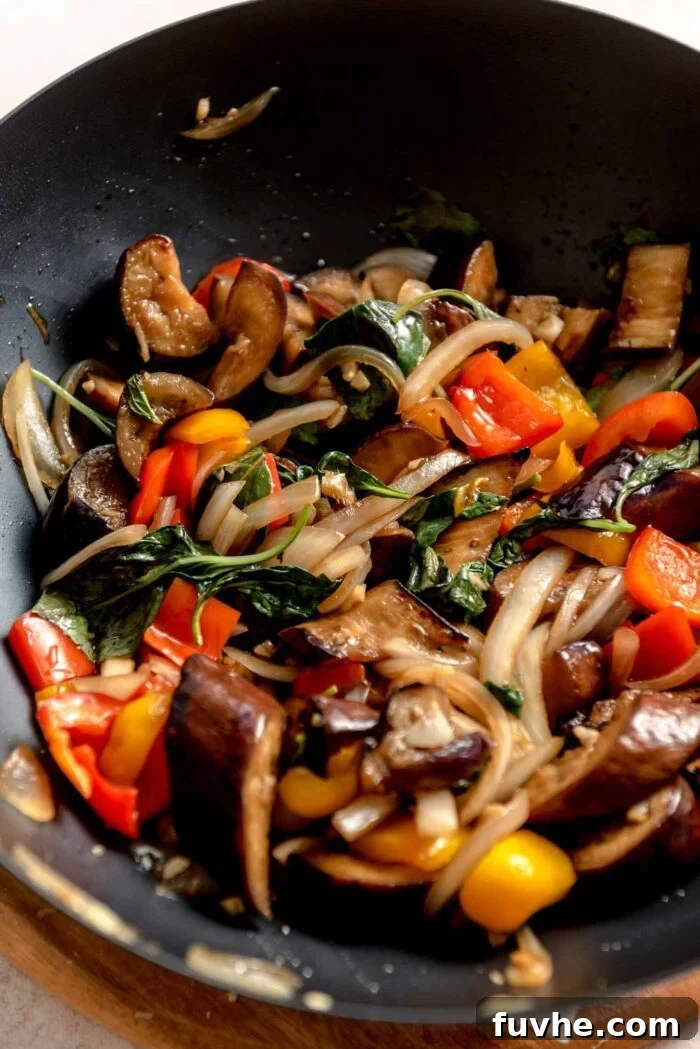
Serve your exquisite Thai Basil Eggplant immediately over a bed of freshly cooked Jasmine or Basmati rice. For an extra touch of freshness and aroma, garnish with additional torn Thai basil leaves before bringing it to the table. Enjoy this wonderfully flavorful and satisfying dish!
Common Recipe Questions (FAQs)
Generally, eggplant skin is edible and packed with nutrients. For varieties like Japanese or Chinese eggplant, which are recommended for this recipe, the skin is thin and tender, making peeling unnecessary. However, if you’re using a globe eggplant (which has thicker skin) or simply prefer a smoother texture, you can trim the skin off. For this specific stir-fry, leaving the skin on is perfectly fine.
Absolutely! Transforming this dish into a gluten-free meal is straightforward. The key adjustments are to substitute regular soy sauce with tamari, which is a gluten-free soy sauce alternative, and to ensure you select a vegetarian oyster sauce that is explicitly labeled as gluten-free. Many brands offer both options, making it easy to accommodate dietary needs without compromising on flavor.
While Thai basil is highly recommended for its distinct anise-like and peppery flavor, if it’s unavailable, Italian sweet basil can be used as a substitute in a pinch. However, be aware that the flavor profile will be milder and less authentic. You might consider adding a tiny dash of dried anise or fennel seed (very sparingly) to try to mimic some of the unique notes of Thai basil.
The steaming and browning method used in Step 2 is designed to prevent mushy eggplant. Cooking it in an even layer, with brief steaming and subsequent browning, helps it become tender yet hold its shape. Avoid overcrowding the pan, as this can lead to steaming rather than browning, resulting in a softer texture. Ensure your oil is hot, and don’t overcook it in the final saucing step.
Yes, this recipe is highly versatile! Cubed firm or extra-firm tofu, tempeh, or even pre-cooked chickpeas can be added for extra protein. For tofu or tempeh, it’s best to press them, then pan-fry or air-fry them separately until golden and crisp before adding them back to the stir-fry with the eggplant in Step 6. This ensures they maintain a good texture.
Chef’s Expert Tips for Success
Achieving a restaurant-quality Thai Basil Eggplant stir-fry is easier than you think with these professional tips. These insights will help you navigate the cooking process smoothly and ensure maximum flavor and texture.
- Embrace “Mise en Place”: The most crucial rule for stir-frying! “Mise en place” means “everything in its place.” Chop all your vegetables, mince your garlic and ginger, measure out your sauces, and prepare your cornstarch slurry *before* you even turn on the stove. Stir-frying is a rapid cooking method, and you won’t have time to prep once the heat is on. This preparation guarantees a stress-free cooking experience.
- Timely Eggplant Preparation: To prevent your eggplant from browning and developing a slightly bitter taste, only chop it just before you are ready to begin cooking. Eggplant oxidizes quickly once cut. If you must chop it ahead, toss the pieces lightly with a squeeze of lemon juice or soak them in salted water for a short period, then pat thoroughly dry before cooking.
- Choose the Right Eggplant Variety: The success of this stir-fry largely depends on the type of eggplant used. Always opt for Japanese or Chinese eggplants, which are long and slender. These varieties have a thinner skin, fewer seeds, and a more tender flesh that cooks quickly and absorbs flavors beautifully, unlike the larger, sometimes bitter, globe eggplants. Avoid the fat, round ones!
- Prioritize Authentic Thai Basil: For the most genuine and aromatic flavor profile, sourcing fresh Thai basil (also known as holy basil) is paramount. Its distinct spicy, peppery, and subtle anise notes are irreplaceable and provide the characteristic taste of this dish. While Italian sweet basil can be a last resort, it will yield a different, milder result.
- Master the Chili Heat: Thai chilies add a wonderful depth of flavor and a kick of spice that balances the sweet and savory elements of the sauce. If you are sensitive to heat, remove all the seeds and membranes from the chili (this is where most of the capsaicin resides). For a medium spice level, use one chili with seeds removed. If you enjoy a fiery dish, use two chilies and/or leave some of the seeds in. Taste and adjust to your preference.
- Optimal Eggplant Slicing: Cut your eggplant into pieces that are slightly larger than 3/4-inch. This ensures they cook thoroughly without becoming overly soft or disintegrating during the stir-frying process. Uniform pieces also promote even cooking.
- Don’t Overcrowd the Pan: When stir-frying, especially the eggplant, avoid overloading your wok or skillet. Cooking in batches if necessary ensures that ingredients fry rather than steam, leading to better browning and texture. Overcrowding lowers the pan’s temperature and can result in soggy vegetables.
Storing Leftovers & Reheating Best Practices
Ensuring your delicious Thai Basil Eggplant remains fresh and flavorful for future enjoyment requires proper storage techniques. While this dish is best enjoyed fresh, it also makes for excellent leftovers.
- Cool Completely Before Storing: Before transferring any leftover stir-fry to a container, allow it to cool down to room temperature. Storing hot food directly in the fridge can raise the internal temperature of the refrigerator, potentially affecting other foods and encouraging bacterial growth.
- Airtight Container in the Fridge: Once cooled, transfer the Thai basil eggplant to an airtight container. This prevents air exposure, which can dry out the food and lead to spoilage. Store the sealed container in the refrigerator for up to 3 days. Beyond this, the quality and freshness may begin to decline.
- Reheating for Optimal Enjoyment: To reheat, you have a couple of excellent options. You can gently warm the stir-fry in a pan over medium heat on the stovetop, stirring occasionally, until it is heated through. This method often helps maintain some of the texture. Alternatively, you can use a microwave; heat in short intervals (e.g., 60-90 seconds) and stir between each interval until uniformly hot.
- Freezing is Not Recommended: While you technically *could* freeze this recipe, it is strongly advised against. Eggplant, like many vegetables with high water content, tends to become very mushy and lose its desirable texture once thawed from freezing. The sauce might also separate. For the best experience, enjoy this dish fresh or within a few days from the refrigerator.
If you try this Thai Eggplant recipe or any other recipe on Running on Real Food, don’t forget to leave a comment and a ⭐⭐⭐⭐⭐ rating in the comment section below. It helps others who are thinking of making the recipe, and I love to hear from you. And don’t forget to tag me on Instagram @runningonrealfood so I can see your creation! Thanks for trying my recipes! – Deryn
Thai Basil Eggplant
Rate Recipe
Print Recipe
Ingredients
For the Sauce
- 3 tbsp tamari or soy sauce, 45 mL
- 1 tbsp dark soy sauce, or soy sauce/tamari, 15 mL
- 3 tbsp vegetarian oyster sauce, 54 g
- 1 tbsp rice vinegar, 15 mL
- 1 tbsp maple syrup or coconut sugar, 20 g
- ¼ cup cold water, 60 mL
- 2 tsp cornstarch
For the Eggplant Stir Fry
- 2 tbsp neutral oil, like avocado or grape seed (30 mL)
- 2 Japanese eggplants, halved lengthwise, then cut into 3/4-inch pieces (about 6 cups/420 g)
- 1 red bell pepper, thinly sliced (approx. 140 g/1.5 cups)
- 1 yellow bell pepper, thinly sliced (approx. 140 g/1.5 cups)
- 1 onion, thinly sliced (approx. 155 g/1.5 cups)
- 4 garlic cloves, minced or grated (heaping 1 tbsp/20 g)
- 1- inch ginger, peeled then grated (1 tbsp/20g)
- 1-2 red Thai chili, seeds removed, if desired, thinly sliced
- 1 bunch Thai basil, torn (15 g, about 1 cup torn)
For Serving
- fresh Jasmin or Basmati rice
- more Thai basil
Instructions
-
Prepare the Sauce: In a small bowl, whisk together the soy sauce, dark soy sauce (or additional soy sauce), vegetarian oyster sauce, rice vinegar and maple syrup until combined. In a separate small bowl, mix together the cornstarch and cold water. Set both aside.3 tbsp tamari or soy sauce, 1 tbsp dark soy sauce, 3 tbsp vegetarian oyster sauce, 1 tbsp rice vinegar, 1 tbsp maple syrup or coconut sugar, ¼ cup cold water, 2 tsp cornstarch
-
Cook the Eggplant: Heat 1 tbsp of the oil in a large skillet or wok over medium-high heat. Once it’s hot, add the eggplant and toss to coat in the oil. Spread the pieces evenly around the pan in one layer. Sprinkle a little water over the eggplant, cover and cook for 2-3 minutes, flip the pieces and sprinkle with a little more water, cover and cook another 2 minutes.
Remove the lid and stir fry until the eggplant is golden brown. It should be tender but still holding its shape. Remove the eggplant from the pan and set aside.
2 tbsp neutral oil, 2 Japanese eggplants -
Stir Fry Peppers & Onions: Heat the remaining 1 tbsp oil over medium-high. Add onions and peppers. Cook for 5-6 min, stirring often, until tender-crisp.1 red bell pepper, 1 yellow bell pepper, 1 onion
-
Add Aromatics: Add garlic, ginger and Thai chili. Cook for 1 min, stirring constantly, until fragrant.4 garlic cloves, 1- inch ginger, 1-2 red Thai chili
-
Add Sauce: To the pan, add the sauce and cornstarch slurry, making sure to re-mix the slurry as the cornstarch will have settled to the bottom.
-
Add Eggplant and Thai Basil: Bring to a simmer. Once simmering, reduce heat to medium. Add eggplant to the pan. Cook for another 2 minutes stirring often, until slightly reduced, saucy and eggplant absorbs some of the sauce. Turn off the heat and stir in the Thai basil.1 bunch Thai basil
-
Serve: Serve Thai basil eggplant over your choice of rice. Garnish with more Thai basil, if desired.
Video
Notes
Nutrition facts do not include rice.
For the Thai chilies, one chili with the seeds removed was the right amount of heat for me. If you want more spice, use 2 chilies and/or leave in a few of the seeds.
Nutrition
Like this recipe? Rate and comment below!