
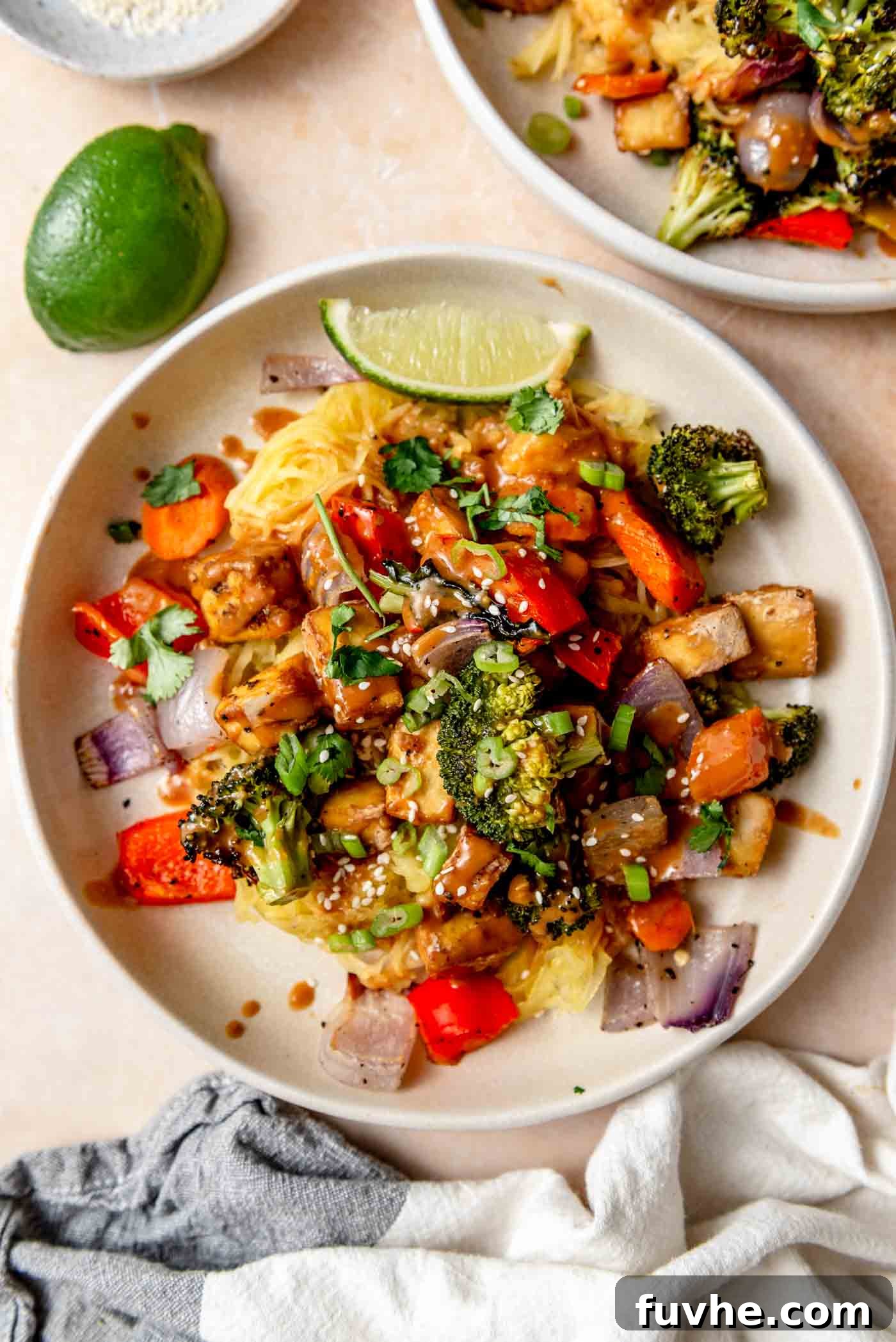
Flavorful Vegan Spaghetti Squash with Crispy Tofu and Peanut Sauce
Discover a delicious and incredibly satisfying vegan spaghetti squash recipe that combines tender spaghetti squash “noodles” with perfectly crispy tofu and a rich, savory peanut sauce. This vibrant dish is packed with an abundance of vegetables, making it a stellar choice for a wholesome, plant-based meal that’s high in fiber and protein.
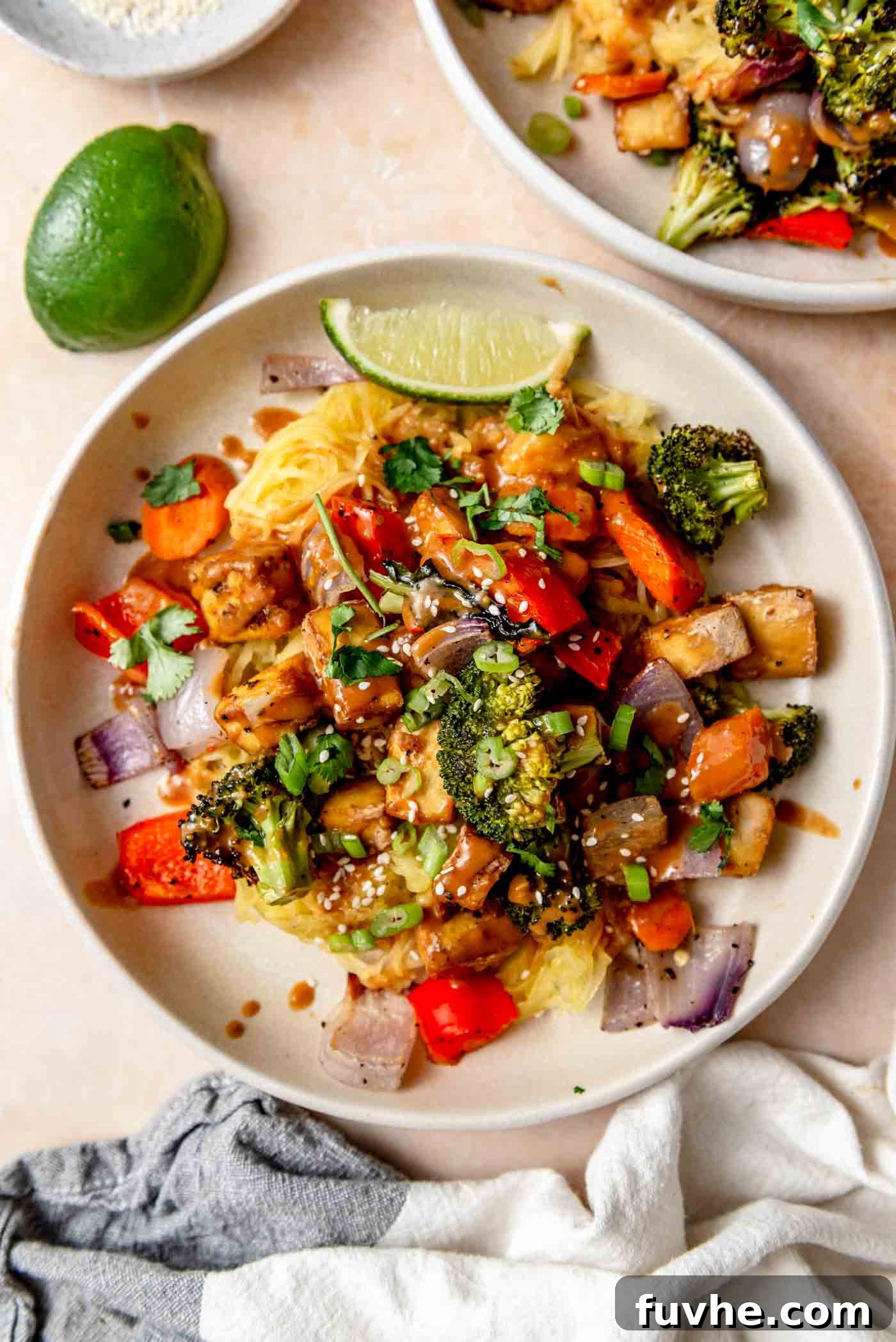
About This Irresistible Recipe
This recipe offers an inventive and delectable way to incorporate spaghetti squash into your culinary repertoire. Drawing inspiration from classic Asian flavors, it features perfectly baked crispy tofu, a medley of colorful roasted vegetables, and a luxurious, easy-to-make coconut peanut sauce that brings all the elements together in a harmonious blend of taste and texture.
Utilizing spaghetti squash as a nutritious alternative to traditional pasta or rice is an excellent strategy to significantly boost your daily fiber intake. Furthermore, its naturally lower carbohydrate profile makes it an ideal option for those adhering to a lower carbohydrate diet without sacrificing flavor or satisfaction.
If you’re keen on exploring more ways to enjoy this versatile vegetable, you might also love our Pesto Spaghetti Squash with Roasted Tomatoes. The signature peanut sauce from this recipe is so versatile that it’s also featured in our popular Tofu Edamame Buddha Bowl, giving you a fantastic reason to double the sauce batch and enjoy both amazing dishes!
Why You’ll Adore This Vegan Spaghetti Squash Dish
This recipe isn’t just a meal; it’s a culinary experience designed to delight your taste buds while nourishing your body. Here’s why this vegan spaghetti squash with tofu and peanut sauce will quickly become a favorite:
- Completely Vegan: Crafted entirely from plant-based ingredients, this dish is perfect for vegans, vegetarians, and anyone looking to incorporate more plant-forward meals into their diet. It proves that healthy eating can be incredibly flavorful and satisfying.
- Easily Gluten-Free: By simply opting for gluten-free tamari instead of traditional soy sauce, this recipe effortlessly becomes suitable for those with gluten sensitivities or celiac disease, ensuring everyone can enjoy its vibrant flavors.
- Rich in Fiber: Spaghetti squash is an exceptional source of dietary fiber, which is crucial for digestive health, blood sugar regulation, and promoting a feeling of fullness. This meal helps you meet your daily fiber goals deliciously.
- High in Plant-Based Protein: With hearty extra-firm tofu as its star, this dish delivers a substantial amount of plant-based protein. Protein is essential for muscle repair, energy, and overall body function, making this a truly empowering meal.
- Low Carb Friendly: Replacing traditional pasta or grains with spaghetti squash significantly reduces the carbohydrate content, making this an excellent option for those managing their carb intake or following a low-carb lifestyle.
- Perfect for Meal Prep: This recipe is a dream come true for meal preppers. Its components hold up wonderfully when stored properly, allowing you to prepare healthy, delicious meals in advance for busy weeknights or lunches.
Essential Ingredient Insights
Understanding each ingredient’s role and potential substitutions can elevate your cooking experience and ensure a perfect outcome every time. Here are some key notes on the components of this recipe:
- Spaghetti Squash: Don’t fret too much over finding an exact size. Approximately 1 medium to large squash, or alternatively two smaller ones, should yield the right amount of “noodles” for this recipe. When selecting, look for a squash that feels heavy for its size and has a firm, unblemished skin.
- Tofu: For the best crispy texture, extra-firm tofu is highly recommended. It contains less water and will crisp up beautifully when baked. Firm tofu can also be used, but you might need to press out a bit more excess water to achieve a similar result.
- Cornstarch: This ingredient is key to achieving that desirable crispy coating on your tofu. If cornstarch is not available, arrowroot powder makes an excellent 1:1 substitute, providing a similar light and crunchy texture.
- Versatile Vegetables: The recipe suggests a colorful mix of broccoli, bell pepper, red onion, and carrot. However, feel free to customize! This dish is incredibly forgiving and welcomes other vegetables like cauliflower florets, zucchini chunks, sliced mushrooms, or even snap peas – whatever seasonal produce you enjoy most.
- Almond Butter vs. Peanut Butter: The creamy peanut sauce can be made with either almond butter or peanut butter. Both offer a rich, nutty base. Peanut butter delivers a more traditional “satay” flavor, while almond butter provides a slightly milder, earthier note. Choose based on your preference or what you have on hand.
- Coconut Milk for Sauce: Canned light coconut milk is crucial for achieving the perfect consistency and tropical hint in this peanut sauce. We advise against using full-fat coconut milk as it tends to make the sauce too thick and heavy. If you prefer a peanut sauce without coconut milk altogether, consider trying the vibrant ginger peanut sauce from our Peanut Tofu Bowl recipe or the spicy peanut sauce from our refreshing Cold Asian Noodle Salad.
Please remember, this overview provides key ingredient insights. A complete list of ingredients with precise measurements and detailed instructions can be found in the comprehensive recipe card towards the end of this post.
Exciting Additions and Flavor Variations
While this recipe is fantastic as written, it also serves as a wonderful base for culinary creativity. Don’t hesitate to experiment with these delicious additions and variations to tailor the dish to your taste and pantry:
- Chickpea Power: For an alternative or additional protein boost, chickpeas are a fantastic option. Simply toss a can of drained and rinsed chickpeas with 1 teaspoon of oil, a pinch of salt, and pepper, then add them to the baking sheet along with the squash and other vegetables for roasting. They’ll become delightfully crispy!
- Tempeh Transformation: Tempeh, another excellent plant-based protein, can be used in place of tofu. You can either incorporate it directly into the recipe, cutting it into cubes and coating it as you would the tofu, or take it a step further by using the flavorful marinated tempeh preparation from our High-Protein Vegan Salad recipe for an extra layer of taste.
- Asian Greens Boost: If you wish to incorporate an Asian green like bok choy or gai lan, we recommend steaming it separately until tender-crisp. This method preserves its vibrant color and delicate texture, allowing you to fold it into the finished dish just before serving.
- Spice It Up: For those who love a bit more heat, a dash of red pepper flakes or an extra spoon of sambal oelek in the peanut sauce will add a delightful kick. You can also garnish with freshly sliced chilies.
- Nut-Free Option: If you have a nut allergy, you can make a delicious nut-free sauce using sunflower seed butter or tahini as the base, adjusting the liquids and seasonings to achieve the desired consistency and flavor profile.
- Garnish Galore: Beyond sesame seeds and green onions, consider fresh cilantro, chopped peanuts (if not avoiding nuts), or a squeeze of lime juice for an extra burst of freshness.
Visual Guide: Crafting Your Spaghetti Squash Masterpiece
Let’s walk through the creation of this stunning dish with clear, step-by-step instructions. Before you begin, ensure your oven is preheated to 425°F (220°C) and prepare two large baking sheets by lining them with parchment paper. This will prevent sticking and make cleanup a breeze.
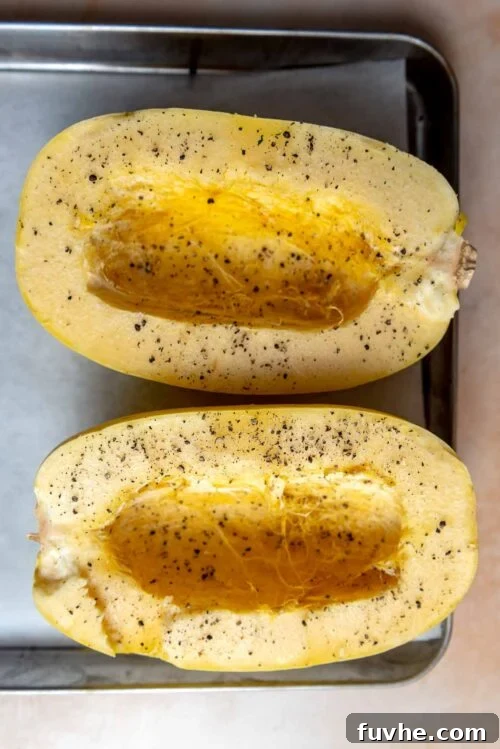
Step 1: Prep the Squash. Carefully cut the spaghetti squash in half lengthwise. Using a spoon, scoop out and discard all the seeds and fibrous pulp from the center. Lightly season the cut sides with salt and freshly ground black pepper.
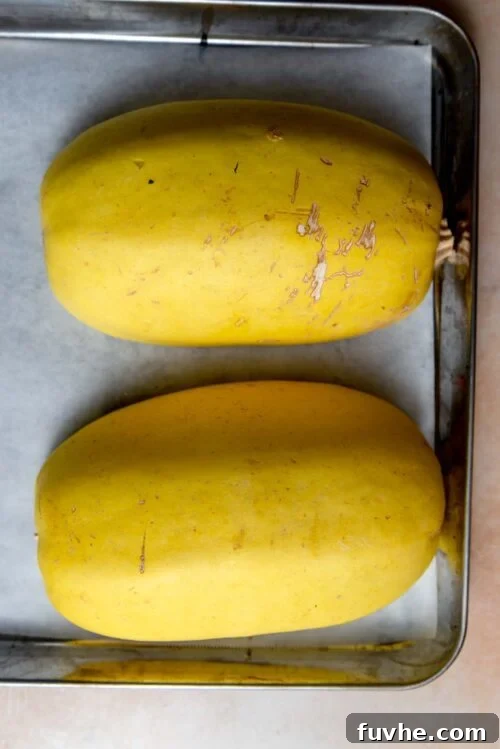
Step 2: Bake the Squash. Place the spaghetti squash halves cut-side down on one half of your prepared baking sheet. Transfer to the preheated oven at 425°F (220°C).
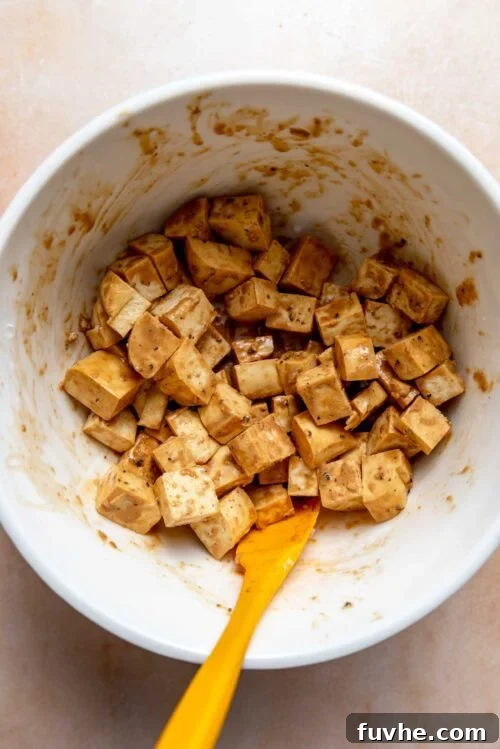
Step 3: Prepare the Tofu. While the squash starts roasting, cut your extra-firm tofu into bite-sized cubes. In a bowl, combine the tofu cubes with sesame oil, soy sauce (or tamari), garlic powder, black pepper, and cornstarch. Toss gently until all the tofu pieces are evenly coated.
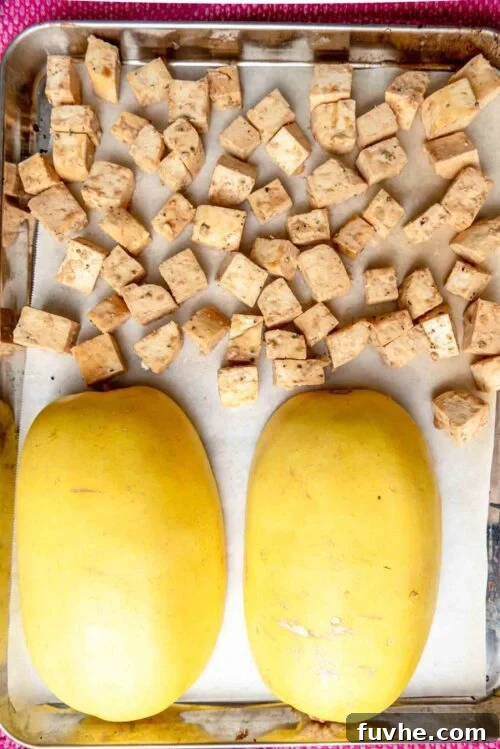
Step 4: Roast the Tofu. After the spaghetti squash has been baking for approximately 10 minutes, carefully add the seasoned tofu cubes to the other half of the same baking sheet, spreading them in a single layer. Return the baking sheet to the oven.
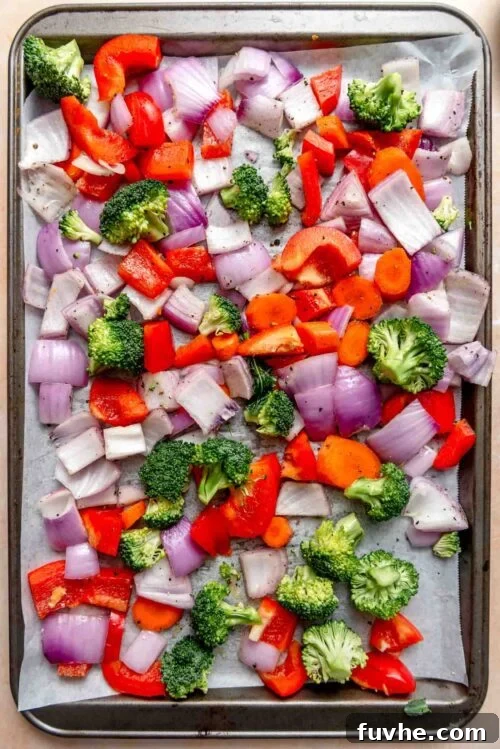
Step 5: Roast the Vegetables. On your second prepared baking sheet, arrange all the chopped vegetables (broccoli florets, red bell pepper, red onion, and thinly sliced carrots). Drizzle with 1 tablespoon of olive oil, and season with salt and pepper. Add this baking sheet to the oven alongside the squash and tofu. The squash will roast for a total of 35-40 minutes, while the tofu and vegetables will need about 25-30 minutes until tender and slightly caramelized.

Step 6: Prepare the Peanut Sauce. While everything is roasting, combine all the sauce ingredients—almond butter (or peanut butter), sweet chili sauce, soy sauce (or tamari), rice vinegar, light coconut milk, and sambal oelek (or sriracha)—in a small bowl. Whisk vigorously until the sauce is completely smooth and creamy. Taste and adjust seasonings if needed.
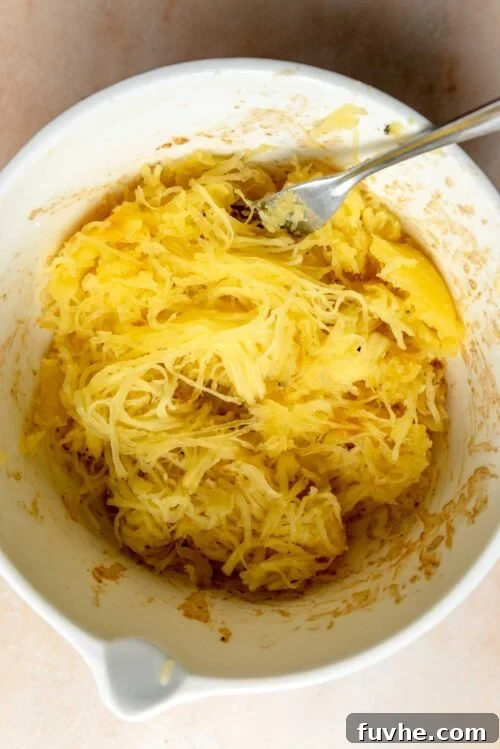
Step 7: Create Spaghetti Squash Noodles. Once the squash skin can be easily pierced with a knife, remove all baking sheets from the oven. Using a fork, gently scrape the cooked spaghetti squash flesh away from the skin. It will naturally separate into delicate, spaghetti-like strands, or “noodles.” Continue until all the flesh has been scraped from both halves.
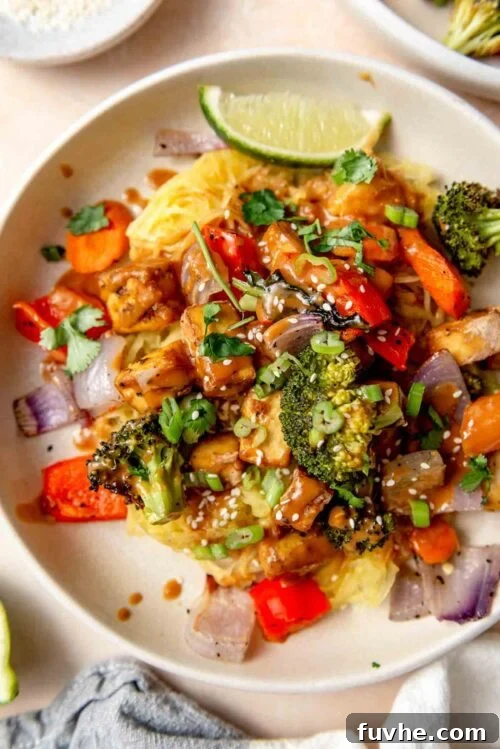
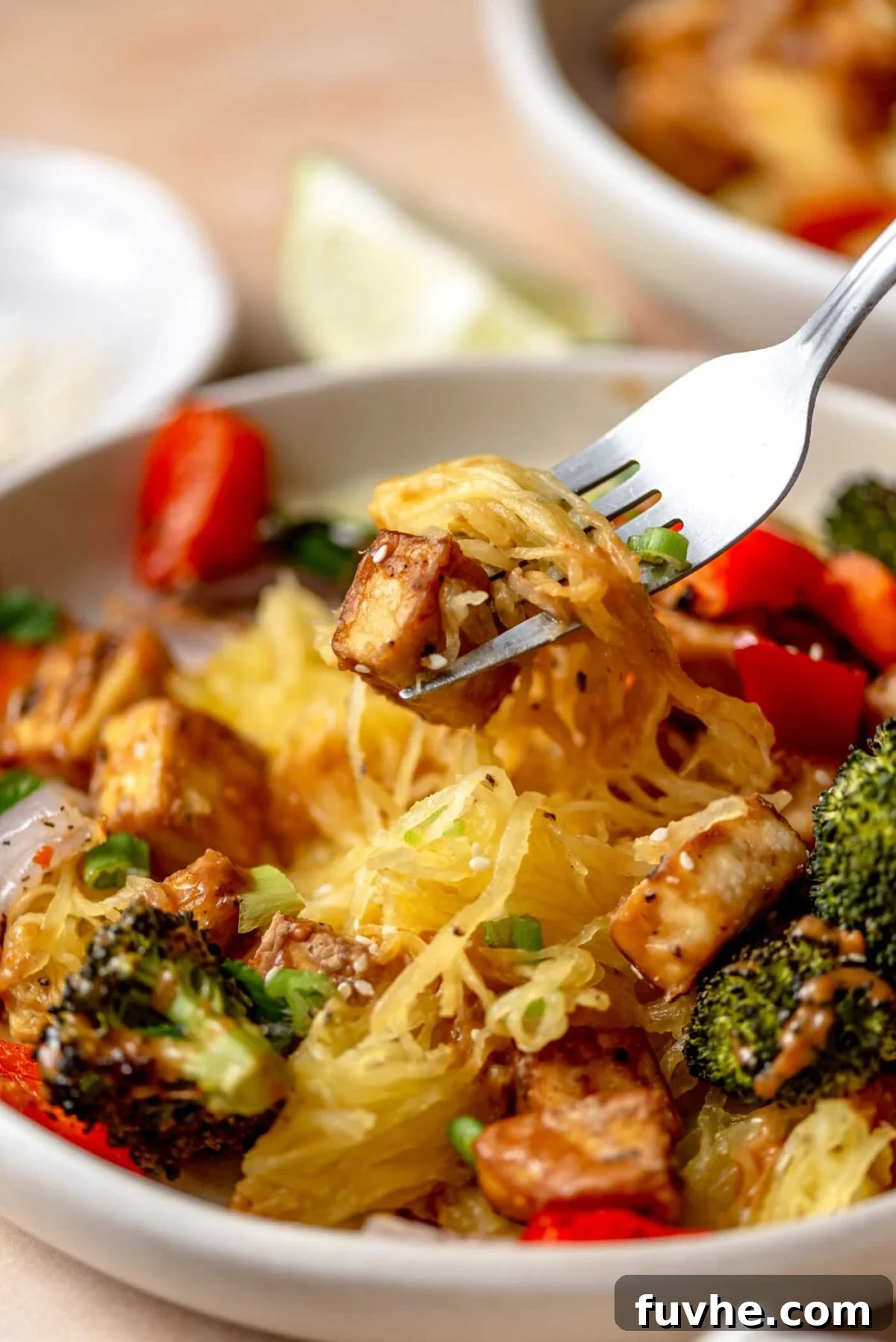
Step 8: Assemble and Serve. Divide the fluffy spaghetti squash noodles evenly among four serving bowls. Top each portion with equal amounts of the crispy roasted tofu and the tender, flavorful roasted vegetables. Drizzle your desired amount of the creamy peanut sauce over each serving – you may use all of it or have a little extra for another meal. Garnish generously with fresh green onions, sesame seeds, and a sprinkle of fresh cilantro for an added burst of flavor and color. Serve immediately and enjoy!
Tips for Success & Optimal Meal Prep
Achieving the best results with this recipe is easy with a few simple tips, and its meal prep friendliness makes it even more appealing for busy lifestyles:
Ensuring Crispy Tofu
- Press Your Tofu: Even extra-firm tofu benefits from pressing to remove excess water. Wrap the block in a few layers of paper towels or a clean kitchen towel, place it on a plate, and top with something heavy (like a cast-iron skillet or a few cans) for at least 30 minutes, or up to an hour. This step ensures maximum crispiness.
- Don’t Overcrowd the Pan: When roasting tofu and vegetables, ensure they are spread in a single layer on the baking sheets. Overcrowding steams the food instead of roasting it, preventing that coveted crispy exterior. Use two sheets if necessary.
- Even Cubes: Cut tofu and vegetables into relatively uniform sizes to ensure they cook evenly. This prevents some pieces from being undercooked while others are burnt.
Perfecting Your Peanut Sauce
- Adjust Consistency: If your peanut sauce is too thick, add a teaspoon of water or a splash more light coconut milk until it reaches your desired drizzling consistency. If it’s too thin, a tiny bit more peanut butter can help.
- Flavor Balance: Taste your sauce and adjust to your preference. Add more sweet chili sauce for sweetness and a mild kick, more rice vinegar for tang, or an extra dash of sambal oelek for more heat.
Meal Prep Strategies
- Separate Storage is Key: For optimal freshness and texture, store the spaghetti squash, roasted tofu, and roasted vegetables in separate airtight containers in the refrigerator.
- Sauce on the Side: Always store the peanut sauce in its own airtight container. Drizzle it over individual servings just before eating to prevent the “noodles” and veggies from becoming soggy.
- Reheating Instructions: When ready to eat, gently reheat the spaghetti squash, tofu, and vegetables in a microwave or a skillet until warmed through. Then add the fresh sauce. This method ensures everything retains its best texture.
Frequently Asked Questions (FAQs)
While technically possible, this recipe isn’t ideal for freezing. The delicate texture of the spaghetti squash, combined with the roasted vegetables and tofu, tends to become less appealing after freezing and thawing. We recommend enjoying it fresh or as meal prep within a few days.
You can store the cooked spaghetti squash, roasted vegetables, and crispy tofu in an airtight container in the refrigerator for up to 4 days. For the best results and to maintain texture, we highly recommend storing the peanut sauce separately and adding it just before serving, especially if you’re preparing this dish in advance for meal prep.
This recipe is very flexible! Feel free to substitute or add other quick-roasting vegetables you have on hand. Great alternatives include zucchini, mushrooms, asparagus, or even cauliflower florets. The key is to cut them into similar sizes so they cook evenly.
Absolutely! If you love a fiery kick, increase the amount of sambal oelek or sriracha sauce in the recipe. You can also add a pinch of red pepper flakes to the sauce, or garnish your finished dish with thinly sliced fresh chili peppers.
Vegan Spaghetti Squash with Tofu and Peanut Sauce
Ingredients
For the Squash, Tofu & Vegetables
- 1 medium to large or 2 small spaghetti squash, about 1500g total
- Salt and pepper, to taste
- 1 (350 g) package extra-firm tofu, pressed and cut into 1/2-inch cubes
- 1 tbsp cornstarch (or arrowroot powder)
- 1 tbsp soy sauce or gluten-free tamari
- 1 tsp sesame oil
- 1 tsp garlic powder
- 1 cup broccoli florets, chopped
- 1 red bell pepper, chopped
- 1 small red onion, chopped
- 2 carrots, thinly sliced
- 1 tbsp olive oil
For the Peanut Sauce
- 1/4 cup almond butter or peanut butter
- 2 tbsp sweet chili sauce
- 3 tbsp soy sauce or gluten-free tamari
- 1 tsp rice vinegar
- 1/4 cup light coconut milk
- 1 tbsp sambal oelek or sriracha sauce (adjust to taste for desired spice level)
Instructions
-
Prepare Oven & Pans: Preheat your oven to 425°F (220°C). Line two large baking sheets (that can fit on one oven rack simultaneously) with parchment paper. This will ensure easy cleanup and prevent sticking.
-
Slice and Season Squash: Carefully slice the spaghetti squash in half lengthwise using a sharp, sturdy knife. Scoop out and discard the seeds and stringy pulp from the center. Lightly season the cut sides of the squash with salt and freshly ground black pepper.
-
Bake Squash: Place the seasoned spaghetti squash halves cut-side down on one half of one of the prepared baking sheets. Place this sheet into the preheated oven.
-
Roast Tofu: While the squash is baking, cut the pressed extra-firm tofu into bite-sized cubes. In a medium bowl, combine the tofu cubes with the cornstarch, soy sauce (or tamari), sesame oil, garlic powder, and a generous pinch of black pepper. Toss gently until all the tofu pieces are evenly coated. After the spaghetti squash has been in the oven for about 10 minutes, carefully add the coated tofu pieces to the other half of the same baking sheet, spreading them into a single layer. Return the baking sheet to the oven.
-
Roast Vegetables: On the second prepared baking sheet, arrange all the chopped vegetables: broccoli florets, red bell pepper, red onion, and thinly sliced carrots. Drizzle the vegetables with 1 tablespoon of olive oil and season them with salt and pepper. Add this baking sheet to the oven with the squash and tofu. The spaghetti squash should roast for a total of 35-40 minutes until fork-tender, while the tofu and vegetables will typically need about 25-30 minutes, or until the tofu is golden and crispy, and the vegetables are tender-crisp with slight caramelization.
-
Mix Sauce: While everything is roasting, prepare your peanut sauce. In a small bowl, combine the almond butter (or peanut butter), sweet chili sauce, soy sauce (or tamari), rice vinegar, light coconut milk, and sambal oelek (or sriracha). Whisk thoroughly until the sauce is completely smooth and creamy. Taste and adjust seasonings (e.g., more spice, more tang) as desired.
-
Create Squash Noodles: Once the spaghetti squash is cooked through (you can easily pierce the skin with a knife), carefully remove all baking sheets from the oven. Using a fork, gently scrape the cooked spaghetti squash flesh away from the skin. It will naturally separate into long, delicate strands, resembling traditional spaghetti noodles. Continue until all the flesh from both squash halves has been scraped into “noodles.”
-
Assemble and Serve: Divide the spaghetti squash noodles evenly among four serving bowls. Top each portion with an equal amount of the crispy roasted tofu and the tender, flavorful roasted vegetables. Drizzle your desired amount of the creamy peanut sauce generously over each serving (you may use all of the sauce, or have a little extra). Garnish with fresh chopped green onions, a sprinkle of sesame seeds, and fresh cilantro leaves for a bright finish. Serve immediately and savor this delightful, plant-based meal!
Nutrition
Calories: 307kcal,
Carbohydrates: 34g,
Protein: 13g,
Fat: 16g,
Sodium: 179mg,
Fiber: 9g,
Sugar: 14g