
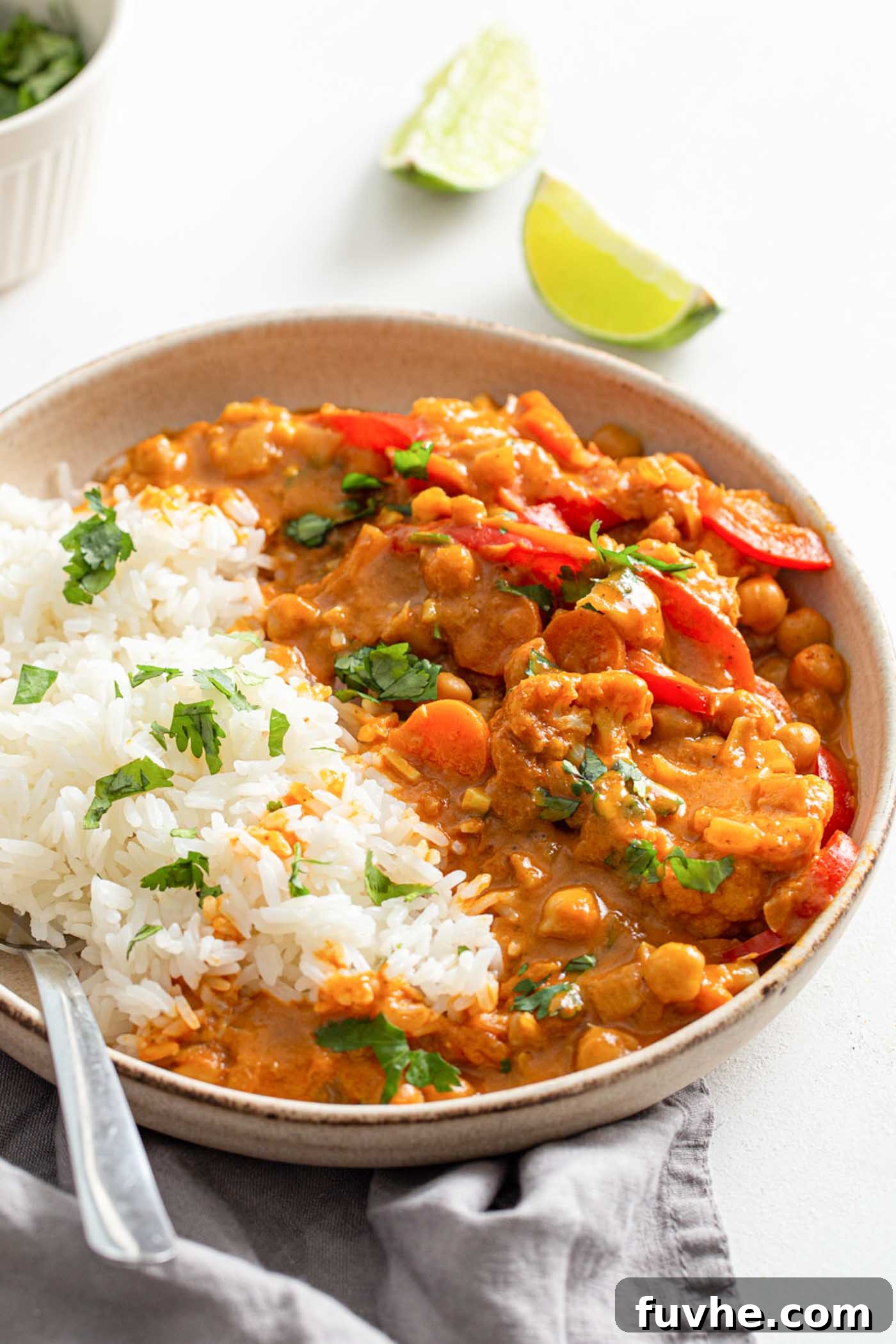
Welcome to your new favorite weeknight meal! This incredibly satisfying and vibrantly flavored **Chickpea Cauliflower Curry** is designed for deliciousness, ease, and nourishment. Bursting with aromatic spices, tender vegetables, and creamy coconut milk, this vegan and gluten-free recipe comes together in just 30 minutes. It’s the perfect solution for busy evenings when you crave a hearty, wholesome, and exotic dish without spending hours in the kitchen. Whether you’re a seasoned chef or a cooking novice, this one-pot wonder promises a culinary experience that’s both simple to prepare and wonderfully gratifying.
Featured Review
This was SO easy to make and turned out delicious – I’m usually sick of my meals by the end of the week but I was still craving it on day 5. Swapped carrots for spinach and used low fat coconut milk. Will definitely be making again!
Tania
Why You’ll Love This Easy Chickpea Cauliflower Curry
Prepare to fall in love with this sensational chickpea and cauliflower curry, featuring a rich, golden sauce that perfectly complements hearty chickpeas, crisp cauliflower, sweet carrots, and colorful bell peppers. This recipe isn’t just a meal; it’s a testament to how simple ingredients can transform into something truly extraordinary. Here are numerous reasons why this vegan curry will become a staple in your culinary repertoire:
- Exquisite Yellow Curry Sauce: The foundation of this dish is its deeply flavorful and aromatic yellow curry sauce, which is both creamy and subtly spiced. It perfectly coats every ingredient, creating a harmonious blend of tastes that tantalize the palate.
- Dietary Dream: This recipe is naturally vegan and gluten-free, making it suitable for a wide range of dietary preferences and restrictions. For those looking to reduce fat, it can also be easily adapted to be oil-free without compromising on flavor.
- Lightning Fast & One-Pot Wonder: Forget the endless cleanup! This entire dish comes together in a single pot in just 30 minutes, making it an ideal choice for busy weeknights when time is of the essence.
- Nutritional Powerhouse: Packed with plant-based protein from chickpeas and fiber from a medley of vegetables, this curry is incredibly satisfying and beneficial for your digestive health. It’s a nutritious meal that fuels your body with goodness.
- Meal Prep Champion: This curry tastes even better the next day as the flavors deepen, making it perfect for meal prepping. Cook a large batch and enjoy wholesome, delicious meals throughout the week.
- Endlessly Adaptable: Its inherent flexibility allows for endless customization. Feel free to swap in your favorite seasonal vegetables or add extra protein to suit your taste and what you have on hand.
- Perfect Pairing: While sublime on its own, this curry truly shines when served over a bed of fluffy basmati rice or scooped up with warm, chewy naan bread. The combination of textures and flavors is simply irresistible!
With its delightful taste, quick preparation, and wholesome ingredients, this chickpea cauliflower curry is truly a dish to cherish. If you’re looking for more vibrant vegan curry ideas, explore recipes like Vegetable Korma, Kabocha Squash Red Curry, Vegetable Curry with Tofu, or Vegan Panang Curry.
Essential Ingredients & Smart Substitutions
Crafting the perfect Chickpea Cauliflower Curry starts with understanding each ingredient and its role in building layers of flavor and texture. Below is an overview of the key components you’ll need, along with suggestions for substitutions, variations, and additions to help you tailor the recipe to your preferences and pantry.
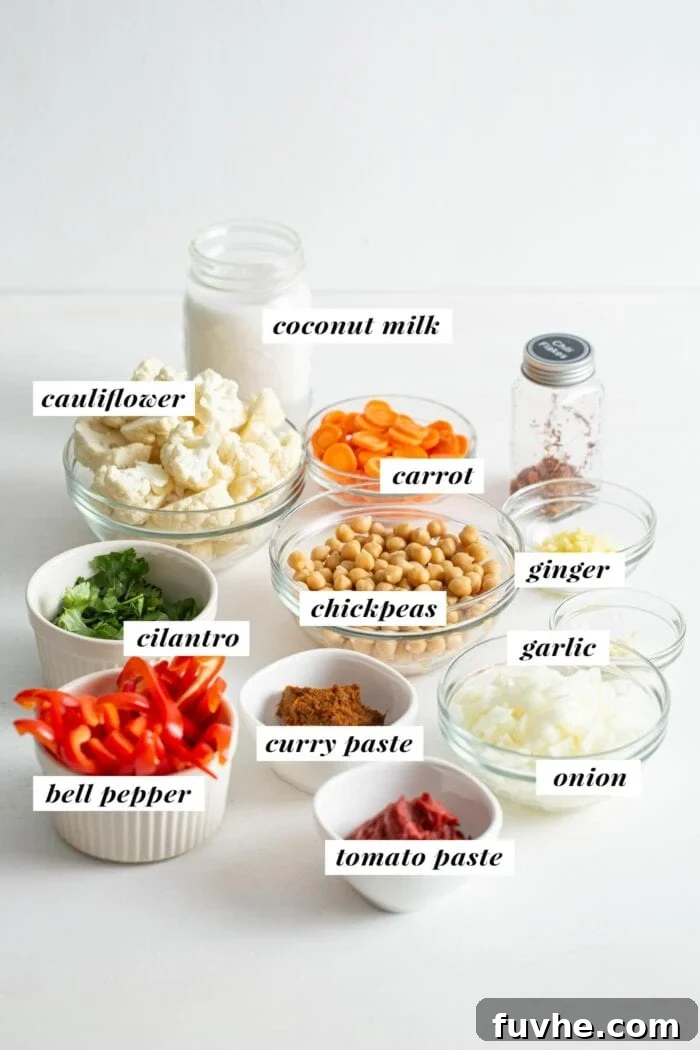
Here’s what you’ll need to create this delicious curry, along with some versatile alternatives:
- Olive Oil: Used for sautéing the aromatics and deepening their flavor. You can easily substitute with another high-heat cooking oil like avocado oil. For an entirely oil-free version, simply omit the oil and use a splash of water or vegetable broth to prevent sticking while cooking your aromatics.
- Chickpeas (Garbanzo Beans): Canned chickpeas are incredibly convenient for this recipe. Remember to drain and rinse them thoroughly before adding them to the pot to remove excess sodium and improve their texture. Chickpeas are a fantastic source of plant-based protein and fiber, making this curry extra satisfying.
- Aromatics (Onion, Garlic, Ginger): These three ingredients form the foundational flavor base of the curry. Diced white onion, finely chopped garlic, and minced fresh ginger create a fragrant and warming aroma that is essential to any good curry. Fresh is always best for maximum flavor.
- Vegetables: The core vegetables in this recipe are cauliflower, carrots, and bell peppers, chosen for their complementary textures and colors. Cauliflower florets become wonderfully tender in the sauce, carrots add a touch of sweetness, and bell peppers offer a vibrant crunch. We’ll explore more suitable swaps and additions further down.
- Tomato Paste: A small amount of tomato paste adds a concentrated depth of umami and a subtle tang to the curry, enriching the overall flavor profile.
- Curry Paste: This recipe primarily uses yellow curry paste for its mild, earthy, and aromatic profile. However, red curry paste makes an excellent substitute if you prefer a slightly spicier kick and a different depth of flavor. Always check the label to ensure it aligns with your dietary needs (e.g., gluten-free).
- Coconut Milk: Full-fat canned coconut milk is highly recommended for achieving a lusciously creamy and rich curry sauce. If you’re aiming for a lighter option, light coconut milk can be used, though it will result in a less decadent consistency.
- Water: A bit of water helps to create the perfect consistency for the sauce and ensures all the vegetables cook evenly. Vegetable broth can be used for added flavor.
- Seasoning (Salt & Pepper): Essential for enhancing all the other flavors. Season to taste as you cook.
- Red Pepper Flakes (Optional): For those who enjoy a bit of heat, red pepper flakes can be added to adjust the spice level to your preference.
- Fresh Cilantro: A final flourish of fresh, finely chopped cilantro adds a bright, herbaceous note and a beautiful pop of color, elevating the overall freshness of the curry.
Exciting Variations & Delicious Additions
One of the best aspects of this Chickpea Cauliflower Curry is its incredible versatility. Don’t hesitate to experiment and make it your own! From boosting protein to incorporating diverse vegetables and adjusting the spice level, here are numerous ideas to customize your curry and discover new flavor dimensions:
- Boost the Protein: To significantly increase the protein content, consider adding tofu. Baked or pan-fried curried tofu, like in this recipe, works beautifully, either stirred into the curry or served as a topping. Other plant-based protein options include lentils (red or green, added with the liquids), or tempeh. Cook any additional proteins separately and mix them in during the final stages of cooking to maintain their texture.
- Expand Your Veggie Palette: This curry is a fantastic way to enjoy a wide variety of vegetables. Beyond cauliflower, carrots, and bell peppers, popular additions or substitutions include green peas (add towards the end), broccoli florets, snow peas or snap peas, zucchini slices, fresh spinach (stir in until wilted at the very end), chunks of sweet potato or potato (cubed small for quicker cooking, simmer longer until tender), and tender eggplant. For best results and balanced flavors, try to stick with no more than 4 different main vegetables.
- Embrace Thai-inspired Flavors: For a delightful twist, infuse your curry with the bright and aromatic notes of Thai cuisine. Add finely minced lemongrass (the bottom third of a stalk) along with the garlic and ginger. Finish the dish by stirring in the zest and juice of one lime, along with a handful of fresh Thai basil leaves for a truly authentic touch.
- Enhance with Turmeric: For an even richer, deeper golden color and a boost of anti-inflammatory benefits, stir in up to 1 teaspoon of ground turmeric powder with the curry paste. Turmeric adds warmth and a subtle earthy flavor.
- A Citrusy Finish: Brighten the entire dish with a squeeze of fresh lemon or lime juice just before serving. A sprinkle of grated lemon or lime zest over the top also adds a wonderfully fragrant aroma and a zesty punch. Serve with extra citrus wedges on the side for individual preference.
- Crunchy Roasted Nuts: Add a delightful textural contrast and nutty flavor by topping your finished curry with a sprinkle of chopped roasted almonds, cashews, or peanuts. Lightly toast them in a dry pan for a few minutes before serving for maximum crunch and aroma.
- Rich Crushed Tomatoes: For a slightly different flavor profile and an added layer of acidity, stir in a 15-ounce can of crushed or diced tomatoes along with the coconut milk. This creates a slightly tangier and heartier sauce.
- Creamy Cashew Alternative: If you’re looking for an alternative to coconut milk or simply want to try something different, make a homemade cashew cream. Soak 1 cup of raw cashews in hot water for at least 30 minutes (or several hours in cold water), then drain and blend with 1.5 cups of fresh water until completely smooth and creamy. Add this mixture at the same stage you would add coconut milk.
- Adjust the Spice Level: The base recipe offers a mild spice level, perfect for most palates. To add a significant kick, mince one jalapeño or serrano pepper and sauté it with the garlic and ginger. Alternatively, add up to 1 teaspoon of red chili flakes with the curry paste. For a flexible heat, offer sriracha sauce or extra chili flakes at the table.
These variations allow you to customize your curry adventure every time you cook, ensuring it’s always fresh, exciting, and perfectly suited to your cravings!
How to Craft Your Chickpea Cauliflower Curry
Creating this flavorful chickpea cauliflower curry is a straightforward process, broken down into a few simple steps. For a visual reference, you can review the step-by-step photos below. When you’re ready to cook, follow the detailed written instructions in the recipe card at the end of this post to ensure a perfect result every time.
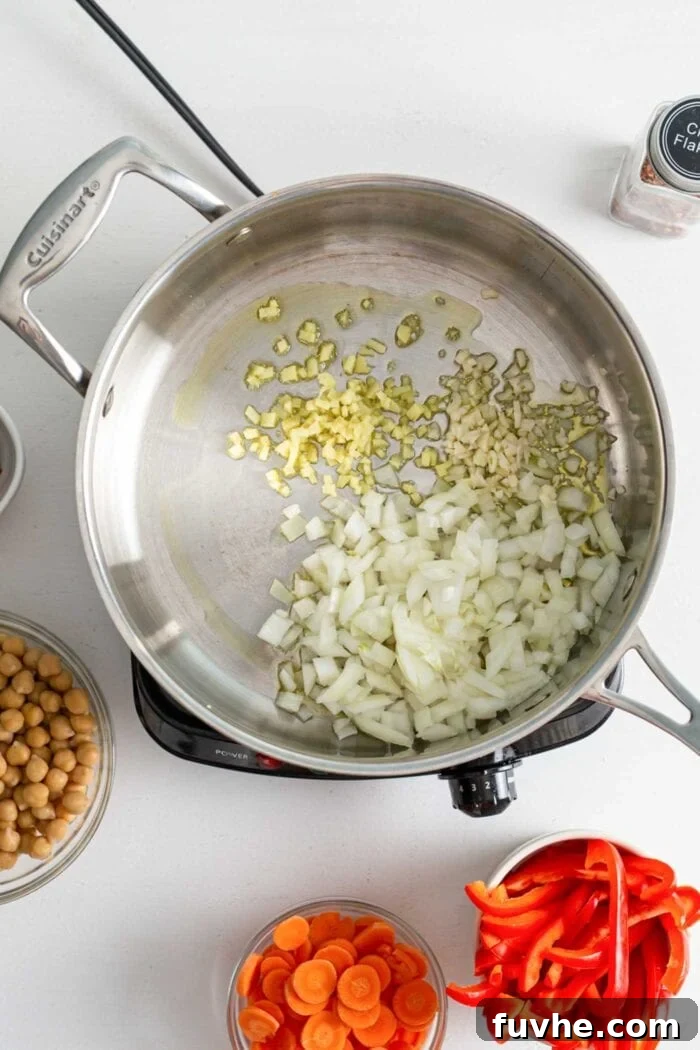
Step 1: Sauté the Aromatics. Begin by heating the olive oil (or a splash of water/broth for oil-free) in a large saucepan or deep skillet over medium heat. Once shimmering, add the diced onion, minced garlic, and grated ginger. Cook this fragrant mixture for 2-3 minutes, stirring frequently, until the onion has softened and the aromatics are wonderfully fragrant but not browned. This step is crucial for building the foundational flavor of your curry.
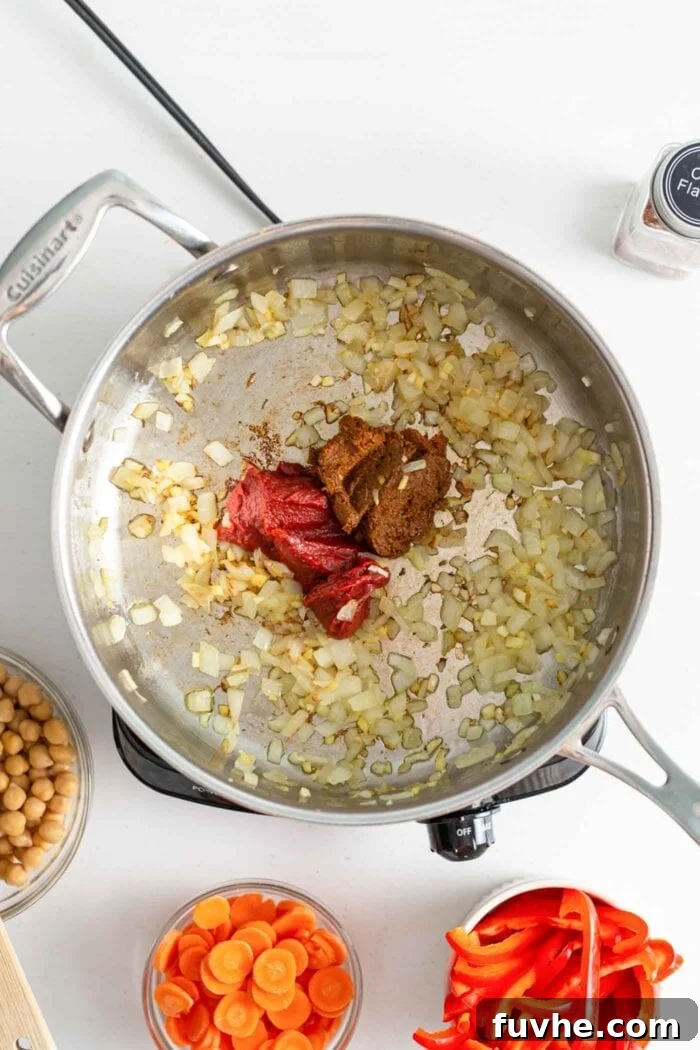
Step 2: Bloom the Pastes. Next, stir in the tomato paste and your chosen curry paste (yellow or red) into the sautéed aromatics. Continue to cook for an additional 2-3 minutes, stirring occasionally. This process, known as “blooming,” helps to toast the spices in the curry paste, releasing their full aroma and deepening their complex flavors, which is key to a truly rich curry.
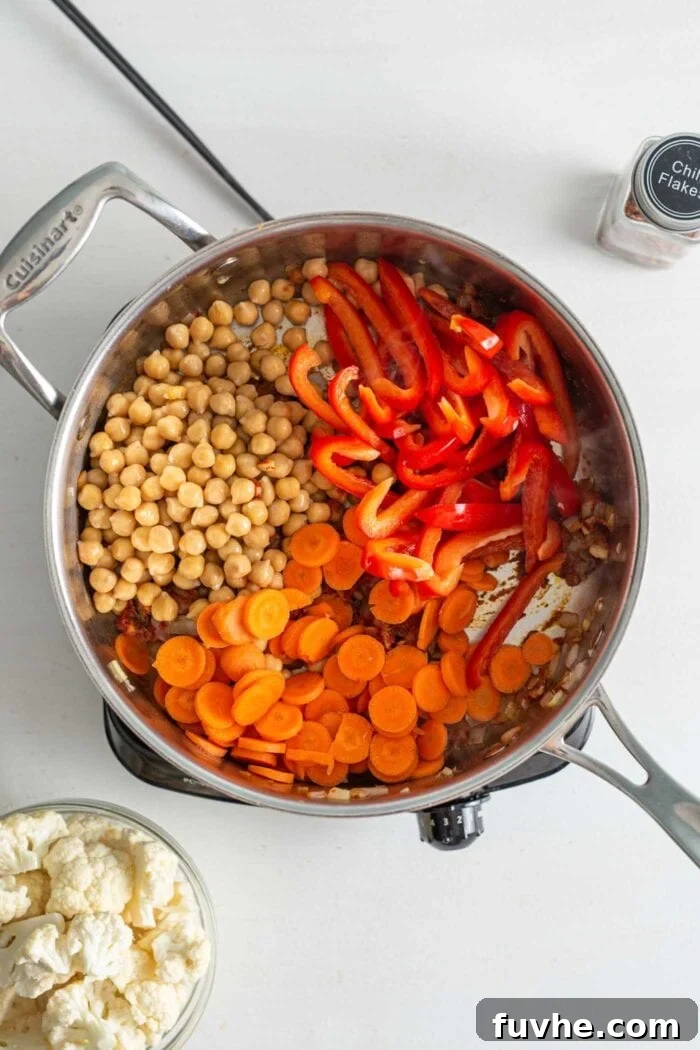
Step 3: Introduce Chickpeas and Hearty Vegetables. Add the drained and rinsed chickpeas, chopped carrots, and sliced red bell peppers to the pan. Stir well to ensure all the ingredients are thoroughly coated in the fragrant paste mixture. Allow them to cook for a minute or two, absorbing the initial flavors.
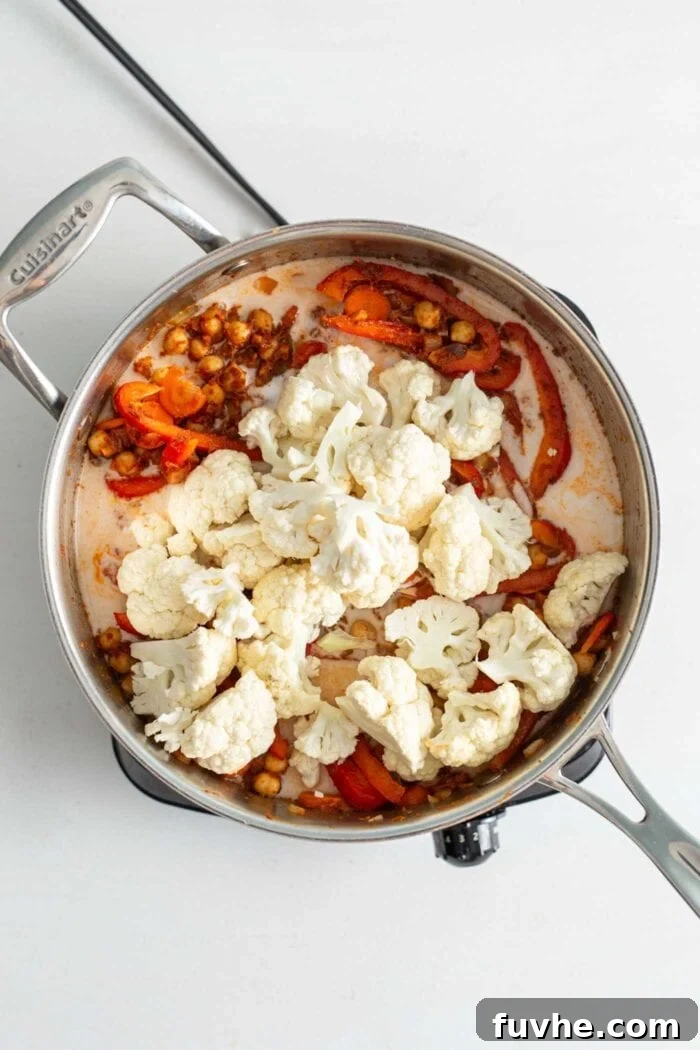
Step 4: Simmer to Perfection. Pour in the full-fat coconut milk and water, then add the cauliflower florets. Stir everything gently to combine. Bring the mixture to a gentle simmer, then reduce the heat to low, cover the pan, and allow it to cook for 10-15 minutes. This simmering time is essential for the vegetables to become tender and for all the incredible flavors to meld beautifully, creating a rich and cohesive curry.
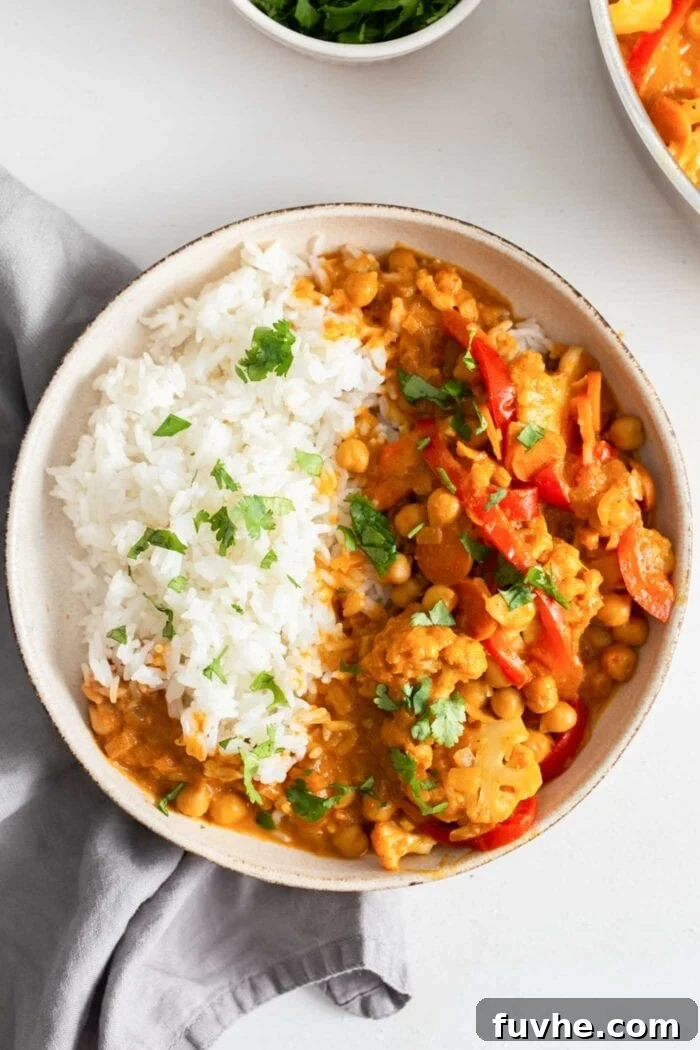
Step 5: Season and Serve. Once the vegetables are tender, remove the pan from the heat. Taste the curry and season generously with salt and pepper to your preference. If you enjoy a spicier dish, now is the time to stir in red chili flakes for additional heat. Finally, fold in the fresh, finely chopped cilantro. Serve your aromatic chickpea cauliflower curry immediately over a bed of your favorite cooked rice (such as basmati or jasmine) or with warm naan bread for dipping. Enjoy the vibrant flavors and comforting warmth!
Frequently Asked Questions About Chickpea Cauliflower Curry
Absolutely! Adding spinach or other leafy greens like kale or Swiss chard is a fantastic way to boost the nutritional content of your curry. Simply stir them in during the last 2-3 minutes of cooking, just after removing the pan from the heat, and continue to stir until the greens are wilted and heated through. They will cook down quickly in the residual heat of the curry.
Yes, incorporating potatoes or sweet potatoes is a delicious variation! To do this, reduce the amount of cauliflower by half and add 1-2 cups of peeled and cubed potato (cut into small, roughly 1.5 cm cubes for even cooking). Add the potatoes at the same time as the carrots. You may need a slightly longer simmering time, perhaps an additional 5-10 minutes, to ensure the potatoes are fully cooked and tender. This works equally well with sweet potatoes, which add a lovely natural sweetness.
Yes, you can absolutely substitute red curry paste for yellow curry paste. Red curry paste typically offers a slightly spicier kick and a different aromatic profile, often with notes of red chilies and galangal. Always check the label of your chosen curry paste to ensure it’s gluten-free if that’s a dietary requirement.
As written, this chickpea cauliflower curry recipe is naturally gluten-free. Most curry pastes, chickpeas, vegetables, and coconut milk are gluten-free. However, it’s always important to double-check the label of the curry paste you use, as some brands may contain gluten-containing ingredients or be processed in facilities that handle gluten. Reading ingredient lists carefully ensures your meal remains completely gluten-free.
Yes, this recipe adapts wonderfully to a slow cooker for a hands-off approach. To prepare it in a slow cooker, simply combine all the ingredients (onion, garlic, ginger, oil/broth, chickpeas, carrots, bell peppers, cauliflower, tomato paste, curry paste, coconut milk, water, salt, pepper) in the slow cooker pot. Stir everything well to combine. Cook on low for 5-6 hours or on high for 2.5-3 hours, or until the cauliflower and carrots are tender to your liking. Stir in the fresh cilantro just before serving.
This versatile curry pairs wonderfully with a variety of accompaniments. Traditionally, it’s served over fluffy basmati or jasmine rice, which perfectly soaks up the rich sauce. Warm naan bread or chapati are also excellent for dipping. For a lighter option, serve it with quinoa or brown rice, or even alongside a simple green salad. A dollop of vegan yogurt or a squeeze of fresh lime juice can add extra brightness.
Storage & Reheating Tips
This Chickpea Cauliflower Curry is not only delicious freshly made but also fantastic for meal prepping and enjoying throughout the week. Proper storage ensures its flavors remain vibrant and delicious.
- Cool Down: Always allow the curry to cool completely to room temperature before storing. This prevents condensation and keeps your curry fresh.
- Refrigerator: Store any leftovers in an airtight container in the refrigerator for up to 5 days. It can be stored on its own or already combined with cooked rice for grab-and-go meals.
- Freezer: For longer storage, transfer the cooled curry to a freezer-safe, airtight container. It can be frozen for up to 3 months. When ready to enjoy, thaw overnight in the refrigerator before reheating.
- Reheating:
- Stovetop: Transfer the curry to a pot and reheat over medium-low heat, stirring occasionally, until it is heated through. You might need to add a splash of water or vegetable broth if the sauce has thickened too much.
- Microwave: For individual portions, place the curry in a microwave-safe container and heat in 1-minute intervals, stirring in between, until piping hot.
- Meal Prep Advantage: The flavors of this curry often deepen and meld even more beautifully after a day or two, making it an excellent choice for batch cooking and enjoying as easy, flavorful meals throughout your busy week.
We hope you cherish this **Chickpea Cauliflower Curry** recipe as much as we do! If you prepare this dish or any other recipe from our collection, please consider leaving a comment and a ⭐⭐⭐⭐⭐ rating in the section below. Your feedback truly helps other home cooks discover and enjoy our recipes. And don’t forget to tag us on Instagram @runningonrealfood so we can admire your culinary creations! Thank you for choosing our recipes! – Deryn

Chickpea Cauliflower Curry
Pin Recipe
Rate Recipe
Print Recipe
Ingredients
- 1 medium white onion, diced (1 cup, 200 g)
- 3 cloves garlic, finely chopped (15 g)
- 1 inch piece of fresh ginger, peeled and minced (5 g)
- 1 tbsp olive oil, (omit or use water for oil-free)
- 1 can (540mL) chickpeas, drained and rinsed (approx. 2.5 cups)
- 2 cups peeled and chopped carrots, approx. 4 carrots, 300 g
- 2 red bell peppers, sliced (2 cups, 300 g)
- 1 medium head of cauliflower, stems and leaves removed, chopped into florets (500 g)
- 2 tbsp tomato paste, 28 g
- 4 tbsp yellow or red curry paste, 56 g
- 1 can (14oz) full-fat coconut milk, 400 mL
- 1/2 cup water
- salt, to taste
- 1/2-1 tsp red pepper flakes, optional, to spice preference
- 1/2 cup fresh cilantro, finely chopped
- cooked basmati rice, for serving, optional
Instructions
-
Sauté Aromatics: Heat olive oil in a medium saucepan over medium heat. Add the diced onion, minced garlic, and grated ginger with a pinch of salt. Sauté for approximately 2-3 minutes, stirring often, until softened and fragrant.
-
Add Tomato and Curry Paste: Stir in the tomato paste and curry paste with the sautéed aromatics. Cook for an additional 2-3 minutes, stirring frequently, allowing the flavors to bloom and deepen.
-
Add Chickpeas and Vegetables: Add the drained and rinsed chickpeas, chopped carrots, and sliced red bell peppers to the pan. Stir until all the ingredients are well coated in the aromatic paste mixture.
-
Add Coconut Milk, Water, and Cauliflower: Pour in the full-fat coconut milk and 1/2 cup of water, then add the cauliflower florets. Season lightly with salt. Bring the mixture to a gentle simmer, then reduce the heat to low. Cover the pan and let it cook for 10-15 minutes, or until all the vegetables are tender.
-
Season and Serve: Taste the curry and adjust seasoning with salt and pepper as needed. If desired, stir in red pepper flakes for an extra kick. Remove the pan from the heat and gently stir in the fresh, chopped cilantro. Serve your delicious curry hot over a bed of cooked rice or with warm naan bread.
Notes
Nutrition
Calories: 498kcal,
Carbohydrates: 52g,
Protein: 15g,
Fat: 29g,
Saturated Fat: 20g,
Polyunsaturated Fat: 2g,
Monounsaturated Fat: 4g,
Sodium: 175mg,
Potassium: 1399mg,
Fiber: 15g,
Sugar: 16g,
Vitamin A: 15200IU,
Vitamin C: 158mg,
Calcium: 157mg,
Iron: 8mg
Like this recipe? Rate and comment below!