
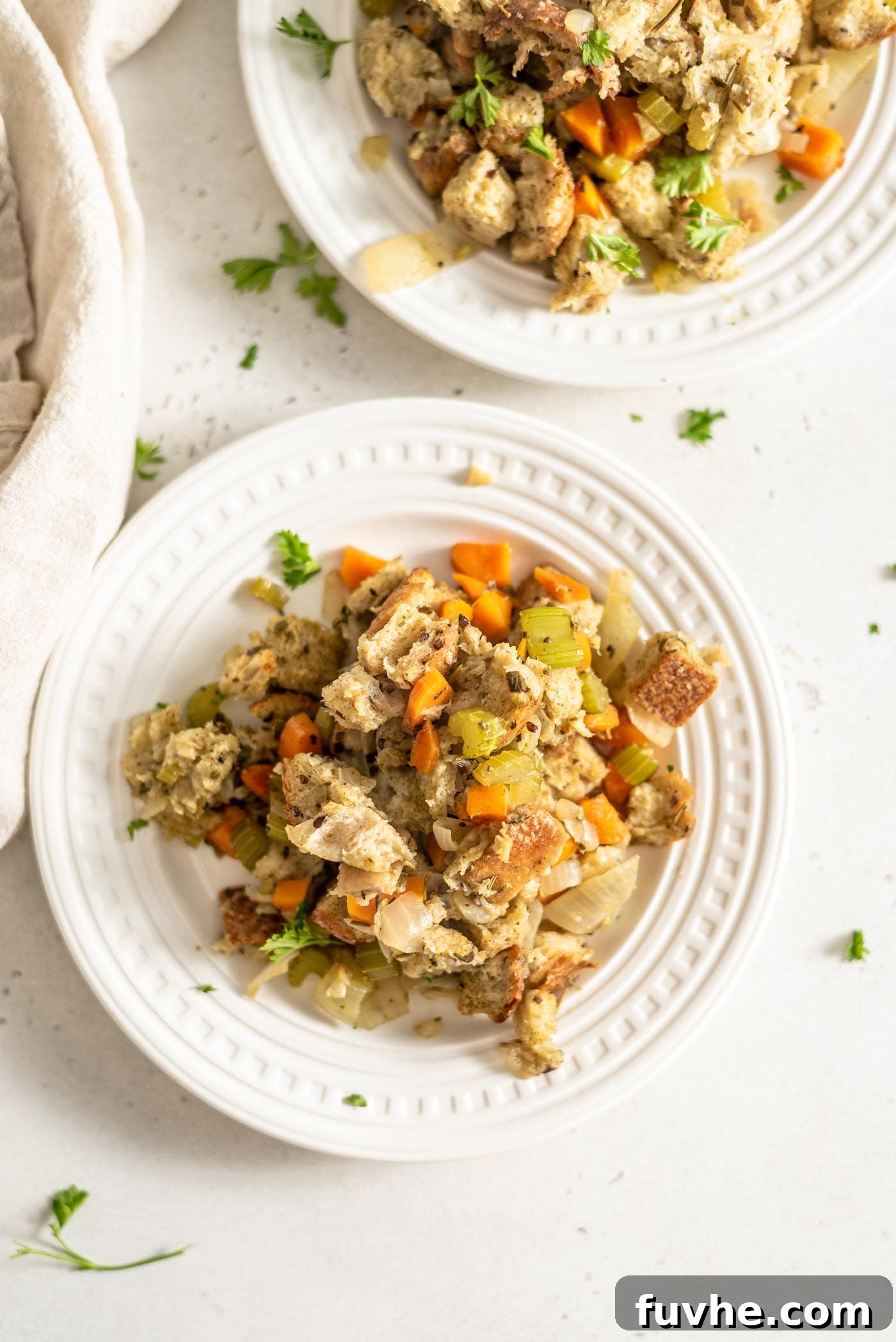
Transform your holiday table with this incredibly delicious and wholesome vegan stuffing recipe. Crafted from a simple selection of fresh ingredients, this plant-based rendition of a classic side dish is an absolute must-have for Thanksgiving, Christmas dinner, and any festive gathering. Its rich, savory flavor and delightful texture promise to satisfy even the most discerning palates, proving that healthy eating doesn’t mean sacrificing taste.
This recipe is designed for ease and efficiency, allowing you to create a heartwarming dish in under an hour. Featuring staple ingredients like fragrant onions, aromatic garlic, sweet carrots, crisp celery, and a medley of classic herbs, every bite bursts with comforting holiday flavors. Whether you’re a seasoned chef or a kitchen novice, our straightforward steps will guide you to a perfectly baked stuffing that’s moist on the inside and beautifully golden and crispy on top.
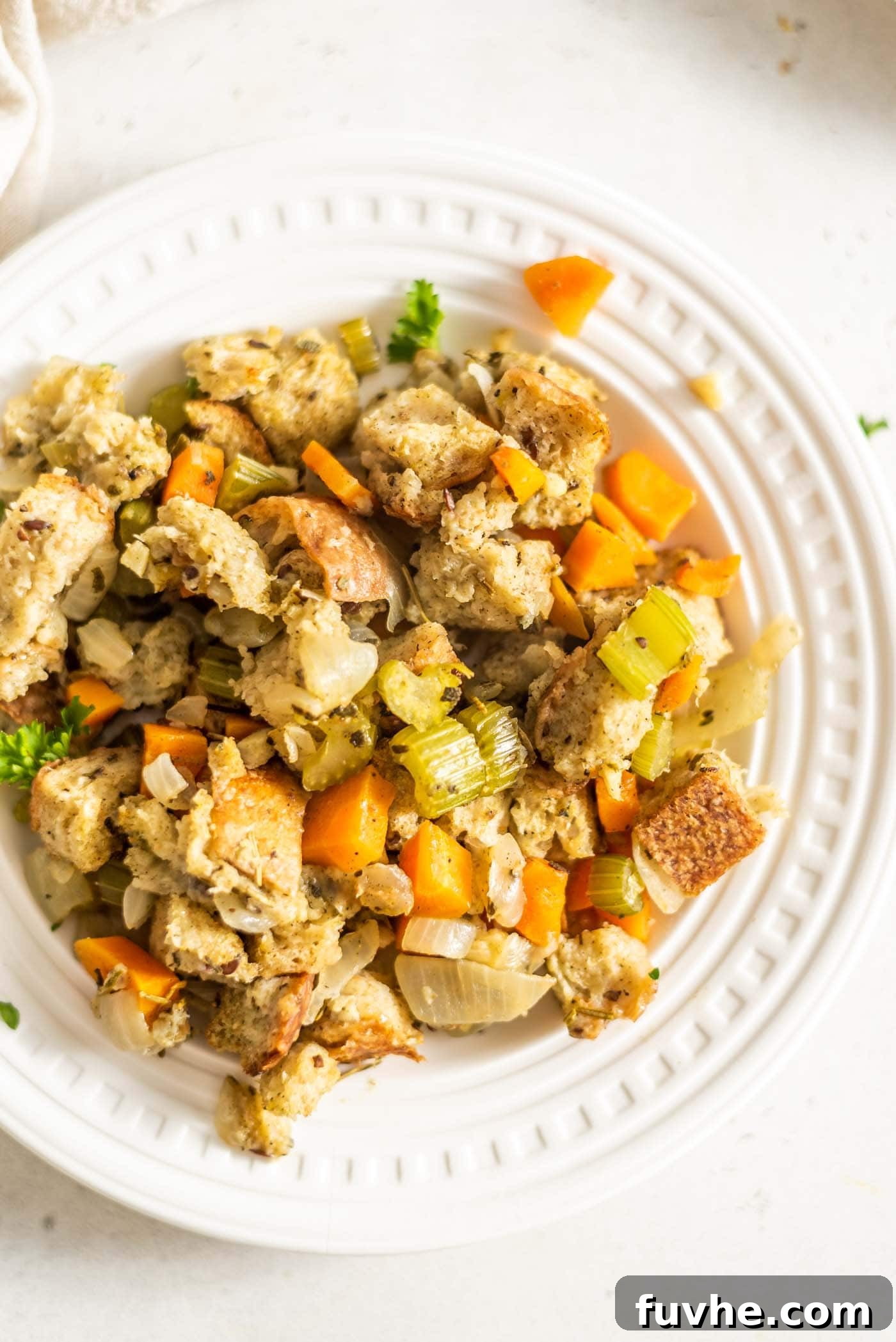
Introduction: The Ultimate Vegan Stuffing for Every Occasion
Stuffing is more than just a side dish; it’s a centerpiece of holiday tradition, evoking warmth, family, and celebration. This delightful vegan stuffing offers a fantastic alternative for those with dietary restrictions, ensuring everyone at your table can indulge in this comforting classic. Free from animal products, it’s a brilliant choice for vegans, vegetarians, and anyone looking to incorporate more plant-based meals into their diet. Plus, with a simple swap to gluten-free bread, it effortlessly accommodates gluten sensitivities, making it truly inclusive for all your guests.
Imagine a holiday spread where every dish complements the next, creating a symphony of flavors and textures. Our savory vegan stuffing pairs perfectly with an array of other plant-based delights. Serve it alongside creamy vegan mashed potatoes, rich vegan mushroom gravy, and a vibrant easy homemade cranberry sauce for a traditional feast. For main courses, it’s an excellent accompaniment to a hearty chickpea meatloaf or an elegant stuffed butternut squash. This versatile dish isn’t just for the holidays; it’s ideal anytime you crave those comforting, nostalgic flavors that define festive meals. Its robust taste and satisfying texture make it a crowd-pleaser that will disappear from the serving dish in no time.
Why You’ll Love This Healthy Vegan Stuffing
Discover the myriad reasons why this easy vegan stuffing recipe will become a cherished part of your culinary repertoire, especially during the festive season:
- Completely Plant-Based & Dietary Friendly: This recipe is 100% vegetarian and vegan, meaning it’s entirely dairy-free and egg-free. It’s a wonderful option for plant-based eaters and those avoiding animal products, without compromising on flavor or richness.
- Easily Adaptable for Gluten-Free Diets: Simply swap regular bread for your favorite gluten-free loaf, and you’ll have a delicious, safe stuffing for guests with gluten sensitivities. This flexibility ensures everyone can enjoy a taste of the holidays.
- Quick & Simple Preparation: Forget complicated, time-consuming recipes. This stuffing comes together quickly with minimal fuss, allowing you to spend less time in the kitchen and more time enjoying your celebration.
- Uses Basic, Wholesome Ingredients: You won’t need any exotic items for this recipe. It relies on everyday pantry staples and fresh vegetables, making it accessible and budget-friendly.
- Excellent Make-Ahead Potential: Prepare this stuffing a day or two in advance to significantly reduce holiday stress. Its flavors deepen over time, making it even more delicious when reheated.
- Oil-Free & Butter-Free Option: For those looking for an even lighter version, the vegetables can be sautéed in vegetable broth instead of vegan butter or oil, providing a guilt-free indulgence without sacrificing taste.
With these outstanding features, this vegan stuffing is poised to be the highlight of your next gathering, offering a healthy, inclusive, and undeniably delicious addition to any meal.
Essential Ingredients for the Perfect Vegan Stuffing
Crafting a truly memorable stuffing starts with selecting the right ingredients. Here’s a closer look at what you’ll need and some tips for choosing the best:
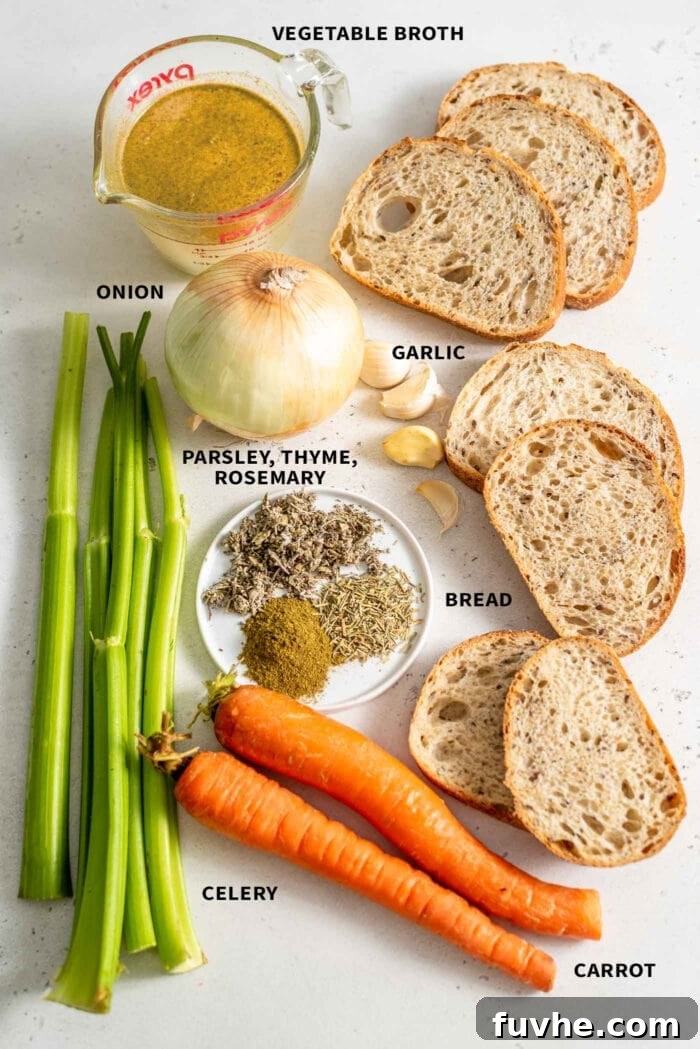
- Bread: The foundation of any great stuffing! For optimal flavor and texture, I highly recommend using a hearty, good-quality bread that can hold its shape and absorb moisture without becoming mushy. Sourdough bread or a robust multi-grain variety are excellent choices. Classic white bread like French or Italian bread also works beautifully for a lighter, more tender crumb. If you’re catering to dietary needs, any gluten-free bread can be used—just ensure it’s slightly stale or toasted to prevent sogginess. The key is to have dry, firm bread cubes.
- Cooking Liquid: This is where you can adjust the richness. For a classic, rich stuffing flavor, plant-based butter is an excellent choice. Olive oil or any neutral cooking oil also works well. For a truly oil-free stuffing, vegetable broth is your best friend for sautéing the vegetables, adding flavor without extra fat.
- Onion: Both white or yellow onions are suitable and will provide a sweet, aromatic base for your stuffing. Aim for finely diced pieces to ensure they soften and integrate seamlessly into the stuffing mixture.
- Garlic: Fresh garlic is crucial for depth of flavor. Minced or grated garlic will release its pungent, earthy notes wonderfully into the sautéed vegetables, building the savory profile of your stuffing.
- Carrot: Adding natural sweetness and a beautiful color, carrots are an essential component. You’ll need approximately 2 medium carrots, diced to about 1.5-2 cups. Don’t worry too much about exact measurements here; a little more or less won’t significantly impact the outcome.
- Celery: Celery provides a refreshing crunch and classic aromatic flavor. Roughly 2 cups of diced celery, from about 4 ribs, will add the perfect balance to the other vegetables. Like carrots, exact amounts are flexible.
- Herbs: The aromatic backbone of your stuffing! This recipe traditionally calls for a fragrant blend of sage, thyme, and rosemary. You can use either dried or fresh herbs. If using fresh, remember to chop them finely to distribute their flavors evenly. Fresh herbs will offer a brighter, more vibrant taste, while dried herbs provide a more concentrated, earthy note.
- Broth: Vegetable stock or broth is essential for moistening the bread and infusing the entire dish with savory flavor. Use your favorite brand, whether it’s homemade for extra richness or a good quality store-bought option for convenience. Choose a low-sodium variety if you prefer to control the salt content.
Remember, the quality of your ingredients directly impacts the final taste. Opt for fresh, vibrant vegetables and a good quality bread for the best results. For precise measurements and step-by-step instructions, please refer to the detailed recipe section below.
Exciting Flavour Variations to Customize Your Stuffing
While I adore the simplicity of a classic stuffing made with essential ingredients, this recipe is incredibly versatile, inviting you to personalize it with your favorite additions. Don’t be afraid to experiment and make this stuffing uniquely yours! Here are a few delightful ideas to spark your creativity:
- Sweet & Tangy Cranberries: For a burst of festive flavor and a touch of sweetness, stir in 1/2 cup of dried cranberries when you add the cubed bread to the mixing bowl. They add a lovely chewiness and a bright contrast to the savory herbs.
- Nutty Crunch: Introduce a delightful textural contrast and rich, earthy notes by mixing in 1/2 cup of chopped walnuts or pecans at the same stage as the bread. Toasting the nuts lightly beforehand can enhance their flavor even further.
- Fruity Freshness with Apple: Add a hint of sweetness and moisture by including 1 diced apple (such as Granny Smith or Honeycrisp) when you sauté the vegetables. It softens beautifully and adds a subtle fruitiness that complements the herbs.
- Earthy Mushrooms: For a deeper, umami-rich flavor, incorporate 1-2 cups of sliced mushrooms (cremini, button, or a mix). Sauté them first in a separate pan with a little oil or vegan butter for about 8-9 minutes until they are beautifully browned and their liquid has evaporated. Remove them from the pan, proceed with the recipe, and then mix the cooked mushrooms back in with the bread.
- Hearty Butternut Squash: For a sweeter, more substantial stuffing, consider following this recipe for Butternut Squash Stuffing, which integrates roasted squash for a unique twist.
- Smoky Undertones: A pinch of smoked paprika or a teaspoon of liquid smoke (used sparingly) can add a wonderful depth to the stuffing, reminiscent of traditional flavors. Add it with the herbs during the sautéing process.
- Spice it Up: For a touch of warmth and complexity, consider adding a pinch of cinnamon, nutmeg, or allspice along with your other herbs. These spices can elevate the traditional holiday flavor profile.
- Protein Boost: For a more substantial stuffing, consider adding cooked crumbled plant-based sausage or lentils. Cook them separately and mix them in with the bread and sautéed vegetables.
These variations allow you to tailor the stuffing to your personal preferences or what you have on hand, ensuring a delicious outcome every time.
Step-by-Step Guide: Crafting Your Perfect Vegan Stuffing
Follow these detailed steps to create a truly irresistible vegan stuffing that will be the star of your holiday spread. Each stage is designed to build flavor and ensure a perfect texture.
Step 1: Preparing and Drying the Bread Cubes
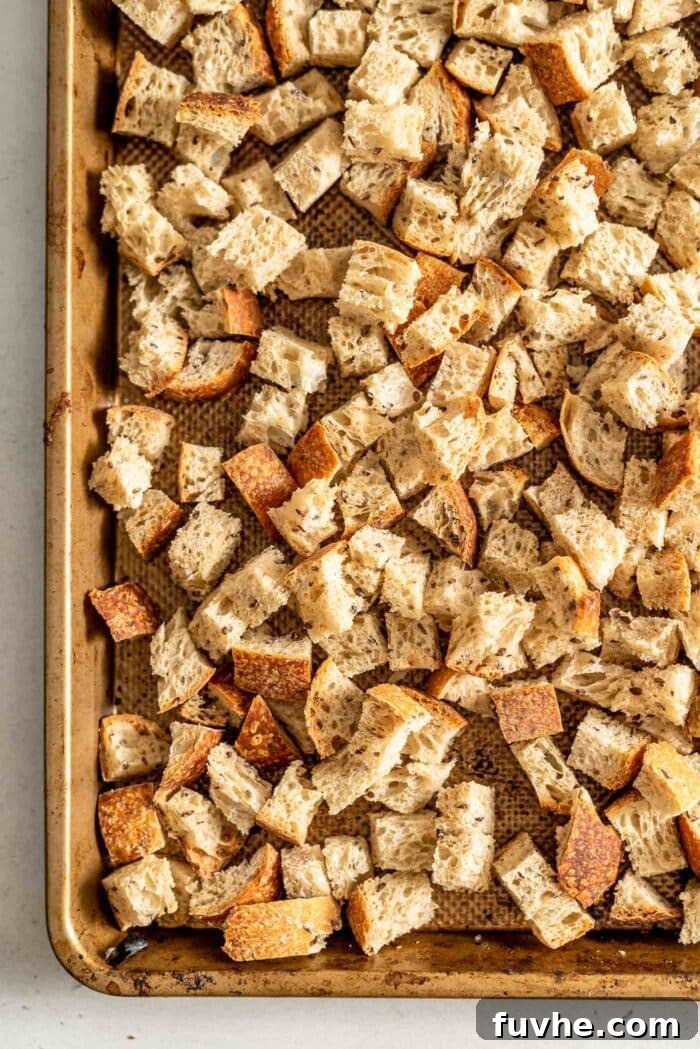
The secret to non-soggy stuffing with a superb texture lies in properly drying your bread. This prevents it from absorbing too much liquid and turning into a gummy mess. You have two excellent options for achieving this:
- Overnight Air Dry: Cube your chosen bread and spread it out in a large bowl or on a clean baking sheet. Let it sit uncovered on your kitchen counter overnight. This allows the bread to naturally stale and dry out. Alternatively, use bread that’s 1-2 days old and already a bit firm.
- Quick Oven Toasting: This is my preferred method for efficiency and consistency. Arrange the bread cubes in a single layer on one or two baking sheets. Toast them in a preheated oven (set to 350°F / 175°C) for 10-15 minutes, or until they are lightly crispy and slightly browned. You’re not looking for rock-hard croutons, but rather firm cubes with a discernible crispiness. Keep a close eye on them to prevent burning, as oven temperatures can vary.
Whichever method you choose, ensuring your bread is adequately dry is the critical first step to a perfectly textured stuffing.
Step 2: Sautéing the Aromatic Vegetables
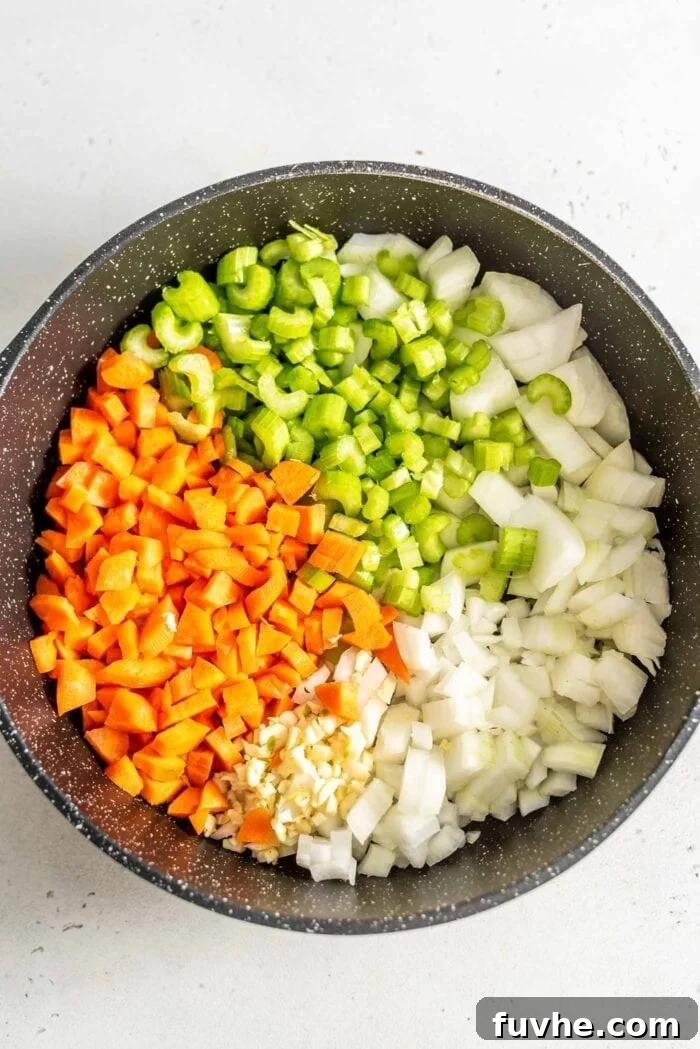
While your bread is drying or toasting, prepare the aromatic base for your stuffing. Heat 2 tablespoons of vegan butter or olive oil in a large skillet over medium heat. Once shimmering, add the finely diced carrots, onion, garlic, and celery. Season generously with a pinch of salt and black pepper.
If you’re opting for an oil-free stuffing, simply heat the pan, then add the vegetables along with 2 tablespoons of vegetable broth or water to prevent sticking. Sauté the vegetables for about 7-8 minutes, stirring occasionally, until they have softened and become wonderfully fragrant. Notice how the photo illustrates finely diced vegetables; taking the time for this step ensures a more uniform and pleasant consistency in your final stuffing.
Sautéing Options for Flavor and Health: For a classic, richer stuffing flavor, using 1-2 tablespoons of vegan butter or olive oil to sauté the vegetables is highly recommended. The butter will add a delicious depth. However, if you’re aiming for an oil-free recipe, vegetable broth works beautifully. It helps to soften the vegetables and infuse them with savory notes without any added fat. Both methods yield excellent results, so choose the one that best fits your dietary preferences.
Step 3: Infusing with Fragrant Herbs
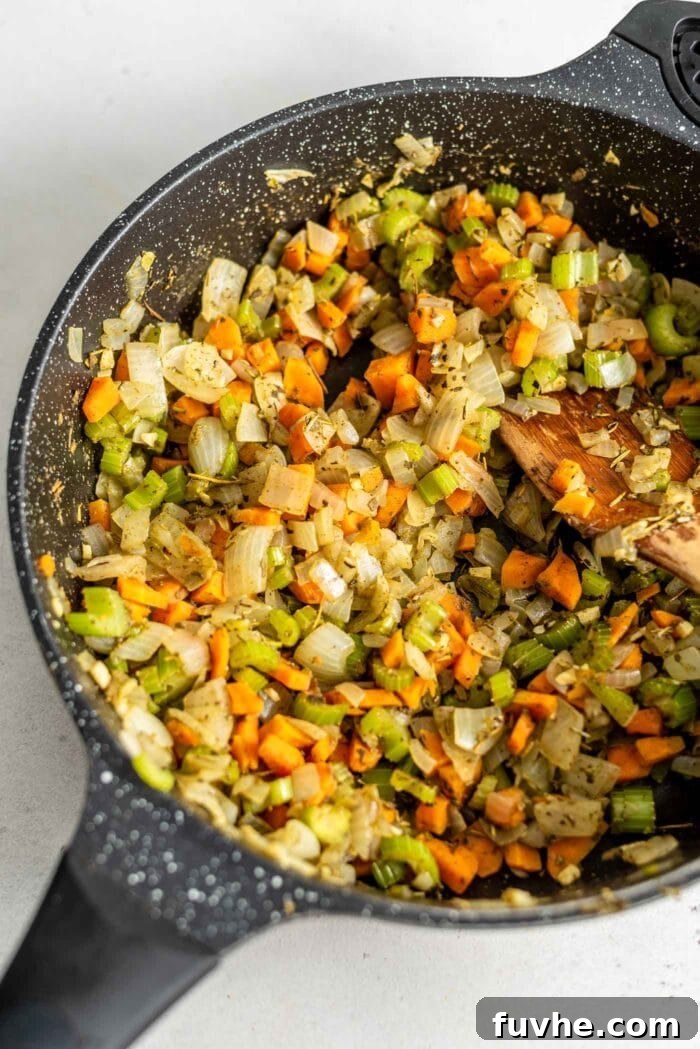
Once the vegetables are softened, it’s time to introduce the star flavors: the herbs. Stir in your dried or fresh herbs (sage, thyme, and rosemary) into the vegetable mixture. Continue to cook for another 4-5 minutes. This brief cooking period allows the herbs to release their aromatic oils and meld beautifully with the sautéed vegetables. If the pan appears to be drying out or the mixture starts to stick, add a splash of vegetable stock as needed.
A crucial tip for maximizing flavor: be sure to scrape any browned bits off the bottom of the pan when you add more stock. These “fond” bits are packed with concentrated flavor and will significantly enhance the overall taste of your stuffing. Now is also a good time to start preheating your oven to 350°F (175°C) if you haven’t already, ensuring it’s ready for baking in the final step.
Step 4: Combining and Moistening the Stuffing Mixture

In a very large mixing bowl, combine your toasted or dried bread cubes with the aromatic sautéed vegetables and herbs. This is where the magic truly comes together. Begin by adding 1 cup of vegetable broth, gently tossing the mixture to distribute the liquid evenly. The goal is to moisten all the bread without making it soggy. Depending on the type and dryness of your bread, you may need slightly more or less broth.
Continue to add more broth, a quarter cup at a time, mixing thoroughly after each addition, until all the bread cubes are moist and plump but not oversaturated. You want a consistency where the stuffing holds together when squeezed but still has distinct bread pieces. Taste the mixture at this stage and adjust the seasoning with additional salt and pepper if desired. This careful moistening process ensures a perfectly balanced texture once baked.
Step 5: Baking to Golden Perfection
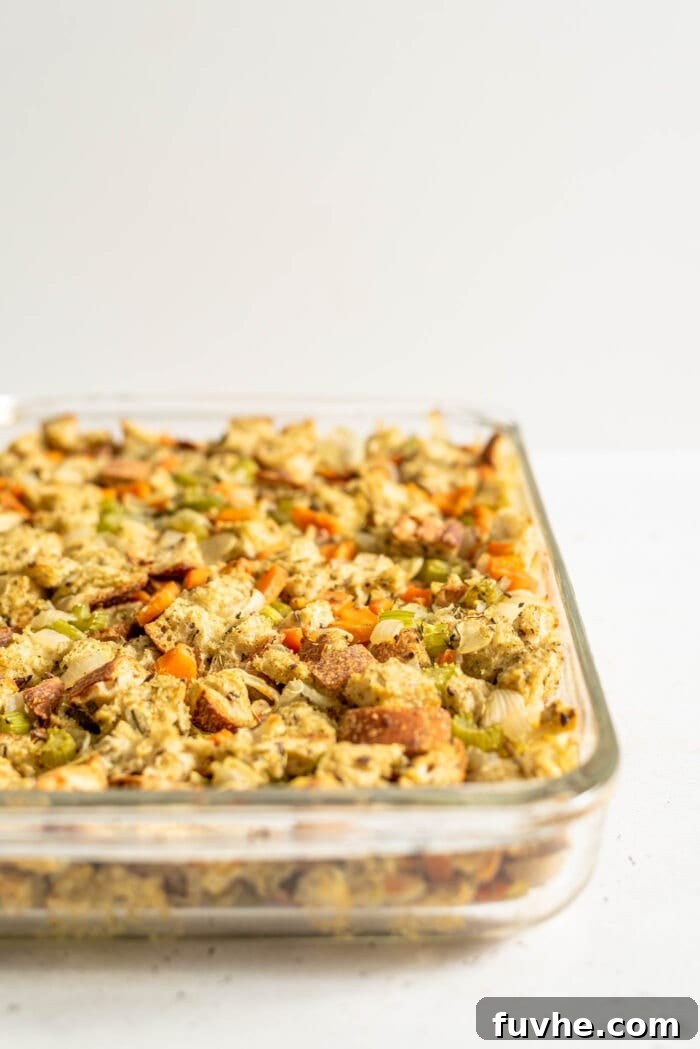
Transfer the thoroughly mixed stuffing into a large casserole dish. A shallow 12×9 inch glass dish works well, but a slightly smaller and deeper dish is also perfectly fine. Cover the dish tightly with aluminum foil. Baking it covered initially allows the stuffing to steam, ensuring a moist and tender interior.
Bake in your preheated oven at 350°F (175°C) for 35 minutes. After this time, carefully remove the foil. This is when the stuffing develops its irresistible golden-brown and crispy top layer. Continue to bake for another 10-15 minutes, or until the top is beautifully browned and the stuffing is heated through. Serve your perfectly baked vegan stuffing immediately, allowing its comforting aromas to fill your home. If preparing in advance, let it cool completely before covering and storing it in the fridge for later reheating.
Frequently Asked Questions About Vegan Stuffing
While not strictly mandatory, toasting or drying the bread is highly recommended. It’s a crucial step in preventing your stuffing from becoming soggy and mushy. Dry bread cubes absorb the broth and flavors more effectively, leading to a much better texture. You can either cube the bread and leave it out on the counter overnight to air dry, or use 1-2 day old bread that has naturally become a bit firm. However, oven-toasting offers the quickest and most consistent results for perfectly crisp-tender bread cubes.
Yes, you absolutely can make stuffing on the stovetop, though the final texture will differ. Ensure you use a large saucepan or Dutch oven that can comfortably accommodate all the ingredients. After sautéing the vegetables and herbs, add the bread cubes. Gradually add the vegetable broth, stirring continuously over low heat until you achieve your desired consistency. Stovetop stuffing typically results in a softer, more uniformly moist and mushy consistency. The baked version, in contrast, offers a lovely contrast of a soft, flavorful interior with a golden, crispy layer on top. Both methods are delicious, so choose based on your preference for texture!
For the best results, a hearty, sturdy bread works wonderfully. Sourdough, a good quality multi-grain bread, or even a robust French or Italian white bread are excellent choices. These types of bread hold their structure well when moistened and baked. If you’re making gluten-free stuffing, ensure your gluten-free bread is also a firm variety and follow the toasting/drying steps carefully.
Absolutely! Using fresh herbs will impart a brighter, more vibrant flavor to your stuffing. As a general rule, you’ll need approximately three times the amount of fresh herbs compared to dried herbs. So, if the recipe calls for 1 teaspoon of dried thyme, use about 1 tablespoon of finely chopped fresh thyme. Adjust to your taste preferences.
The key to perfect stuffing consistency lies in the bread preparation and broth addition. Ensure your bread is adequately dried or toasted before mixing; this prevents it from absorbing too much liquid. When adding broth, do so gradually, a little at a time, mixing well after each addition. You want the bread to be uniformly moist but not soaked. The stuffing should hold its shape when gently pressed but still have distinct bread cubes. If it looks dry, add a bit more broth; if it seems too wet, add a few more dry bread cubes if available, or bake it uncovered for a longer period.
Storing & Making Ahead: Tips for Convenience
Preparing for holiday meals can be hectic, which is why this vegan stuffing is a fantastic make-ahead option. Its flavors actually deepen over time, making it even more delicious the next day!
- Prepare in Advance: To save valuable time on busy holiday mornings, you can fully bake this stuffing up to 1-2 days ahead of time. Once baked and cooled, cover it tightly and refrigerate. When ready to serve, add a little extra vegetable stock over the top to re-introduce moisture, then bake at 350°F (175°C) until it’s heated through and the top is crisp again, usually about 20-30 minutes.
- Leftovers Storage: Any leftover stuffing can be easily stored. Keep it covered in its original baking dish or transfer it to an airtight container. It will stay fresh and delicious in the refrigerator for up to 5 days.
- Reheating Instructions: Reheat individual portions in the microwave for a quick option, or gently warm in a pot on the stovetop. For larger quantities, reheat in the oven at 300-325°F (150-160°C) until warmed through. If the stuffing appears a bit dry after refrigeration, simply mix in a tablespoon or two of vegetable broth or water before reheating to restore its moisture and tender texture.
These tips ensure your vegan stuffing is always at its best, whether fresh from the oven or enjoyed days later.
More Delightful Plant-Based Holiday Recipes
Complete your festive spread with these other delicious plant-based recipes that pair wonderfully with our vegan stuffing:
- Homemade Cranberry Sauce
- Healthy Vegan Mashed Potatoes
- Maple Dijon Brussels Sprouts
- Stuffed Acorn Squash
- Vegan Mushroom Gravy
- Healthy Sweet Potato Casserole
- Rosemary Lemon Roasted Potatoes
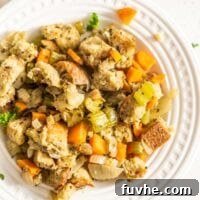
Simple & Healthy Vegan Stuffing
Ingredients
- 10 cups cubed whole-grain bread, or white or sourdough bread
- 2 tbsp vegan butter or olive oil, or water or broth for oil-free stuffing
- 1 white or yellow onion, diced, approx. 2 cups
- 3 cloves garlic, minced
- 2 medium carrots, diced, approx. 1.5 cups
- 4 ribs celery, chopped, approx. 2 cups
- salt and black pepper
- 2 tsp dried sage or 2 tbsp finely chopped fresh sage
- 1 tsp ground thyme or 1 tbsp finely chopped fresh thyme
- 1/2 tsp dried rosemary or 1 tbsp finely chopped fresh rosemary
- 1-2 cups vegetable stock
Instructions
-
Preheat Oven: Preheat the oven to 350 degrees F (175°C).
-
Toast Bread: Place the bread cubes on 1 or 2 baking trays and toast in the oven for 10-15 minutes until lightly crispy and browned. Keep a close eye on them to ensure they don’t burn.
-
Saute Vegetables: Heat the butter or oil, if using, in a large skillet over medium heat. Add the celery, onion, garlic and carrot and a generous pinch of salt and pepper. If you’re not using butter, add 2-3 tbsp of water or broth for cooking. Saute the vegetables for 7-8 minutes until softened and fragrant.
-
Add Herbs: Stir in the dried or fresh herbs and cook for a few more minutes. Add more vegetable broth if the pan starts to dry out, scraping any browned bits off the bottom of pan as you do.
-
Mix Stuffing: Add the cubed toasted bread and sautéed veggies to a large mixing bowl and add 1 cup of vegetable broth.
-
Adjust Liquid & Seasoning: Mix well then slowly start adding more broth until all the bread is moist but not soaked. I typically use about 1.5 cups broth. You may need a little more or less depending on the bread you use. Taste and add more salt and pepper, if needed.
-
Transfer to Baking Dish: Transfer the mixture to a large casserole dish. I used a shallow 12 x 9 inch glass dish. It can be a little smaller and deeper, that’s totally fine.
-
Bake Stuffing: Cover the dish with foil and bake in the oven for 35 minutes. Remove the foil and bake another 10-15 minutes until golden brown on top.
-
Serve: Serve right away or cool and store in the fridge until ready to reheat.