
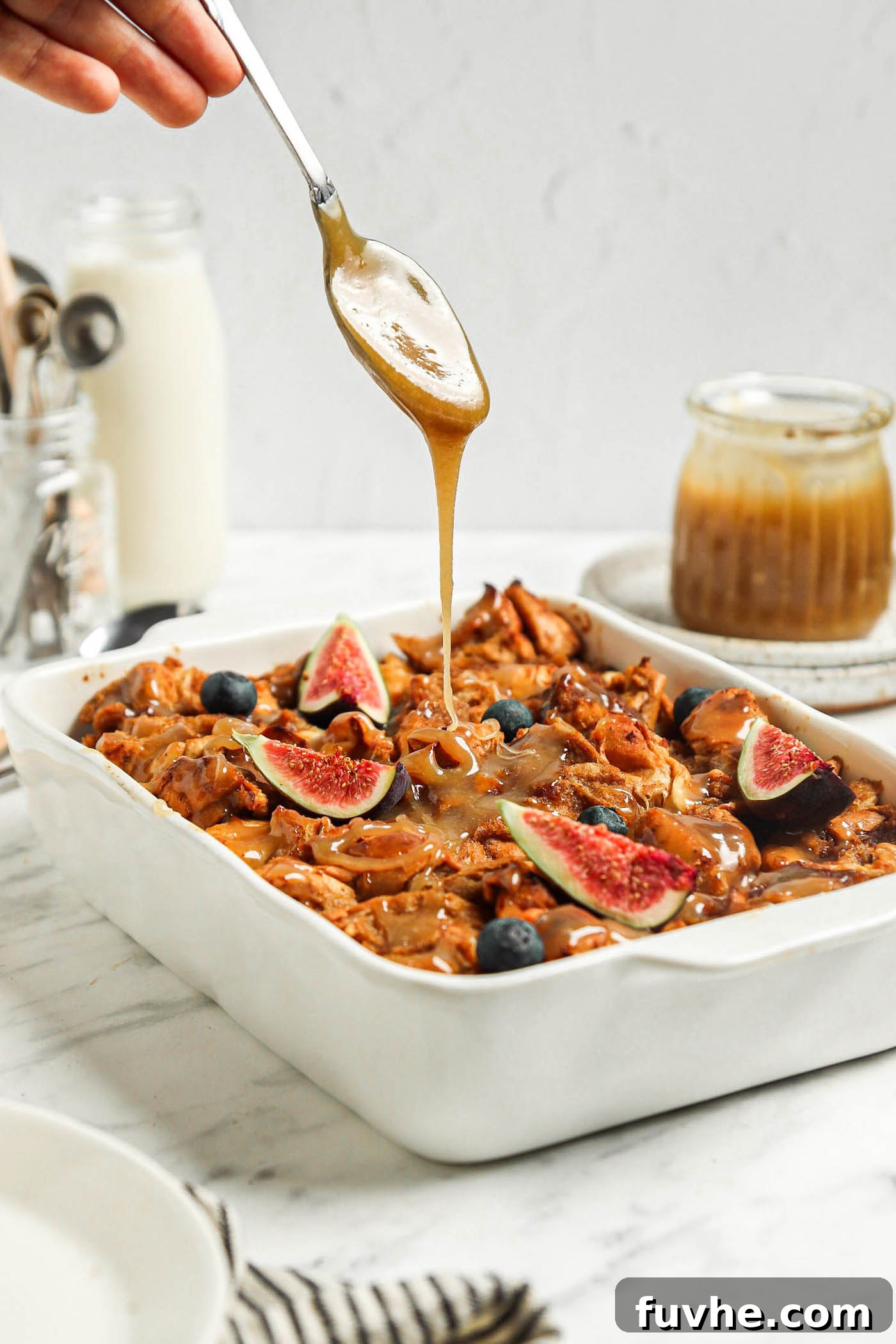
Wake up to the irresistible aroma of a truly special breakfast with this delightful vegan French toast casserole. Designed for convenience and bursting with flavor, this baked dish can be effortlessly prepared the day before, making it the perfect solution for a stress-free holiday morning or a leisurely weekend brunch. Say goodbye to the hustle and bustle of individual French toast preparation and hello to a communal, heartwarming meal that everyone will adore.
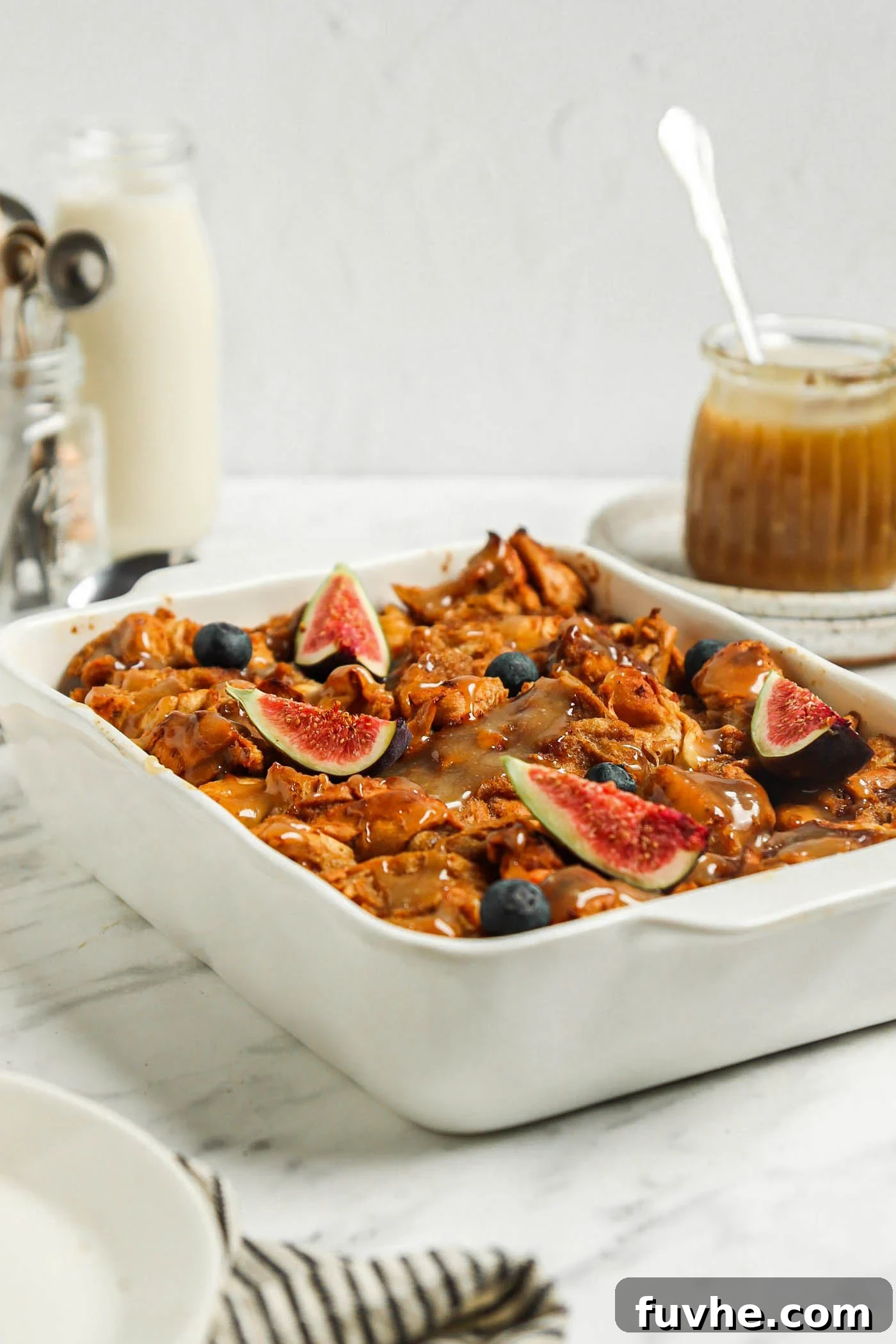
Crafted to be incredibly simple yet astonishingly delicious, this casserole offers all the comforting flavors of traditional French toast without any dairy or eggs. It’s a fantastic plant-based alternative that caters to various dietary needs, ensuring that no one misses out on a beloved breakfast classic. Whether you’re hosting guests or simply treating your family, this recipe is guaranteed to be a hit.
One of the best features of this vegan French toast casserole is its flexibility. You can bake it after a brief 30-minute resting period, or for ultimate ease, assemble it the night before and let it soak in the refrigerator overnight. Both methods yield an exquisitely tender, flavorful casserole with a beautifully golden-brown top. It’s a fantastic addition to any breakfast spread or brunch menu, promising a delectable start to your day.
If you’re a fan of classic French toast slices, be sure to explore our Coconut Vegan French Toast recipe. And for another unforgettable holiday breakfast treat, our Vegan Monkey Bread is an absolute must-try. These recipes showcase the versatility and deliciousness of plant-based cooking.
Why You’ll Love This Vegan French Toast Casserole
This vegan French toast casserole isn’t just a recipe; it’s a game-changer for your morning routine, especially during busy times or festive occasions. Here are some key features that make it truly exceptional:
- Completely Vegan & Allergy-Friendly: Made without any dairy or eggs, this recipe is perfect for those following a vegan diet or managing allergies. It can also be easily adapted to be gluten-free by using gluten-free bread.
- Ideal for Make-Ahead Preparation: The ability to prepare this casserole a day in advance and simply bake it in the morning is a huge time-saver. This feature makes it incredibly convenient for early mornings, holiday gatherings, or when you want to impress without the morning rush.
- A Family Favorite: This casserole is designed to please everyone, from picky eaters to gourmet enthusiasts. Its comforting flavors and delightful texture make it a universally loved breakfast or brunch option that brings smiles to the table.
- Perfect for Special Occasions: Elevate your holiday breakfasts or brunches with this elegant yet easy dish. It’s particularly well-suited for festive mornings like Christmas, Easter, or Mother’s Day, adding a touch of warmth and indulgence to your celebrations.
- Highly Customizable: The base recipe is fantastic on its own, but it also serves as a canvas for your creativity. Easily customize it with your favorite add-ins like fruits, nuts, or chocolate, and garnish with an array of delicious toppings.
Essential Ingredients for Your Vegan French Toast Casserole
Creating a truly magnificent vegan French toast casserole begins with understanding the role of each ingredient. While the full list with precise measurements is provided in the recipe card below, here’s a detailed look at the core components and why they are essential:
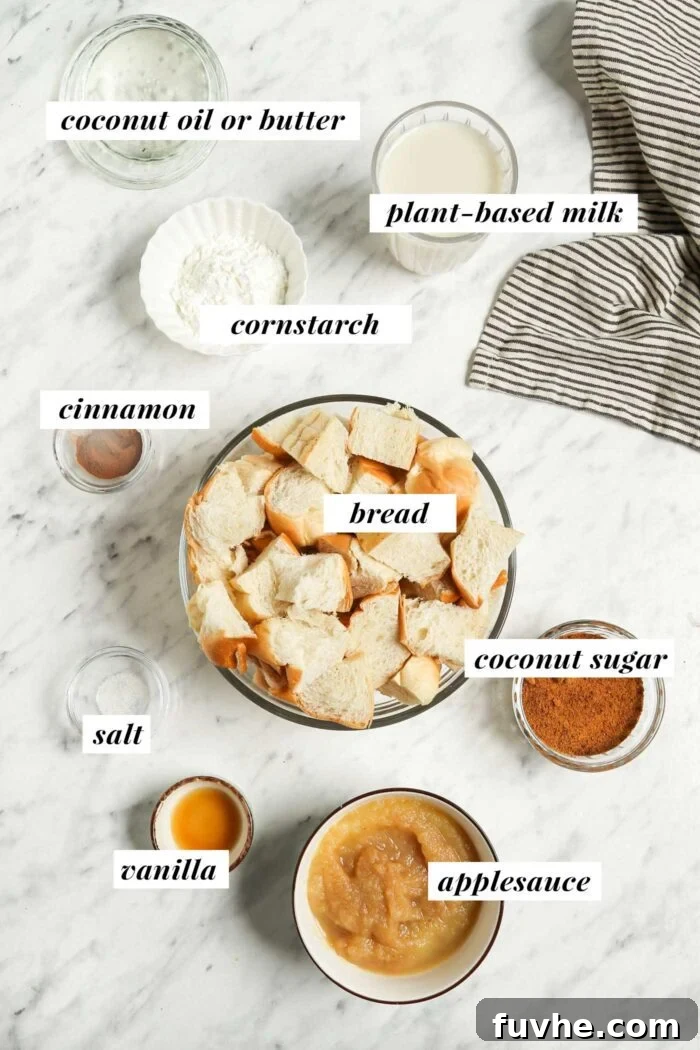
This list provides insights into the main ingredients. For a complete list with exact measurements and detailed instructions, please refer to the comprehensive recipe card at the conclusion of this article.
- Bread: The Foundation of Flavor and Texture
The type and freshness of your bread are crucial for the casserole’s success. We highly recommend using day-old, slightly stale, hearty bread varieties such as French bread, brioche (ensure it’s a vegan version), sourdough, or challah. Stale bread is key because it acts like a sponge, soaking up the custard mixture beautifully without becoming mushy. If you only have fresh bread, don’t worry! You can easily dry it out by cubing it and leaving it uncovered on a baking sheet overnight, or by briefly toasting it in the oven at a low temperature (around 200°F or 95°C) for 30-40 minutes until just dry. This prevents a soggy casserole and ensures a delightful texture. - Applesauce: The Natural Egg Replacer
Unsweetened applesauce is a star in this vegan recipe, serving as an excellent binder and moisture provider in place of eggs. Its natural sweetness also complements the overall flavor profile. Both homemade and store-bought unsweetened applesauce work perfectly, contributing to the casserole’s tender interior. - Coconut Oil or Vegan Butter: For Richness and Golden Finish
Melted coconut oil or a good quality vegan butter adds richness to the custard and helps achieve that desirable golden-brown crust during baking. Choose whichever you prefer; both contribute to a delicious flavor. Ensure your coconut oil is fully melted for easy incorporation. - Plant-Based Milk: The Custard Base
Any light-flavored plant-based milk will work wonderfully as the base for our creamy custard. Excellent choices include light coconut milk (for a hint of tropical flavor), almond milk, cashew milk, soy milk, or oat milk. Opt for unsweetened varieties to control the overall sweetness of the dish. - Coconut Sugar: A Wholesome Sweetener
Coconut sugar provides a lovely caramel-like sweetness with a slightly lower glycemic index than regular sugar. If coconut sugar isn’t available, you can easily substitute it with an equal amount of cane sugar or light brown sugar, adjusting to your taste preferences. - Cornstarch: The Thickening Agent and Egg Substitute
Cornstarch is essential for achieving the perfect custard consistency, acting as a crucial egg replacement to bind the ingredients and create a rich, creamy texture. For alternatives, arrowroot powder or tapioca starch can be used in the same quantity, providing similar thickening properties. - Flavor Enhancers: Spices and Vanilla
Cinnamon and vanilla extract are non-negotiable for that classic French toast taste. A pinch of nutmeg (optional) can add an extra layer of warm, comforting spice. A small pinch of salt balances the sweetness and brings out all the flavors. - Optional Add-ins: Unleash Your Creativity
This is where you can truly personalize your casserole! Consider adding diced apples, fresh or frozen berries (blueberries, raspberries, blackberries), plump raisins or dried cranberries, crunchy pecans or walnuts, nutrient-rich pumpkin seeds, or decadent chocolate chips. These additions not only enhance flavor but also add delightful textural contrasts.
Effortless Step-by-Step Preparation
Making this vegan French toast casserole is a straightforward process, designed for ease and enjoyment. Follow these simple steps for a perfect outcome every time:
Step 1: Prepare Your Casserole Dish and Bread
Begin by lightly greasing a 9×7-inch casserole dish. This ensures that your delicious casserole won’t stick and makes serving a breeze. Next, take your day-old bread and cut it into approximately 1-inch cubes. Uniform cubes help the bread soak evenly and bake consistently. Arrange these bread cubes in a single layer within your prepared casserole dish.
Step 2: Whisk Together the Creamy Custard Mixture
In a separate large mixing bowl, combine all the remaining ingredients for the custard: unsweetened applesauce, melted coconut oil (or vegan butter), plant-based milk, coconut sugar, cornstarch, cinnamon, optional nutmeg, vanilla extract, and a pinch of salt. Whisk everything thoroughly until the mixture is completely smooth and all ingredients are fully incorporated. There should be no lumps, especially from the cornstarch.
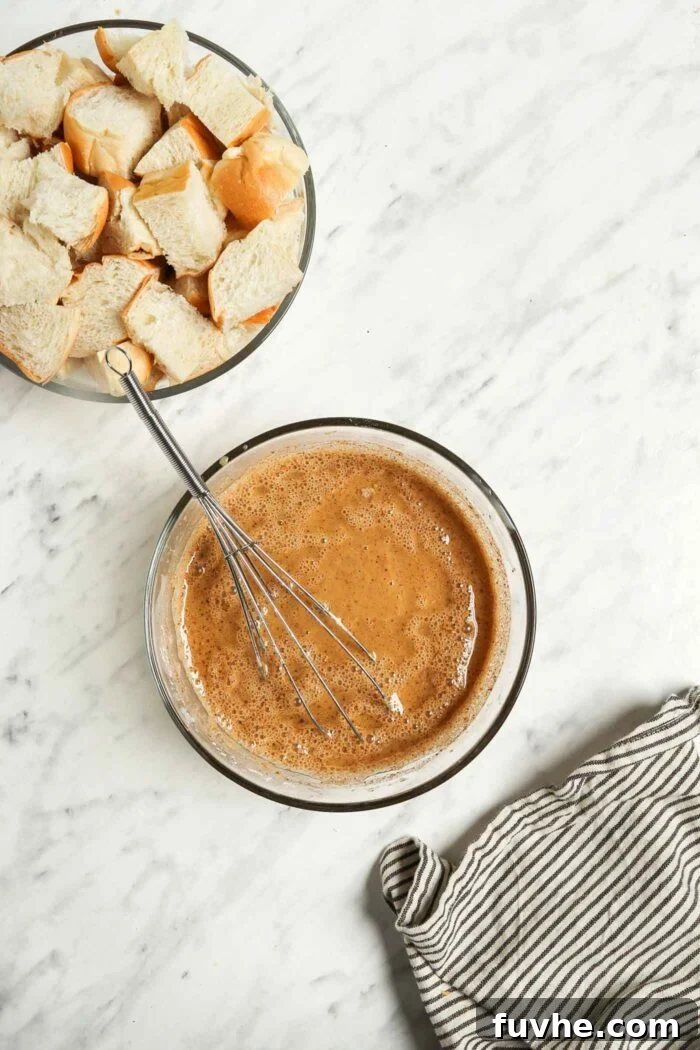
Step 3: Combine Bread and Custard for Perfect Soaking
Pour the prepared custard mixture evenly over the bread cubes in the casserole dish. This is a crucial step for ensuring every piece of bread is infused with flavor. To achieve the best coating, gently mix the bread and custard together. Many find using their clean hands to be the most effective method, as it allows you to gently press and turn the bread, ensuring every cube is thoroughly saturated with the liquid mixture. This careful mixing prevents dry spots and ensures a consistently moist and flavorful casserole.
Step 4: Allow to Soak (The Make-Ahead Magic!)
Once the bread is fully coated, cover the casserole dish tightly with plastic wrap or an airtight lid. Place it in the refrigerator for at least 30 minutes to allow the bread to absorb the custard. For the ultimate make-ahead convenience, you can refrigerate it overnight (up to 12 hours). The longer soaking time results in a deeper flavor penetration and a more tender, melt-in-your-mouth texture.
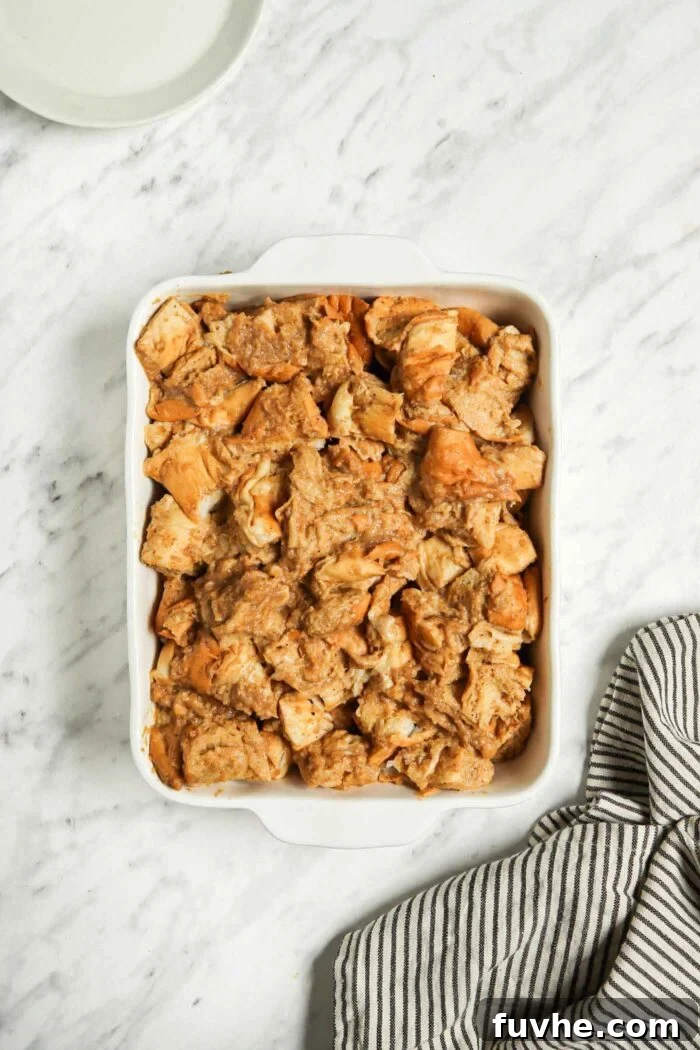
Step 5: Bake to Golden Perfection
When you’re ready to bake, remove the casserole dish from the refrigerator and discard the cover. Preheat your oven to 350°F (175°C). Once the oven reaches the desired temperature, place the uncovered casserole dish inside. Bake for approximately 35-40 minutes, or until the top is beautifully golden brown and the edges are slightly crispy. The casserole should feel set in the center.
Step 6: Cool, Slice, and Serve with Your Favorite Toppings
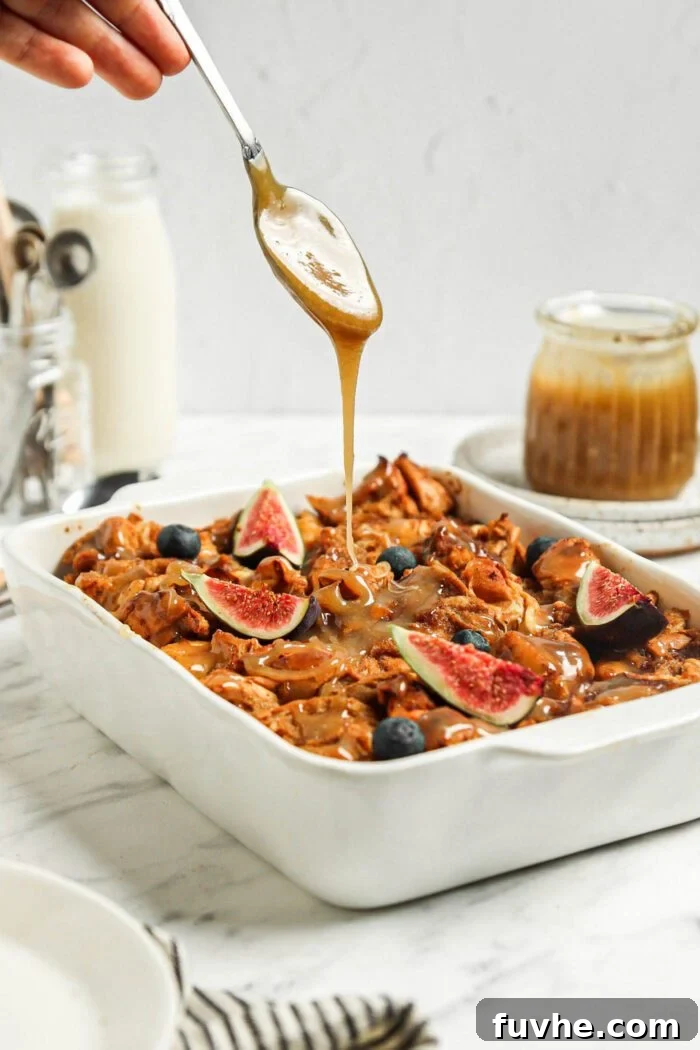
After baking, remove the casserole from the oven and let it cool for 5-10 minutes. This brief resting period allows the casserole to set further and makes for easier slicing. Once cooled slightly, slice into individual portions and serve immediately. This casserole is truly elevated with an array of delicious toppings like rich maple syrup, homemade vegan caramel sauce, a generous sprinkle of powdered sugar, fresh fruit, or a dollop of vegan whipped cream. Enjoy every delightful bite!
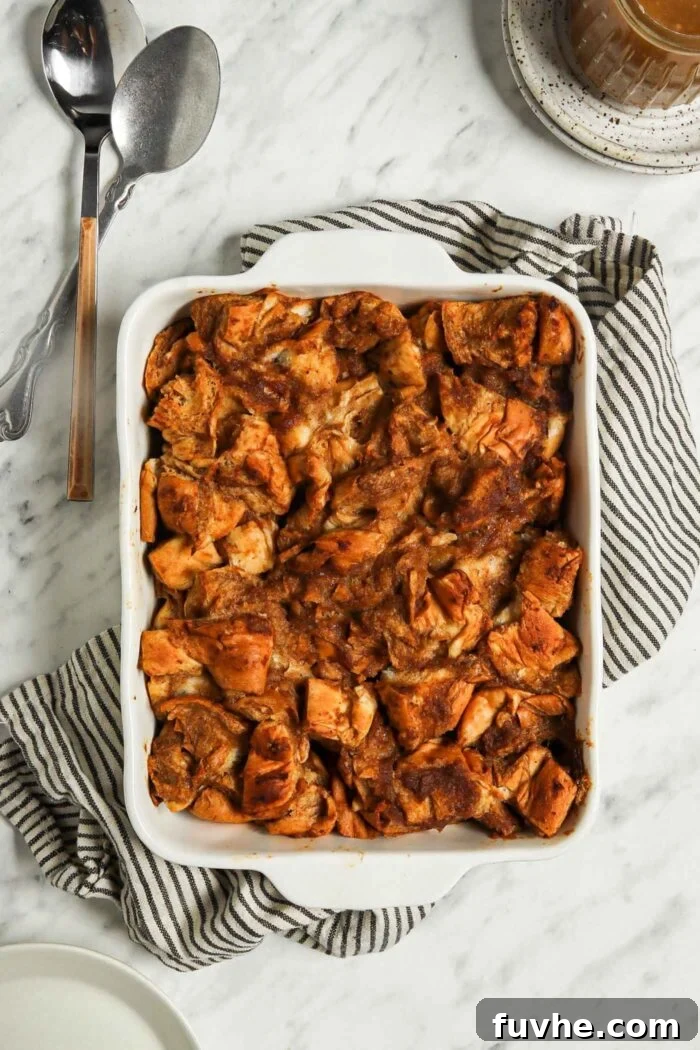
Drizzle generously with your choice of maple syrup, our luscious vegan caramel sauce, fresh fruit, or a cloud of vegan whipped cream for an unforgettable breakfast experience. Each topping adds its own unique touch, allowing you to customize every serving.
Frequently Asked Questions About Vegan French Toast Casserole
Here are answers to some common questions about making and enjoying this delicious vegan French toast casserole:
Absolutely! This baked French toast casserole freezes exceptionally well, making it ideal for meal prepping or having a quick breakfast on hand. Once baked and completely cooled, cover the casserole tightly with plastic wrap and then aluminum foil, or transfer individual portions to an airtight freezer-safe container or bag. It can be frozen for up to 3 months. When you’re ready to enjoy it, simply let it thaw in the refrigerator overnight, then reheat in the oven at 350°F (175°C) until heated through, or warm individual slices in the microwave.
The key to a non-soggy, perfectly textured casserole is using day-old, stale, and hearty bread. Excellent choices include a French loaf, sourdough, Italian loaf, or even vegan brioche or challah. The staleness allows the bread to thoroughly absorb the custard mixture without falling apart or becoming overly mushy during baking. Fresh, soft bread tends to become soggy. If you only have fresh bread, you can easily dry it out: cube the bread and spread it out in a bowl or on a baking tray to sit out overnight, or place it on a baking tray in the oven at a low temperature (around 200°F or 95°C) for 30-40 minutes until it feels dry to the touch.
Yes, absolutely! To make this vegan French toast casserole gluten-free, simply substitute the regular bread with your favorite hearty gluten-free bread. Ensure it’s a type that holds up well when soaked, like a good quality gluten-free sourdough or brioche loaf. Just like with regular bread, it’s best if the gluten-free bread is slightly stale to prevent a soggy texture.
Beyond classic maple syrup and vegan caramel, the topping possibilities are endless! Consider a dusting of powdered sugar, fresh berries (strawberries, blueberries, raspberries), sliced bananas, a sprinkle of chopped toasted nuts (pecans, walnuts, almonds), a dollop of coconut whipped cream, a fruit compote (berry, apple, or peach), a drizzle of chocolate sauce, or even a spoonful of vegan cream cheese frosting for an extra decadent touch.
The casserole is ready when the top is golden brown and appears slightly puffed, and the edges are lightly caramelized. You can also gently press the center; it should feel set and not overly wobbly. If you’re unsure, insert a knife into the center; it should come out mostly clean. The internal temperature, if checked with a thermometer, should reach around 165°F (74°C).
Storing Your Vegan French Toast Casserole
Proper storage ensures you can enjoy this delicious casserole for days to come. Here’s how to store and reheat your leftovers:
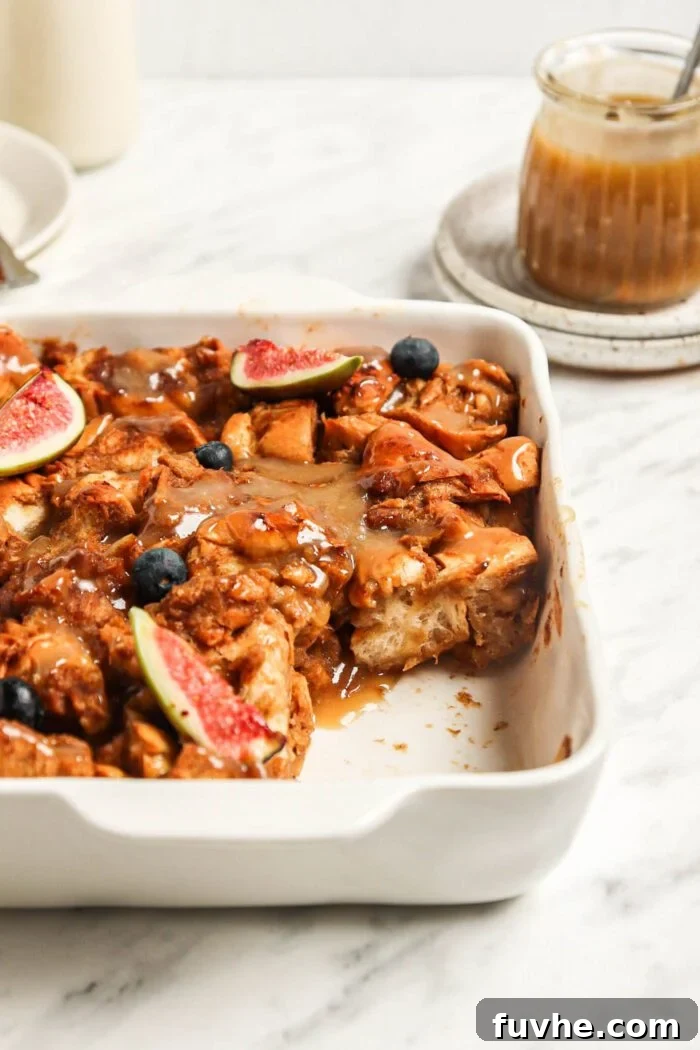
- In the Fridge: Allow the baked casserole to cool completely to room temperature. Then, either cover the casserole dish tightly with plastic wrap or transfer individual portions to an airtight container. It will keep fresh in the refrigerator for up to 3 days, making it perfect for quick breakfasts throughout the week.
- In the Freezer: For longer storage, this casserole freezes beautifully. Once completely cooled, you can wrap the entire dish well in plastic wrap and then aluminum foil, or transfer individual slices to an airtight, freezer-safe container or freezer bag. Freeze for up to 3 months. When ready to use, thaw overnight in the refrigerator before reheating.
- Reheating: To reheat the entire dish, preheat your oven to 350°F (175°C) and bake, covered with foil, for about 15-20 minutes, or until thoroughly heated. Remove the foil for the last few minutes if you desire a crispy top. For individual portions, a quick reheat in the microwave for 1-2 minutes, or until warm, works perfectly.
More Delicious Plant-Based Breakfast Recipes to Try
If you loved this vegan French toast casserole, you’re sure to enjoy these other fantastic plant-based breakfast and brunch options:
- Vegan Breakfast Casserole: A savory, egg-free, and dairy-free breakfast casserole packed with veggies and wholesome ingredients, perfect for those who prefer a savory start to their day.
- Vegan Bread Pudding: Similar in concept to French toast casserole but often richer and more gooey, this comforting dish is a delightful dessert or a decadent breakfast.
- Coconut Vegan French Toast: For the traditionalists, this recipe offers individual slices of classic French toast, made entirely vegan with a hint of coconut flavor.
- Vegan Cinnamon Rolls: You simply can’t beat the warm, sweet, and sticky indulgence of homemade cinnamon rolls for a truly special breakfast or brunch treat.
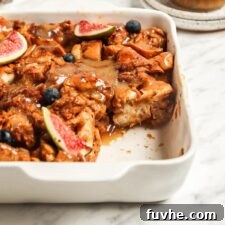
Vegan French Toast Casserole
Rate Recipe
Print Recipe
Ingredients
- 400 g day-old stale bread, cut into 1-inch cubes (brioche, french loaf or challah)
- 1 cup unsweetened applesauce, 200 g
- 2 tablespoons melted coconut oil or vegan butter, 30 g
- 1 ½ cup almond milk, 355 mL, or non-dairy milk of choice
- ⅓ cup coconut sugar, 55 g
- 3 tablespoons cornstarch, 25 g
- 1 teaspoon cinnamon
- 1/2 tsp nutmeg, optional
- 1 teaspoon vanilla extract
- pinch of salt
Instructions
-
Grease a 9 x 7-inch casserole dish and cut the bread into 1-inch cubes. Place the bread in the casserole dish.
-
Add the rest of the ingredients to a mixing bowl and mix until fully incorporated.
-
Pour the custard mixture over the top of bread cubes and mix carefully with your hands ensuring that all the pieces of bread are coated.
-
Cover with dish with saran wrap and place in the fridge for at least 1 hour up to overnight.
-
When you’re read to bake, remove the casserole from the fridge, remove the cover and preheat the oven to 350 F. Bake for 35 to 40 minutes until the top is golden brown.
-
Remove from the oven and allow to cool for 5-10 minutes, then slice and serve with homemade vegan caramel or maple syrup and fresh fruit and enjoy!
Notes
Leftovers are wonderful! They can be stored in an airtight container in the fridge for up to 3 days and reheated as needed in the oven or microwave. To freeze, let the casserole cool completely before wrapping it well in the dish or transferring to an airtight container or freezer bag. It can be stored frozen for up to 3 months. Always thaw in the fridge before reheating for best results.
Nutrition
Like this recipe? Rate and comment below!