
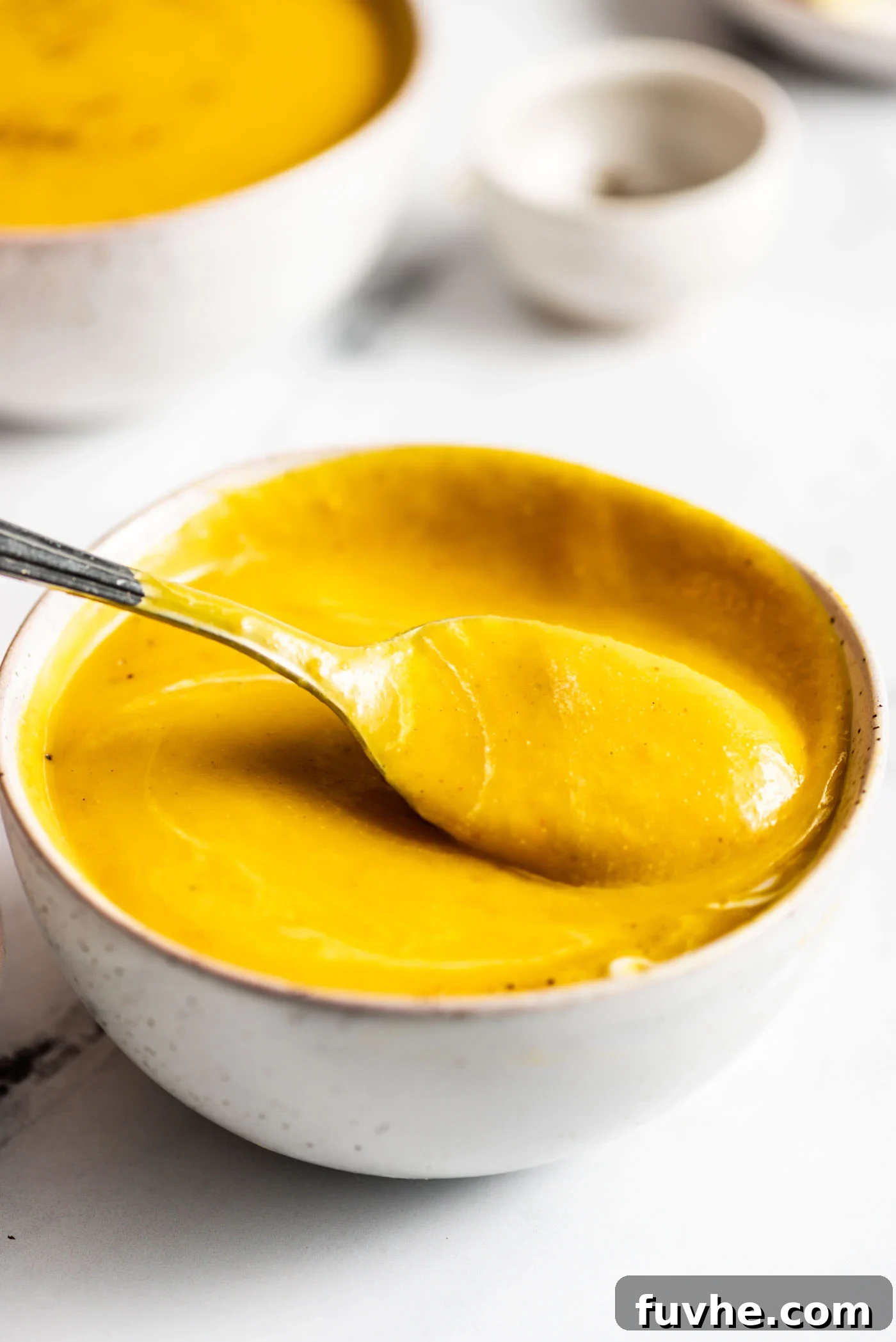
Indulge in the comforting embrace of a creamy Kabocha Squash Soup with Coconut – a culinary delight that bursts with vibrant flavors and requires just 30 minutes to prepare. This vegan, gluten-free sensation combines the inherent sweetness of kabocha squash with the richness of coconut milk and an aromatic blend of spices, creating a truly unforgettable experience for your taste buds. Perfect for a chilly evening or a wholesome lunch, this nourishing soup is not just easy to make but also packed with health benefits, offering a delicious way to enjoy wholesome ingredients.
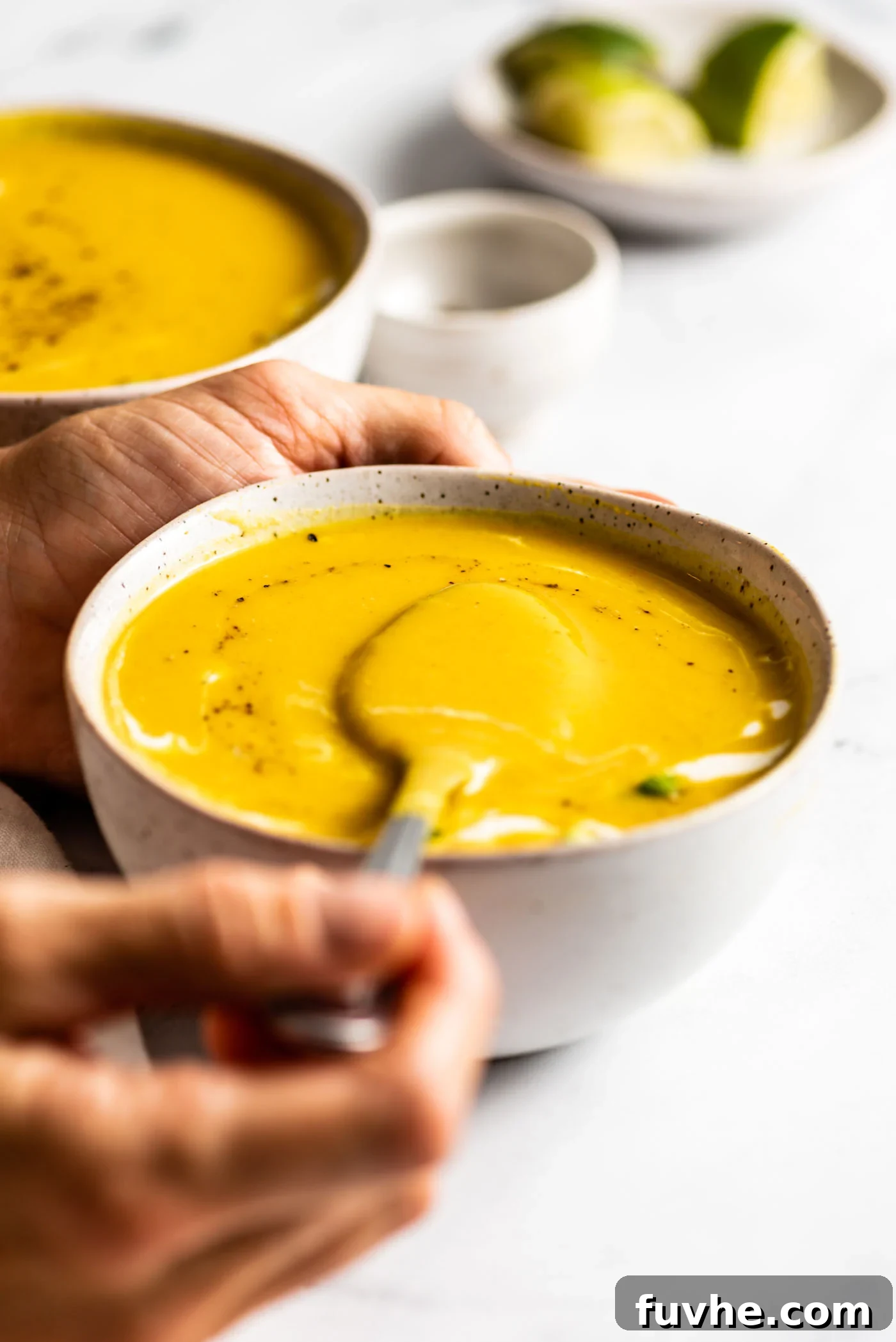
Discovering Kabocha Squash: The Japanese Pumpkin
Kabocha squash, often referred to as Japanese pumpkin or Japanese squash, is a nutritional powerhouse renowned for its sweet, earthy flavor and incredibly smooth, silky texture when cooked. Its striking bright orange flesh not only makes for a visually stunning soup but also contributes to its rich nutrient profile, including essential vitamins and minerals. Unlike many other squash varieties, kabocha has an edible skin, although it’s often removed for a smoother, brighter soup.
This versatile winter squash offers a unique sweetness that beautifully complements the savory notes of miso, the zesty kick of fresh ginger, and the pungent depth of garlic in our recipe. Its creamy consistency eliminates the need for heavy cream, making it a naturally lighter and healthier choice. Whether you’re a seasoned chef or a home cook, kabocha squash is an excellent ingredient to explore, adding depth and nutrition to any dish.
Recipe Highlights
- Completely Vegan: Made with plant-based ingredients, this soup is suitable for all vegan diets and those looking for delicious meat-free options.
- Naturally Gluten-Free: Free from gluten-containing ingredients, making it safe for individuals with gluten sensitivities or celiac disease.
- Ready in 30 Minutes: A perfect quick meal solution for busy weeknights, delivering gourmet flavor in minimal time.
- Effortless One-Pot Preparation: Simplifies cooking and cleanup, requiring only a single pot for the main preparation.
- Low in Fat & High in Fiber: A nutritious choice that supports digestive health and satiety without excess fat.
- Perfectly Seasoned: A harmonious blend of spices creates a rich, balanced flavor profile that’s both warming and invigorating.
- Simple, Accessible Ingredients: Uses common pantry staples and fresh produce, making it easy to gather everything you need.
- Luxuriously Creamy Texture: Achieves a velvety smooth consistency thanks to blended squash and coconut milk, no dairy needed.
- Ideal for Meal Prep: Stores wonderfully in the refrigerator or freezer, making it convenient for future meals.
- Freezer-Friendly: Can be frozen for up to 3 months, allowing you to enjoy this delicious soup anytime.
Beyond this incredible soup, kabocha squash shines in various recipes. You might also enjoy experimenting with its robust flavor in a hearty Kabocha Squash Curry. For those who love exploring different squash varieties, kabocha can also be an excellent substitute in recipes like this flavorful Butternut Squash Curry or a wholesome Butternut Squash Lentil Soup, offering a slightly sweeter and silkier twist.
Essential Ingredients
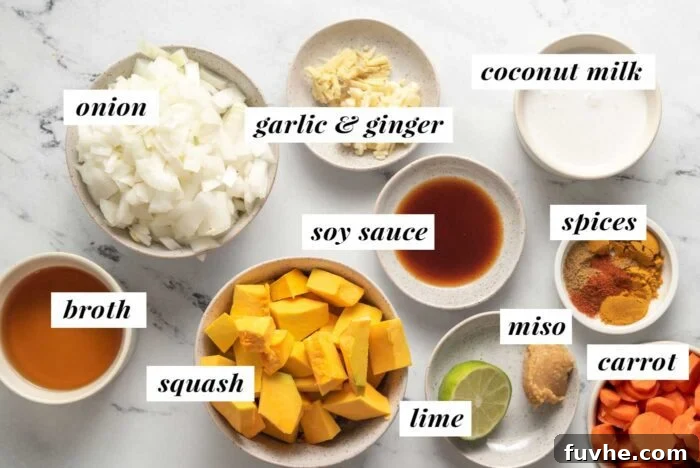
Crafting this delicious kabocha squash soup requires a thoughtful selection of fresh produce and pantry staples. Each ingredient plays a vital role in building the soup’s complex flavor and creamy texture.
- Kabocha Squash: The star of our soup! You’ll need one medium-sized kabocha squash, roughly 700g, yielding about 5 cups once cubed. Its vibrant orange flesh and sweet, nutty flavor are irreplaceable. If kabocha is unavailable, you can substitute with butternut squash, sweet potatoes, acorn squash, or even pumpkin for a similar creamy base, though the flavor profile may vary slightly.
- Vegetable Broth: This provides the foundational liquid for our soup, infusing it with savory notes. Any high-quality homemade or store-bought vegetable stock, broth, or even bouillon powder/cubes dissolved in water will work perfectly. Adjust the salt content of the soup based on your broth choice.
- Coconut Milk: The key to achieving that luxurious creaminess. Canned light or full-fat coconut milk both yield excellent results. Opt for full-fat coconut milk if you desire an extra rich, decadent soup. For a lighter version with fewer calories and less fat, light coconut milk is a fantastic alternative without compromising too much on flavor.
- Miso Paste: An optional but highly recommended addition, miso paste introduces a fantastic umami depth that elevates the soup’s complexity. Both white (shiro) or yellow (awase) miso paste work well, offering a mild, salty, and slightly sweet fermented flavor. Ensure it’s gluten-free if necessary.
- Soy Sauce: A touch of soy sauce enhances the savory profile of the soup. For a gluten-free version, be sure to swap this for tamari or coconut aminos. Coconut aminos also provide a soy-free alternative, making the soup suitable for more dietary needs.
- Aromatics: Fresh garlic, ginger, and onion form the aromatic backbone of this soup, imparting warmth and depth. Use freshly minced garlic and ginger for the best flavor.
- Carrots: Peeled and chopped carrots add natural sweetness, a beautiful color, and extra nutrients to the soup, complementing the kabocha wonderfully.
- Spices: A blend of mild curry powder, cumin, ground coriander, and a pinch of red pepper flakes (or cayenne pepper) creates the soup’s signature warming and exotic flavor profile. Adjust the red pepper flakes to your preferred level of heat.
- Lime Juice: Freshly squeezed lime juice brightens the soup, adding a necessary acidic balance to the creamy coconut and sweet squash.
- Optional Sweetener: A tablespoon of maple syrup or coconut sugar can be added at the end to further enhance the natural sweetness of the squash, especially if your squash isn’t as sweet.
Recipe Variations & Dietary Adjustments
This kabocha squash soup recipe is incredibly versatile, allowing for easy modifications to suit different tastes and dietary requirements:
- Thai Red Curry Squash Soup: To transform this into a Thai-inspired delight, omit the cumin, curry powder, coriander, and cayenne pepper. Instead, stir in 3 tablespoons of authentic Thai red curry paste with the aromatics for a vibrant and spicy kick.
- Roasted Kabocha Squash Soup: For a deeper, caramelized flavor, try roasting the squash before adding it to the soup. Simply cut the kabocha into halves or wedges, roast until tender, then peel off the skin (which becomes easier after roasting). Add the cooked, peeled squash to the pot with the broth after sautéing the aromatics. Simmer briefly, then blend and continue with the rest of the recipe as instructed.
- Oil-Free Preparation: To make this recipe completely oil-free, simply use water or vegetable broth instead of oil when sautéing the initial aromatics. This maintains flavor while reducing fat content.
- Gluten-Free Version: Ensure all ingredients are naturally gluten-free. For the soy sauce, always opt for gluten-free tamari or coconut aminos to keep the soup compliant.
- Soy-Free Alternative: To make the soup entirely soy-free, substitute soy sauce with coconut aminos. Additionally, omit the miso paste, as it is a soy-based product. The soup will still be incredibly flavorful without these additions.
Step-by-Step Cooking Guide
Follow these detailed steps to create a rich and creamy kabocha squash soup that will impress everyone:
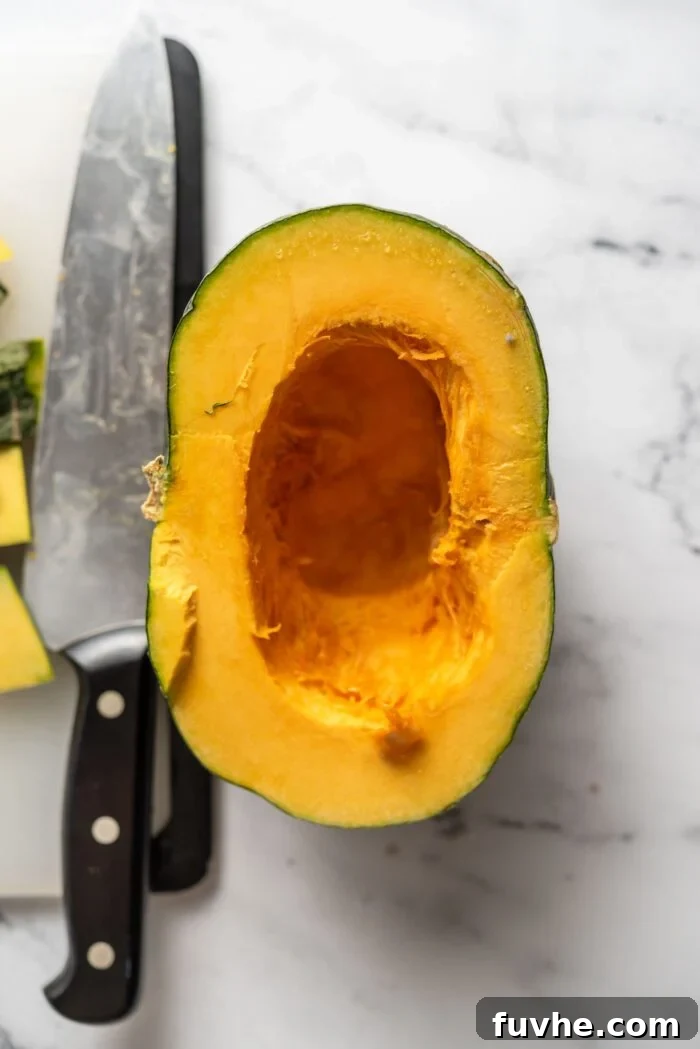
Step 1: Prepare the Kabocha Squash. Begin by carefully cutting the kabocha squash in half from the stem to the root. Using a sturdy spoon, scoop out all the seeds and fibrous pulp from each half. This ensures a smooth final soup texture.
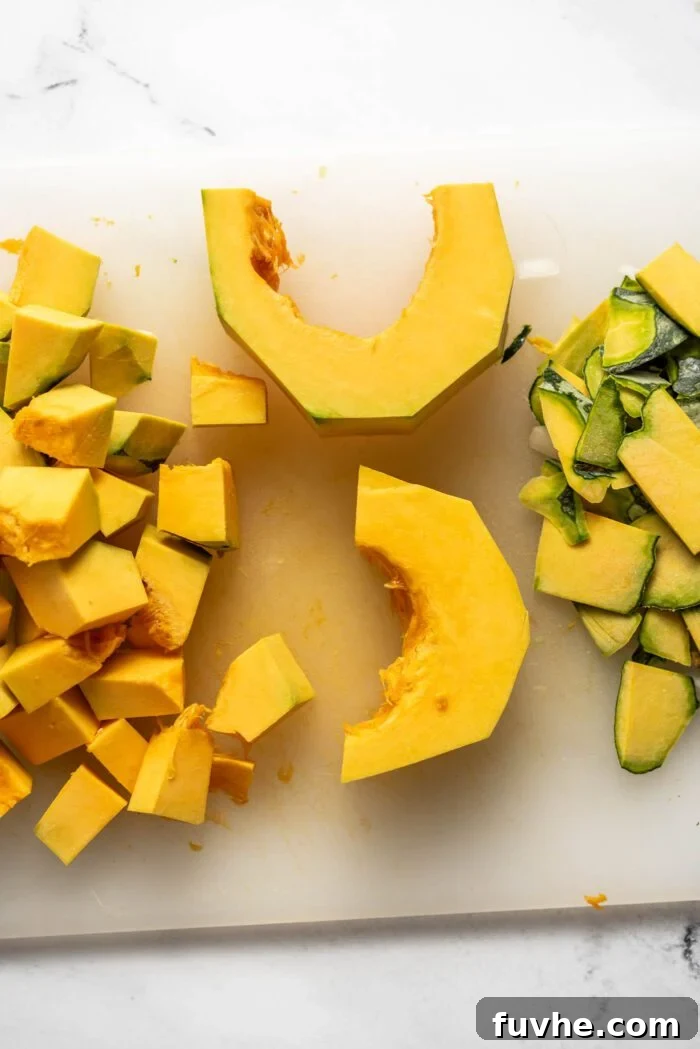
Step 2: Cube the Squash and Prepare Aromatics. Cut each squash half into two more manageable pieces, then slice each piece into wedges. Carefully remove the skin from each wedge using a sharp knife or vegetable peeler. Kabocha squash skin is edible, so don’t fret if a tiny bit remains; it will soften during cooking. Once peeled, chop the wedges into approximately 1-inch cubes. Simultaneously, prepare your carrot, mince the garlic and ginger, and dice the onion so all ingredients are ready for cooking.
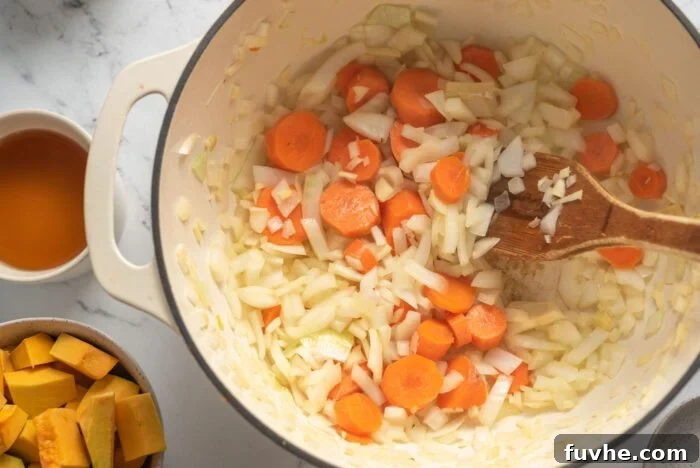
Step 3: Sauté the Aromatics. Heat your chosen cooking liquid – either 2 teaspoons of olive oil for flavor or water/broth for an oil-free option – in a large soup pot or Dutch oven over medium heat. Add the prepared carrot, onion, garlic, and ginger to the pot. Sauté these vegetables for about 4-5 minutes, stirring occasionally, until they have softened and become fragrant. This step builds the foundational flavor of your soup.
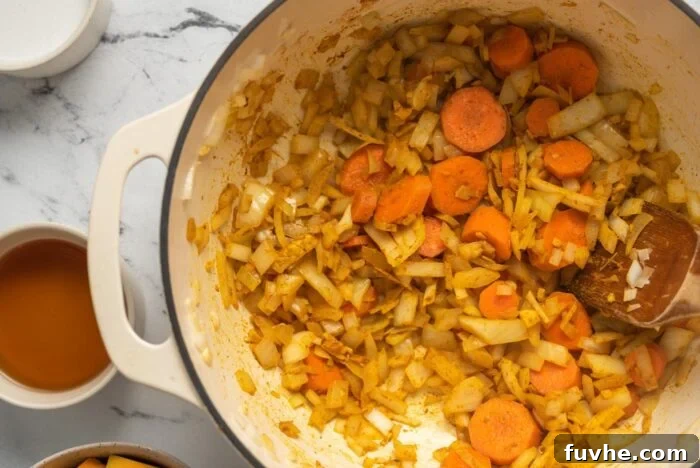
Step 4: Toast the Spices. Stir in the mild curry powder, cumin, ground coriander, red pepper flakes (or cayenne), salt, and black pepper. Cook for an additional 2-3 minutes, stirring constantly. This brief toasting of the spices in the hot oil or liquid helps to release their full aromatic potential, deeply infusing the vegetables with flavor.

Step 5: Simmer the Squash. Add the cubed kabocha squash and vegetable broth to the pot. Bring the mixture to a gentle boil, then reduce the heat to a low simmer. Allow the soup to cook uncovered for approximately 15 minutes, or until the squash flesh is perfectly tender and can be easily pierced with a fork. This ensures optimal blending consistency.

Step 6: Blend to Creaminess. Carefully transfer the hot soup mixture to a high-speed blender. Process until the soup is completely smooth and wonderfully creamy. Alternatively, for convenience, you can use an immersion blender directly in the pot. If using a regular blender, remember to remove the center cap of the blender lid (or slightly vent it) to allow steam to escape, preventing pressure buildup.

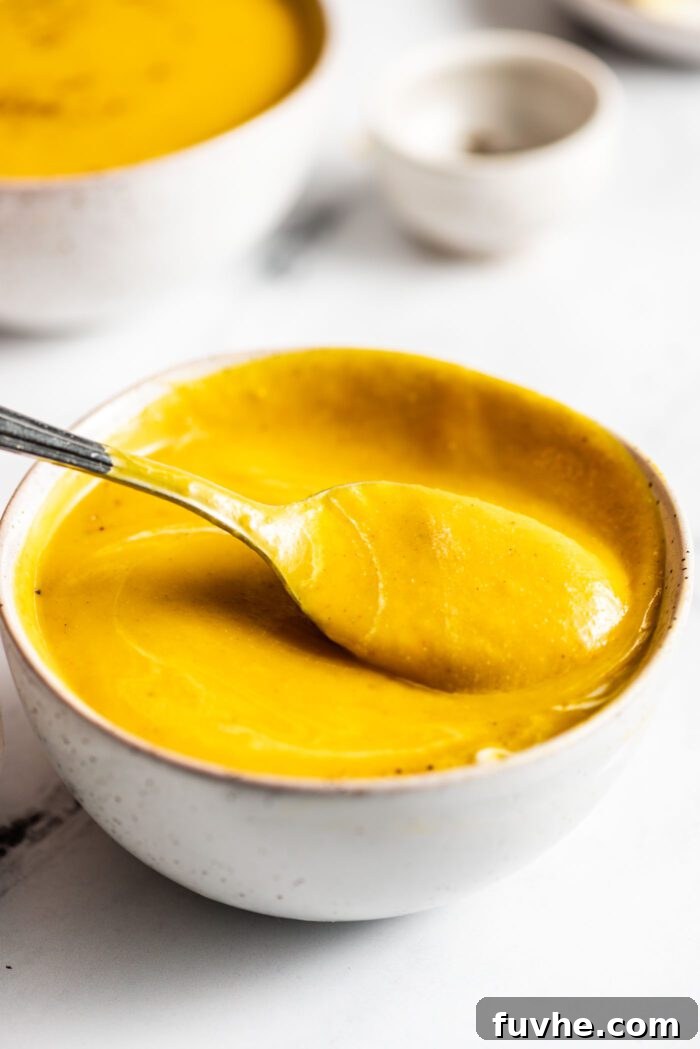
Step 7: Final Seasoning & Serve. Pour the blended soup back into the pot (if using a stand blender). Stir in the coconut milk, fresh lime juice, soy sauce (or tamari/coconut aminos), miso paste (if using), and optional sugar (maple syrup or coconut sugar). Taste and adjust seasonings as needed, adding more salt and pepper to your preference. Serve immediately, garnished with toasted pumpkin seeds, crispy roasted chickpeas, a dollop of vegan sour cream, or fresh cilantro. This soup is a delightful meal on its own or paired with your favorite accompaniments.
Frequently Asked Questions
Can you eat the skin on kabocha squash?
Yes, the dark green skin of kabocha squash is indeed edible and softens beautifully when cooked. You can choose to leave it on if you prefer, as it adds extra fiber and nutrients. However, for a soup with a smoother texture and a brighter, more vibrant orange color, we recommend removing the skin.
What can I serve with kabocha squash soup?
This creamy kabocha squash soup is surprisingly filling and satisfying on its own. However, it also pairs wonderfully with a variety of sides to make a complete meal. Consider serving it with a hearty slice of crusty bread for dipping, or complement it with one of these delicious recipes:
- Spicy Chickpea Wraps
- Curried Chickpea Quinoa Salad
- Roasted Chickpea Avocado Salad
- Sweet Potato Black Bean Burgers
- Roasted Vegetable Lentil Salad
How long does kabocha squash soup keep?
Leftover kabocha squash soup can be stored in an airtight container in the refrigerator for up to 5 days. Always allow the soup to cool completely before transferring it to storage containers to maintain freshness and safety.
Can you freeze kabocha squash soup?
Absolutely! This soup freezes exceptionally well. To freeze, first ensure the soup has cooled entirely. Then, transfer it to freezer-safe containers or heavy-duty freezer bags, leaving a little headspace for expansion. It can be stored in the freezer for up to 3 months. When ready to enjoy, thaw the soup overnight in the refrigerator, then gently reheat it in individual portions in the microwave or in a saucepan on the stovetop until thoroughly warmed through.
Slow Cooker Adaptation
For a hands-off approach to making this delicious soup, your slow cooker is a fantastic tool:
- Optional Sauté: For maximum flavor depth, you can optionally sauté the onion, ginger, garlic, and carrot in a separate pan before adding them to the slow cooker. This step enhances their aroma and sweetness.
- Combine & Cook: If skipping the sauté, simply add all ingredients up to the vegetable broth into your slow cooker. Cover and cook on high for 3-4 hours, or on low for 5-6 hours, until the kabocha squash is perfectly tender.
- Blend to Smoothness: Once cooked, carefully transfer the mixture to a blender and process until creamy, or use an immersion blender directly in the slow cooker pot for convenience.
- Final Touches: Stir in the remaining ingredients: coconut milk, lime juice, soy sauce (or tamari/aminos), miso paste, and optional sugar. Season to taste and serve warm.
Instant Pot Adaptation
Leverage the speed and efficiency of your Instant Pot for this creamy kabocha squash soup:
- Sauté Aromatics: Use the “Sauté” function on your Instant Pot. Add olive oil (or water/broth) and sauté the onion, garlic, ginger, and carrot for 3-4 minutes until softened. For an even quicker process, you can skip this step and add everything directly.
- Pressure Cook: Add the cubed kabocha squash and vegetable broth to the pot. Secure the lid and set the valve to “Sealing.” Cook on “High Pressure” for 8 minutes.
- Quick Release: Once cooking is complete, carefully move the valve to “Venting” for a quick release of pressure.
- Blend & Finish: When the valve drops, remove the lid. Proceed with blending the soup until smooth, either by carefully transferring it to a blender or using an immersion blender directly in the Instant Pot liner.
- Season & Serve: Stir in the coconut milk, lime juice, soy sauce (or tamari/aminos), miso paste, and optional sugar. Taste, adjust seasonings, and enjoy your speedily prepared, creamy soup!

Creamy Kabocha Squash Soup
By: Deryn Macey
A creamy kabocha soup with coconut and miso that’s the perfect fall recipe to warm up with on a chilly day.
Prep: 10 mins
Cook: 25 mins
Servings: 6
Rate Recipe
Print Recipe
Ingredients
- 1 tbsp of olive oil
- 4 garlic cloves, minced or crushed (16 g)
- 1 tbsp minced fresh ginger, 12 g
- 1 medium white onion, diced (300 g, approx. 2 cups)
- 2 cups peeled and chopped carrot, 300 g
- 2 tsp mild curry powder
- 1 tsp cumin
- 1 tsp ground coriander
- 1/4 tsp red pepper flakes
- 1/2 tsp salt
- 1/2 tsp black pepper
- 5 cups cubed kabocha squash, seeds and skin removed (about 1 medium kabocha squash or 700 g)
- 5 cups vegetable broth, 1250 ml
- 1 14 oz can light or full-fat coconut milk
- 2 tbsp fresh lime juice, 30 ml
- 1 tbsp soy sauce or gluten-free tamari, 15 ml
- 1 tbsp white or yellow miso paste, optional
- 1 tbsp maple syrup or coconut sugar, optional
Instructions
- Prepare Squash and Vegetables: Before you begin cooking, prepare the kabocha squash by cutting it in half from top to bottom and removing the seeds. Cut each half into two large chunks, then slice these chunks into wedges. Carefully slice the skin off each wedge and chop the wedges into uniform cubes. Remember, kabocha squash skin is edible, so a little bit left on is perfectly fine. While preparing the squash, also chop your onion, mince the garlic and ginger, and peel and chop the carrot.
- Heat Oil: In a large pot or Dutch oven, heat your choice of cooking oil (such as olive oil) or an oil-free liquid like water or vegetable broth over medium heat.
- Add Aromatics: Add the prepared garlic, ginger, onion, and carrot to the heated pot. Sauté for 4-5 minutes until the vegetables are soft and wonderfully fragrant.
- Add Spices: Stir in the curry powder, cumin, ground coriander, red pepper flakes (or chili flakes), salt, and black pepper. Continue to cook for another 2-3 minutes, stirring continuously to toast the spices and enhance their flavor.
- Add Squash and Broth: Incorporate the cubed kabocha squash and vegetable broth into the pot. Bring the mixture to a low boil, then reduce the heat and let it simmer gently, uncovered, for approximately 15 minutes. The squash should be fork-tender when ready. If you prefer a thinner consistency later, note that you can add more broth after blending.
- Blend Soup: Carefully transfer the cooked soup mixture to a high-speed blender and process until it achieves a silky smooth and creamy consistency. Alternatively, an immersion blender can be used directly in the pot. If using a conventional blender, ensure you allow steam to escape by opening the vent on the lid or removing the center cap, preventing pressure buildup.
- Add Final Seasonings: If you used a stand blender, return the perfectly blended soup to the pot. Stir in the coconut milk, fresh lime juice, soy sauce (or gluten-free tamari), miso paste (if using), and optional sugar (maple syrup or coconut sugar). Taste the soup and adjust seasonings as needed with additional salt and pepper.
- Serve: Your creamy kabocha squash soup is now ready to be enjoyed! Serve it warm with your favorite garnishes such as fresh naan bread, a sprinkle of sesame seeds, chopped fresh cilantro, toasted pumpkin seeds, or crunchy roasted chickpeas.
Notes
Alternative Seasoning: For a vibrant Thai red curry soup, simply omit the curry powder, cumin, coriander, and cayenne pepper. Instead, incorporate 3 tablespoons of rich red curry paste into the soup base when sautéing the aromatics.
Storing: Leftover soup can be stored in a sealed container in the refrigerator for up to 5 days. For longer storage, freeze the soup in a freezer-safe container for up to 4 months. To reheat, simply thaw overnight in the fridge and warm on the stovetop or in the microwave until heated through.
Nutrition facts are estimated using full-fat coconut milk. If you opt for light coconut milk instead of full-fat, the nutritional values will change to approximately 115 calories per serving, with 4g Fat, 18g Carbohydrates, and 2g Protein. These estimates do not include the two optional ingredients, which would add only a few additional calories per serving.
Nutrition
Serving: 1/6th of recipe,
Calories: 194 kcal,
Carbohydrates: 17 g,
Protein: 3 g,
Fat: 14 g,
Fiber: 3 g,
Sugar: 5 g
Like this recipe? Rate and comment below!
Originally published December 6, 2016.