
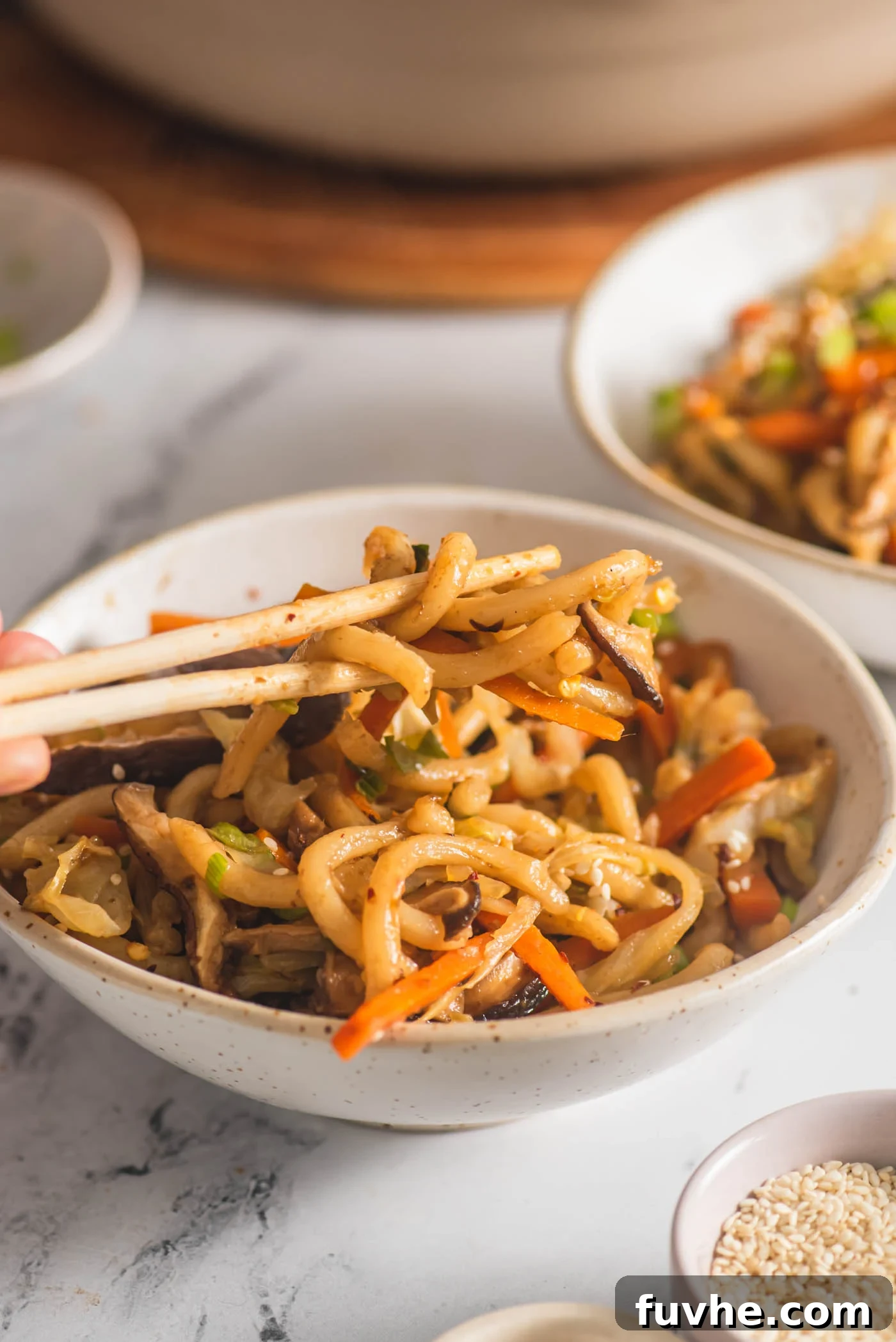
Flavorful Vegan Udon Noodle Stir Fry: A Quick and Healthy Weeknight Meal
Craving a delicious, wholesome meal that comes together in a flash? Look no further than this incredible vegan udon noodle stir fry! Inspired by the beloved Japanese yaki udon, this recipe delivers an irresistible blend of savory and slightly sweet flavors, all in just 20 minutes. It’s the perfect solution for busy weeknights when you want something satisfying, healthy, and packed with plant-based goodness.
Featuring thick, wonderfully chewy udon noodles stir-fried with a vibrant medley of fresh vegetables like crisp cabbage, tender carrots, earthy mushrooms, and bright green onions, this dish is a feast for the senses. Everything is brought together by a simple yet potent soy-based sauce that perfectly coats every strand of noodle and every piece of veggie, ensuring a burst of umami in every bite.
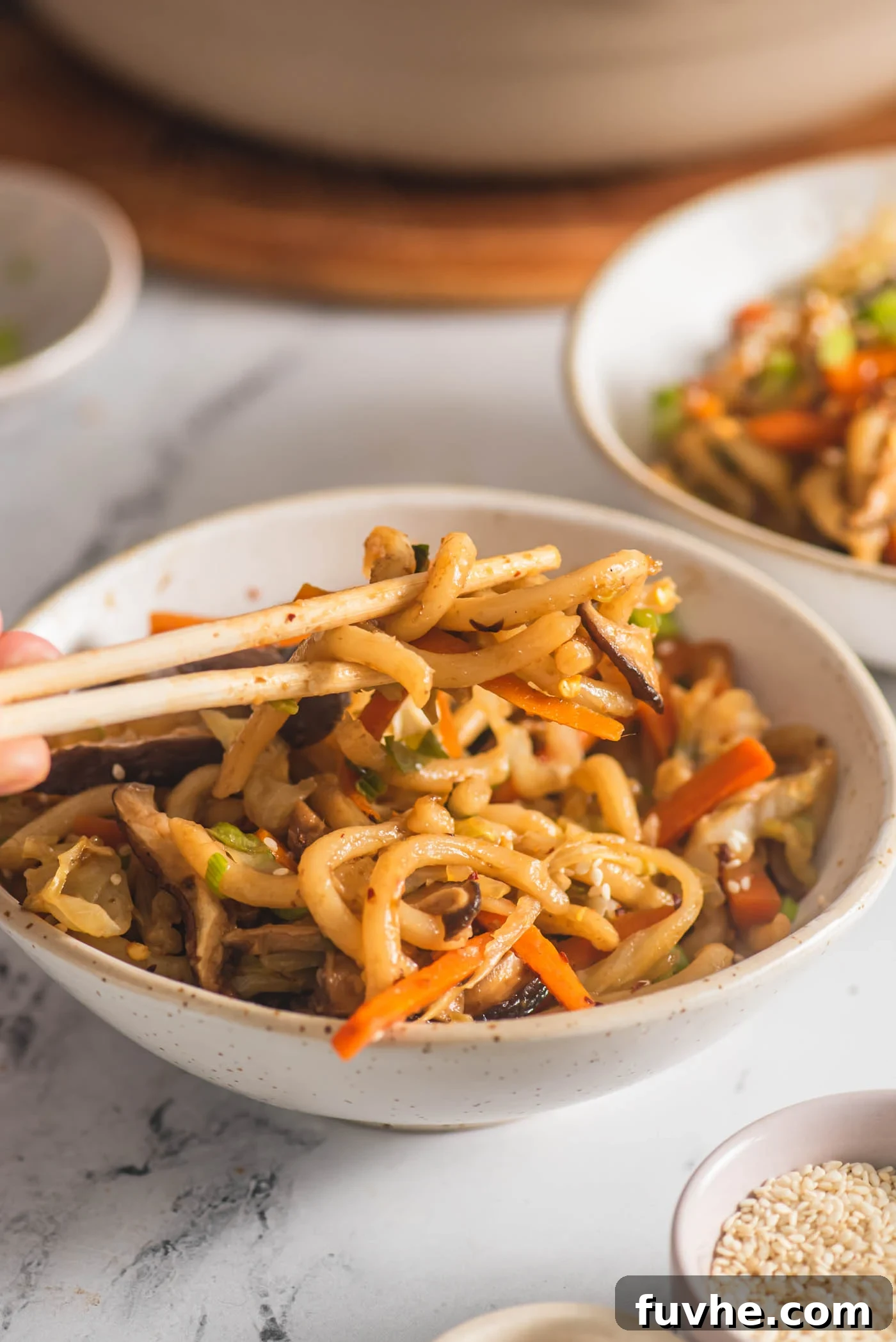
The beauty of udon noodles lies in their delightful texture – thick, bouncy, and incredibly satisfying. They are quick to cook and act like sponges, soaking up all the rich, sweet, and savory nuances of the sauce. This makes them an ideal choice for stir-fries, providing a hearty base that complements the crisp-tender vegetables.
Beyond its addictive umami flavor, this vegan udon stir fry is remarkably versatile. It’s super easy to customize with whatever vegetables you have on hand, making it excellent for cleaning out the fridge and minimizing food waste. Want to boost the protein content? Easily add your choice of plant-based protein such as pan-fried tofu, crumbled tempeh, or even edamame for an even more substantial meal.
If you’re a fan of quick and flavorful noodle dishes, be sure to explore other favorites like our Vegan Ramen Noodle Stir Fry, spicy and comforting Spicy Miso Noodles, or a refreshing Cold Soba Noodle Salad. Each of these recipes is designed to be on your table in approximately 20 minutes, proving that healthy eating doesn’t have to be time-consuming.
Recipe Highlights: Why You’ll Love This Udon Stir Fry
- Effortless & Lightning-Fast: This dish is your secret weapon for those hectic days. From start to finish, you can have this flavorful noodle stir fry on the table in about 20 minutes, making it quicker than takeout and far more nutritious.
- Wholly Plant-Based & Allergy-Friendly: Perfectly suited for a vegetarian and vegan lifestyle, this recipe is naturally dairy-free and meat-free. With simple substitutions for soy sauce (like tamari), it can also easily be made gluten-free, catering to various dietary needs.
- Infinitely Customizable with Protein: While delicious on its own, this udon stir fry welcomes your favorite protein additions. Whether you opt for crispy tofu, marinated tempeh, hearty chickpeas, or plant-based chicken strips, it’s simple to make this meal even more robust and satisfying.
- Ideal for Using Up Leftovers: A true “clean out the fridge” recipe! Its flexible nature means you can incorporate almost any leftover vegetables, reducing food waste and ensuring every meal is a unique creation. Broccoli, bell peppers, snap peas, or bok choy all make fantastic additions.
- Packed with Umami & Fresh Veggies: Prepare for a flavor explosion! This dish is loaded with rich umami notes from the sauce, complemented by a generous helping of diverse vegetables, offering essential vitamins and minerals. The star of the show, the delicious, chewy udon noodles, provide a satisfying texture that ties everything together.
Essential Ingredients for Your Vegan Udon Stir Fry
Creating an incredible stir fry begins with selecting the right ingredients. Here’s a closer look at what you’ll need and some helpful tips for each component:
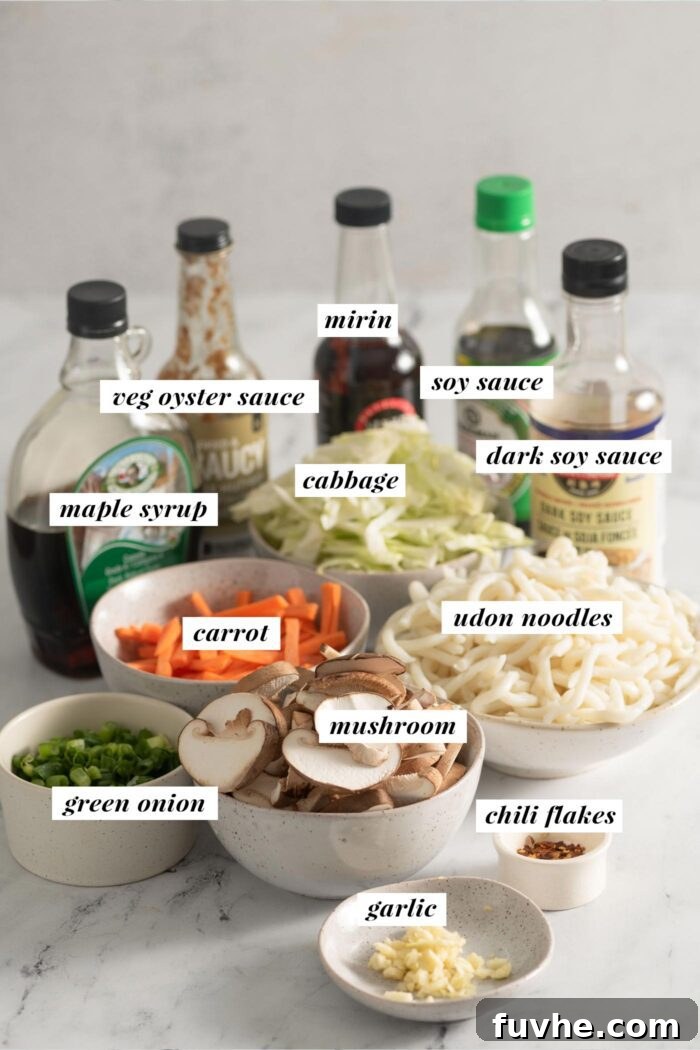
- Dark Soy Sauce: This is a game-changer for authentic stir fry color and flavor. Unlike regular soy sauce, dark soy sauce is thicker, slightly sweeter, and primarily used for its rich, dark hue and deeper flavor profile rather than just saltiness. The combination of dark and regular soy sauce creates a beautiful, appetizing color and a more complex, well-rounded taste in the final dish. If you don’t have dark soy sauce, you can create a decent substitute using 1 tablespoon of regular soy sauce mixed with 1/2 teaspoon of molasses and 1/8 teaspoon of sugar. This ingredient is also fantastic in recipes like our Vegan Drunken Noodles.
- Regular Soy Sauce: Provides the foundational savory and salty notes for the sauce. Use a good quality brand for the best flavor. For a gluten-free option, tamari works perfectly as a 1:1 substitute.
- Vegetarian Oyster Sauce: A crucial ingredient for adding that distinctive, savory umami depth characteristic of many Asian stir-fries, without any animal products. It’s typically made from mushrooms or fermented soybeans. Look for brands like Naked & Saucy, Lee Kum Kee (their vegetarian version), or Wan Ja Shan at well-stocked grocery stores or Asian markets. This ingredient also shines in our drunken noodle recipe, enhancing its rich flavor. If you are not vegan or vegetarian, traditional oyster sauce can be used.
- Mirin: A sweet Japanese rice wine that is a cornerstone of Japanese cuisine. Mirin adds a subtle sweetness, a pleasant tang, and a glossy sheen to sauces. Its unique flavor significantly enhances the overall profile of the stir fry. You can typically find mirin in the international aisle of larger grocery stores or, more reliably, at Asian markets. Stocking your pantry with mirin is a great investment for authentic Asian cooking, also featured in our delicious teriyaki chickpea bowl recipe.
- Maple Syrup: Used as a natural sweetener to balance the savory and salty notes of the soy and oyster sauces. Any variety of maple syrup (dark, amber, or light) will work beautifully. Agave syrup is a suitable alternative if you don’t have maple syrup.
- Fresh Garlic: Minced garlic provides an aromatic foundation that infuses the entire dish with warmth and depth. Freshly minced garlic offers the best flavor.
- Water: Helps to thin out the sauce slightly, ensuring it coats the noodles and vegetables evenly without becoming too thick or sticky.
- Pinch of Chili Flakes (Optional): For those who enjoy a little heat, a small pinch of chili flakes in the sauce adds a subtle warmth that complements the other flavors.
- Udon Noodles: The star of the show! Frozen udon noodles are highly recommended for their superior thick, chewy texture and convenience. They are pre-cooked and typically only require a quick soak or boil to separate. If frozen aren’t available, fresh udon noodles (found in the refrigerated section of Asian markets) are an excellent alternative. Shelf-stable packaged udon noodles can also be used, though their texture may be slightly less springy.
- Carrot: Adds a pop of color, natural sweetness, and a lovely crunch. For stir-fries, slicing carrots into matchsticks ensures they cook quickly and evenly, becoming tender-crisp. If carrots aren’t on hand, feel free to substitute with other crunchy vegetables like broccoli florets, snow peas, baby corn, or snap peas.
- Green Cabbage: Provides a mild, slightly sweet flavor and a satisfying texture when stir-fried. Green cabbage is preferred for this recipe. If you don’t have cabbage, bok choy or additional broccoli florets make good substitutes. Its hearty nature holds up well to the stir-frying process.
- Mushroom: Earthy and umami-rich, mushrooms are fantastic in this stir fry. Shiitake mushrooms are recommended for their distinctive flavor and texture, but white button or crimini mushrooms (baby bellas) also work well. If you’re not a mushroom fan or don’t have any, they can be easily omitted or swapped for another vegetable.
- Green Onions (Scallions): Used both in the stir fry for a mild oniony flavor and as a fresh, vibrant garnish. They add a fresh bite and color.
- Neutral Oil: A high smoke point oil like avocado oil, grapeseed oil, or canola oil is ideal for stir-frying. Olive oil is generally not recommended due to its lower smoke point.
- Sesame Seeds (for topping): Toasted sesame seeds add a delicate nutty flavor and a beautiful visual appeal as a garnish.
- Chili Flakes or Sriracha (for topping): For an extra kick of heat, sprinkle with additional chili flakes or drizzle with Sriracha sauce just before serving.
This list is designed to guide you. For precise measurements and detailed step-by-step instructions, please refer to the comprehensive recipe card section below.
How to Make This Delicious Vegan Udon Stir Fry
Making this Yaki Udon is straightforward and fast. Follow these detailed steps for a perfect stir fry every time:
Step 1: Prepare the Udon Noodles. If you’re using frozen or pre-cooked packaged udon noodles, the first step is to prepare them. Place them in a bowl and cover with hot (but not boiling) water for approximately 1 to 2 minutes. Use a pair of chopsticks or a fork to gently separate the noodle strands, being careful not to break them. Once separated and pliable, immediately drain the noodles and rinse them thoroughly under cold water. This crucial step removes excess starch, which prevents the noodles from sticking together and ensures they have that perfect chewy texture. Set them aside until you’re ready to add them to the wok.
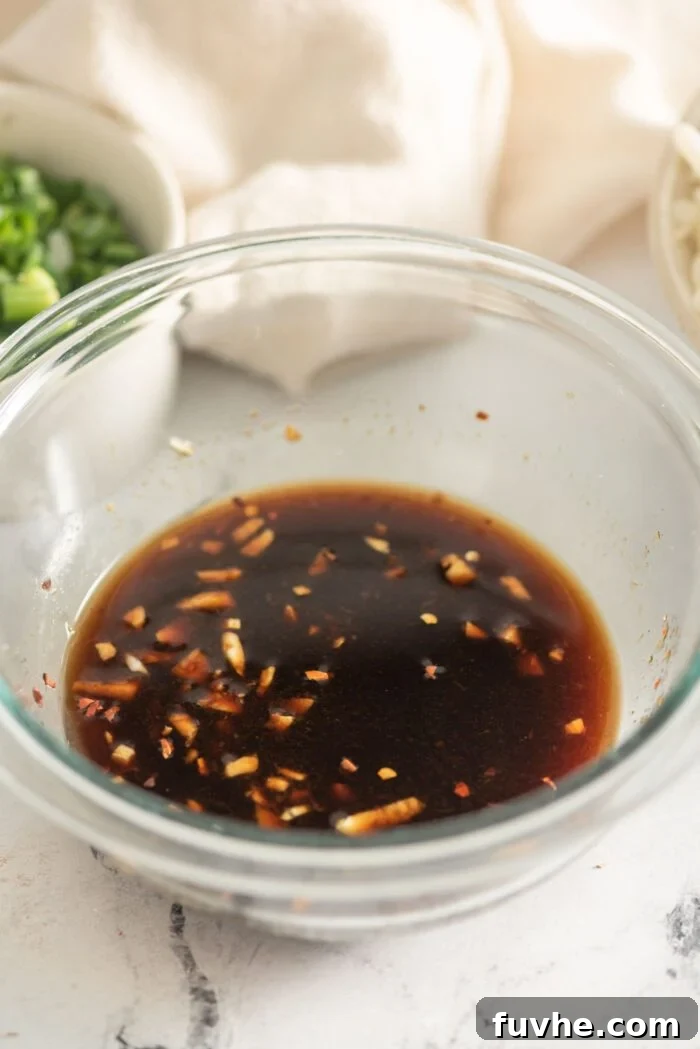
Step 2: Whisk Together the Flavorful Sauce. In a small bowl or measuring cup, combine all the sauce ingredients: dark soy sauce, regular soy sauce, vegetarian oyster sauce, mirin, maple syrup, minced garlic, water, and an optional pinch of chili flakes. Whisk everything vigorously until all ingredients are well combined and the maple syrup has dissolved completely. This ensures an even distribution of flavors throughout your stir fry. Set the sauce aside; having it ready before you start cooking is key to a smooth stir-fry process.
Quick Tip: Accurate measurement of your sauce ingredients is vital! Avoid eyeballing, as getting the right balance of sweet, savory, and tangy flavors is what makes this stir fry truly exceptional.
Step 3: Stir Fry the Vegetables. Heat 1 tablespoon of your chosen neutral oil (like avocado or grapeseed) in a large wok or a heavy-bottomed frying pan over medium-high heat. Ensure the pan is hot before adding the vegetables, which is essential for achieving a good sear and preventing them from steaming. Once the oil is shimmering, add the matchstick carrots, thinly sliced green cabbage, and sliced mushrooms. Stir fry continuously for 5-6 minutes, tossing regularly, until the vegetables are just tender-crisp. You want them cooked through but still retaining a slight bite.
Step 4: Combine Noodles and Sauce. Once your vegetables have reached the desired tenderness, add the sliced green onions (reserving some for garnish), the prepared udon noodles, and the whisked sauce to the wok. Cook for an additional 1-2 minutes, using tongs to toss everything together vigorously. Ensure the noodles and vegetables are thoroughly coated in the rich, glossy sauce. Work quickly to prevent overcooking the noodles.
Quick Tip: For an extra layer of texture and flavor, after tossing everything together, spread the noodles and vegetables in an even layer in the pan. Let it sit for 1-2 minutes without stirring. This allows the noodles to crisp and brown slightly on the bottom, adding a delightful crunch to your Yaki Udon!
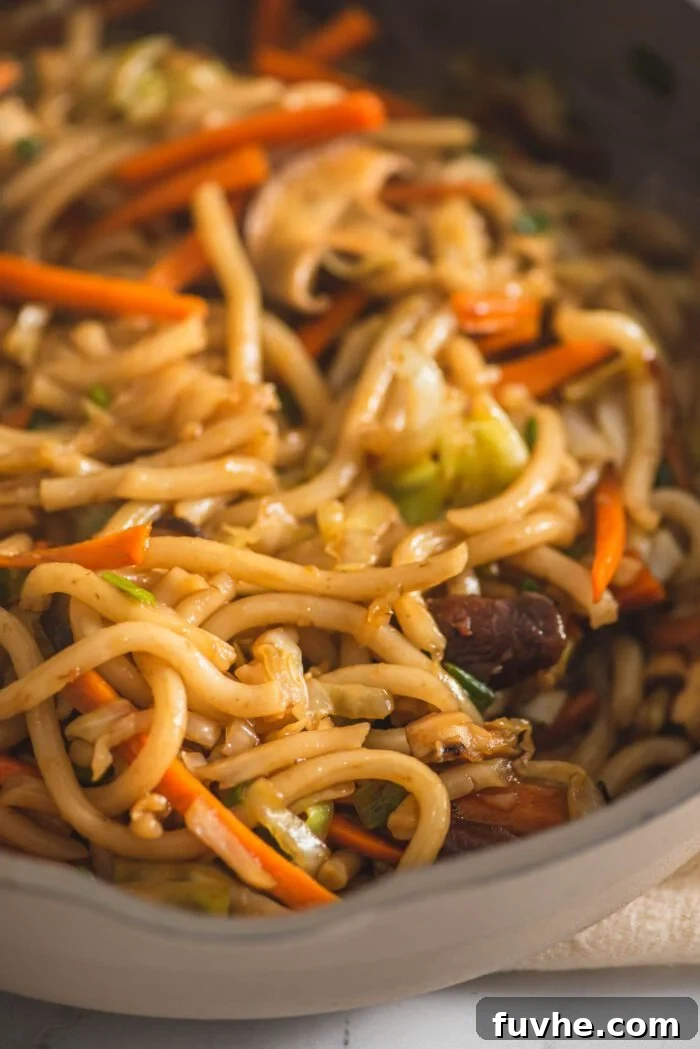
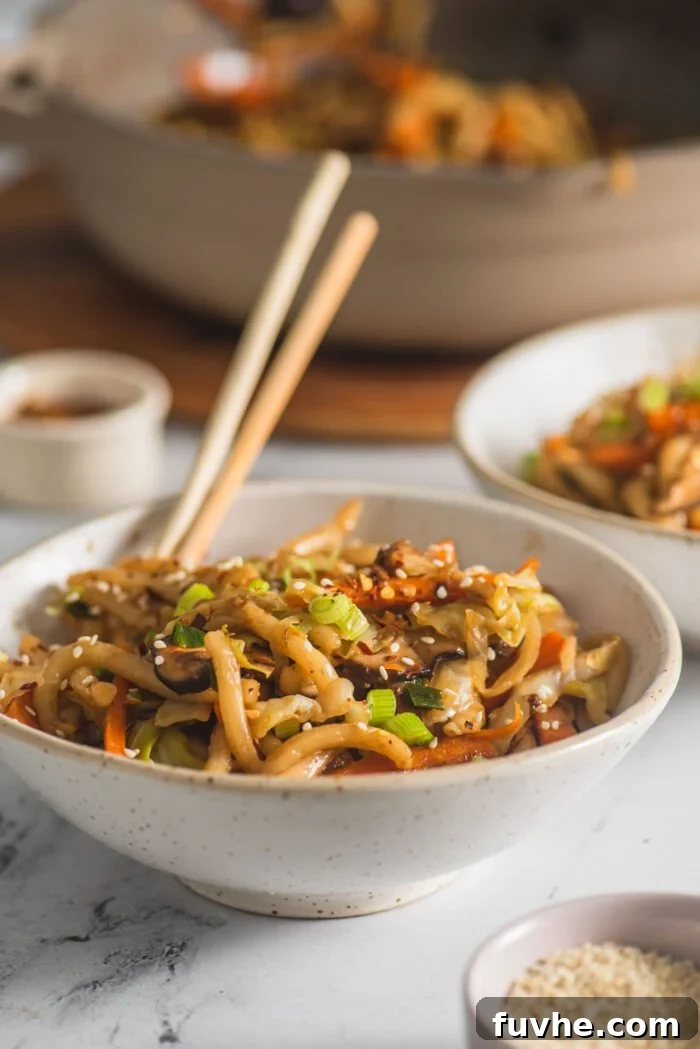
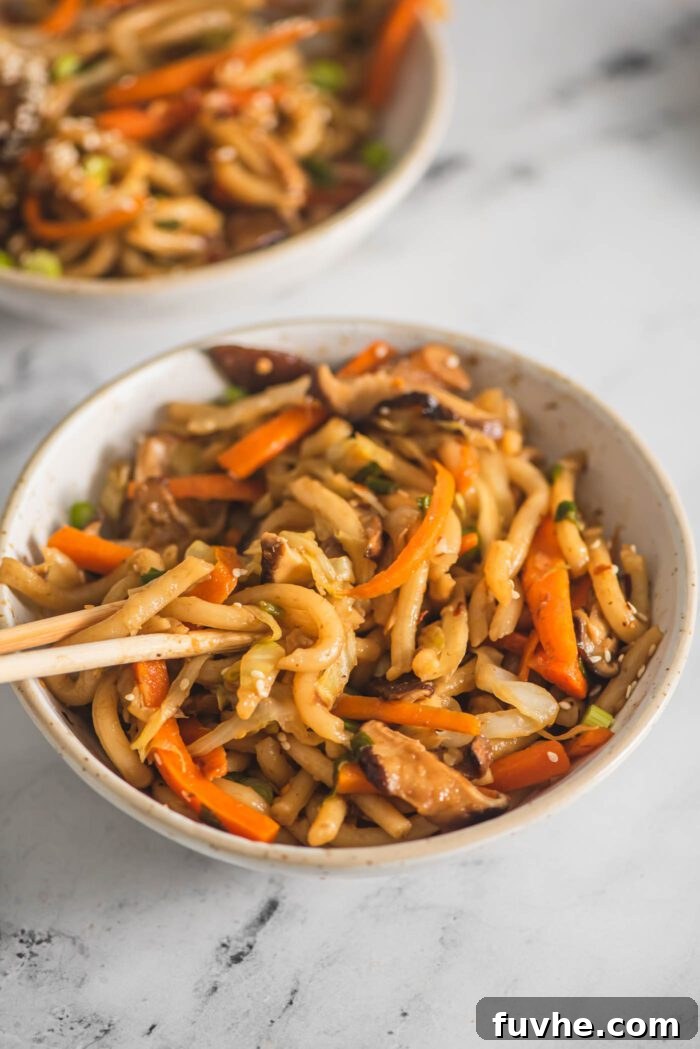
Step 5: Serve Immediately and Garnish. Your flavorful vegan udon stir fry is best served fresh and hot! Transfer the noodles to individual bowls. For an extra touch of freshness and visual appeal, top generously with the reserved sliced green onion and a sprinkle of toasted sesame seeds. If you crave an additional burst of heat, now is the time to sprinkle with chili flakes or add a drizzle of Sriracha sauce to taste. Enjoy your homemade, quick, and healthy Yaki Udon!
Frequently Asked Questions About Vegan Udon Stir Fry
Udon noodles are a type of thick, chewy wheat flour noodle, a staple in Japanese cuisine. They are typically made from just three main ingredients: wheat flour, water, and salt. This simple composition gives them their characteristic white color and firm, elastic texture. Udon noodles are thicker than ramen or soba noodles. While ramen noodles are typically thin and wavy, made with alkaline water for a distinct chewiness, and soba noodles are thin and made from buckwheat flour (often gluten-free), udon’s robust size and smooth, springy bite set them apart, making them ideal for hearty soups and stir-fries like Yaki Udon. You can purchase udon noodles in various forms: dried, frozen, fresh (refrigerated), or pre-cooked and packaged in vacuum seals.
Vegetarian oyster sauce has become increasingly popular and is generally easier to find than it once was. You can typically buy it in the international or Asian food aisle of most well-stocked grocery stores, especially those with a good selection of specialty sauces. Asian grocery stores are also a reliable source, often offering a wider variety of brands. Alternatively, you can easily purchase it online through various retailers. Popular brands that offer a high-quality vegetarian (and usually vegan) oyster sauce include Naked & Saucy, Lee Kum Kee (make sure to look for their specific “Vegetarian Stir-Fry Sauce” or “Vegetarian Oyster Flavored Sauce” which is mushroom-based), and Wan Ja Shan. In terms of taste, vegetarian oyster sauce aims to mimic the savory, slightly sweet, and rich umami flavor of traditional oyster sauce. It adds a depth and complexity to dishes, often described as a mushroomy, savory glaze, which is essential for authentic Asian stir-fry flavors.
Udon noodles themselves can certainly be included as part of a healthy and balanced diet. They are primarily a source of carbohydrates, providing energy, along with some protein and minimal fat. Being made from wheat, salt, and water, they offer a range of essential vitamins and minerals, particularly B vitamins. Many people also find them quite easy to digest. However, as with any packaged food, if sodium intake is a concern, it’s wise to check the sodium content on the label of the specific udon noodles you are using, as some brands can be higher in sodium. When preparing dishes like Yaki Udon, the overall healthfulness depends on several factors: the amount and type of oil used, the quantity and variety of other ingredients (especially vegetables and lean proteins), and the serving size. To make this udon stir fry even healthier, consider: using minimal oil, packing in extra vegetables (think broccoli, bell peppers, spinach), adding a lean plant-based protein like baked tofu or edamame, and opting for low-sodium soy sauce. Increasing fiber content with more veggies and controlling portion sizes are also great strategies.
Udon stir fry is incredibly versatile, allowing for a wide array of vegetables and proteins to be incorporated based on preference and availability. Beyond the core ingredients in this recipe, excellent vegetable additions include broccoli florets, Chinese broccoli (gai lan), colorful bell peppers (red, yellow, orange), snow peas, snap peas, bok choy, baby corn, bamboo shoots, and water chestnuts for extra crunch. For protein, pan-fried or baked tofu, crispy tempeh, shelled edamame, or plant-based chicken strips are fantastic vegan options that add substance and nutritional value. You can also experiment with different aromatic additions like ginger or a sprinkle of toasted cashews for texture. For a super minimalist yet delicious udon stir fry, you can simply use udon noodles, green onions, and the savory sauce.
Traditional udon noodles are made from wheat flour, meaning they are not gluten-free. However, making a gluten-free version of this delicious stir fry is absolutely possible with a few smart substitutions! Some companies now produce gluten-free dried udon rice noodles, which are an excellent choice if you want to maintain a similar noodle shape and texture. Alternatively, you can use other types of gluten-free noodles, such as rice noodles (vermicelli, flat rice noodles), glass noodles, or even gluten-free egg noodles (if not strictly vegan). While it wouldn’t technically be an “udon” stir fry, it would still be a wonderfully tasty and satisfying noodle dish. Crucially, you will also need to substitute tamari for both the dark and regular soy sauce in the recipe, as tamari is a gluten-free alternative that offers a similar savory flavor profile. Ensure your vegetarian oyster sauce is also certified gluten-free, as some brands may contain wheat.
This udon stir fry is best enjoyed fresh, immediately after cooking, to fully appreciate the crisp-tender vegetables and the perfect texture of the noodles. However, leftovers store well in the refrigerator (see storage section below). If you’re looking to save time on a busy night, you can definitely do some prep work in advance! This includes chopping all your vegetables (carrots, cabbage, mushrooms, green onions) and preparing your sauce in a sealed container up to 1-2 days ahead. Having your mise en place ready means the actual cooking time will be incredibly quick once you’re ready to eat.
Expert Cooking Tips for the Best Vegan Udon Stir Fry
Achieving a perfect stir fry requires a few key techniques. Here are some expert tips to ensure your udon noodle stir fry is restaurant-quality every time:
- Embrace Your Tongs: For stir-fries, a good pair of tongs is an indispensable kitchen tool. They are incredibly handy for efficiently tossing the noodles with the vegetables and sauce, ensuring every strand and piece is evenly coated without mushing or breaking delicate ingredients. If you don’t have a pair, consider investing in an inexpensive set of kitchen tongs; they’ll become your go-to for noodles, pasta, salads, and so much more!
- Utilize a Large Pan or Wok: Stir-frying thrives on high heat and ample space. Using the largest pan or wok you own is crucial for success. A spacious cooking surface prevents overcrowding, which is vital for proper stir-frying. Overcrowding cools down the pan, causing vegetables to steam rather than sear, resulting in a less desirable soft and watery texture. If your pan isn’t large enough, consider cooking the vegetables in two batches.
- Achieve Crispy Noodles: For an irresistible texture, don’t rush the final step. After you’ve tossed the noodles and vegetables with the sauce, spread everything out in an even layer across the bottom of the pan. Allow it to sit undisturbed for 1-2 minutes. This brief pause allows the udon noodles to caramelize and get slightly crispy on the bottom, adding a fantastic textural contrast to the dish.
- Practice Mise en Place: “Mise en place” (everything in its place) is the golden rule for stir-fries. This recipe cooks incredibly quickly, so once you start, there’s no time to stop and chop. Ensure all your ingredients are prepped, chopped, and measured, and the sauce is mixed before you even turn on the stove. This streamlined approach guarantees a smooth and stress-free cooking experience.
- Rinse Noodles Thoroughly: After breaking apart your udon noodles in hot water, it’s critical to rinse them well under cold water. This step serves two important purposes: it removes excess starch that can make the noodles gummy or sticky, and it stops the cooking process, ensuring they remain perfectly al dente and chewy when added to the stir fry.
- High Heat is Your Friend: Stir-frying is a high-heat cooking method. Ensure your pan is adequately hot before adding oil and vegetables. This high temperature is what allows the vegetables to quickly cook through while retaining their crispness and vibrant color.
- Adjust Seasoning to Taste: Once the stir fry is complete, always taste and adjust seasonings. You might want a little more soy sauce for saltiness, a touch more maple syrup for sweetness, or extra chili flakes for heat. Your perfect balance is unique to you!
A Guide to Udon Noodles: Which Type is Best for Stir Fry?
Choosing the right udon noodle can significantly impact the texture and overall success of your stir fry. Here’s a breakdown of the different types available and how to prepare them:
- Frozen Udon Noodles: These are unequivocally my top recommendation for this stir fry and most other udon noodle recipes. You’ll typically find them in the frozen foods section of Asian grocery stores or in the international aisle of larger, well-stocked supermarkets. They are pre-cooked and flash-frozen, which helps them retain their superior chewy, bouncy texture when reheated. To prepare, simply soak them in hot (not boiling) water for a few minutes (usually 1-2 minutes) to defrost and gently separate the strands, then rinse under cold water. They cook very quickly, making them ideal for fast stir-fries.
- Fresh Udon Noodles (Refrigerated): If you have access to a good Asian grocer, check their refrigerated section for fresh udon noodles. These are another excellent choice, offering a wonderfully authentic and tender-chewy texture very close to frozen varieties. They are usually pre-cooked or par-cooked and require only a brief boil or soak to loosen before adding to your dish. Follow package instructions, then rinse and drain thoroughly.
- Shelf-Stable (Packaged) Udon Noodles: These are widely available in the Asian section of most grocery stores. They come vacuum-sealed in individual packages and are typically pre-cooked. While convenient, their texture can sometimes be slightly softer or less springy than fresh or frozen varieties. Although they are technically ready to add directly to soups or stir-fries, I always suggest briefly soaking them in hot water and gently separating them. This helps to loosen the noodles and improve their texture before combining them with other ingredients.
- Dry Udon Noodles: Similar to dried pasta, these are often found alongside other dry noodles like rice sticks, lo mein, or ramen in the Asian food aisle. Dry udon noodles require full cooking from scratch, just like pasta. They need to be boiled in a pot of water according to package directions until tender, then drained and rinsed under cold water before being added to your stir-fry. While they are a viable option, their texture may not be as thick or chewy as the frozen or fresh varieties.
Storing & Reheating Your Vegan Udon Stir Fry
Proper storage and reheating ensure you can enjoy your delicious Yaki Udon leftovers for another meal:
Storage: Store any leftover udon stir fry in an airtight container in the refrigerator for up to 4 to 5 days. It’s important to cool the stir fry completely before transferring it to the container to prevent condensation and maintain freshness. I do not recommend freezing this recipe, as the noodles can become mushy and the vegetables lose their desirable texture upon thawing.
Reheating: To reheat leftovers, you have a couple of excellent options. For best results, add the stir fry to a pan or wok over medium heat on the stovetop, stirring occasionally until heated through. If the noodles appear a bit sticky or clumped together after refrigeration, you can add 1-2 tablespoons of water or vegetable broth while reheating to help loosen them up and restore some moisture. Alternatively, you can reheat portions in the microwave until warm, stirring halfway through the process for even heating. While the texture won’t be as crisp as fresh, it will still be incredibly flavorful!
More Quick & Easy Plant-Based Recipes You’ll Love
If you enjoyed this vegan udon stir fry, be sure to check out these other simple and satisfying plant-based meals that come together in a flash:
- Vegan Drunken Noodles: Experience saucy and addictive rice noodles with an abundance of fresh veggies, delivering bold Thai-inspired flavors.
- Vegan Lo Mein: A quick and easy vegetable lo mein that makes for a fantastic 15-minute meal, perfect for busy weeknights.
- Sesame Noodles: Simple yet incredibly flavorful noodles tossed in a rich, nutty sesame sauce, ideal for a speedy lunch or dinner.
- Tempeh Stir Fry: A hearty and easy vegetable and tempeh stir fry coated in a delectable sauce, offering a satisfying protein boost.
- Eggplant Stir Fry: Discover a simple and flavorful eggplant stir fry that pairs wonderfully with either noodles or steamed rice for a complete meal.
Vegan Udon Stir Fry
By: Deryn Macey
You’ll love this simple but flavorful udon noodle recipe for a quick stir fry that’s ready to eat in under 20 minutes!
Prep: 8 mins
Cook: 15 mins
Total: 23 mins
Servings: 3
Ingredients
Yaki Udon Sauce
- 1 tbsp dark soy sauce (20 g)
- 1 tbsp soy sauce (15 g)
- 3 tbsp vegetarian oyster sauce (60 g)
- 1 tbsp mirin (15 g)
- 1 tbsp maple syrup (15 g)
- 2 cloves garlic, minced
- 2 tbsp water
- Pinch of chili flakes (optional)
Stir Fry
- 500 g udon noodles (frozen are best)
- 2 carrots, peeled and cut into matchsticks (125 g)
- 2 cups green cabbage, thinly sliced (180 g)
- 2 cups shiitake mushrooms, thinly sliced (110 g)
- 5-7 green onions, thinly sliced
- 1 tbsp neutral oil (like avocado oil)
- Sesame seeds, for topping
- Green onions, for topping
- Chili flakes, for topping
Instructions
- For the sauce: In a small bowl, mix all sauce ingredients together until combined. Set aside.
- Prepare the Noodles: If using frozen udon noodles, soak them in hot water for 1-2 minutes, carefully separating the noodles using chopsticks, then drain and rinse well under cold water. Set aside until ready to use. If you’re using shelf-stable packaged noodles, you don’t have to soak them but it’s helpful to gently separate and loosen the noodles.
- Stir Fry the Veggies: In a large pan or wok, heat 1 tbsp oil over medium-high heat. When the pan is hot, add the carrots, cabbage, and mushrooms. Cook for 5-6 minutes, stirring often, until tender.
- Add Noodles: When the veggies are tender, add the green onions (reserve some green onions for topping), udon noodles, and prepared sauce. Cook for 1-2 minutes, tossing everything together until noodles are well coated. For slightly crisped noodles, mix well then let them sit without stirring for 1-2 minutes to brown on the bottom.
- Serve: Serve the yaki udon immediately. Garnish with extra green onions, toasted sesame seeds, and chili flakes, if desired.
Notes
Store leftovers in a sealed container in the fridge for up to 5 days. Reheat in a hot pan or the microwave until heated through.
If you’d like to add tofu to this recipe, cook it separately according to this pan-fried recipe or baked tofu recipe and serve on top of your noodles.
Nutrition (Approximate per serving)
Serving: 1/3 of recipe, Calories: 382kcal, Carbohydrates: 66g, Protein: 12g, Fat: 9g, Fiber: 7g, Sugar: 14g