
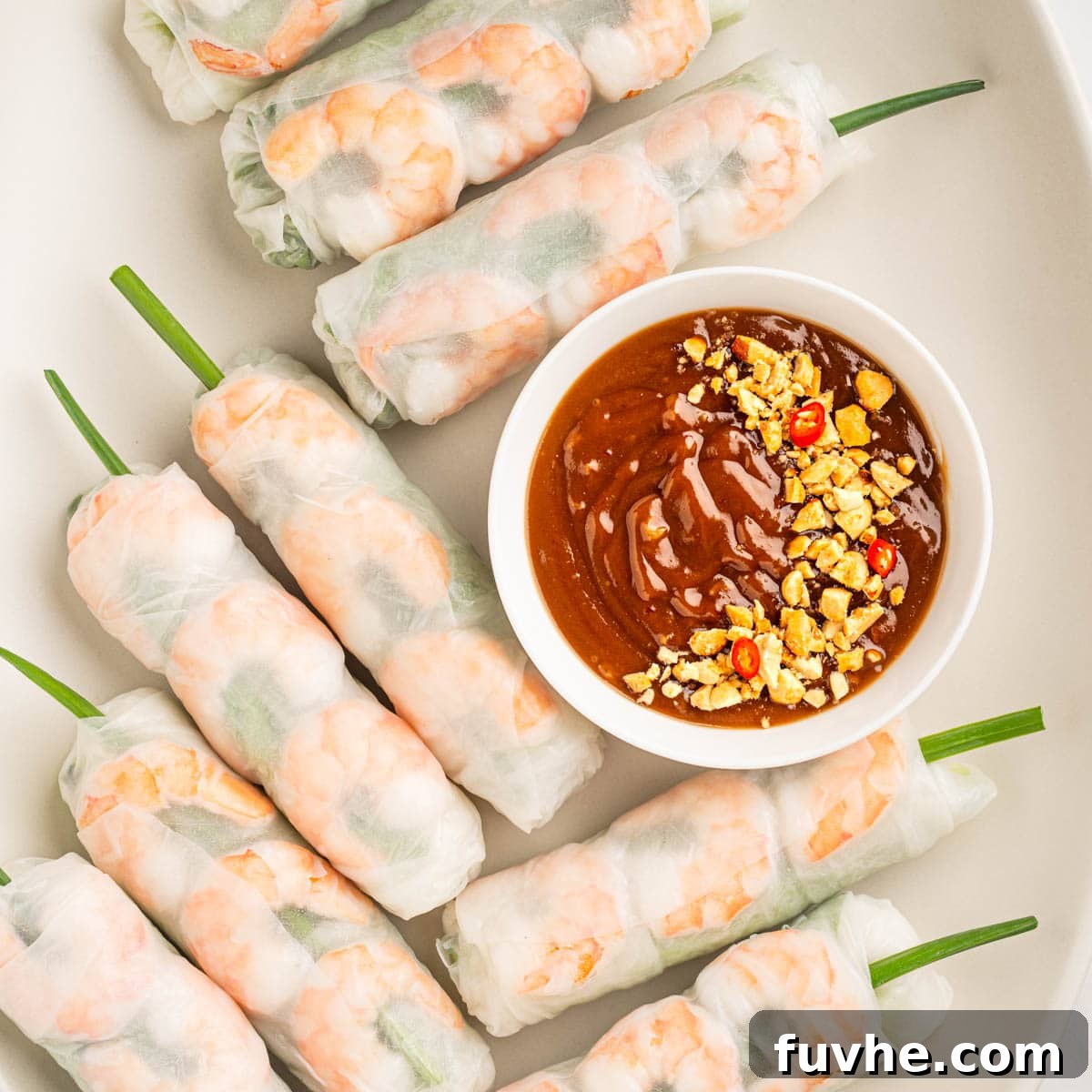
Fresh Vietnamese spring rolls are one of my favorite restaurant orders, and they’re so easy to make at home that I usually end up wanting more than two. Once the ingredients are prepped, assembling and rolling are quick and satisfying.
Traditional gỏi cuốn (Vietnamese fresh spring rolls) typically include shrimp, pork, rice vermicelli, herbs, and crisp vegetables. There are many variations, though — for a lighter option, salmon or tofu work great as alternatives.
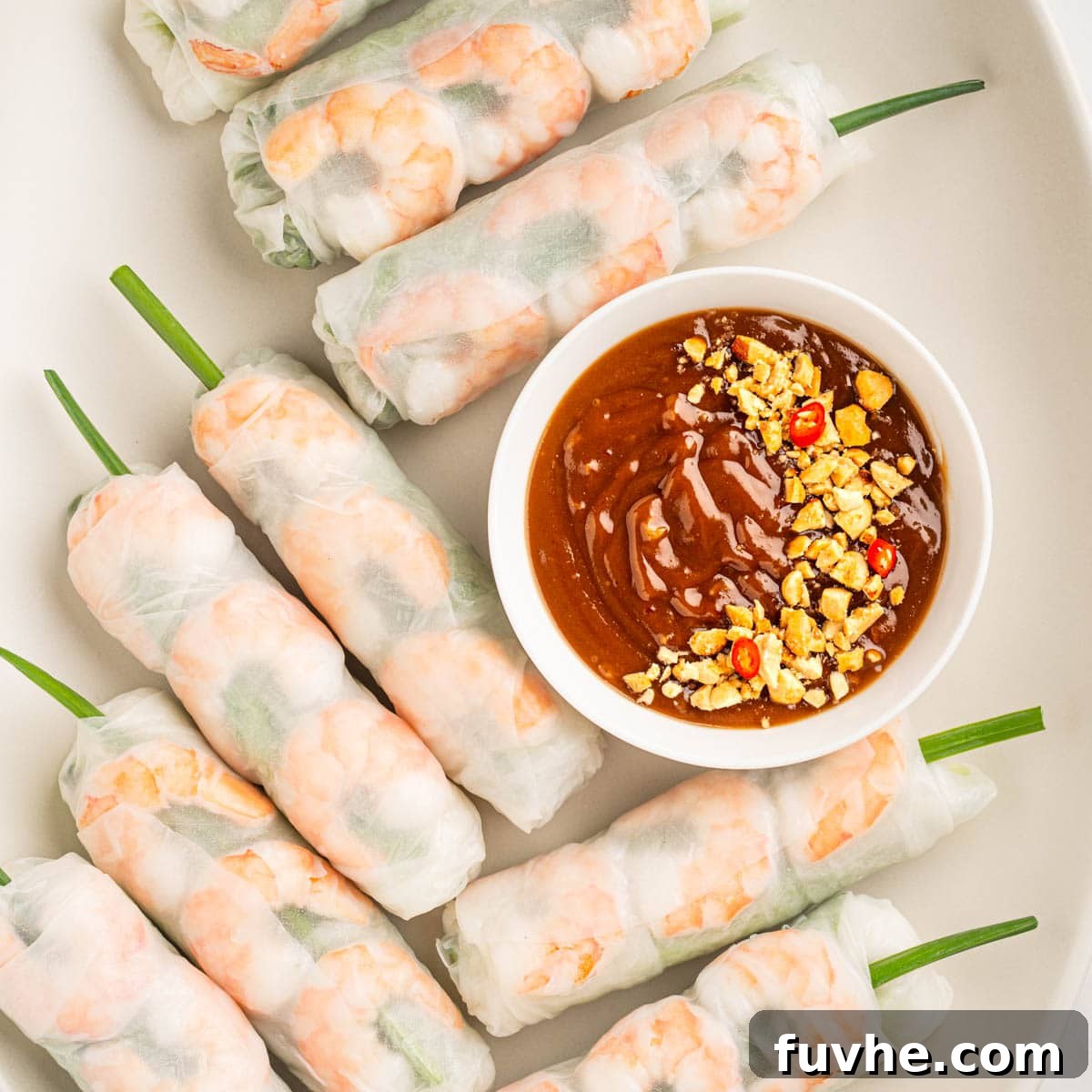
Growing up, spring rolls showed up at nearly every family gathering. They’re perfect for sharing because everyone can build their own. On nights my mom didn’t want to cook, she’d lay out bowls of prepared ingredients and let family members roll their own — simple, interactive, and still one of my favorite ways to eat them.
Whether you’re making spring rolls for a party, meal prep, or an easy weeknight dinner, they always disappear fast.
What Are Vietnamese Spring Rolls?
Gỏi cuốn, often called summer rolls on menus, are rice paper wrappers filled with protein, herbs, vegetables, and rice vermicelli. The name loosely translates to “salad rolls,” which fits since they’re full of fresh greens and herbs.
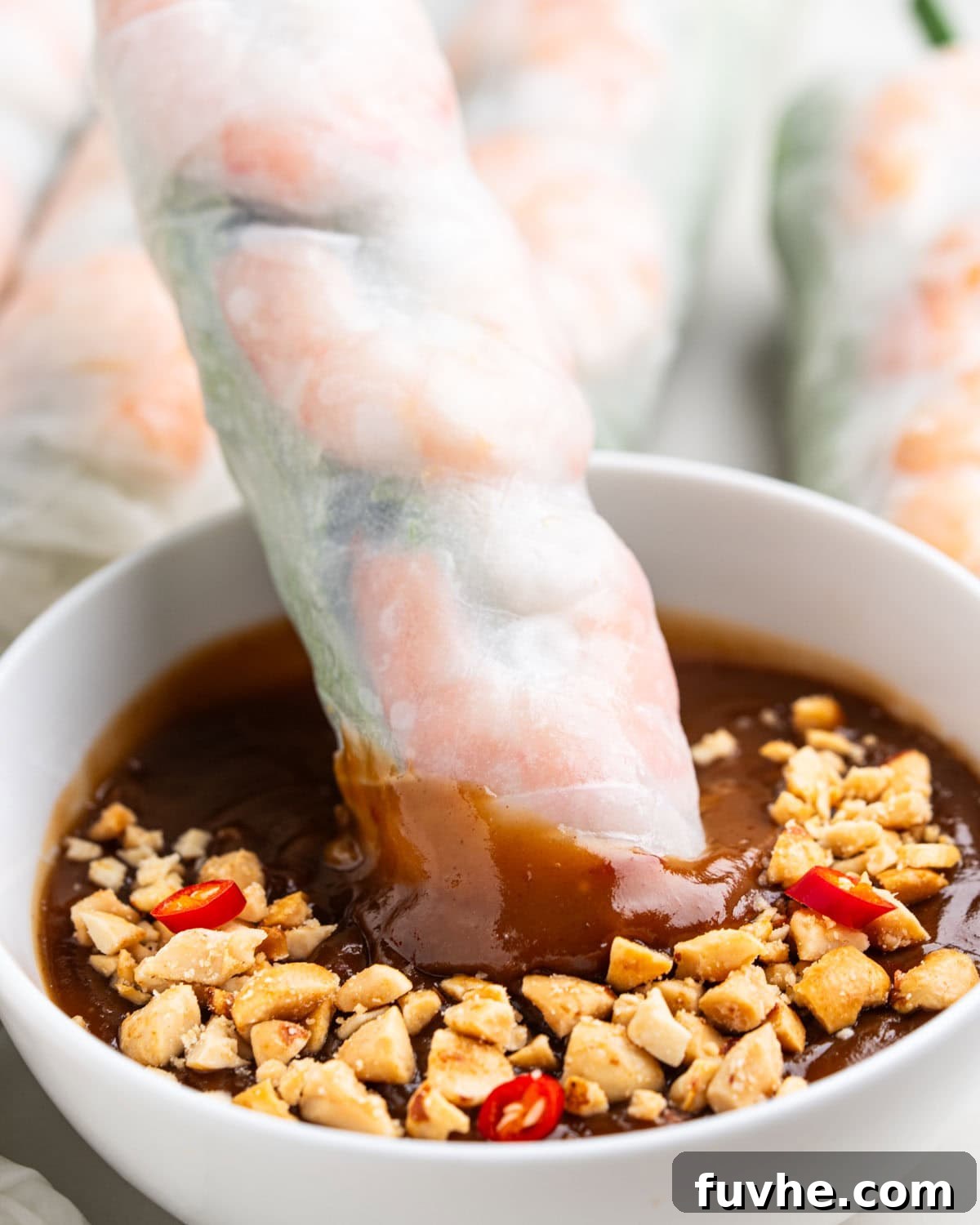
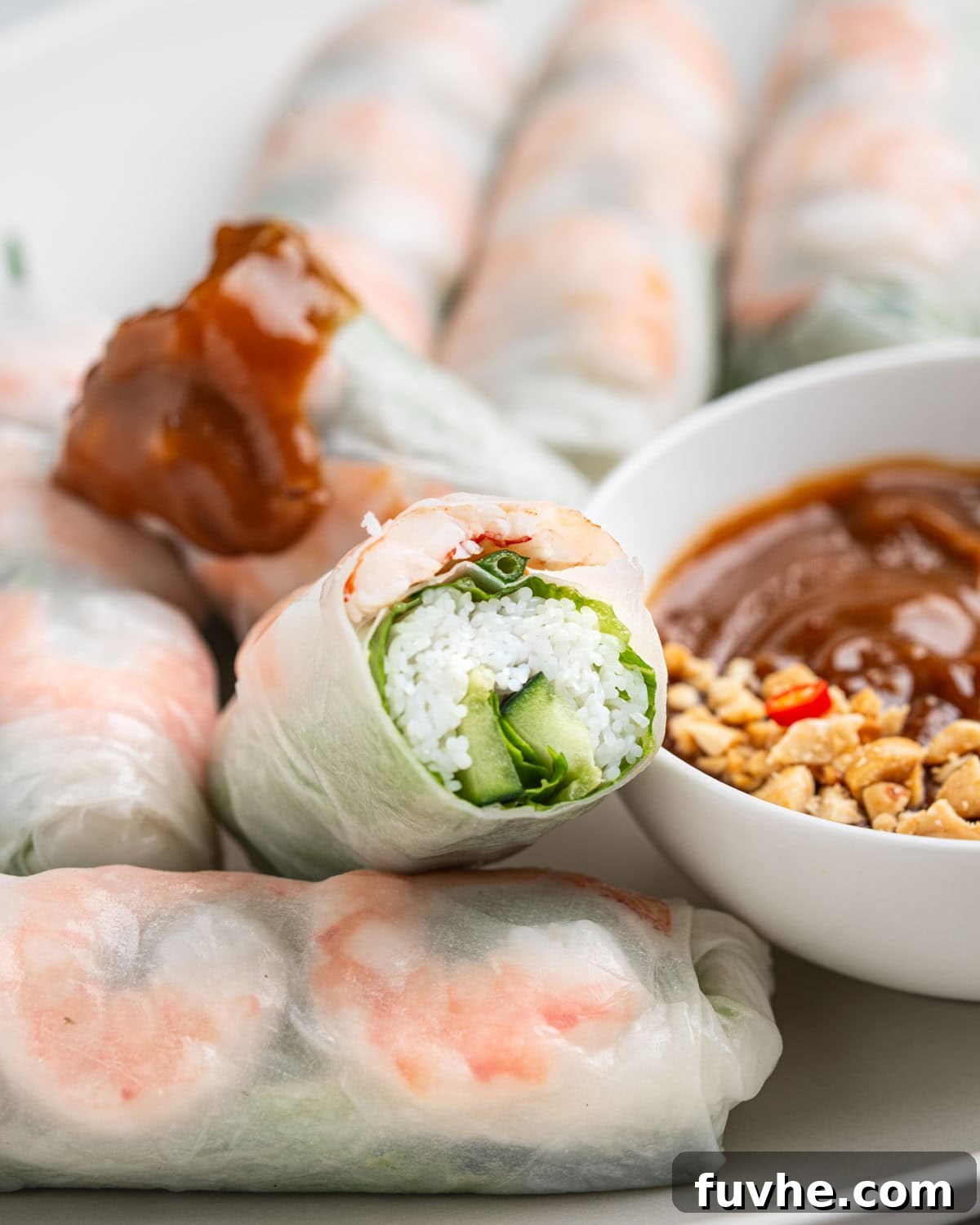
The rice paper becomes soft and slightly chewy when hydrated, and it’s translucent enough to show the colorful fillings. Each bite combines tender shrimp, savory pork, soft noodles, and crunchy herbs.
Because they’re not fried, spring rolls feel light and refreshing compared to cha giò (Vietnamese fried egg rolls). The ingredients are layered and rolled tightly, so you get a balanced bite every time.
Why You’ll Love This Recipe
- Bright, fresh flavors and a light texture
- Minimal cooking after prep — mostly assembly
- Highly customizable with ingredients you have on hand
- Perfect for meal prep or feeding a crowd
- Pairs well with peanut sauce or nuoc cham (fish sauce dip)
Rice Paper: What to Look For
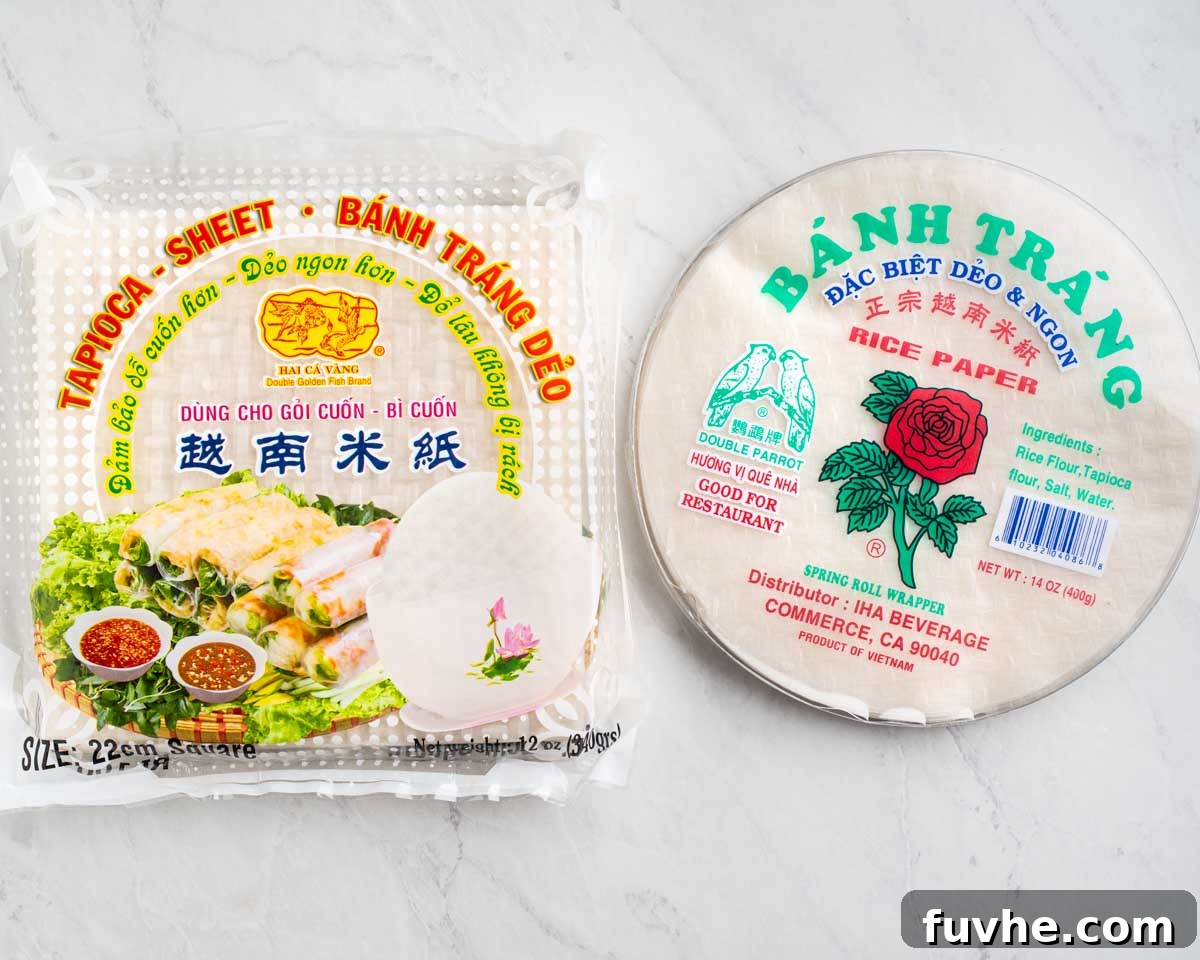
Rice paper comes in round and square shapes; both work, so choose whichever you find easiest to roll. Size 22 is a common option that makes a nicely sized roll.
Look for rice paper made with rice flour and tapioca flour. Tapioca adds elasticity and reduces tearing while you roll.
Each sheet has a smooth side and a slightly bumpy side; assemble with the bumpy side up. When softening the sheets, dip them in cold or lukewarm water briefly — avoid hot water. The rice paper continues to soften as you work, so only wet it until it’s just pliable to prevent tearing.
Fillings and How to Choose Them
Spring rolls are an opportunity to mix and match flavors and textures.
Protein
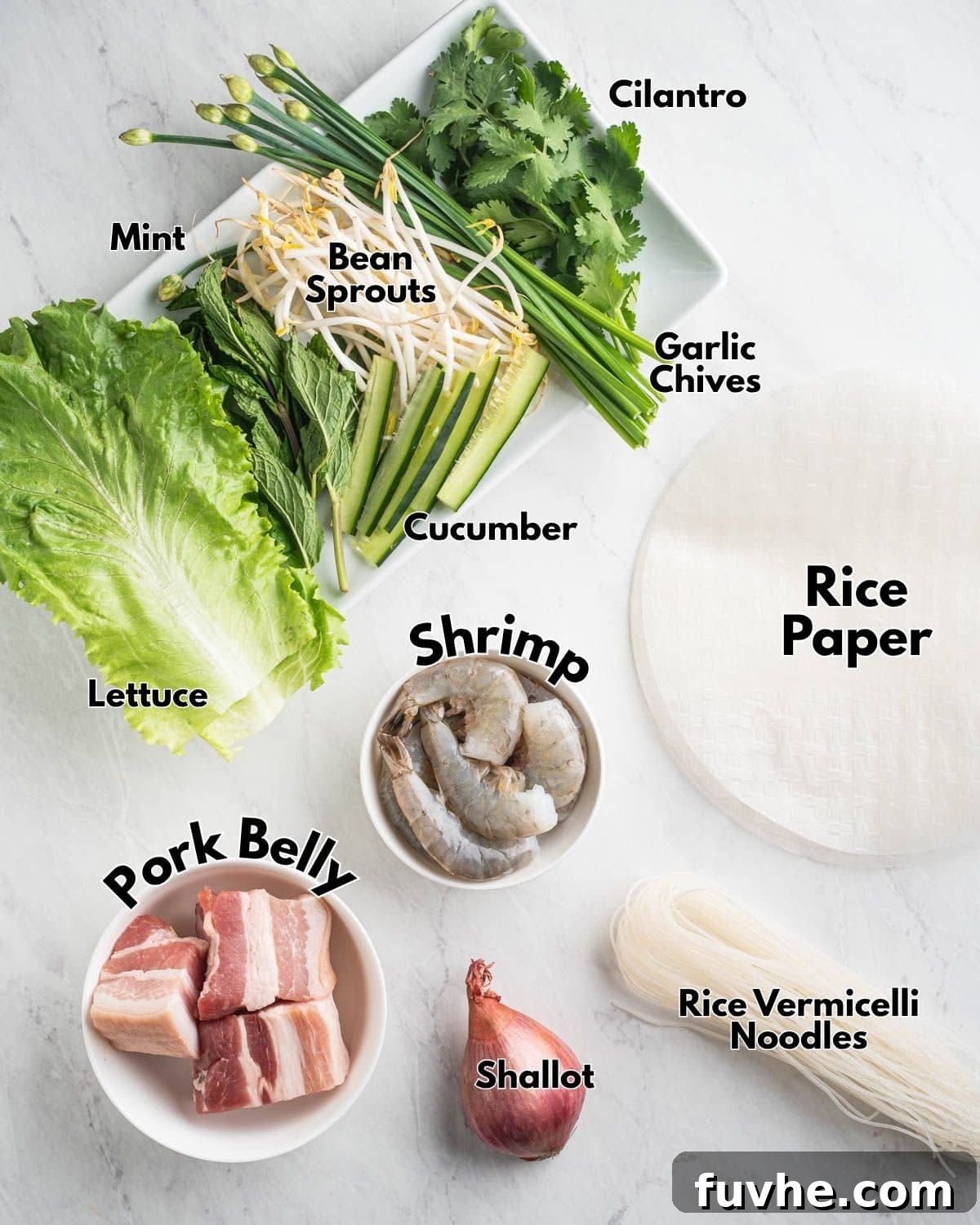
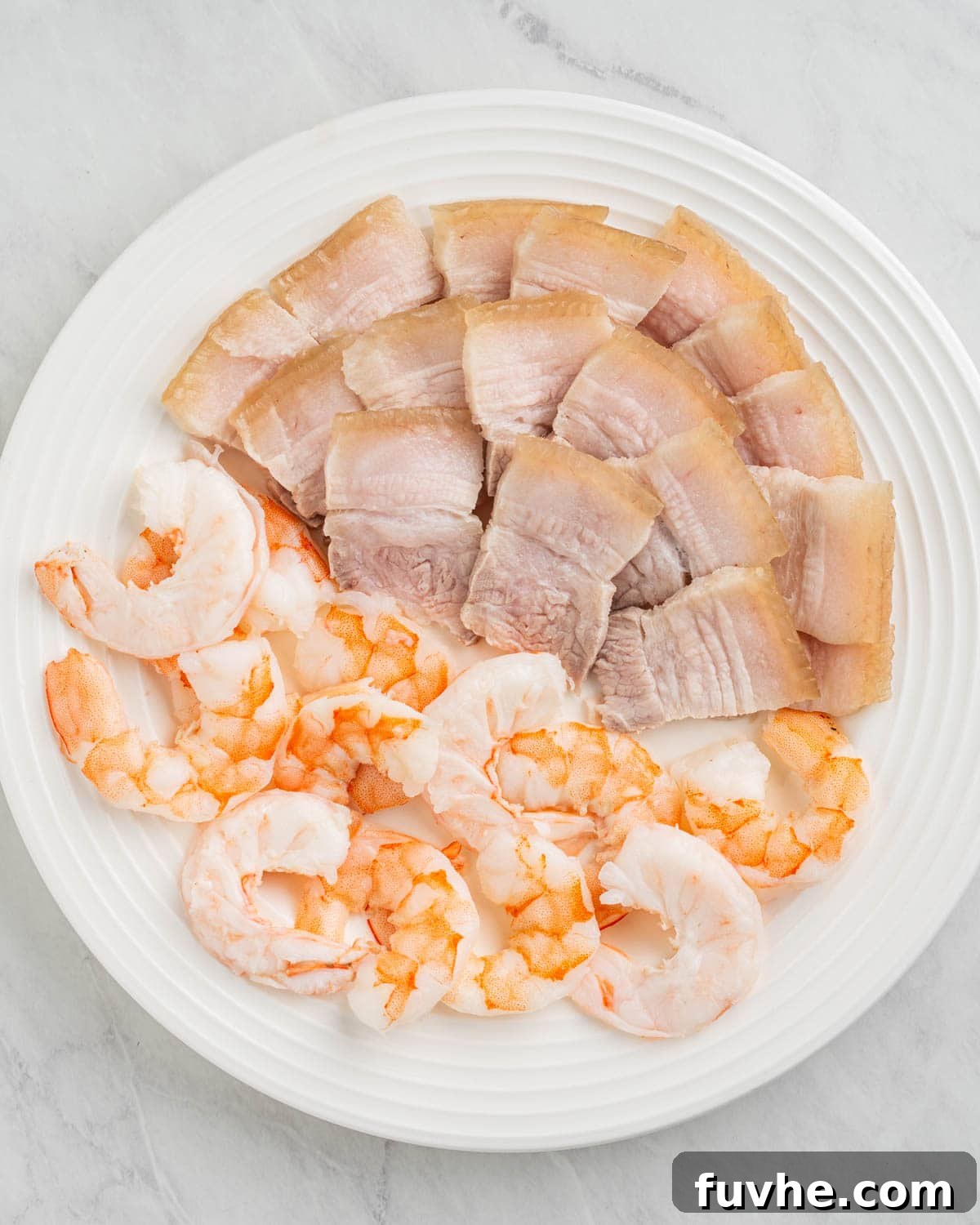
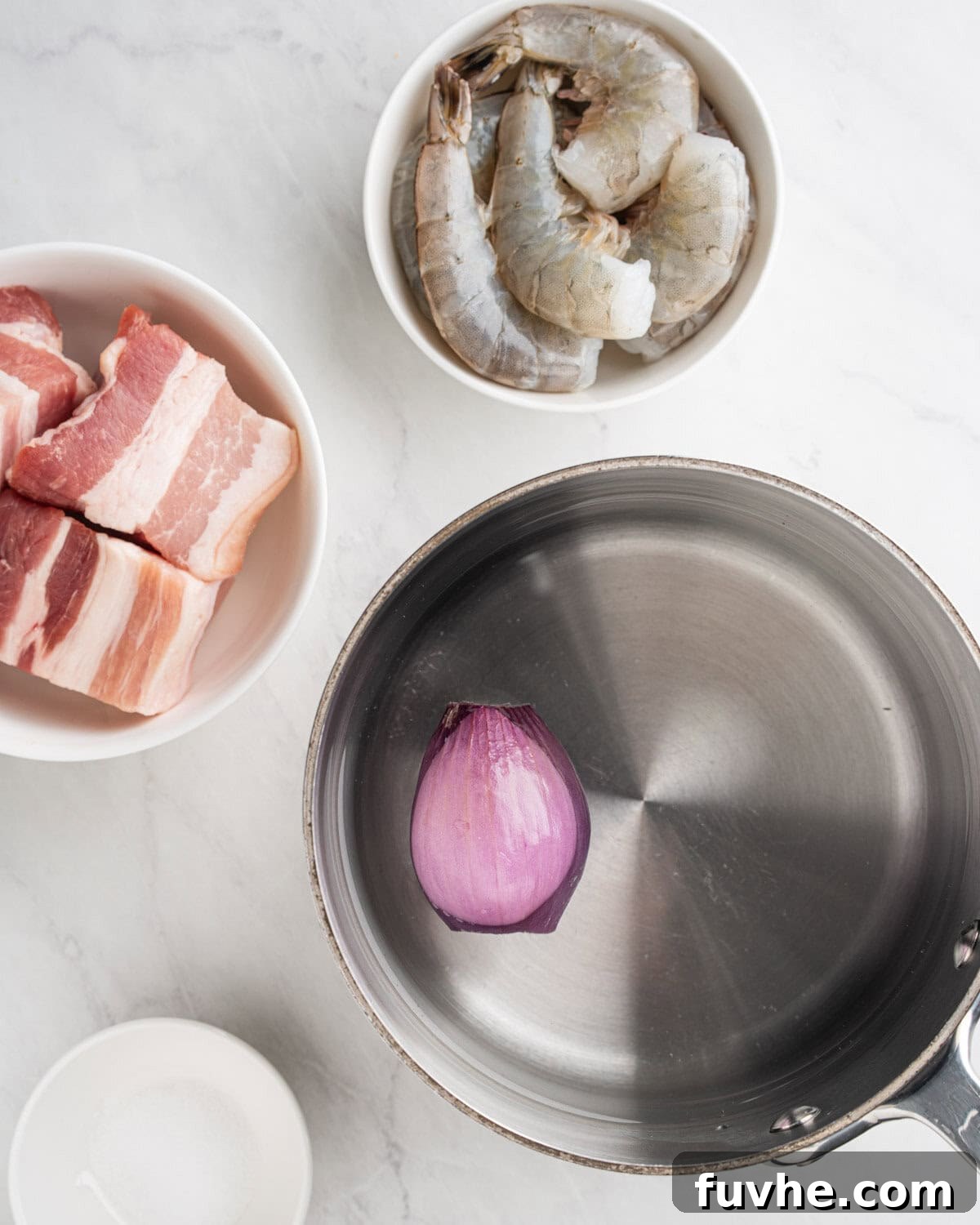
The classic pairing is shrimp and pork. Pork belly or shoulder both work; slice the pork thinly after it cools for easy cutting. For shrimp, cook them with the shell on so they hold shape and look appealing through the rice paper, then peel and slice each shrimp lengthwise.
Other options: grilled chicken or pork, fried or baked tofu, or cooked fish for a seafood-forward roll.
Noodles
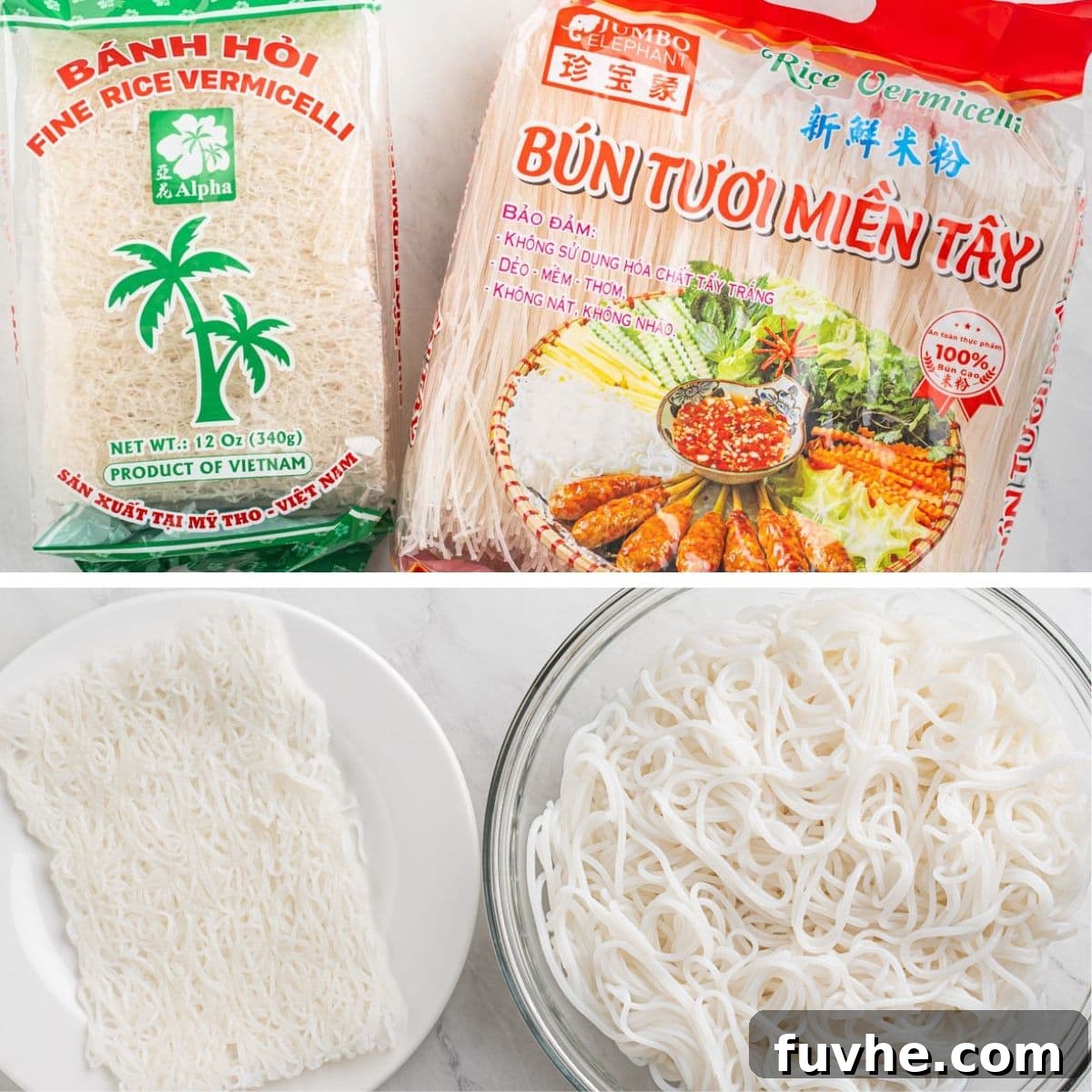
Use thin rice vermicelli (bún tươi). They’re soft, lightweight, and easy to portion. Rinse cooked noodles with cold water to stop cooking and keep them from clumping.
Bánh hỏi is another great choice — it comes in woven sheets that hold together, so you can use one portion per roll without loose strands. Cook until tender, rinse with cold water, and lightly oil layers to prevent sticking. Fold or cut to size for a neat roll.
Herbs and Vegetables
Common herbs and veggies include:
- Lettuce (butter, red leaf, or green leaf)
- Mint
- Cilantro
- Perilla
- Bean sprouts
- Cucumber
- Carrots (optional)
- Garlic chives or chives
Choose a few favorites rather than using every option. Tip: remove or bend thick lettuce stems so they don’t poke through the rice paper.
How to Make Spring Rolls
Prep everything first: cook and slice proteins, cook noodles, and wash and dry herbs. Having ingredients ready makes assembly smooth and fast.
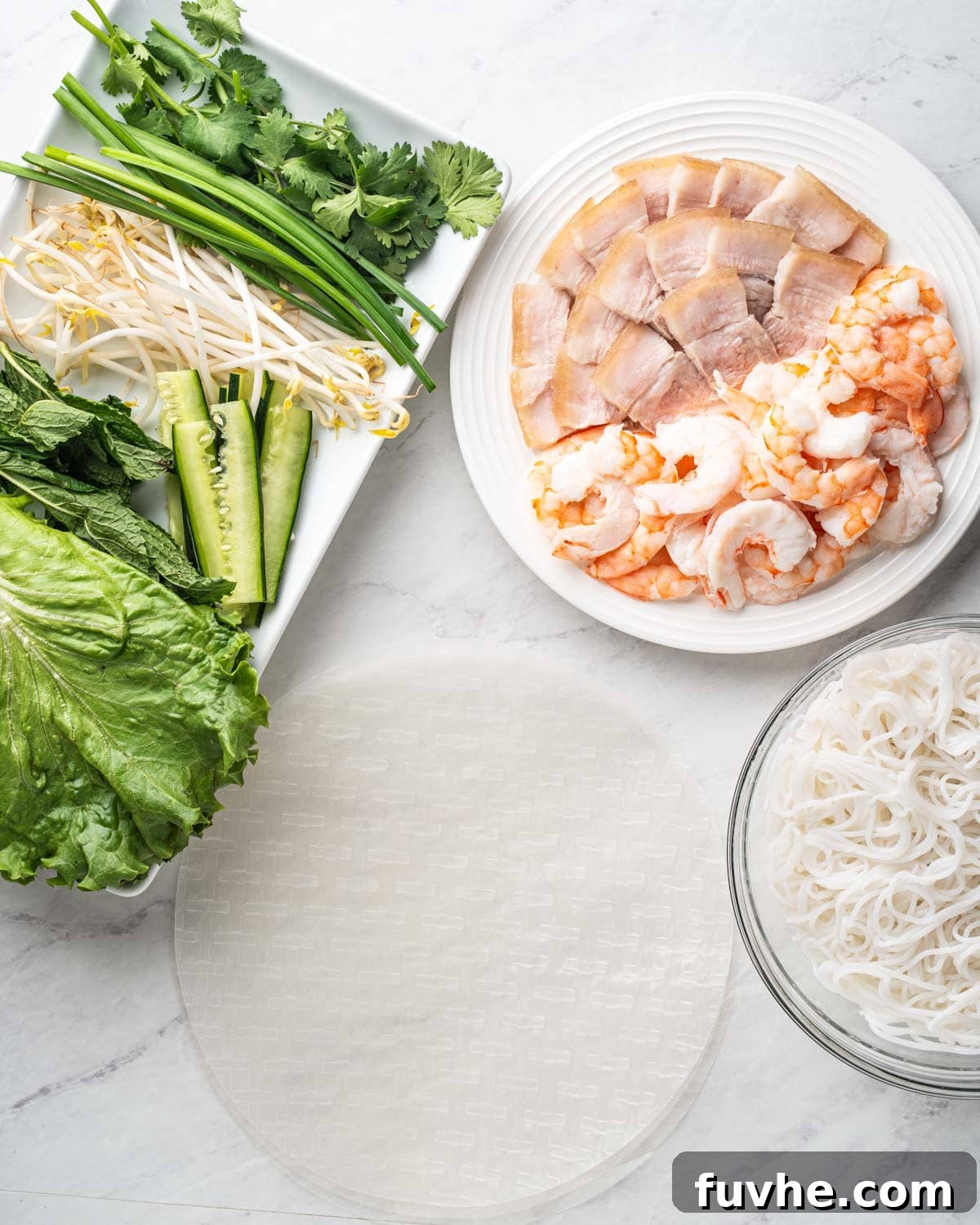
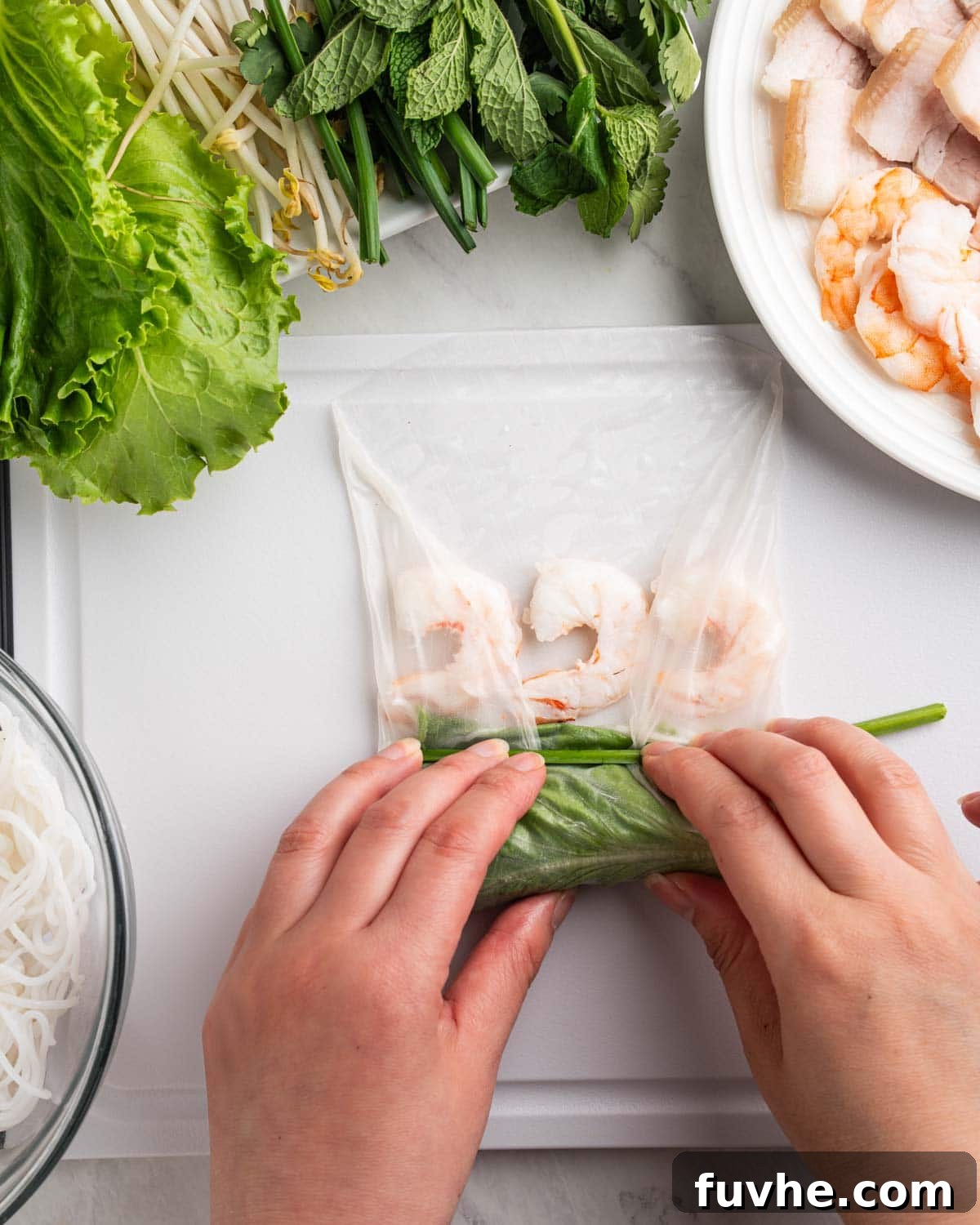
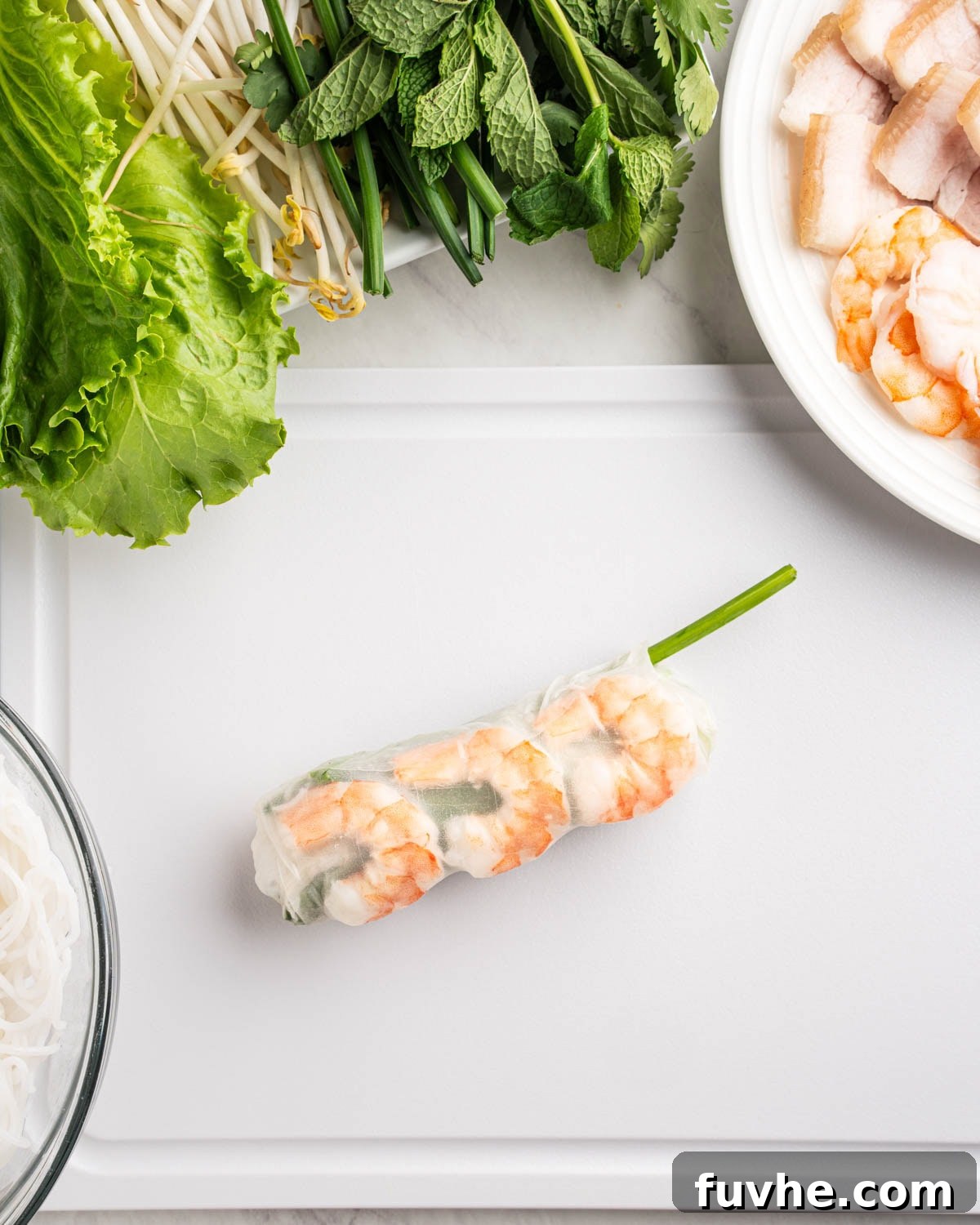
To assemble: dip one sheet of rice paper into cold or lukewarm water until just lightly wet, then lay it on a flat surface with the bumpy side up. Layer lettuce on the lower third, then a small amount of noodles, herbs, vegetables, and protein. Place shrimp cut-side down near the edge if you want them visible through the wrapper.
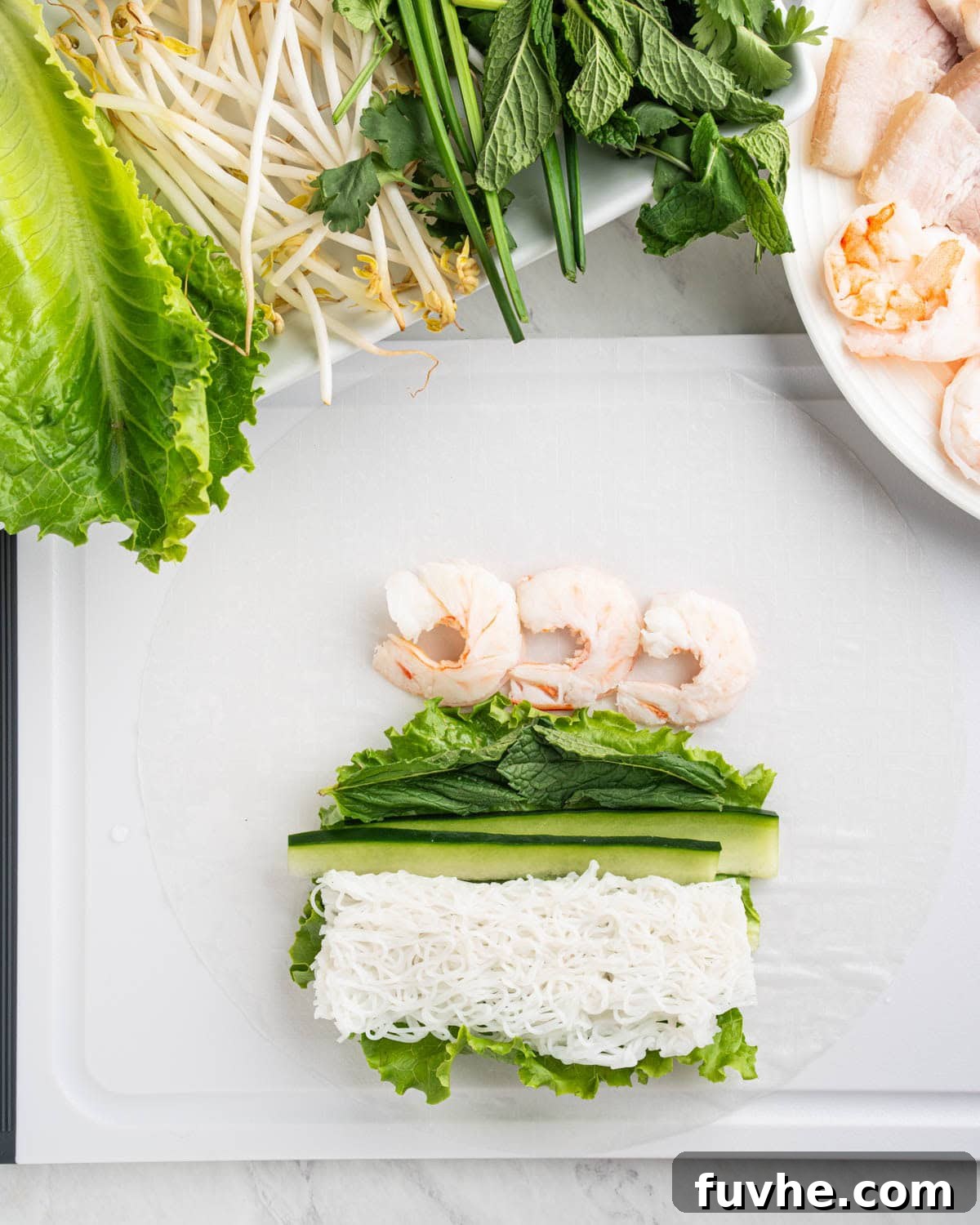
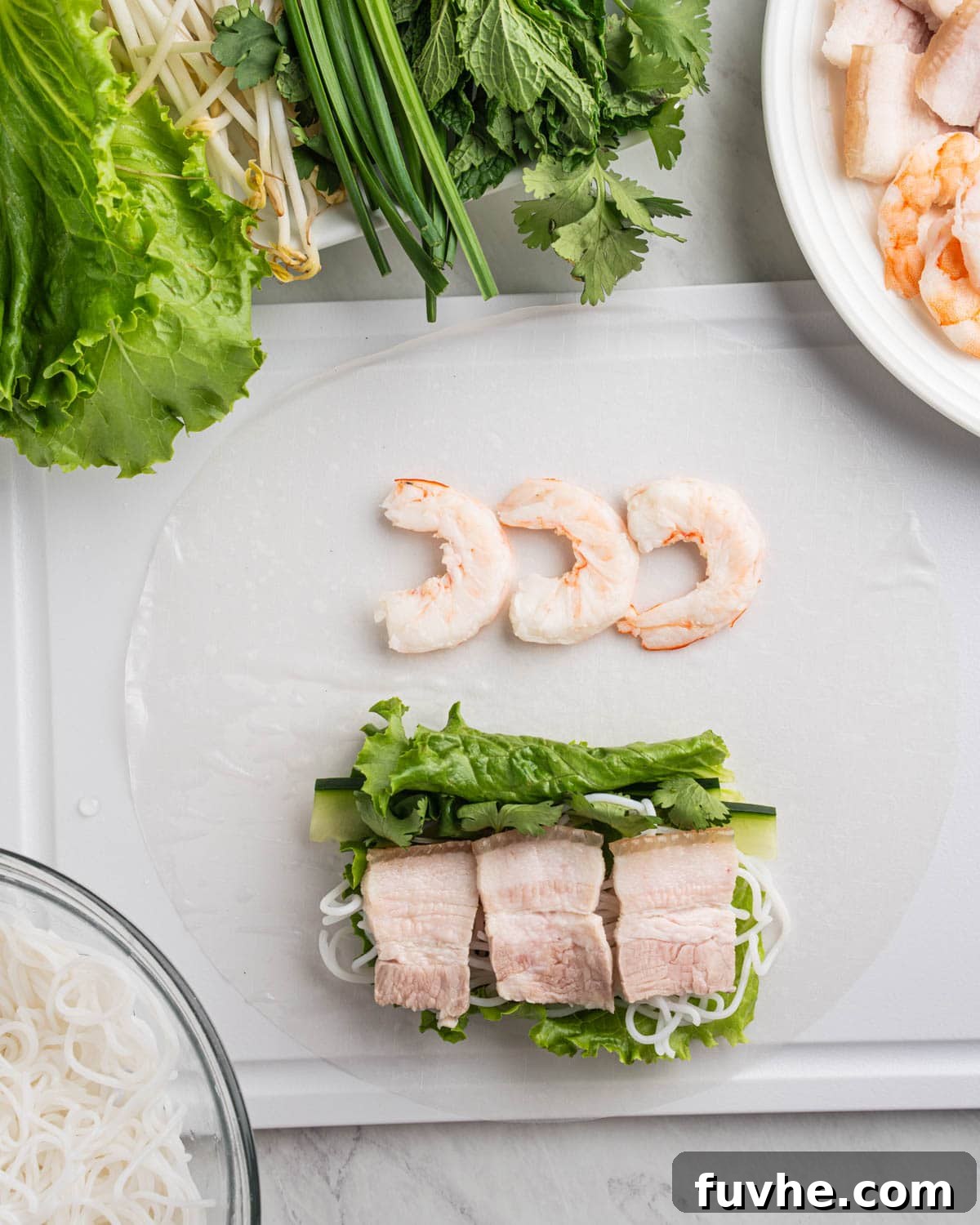
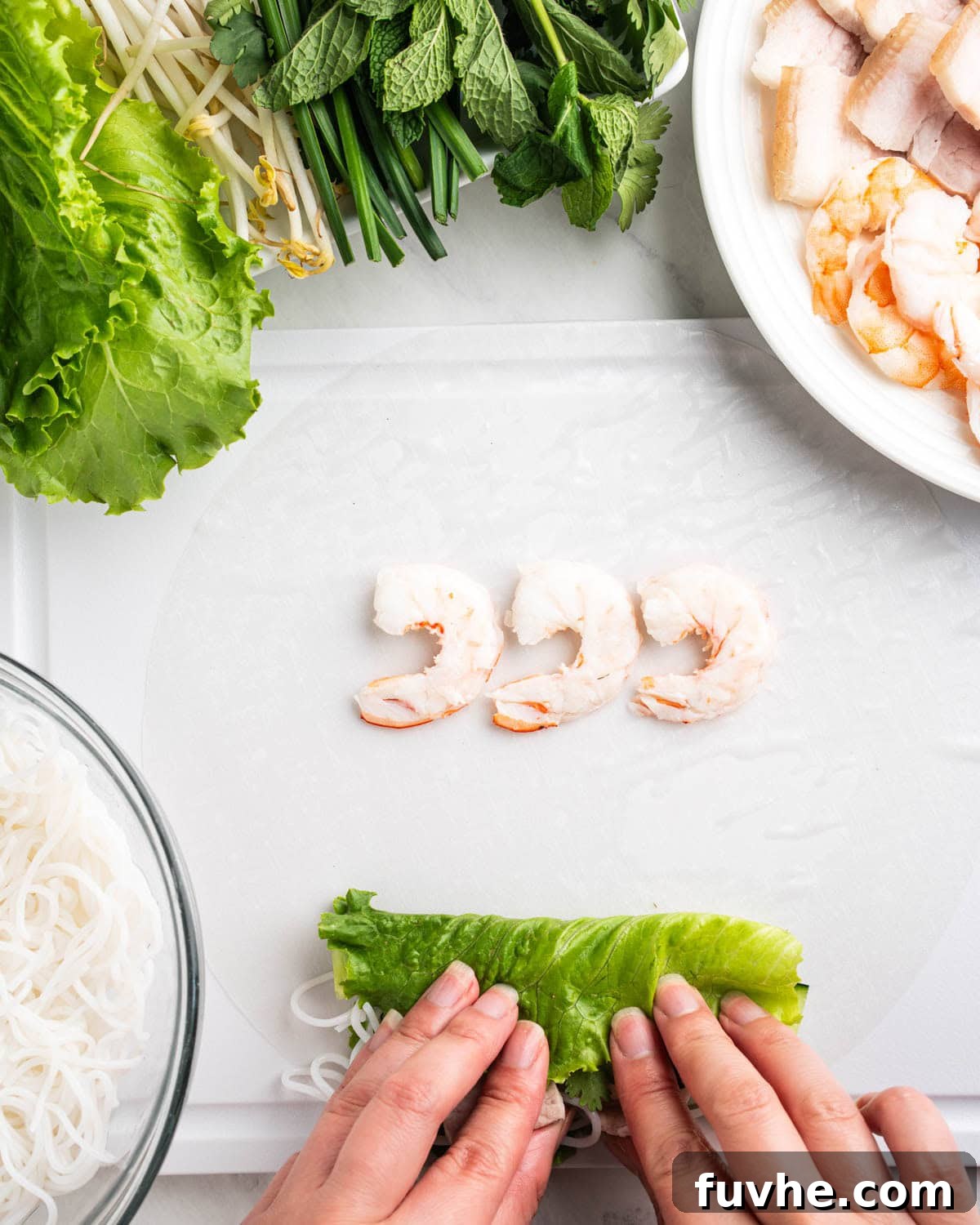
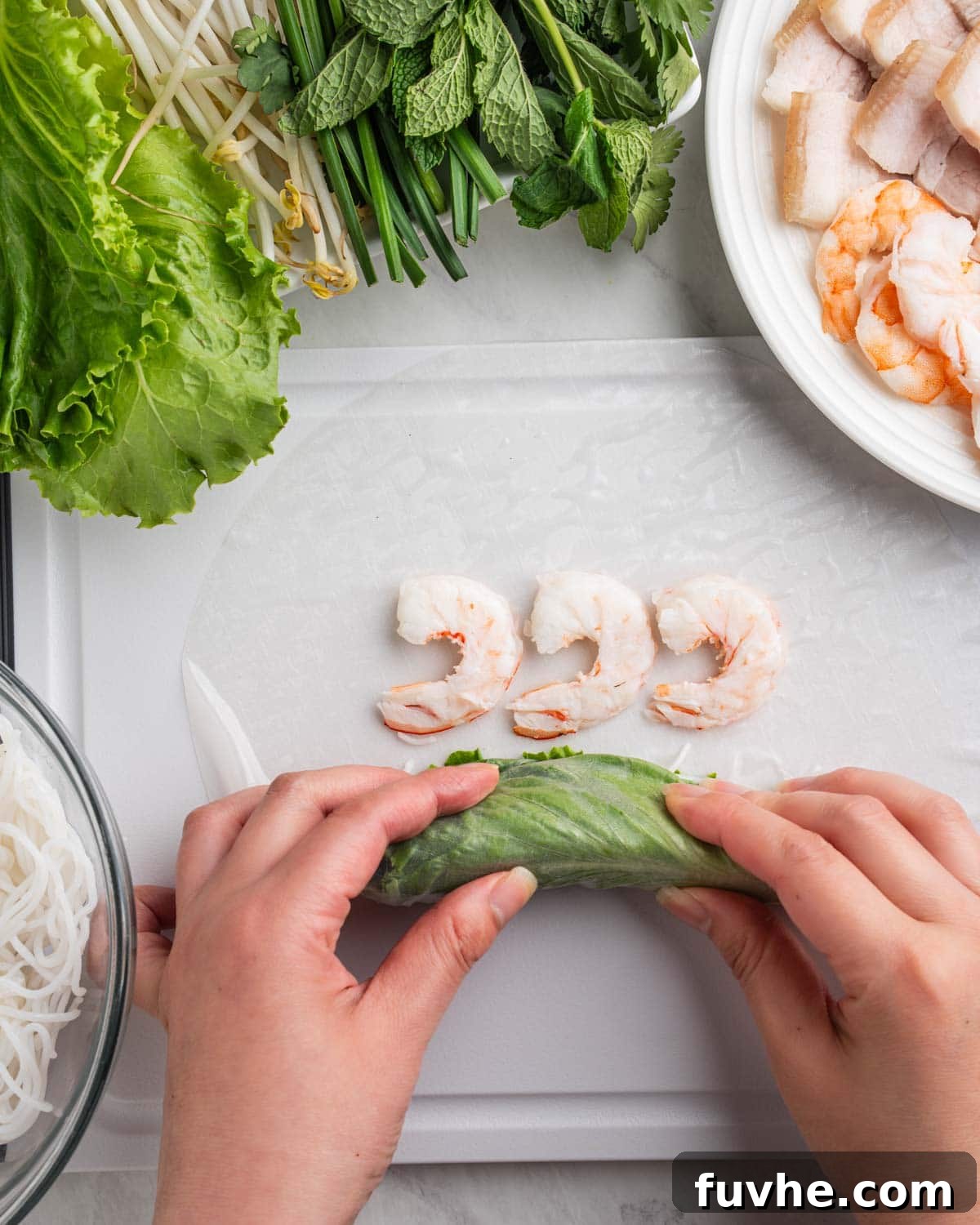
Fold the bottom over the filling, tuck the sides in, then roll tightly to seal. Your first few may feel awkward, but rolling becomes easier with practice.
How to Serve
Spring rolls are best eaten fresh, right after rolling, while the rice paper is soft and tender.
Serve with:
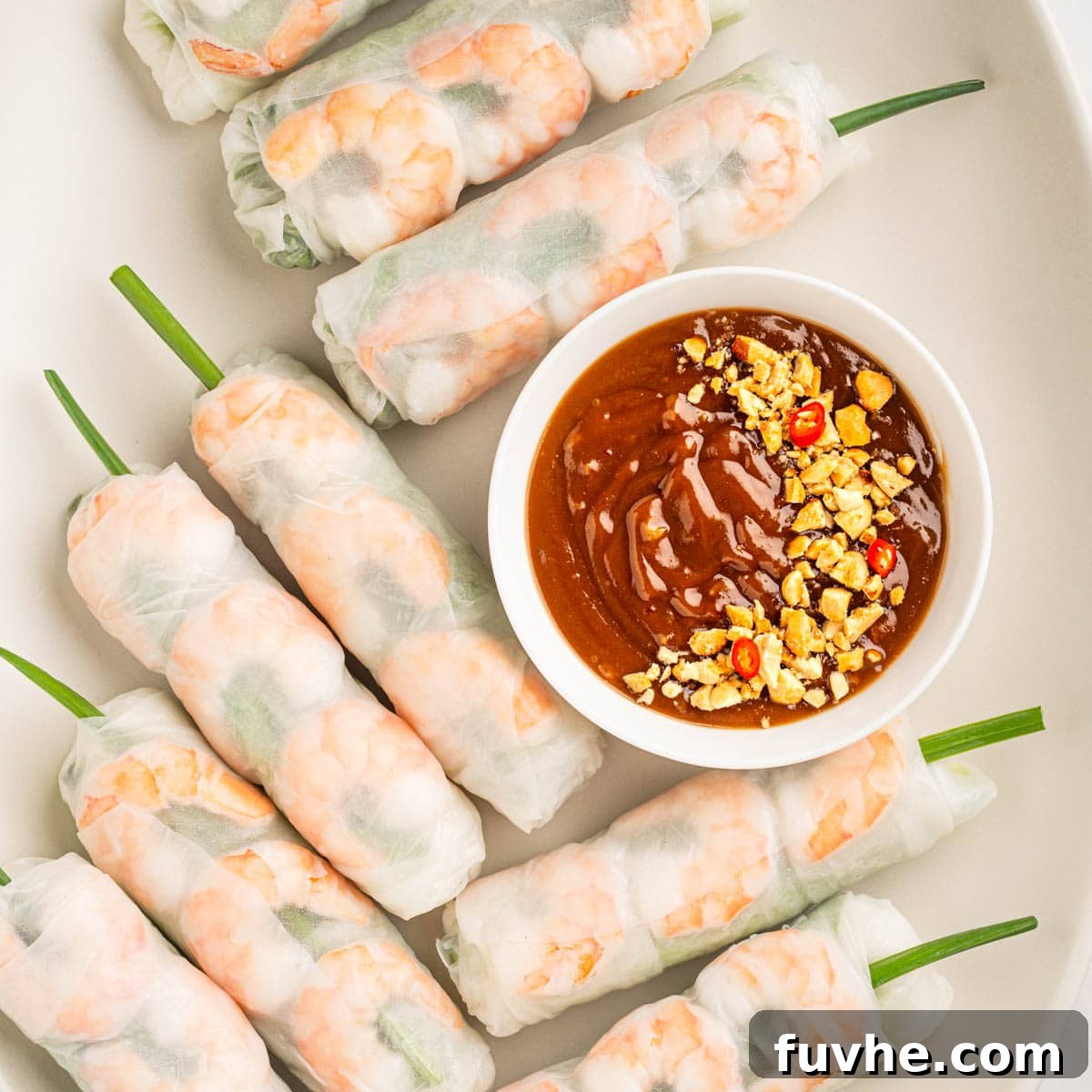
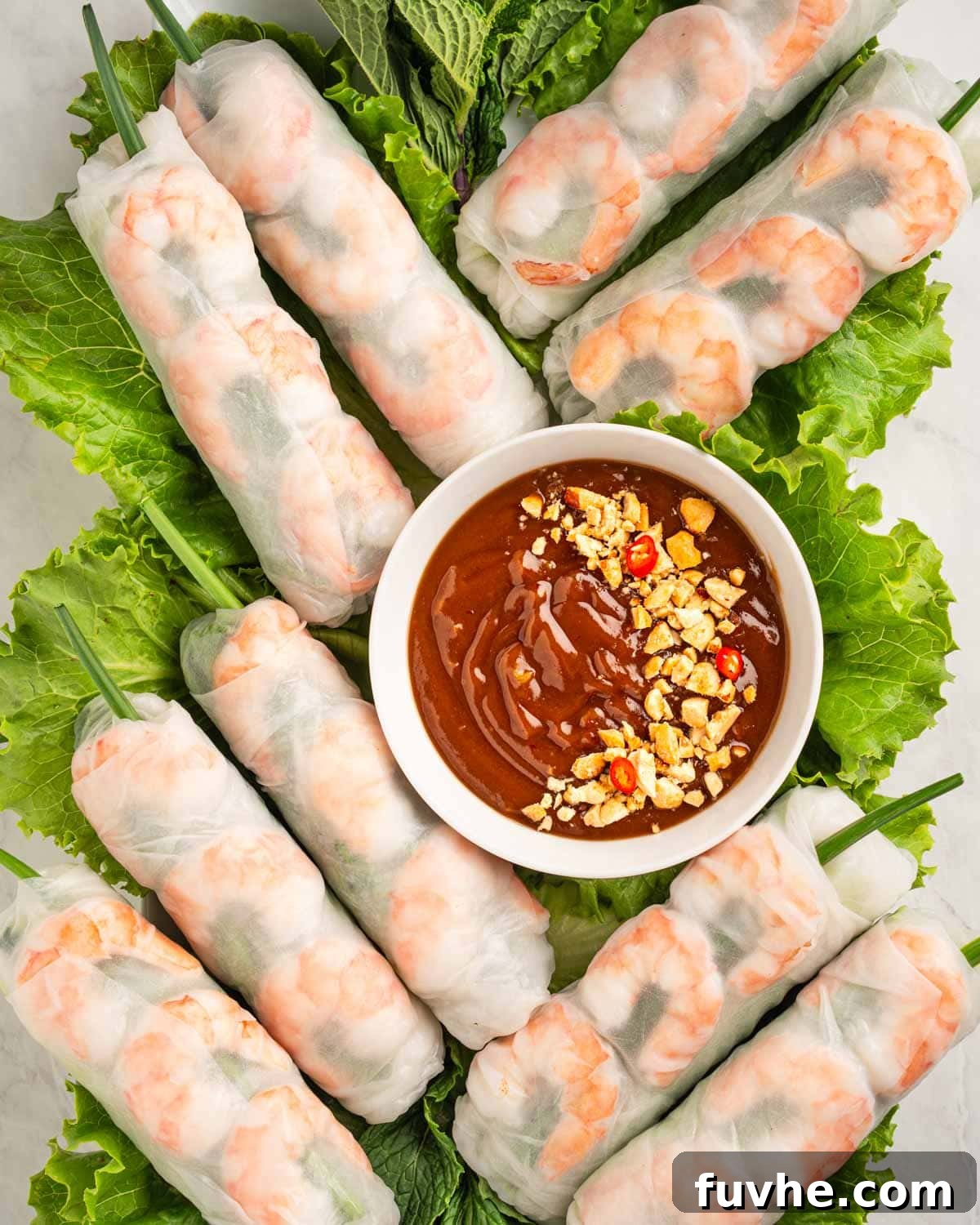
- Vietnamese peanut sauce for a richer, creamier dip
- Nuoc cham (fish sauce dip) for a lighter, tangy option
They work as an appetizer, snack, or alongside Vietnamese mains like bún thịt nướng, phở, bún riêu, or crispy dishes like bánh xèo and bánh khọt.
Make Ahead and Storage Tips
For best texture, eat spring rolls the day you make them. If prepping for a gathering, make them a few hours ahead and cover with a damp towel or wrap each roll individually in plastic to prevent the rice paper from drying out.
For longer storage, wrap rolls individually and refrigerate for up to 1–2 days. Before serving, let them sit at room temperature for 20–30 minutes with a damp paper towel on top so the rice paper softens again.
Make this Tonight!
Once you get the hang of rolling, this is a recipe you’ll return to often. It’s adaptable, fast after prep, and satisfying to eat.
If you try this version, leave a comment with the fillings you used — it’s always fun to see different twists on a classic.
RECIPE
Vietnamese Spring Rolls (Gỏi Cuốn)
Quynh Nguyen
Ingredients
For the Rolls
- 12 rice paper (size 22, round or square)
- ½ pound shrimp, shell on and deveined
- ½ pound pork belly or pork shoulder
- 1-2 shallots, halved
- 1-2 teaspoons salt
- rice vermicelli noodles (bun tuoi)
- leaf lettuce, washed and torn
- mint, cilantro, perilla (optional)
- bean sprouts
- cucumbers, julienned
- garlic chives or chives
For Serving
- Peanut sauce or nuoc cham
Instructions
Cook Noodles, Pork, and Shrimp
-
Cook rice vermicelli noodles according to package directions. Rinse with cold water and drain well.
-
Bring a pot of water to a boil with halved shallots and salt to lightly season the cooking liquid.
-
Add pork and cook until done, about 10–15 minutes depending on thickness. Remove and let cool before slicing thinly.
-
Cook shrimp in the same pot until pink and opaque, about 2–3 minutes. Drain, cool, then slice each shrimp lengthwise. Cooking with the shell on helps them keep their shape.
Wrap the Rolls
-
Fill a shallow pan with cold or lukewarm water. Dip one rice paper briefly until just wet; it will continue to soften on the surface.
-
Lay the sheet on a clean surface with the bumpy side up.
-
Place lettuce on the lower third, then a small portion of noodles, pork, herbs, and vegetables. Position shrimp cut-side down near the edge if you want them visible.
-
Fold the bottom over the filling, tuck in the sides, and roll snugly to seal. Repeat with remaining ingredients.
Serve
-
Serve immediately with peanut sauce or nuoc cham.
Notes
- Cooking pork and shrimp with shallots and salt adds subtle flavor without extra effort.
- Allow pork to cool before slicing for thin, tidy pieces.
- Don’t over-soak rice paper; it should still feel slightly firm when you start rolling.
- Keep fillings balanced and avoid overstuffing for best texture and appearance.
- Eat fresh for the best experience, or wrap rolls individually if making ahead.