

Beginner’s Guide to Weightlifting: Your Ultimate Kickstart to Strength and Fitness
Have you ever considered starting weightlifting but felt a bit daunted by the idea, unsure of where to begin? Or perhaps you’ve tried it sporadically but never truly found your rhythm? You’re not alone, and there’s absolutely no need to feel intimidated! The most crucial step is simply to start. This comprehensive guide is packed with practical tips for weightlifting beginners, designed to help you confidently step into the gym and embark on your strength journey. These insights are universally applicable, whether your interest lies in bodybuilding, powerlifting, Olympic lifting, or general strength training.
Lifting weights is a profoundly rewarding experience. It’s an incredible journey of self-discovery, constantly challenging, building not just physical strength but also mental resilience and character. For many, it evolves into a deep-seated passion. We hope these tips ignite your desire to get into the gym, pick up a weight, and discover the transformative power of lifting, regardless of your current fitness level.
Weightlifting truly is for everyone, offering a path to improved health, confidence, and well-being. So, what are you waiting for?
Understanding the World of Weightlifting: A Brief Overview
When you hear people casually mention “weightlifting,” they are often referring specifically to the Olympic sport of weightlifting. This highly technical discipline involves two primary lifts: the snatch and the clean and jerk. Both are ground-to-overhead movements, requiring an athlete to lift a barbell from the floor to a stable, locked-out position overhead in a single, fluid motion (snatch) or two distinct movements (clean and jerk).
While the sport has a rich history, its recent surge in popularity, particularly over the last decade, is largely attributed to the inclusion of these dynamic lifts in the mainstream sport of CrossFit. The explosive nature and demand for precision in Olympic lifts make them captivating to watch and incredibly challenging to master.
Olympic Lifting vs. Powerlifting: Deciphering the Differences
In contrast, powerlifting focuses on three fundamental, raw strength movements: the squat, bench press, and deadlift. Unlike Olympic lifts, none of these movements involve lifting the weight vertically overhead. Powerlifting movements are foundational and widely utilized across various training methodologies, including CrossFit and Olympic lifting, serving as crucial exercises for building overall strength, power, and speed—qualities essential for enhancing performance in the snatch and clean and jerk.
Each of these disciplines is a science unto itself, demanding meticulous technique, consistent practice, and deep understanding. However, their technicality should not be a barrier; with proper instruction and dedication, these movements are accessible and can be safely performed by beginners. While Olympic lifts prioritize speed and explosiveness, powerlifting often involves moving extremely heavy weights at a more controlled, slower tempo. For beginners, the precise technicalities of distinguishing between these styles aren’t the primary concern. The key takeaway is that with a bit of guidance and practice, you can safely and effectively perform all these powerful movements.
Exploring Strength Training and Bodybuilding
Both powerlifting and Olympic weightlifting fall under the broader umbrella of strength training. Strength training encompasses any physical exercise that uses resistance to induce muscular contraction, with the goal of building muscle strength, size (hypertrophy), and endurance. It’s a fundamental component of a healthy lifestyle, offering benefits far beyond the gym.
Bodybuilding, on the other hand, is a sport where strength training is strategically employed to sculpt and develop the body’s muscles for aesthetic purposes. Bodybuilding-style workouts are arguably the most common form of strength training people engage in, often involving exercises like bicep curls, lateral raises, and leg extensions, which focus on isolating and developing specific muscle groups.
Choose Your Passion: The Joy of Consistent Movement
Ultimately, the specific type of strength training you choose is less important than your enjoyment and consistency. All forms offer profound benefits, including building muscle mass, improving overall strength and endurance, enhancing bone density, reducing stress, and maintaining a fit and healthy body as you age. The paramount factor is finding a style of strength training that you genuinely enjoy, making it sustainable and an integral part of your routine. When you love what you do, consistency follows naturally, paving the way for lasting results.
My Personal Journey with Weights: A Story of Strength and Evolution
My first encounters with formal strength training began during dry-land conditioning sessions as a young competitive swimmer. As I eventually transitioned away from competitive swimming and explored other sports, my interest in lifting weights independently grew. I distinctly remember starting bodybuilding-style workouts around the age of 14.
I would eagerly pore over workout routines in magazines like Oxygen, then head to my local recreation center every morning before school. There, alongside the dedicated early bird seniors, I would perform my strength training sessions. I vividly recall casually curling 20 lbs dumbbells, much to the impressed amusement of the older gentlemen and women, who marvelled at my “super-powered” 14-year-old strength. That feeling of being strong was exhilarating and instantly hooked me. As I matured, my commitment to lifting weights and strength training in various forms remained unwavering, continuing steadfastly to the present day.
The CrossFit Connection: A New Chapter
Over the years, my fitness interests began to shift towards sports conditioning, which eventually led me to discover CrossFit. When I first learned about CrossFit, it was still in its nascent stages, not yet the global phenomenon it is today. I was working as a personal trainer at the time, and one of my colleagues at the gym was already incorporating “this CrossFit thing” into his clients’ programs. While he received a lot of skepticism and even criticism for teaching movements like overhead squats in a traditional “Globo gym” setting, I became intrigued. I started researching CrossFit online and began integrating CrossFit-style metcons, or metabolic conditioning workouts, into both my own training and my clients’ programming.
My clients would perform AMRAPs (As Many Rounds/Reps As Possible) and rounds for time, combining dynamic bodyweight movements like burpees, box jumps, and running with traditional powerlifts such as deadlifts, squats, and bench presses. It wasn’t until years later, when I finally joined a dedicated CrossFit gym, that I began to learn the intricate Olympic lifts. That was approximately four years ago, and I haven’t looked back since. Even now, I still incorporate bodybuilding movements into my fitness regimen as accessory exercises, which significantly help improve my performance in other lifts. And honestly, bodybuilding workouts are just plain fun sometimes – who doesn’t enjoy a satisfying arm pump after a good session?
The Universal Truth: Just Lift Something
While my days of highly body part-specific bodybuilding routines are mostly behind me, I have consistently maintained some form of weightlifting in my fitness program. With my primary focus now on CrossFit, weightlifting manifests in the execution of the snatch, clean and jerk, various presses, deadlifts, squats, and a multitude of accessory movements that support and enhance these core lifts.
Beyond barbell work, I also engage extensively in bodyweight strength training, or calisthenics, which includes movements like push-ups, air squats, pull-ups, and dedicated core work. Furthermore, I love to incorporate plyometrics, such as jump squats and box jumps, to maintain and enhance explosive power. Regardless of the specific type of lifting I’m doing, it consistently brings joy, offers a humbling challenge, and after hundreds upon hundreds of lifts, there’s always more to learn and more room to grow. This continuous evolution is what makes the journey so endlessly captivating.
Why I Love Weightlifting: More Than Just Physical Strength
Fitness is not just a hobby; it’s a fundamental passion that shapes my daily life. I genuinely cannot imagine a life without daily physical activity, and among all forms of fitness, weightlifting holds a special place. Lifting weights makes me feel undeniably strong, profoundly fit, and incredibly confident. I love the tangible results it produces, both in how my body looks and, more importantly, how it feels. Beyond the physical, I thrive on the personal challenge and the immense sense of accomplishment that washes over me after a demanding workout. It provides a constant goal to work towards, keeps me feeling vibrant and youthful, and instills a deep-seated belief that whatever life throws my way, I’ll possess the physical and mental fortitude to handle it, thanks to the resilience cultivated through consistent weightlifting.
Weightlifting has also become my most effective tool for managing stress. I can walk into the gym with a mind cluttered by a thousand worries, but by the time my session concludes, those anxieties often feel distant, almost forgotten. Being in the gym, under the weight, forces you to be entirely present, to live fully in the moment. When you’re at the bottom of a squat with a heavy barbell across your shoulders, there’s little room for anything else in your thoughts.
As a woman, the feeling of physical strength is immensely empowering. I can confidently approach a squat rack or step into any gym, knowing I have the capability to lift challenging weights alongside anyone, regardless of their gender or build. There’s a profound satisfaction in continually getting stronger, in moving weights that once felt insurmountable. It’s an amazing experience to witness your body adapt and respond to the demands you place upon it. I deeply appreciate the discipline and strength that weightlifting instills. It’s a realm of clear results: you either make the lift or you don’t; there are no shortcuts or grey areas. Two hundred pounds will always be two hundred pounds. Some days it might feel lighter, other days undeniably heavier, but each time you successfully lift that weight, it builds a little more confidence in your capacity to rise again, even after a setback. It teaches you that resilience is built one rep at a time.
The Profound Benefits of Lifting Weights: Transform Your Health and Life
Let’s delve deeper into some of the most compelling benefits of incorporating weightlifting into your life. It is widely believed that everyone, to the extent they are able, should include some form of resistance or weight-bearing exercise in their fitness routine. The specific form this takes can vary significantly based on individual goals, access to equipment, existing injuries or health concerns, or simply personal training preferences. However, the overarching benefits remain consistent and incredibly powerful.
The advantages of lifting weights are truly numerous, ranging from vital improvements in bone density to a significant reduction in injury risk, culminating in a profound sense of strength and confidence within your own body. Beyond these major benefits, consistent weightlifting has been shown to aid in combating chronic inflammation, enhancing posture, improving sleep quality and energy levels, boosting mood and mental well-being, improving performance in other athletic pursuits like running, cycling, and swimming, and even increasing overall life expectancy. This diverse range of positive impacts underscores why weightlifting is so much more than just building muscles.
So, considering these powerful and far-reaching benefits, what truly are you waiting for? You can begin to reap these life-changing advantages with as little as 30 minutes of dedicated strength training, just three days a week. The investment in time is minimal, but the returns on your health and well-being are immeasurable.
1. Improved Bone Density: A Strong Foundation for Life
Weight-bearing activities are absolutely critical for maintaining and strengthening your bones. As we age, natural bone loss becomes a concern, increasing the risk of osteoporosis and fractures. One of the most effective strategies to counteract this decline is to integrate some form of strength training into your fitness plan. Any activity that necessitates muscular contractions places stress on your skeletal system, which, in turn, stimulates bone growth and adaptation. While any physical activity is better than none, resistance training is particularly potent in encouraging new bone formation and increasing bone mineral density. This makes lifting weights an indispensable tool for preventing age-related bone density loss and building a robust skeletal system that will support you throughout your life.
2. Injury Prevention: Building Resilience from the Inside Out
Lifting weights doesn’t just build muscle; it also significantly strengthens connective tissues, including ligaments and tendons, which are vital for joint stability. This comprehensive strengthening leads to improved athletic performance and, crucially, a decreased risk of injury, both in and out of the gym. These benefits become even more significant as we age, helping to maintain functional independence. Furthermore, strength training enhances balance, improves overall mobility, and supports the ability to move with ease and grace in daily life. A strong, stable body is also remarkably effective at preventing common issues like chronic back pain, creating a protective shield for your body.
3. Fat Loss: The Metabolic Advantage of Muscle
Here’s a simple, powerful equation: build more muscle, burn more fat. Muscle tissue is metabolically active, meaning it burns more calories at rest compared to fat tissue. Even when you’re simply relaxing, having more muscle mass means your body is burning more energy. It’s important to remember that muscle also weighs more than fat. So, while you might notice your clothes fitting better or your dress size shrinking when you begin lifting, the number on the scale might stay the same or even increase. Therefore, the scale isn’t always the most accurate measure of progress. For a more comprehensive view of your transformation, consider taking body measurements and progress photos regularly to visually track how your body changes over time.
4. Training for Life and Longevity: Empowering Your Future
We all desire to live our lives to the fullest, maintaining the ability to engage in the activities we love for as long as possible. A strong, capable body is your ultimate enabler for this goal. Whether your passions lie in hiking rugged trails, playing with grandchildren, gardening, or traveling, getting stronger inside the gym directly translates to enhanced capacity and endurance for everything you do outside of it. Weightlifting is not just about aesthetics or athletic performance; it’s about investing in your future self, ensuring you have the physical freedom to enjoy a long, active, and independent life.
5. Stress Management: Your Gym as a Sanctuary
In our fast-paced world, having healthy coping mechanisms for stress is absolutely vital. Stress is an inevitable part of life, and in controlled doses, it can even motivate growth and learning. However, if chronic stress levels aren’t managed effectively, they can wreak havoc on nearly every aspect of our physical and mental well-being. “Pumping iron,” immersing yourself completely in a challenging workout, and sweating it out offers a profoundly therapeutic release from daily pressures. The focus required during heavy lifts leaves little room for anxious thoughts. Moreover, a growing body of research links consistent strength training to significant reductions in symptoms of anxiety and depression, alongside marked improvements in self-esteem and overall mental clarity. The gym can truly become your sanctuary.
6. Disease Prevention: A Powerful Prescription
From safeguarding heart health to actively preventing type 2 diabetes, lifting weights offers a multifaceted approach to disease prevention. Scientific studies consistently highlight its preventative power. For instance, research from Appalachian State University revealed a remarkable 20 percent decrease in blood pressure after just 45 minutes of moderate-intensity strength training, a benefit comparable to, and in some cases surpassing, that of blood pressure medication. Another significant study, funded by the National Institutes of Health and published in The Archives of Internal Medicine, found that men who lifted weights for 150 minutes each week (divided into five 30-minute sessions) experienced a striking 34-percent lower risk of developing diabetes. These findings, and countless others, unequivocally demonstrate that regular weightlifting can effectively manage stress, prevent injuries, improve cardiovascular health and circulation, motivate healthier dietary choices, and profoundly enhance our overall mental and physical health. Think of strength training as an essential tool in your personal health arsenal, empowering you to live your best life and feel your absolute best while doing it.

Do I Need Any Special Gear for Weightlifting? Essential vs. Optional
The short answer is no, not at all to start. When you’re first beginning your weightlifting journey, you truly don’t need any specialized equipment. However, a recommendation would be comfortable, athletic clothing that allows for a full range of motion at your shoulders and hips, ensuring you can move freely without restriction. As you gain more experience and delve deeper into specific types of lifting, you might find certain pieces of equipment beneficial, but none are mandatory for simply getting started.
For example, as an experienced lifter, I frequently use a weight belt for heavy lifts to support my core, and I regularly wear lifting shoes for Olympic lifts and deep squats, finding they enhance stability and positioning. Some individuals also find wrist wraps and lifting straps helpful for specific movements or to aid grip strength. These are all accessories you can explore and discover as your training progresses. Your need for such gear will depend on the kind of strength training you prefer, your specific goals, and how deeply you choose to pursue specialized lifting. But remember, beyond comfortable attire, nothing else is required to simply begin your incredible weightlifting journey today.
Finding the Motivation to Start: The First and Hardest Step
I consider myself fortunate to have developed the habit of a consistent fitness routine at a very young age. Once that foundation was established, the idea of a life without fitness became unimaginable. While I enjoy a wide array of activities, from challenging hikes to calming yoga sessions, my greatest passion remains weightlifting. There’s an unparalleled feeling of strength and power that comes from lifting weights, and an immense satisfaction in moving a weight that seemed impossible just months prior. This progression is a constant source of motivation.
So, how does one find the motivation to embark on something entirely new? There isn’t a simple answer or a quick fix. Often, you just have to make the decision and do it. The good news is that getting started is typically the hardest part. Once you take that initial leap and build a little momentum, the key is to not stop. Let that initial push carry you forward.
Stop Working Out, Start Training: A Powerful Mindset Shift
When you’re first stepping into the gym, or wherever you plan to begin your strength journey, adopting a specific mindset can be incredibly helpful. Instead of viewing it as a “workout” you have to do, reframe it as “training” you want to do. This subtle shift can dramatically change your perception and commitment.
Embrace the identity: you are an athlete. We all possess that inherent capacity. So, step into that role with conviction and begin training like one. This mental transformation fosters greater purpose, discipline, and long-term adherence to your fitness goals.

Essential Tips for Weightlifting Beginners: Your Roadmap to Success
These tips for weightlifting beginners are crafted with a strong emphasis on powerlifting, Olympic weightlifting, and CrossFit, reflecting my preferred forms of lifting. However, their underlying principles are incredibly versatile and can be effectively applied to virtually any strength training methodology. Whether you plan to utilize machines at your local community center three times a week, or begin with a set of dumbbells in your apartment building gym or home garage, these core concepts will guide you.
The most effective strength training program is ultimately the one you believe in and can adhere to consistently. As long as you remain consistent in your efforts, regardless of your chosen method, you will undoubtedly see results, improve your health and fitness, and reap the myriad benefits that weightlifting has to offer. The specific starting point is far less important than simply taking that initial step. You have the potential to achieve incredible things; believe in yourself and get started today!
1. Consider a coach: The Value of Expert Guidance
If your budget allows, investing in a few sessions with a qualified weightlifting coach or a certified personal trainer can be incredibly beneficial for beginners. A good coach can demystify the gym environment, teach you how to properly set up equipment, and, most importantly, instruct you on correct movement patterns and proper form. This foundational knowledge will significantly boost your confidence when you’re ready to train independently. Furthermore, your coach can design an effective warm-up routine specific to weightlifting and introduce you to mobility exercises that will enhance your flexibility, crucial for safe and efficient lifting. Even if your ultimate goal isn’t to join CrossFit, many CrossFit gyms employ highly qualified Olympic weightlifting or powerlifting coaches who can provide excellent foundational instruction, making it well worth exploring these options.
2. Get a plan: Structure Your Success
A structured plan is paramount for consistent progress. Fortunately, there’s an abundance of free and paid online resources offering high-quality weightlifting programs. For those interested in general strength training and bodybuilding workouts, platforms like bodybuilding.com provide access to a wide variety of programs suitable for beginners, often with detailed instructions and video demonstrations. For comprehensive Olympic weightlifting programs, reputable resources such as the TrainHeroic marketplace, The Outlaw Way, Catalyst Athletics, or Brute Strength offer specialized programming. Having a clear roadmap helps eliminate guesswork and ensures progressive overload, a key principle for building strength and muscle.
Online Strength Training Programming Options:
- StrongLifts 5×5 (free) – A highly effective yet simple program focused on increasing strength in core compound lifts: Squat, Bench Press, Deadlift, Overhead Press, and Barbell Row. Ideal for beginners.
- Catalyst Athletics Starter Program (free) – A 4-week introductory Olympic weightlifting program. While free, beginners new to these complex lifts would greatly benefit from initial coaching guidance.
- Catalyst Athletics (approx. $30 per program) – Offers more advanced and specific Olympic weightlifting programs for continued progression.
- WODStar ($30-50/month) – Provides diverse programming ranging from CrossFit to general strength training, catering to intermediate to advanced fitness levels.
- TrainHeroic Marketplace ($10-50/month) – A vast marketplace with a huge variety of programs, from beginner to advanced, covering CrossFit, sports conditioning, and bodybuilding.
- Barbell WOD ($15/month) – An excellent 3-day-a-week Olympic weightlifting program. I followed this program for an extended period. It is very effective and manageable for beginners, especially if you can secure initial coaching for the lifts. Example videos are included, but for those very new to weightlifting, working with a trainer first is highly recommended.
- List of the Best CrossFit programming (free and paid) – A curated list for those interested in CrossFit-specific programming.
Following some kind of plan is highly advisable. Even if you don’t commit to a formal program, at least have a clear idea of what you intend to do each time you enter the gym, preventing aimless wandering. You can browse various Running on Real Food workouts for inspiration. Beginners might consider starting with a full-body workout three times a week and consistently adhere to that for a few months before transitioning to more specialized or advanced programming. Additionally, many excellent free and premium fitness apps offer structured strength training programs you can conveniently follow on your phone.
3. Take it slow: Patience and Progressive Overload
Resist the temptation to jump into an intense, 5-day-a-week weightlifting program right away. If you’re new to lifting, your muscles will likely be quite sore after each session. It’s much wiser to start with 3 days of strength training per week. On your non-lifting days, consider engaging in active recovery such as light cardio, stretching, or other low-impact forms of fitness. This approach allows your body sufficient time to recover and adapt to the new demands. Over time, as your body adjusts to the volume and intensity, you can gradually increase the frequency of your strength training sessions if you wish. Remember, consistency over time, not initial intensity, builds lasting strength.
4. Read, learn, and read some more: The Power of Knowledge
The digital age offers an unparalleled wealth of free resources to educate yourself about weightlifting. Make the most of it! Spend time perusing YouTube for countless technique videos that visually break down movements, helping you understand proper form. Listen to podcasts for motivation, insights into training philosophies, and self-development related to fitness. And embrace Google as your ultimate research tool. Continuous learning about anatomy, exercise science, nutrition, and recovery will not only enhance your performance but also make your journey more informed and enjoyable. Knowledge is power, especially when it comes to safely and effectively transforming your body.

5. Stick to the programming: Trust the Process
When I first ventured into Olympic weightlifting, I often found myself wanting to lift heavier than what my program prescribed. It’s a common temptation to chase bigger numbers, but resist it. Training programs are meticulously designed with specific percentages, sets, and reps for very good reasons. Adhere to them diligently. These numbers are carefully calculated to ensure you progress safely and effectively, minimizing the risk of injury and burnout. You won’t achieve a personal record (PR) every time you step into the gym, nor even every week or month, and sometimes not even every year. Sustainable progress in weightlifting is a result of slow, consistent, dedicated, and periodized effort over time. Trust the expertise embedded in your program; it is your guide to long-term success. Stick to the numbers.
6. Work your core: The Foundation of All Strength
A strong, stable core is absolutely imperative for safe, efficient, and powerful weightlifting. The core, broadly defined as everything from your hips to your shoulders, acts as the central link in your kinetic chain. It facilitates the transfer of power from your legs to your upper body, crucial for almost every lift, and critically helps protect your spine from injury. Without a robust core, your body struggles to stabilize under load, compromising both performance and safety. Dedicated core training plays an integral role in everything from developing initial strength to ensuring longevity in weightlifting. It can also be invaluable in correcting poor movement patterns and improving overall posture.
Core Strength Exercises for Beginners
- Planks: Start with standard high planks, then progress to side planks and eventually weighted planks.
- Hollow Rocks and Hollow Holds: Excellent for developing full-body tension and core stability.
- Back Extensions: Strengthen the posterior chain, essential for balanced core development.
- V-ups: A dynamic exercise for challenging both upper and lower abs simultaneously.
- Sit-ups: Can be varied with weights, resistance bands, or medicine ball tosses for increased difficulty.
- Russian Twists: Targets the oblique muscles for rotational core strength.
- Landmine Rotations: Another effective exercise for building rotational power and stability.
- Barbell Hip Lifts: Focuses on glute and lower back strength, vital for compound lifts.
- Single-Leg Hip Lifts: Improves unilateral strength and stability in the hips and core.
I recommend training your core twice a week. Aim for 3 sets of 10-20 repetitions for most exercises. For planks, gradually build up to at least 60-second holds before introducing external weight. When focusing on your core, always think about working it multi-directionally and ensuring you strengthen both the anterior (front) and posterior (back) sides of your body for balanced development and injury prevention.
7. Improve your grip strength: Clench Your Way to Heavier Lifts
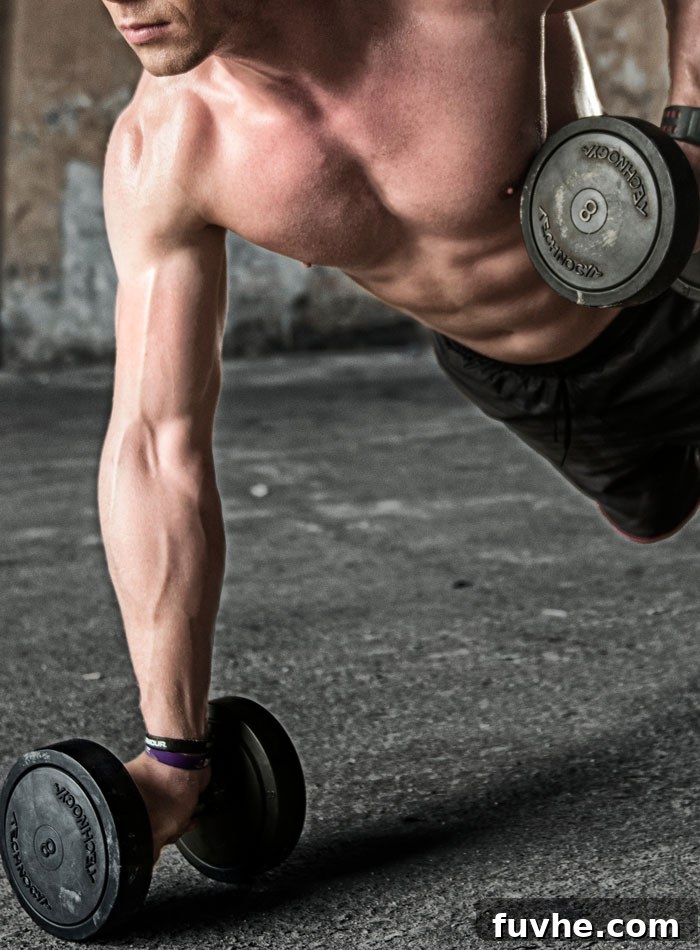
Grip strength is a critical, often underestimated, component of successful weightlifting. It encompasses everything from your elbows down to your fingertips, involving the forearms, wrists, and hands. For me, grip strength was once a limiting factor, hindering my ability to lift heavier weights and complete longer sets. However, by consistently incorporating specific grip strength exercises into my routine, I was able to dramatically improve it, which, in turn, significantly enhanced my overall lifting performance.
Developing strong grip strength, along with robust muscles and connective tissues in your hands and wrists, not only directly contributes to better lifting but also plays a vital role in injury prevention and faster recovery should an injury occur. A stronger grip also translates to greater endurance, allowing you to train harder for longer periods without prematurely fatiguing your hands and forearms. This is particularly crucial for pulling movements such as deadlifts, rows, and pull-ups, where your grip is often the first thing to fail. Prioritizing grip strength is an investment that pays dividends across your entire lifting journey.
Grip Strength Exercises to Incorporate
- Farmer Walks: Grab the heaviest dumbbells or kettlebells you can safely handle and walk for a set distance. I often do 5 sets of 50 meters as a powerful workout finisher.
- Dead Hangs off the Bar: Simply hang from a pull-up bar for time. Work on increasing your hold time, aiming for at least 60 seconds.
- Plate Pinch Holds or Walks: Pinch a weight plate (or two for more challenge) between your thumb and fingers. Hold for 30 seconds and repeat. You can either stand in place or perform short walks while maintaining the pinch.
- Bottoms-Up Kettlebell Holds and Presses: Holding a kettlebell upside down by the handle demands significant grip and wrist stability.
- Towel Farmer Walks, Pull-ups, or Hangs: Wrap a towel around a bar or dumbbell handle and hold onto the towel. This significantly increases the grip challenge.
- Wrist Extension and Flexion Exercises: Use light dumbbells or resistance bands to strengthen the muscles that control wrist movement.
8. Choose form over weight: The Golden Rule
It’s incredibly tempting to continually add more weight to the bar. Hitting bigger numbers feels great and is a significant motivator. However, this pursuit should never come at the expense of proper form. This is especially critical when you’re just starting out and your body is still learning the intricate movement patterns. Prioritize taking the time to absolutely nail the basics and perfect your technique with lighter weights. Building a solid foundation of correct form ensures that as your strength and the weights you lift increase, your body instinctively knows how to move safely and efficiently. Sacrificing form for heavier weight is a direct path to injury and halted progress. Master the movement, then progressively add load.
9. Ditch your ego: Focus on Your Personal Journey
The gym is no place for ego. It’s a space for personal growth and challenge, not comparison. You will inevitably encounter individuals who are half your size yet lift significantly heavier, or women who effortlessly out-lift you. You won’t always hit the numbers you expect, and sometimes, you’ll feel weaker than you thought. Pushing yourself harder than your body is ready for, simply to keep up or to satisfy your ego, dramatically increases your risk of injury and can lead to frustration and burnout. Let go of the need to compare yourself to others. Your weightlifting journey is uniquely yours. Focus intently on your own progress, celebrate your small victories, and listen to what your body tells you. This humble approach is the most sustainable and rewarding path to long-term success.
10. Be consistent: The Key to Lasting Results
Consistency is, without a doubt, the single most important factor when it comes to building strength and muscle. Sporadic workouts, such as once a week, simply won’t yield the results you’re hoping for. As discussed earlier, a great starting point is committing to 3 days of strength training per week. Make it a non-negotiable part of your schedule and strive for 100% consistency with this frequency. As you maintain this routine over time, consistency will become a deeply ingrained habit, and you will undeniably begin to see tangible and impressive results. Remember, frequent, steady effort always triumphs over infrequent, intense bursts.
11. Be realistic and stay patient: The Marathon, Not the Sprint
Like almost everything truly worthwhile in life, building strength and gaining muscle requires significant time, dedication, and consistent hard work. Developing into a proficient weightlifter is a journey that often spans years, even decades. I’ve been engaged in this pursuit since my teenage years and throughout my entire adult life, continually learning and evolving. If you are entirely new to lifting weights, your body will need a substantial period to adapt to the new physical demands placed upon it. This adaptation isn’t just about your muscles; your tendons, ligaments, and even your mental fortitude will need time to strengthen and catch up. You’ll also need to gradually adjust to increasing training volume over time to avoid injury and ensure continued progress. For an absolute beginner, it can easily take at least a year to feel genuinely solid and confident in the weight room. While you will certainly make noticeable progress in weeks and months, understand that profound, long-term changes unfold slowly. Don’t expect anything miraculous to happen overnight; embrace the gradual transformation.
One of my favorite guiding quotes is: “Never give up on a dream because of the time it will take to accomplish it. The time will pass anyway.” This powerfully illustrates the futility of inaction driven by impatience. What is the alternative to doing nothing because you believe progress will take too long? If you choose to do nothing, another year will still pass, and you will find yourself in the exact same place as today, or perhaps even having regressed. Most people tend to overestimate what they can accomplish in a single day or week, yet vastly underestimate the incredible progress they can achieve in a year. The ultimate goal of strength training is to make it a lifelong endeavor, so what’s the rush? Start today, shift your focus away from arbitrary short-term goals, and instead concentrate on simply being consistent. If you commit to this, the desired results will unfold naturally and powerfully over time.

12. Prioritize recovery: The Unsung Hero of Progress
There’s a popular saying in fitness, “There’s no such thing as overtraining, only under-recovering.” While not entirely true in every context, it highlights a crucial point: recovery is paramount to progress. Your muscles don’t grow during your workout; they grow and adapt during recovery. Neglecting recovery is a surefire way to plateau, experience burnout, and increase your risk of injury. Comprehensive recovery encompasses several key elements: adequate sleep, a nutrient-dense diet, consistent stretching and mobility work, active recovery sessions, therapeutic practices like ice baths or Epsom salt baths, essential mental breaks from the gym, and engaging in enjoyable activities with friends and family. Anything that helps your body and mind rejuvenate and heal should be considered a vital part of your training regimen. Prioritize recovery as much as you prioritize your lifting sessions.
13. Go for quality over quantity: Smarter, Not Just Harder
In weightlifting, intensity is just as crucial as volume. If you find yourself in the gym 6 days a week, constantly struggling to make progress or hit your prescribed numbers in each session, it might be time to re-evaluate. Consider scaling back your frequency and instead approaching each workout with greater focus, intention, and intensity. Four high-quality, intensely focused sessions per week will almost always be more effective and productive than struggling through six mediocre ones. In this case, more is not always better. Pushing too hard without seeing results can quickly lead to mental burnout, sucking the joy out of your training. Ensure your training remains an enjoyable and sustainable part of your lifestyle by valuing quality over sheer quantity.
14. Up your mental game: The Mind-Muscle Connection
Weightlifting is as much a mental challenge as it is a physical one. To enhance your mental toughness and overcome self-doubt, practice visualization. Before attempting a challenging lift, vividly imagine yourself successfully executing it with perfect form. Elite athletes across all sports consistently speak to the critical importance of visualization and mental fortitude in their performance. It’s imperative to approach each training session with unwavering focus and a powerful mindset. Enter the gym with the conviction that every rep is an opportunity to strengthen not only your body but also your mind. Cultivate a belief in your capabilities, and you’ll unlock reserves of strength you didn’t know you possessed.
15. Don’t be afraid to fail: The Path to Growth
To truly progress and discover your limits, you must occasionally aim for those big, challenging numbers. Sometimes you will fail, and that’s not just okay – it’s an essential part of the growth process. What’s the worst that can happen? More importantly, what’s the best that can happen if you succeed? There are moments when you simply have to go for it. As you gain more weightlifting experience, you’ll develop an intuitive sense of when it’s appropriate to push beyond your comfort zone and test your boundaries. The ability to do this courageously stems not only from physical strength but equally from mental strength, both of which you will steadily build as you continue along your strength training journey. Pushing beyond your known limits, even when failure is a distinct possibility, is precisely where true growth occurs. It will be uncomfortable, but sustained progress and meaningful development rarely happen without a little discomfort.

16. Be prepared for hard work: The Rewarding Challenge
Weightlifting is inherently challenging, and that very difficulty is precisely what makes it so incredibly rewarding. Remind yourself that nothing truly worthwhile ever comes easily. Be mentally and physically prepared to push your limits and unlock your full potential. Embrace the struggle, because the sense of accomplishment and the tangible results you achieve will undoubtedly be worth every single ounce of effort you invest. The journey itself builds character, and the destination—a stronger, more resilient you—is a magnificent reward.
17. Consider lifting shoes: Enhancing Stability and Performance
Among the few pieces of specialized equipment, my lifting shoes are probably the one I use most regularly. Lifting shoes are designed with an elevated, incompressible heel and a flat, rigid sole, which collectively create a stable and powerful platform for lifting. The elevated heel specifically helps improve your squat mechanics by allowing for a deeper, more upright torso position, particularly beneficial for individuals with ankle mobility limitations. Generally, I feel significantly more stable and grounded when lifting in them, especially during squats and Olympic lifts. I invested in a pair of Nike Romaleos several years ago, and they have proven to be incredibly durable, still performing as good as new.
While I’ve also tried CrossFit-style Reebok Lifters, I didn’t find them as supportive or comfortable as the Nikes for dedicated Olympic lifting. If you primarily do CrossFit and might want to wear lifters for certain metcons, the crossover lifters from Reebok could be a suitable choice. However, if your passion lies predominantly in Olympic weightlifting and powerlifting, I highly recommend exploring options like the Nike Romaleos or Adidas powerlifting shoes. They are by no means a strict requirement, especially for beginners or depending on your lifting style, but I almost always wear mine for squatting and Olympic lifting. Plus, they can be quite fun to wear and definitely contribute to feeling a bit more ‘badass’ in the gym!
Beyond shoes and a weightlifting belt (which I also use consistently for heavier lifts), there isn’t much else I regularly incorporate. However, some individuals find the following accessories to be very useful as they gain experience. You can investigate these suggestions as your training progresses and your needs evolve.
Weightlifting Accessories to Explore
- Wrist wraps: Provide support to the wrists during pressing movements.
- Lifting straps: Aid grip strength for heavy pulling movements like deadlifts, allowing you to focus on the primary muscles.
- Weightlifting belt: Offers core support and helps increase intra-abdominal pressure during heavy compound lifts, protecting the lower back.
- Knee sleeves: Provide compression and warmth to the knees, offering a sense of support during squats and other knee-dominant movements. I use these occasionally if my knees feel a bit tender or need extra support.
- Fun socks: Everyone needs a couple of expressive pairs of Stance Socks to add personality and motivation to their gym attire!
18. Don’t skip mobility and flexibility: The Cornerstone of Functional Strength
Strength alone will only take you so far if you lack the mobility and flexibility to effectively utilize that strength. Conversely, being highly mobile and flexible without developing foundational strength is equally limiting. These two components go hand in hand, acting as synergistic partners in creating a truly functional and resilient body. I strive to dedicate at least 10 minutes daily to stretching and specific mobility exercises, particularly focusing on my chronically tight shoulders, chest, and hips. These areas commonly experience limited mobility, especially for individuals who spend a significant amount of time sitting at a desk or driving.
Key areas to prioritize for improved mobility include enhancing thoracic (upper back) and scapular (shoulder blade) mobility to ensure healthy shoulders, along with improving flexibility and range of motion in the ankles, feet, hips, and glutes. These foundational mobility aspects are crucial for deep squats, overhead lifts, and maintaining pain-free movement in daily life. Below, I’ve listed some effective tools, programs, and videos that can help you address these and other areas of your body.
Best Tools for Mobilization and Myofascial Release
- Foam roller: An absolute must-have for self-massage, rolling out tight muscles, and improving overall mobility at home. It’s particularly effective for releasing tension in the upper back (thoracic spine) area.
- Massage ball and myofascial release set: Inexpensive and incredibly effective for targeting smaller, harder-to-reach areas like glutes, shoulders, and feet. Be prepared for some intense pressure, but the relief is immensely satisfying!
- Massage roller stick: Excellent for working on larger muscle groups like quadriceps, hamstrings, and calves. It feels wonderfully intense in a beneficial way.
- Trigger point self-massage stick: This tool is a game-changer for working out stubborn knots and trigger points. Get one – you won’t regret it.
- Resistance bands for stretching: Super versatile and handy for assisted stretching of virtually every body part, from shoulders and lats to hips and hamstrings.
- Muscle floss bands: These compression bands are amazing for reducing muscle soreness, improving range of motion, and breaking up adhesions. They are easy to use at home, even while watching TV.
19. Eat well to support your training: Nutrition is Your Fuel
Nutrition and strength training are inextricably linked; they go hand in hand. You simply won’t achieve your full potential in the gym without a solid and consistent nutrition plan. You can train with all the intensity and dedication in the world, but if your diet isn’t supporting your efforts – at least most of the time – you’ll be leaving significant gains and recovery benefits on the table. For those aiming to build muscle, ensuring you consume adequate calories and macronutrients (protein, carbs, fats) is crucial for muscle protein synthesis and energy. It can be incredibly helpful to track your food intake for a couple of weeks to gain insight into whether you’re meeting your nutritional needs, and conversely, not consuming excessive amounts that might hinder progress. Fueling your body properly is just as important as the training itself.
20. Have fun and enjoy the process: Find Your Joy in Lifting
Ultimately, your time in the gym should be enjoyable. If you’re new to weightlifting, it’s perfectly normal to feel a bit uncomfortable or even out of place at first. Push through that initial awkwardness and keep going. Actively try to find fun and satisfaction in the challenge, because once you navigate through the beginner stages and weightlifting becomes a cemented part of your lifestyle, it’s truly an awesome and empowering experience. Experimenting with different gyms, training styles, or even various types of workouts at the beginning can help you discover what you genuinely enjoy. While weightlifting is something we should do for our health, persist until it transforms into something you eagerly want to do. That’s when it becomes a sustainable and joyful lifelong practice.
21. Find a training partner or group: The Power of Community
This is precisely why CrossFit is often so effective for individuals new to fitness. When you join a CrossFit gym, you immediately gain access to a supportive community of training partners, new friends, and a group environment that fosters accountability. Moreover, you’ll have a qualified coach present at every training session. The social aspect of group training is incredibly powerful at keeping us motivated and consistently returning, even when the workouts are gruelling. Regardless of the type of gym you train at, having a training partner or even just someone you can regularly discuss your lifting journey with goes a long way. Sharing your struggles, celebrating your successes, and having that mutual support can significantly enhance the enjoyment and sustainability of your training. A shared journey is often a more fulfilling one.
22. Stay hydrated all day long: The Essential Fluid
While drinking water during your gym session is undoubtedly important, do not underestimate the critical importance of consistent hydration throughout your entire day. You want to arrive at the gym already well-hydrated, and continue to hydrate effectively afterwards to optimally assist in muscle recovery and overall physiological function. Invest in a good quality, reusable water bottle and make it your constant companion. If you begin to feel thirsty, you’re already in a state of mild dehydration. Sip water consistently throughout the day to maintain optimal energy levels, improve mental focus and productivity, and ensure you perform at your absolute best, both in and out of the gym. Hydration is the unsung hero of peak performance and health.
23. Recognize every win: Celebrate Your Progress
It’s common for us to be overly critical of ourselves when tracking progress in the gym. Daily or even weekly progress can sometimes be hard to perceive, even if, upon looking back a year or two, you’ve made incredible leaps and bounds. To combat this, we can redefine what constitutes a “win.” By acknowledging even the smallest amounts of progress or non-weight-related achievements as victories, we can experience more frequent successes and build momentum towards bigger goals. Did you make it to the gym on a day you really didn’t feel like it? That’s a WIN. Did you manage one extra rep compared to last week when you dropped the bar? That’s a WIN. Did you execute a back squat with perfect form, a movement you once struggled with? Absolutely a WIN. Lifting heavier weights is not the only metric of success in the gym; consistency, improved form, and showing up are equally, if not more, valuable.
On a related note, always refer back to the principles of patience, consistency, and hard work. Getting stronger is a gradual process, and nothing truly significant happens overnight. I’ve spent more than a year to achieve a personal record on certain lifts, but that’s perfectly fine. We are here for the journey, after all. Embrace and enjoy the process of training, and the results will inevitably follow.
24. No weights, no problem: The Power of Bodyweight Training
While we’ve discussed weightlifting extensively, it’s important not to overlook the remarkable effectiveness of bodyweight workouts if you don’t have access to traditional weights. Workouts requiring no equipment can be performed virtually anywhere, at any time, making them an excellent option for home training or when you’re traveling. Think about the foundational power of exercises like lunges, squats, sit-ups, push-ups, and planks. These movements build incredible functional strength and endurance. If you lack access to a gym or don’t have any equipment at home, rest assured, you can still get into fantastic shape using just your own bodyweight. Don’t let perceived limitations hold you back from starting your fitness journey.
25. Track your Progress: Document Your Journey
Whether you opt for a dedicated fitness app or a classic notebook and pen, I highly recommend tracking your workouts in some form. It’s incredibly rewarding and motivating to look back and visualize your progress over time, seeing how far you’ve come. Beyond motivation, tracking your numbers (weights lifted, reps performed, sets completed) is crucial for ensuring progressive overload – the gradual increase in stress placed on the body – which is essential for continued strength and muscle gains. A detailed log allows you to make informed adjustments to your program, ensuring you’re continually challenging yourself effectively and avoiding plateaus. Don’t guess; track your success!
26. Inspiration Only Zone: Curate Your Digital Environment
In today’s digital world, your social media feed can be a powerful tool for motivation or a source of distraction and self-doubt. Make a conscious effort to fill your Instagram feed and other platforms with accounts that genuinely inspire and uplift you. Mine, for instance, is rich with content from strong female CrossFit athletes and my favorite Olympic weightlifters. This means every time I browse my feed, I’m immersed in a stream of positive inspiration, alongside a healthy dose of delicious, nourishing food ideas. Curate your digital environment to reinforce your goals and support your journey, transforming it into a constant source of encouragement and motivation rather than comparison.
Do What You Can with What You Have: Overcoming Barriers to Start
Many people become overwhelmed by the perceived complexities of getting started with weightlifting, leading them to not start at all. This inertia is understandable but entirely avoidable. Don’t overthink it; just do something. Any effort is always superior to no effort. Commit to doing what you can with the resources and time you have available at any given moment. Perhaps you only have 15 minutes in your day? Work with those 15 minutes – you can accomplish a surprising amount in a short, focused burst. Maybe you can only work out at home? Excellent! Get yourself a set of dumbbells and begin there. You can achieve tremendous results with just a basic set of weights and the space of your living room floor. The key is to eliminate excuses and empower yourself to start right where you are.
If you’re planning to work out primarily at home, here’s some recommended beginner equipment to get started effectively:
- A couple sets of dumbbells in various weights or a set of PowerBlocks: This allows for progressive overload and a wide range of exercises.
- A kettlebell: Extremely versatile for both strength and conditioning workouts.
- A yoga mat: Provides comfort and grip for floor exercises.
If you have more space and are ready to invest in building a more comprehensive home gym, consider adding:
- A barbell: Essential for compound lifts like squats, deadlifts, and presses.
- Weight plates: Start with lighter plates (5, 10, and 15 lb.) and gradually add heavier ones (25 and 45 lb.) as your strength increases.
- A squat rack: Provides safety and stability for heavy barbell exercises, particularly squats and bench presses.
- Medicine balls: Great for dynamic movements, core work, and explosive training.
- A weight bench: Versatile for bench presses, dumbbell rows, and various other exercises.
What’s Next? Your Journey Begins!
So, what else is there to say? You are capable of achieving incredible things. Don’t postpone your strength journey any longer; seize the day and get started today! Wait, hold on… just one last thing! I genuinely want to hear from you. Have you tried a strength training program before? What specific areas have you struggled with regarding consistency? If you’re an experienced lifter, what is your absolute favorite aspect of weightlifting? Share your thoughts and let’s inspire each other!