
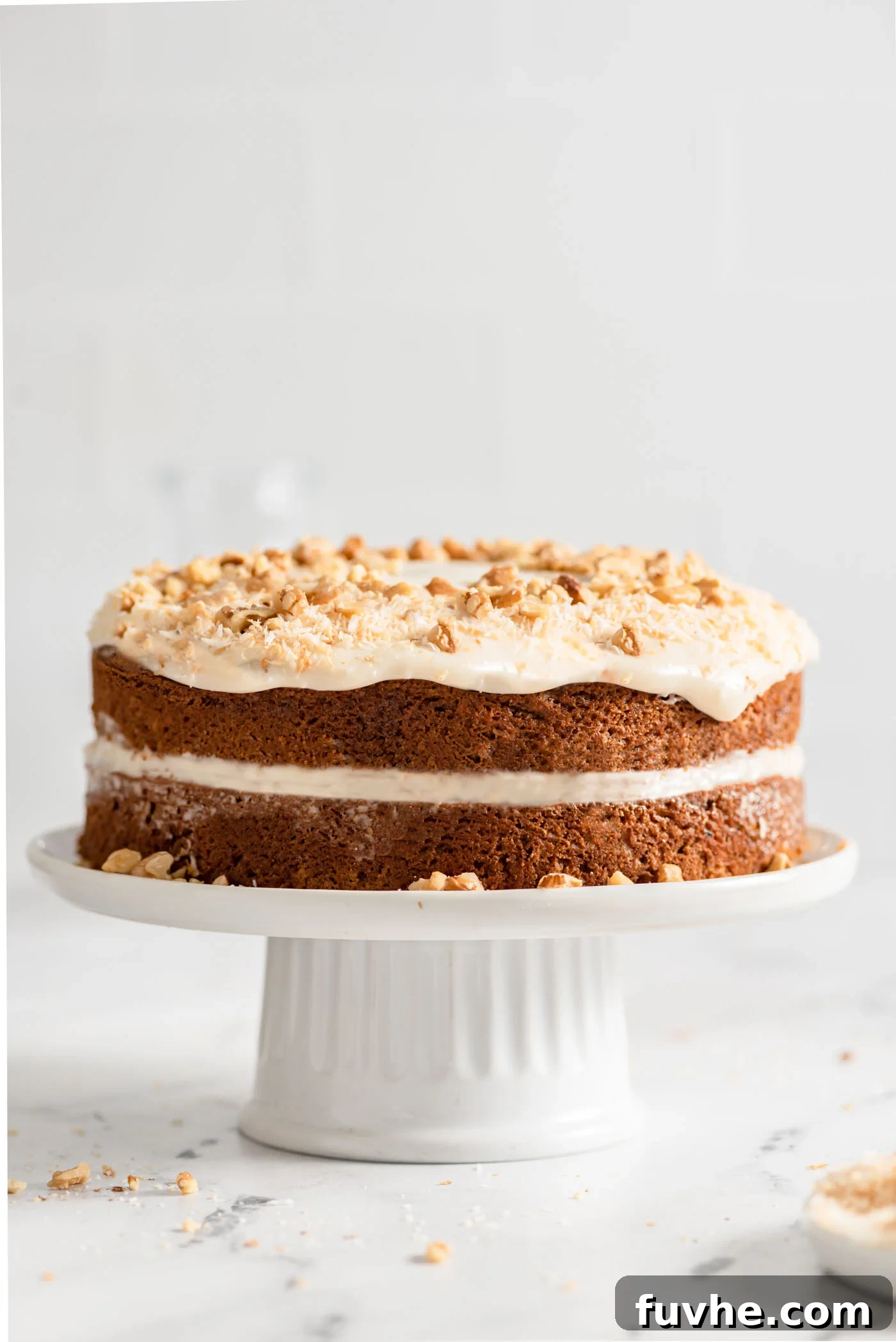
Welcome to the ultimate guide for baking the most incredibly delicious vegan carrot cake! This recipe delivers a perfectly moist, exquisitely spiced, and wonderfully sweet cake that is entirely egg-free and dairy-free, making it ideal for vegans, those with allergies, or anyone simply looking to enjoy a wholesome, plant-based treat. Whether you’re celebrating a special occasion, hosting a gathering, or simply craving a comforting dessert, this easy-to-follow vegan carrot cake recipe is guaranteed to impress. Its tender crumb and rich flavor make it a standout, proving that plant-based baking can be just as, if not more, delightful than traditional methods.
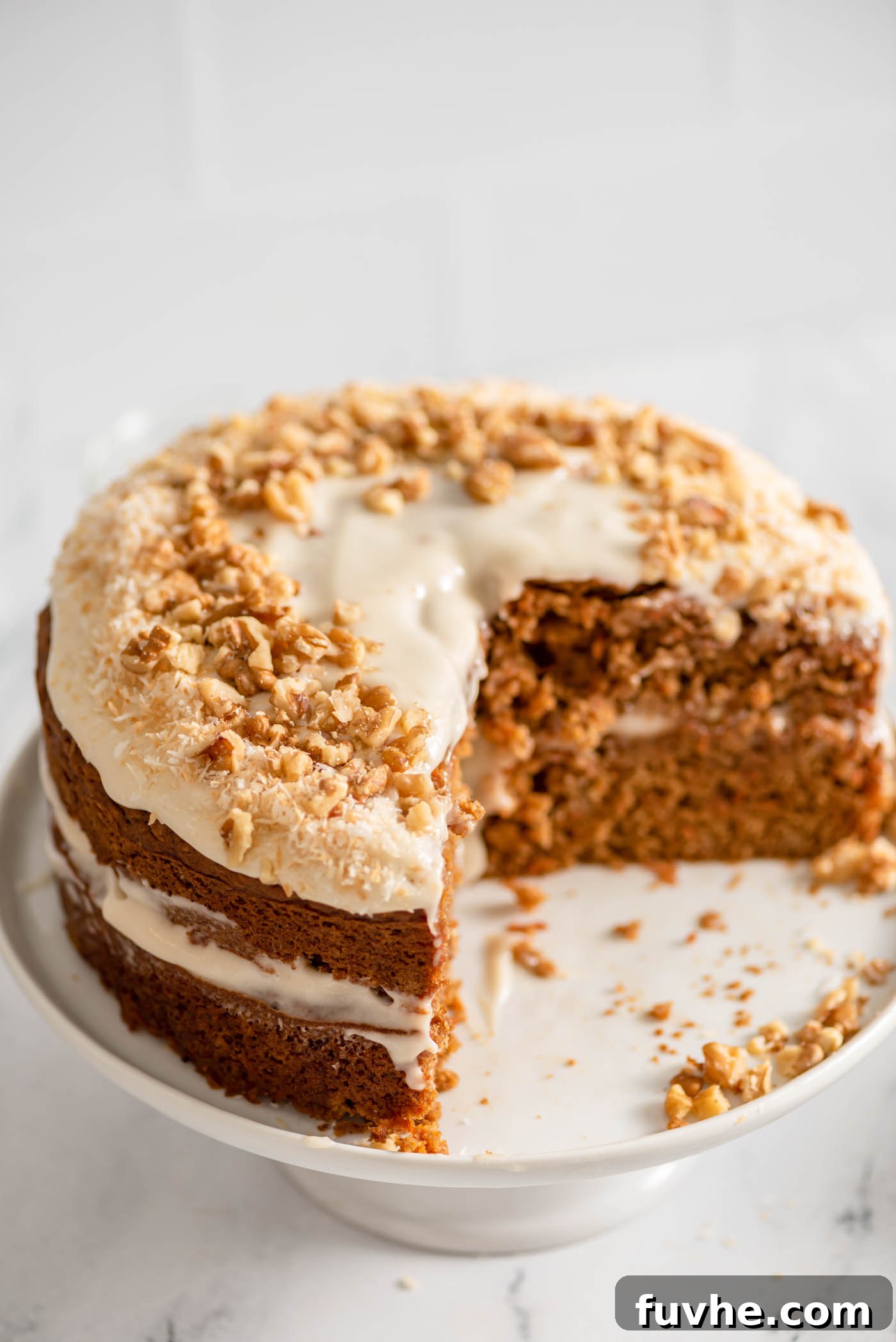
Why You’ll Absolutely Adore This Vegan Carrot Cake
This isn’t just another carrot cake recipe; it’s a testament to how flavorful and satisfying plant-based baking can be. Prepare to fall in love with a dessert that’s not only consciously crafted but also bursting with classic, comforting taste. Here’s why this vegan carrot cake will become your new go-to:
- Unbelievably Moist and Perfectly Spiced: Every bite offers a soft, tender crumb infused with a harmonious blend of warm spices like cinnamon, nutmeg, and ginger. It’s the ideal balance of sweetness and aromatic depth.
- Remarkably Versatile: Whether you envision an elegant double-layer cake for a celebration, a convenient sheet cake for a potluck, or delightful individual cupcakes, this batter adapts flawlessly to your preferred baking format.
- Simple, Wholesome Ingredients: Crafted using everyday staples, this recipe proves that extraordinary desserts don’t require obscure or complicated components. You likely have most of what you need in your pantry already!
- Two Irresistible Frosting Options: Choose between our luscious cashew cream cheese frosting for a naturally sweet and tangy finish, or a classic cream cheese frosting made with readily available store-bought vegan cream cheese. Both are incredibly delicious and elevate the cake to perfection.
- Completely Plant-Based Perfection: This recipe is 100% vegan, meaning it’s entirely dairy-free and egg-free. It’s an inclusive dessert that everyone can enjoy without compromise on flavor or texture.
Craving Carrot Cake Flavor Without the Baking Commitment?
If you love the taste of carrot cake but are short on time or simply in the mood for something different, we have you covered! Explore these delightful alternatives that capture all the comforting flavors you crave:
- Carrot Cake Banana Bread: A delightful fusion of two beloved classics, offering a moist and flavorful loaf that’s perfect for breakfast or a snack.
- Healthy Vegan Carrot Cake Smoothie: A quick, nutritious, and surprisingly satisfying way to enjoy all the spicy sweetness of carrot cake in a glass.
- No-Bake Carrot Cake Energy Balls: Ideal for wholesome snacking, these bite-sized treats are packed with flavor and require no oven time.
Essential Ingredients for Your Healthy Vegan Carrot Cake
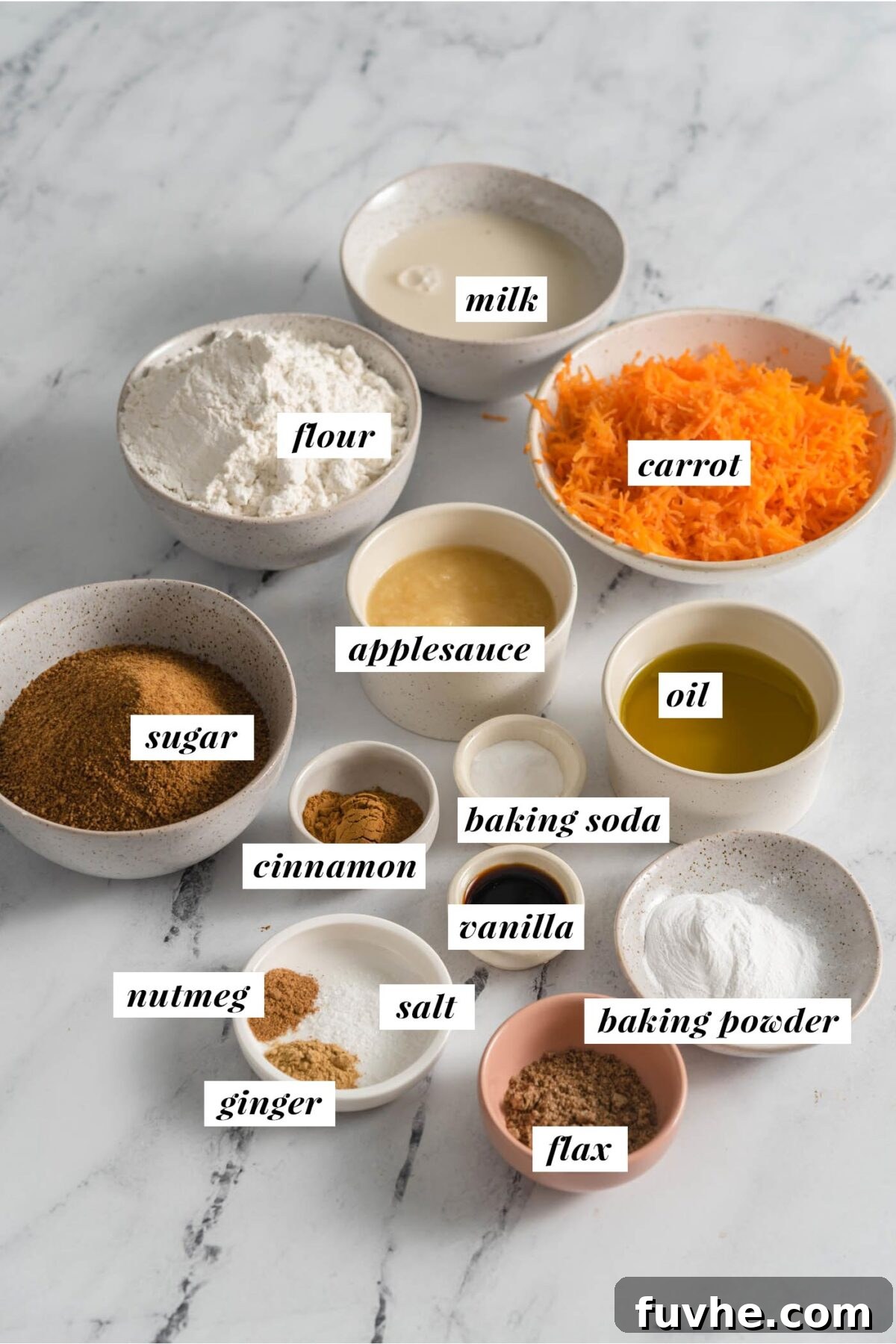
Crafting an exceptional vegan carrot cake starts with selecting quality ingredients. Here’s a detailed breakdown of what you’ll need and some valuable tips to ensure the best possible outcome for your plant-based masterpiece:
- Ground Flaxseed (for Flax Egg): This ingredient is your hero for replacing eggs in vegan baking. When mixed with warm water, ground flaxseed creates a gelatinous consistency that acts as a powerful binder and adds essential moisture to the cake. For optimal performance, ensure your ground flaxseed is fresh; older flax can lose its binding power and develop an unpleasant taste. Storing it in the freezer is an excellent way to maintain its freshness for longer.
- Plant-Based Milk: The beauty of vegan baking lies in its versatility. You can confidently use unsweetened oat milk, almond milk, or cashew milk in this recipe. Oat milk often lends a lovely creamy richness, while almond and cashew milk offer lighter alternatives. Always opt for unsweetened varieties to have full control over the cake’s sweetness.
- Sweetener (Brown Sugar or Coconut Sugar): Both brown sugar and coconut sugar are fantastic choices for this carrot cake. They not only provide the necessary sweetness but also contribute significantly to the cake’s moist texture and impart subtle, delightful caramel undertones. Coconut sugar is often favored for its slightly lower glycemic index and less refined nature, but classic brown sugar works just as well for that traditional carrot cake flavor.
- Neutral Oil (Olive, Melted Coconut, or Canola): A high-quality, neutral-flavored oil is crucial for achieving a moist cake without introducing unwanted dominant flavors. Olive oil, melted coconut oil, or canola oil are all excellent options. If you choose melted coconut oil, a critical tip is to ensure all your other wet ingredients are at room temperature. Cold ingredients can cause the coconut oil to re-solidify into small lumps, resulting in an uneven batter texture.
- Fresh Carrots: The namesake and star of our cake! Use fresh, firm carrots for the best flavor and moisture. The specific variety of carrot is less important than how you prepare them: they must be finely grated. This ensures they soften and “melt” seamlessly into the cake during baking, distributing their natural sweetness and moisture throughout without leaving large, crunchy bits.
- Walnuts and Shredded Coconut (Optional Add-ins and Toppings): These optional additions provide wonderful textural contrast and a boost of nutty and tropical flavors. Walnuts can be folded directly into the cake batter for a delightful crunch or reserved as a garnish. Toasting both walnuts and shredded coconut before use significantly deepens their flavor profile and adds a beautiful golden-brown appearance.
- Spices (Cinnamon, Nutmeg, Ginger, Sea Salt): The soul of any great carrot cake lies in its aromatic spice blend. Freshly ground cinnamon, nutmeg, and ginger are indispensable for that warm, comforting, and distinctive carrot cake taste. Don’t underestimate the role of sea salt; it perfectly balances the sweetness and enhances all the other flavors, making them sing.
- Unsweetened Applesauce: This humble ingredient serves multiple purposes in our vegan cake. It acts as an additional binder, contributes natural sweetness, and crucially, adds extra moisture, which allows us to reduce the amount of oil or sugar while still achieving a wonderfully tender crumb.
- Baking Powder and Baking Soda: These are the leavening agents responsible for giving your cake its airy, light, and fluffy texture. Always ensure your baking powder and baking soda are fresh and active for the best rise; expired leaveners can lead to a dense, flat cake.
This list provides a comprehensive overview of the key components. For the complete list of ingredients, including precise measurements for both the cake and the frosting options, please refer to the detailed recipe card conveniently located at the end of this post.
Crafting Your Perfect Vegan Carrot Cake: A Detailed Step-by-Step Guide
Before You Begin: It’s essential to set your oven to a consistent 350°F (175°C) to ensure even baking. While the oven preheats, prepare two 8-inch round baking pans. Generously spray them with cooking spray, then line the bottoms with parchment paper. A helpful trick is to spray a little extra cooking spray under the parchment paper; this helps it stick securely to the pan. For ease of removal, I highly recommend using springform pans or those with removable bottoms, although any standard round baking pans will work perfectly.
Step 1: Prepare Your Flax Egg. In a small bowl, combine 1 tablespoon of ground flaxseed with 3 tablespoons of warm water. Stir these two ingredients thoroughly until they are well mixed. Set this mixture aside for 5-10 minutes; during this time, it will thicken into a gelatinous, egg-like consistency, which will act as our perfect vegan binder.
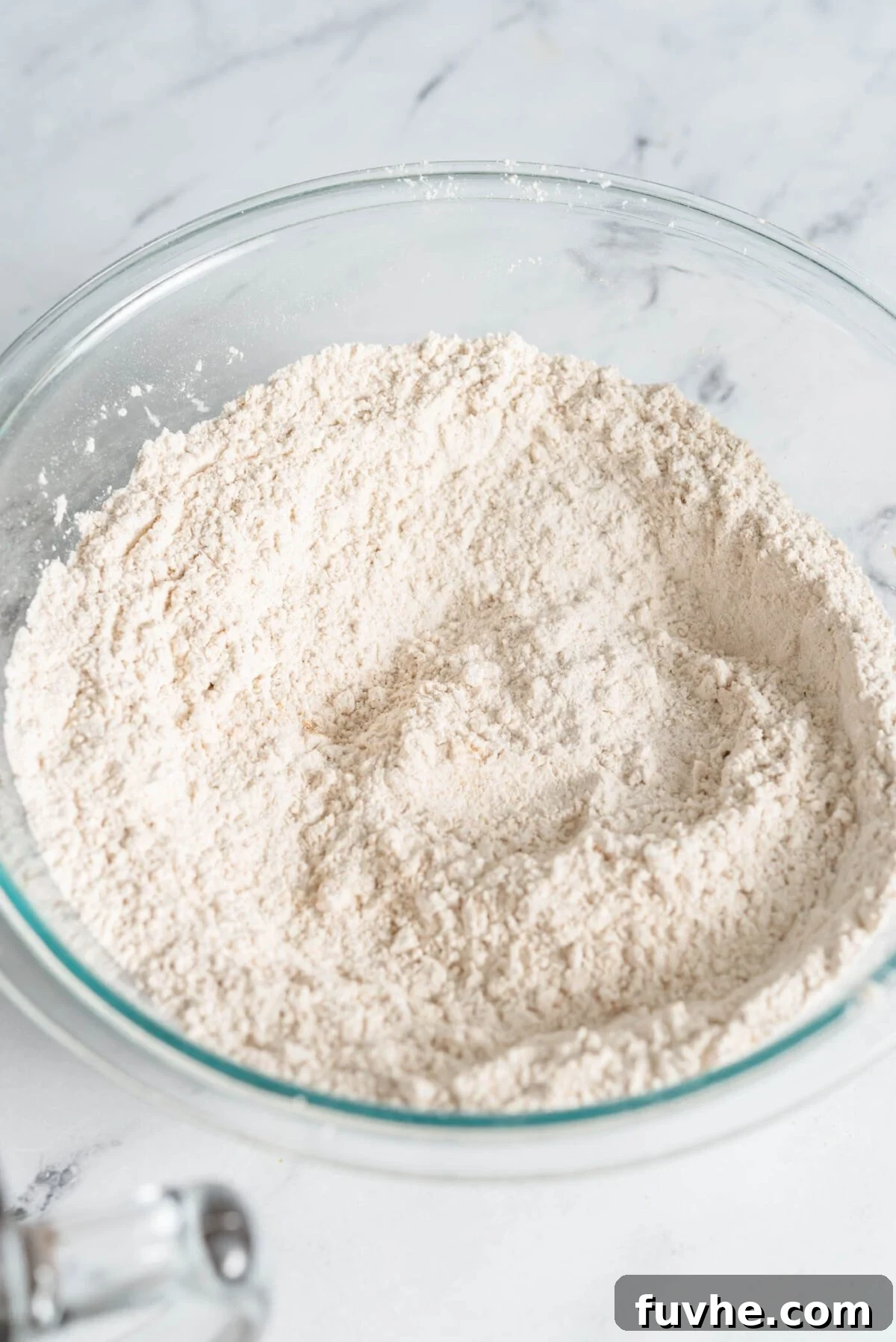
Step 2: Combine the Dry Ingredients. In a large mixing bowl, meticulously whisk together the all-purpose flour, baking powder, baking soda, ground cinnamon, nutmeg, ginger, and sea salt. It’s crucial to whisk these ingredients very well to ensure that the leavening agents and all the aromatic spices are evenly distributed throughout the flour. This diligent mixing prevents any pockets of unmixed ingredients and guarantees a consistent rise, texture, and flavor in every single bite of your baked cake.
Baking Pro Tip: For truly consistent and accurate results, particularly in the precise science of baking, a digital kitchen scale is an indispensable tool. Measuring ingredients by weight (grams or ounces) rather than by volume (cups) eliminates common inaccuracies caused by packing flour too tightly or not enough. Investing in an affordable kitchen scale will significantly enhance the reliability and success of all your baking endeavors!
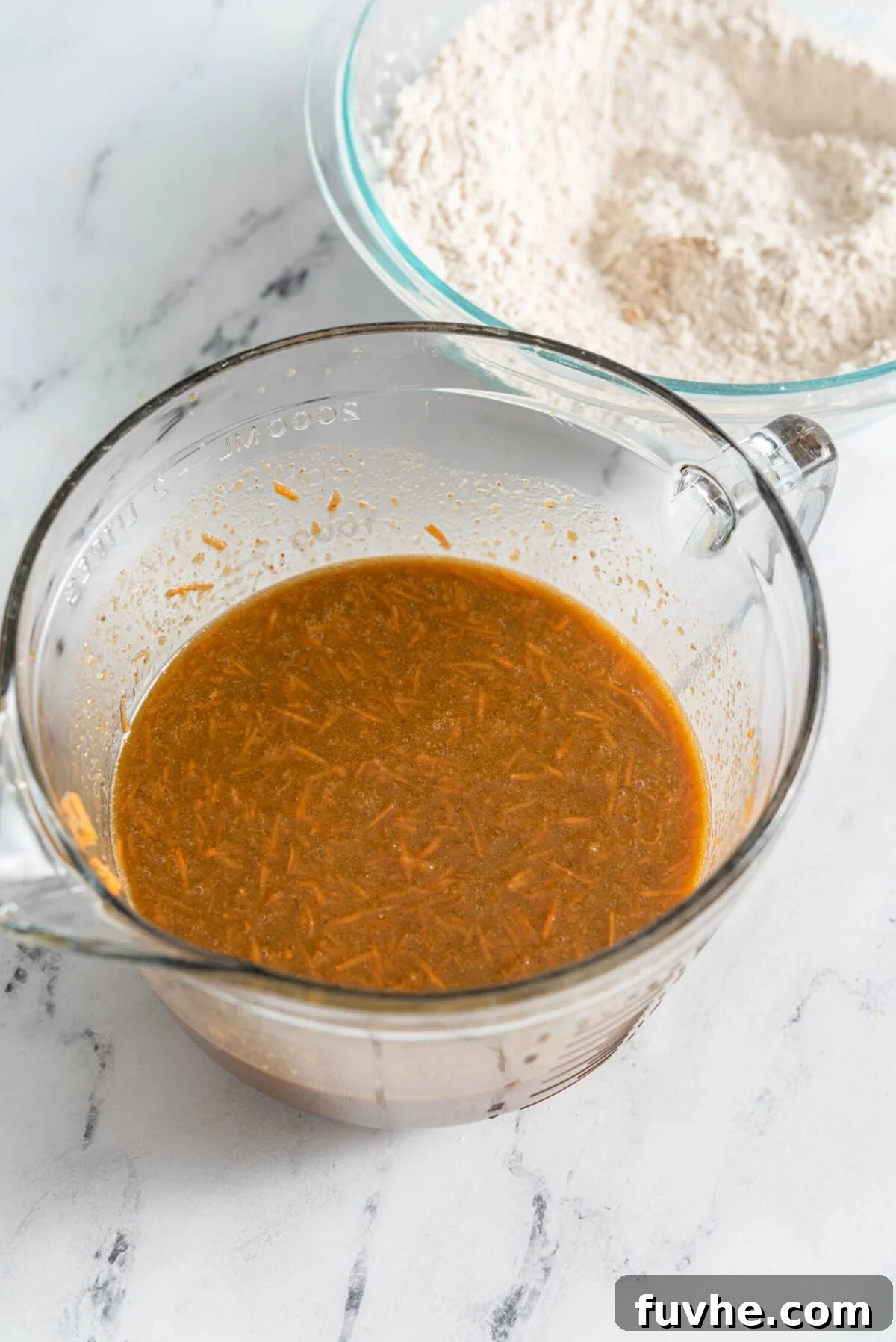
Step 3: Whisk Together the Wet Ingredients. In a separate, medium-sized mixing bowl, whisk together the unsweetened applesauce, your chosen plant-based milk, vanilla extract, coconut or brown sugar, neutral oil, and the prepared flax egg until they are thoroughly combined and create a smooth, homogenous mixture. Once these liquids are harmoniously blended, gently fold in the finely grated carrots. The vibrant color and natural sweetness of the carrots are absolutely essential here, contributing both flavor and moisture to the cake.
Crucial Carrot Tip: Finely grate your carrots for an optimal texture! This step is paramount. Using the absolute finest holes on your box grater ensures that the carrots “melt” seamlessly and almost invisibly into the cake batter during baking. This results in a superior, tender, and moist texture throughout the cake, preventing any unwanted large, tough, or chunky pieces, and allowing the natural carrot flavor to beautifully infuse every single bite.
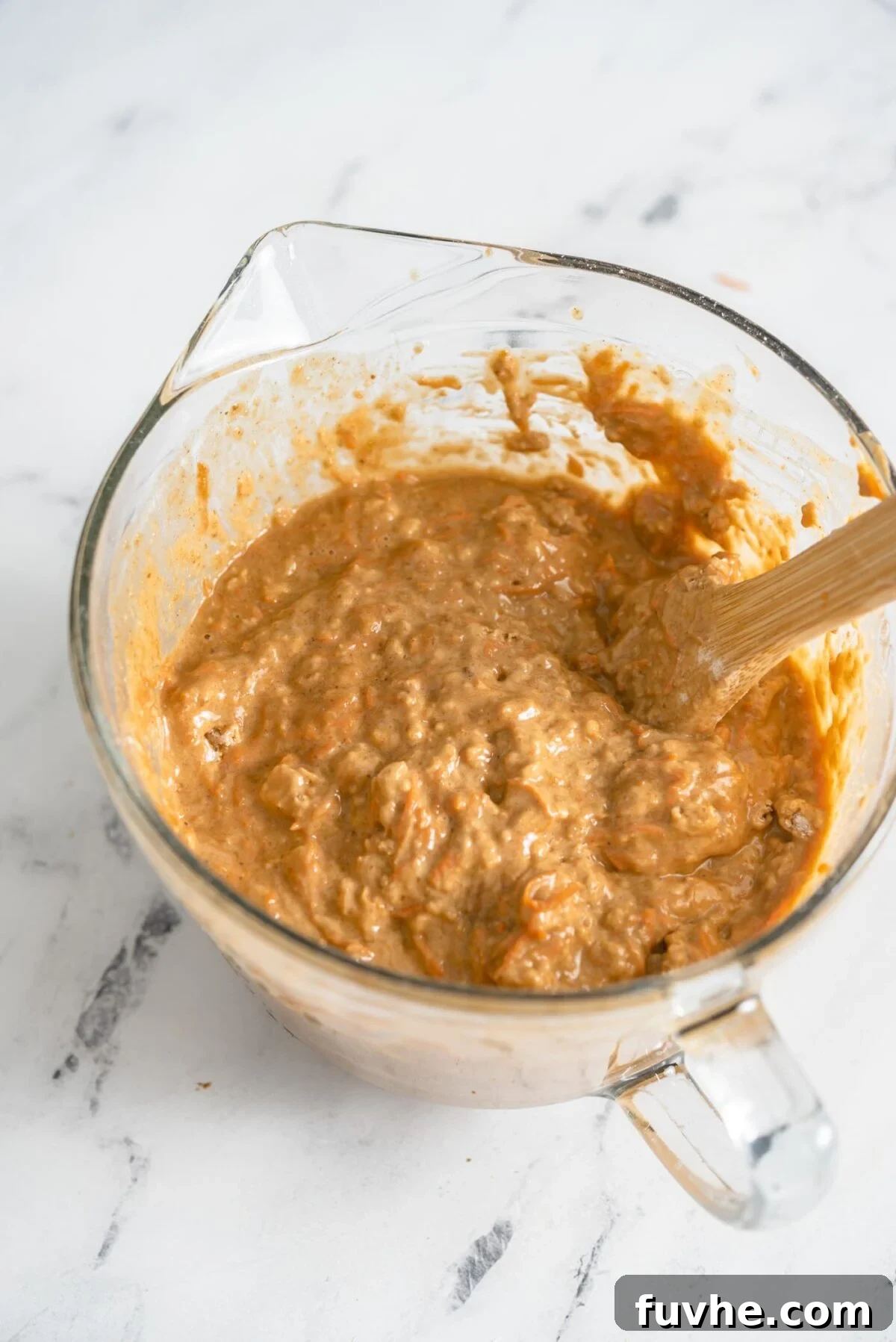
Step 4: Gently Combine Wet and Dry Mixtures. Now it’s time to bring everything together. Pour the wet ingredients mixture into the bowl containing your dry ingredients. Using a spatula or a sturdy wooden spoon, gently fold them together until they are *just combined*. This step is of utmost importance for achieving a light, airy, and fluffy cake texture. **Absolutely avoid overmixing!** The moment you no longer see streaks of dry flour, stop mixing immediately. Overmixing will cause the gluten in the flour to develop too much, which will inevitably lead to a dense, tough, and less tender cake.
If you’ve decided to include chopped toasted walnuts directly into your cake batter for an added layer of nutty flavor and crunch, now is the ideal moment to gently fold them in. For detailed instructions on how to perfectly toast walnuts to bring out their best flavor, please refer to the “Creative Topping and Decoration Ideas” section located further down this page.
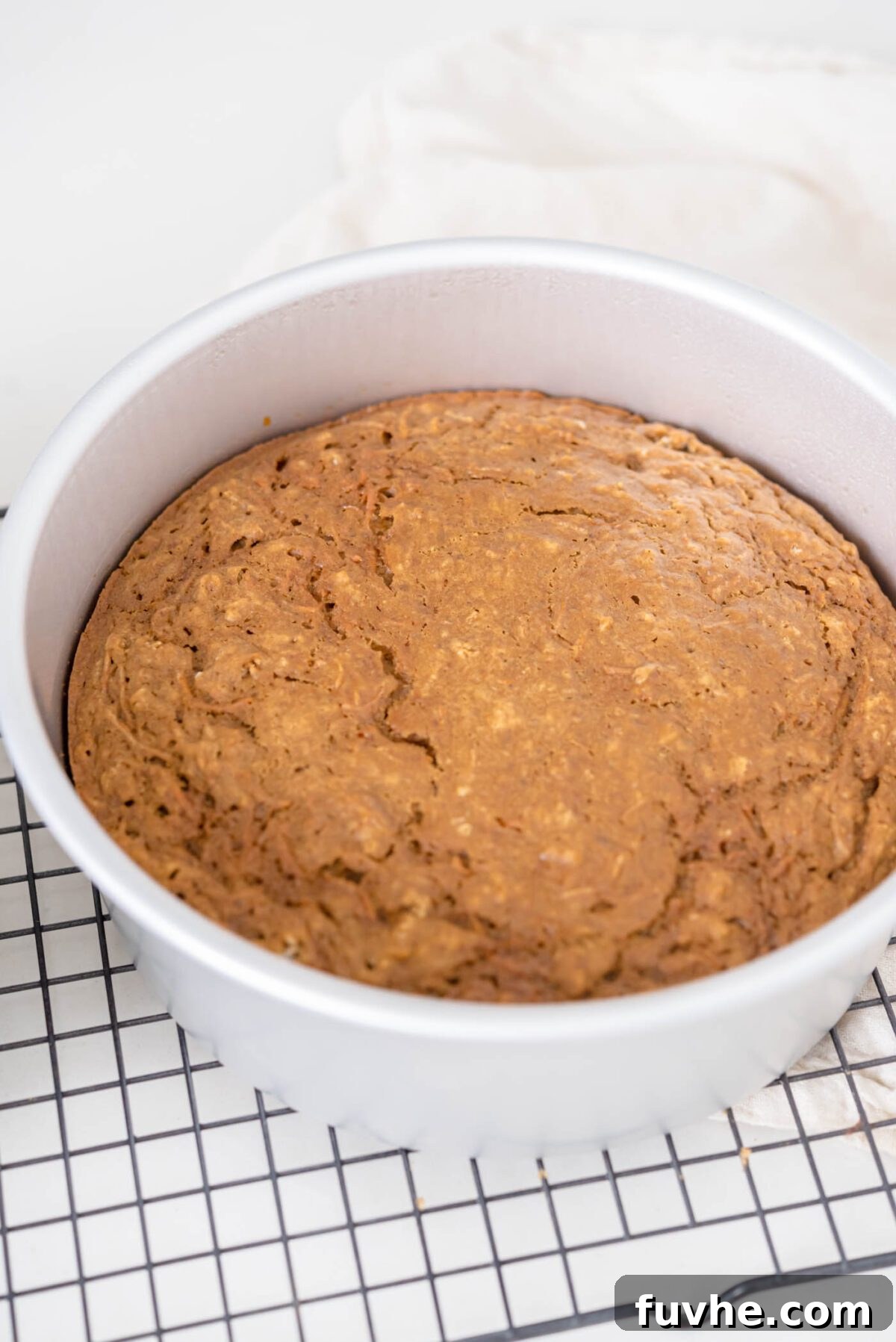
Step 5: Bake and Cool Your Cake Layers. Carefully divide the prepared carrot cake batter evenly between your two greased and parchment-lined baking pans. Use a spatula to gently smooth the tops of the batter, ensuring an even layer in each pan. Bake for approximately 30-35 minutes. To check for doneness, insert a toothpick into the center of one of the cakes; it should come out clean, indicating the cake is fully cooked. Once baked, remove the cakes from the oven and allow them to cool completely in their pans on a wire rack. **This step requires patience! Frosting a warm cake will inevitably lead to a melted, runny, and ultimately messy frosting disaster!**
While the Cakes Cool: Prepare Your Chosen Frosting. The cooling period for your cakes is the perfect window to whip up your frosting. You have two absolutely delightful options to choose from, both designed to perfectly complement the spiced carrot cake. You can opt for a rich and tangy cashew-based cream cheese frosting, which offers a healthier, more whole-foods approach, or a quicker and equally delicious version made with store-bought dairy-free cream cheese and powdered sugar. Both options yield incredibly tasty results! Detailed recipes for both frostings are conveniently provided in the complete recipe card found at the conclusion of this post.
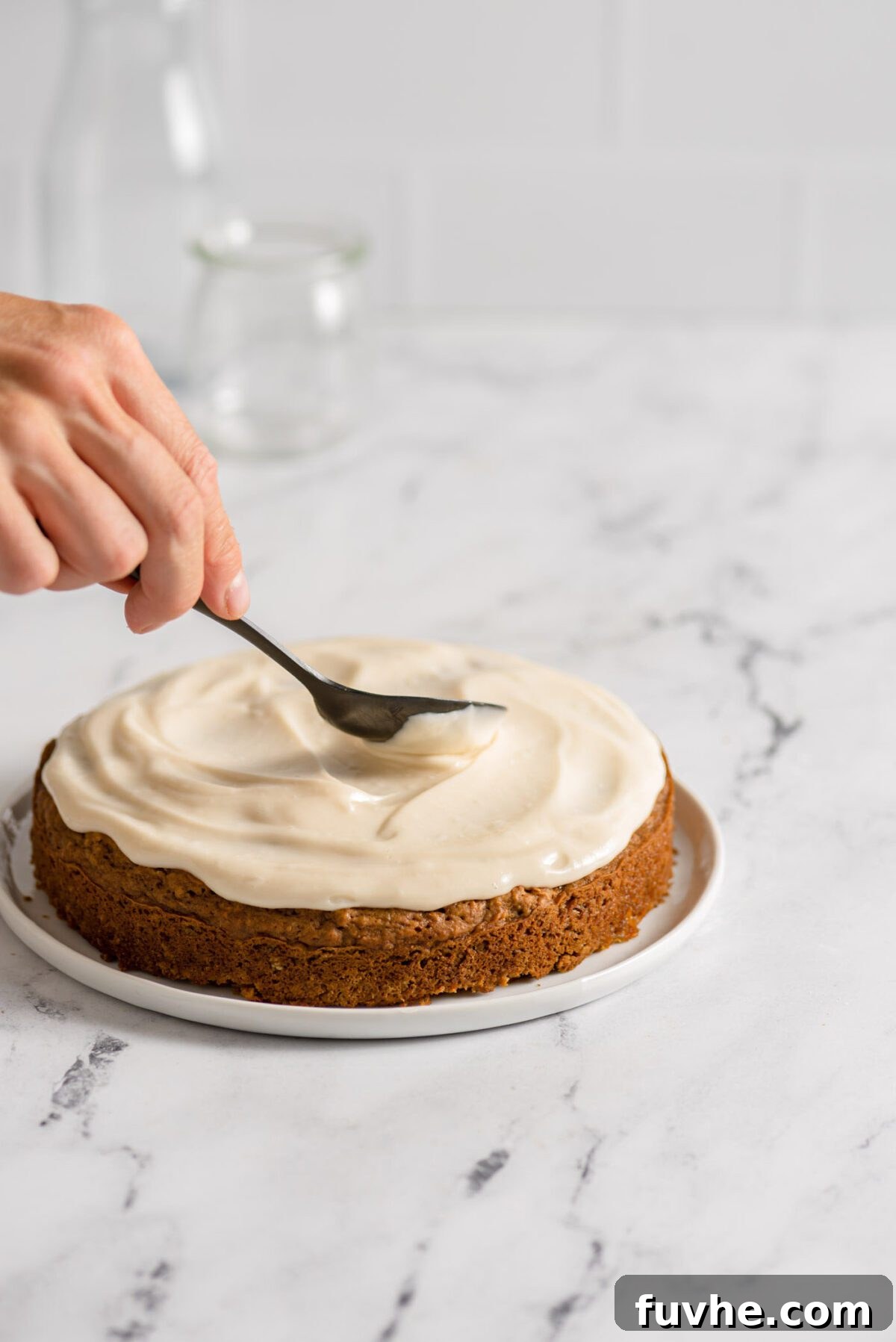
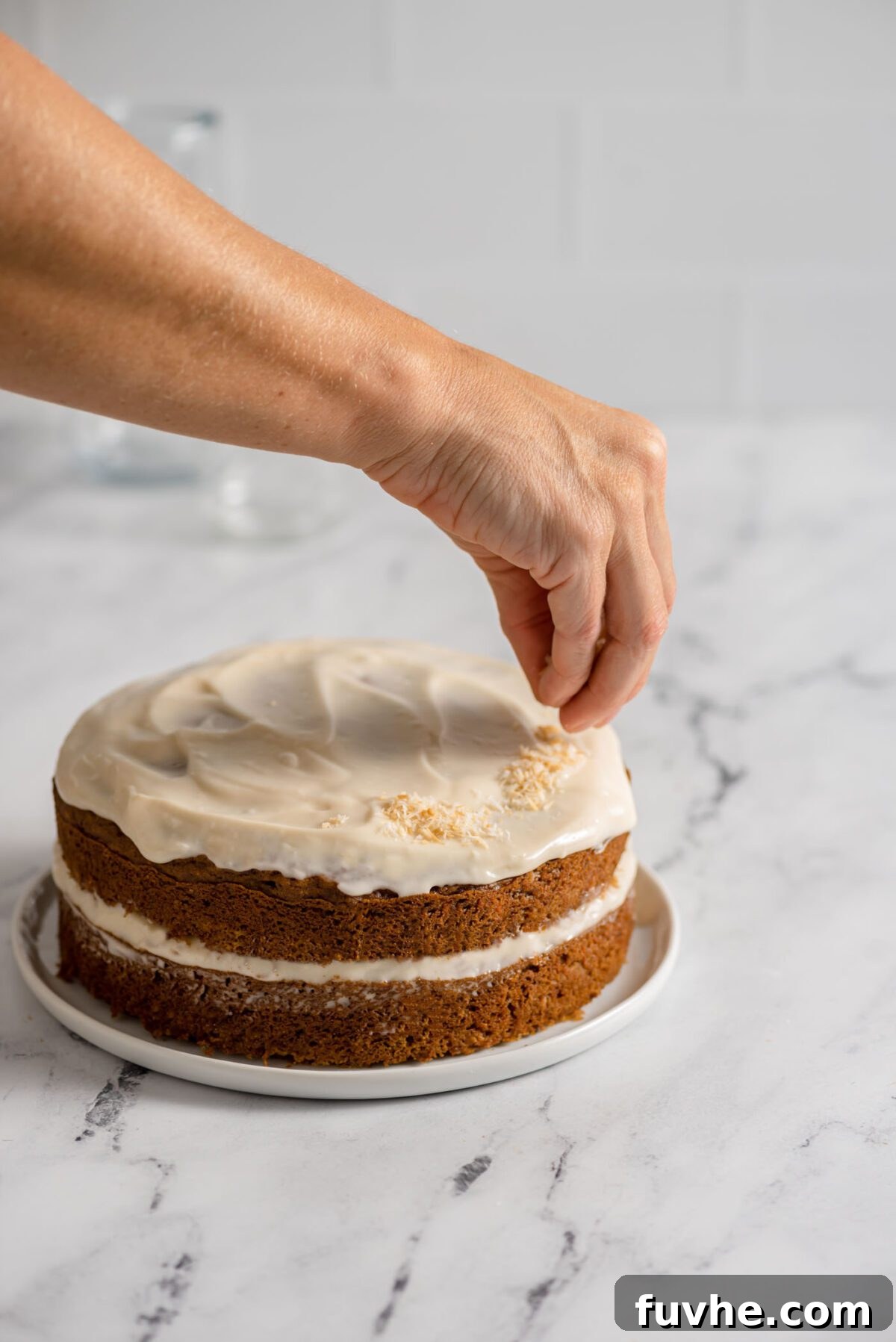
Step 6: Frost and Decorate Your Vegan Carrot Cake Masterpiece. Once your cake layers have completely cooled to room temperature and your chosen frosting is ready and beautifully creamy, it’s time for the most visually rewarding part: assembly and decoration! Carefully transfer the first cake layer to your chosen serving plate or an elegant cake stand. Using an offset spatula or a knife, spread about half of your prepared frosting evenly over the top of this layer, extending it almost to the edges. Gently place the second cake layer directly on top, aligning it as carefully as possible to create a neat stack. Then, spread the remaining frosting over the top of the second layer. For a modern, effortlessly chic look, you can choose to leave the sides of the cake exposed, creating what is known as a “naked cake.”
To add a final, irresistible flourish that enhances both taste and visual appeal, generously decorate the top of your cake with a sprinkling of golden toasted shredded coconut and finely chopped walnuts. These additions not only provide an irresistible textural contrast but also make your cake truly beautiful. Feel empowered to get creative with your decorations – a beautifully presented cake tastes even better!
Creative Topping and Decoration Ideas for Your Vegan Carrot Cake
Decorating your vegan carrot cake offers a wonderful opportunity to express your creativity and personalize your dessert. Whether you prefer a charmingly rustic aesthetic or a more elaborate, festive design, remember to have fun with it! For my cake, I chose a simple yet elegant presentation, showcasing beautifully exposed edges (a popular “naked cake” style) complemented by a generous sprinkling of toasted coconut flakes and finely chopped walnuts around the perimeter. Don’t hesitate to explore online for endless carrot cake decoration inspiration to perfectly match your desired style or occasion.
How to Perfectly Toast Coconut and Walnuts: Toasting these delightful additions is a simple yet incredibly effective step to deepen their flavor and enhance their aroma. To do this, preheat your oven to 350°F (175°C). Spread the walnuts and/or shredded coconut in a single, even layer on a baking sheet. Bake for approximately 5-10 minutes. It’s crucial to keep a very close eye on them during this process, as nuts and coconut can go from perfectly golden to burnt in a matter of seconds! You’re aiming for a beautiful light golden-brown color and a fragrant, nutty aroma. Once cooled completely, the walnuts can be finely chopped for a delicate sprinkle or roughly chopped for a chunkier, more pronounced texture in your topping.
Expert Baking Tips for a Flawless Vegan Carrot Cake
Achieving the perfect vegan carrot cake with a moist crumb and rich flavor is straightforward with these tried-and-true expert tips. Pay attention to these details, and you’ll be rewarded with a truly spectacular dessert every time:
- Finely Grate Your Carrots: This is arguably the most important tip for an outstanding carrot cake. Using the smallest holes on your box grater ensures that the carrots integrate seamlessly into the batter. This allows them to become incredibly tender and moist during baking, effectively disappearing into the cake while imparting all their natural sweetness and moisture. Larger pieces tend to remain tough and can disrupt the smooth, delicate texture of the cake.
- Do Not Overmix the Batter: Once you’ve combined the wet and dry ingredients, mix only until they are *just combined*. Overmixing is the enemy of a tender cake, as it overdevelops the gluten in the flour, leading to a dense, chewy, and less enjoyable texture. A few small lumps of flour are actually preferable to an overmixed, tough batter. Mix gently until no dry streaks remain, then stop.
- Ensure Cakes are Completely Cooled Before Frosting: This is a golden rule in the world of cake decorating that cannot be stressed enough. Attempting to frost a cake that is even slightly warm will inevitably result in your beautiful frosting melting, sliding off, and creating a sticky, crumbly mess. Allow ample time for your cake layers to cool entirely on a wire rack before you even think about reaching for that frosting spatula.
- Preheat Your Oven Thoroughly: Always allow your oven to fully preheat to the specified temperature (350°F / 175°C) before placing your cake pans inside. A consistently heated oven is crucial for even baking and proper leavening, ensuring your cake rises beautifully and cooks through. Furthermore, avoid opening the oven door frequently, especially during the first 20 minutes of baking, as sudden temperature drops can cause the cakes to sink in the center.
- Utilize a Kitchen Scale for Precision: For the most accurate and consistent baking results, especially in sensitive recipes like cakes, measuring ingredients by weight (using grams or ounces) with a digital kitchen scale is highly recommended over volumetric measurements (cups). Baking is a precise science, and a kitchen scale makes all the difference in achieving consistent success.
- The Quality of Your Spices Matters Immensely: Fresh, aromatic spices are the heart and soul of this vegan carrot cake. If your ground cinnamon, nutmeg, and ginger have been sitting in your pantry for an extended period, their potency and flavor will have diminished significantly. Consider replacing older spices with fresh ones for a truly vibrant, fragrant, and deeply flavorful cake.
- Room Temperature Ingredients for Frosting (If Using Vegan Butter): If you opt for the classic vegan cream cheese frosting that includes vegan butter, ensure that both your vegan cream cheese and vegan butter are at room temperature. This allows them to cream together smoothly and effortlessly, preventing lumps and resulting in a silky-smooth, easy-to-spread frosting consistency.
Frequently Asked Questions About Vegan Carrot Cake
Absolutely, this recipe is quite adaptable! If you prefer a simpler presentation or don’t have two round pans, a 9×9-inch square baking pan works perfectly for a single-layer cake. You’ll need to adjust the baking time slightly, typically around 35-40 minutes, but always confirm doneness by inserting a toothpick into the center (it should come out clean). You can also use a 9×13-inch baking dish, although the cake will be thinner, requiring a similar baking time. Adjust frosting quantity if making a much larger or smaller surface area.
Yes, this vegan carrot cake recipe is wonderfully versatile and yields fantastic cupcakes! Line a standard muffin tin with cupcake liners, then fill each liner approximately three-quarters of the way full with batter. Bake for about 20-25 minutes, or until a toothpick inserted into the center of a cupcake comes out clean. Ensure they cool completely on a wire rack before applying your chosen frosting and decorating them.
While this specific recipe hasn’t been officially tested with gluten-free flour, I anticipate excellent results if you opt for a high-quality 1:1 gluten-free baking flour blend. Brands such as Bob’s Red Mill 1-to-1 Baking Flour are often formulated to substitute directly into recipes that use all-purpose flour. When baking with gluten-free flour, be mindful that the cake might be a bit more delicate, so handle the baked layers gently. Also, ensure your chosen vegan milk and other ingredients are certified gluten-free if cross-contamination is a concern.
Absolutely! To make this cake entirely nut-free, simply omit the optional walnuts from both the cake batter and the topping. For the frosting, choose the “Classic Vegan Cream Cheese Frosting” option (Option 2) and ensure that your chosen brand of vegan cream cheese and vegan butter are explicitly labeled as nut-free. Always double-check all ingredient labels if you or your guests have severe nut allergies to ensure there are no hidden nut-derived ingredients.
It is quite important, especially if you are using melted coconut oil. Cold ingredients can cause the melted coconut oil to rapidly solidify into small, hard lumps when mixed into the batter. This can lead to an uneven distribution of fat and moisture, resulting in a cake with an inconsistent texture. Room temperature ingredients blend much more smoothly and cohesively, creating a uniform batter that bakes into a lighter, more evenly textured cake.
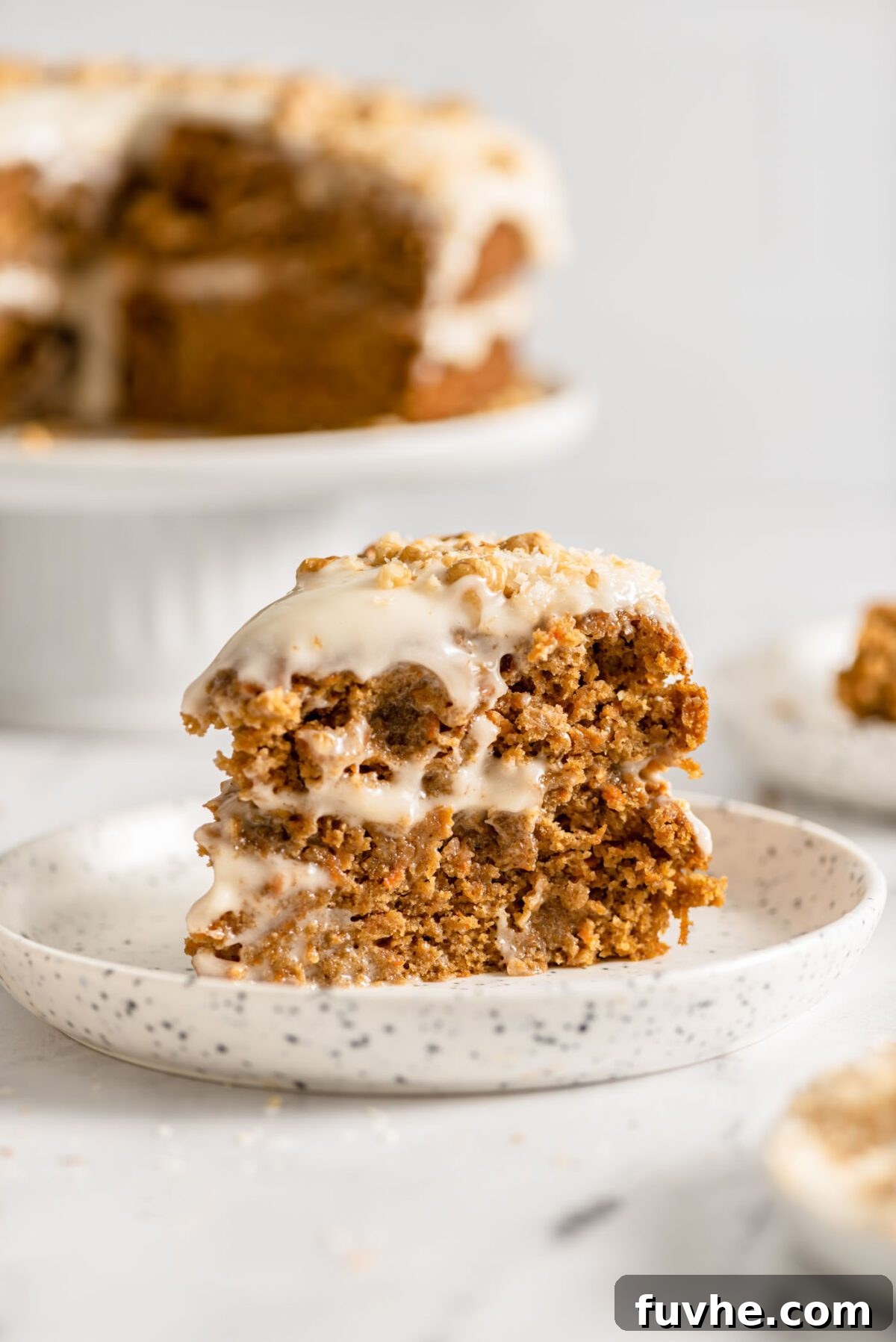
Delicious Variations for Your Vegan Carrot Cake
One of the best aspects of this vegan carrot cake recipe is its adaptability. Feel free to customize it to suit your personal tastes or dietary needs with these delightful variations:
- Your Choice of Frosting: This recipe offers fantastic flexibility with frosting. You can either opt for the lusciously rich cashew cream cheese frosting, which offers a healthier, naturally sweetened, and undeniably creamy finish, or select the classic, tangy vegan cream cheese frosting made with readily available store-bought vegan cream cheese. For a lighter approach, you can even skip the frosting altogether!
- Fabulous Frosting-Free Serving Alternatives: If you decide to serve your cake unfrosted, don’t worry – it’s still incredibly delicious! Consider pairing a slice with a dollop of fluffy vegan whipped cream, a scoop of your favorite dairy-free vanilla ice cream, or a generous drizzle of homemade vegan caramel sauce for an extra layer of decadence and sweetness.
- Exciting Add-Ins for Texture and Flavor: While the recipe suggests optional walnuts, the possibilities for delightful additions are endless. Feel free to experiment with chopped pecans for a slightly different nutty profile, additional shredded coconut for tropical sweetness, or plump raisins or chopped dates for chewy bursts of fruitiness that complement the spices beautifully. A combination of these can create a truly complex and satisfying cake.
- Flour Alternatives for Varied Textures: The recipe uses all-purpose flour for a classic cake texture. For a slightly different flavor and a denser, yet still moist crumb, you can use a blend of half all-purpose flour and half oat flour. If you’re exploring gluten-free options, please refer to our FAQ section for guidance on using 1:1 gluten-free baking blends.
- Zesty Citrus Boost: For a bright, refreshing note that beautifully cuts through the richness of the spices and carrots, consider adding the finely grated zest of one orange or lemon to your wet ingredients. This simple addition can elevate the flavor profile significantly.
Storing Your Vegan Carrot Cake for Lasting Freshness
Proper storage is key to ensuring your homemade vegan carrot cake remains wonderfully fresh, moist, and delicious for as long as possible. Follow these guidelines to maximize its shelf life and enjoy every last slice:
- Storing Frosted Cake: If your vegan carrot cake is frosted (with either the cashew or classic cream cheese frosting), it **must be stored in the refrigerator**. Both frosting varieties contain ingredients that require cool temperatures to maintain their freshness, texture, and prevent spoilage. To keep it from drying out or absorbing other food odors, cover the cake tightly with plastic wrap or transfer it to an airtight cake carrier.
- Shelf Life of Frosted Cake: When properly covered and refrigerated, your frosted vegan carrot cake will maintain its deliciousness and freshness for up to 1 week.
- Preparing Frosting in Advance: For ultimate convenience and to streamline your baking process, you can prepare either the cashew cream cheese frosting or the classic vegan cream cheese frosting 1-2 days ahead of time. Store the prepared frosting in an airtight container in the refrigerator. Before frosting your cake, allow the frosting to come to room temperature for about 30 minutes, then give it a good whisk or beat it gently to restore its creamy, spreadable consistency.
- Storing Unfrosted Cake: An unfrosted vegan carrot cake can be kept at room temperature in an airtight container for 2-3 days. However, for superior freshness and to extend its enjoyment, I highly recommend storing even the unfrosted cake in the refrigerator. When refrigerated, it will keep beautifully for up to 1 week. Many people find chilled carrot cake to be exceptionally delicious!
- Freezing for Long-Term Storage: Vegan carrot cake freezes remarkably well, making it perfect for meal prep or saving for future cravings. For the best results, freeze the cake layers *unfrosted*. Once completely cooled, wrap each cake layer tightly in plastic wrap, then add an additional layer of aluminum foil to prevent freezer burn. Store the wrapped layers in the freezer for up to 3 months. When you’re ready to enjoy, thaw the cake layers in the refrigerator overnight, then bring them to room temperature before frosting and serving. Frosted slices can also be frozen individually, wrapped in the same manner.
Discover More Delicious Vegan Cake Recipes
If you’ve fallen in love with the comforting flavors and moist texture of this vegan carrot cake, you’re in for a treat! Our collection is brimming with other fantastic plant-based cake creations that are sure to delight your taste buds. Explore these tempting recipes for your next baking adventure:
- Vegan Lemon Loaf: A bright, zesty, and incredibly moist loaf cake, bursting with fresh lemon flavor. It’s an ideal dessert or snack, especially perfect for spring brunches and summer gatherings.
- No-Bake Vegan Cheesecake: Indulge in the tangy, creamy, and wonderfully refreshing texture of this cheesecake that requires absolutely no oven time. It’s a perfect lighter dessert, especially on warmer days when you want something cool and decadent.
- Vegan Olive Oil Cake: Experience the unique, tender crumb and subtle richness of this elegant and sophisticated cake. Remarkably easy to whip up in just one bowl, it offers a distinct flavor profile that’s both simple and impressive.
- Vegan Apple Cake: A truly comforting and fluffy cinnamon-spiced apple cake, often crowned with a luscious caramel glaze. It’s the quintessential dessert for autumn gatherings and cozy evenings.
Healthy & Delicious Vegan Carrot Cake
Rate Recipe
Print Recipe
Ingredients
For the Vegan Carrot Cake:
- 1 tbsp ground flaxseed
- 3 tbsp warm water (for flax egg)
- 2 1/2 cups all-purpose flour (340 g)
- 1 tbsp baking powder
- 1 tsp baking soda
- 3 tsp ground cinnamon
- 1/2 tsp ground nutmeg
- 1/2 tsp ground ginger
- 3/4 tsp sea salt
- 1/2 cup unsweetened applesauce (120 g)
- 1 cup plant-based milk (almond, oat, or cashew), 240 ml
- 2 tsp vanilla extract
- 1 1/4 cup coconut sugar or brown sugar (188 g)
- 1/2 cup melted coconut oil or other neutral oil (olive or canola)
- 2 cups packed, finely grated carrots (245 g, about 3 medium carrots)
- 1 cup walnuts, toasted and chopped (optional, for batter or topping)
- Toasted coconut flakes, for decorating (optional)
For the Cashew Cream Cheese Frosting (Option 1):
- 2 cups raw cashews, soaked overnight (300 g, before soaking)
- 1/4 cup + 3 tbsp maple syrup
- 2 tbsp coconut oil, at room temperature
- 1 tsp vanilla extract
- 1/4 cup oat milk
- 2 tbsp lemon juice (30 ml)
- Pinch of sea salt
For the Classic Vegan Cream Cheese Frosting (Option 2):
- 8 ounces vegan cream cheese (1 container), softened
- 3 tbsp vegan butter, at room temperature (35 g)
- 2 1/2 cups powdered sugar (330 g)
- 1 tsp vanilla extract
Instructions
-
Preheat oven to 350°F (175°C). Grease and line the bottoms of two 7 or 8-inch round baking pans with parchment paper.
-
In a small bowl, combine ground flaxseed with 3 tbsp warm water. Stir well and set aside for 5-10 minutes to thicken into a flax egg.
-
If using walnuts, spread them on a small rimmed baking sheet. Bake for 6-8 minutes until golden brown and fragrant. Let cool. If using some for topping, finely chop half and roughly chop the rest; keep separate.
-
In a medium bowl, whisk together the flour, baking powder, baking soda, cinnamon, nutmeg, ginger, and sea salt until thoroughly combined and lump-free.
-
In a large bowl, whisk together the unsweetened applesauce, plant-based milk, vanilla extract, sugar (coconut or brown), neutral oil, and the prepared flax egg. Mix until well combined. Stir in the finely grated carrots. If using melted coconut oil, ensure all wet ingredients are at room temperature to prevent the oil from solidifying.
-
Pour the wet ingredients into the dry ingredients. Gently fold with a spatula until *just combined*, being careful not to overmix. If adding chopped walnuts to the batter, fold them in now.
-
Divide the batter evenly between the two prepared baking pans. Smooth the tops to create an even layer. Bake for 30-35 minutes, or until a toothpick inserted into the center comes out clean.
-
Allow the cake layers to cool completely in their pans on a wire rack before attempting to frost.
-
To make Cashew Cream Cheese Frosting: Drain soaked cashews. Combine all cashew frosting ingredients in a high-speed blender. Blend until exceptionally smooth and creamy, scraping down the sides as needed (1-2 minutes). Chill the frosting in the refrigerator for at least 30 minutes to allow it to firm up slightly before spreading.
-
To make Classic Vegan Cream Cheese Frosting: In a medium bowl, beat together the softened vegan cream cheese, room temperature vegan butter, powdered sugar, and vanilla extract until smooth and creamy.
-
Once cakes are completely cool, remove them from the pans. Place one cake layer on a serving plate. Spread half of your chosen frosting evenly over the top. Carefully place the second cake layer on top. Spread the remaining frosting over the top of the second layer. You can leave the sides exposed for a rustic look.
-
Decorate the cake by sprinkling the remaining chopped walnuts and/or toasted coconut flakes around the outer edge, or get creative with your preferred decorations. Slice and serve!
Notes
Nutrition Information: The provided nutrition facts are calculated for the cake only and do not include the frosting.
Storage Tips: Store frosted leftover cake in a sealed container in the refrigerator for up to 1 week. Unfrosted cake can be kept at room temperature for 2-3 days but is best refrigerated for up to 1 week. For longer storage, freeze unfrosted cake layers (wrapped tightly) for up to 3 months. Thaw in the refrigerator before frosting and serving.
Nutrition Facts (Cake Only)
Calories: 337 kcal,
Carbohydrates: 53 g,
Protein: 4 g,
Fat: 12 g,
Sodium: 357 mg,
Fiber: 2.5 g
Love this recipe? We’d be thrilled if you rated and commented below!