
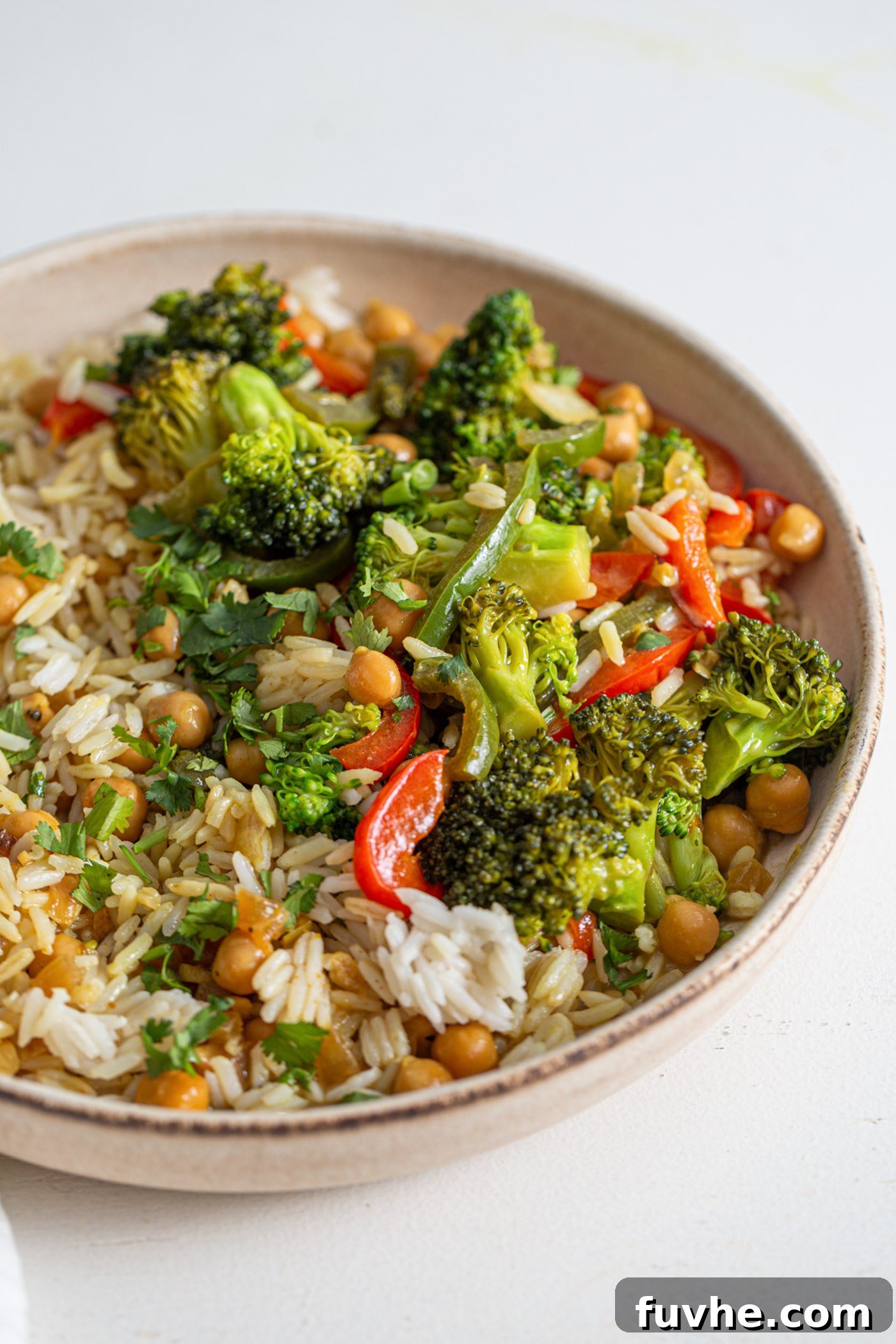
Transform your weeknight dinner routine with this incredibly quick and easy vegetable chickpea curry. This wholesome, plant-based meal comes together in just 20 minutes, requiring minimal ingredients but delivering maximum flavor and nutrition. It’s the perfect solution for busy evenings when you crave something satisfying, healthy, and utterly delicious without spending hours in the kitchen.
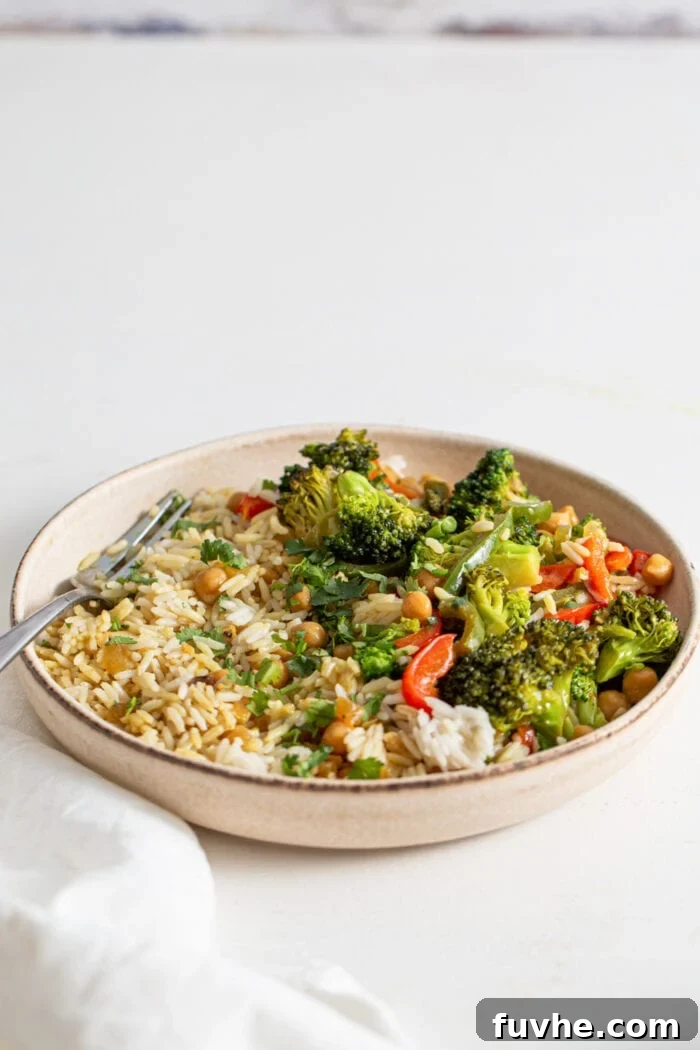
Why You’ll Love This 20-Minute Chickpea & Vegetable Curry
This chickpea and vegetable curry isn’t just another recipe; it’s a culinary lifesaver that checks all the boxes for a perfect weeknight meal. Here’s why it deserves a spot in your regular rotation:
- Unbelievably Quick & Easy: From prep to plate in under 20 minutes, this recipe is designed for speed without compromising on taste. It’s perfect for those busy evenings when time is of the essence, proving that healthy eating doesn’t have to be complicated.
- Highly Customizable: The beauty of this curry lies in its flexibility. It’s a fantastic way to use up whatever vegetables you have on hand, minimizing food waste and allowing you to tailor the dish to your personal preferences or seasonal availability.
- Nutritious & Deeply Satisfying: Packed with fiber from chickpeas and fresh vegetables, and plant-based protein, this curry will keep you feeling full and energized. It’s a meal that nourishes your body while delighting your taste buds.
- Excellent for Meal Prep: Cook a larger batch at the beginning of the week, and enjoy delicious, healthy lunches or dinners for days. Its flavors tend to meld and deepen overnight, making leftovers even more enjoyable.
- Dietary-Friendly: This recipe is naturally vegan, gluten-free, and oil-free, making it suitable for a wide range of dietary needs and preferences. It’s a wonderful option for those looking for wholesome, inclusive meal ideas.
- Rich in Fiber and Plant-Based Protein: Chickpeas are a powerhouse of nutrition, providing essential fiber for digestive health and ample protein to support muscle repair and growth. Combined with an array of vegetables, this curry is a nutritional champion.
Key Ingredients for Your Flavorful Chickpea Curry
Creating an exceptionally delicious chickpea curry starts with selecting the right ingredients. While this recipe is incredibly versatile, here’s a closer look at the core components that build its robust flavor profile.
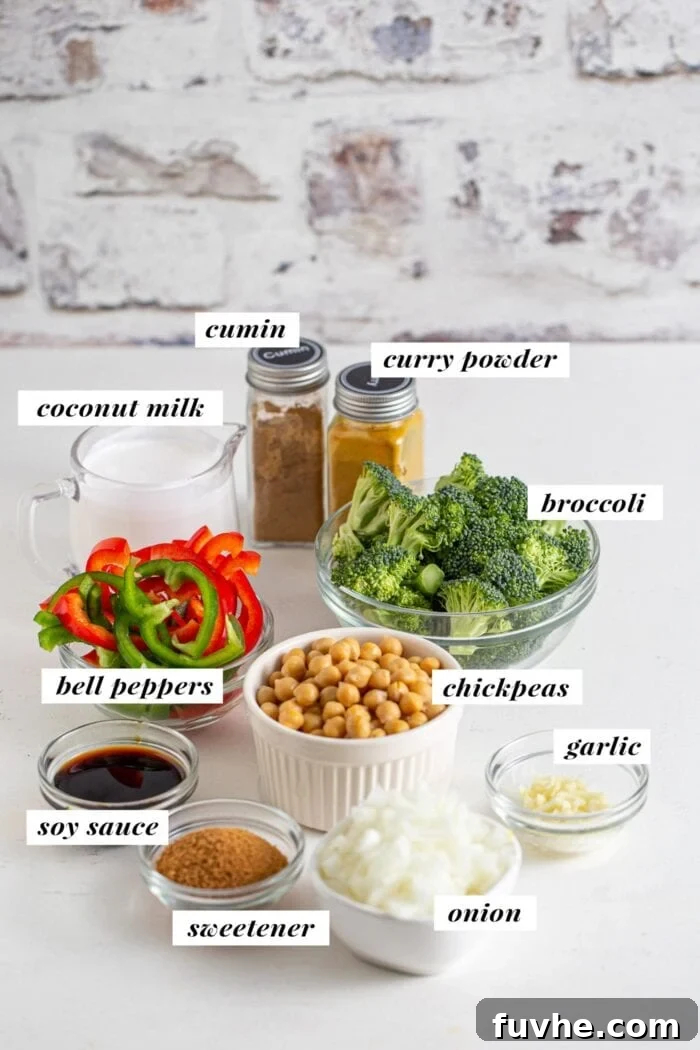
- Chickpeas: The star of our curry! For ultimate convenience, use canned chickpeas. Simply drain them and rinse thoroughly to remove excess sodium and improve digestibility. If you prefer to cook from scratch, ensure they are cooked until tender. You’ll need approximately 2.5 cups, but don’t worry about being exact – a little more or less won’t hurt. Chickpeas provide a hearty texture and a fantastic source of plant-based protein and fiber, making this curry incredibly filling.
- Versatile Vegetables: This recipe shines with bell peppers and broccoli, which add vibrant color, texture, and a wealth of nutrients. However, feel free to use this as a base for whatever vegetables are in season or lingering in your fridge. We’ll explore more customization options further down, ensuring every curry can be unique and delicious.
- Aromatics (Onion & Garlic): These two are non-negotiable foundations for almost any savory dish, and especially for a rich curry. They build the initial layer of flavor, adding depth and complexity. For an extra aromatic kick, consider adding a teaspoon of fresh minced ginger along with the garlic and onion.
- Curry Spices: A blend of mild yellow curry powder, black pepper, turmeric, and cumin creates the signature warmth and exotic aroma of this dish. While it’s best to use all listed spices for the most authentic and well-rounded flavor, don’t fret if you’re missing one or two like turmeric or cumin. The curry powder will still provide a fantastic base. Turmeric also contributes its beautiful golden hue and boasts anti-inflammatory properties.
- Coconut Milk: This is what gives the curry its creamy, luxurious texture and rich flavor. Both light and full-fat coconut milk work wonderfully. I personally lean towards light coconut milk for this particular recipe, as it results in a slightly less dense but equally flavorful sauce, allowing the vibrant vegetable flavors to shine.
- Coconut Sugar: A touch of sweetness is optional but highly recommended to balance the savory and spicy notes of the curry. It rounds out the flavors beautifully. If coconut sugar isn’t available, maple syrup, agave nectar, or even a pinch of your preferred granulated sweetener can be used as a substitute.
- Soy Sauce or Gluten-Free Tamari: A splash of soy sauce (or tamari for a gluten-free option) adds a crucial layer of umami, deepening the overall savory profile of the curry and making it even more irresistible.
For a complete list of ingredients and precise measurements, please refer to the comprehensive recipe card below.
Step-by-Step Guide to Your 20-Minute Chickpea & Vegetable Curry
Preparing this flavorful chickpea curry is incredibly straightforward, designed for efficiency and ease. Follow these simple steps, and you’ll have a delicious, healthy meal on your table in no time.
Step 1: Sauté Your Aromatics and Vegetables
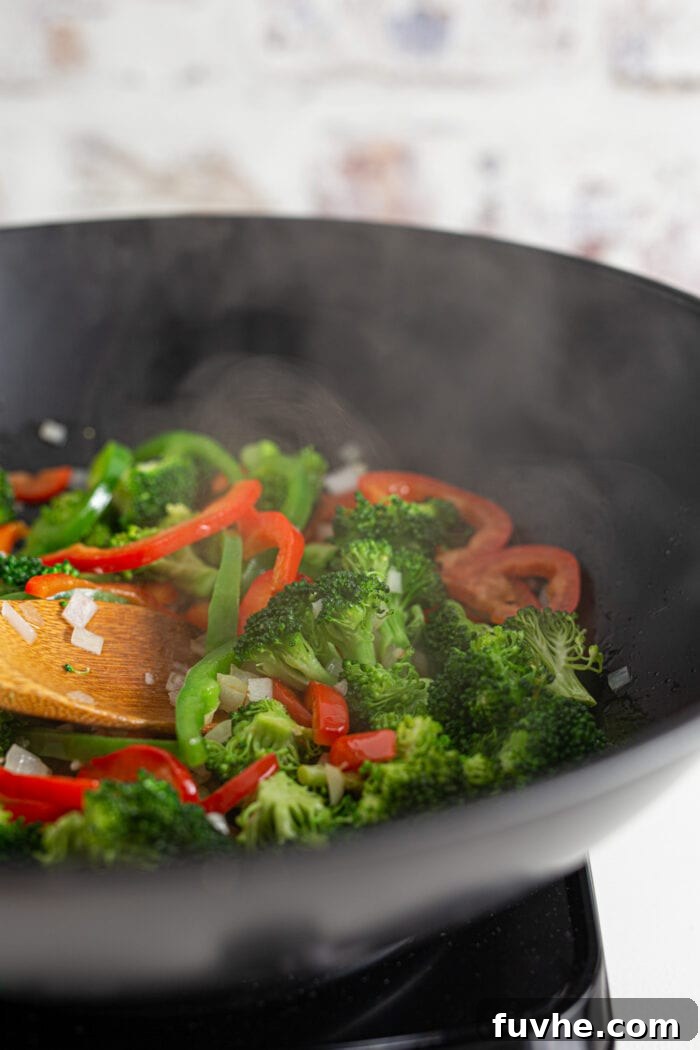
Begin by heating a large skillet or wok over medium-high heat. Add your chopped onion and bell peppers, along with the broccoli florets. Incorporate 1 tablespoon of water, vegetable broth, or a touch of oil (if not strictly oil-free) to prevent sticking and aid in sautéing. Cook these vibrant vegetables for approximately 4-5 minutes, stirring occasionally, until they start to soften slightly and become fragrant. The goal here is to achieve a tender-crisp texture, ensuring they retain some bite in the final curry.
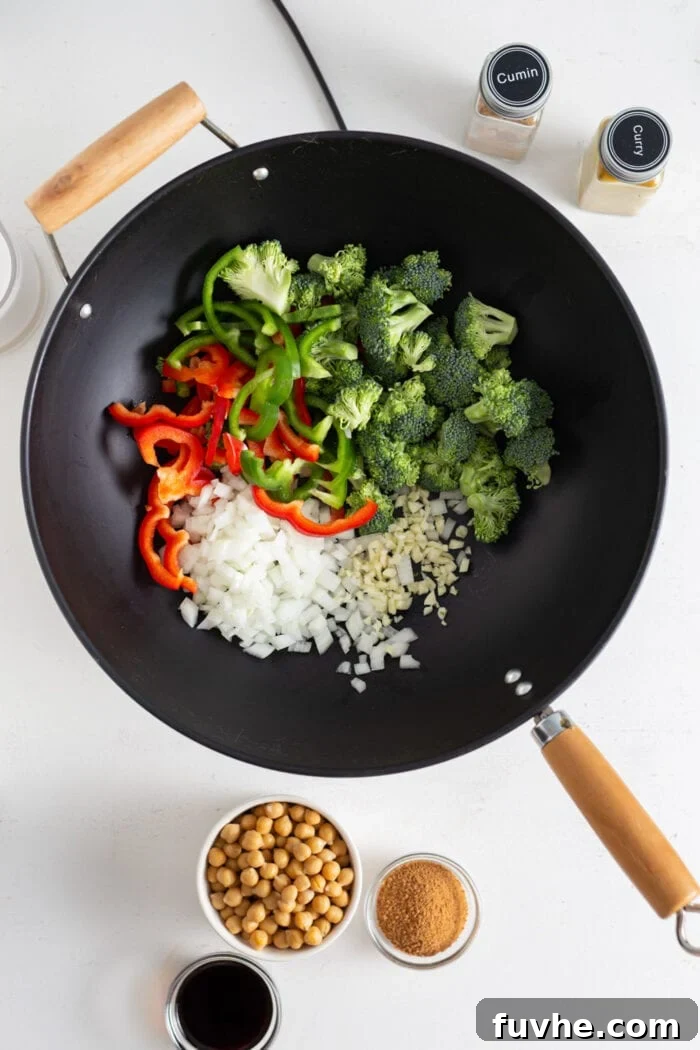
Step 2: Combine and Simmer
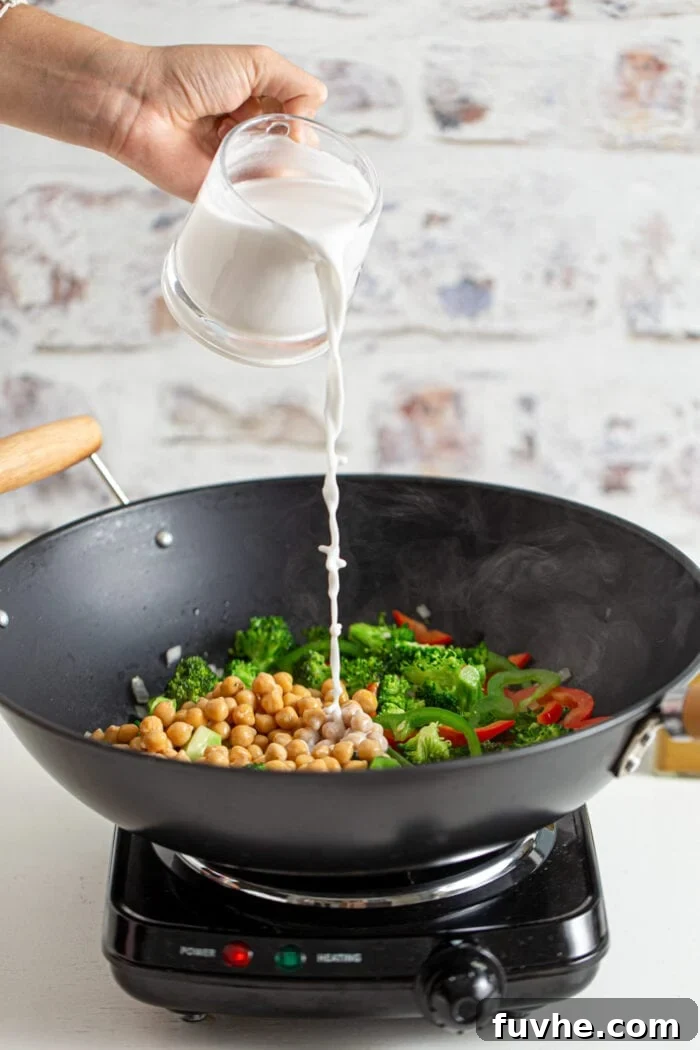
Once your initial vegetables have softened, it’s time to bring all the flavors together. Add the drained and rinsed chickpeas, minced garlic (and optional fresh ginger), all your chosen spices (curry powder, cumin, black pepper, turmeric), coconut milk, soy sauce (or tamari), and coconut sugar (if using). Stir everything well to ensure the vegetables and chickpeas are thoroughly coated in the fragrant spice mixture and coconut milk. Bring the mixture to a gentle simmer over medium heat. This step allows the spices to bloom and infuse the sauce.
Step 3: Cook to Perfection
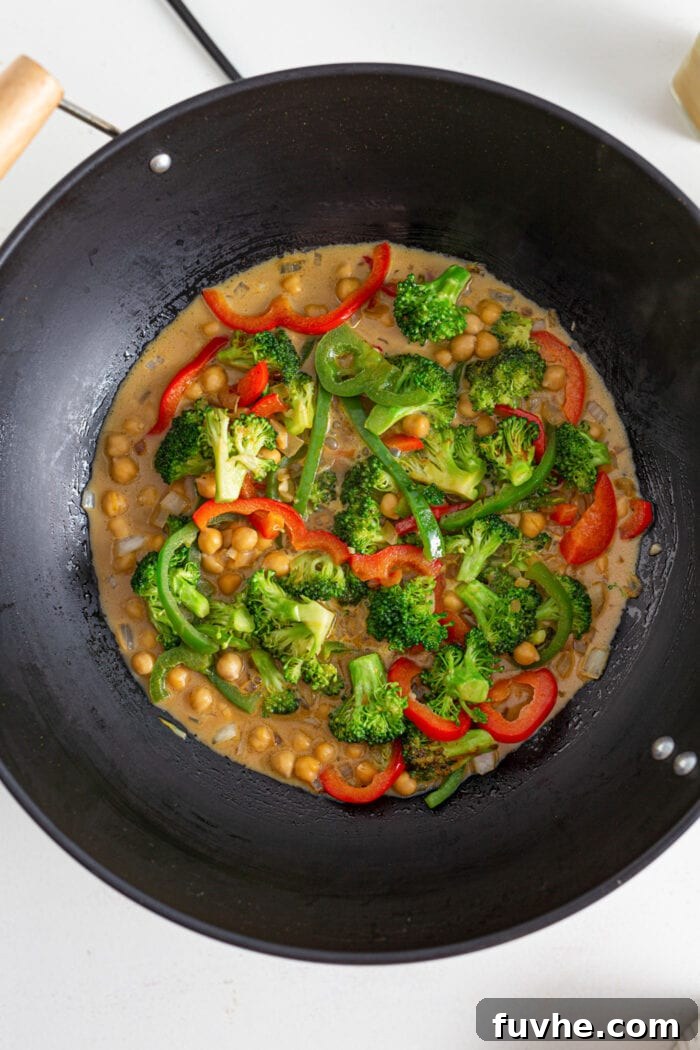
Reduce the heat slightly and continue to cook the curry for another 5-6 minutes. During this time, the sauce will begin to thicken as the flavors meld beautifully. Stir occasionally to prevent sticking. Cook until your vegetables reach your desired level of tenderness – whether you prefer them al dente with a slight crunch or softer and more integrated into the sauce. Taste and adjust seasonings as needed, adding more salt, pepper, or sweetener if desired.
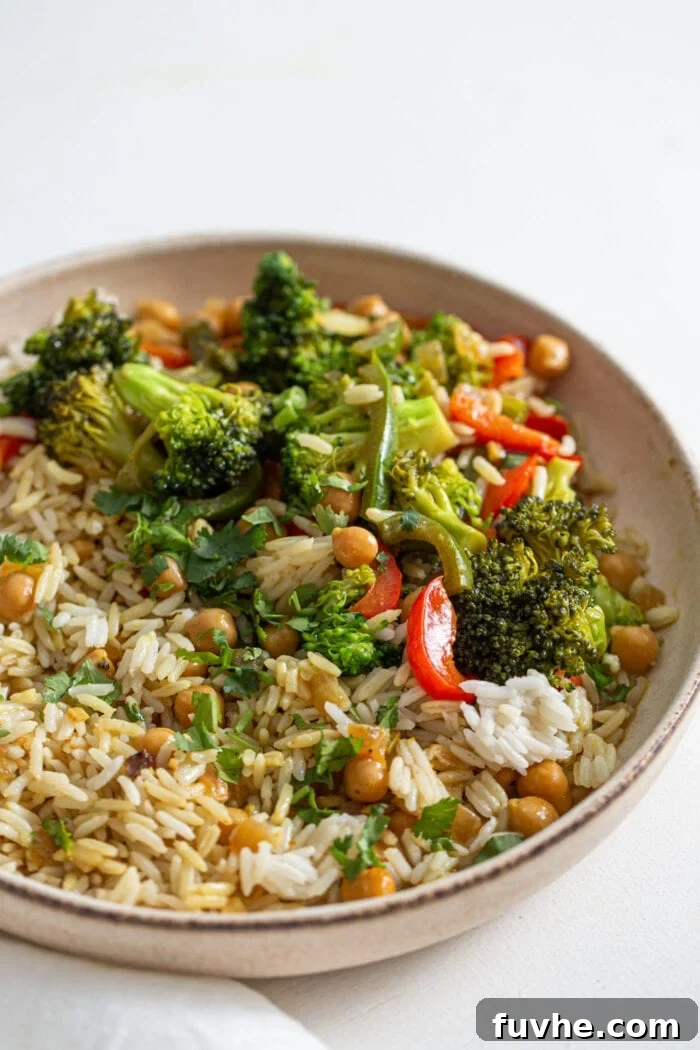
Serve your hot, aromatic curry immediately over your favorite rice, garnished with fresh lime wedges and a generous sprinkle of fresh cilantro, if desired. Enjoy!
Customizing Your Vegetable Chickpea Curry: Endless Options
One of the many charms of this chickpea curry is its incredible versatility. It’s designed to be a flexible base for nearly any vegetable you have on hand, allowing you to create a unique and exciting meal every time. Feel free to experiment with up to 6 cups of various mixed vegetables to suit your taste and utilize seasonal produce.
Here are some fantastic vegetable options to consider, along with tips on when to add them for optimal texture:
- Chopped Zucchini: Adds a tender texture and mild flavor. Add it along with the bell peppers and broccoli in Step 1.
- Thinly Sliced or Diced Carrots: Provides a touch of sweetness and beautiful color. Because carrots are denser, add them at the very beginning of Step 1 to allow them enough time to soften.
- Green Peas: These delicate peas cook quickly. Stir them in during the last 2-3 minutes of simmering (Step 3) to ensure they remain vibrant and tender, not mushy.
- Snap or Snow Peas: Offer a delightful crunch. Similar to green peas, add them towards the end of the cooking process, just before serving, for a crisp bite.
- Red Onion: For a slightly sweeter and milder onion flavor, substitute or complement white onion with red onion. Add it with the other aromatics in Step 1.
- Green Beans: Fresh green beans add a lovely snap. You can add them along with the initial vegetables in Step 1 for a tender-crisp result.
- Spinach or Kale: For a leafy green boost, stir in a few handfuls of fresh spinach or chopped kale at the very end of cooking (Step 3). They will wilt quickly into the hot curry.
- Mushrooms: Sliced mushrooms add an earthy depth. Sauté them with the initial vegetables in Step 1.
- Sweet Potatoes or Butternut Squash: For a heartier curry, diced sweet potatoes or butternut squash are excellent additions. Since they take longer to cook, add them to the skillet before the other vegetables, cooking for about 5-7 minutes until they begin to soften before adding the rest.
Don’t be afraid to mix and match! This curry is a fantastic way to clean out your fridge and create a personalized, nutrient-rich meal every time.
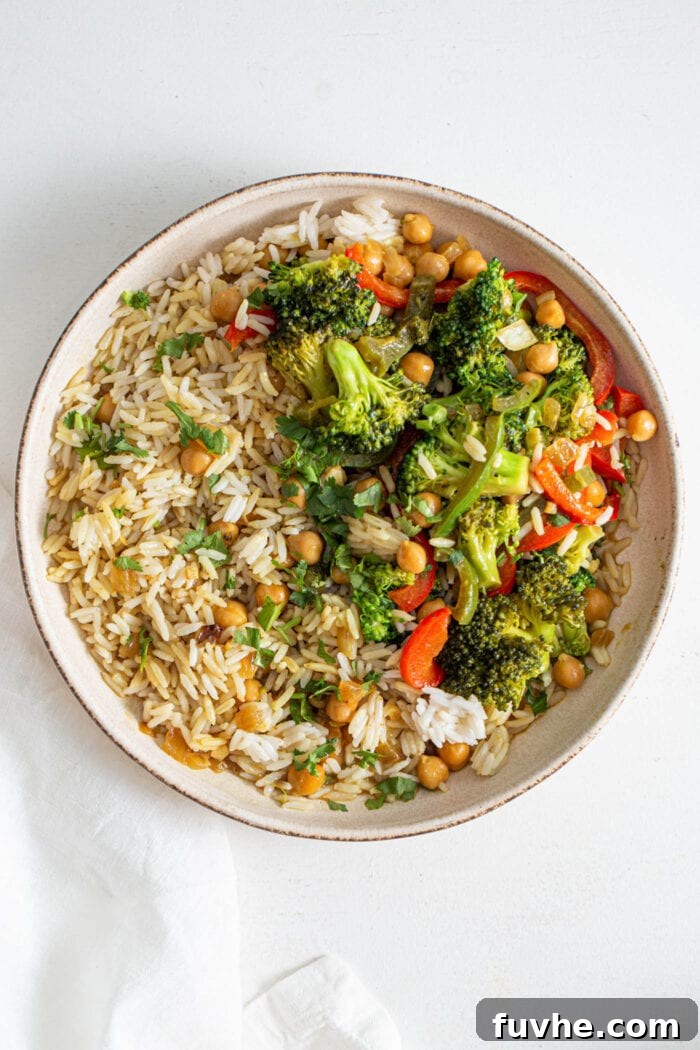
Serving Suggestions
This quick and easy chickpea and vegetable curry is incredibly versatile and pairs wonderfully with a variety of accompaniments. Here are some popular ways to serve it, ensuring a complete and satisfying meal:
- Rice: The classic choice! Serve your curry over fluffy white rice, nutritious brown rice, or even fragrant basmati rice. The rice soaks up the rich sauce beautifully, making every bite delicious.
- Quinoa: For an extra protein boost and a gluten-free alternative to rice, quinoa is an excellent option. Its slightly nutty flavor complements the curry perfectly.
- Naan Bread or Roti: Warm, soft naan bread or flaky roti are perfect for scooping up every last bit of the delicious curry sauce.
- Fresh Cilantro and Lime: A squeeze of fresh lime juice just before serving brightens all the flavors, while a sprinkle of fresh chopped cilantro adds a burst of freshness and color. Don’t skip these simple but impactful garnishes!
- Vegan Yogurt or Raita: A dollop of plain vegan yogurt or a cooling cucumber raita (made with vegan yogurt) can provide a lovely contrast to the warmth of the curry, especially if you add a bit of spice.
- Side Salad: For a lighter meal, serve the curry alongside a simple, crisp green salad with a light vinaigrette.
Meal Prep & Storage Tips
This chickpea and vegetable curry is not only a fantastic weeknight meal but also an excellent candidate for meal prepping. Proper storage ensures you can enjoy its delicious flavors for days to come. Here’s how to handle your leftovers:
- Refrigeration: Allow the curry to cool completely to room temperature before transferring it to an airtight container. It can be stored in the refrigerator for up to 4 days. You can store the curry on its own, or if you know you’ll be eating it with rice, you can mix them together before storing.
- Reheating: To reheat, simply transfer your desired portion to a saucepan and warm over medium heat on the stovetop, stirring occasionally, until heated through to your preference. If you’re in a hurry, you can also reheat it in the microwave in short bursts, stirring in between, until hot. If the curry seems a bit thick after refrigeration, you can add a splash of water or vegetable broth while reheating to loosen the sauce.
- Freezing: While this dish is incredibly tasty when fresh or refrigerated, it is generally not ideal for freezing. The texture of some vegetables, particularly the bell peppers and broccoli, can become quite soft and watery after thawing, and the creamy coconut milk sauce might separate slightly, affecting the overall consistency. For best results, enjoy this curry fresh or within a few days of making it.
- Meal Prep Strategy: If you plan to meal prep, consider cooking a double batch of the curry. Portion it out into individual meal prep containers for grab-and-go lunches or quick dinners throughout the week. You can cook your rice separately and add it to each container when you’re ready to store.
Frequently Asked Questions (FAQ)
Here are some common questions you might have about making this delicious chickpea and vegetable curry:
- Can I make this curry spicy?
Absolutely! If you love a bit of heat, you can easily adjust the spice level. Add up to 1/2 teaspoon of red pepper flakes along with the other spices in Step 2. You can also include a small amount of fresh, minced chili or a dash of hot sauce when serving. - What if I don’t have fresh garlic and onion?
While fresh aromatics provide the best flavor, you can substitute them if necessary. For the onion, you can use 1 teaspoon of onion powder. For the garlic, use 1 teaspoon of garlic powder. Add these dried spices along with the other curry spices in Step 2. The flavor won’t be as robust as fresh, but it will still be delicious. - Can I use different types of beans instead of chickpeas?
Yes, you can! This recipe is adaptable. Great northern beans, cannellini beans, or even black beans (though they will change the color of the curry) could work. Just ensure they are drained and rinsed like the chickpeas. The cooking time will remain similar. - Is this recipe suitable for batch cooking for a crowd?
Definitely! This recipe scales up very well. Simply double or triple the ingredients as needed and use a larger pot or wok. The cooking times might slightly increase, especially for the initial sautéing of vegetables and the final simmer, so just cook until the vegetables reach your desired tenderness and the sauce has thickened. - Can I add a different protein?
Yes, if you’re looking to vary the protein, firm or extra-firm tofu (pressed and cubed), or tempeh would be excellent additions. Sauté them briefly before adding the vegetables, or simply add them along with the chickpeas in Step 2 to absorb the flavors. - What kind of curry powder should I use?
This recipe calls for a mild yellow curry powder. There are many varieties of curry powder, ranging from mild to very hot, and with different spice blends. Choose one that you enjoy and that fits your preference for mildness or heat.
Related Vegan Curry Recipes
If you enjoyed this quick chickpea curry, you might love exploring these other delicious plant-based curry recipes:
- Easy Vegetable Green Curry
- Easy Vegetable Thai Red Curry
- Vegan BBQ Tofu Bowls
- Vegan Panang Curry with Tofu
- Red Lentil Cauliflower Curry
Easy Vegetable Chickpea Curry
By: Deryn Macey
This simple curry makes a great go-to weeknight dinner. Use whatever veggies you have on hand, throw everything in the pan, simmer in coconut milk and you’re done! Serve with rice for a complete meal.
Cook Time: 10 mins
Servings: 4
Rate Recipe |
Print Recipe
Ingredients
- 1 19 oz. can chickpeas, drained and rinsed (330 g, approx. 2.5 cups)
- 2 bell peppers, any color, thinly sliced (approx. 250 g)
- 4 cups chopped broccoli, approx. 300 g
- 1 medium white onion, 300 g, approx. 2 cups
- 3 cloves garlic, minced (or 1 tsp garlic powder)
- 1 tbsp curry powder
- 1 tsp cumin
- 1/2 tsp black pepper
- 1/4 tsp turmeric
- 1 14 oz. can light or full-fat coconut milk
- 1 tbsp soy sauce or gluten-free tamari
- 1 tsp coconut sugar or maple syrup
- Cooked white or brown rice, for serving
- Fresh cilantro and lime wedges, for garnish (optional)
Instructions
- Add the chopped bell peppers, broccoli, and onion to a large wok or skillet. Add 1 tbsp water, broth, or oil, and cook over medium-high heat for 4-5 minutes until vegetables begin to soften slightly.
- Stir in the minced garlic, drained chickpeas, curry powder, cumin, black pepper, and turmeric. Pour in the coconut milk, soy sauce (or tamari), and coconut sugar. Bring the mixture to a light simmer.
- Reduce heat to medium and cook for another 5-6 minutes, stirring occasionally, until the sauce thickens slightly and the vegetables are cooked to your liking (tender-crisp or softer).
- Serve immediately over your favorite cooked rice, garnished with fresh cilantro and a squeeze of lime juice, if desired.
Notes
- To make this even faster, you can throw all ingredients (except rice, cilantro, and lime) into the pan at the same time. Cook for about 10 minutes until vegetables are tender and the sauce is heated through. It’s so easy!
- For a spicier curry, add up to 1/2 tsp red pepper flakes along with the other spices in Step 2.
- Storing: Let cool then store in an airtight container in the fridge for up to 4 days. Can be stored on its own or mixed with rice. Reheat stovetop or in the microwave until heated to your preference. This recipe is not ideal for freezing as vegetable textures may degrade.
Nutrition
Serving: 1/4 of recipe
Calories: 242kcal | Carbohydrates: 33g | Protein: 10g | Fat: 10g | Sodium: 380mg | Fiber: 10g | Sugar: 10g
Enjoyed this recipe? Please take a moment to rate it and share your thoughts in the comments below!
This recipe was originally published on December 11, 2018. Updated with new photos and expanded text on November 4, 2020. This content has been further revised and optimized in [Current Year, e.g., 2023] for enhanced clarity, SEO, and reader experience.