
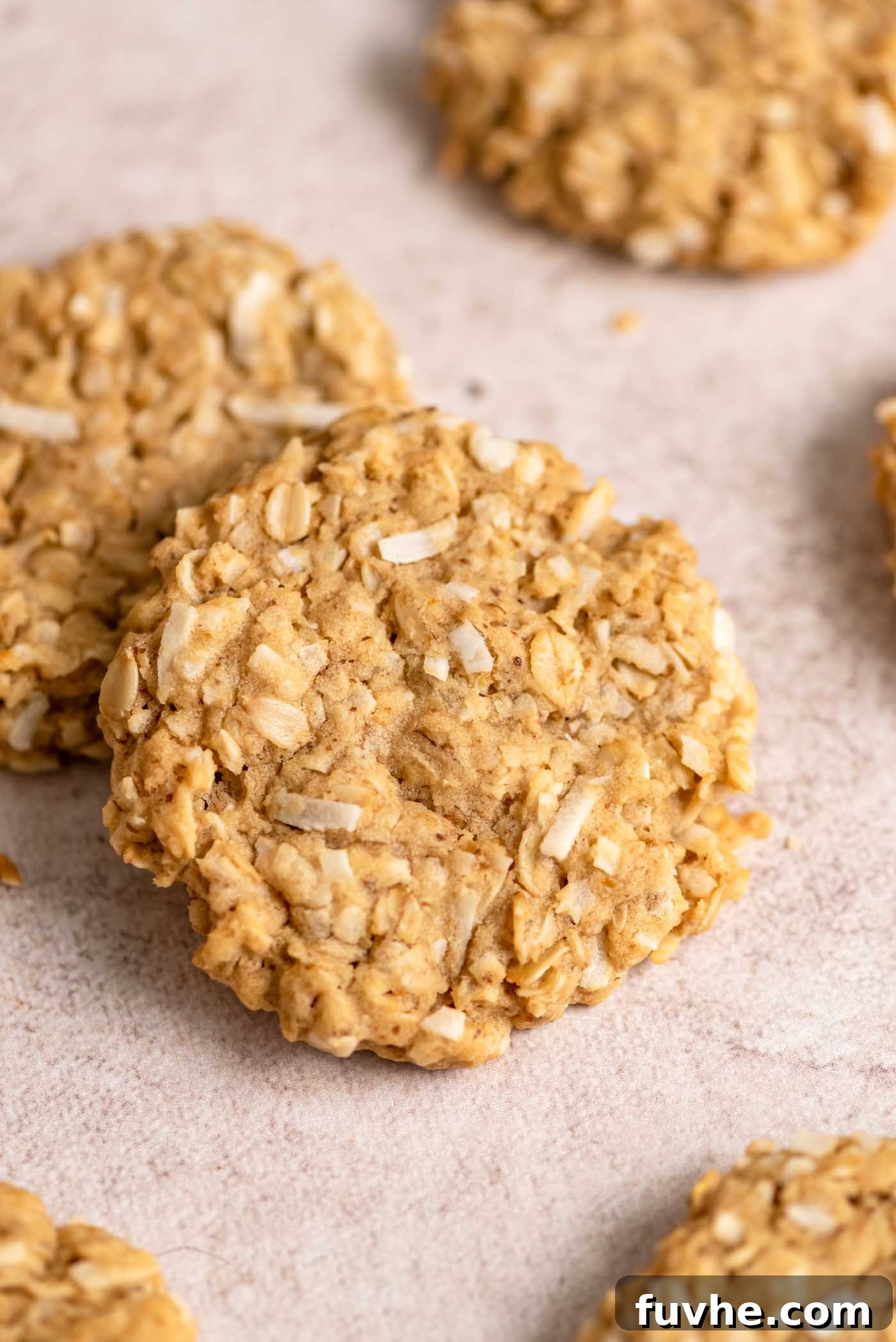
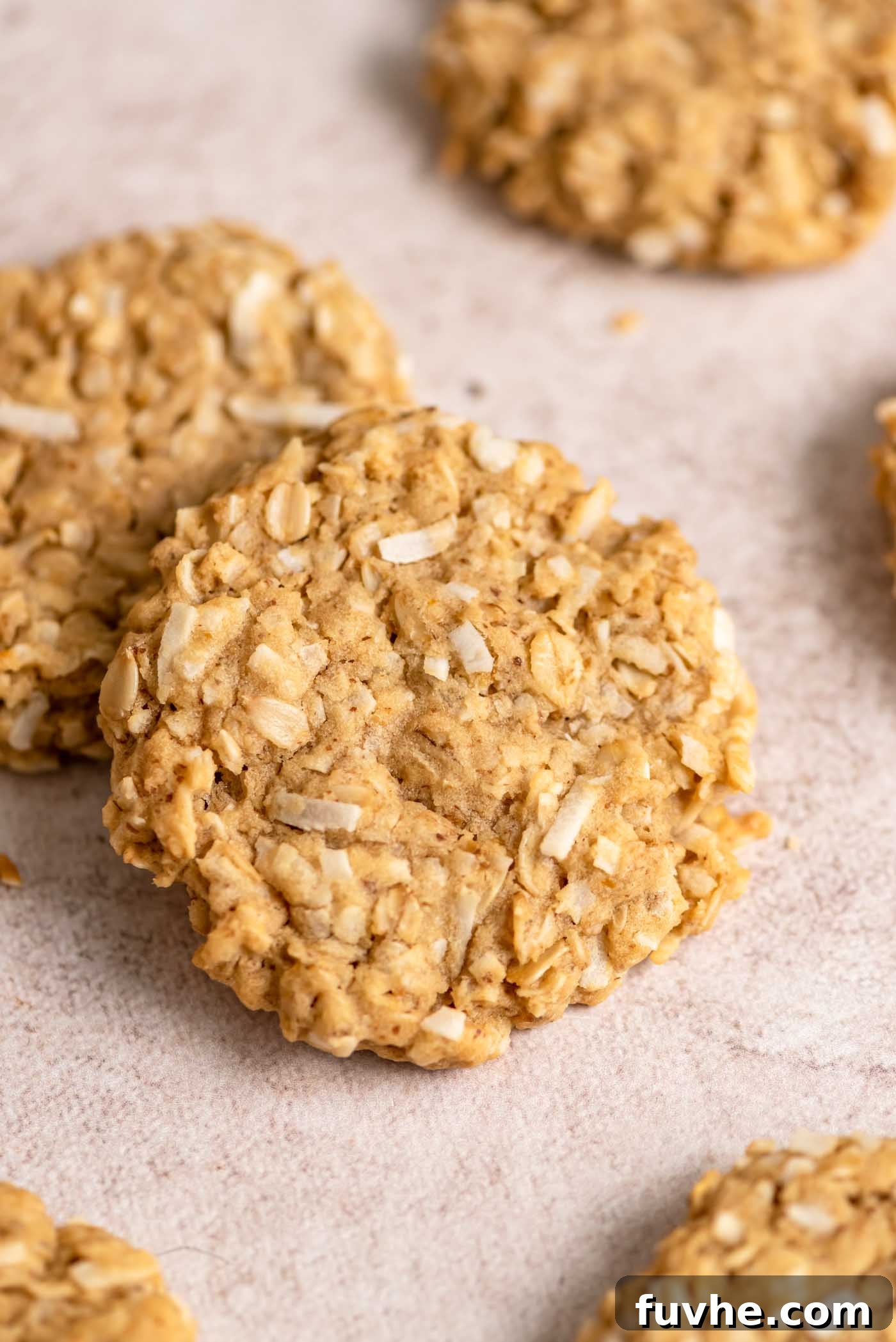
Welcome to the ultimate guide for crafting the most delightful Vegan Coconut Oatmeal Cookies! This recipe promises a truly irresistible treat: a perfect harmony of crispy edges and a wonderfully chewy center, all infused with an abundance of tropical coconut flavor. What makes these cookies truly special is their simplicity and accessibility. You’ll only need a handful of common ingredients – just 8 in total – and a mere 20 minutes from start to finish. Plus, the entire process comes together in a single bowl, minimizing cleanup and maximizing enjoyment. Best of all, this entirely plant-based recipe requires absolutely no eggs or dairy, making it suitable for vegans and those with dietary restrictions without compromising on taste or texture. Prepare to bake a batch of cookies that will quickly become a household favorite!
Featured Review:
These are super delicious and just the perfect amount of sweet. My new favorite cookie.Cheryl
Why These Vegan Coconut Oatmeal Cookies Are a Must-Bake
If the alluring aroma and taste of coconut call to your sweet tooth, then these cookies are specifically designed to be your next obsession! The star of this recipe is undoubtedly the coconut, which not only imparts a naturally subtle sweetness but also contributes a fantastic texture that elevates these simple oatmeal cookies. Beyond their tropical charm, there are numerous compelling reasons why these vegan coconut oatmeal cookies deserve a permanent spot in your recipe collection:
- Completely Vegan & Dairy-Free: This recipe is crafted entirely from plant-based ingredients, meaning no eggs or dairy are required. It’s perfect for vegans, those with allergies, or anyone looking to explore more wholesome, plant-forward desserts without sacrificing flavor or quality.
- Irresistible Texture: Prepare for a delightful textural experience. Each cookie boasts wonderfully crispy edges that give way to a soft, wonderfully chewy center. This contrast creates a truly satisfying bite every single time.
- Freezer-Friendly: These cookies aren’t just delicious fresh; they also freeze exceptionally well! Bake a double batch and store some for later, making them a convenient treat for unexpected guests or busy weeks. They even taste great straight from the freezer.
- Effortlessly Easy & One-Bowl Wonder: Forget complicated techniques and endless dirty dishes. This recipe simplifies baking with just 8 staple ingredients and can be mixed entirely in one bowl, making cleanup a breeze and the baking process enjoyable.
- Quick to Prepare: In just about 20 minutes, you can go from craving to enjoying freshly baked cookies. This speed makes them ideal for last-minute dessert needs or a quick afternoon snack.
- Highly Customizable: While perfect as is, the base recipe is incredibly versatile. Feel free to unleash your creativity by adding various mix-ins such as chocolate chips, plump raisins, crunchy nuts, or even a zesty hint of lemon to tailor them to your preference.
Are you searching for more delectable coconut dessert ideas? Don’t stop here! Be sure to explore these other fantastic recipes: our Easy Coconut Macaroons, rich Chocolate Macaroons, and wholesome Vegan Chocolate Coconut Bars offer even more ways to enjoy the magic of coconut!
Essential Ingredients & Smart Substitutions for Perfect Cookies
Creating these outstanding coconut oatmeal cookies starts with a selection of readily available ingredients. Below is a detailed overview of what you’ll need, along with helpful tips for substitutions to accommodate various dietary needs or pantry availability. For precise measurements and the complete ingredient list, please refer to the comprehensive recipe card located at the end of this post when you are ready to begin baking.
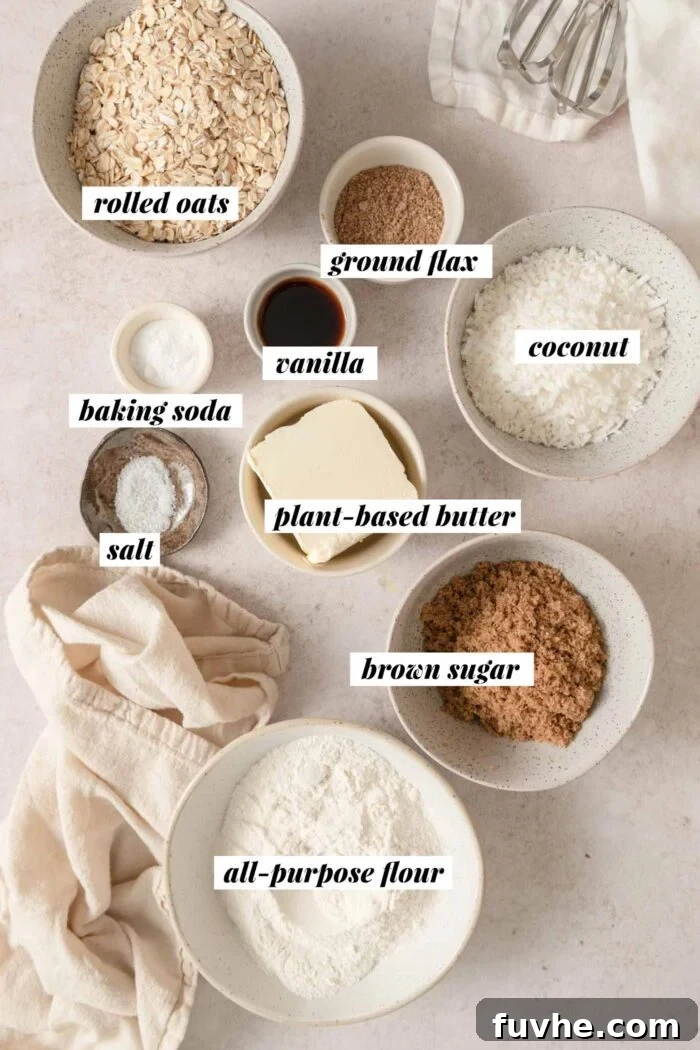
- Vegan Butter: This is the foundation of our cookies, providing richness and aiding in proper texture. Ensure your vegan butter is softened to room temperature before beginning, as this is crucial for creaming smoothly with the sugar. Any stick-style plant-based butter will work beautifully. If using unsalted vegan butter, consider adding an extra 1/4 teaspoon of salt to balance the flavors.
- Brown Sugar: Brown sugar contributes moisture and a delicious caramel-like depth, which is key to achieving that desirable chewy center. You can use either light or dark brown sugar, depending on your preference for intensity. If brown sugar isn’t on hand, granulated white sugar can be substituted, though it may result in a slightly crispier cookie. For a refined sugar-free alternative, coconut sugar can be used, offering a similar moisture profile and a lovely, subtle caramel note.
- Flaxseed Meal (for Flax “Egg”): To create our vegan egg substitute, you’ll need one tablespoon of ground flaxseed meal mixed with water. It’s vital that your flaxseed meal is fresh and finely ground; older or coarsely ground flax may not form the necessary gel to bind the cookie dough effectively. This flax “egg” acts as a fantastic binder, ensuring your cookies hold together perfectly.
- All-Purpose Flour: This recipe is developed using standard all-purpose flour. While I haven’t tested it with other types of flour, if you are experienced with flour substitutions in baking, you might try a gluten-free all-purpose blend. However, be aware that gluten-free flours can absorb liquids differently and may require minor adjustments to the dough consistency.
- Rolled Oats: The heart of any oatmeal cookie! We recommend using old-fashioned rolled oats or large flake oats for the best texture and chewiness. These oats retain their shape and provide a satisfying bite. While quick oats can be used in a pinch, they tend to integrate more completely into the dough, resulting in a less distinct oat texture.
- Unsweetened Coconut: For this recipe, unsweetened medium-flaked coconut is preferred. It offers a pronounced coconut flavor and a lovely texture without making the cookies overly sweet. You could also opt for fine shredded coconut, though it will blend more seamlessly into the dough. If you prefer a sweeter cookie, sweetened shredded coconut can be used, but be mindful that this will increase the overall sugar content.
- Baking Soda: This acts as our leavening agent, helping the cookies to spread and achieve their characteristic texture. It’s important to use baking soda, not baking powder, as they react differently and fulfill different roles in baking. Baking soda needs an acidic component (like the brown sugar here, or any added lemon zest/juice if you opt for a lemon variation) to activate properly.
- Salt: A pinch of salt is essential for balancing the sweetness and enhancing all the other flavors in the cookie. Don’t skip it!
Exciting Variations: Customize Your Coconut Oatmeal Cookies
The beauty of this vegan coconut oatmeal cookie recipe lies in its incredibly versatile base, which invites playful experimentation. Once you’ve mastered the classic version, feel free to unleash your creativity and try some of these exciting variations to discover new flavor profiles. Each addition transforms the cookie into a unique delight, perfect for any mood or occasion:
- Cinnamon Raisin Twist: For a classic, comforting flavor, whisk 1 teaspoon of ground cinnamon into your dry ingredients. Then, fold in 1/2 cup of plump raisins along with the coconut. The warming spice and chewy fruit create a nostalgic and utterly delicious combination.
- Cranberry Coconut Delight: Introduce a touch of tartness and vibrant color by adding 1/2 cup of dried cranberries when you incorporate the coconut into the dough. For an extra layer of decadence, white chocolate chips would be an exceptional addition here, complementing the cranberries beautifully.
- Nut and Fruit Medley: Elevate the texture and nutritional value with a mix of nuts and dried fruit. Stir in 1/2 cup of finely chopped nuts, such as walnuts or pecans, and 1/2 cup of chopped dried fruit like apricots or cherries, again, at the same time you add the coconut. This variation offers a hearty, satisfying bite.
- Chocolate Coconut Dream: A timeless pairing that never disappoints! Fold 1/2 cup of your favorite chocolate chips or coarsely chopped dark chocolate into the dough with the coconut. The rich chocolate melts slightly during baking, creating gooey pockets of pure bliss.
- Matcha Coconut Zen: For a sophisticated and subtly earthy flavor, incorporate 2 teaspoons of high-quality matcha powder with your dry ingredients. The vibrant green hue and unique taste of matcha pair surprisingly well with the sweetness of coconut.
- Almond Coconut Bliss: Swap out the vanilla extract for 1 teaspoon of almond extract to introduce a distinct nutty aroma. Then, mix in 1/2 cup of slivered or finely chopped almonds for an added crunch and intensified almond flavor that beautifully complements the coconut.
- Zesty Lemon Coconut: Brighten up your cookies with a tropical citrus kick. Add 1 tablespoon of fresh lemon zest and 2 tablespoons of freshly squeezed lemon juice to the wet ingredients when you cream the butter and sugar. The tangy lemon cuts through the sweetness and provides a wonderfully refreshing twist.
Step-by-Step Guide: How to Bake Perfect Coconut Oatmeal Cookies
Baking these delightful vegan coconut oatmeal cookies is a straightforward and enjoyable process. Follow these simple steps to achieve crispy edges, chewy centers, and a rich coconut flavor that will impress everyone.
Step 1: Prepare Your Flax “Egg”
Begin by combining 1 tablespoon of ground flaxseed meal with 3 tablespoons of water in a small dish. Stir it well and set it aside for 5-10 minutes. During this time, the mixture will thicken and form a gel-like consistency, which will effectively act as your egg binder in this plant-based recipe.

Step 2: Cream Butter and Sugar
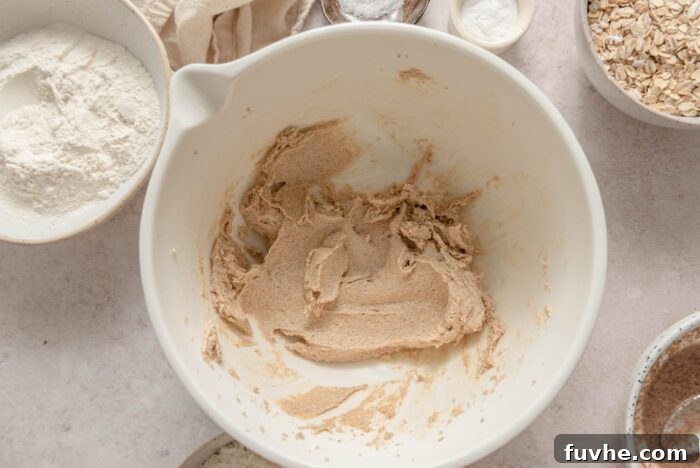
In a large mixing bowl, combine the softened vegan butter and brown sugar. Using a hand-held electric mixer (or a stand mixer fitted with the paddle attachment), beat the mixture on medium speed until it becomes light, fluffy, and thoroughly combined. This creaming process incorporates air, which contributes to the cookies’ light texture. If you don’t have an electric mixer, you can achieve this by mixing vigorously with a sturdy wooden spoon.
Step 3: Add Liquid Binders and Flavor
Once your butter and sugar are perfectly creamed, beat or vigorously stir in the prepared flax egg and vanilla extract. Mix until these liquid ingredients are fully incorporated into the butter-sugar mixture, creating a smooth, cohesive base.
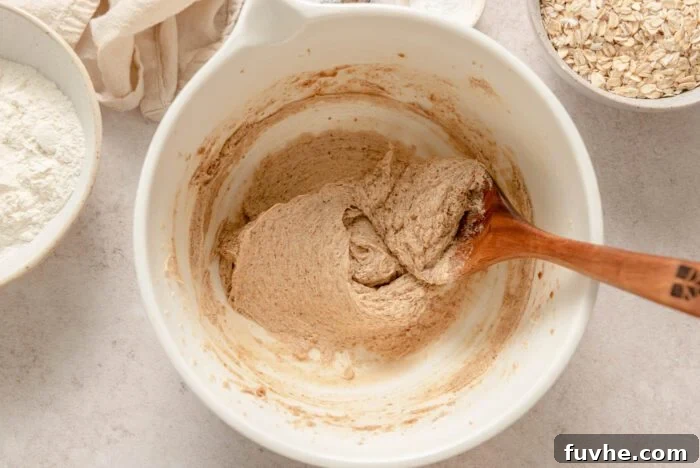
Step 4: Combine Wet and Dry Ingredients
Now, add all the remaining dry ingredients to the wet mixture in the large bowl. This includes the all-purpose flour, rolled oats, unsweetened coconut, baking soda, and salt. Mix gently until a uniform cookie dough forms. Be careful not to overmix; stop as soon as all the ingredients are just combined to prevent tough cookies. If using a stand mixer, start on a low speed to prevent flour from flying out.
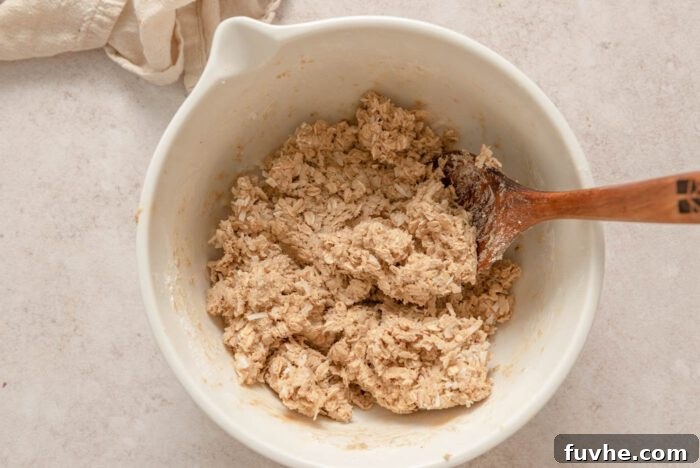
Step 5: Form and Flatten the Cookies
Take approximately 2 tablespoon-sized portions of the cookie dough and roll them into balls. Place these dough balls onto a baking sheet lined with parchment paper, ensuring they are at least 2 inches apart to allow for spreading. This recipe yields about 20 cookies, so you may need to use two baking sheets or bake in two separate batches. Once placed, gently press down on each cookie ball with your fingers, the bottom of a glass, or a wooden spoon until they are about 1/2 inch thick. This flattening helps them bake evenly and achieve the desired crispy-chewy texture.
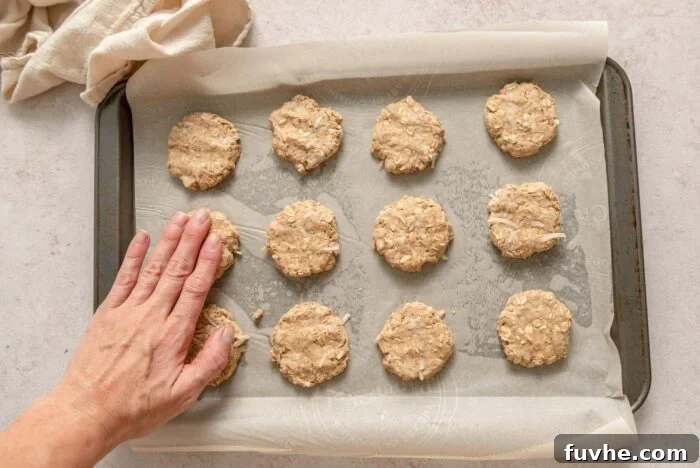
Step 6: Bake to Golden Perfection
Preheat your oven to 350°F (180°C). Once hot, bake the cookies for 10-12 minutes. You’ll know they’re ready when the edges turn a beautiful golden brown. The centers may still seem a little soft when you first pull them from the oven, but don’t worry—they will firm up as they cool. Remove the baking sheet from the oven and let the cookies cool on the sheet for at least 10 minutes before transferring them to a wire rack. This crucial cooling period helps them set and prevents them from breaking.

Recipe FAQs: Your Questions Answered
Absolutely! These coconut oatmeal cookies are perfect for freezing. Once completely cooled, store them in an airtight freezer-safe container or a heavy-duty freezer bag for up to 3 months. For best results, place parchment paper between layers of cookies to prevent them from sticking. When you’re ready to enjoy, you can simply grab one directly from the freezer; they actually have a delightful chewiness when enjoyed chilled, or you can let them thaw at room temperature for a few minutes.
For the ideal texture and balanced sweetness, we recommend using medium unsweetened flaked coconut (often labeled as desiccated coconut). This type provides a distinct coconut presence and flavor. You can also use fine shredded coconut, which will blend more seamlessly into the dough for a less textured cookie. If you prefer your cookies sweeter, sweetened shredded coconut is an option, but be mindful that this will increase the overall sugar content of the recipe.
While not strictly mandatory, using parchment paper is highly recommended for these cookies. It ensures even baking, prevents sticking, and makes for effortless cleanup. If you don’t have parchment paper, a silicone baking mat is an excellent reusable alternative. Alternatively, you can lightly grease your baking sheet, though this might slightly alter the crispness of the cookie bottoms.
No, as written, this recipe is not gluten-free because it calls for all-purpose flour. Oats themselves are naturally gluten-free, but they are often processed in facilities that also handle gluten-containing grains, leading to cross-contamination. If you need a gluten-free version, you would need to use certified gluten-free rolled oats and substitute the all-purpose flour with a gluten-free all-purpose flour blend. However, please note that gluten-free flour blends can behave differently in baking, potentially affecting the cookie’s texture and moisture, so results may vary and adjustments might be needed.
Expert Tips for Baking Your Best Coconut Oatmeal Cookies
Achieving bakery-quality vegan coconut oatmeal cookies is easy with a few insider tricks. These expert tips will help ensure your cookies turn out perfectly every time, delivering that delightful crispy-chewy texture and rich flavor you crave.
- Measure Accurately: In baking, precision is paramount. While cups and spoons are convenient, using a kitchen scale for dry ingredients (flour, oats, coconut, sugar) will yield the most consistent and accurate results. Small discrepancies in measurement can significantly impact the final texture of your cookies, so weigh your ingredients whenever possible.
- Mind Your Baking Time: Always preheat your oven thoroughly to 350°F (180°C) before placing your cookies inside. Bake for the recommended 10-12 minutes, keeping a close eye on them. The cookies are done when their edges are visibly golden brown. Don’t be alarmed if the centers still look slightly soft or underbaked when you pull them out; they will continue to firm up as they cool on the hot baking sheet. It’s always better to slightly underbake than overbake for a chewier cookie.
- To Chill or Not to Chill: For this specific recipe, the dough is designed to be baked immediately, resulting in thinner cookies with distinct crispy edges and a wonderfully chewy center. However, if you prefer a thicker, chewier cookie with less spread and a deeper flavor, you can chill the dough for at least 30 minutes (or up to 2 days) before baking. Chilling allows the fats to firm up and the flavors to meld, leading to a richer, more robust cookie.
- Toast Your Coconut for Enhanced Flavor: For an extra layer of nutty, intensified coconut flavor, consider toasting your unsweetened coconut before adding it to the recipe. Spread the coconut in a single layer on a baking sheet and toast it in your preheated oven at 350°F (180°C) for 5-10 minutes, stirring occasionally. Watch it very closely, as coconut can go from perfectly golden to burnt in a matter of seconds. Let it cool completely before incorporating it into your dough.
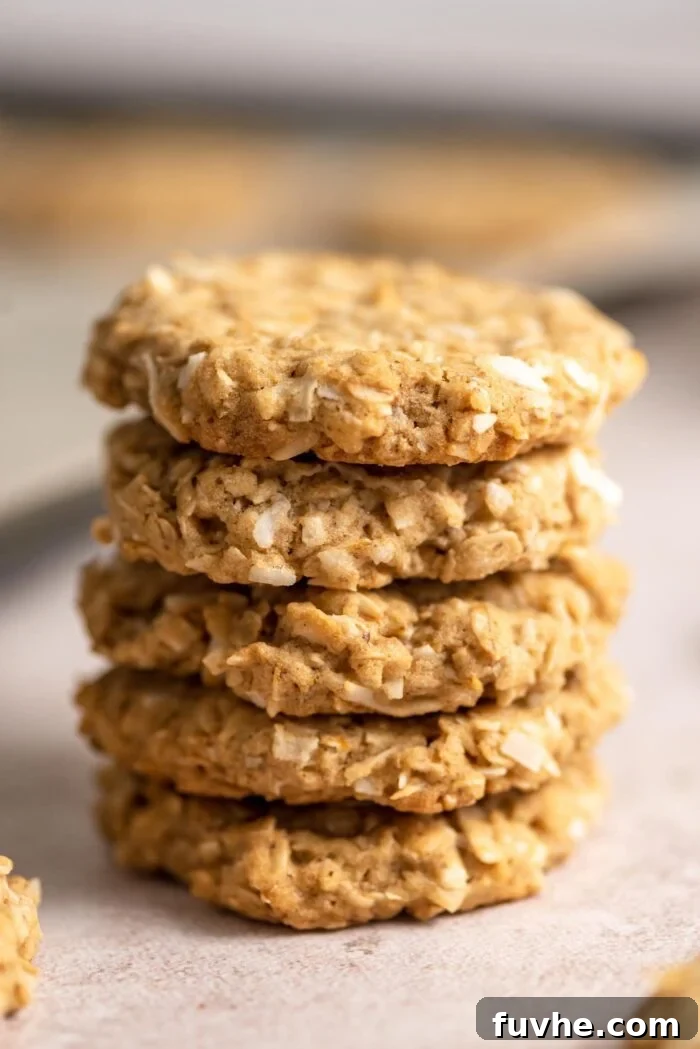
How to Store Your Vegan Coconut Oatmeal Cookies
Proper storage ensures your delicious cookies stay fresh and enjoyable for as long as possible. Here’s how to keep them at their best:
- Cool Completely Before Storing: This is a crucial first step! Always allow the cookies to cool entirely on a wire rack before attempting to store them. Storing warm cookies will create condensation, making them soggy and potentially shortening their shelf life.
- Room Temperature Storage: Once cooled, place your cookies in an airtight container. They will remain fresh and delightful at room temperature for up to 5 days. For optimal freshness, avoid direct sunlight or warm spots in your kitchen.
- Refrigeration: If you want to extend their freshness a bit longer, or if your kitchen is particularly warm, store the cookies in a sealed container in the refrigerator for up to 2 weeks. The texture might become slightly firmer when chilled, but they’re still delicious.
- Freezer Storage for Long-Term Enjoyment: For the longest storage, freezing is your best friend. Arrange the cooled cookies in a single layer on a baking sheet and freeze until solid. Once frozen, transfer them to a freezer-safe container or heavy-duty freezer bag, layering with parchment paper if stacking. They will keep well for up to 3 months. As a bonus, these cookies are incredibly delicious enjoyed straight from the freezer – a perfect instant cold treat!
We hope you adore these Vegan Coconut Oatmeal Cookies as much as we do! If you bake this recipe or any others you discover here, please don’t hesitate to leave a comment and a ⭐⭐⭐⭐⭐ rating in the section below. Your feedback truly helps others in their baking journey, and we love hearing from you. Also, be sure to share your beautiful creations on Instagram and tag us @runningonrealfood so we can see and celebrate your efforts! Thank you for choosing our recipes!
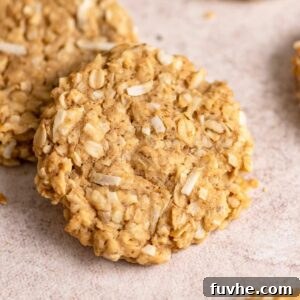
Coconut Oatmeal Cookies
Delicious coconut oatmeal cookies with crispy edges and a soft, chewy center.
Ingredients
- 1 tbsp flaxseed meal + 3 tbsp water
- ½ cup vegan butter, softened (113 g)
- ½ cup brown sugar (96 g)
- 1 tsp vanilla extract
- 1 cup all-purpose flour (120 g)
- 1 ½ cups old-fashioned rolled oats (135 g)
- 1 ½ cups unsweetened coconut (150 g)
- ½ tsp baking soda
- ¼ tsp salt
Instructions
- Preheat oven to 350˚F (180˚C) and line a baking sheet with parchment paper.
- In a small bowl, mix together the flaxseed meal and water to make the flax egg. Let sit for at least 5 minutes to thicken while you gather the other ingredients.
- In a large bowl or using a stand mixer, beat together the softened vegan butter and brown sugar until light, fluffy and evenly combined.
- Beat in the flax egg and vanilla extract, or mix well with a wooden spoon.
- Add the remaining ingredients (all-purpose flour, rolled oats, unsweetened coconut, baking soda, and salt) and mix until a uniform dough is formed. If using a stand mixer, you may want to start mixing on low speed to avoid a flour cloud.
- Roll dough into balls about 2 tablespoons in size and place them at least two inches apart on the prepared baking sheet. Flatten each dough ball with your hands or the back of a spoon until cookies are about ½ inch in height.
- Bake for 10-12 minutes, until the bottoms and edges are just starting to turn golden brown.
- Remove cookies from the oven and let sit on the baking tray for at least 10 minutes to firm up before transferring to a wire rack to cool completely.
Notes
Coconut sugar can be used as a refined sugar-free substitute for brown sugar.
Cookies store well in an airtight container at room temperature for up to 5 days. For longer storage, freeze cookies in a freezer-safe container for up to 3 months.
Nutrition
Calories: 121 kcal
Carbohydrates: 16 g
Protein: 2 g
Fat: 5 g
Sodium: 107 mg
Fiber: 2 g
Sugar: 5 g