
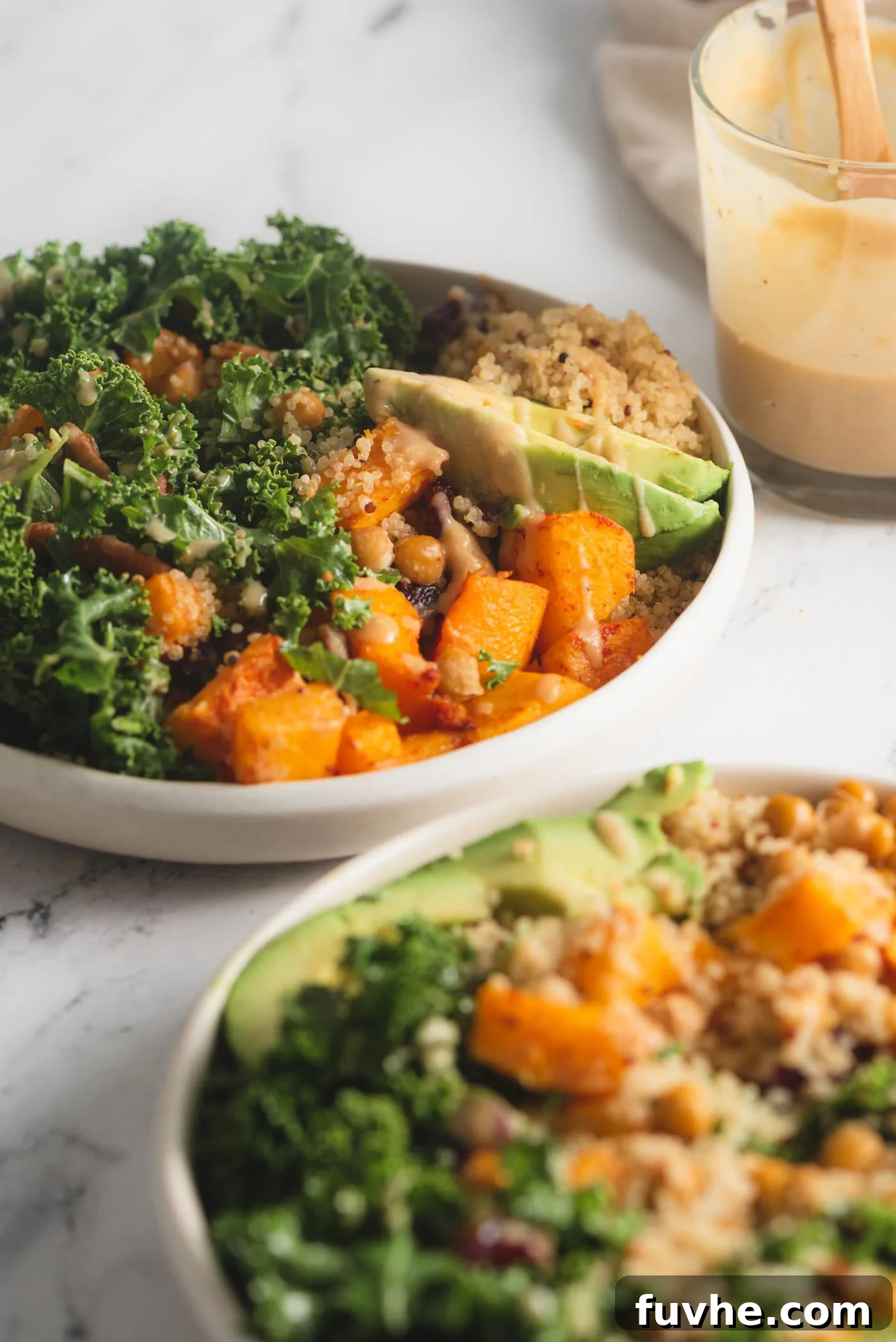
Welcome to the ultimate guide for crafting vibrant and incredibly satisfying Vegan Quinoa Power Bowls. These bowls, packed with nutrient-dense kale, protein-rich chickpeas, creamy avocado, and savory butternut squash, are elevated by a delectable maple dijon dressing. Designed for both ease of preparation and the demands of modern healthy eating, they are perfect whether you’re looking for a quick, nourishing dinner or a reliable option for meal prepping throughout the week. Say goodbye to bland lunches and hello to a symphony of flavors and textures in every bite.
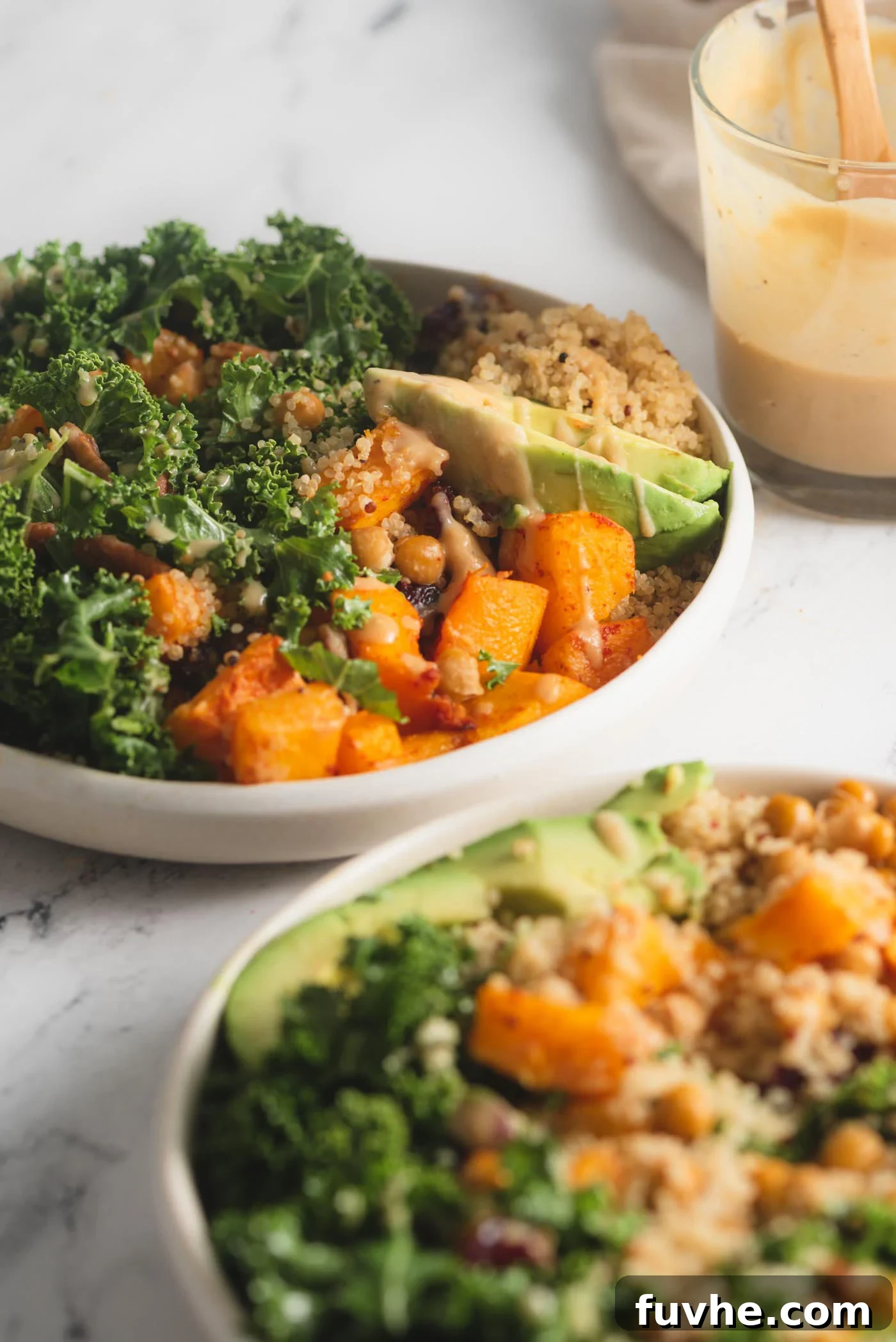
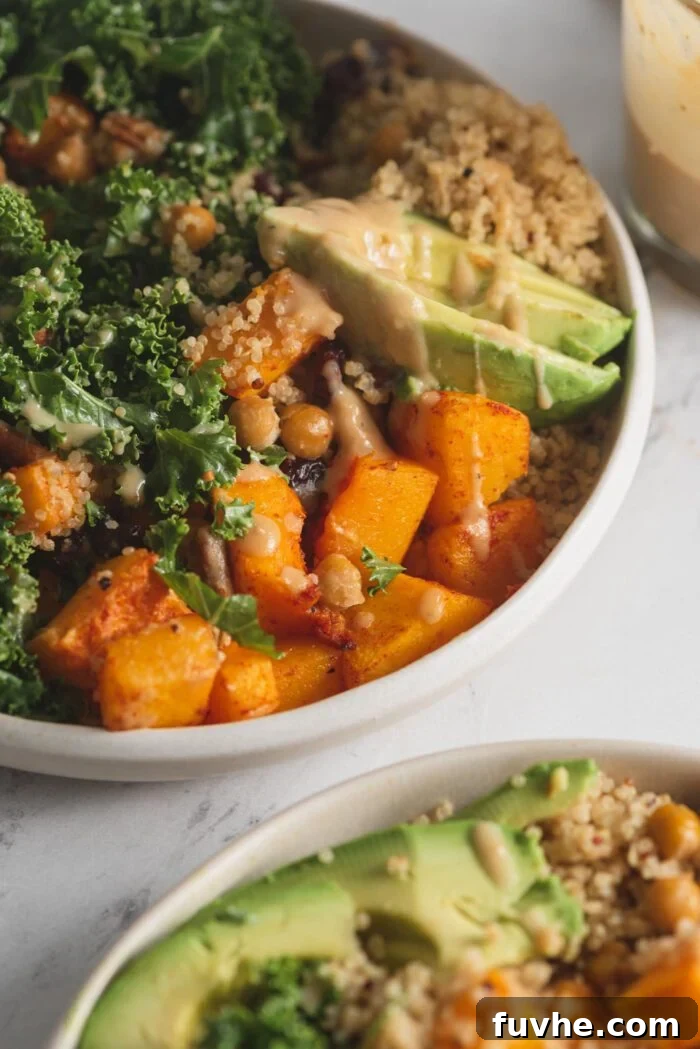
Our featured power bowls are a culinary masterpiece, thoughtfully assembled to ensure a delightful eating experience. They boast a harmonious blend of textures and tastes, including the buttery richness of avocado, the sweet earthiness of roasted butternut squash, the tender crunch of massaged kale, the delightful chewiness of pecans and cranberries, all brought together by a creamy, tangy, and subtly sweet maple tahini dijon dressing. This recipe isn’t just a guide; it’s an inspiration, offering incredible versatility that allows you to easily adjust ingredients based on your preferences or whatever seasonal produce you have on hand. It’s the perfect canvas for your culinary creativity.
These nourishing power bowls are ideal for a healthy and satisfying dinner after a long day, or they can be efficiently prepped in advance, providing you with wholesome, ready-to-eat lunches or dinners throughout your busy week. Embrace the convenience without compromising on nutrition or flavor.
If you’re eager to explore more nourishing bowl recipes, be sure to check out our Veggie Power Bowls, tantalizing BBQ Tempeh Bowls, refreshing Santa Fe Salad Bowls, protein-packed Tofu Edamame Bowls, and comforting Sweet Potato Tofu Bowls. Each offers a unique blend of ingredients to keep your healthy eating exciting and varied.
Why You’ll Love These Quinoa Power Bowls: Key Highlights
- Dietary-Friendly & Inclusive: This recipe is naturally vegetarian, vegan, and gluten-free, making it suitable for a wide range of dietary needs. With simple modifications, it can also be made entirely nut-free, ensuring everyone at the table can enjoy it.
- Nutrient Powerhouse: Each bowl is thoughtfully crafted to be high in both plant-based protein and dietary fiber. Quinoa and chickpeas provide a significant protein boost, crucial for satiety and muscle maintenance, while a rich array of vegetables and whole grains contribute essential fiber for digestive health and sustained energy.
- Effortless Meal Prep Solution: These power bowls are a dream come true for anyone looking to simplify their weekly meal planning. They are incredibly easy to prepare in larger batches, allowing you to assemble nutritious, ready-to-eat meals for several days, saving you time and effort during busy weekdays.
- Deliciously Wholesome: Beyond their impressive nutritional profile, these bowls are genuinely delicious. The combination of sweet roasted squash, savory chickpeas, fresh kale, crunchy nuts, and a creamy, tangy dressing creates a complex and deeply satisfying flavor experience that proves healthy food can be incredibly appetizing.
- Endless Customization Options: The beauty of this recipe lies in its adaptability. It serves as an excellent base for experimentation, easily customizable with various seasonal vegetables, different types of grains, and your favorite sauces and seasonings. Feel free to swap ingredients to suit your taste or utilize whatever fresh produce is available.
- Crowd-Pleasing & Family-Friendly: Despite being a plant-based meal, these power bowls are designed to appeal to a broad audience. Their vibrant colors, diverse textures, and balanced flavors make them a fantastic vegetarian option that even non-vegans will enthusiastically enjoy, perfect for family dinners or entertaining guests.
Essential Ingredients for Your Power Bowl
Crafting these delicious quinoa power bowls begins with selecting fresh, high-quality ingredients. Here’s a detailed look at the core components and suggested substitutions to ensure your culinary success.
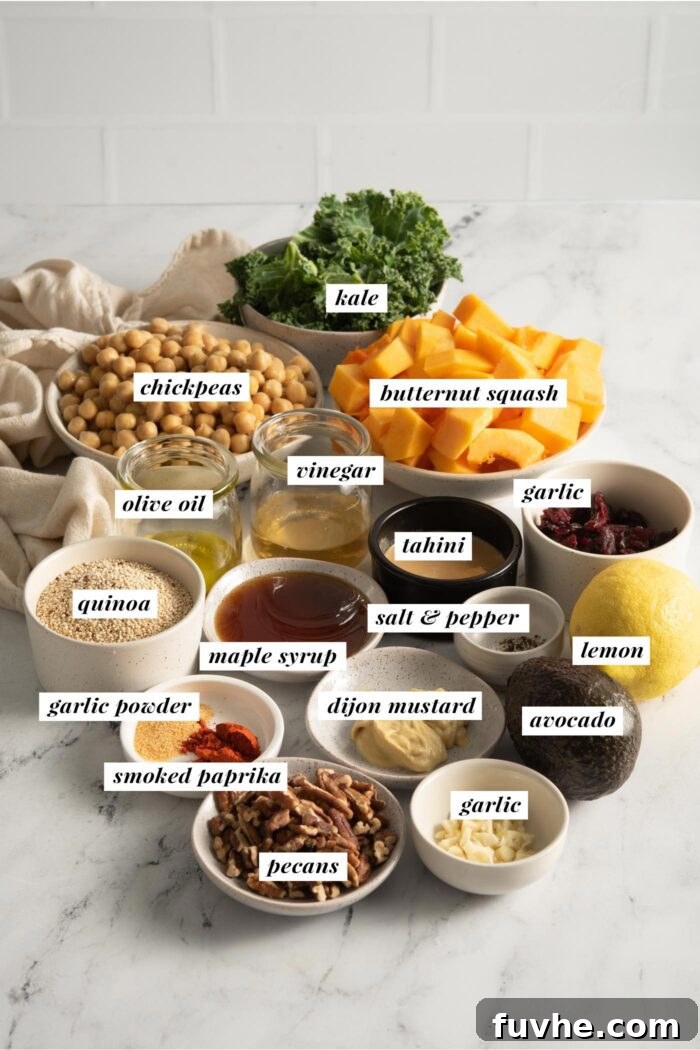
- Maple Syrup: This natural sweetener forms the base of our dressing, lending a rich, nuanced sweetness that complements the savory and tangy notes. For alternative sweeteners, you could use agave syrup to keep it vegan, or honey if not strictly vegan. If you’re aiming for a sugar-free option, liquid monk fruit sweetener works wonderfully without altering the texture significantly.
- Tahini: A crucial element for the dressing’s creamy texture and distinctive nutty flavor. The quality of tahini can greatly impact the dressing; look for a smooth, pourable variety that isn’t overly bitter. Brands like Soom and Arz Fine Foods are known for their excellent, creamy tahini, making them great choices for this recipe.
- Apple Cider Vinegar: This acidic component adds a bright tang to the dressing, balancing the sweetness of the maple syrup and the richness of the tahini. If apple cider vinegar is unavailable, white wine vinegar can be used as a suitable substitute, offering a similar level of acidity.
- Butternut Squash: Roasted butternut squash brings a delightful sweetness and a soft, tender texture to the bowls. While the recipe suggests approximately 1 cup cubed per bowl, or one medium-sized squash, feel free to adjust this to your preference. This ingredient is also highly versatile; sweet potato, acorn squash, or kabocha squash can all be fantastic alternatives, each offering a slightly different flavor profile.
- Smoked Paprika: This spice infuses the roasted butternut squash with a wonderful depth of flavor and a subtle smoky aroma. If smoked paprika is not on hand, regular paprika can be used, though it will yield a less smoky taste. For an extra kick, a pinch of chili powder can be added.
- Quinoa: As the foundation of these power bowls, quinoa is a complete protein and a gluten-free grain, providing a substantial and healthy base. The recipe calls for approximately 3 cups of cooked quinoa, which translates to about 1.5 cups uncooked. If you prefer, or if quinoa isn’t suitable, other grains such as brown rice, farro, or your favorite whole grain can be used interchangeably.
- Pecans: These add a delightful crunch and a rich, buttery flavor to the bowls. They also contribute healthy fats and nutrients. Feel free to swap pecans for other nuts like almonds, cashews, or walnuts to vary the flavor and texture. For a nut-free version, pumpkin seeds, sunflower seeds, or hemp seeds are excellent choices, offering a similar satisfying crunch and nutritional benefits.
- Cranberries: Dried cranberries introduce a touch of tart sweetness and a chewy texture that complements the other ingredients beautifully. If possible, opt for fruit-juice sweetened or unsweetened dried cranberries to reduce added sugars. If cranberries aren’t available, raisins or finely chopped dates make great alternatives, adding natural sweetness.
- Avocado: The creamy, healthy fats from avocado add a luxurious texture and a wealth of nutrients to each bowl. The recipe suggests using half an avocado per bowl, but this can be adjusted up or down based on your personal nutritional needs and preferences for richness.
- Kale: This leafy green superfood is a cornerstone of the bowl, offering a slightly bitter counterpoint and a massive nutritional punch. Massaging it with lemon juice and olive oil is key to tenderizing it, making it more palatable and easier to digest. Choose fresh, vibrant bunches with crisp leaves.
- Chickpeas: Roasted chickpeas provide a wonderful crispy texture and a significant boost of plant-based protein and fiber. Canned chickpeas are convenient, just be sure to rinse and dry them thoroughly for optimal crispiness.
While this section highlights the primary components, please refer to the complete recipe card at the end of this post for a comprehensive list of all ingredients, precise measurements, and detailed cooking instructions to ensure the best results.
Easy Step-by-Step Instructions for Assembly
Follow these straightforward steps to create your delicious vegan quinoa power bowls. We’ve broken down each part of the process to ensure a smooth and enjoyable cooking experience.
Step 1: Prepare the Quinoa Foundation. Begin by bringing 3 cups of water or vegetable broth to a rolling boil in a medium saucepan on the stovetop. Once boiling vigorously, add 1.5 cups of rinsed uncooked quinoa to the pan. Immediately cover the pan with a tight-fitting lid and reduce the heat to a low simmer. Allow the quinoa to cook undisturbed for 15 minutes. After this time, remove the pan from the heat but keep it covered for an additional 5 minutes. This steaming period allows the quinoa to fully absorb the remaining moisture and become light and fluffy. Finally, remove the lid and gently fluff the cooked quinoa with a fork.
Step 2: Roast the Sweet Butternut Squash. While your quinoa is simmering, preheat your oven to 400 degrees Fahrenheit (200 degrees Celsius). Prepare the butternut squash by carefully peeling it, scooping out the seeds, and then cubing the flesh into roughly 1-inch pieces. Transfer the cubed squash to a baking tray lined with parchment paper to prevent sticking and ensure easy cleanup. Drizzle the squash with 1 tablespoon of olive oil, then sprinkle generously with 1 teaspoon of smoked paprika, ½ teaspoon of garlic powder, and a good pinch of salt and black pepper. Toss everything together until the squash is evenly coated. Spread the seasoned squash in a single layer on the baking sheet, ensuring not to overcrowd the pan for even roasting. Roast in the preheated oven for 20-25 minutes, or until the squash is beautifully fork-tender and slightly caramelized at the edges.
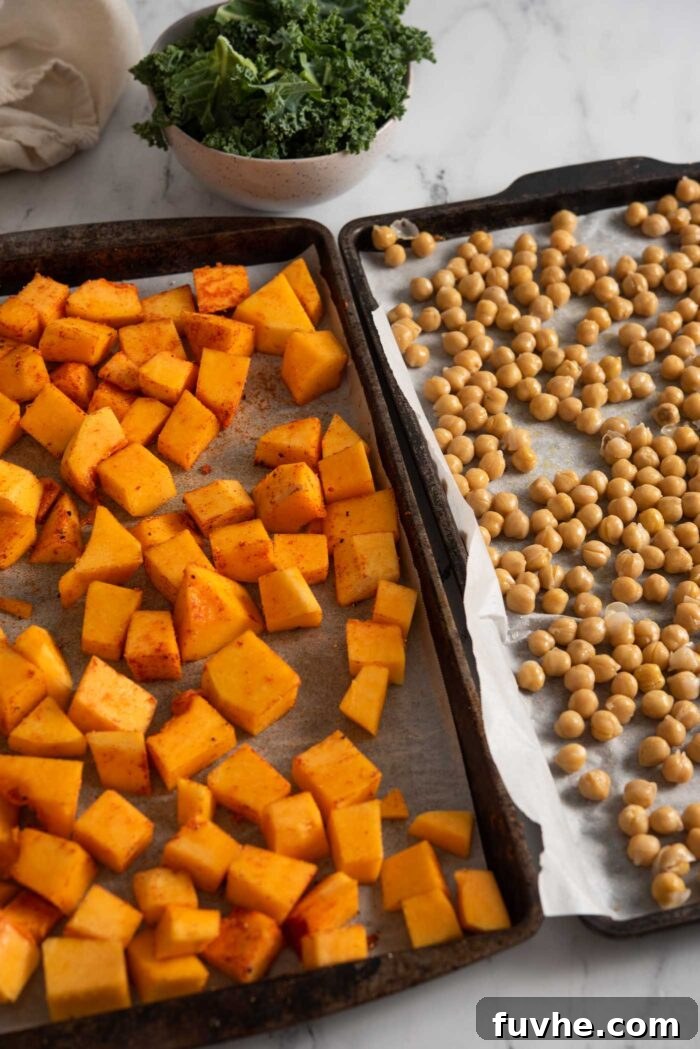
Step 3: Crisp Up the Chickpeas. While the butternut squash is roasting, drain and thoroughly rinse one 19 oz can (approximately 2.5 cups) of chickpeas. Spread the rinsed chickpeas onto a clean dish cloth or several layers of paper towel. Fold the cloth over them and gently rub or dab to remove as much excess moisture as possible. This step is crucial for achieving crispy chickpeas. Don’t worry if some of the skins come off; that’s perfectly normal and doesn’t affect the taste or texture. Transfer the dried chickpeas to a separate baking pan (or the same one as the squash if there’s enough space) and toss them with ½ tablespoon of olive oil and a generous pinch of sea salt. Roll them around to ensure an even coating. Place the chickpeas in the oven alongside the squash and roast for the same 20-25 minutes, or until they are golden brown and deliciously crispy.
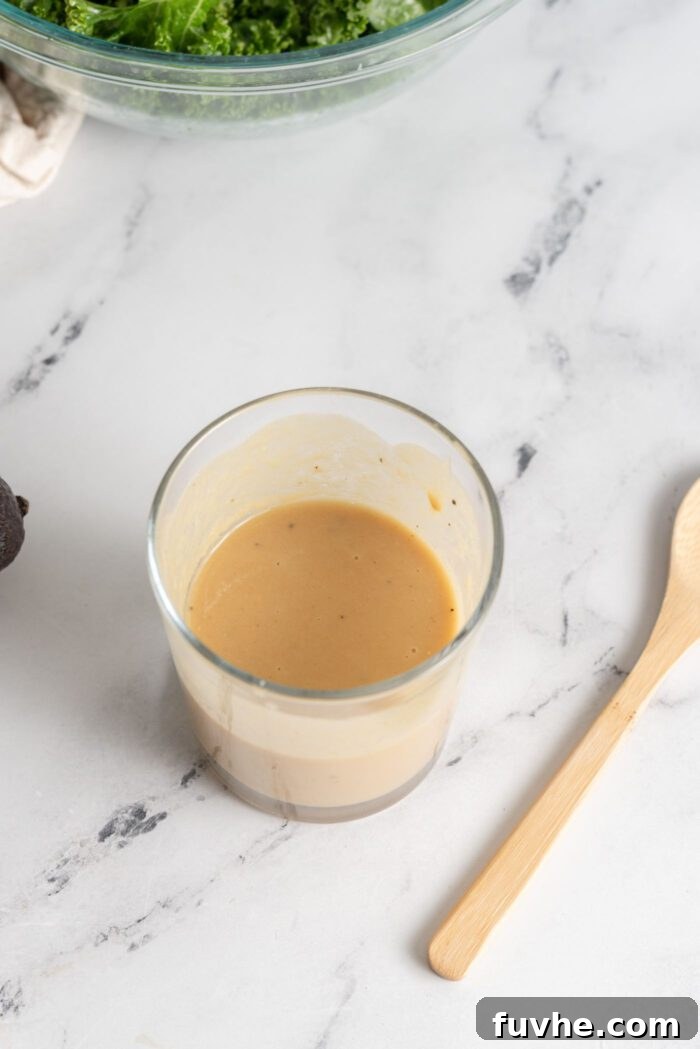
Step 4: Whip Up the Maple Dijon Dressing. In a small jar with a tight-fitting lid, or a small bowl, combine all the ingredients for the maple dijon dressing: 3 tablespoons maple syrup, 3 tablespoons dijon mustard, 4 tablespoons tahini, 6 tablespoons apple cider vinegar, and a pinch of salt and pepper. If using a jar, simply shake vigorously until all ingredients are fully combined and the dressing is smooth and creamy. If using a bowl, whisk thoroughly until the dressing emulsifies and reaches a uniform consistency. Set the dressing aside until you’re ready to assemble your bowls.
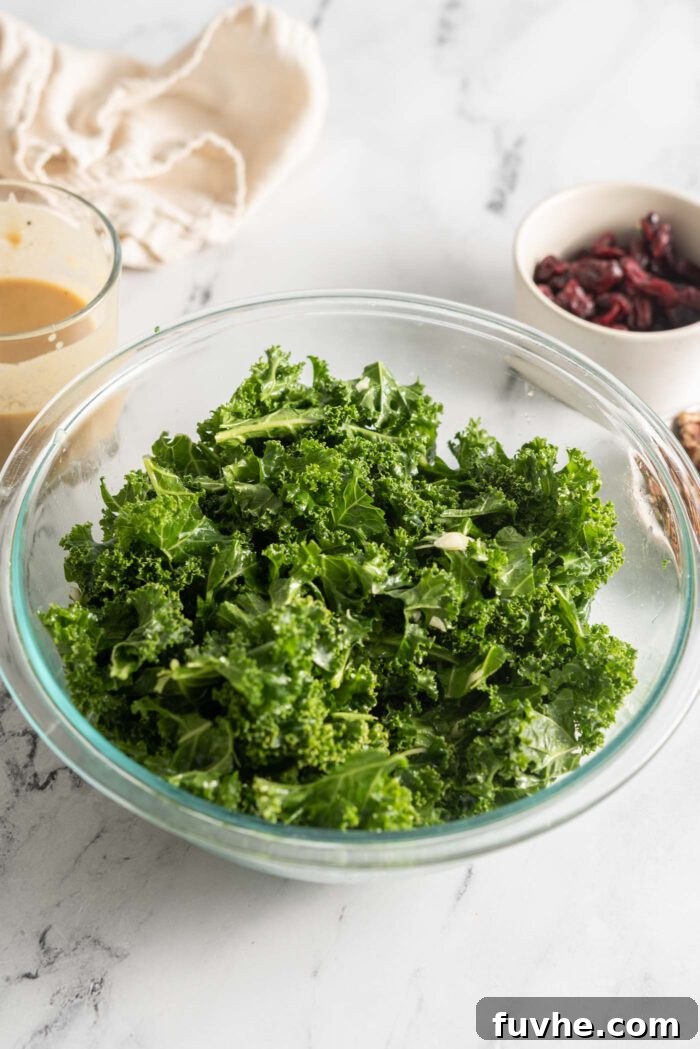
Step 5: Tenderize the Kale. Wash one bunch of fresh kale thoroughly under cold water. Remove the leaves from their tough central stems, discarding the stems. Chop or tear the kale leaves into bite-sized pieces and transfer them to a large mixing bowl. Add 2 tablespoons of lemon juice, 1 minced garlic clove, and 1 tablespoon of olive oil to the kale. Now, using your clean hands, gently massage the kale for 1-2 minutes. This crucial step breaks down the tough fibers in the kale, making it much softer, more tender, and easier to digest, as well as enhancing its flavor. Season with a pinch of salt and pepper to taste.
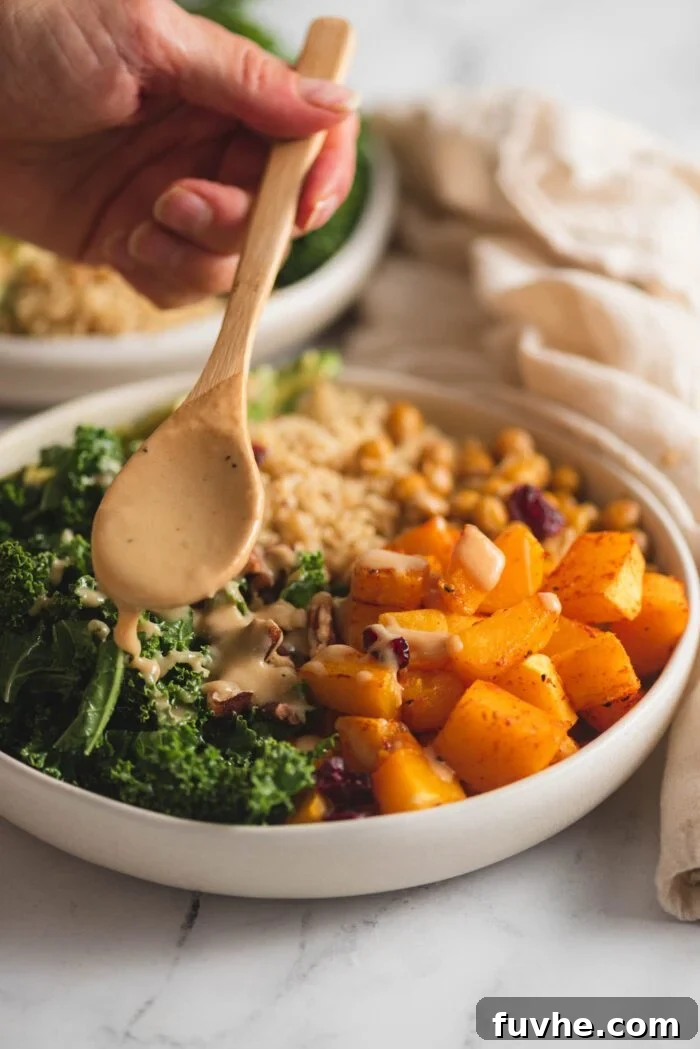
Step 6: Assemble Your Power Bowls. Once all your components are ready—fluffy quinoa, tender roasted butternut squash, crispy chickpeas, and massaged kale—it’s time to assemble. Divide these core ingredients evenly among 6 individual bowls or meal prep containers. Then, top each bowl with ½ cup of pecans, ½ cup of dried cranberries, and ½ of a sliced or diced avocado. Finally, drizzle each bowl generously with a few tablespoons (approx. 2 tbsp per bowl) of the prepared maple dijon dressing, ensuring every component is coated with its delicious flavor.
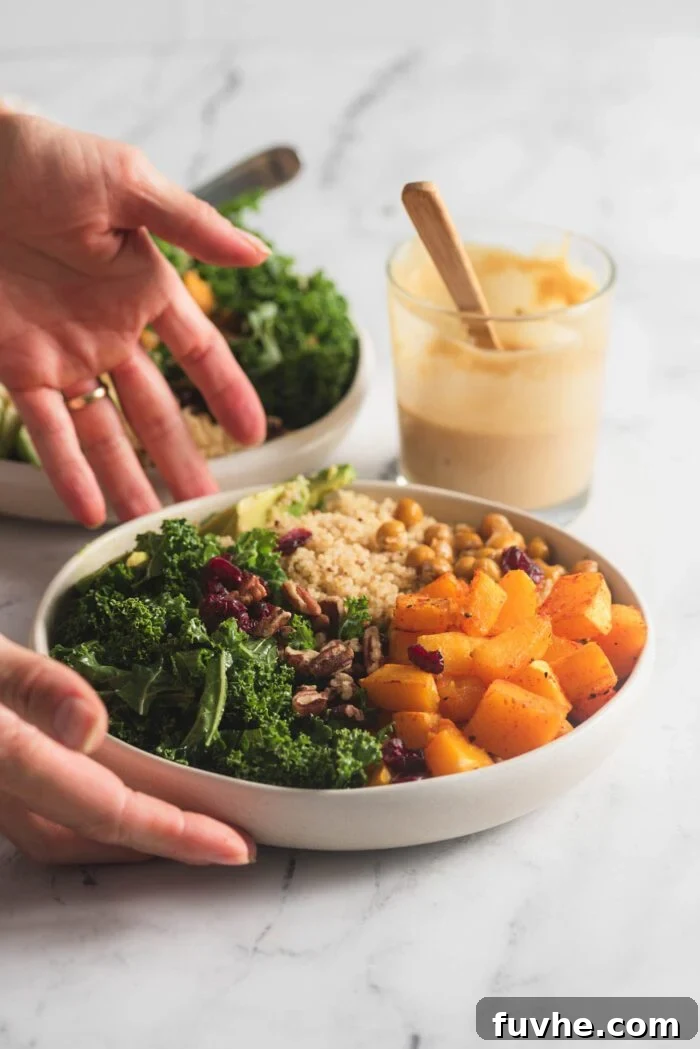
Quick Tip for Meal Prep: If you are preparing these bowls for future meals, it’s highly recommended to store the sliced avocado and the maple dijon dressing separately. This practice helps maintain the freshness of the avocado, preventing browning, and keeps the dressing vibrant until you are ready to serve and enjoy your power bowl.
Expert Tips for the Perfect Quinoa Power Bowls
Enhance your power bowl experience with these practical tips, designed to maximize flavor, freshness, and convenience.
- Optimal Meal Prep Strategy: For those planning to enjoy these bowls throughout the week, strategic storage is key to maintaining peak freshness. To prevent the avocado from browning and to keep the kale from becoming soggy, always store the dressing and the avocado separately from the main bowl components. Add them just before you’re ready to eat, ensuring each meal tastes as fresh as the moment it was prepared.
- Boost Flavor with Simple Additions: Elevate the taste profile of your power bowls with a few simple enhancements. For a tangy, zesty kick, consider topping your bowls with quick pickled red onions. If you enjoy a bit of heat, sprinkle chili flakes over the finished bowls, add thinly sliced jalapeños for a fresh crunch and spice, or drizzle a touch of your favorite hot sauce for an instant flavor explosion.
- Creative Customization for Endless Variety: The versatility of these power bowls makes them incredibly fun to customize. Don’t limit yourself to butternut squash; try swapping it for roasted sweet potato, parsnips, or another variety of squash like acorn or delicata. For the grain, experiment with brown rice, farro, freekeh, or even wild rice instead of quinoa to change the texture and nutritional profile. You can also incorporate other roasted vegetables such as cauliflower florets, Brussels sprouts, bell peppers, or zucchini for added nutrients and flavor.
- Low-Carb Alternatives: If you’re following a low-carb diet, these bowls can easily be adapted. Substitute the quinoa base with lighter, vegetable-based grains. Excellent options include broccoli rice, cabbage rice, or cauliflower rice. These alternatives allow you to enjoy all the delicious flavors and textures of the power bowl while significantly reducing the carbohydrate content.
Frequently Asked Questions About Quinoa Power Bowls
Yes, this specific power bowl recipe is inherently gluten-free, provided that all the individual ingredients used, such as quinoa, chickpeas, vegetables, and dressing components, are certified gluten-free. Quinoa is a naturally gluten-free grain, making it an excellent choice for those with celiac disease or gluten sensitivity. Always double-check labels on packaged ingredients like broths, spices, or tahini to ensure they do not contain hidden gluten.
Quinoa power bowls are incredibly versatile and welcome a vast array of additions. For more vegetables, consider incorporating fresh corn kernels, shredded cabbage, crisp snap peas, tender green beans, colorful bell peppers (especially delicious when roasted red peppers), nutrient-rich sprouts, steamed broccoli florets, juicy cherry tomatoes, or finely chopped green onions. The possibilities are truly endless, limited only by your imagination and what’s in season!
To boost the protein content even further, you have several fantastic options. Firm tofu, crumbled or cubed tempeh, or various plant-based meat alternatives like vegan chicken strips, sausage crumbles, or meatballs can be excellent additions. Feel free to choose any protein source you enjoy that complements the flavors of the bowl.
Absolutely! Using frozen vegetables is a convenient way to make this recipe even quicker and more accessible, especially if fresh produce isn’t readily available. For the butternut squash, you can use frozen pre-cubed squash; simply toss it with the oil and spices and roast directly from frozen, adding a few extra minutes to the cooking time if needed. Just ensure they are thawed and excess moisture is removed to achieve the best roasted texture, particularly for the chickpeas.
Storing & Meal Prep Tips for Ultimate Convenience
Maximize the life and freshness of your power bowls with these essential storage and meal prep guidelines.
- The maple dijon dressing is perfect for advance preparation. You can mix it up to 1 week ahead of time and store it in an airtight container in the fridge. If you find the dressing has thickened slightly after refrigeration, simply thin it out to your desired consistency with a tablespoon or two of water or a splash of apple cider vinegar before serving.
- For assembled bowls (without avocado and dressing), they will stay fresh and delicious in the refrigerator for up to 5 days. Ensure they are stored in sealed airtight containers to maintain their quality and prevent other fridge odors from affecting their taste. This makes them an ideal grab-and-go option for busy weekdays.
- These power bowls are versatile enough to be enjoyed both cold or gently reheated. If you prefer a warm meal, simply microwave your assembled bowl (again, excluding the avocado and adding dressing fresh) until it reaches your desired temperature. This flexibility is perfect for varying meal preferences.
- It’s important to note that this recipe, particularly due to the cooked quinoa and fresh vegetables, is not suitable for freezing. Freezing and thawing would significantly alter the texture of the vegetables, making them mushy, and the quinoa would become grainy. It’s best enjoyed fresh within the recommended refrigeration period.
More Delightful & Nourishing Bowl Recipes
If you’ve fallen in love with the concept of power bowls, you’re in luck! There’s a whole world of nutritious and flavorful bowl recipes waiting to be discovered. Here are some more amazing options that you’re sure to enjoy, each offering a unique twist on the wholesome meal-in-a-bowl idea:
- Quinoa Kale Salad with Roasted Vegetables
- Mediterranean Quinoa Power Bowls
- Roasted Carrot, Kale and Quinoa Bowl
- Teriyaki Chickpea Rice Bowl
- Lentil Quinoa Bowl
- Sweet Potato Quinoa Tofu Bowls
Vegan Quinoa Power Bowls
Rate Recipe
Print Recipe
Ingredients
For the Quinoa
- 1.5 cups uncooked quinoa, rinsed
- 3 cups vegetable broth or water
For the Maple Dijon Dressing
- 3 tbsp maple syrup
- 3 tbsp dijon mustard
- 4 tbsp tahini
- 6 tbsp apple cider vinegar
- pinch of salt and pepper
For the Power Bowls
- 1 medium to large butternut squash, peeled and cubed
- 2.5 tbsp olive oil, divided
- 1 tsp smoked paprika
- ½ tsp garlic powder
- 1 bunch kale, leaves removed from stems (approx. 6-8 cups chopped)
- 2 tbsp lemon juice
- 1 garlic clove, minced or grated
- salt and pepper
- 1 19 oz can chickpeas, 2.5 cups
- ½ cup pecans
- ½ cup dried cranberries
- 3 avocado
Instructions
-
Bring 3 cups of water or vegetable broth to a boil on the stovetop. Once boiling, add the quinoa, cover and reduce to a light simmer over low heat. Cook for 15 minutes. Remove from heat and let stand for 5 minutes. Remove the lid and fluff with a fork.
-
Preheat the oven to 400 degrees F. Toss the butternut squash with 1 tbsp olive oil, the smoked paprika, garlic powder and a pinch of salt and pepper. Evenly spread the butternut squash onto a baking sheet lined with parchment paper. Roast in the oven until the squash is fork tender, approximately 20-25 minutes.
-
Drain and rinse the chickpeas, using a dish cloth or paper towel to rub and remove excess moisture. Some of the skins come of, you can leave them as is. Place the chickpeas on a baking try and toss in ½ tbsp olive oil and a generous pinch of salt. Place in oven with the squash and roast for 20-25 minutes.
-
Add all dressing ingredients to a sealable container and shake until fully combined or whisk together until smooth in a bowl. Set aside until you are ready to use.
-
Wash and chop the kale then add to a large bowl. Add the lemon juice, garlic and 1 tbsp olive oil. Using your hands massage the kale for 1-2 minutes to soften and tenderize.
-
Once the squash and chickpeas are cooked, start assembling the bowls. Evenly distribute all of the ingredients between 6 bowls or storage containers. Dress each with 2 tbsp of maple dijon dressing and ½ avocado diced (if you’re storing the bowls for meal prep, leave the dressing and avocado off until serving).
Nutrition
Like this recipe? Rate and comment below!