
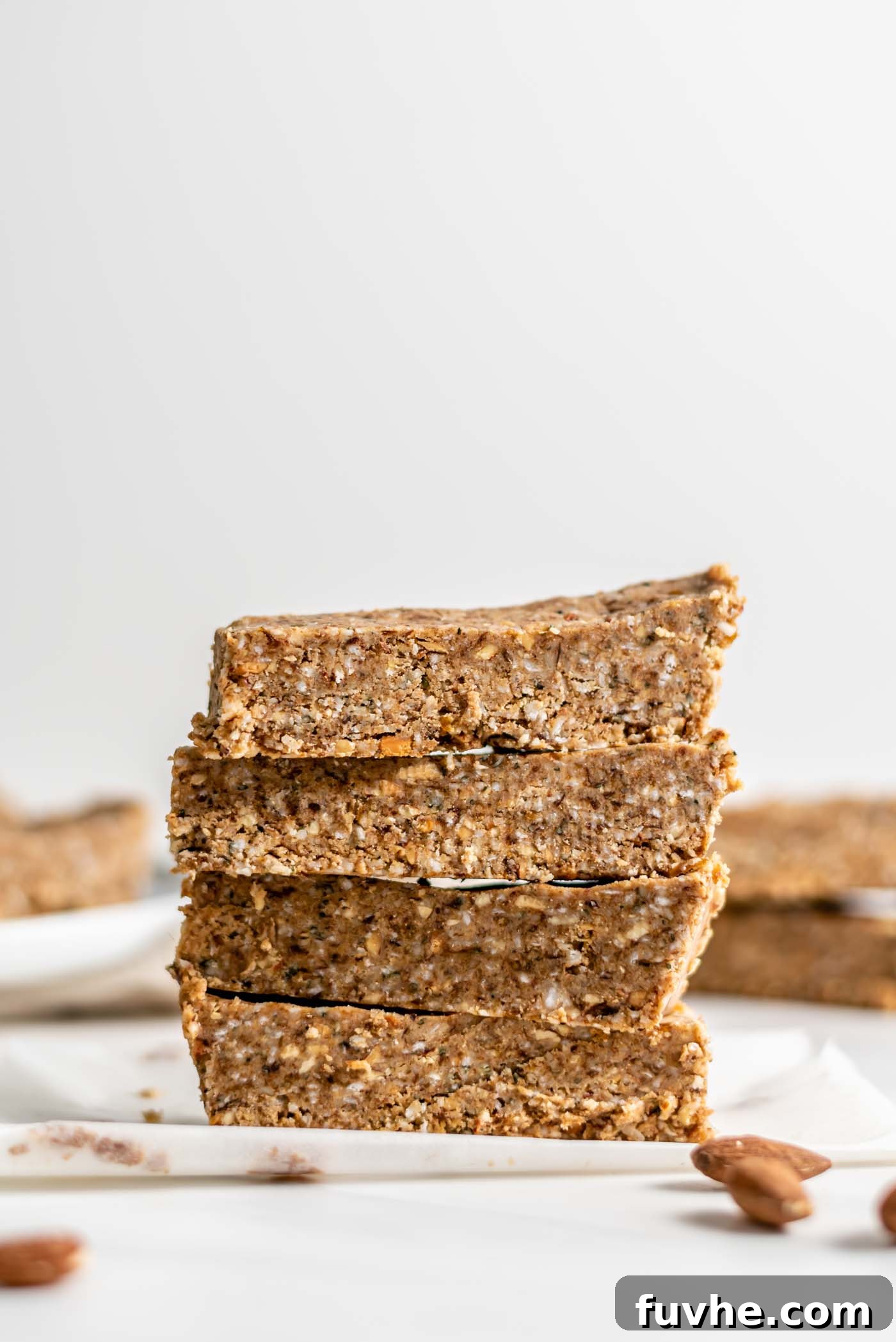
Craving a wholesome, energizing snack that tastes like a decadent treat? Look no further than these incredible vegan no-bake almond coconut protein bars with hemp seeds. Designed for convenience and packed with nutrients, these bars are incredibly easy to whip up using just 6 core ingredients in your food processor. They’re not just a fantastic source of plant-based protein, but also a delightful dessert alternative, perfect for busy lifestyles or anyone seeking a healthier snack option. Get ready to transform your snacking game with a recipe that’s as simple as it is satisfying!
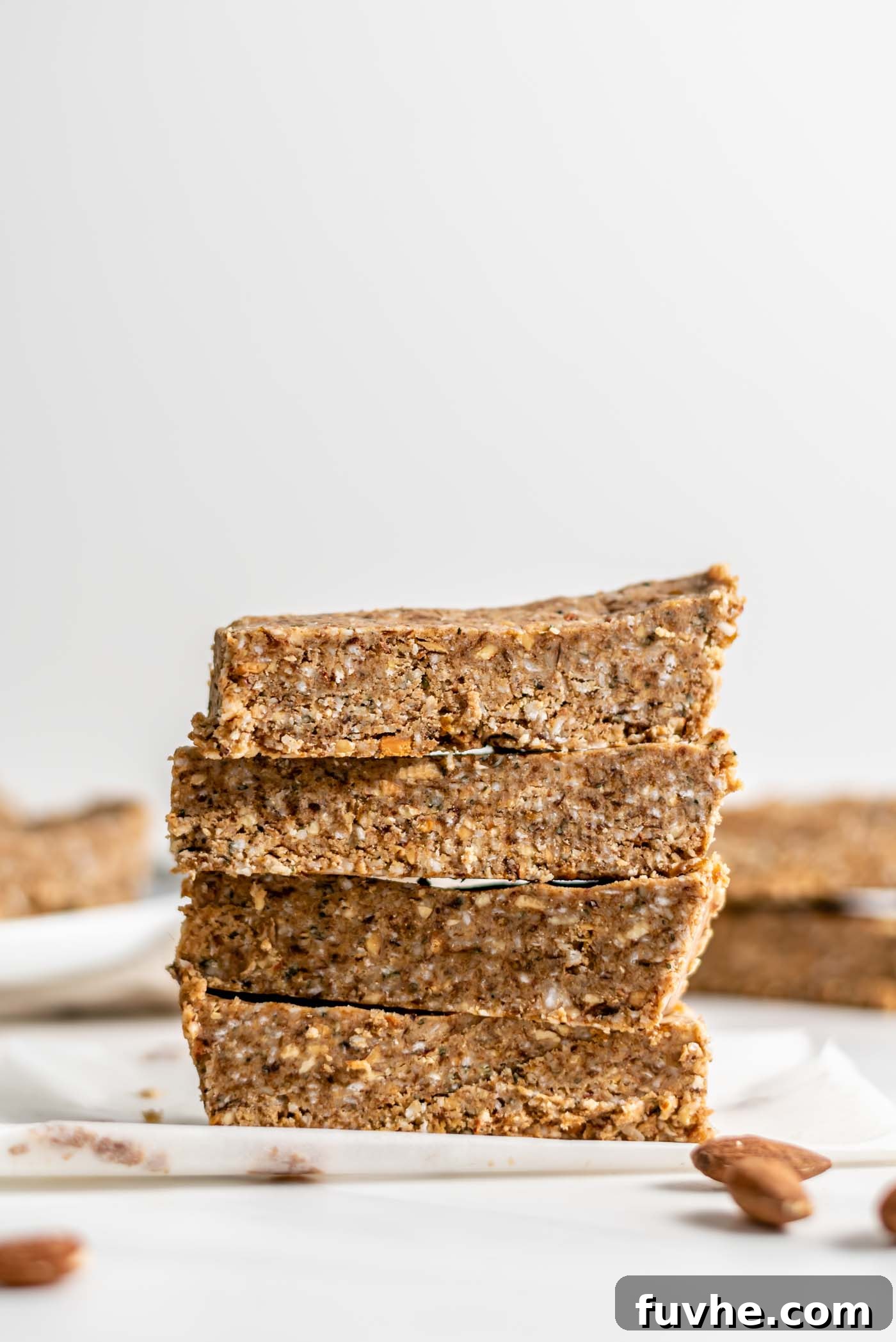
Why You’ll Love These No-Bake Protein Bars
These almond coconut hemp protein bars aren’t just delicious; they’re thoughtfully crafted to be a powerhouse of nutrition and convenience. Here are compelling reasons why this recipe will become a staple in your healthy eating routine:
- Completely Vegan & Gluten-Free: Made entirely with plant-based ingredients, these bars are perfect for those following a vegan diet or anyone looking to reduce their animal product intake. They are also naturally gluten-free, making them suitable for individuals with gluten sensitivities or celiac disease.
- Effortless No-Bake Preparation: Forget about turning on the oven! This recipe requires absolutely no baking, saving you time and energy. All you need is a food processor, and you’re just a few simple steps away from a batch of homemade protein bars.
- Made with 6 Simple Ingredients: You won’t find a long list of obscure ingredients here. This recipe champions simplicity, using only six wholesome ingredients that are easy to find at most grocery stores or health food shops.
- Packed with Protein (11g per Bar): Each bar delivers a substantial 11 grams of plant-based protein, helping you stay full, support muscle recovery, and maintain stable energy levels throughout your day. It’s an ideal post-workout snack or a satisfying mid-day boost.
- Endlessly Customizable: While the core recipe is fantastic, it also serves as a perfect canvas for customization. You can easily experiment with different nuts, seeds, spices, or other healthful add-ins to create unique flavor profiles tailored to your preferences.
- A Superior Alternative to Store-Bought Bars: Ditch the overly processed, sugar-laden, and expensive store-bought protein bars. By making your own, you have complete control over the quality of ingredients, ensuring no artificial flavors, preservatives, or excessive sugars.
If you enjoy crafting your own nutritious snacks, these almond coconut protein bars are a must-try. For more homemade protein bar inspiration, be sure to explore our other popular recipes like these No-Bake Chocolate Protein Bars or our energizing No-Bake Hemp Protein Bars. They’re all designed to provide healthy energy and delicious flavor!
Key Ingredients for Your Almond Coconut Protein Bars
Crafting the perfect no-bake protein bar starts with understanding your ingredients. Below are essential notes on the specific components used in this recipe, along with useful tips for selection and potential substitutions. For the precise measurements, please refer to the comprehensive recipe card at the end of this article.
- Almonds: For the best flavor and texture, opt for plain, raw almonds. Avoid any roasted, salted, or oil-coated varieties, as these can alter the taste and nutritional profile of your bars. Almonds provide a rich, buttery base and contribute healthy monounsaturated fats and fiber.
- Substitution Tip: Feel free to experiment with other nuts like pecans, walnuts, or even cashews. A blend of different nuts can also create a more complex flavor and nutrient profile. Ensure they are raw and unsalted for optimal results.
- Dates: Dates are the natural sweetener and binder for these bars, eliminating the need for refined sugars. The key is to use soft and moist dates; Medjool dates are often preferred for their caramel-like flavor and pliability. Deglet Noor or Sayer dates also work well if they are soft.
- Preparation Tip: If your dates feel a bit dry or firm, a quick soak can work wonders. Submerge them in hot water for 10-15 minutes, then drain them thoroughly and pat them dry before adding them to your food processor. This ensures they blend smoothly and help bind the bars effectively.
- Hemp Seeds (Hemp Hearts): These tiny powerhouses are a fantastic source of plant-based protein, omega-3 and omega-6 fatty acids, and essential minerals. They have a mild, nutty flavor that complements the other ingredients beautifully. You’ll often find them labeled as “hemp hearts” in well-stocked grocery stores, health food stores, or available for purchase online.
- Unsweetened Shredded Coconut: To keep these bars healthy and free from added sugars, always choose unsweetened shredded coconut. Whether you use fine or medium desiccated coconut, it will lend a delightful tropical aroma and chewy texture without overwhelming sweetness.
- Plant-Based Vanilla Protein Powder: This ingredient is crucial for boosting the protein content of your bars. We recommend a high-quality plant-based vanilla protein powder, such as pea protein, brown rice protein, or a blend. The vanilla flavor enhances the overall taste profile.
- Note on Whey Protein: This recipe has not been tested with whey protein. Plant-based protein powders often have different absorption rates and binding properties compared to whey, so results may vary.
- Coconut Oil: Melted coconut oil plays several vital roles in this recipe. It contributes to the creamy, luscious texture, helps to counteract the dryness that can sometimes come from protein powder, and most importantly, acts as a binding agent that helps the bars hold their shape once chilled.
- Water: A small amount of water helps to achieve the perfect consistency, especially when blending the ingredients into a pliable dough. Adjust as needed to ensure the mixture comes together without being too wet or too dry.
- Optional Add-ins (Cinnamon & Sea Salt): A touch of cinnamon adds warmth and depth of flavor, while a pinch of sea salt balances the sweetness and enhances all the other flavors. Don’t skip these if you want to elevate the taste!
Recipe Customization Ideas for Your Protein Bars
One of the best aspects of making homemade protein bars is the ability to tailor them exactly to your taste and nutritional needs. Here are a few ways you can adjust and customize this recipe:
- For a Lower-Fat and Lower-Calorie Bar: If you’re looking to reduce the fat and calorie content, you can choose to omit either the hemp seeds or the shredded coconut. We suggest removing the shredded coconut, as you’ll still benefit from the excellent protein content provided by the hemp seeds.
- Boost with Extra Goodies: Add up to 1/2 cup of other delicious and healthful mix-ins. Consider adding mini vegan chocolate chips, cacao nibs for a subtle chocolatey crunch, dried cranberries or cherries for a tart contrast, or even a handful of chopped walnuts for added texture and healthy fats.
- Flavor Variations:
- Citrus Zest: Add 1-2 teaspoons of orange or lemon zest for a bright, fresh flavor.
- Extracts: A few drops of almond extract can enhance the almond flavor, or try a dash of peppermint extract for a festive twist.
- Spices: Beyond cinnamon, try a pinch of nutmeg, cardamom, or even a touch of pumpkin pie spice for seasonal flair.
- Nut-Free Option: If you have a nut allergy, you can substitute the almonds with sunflower seeds or pumpkin seeds. Ensure your protein powder is also nut-free. The texture might vary slightly, but the deliciousness will remain!
- Extra Protein Boost: If you desire even more protein, you can slightly increase the amount of protein powder, ensuring you add a bit more liquid (water or non-dairy milk) if the mixture becomes too dry.
- Coating or Topping: For an extra special touch, drizzle the chilled bars with melted vegan dark chocolate or sprinkle with extra shredded coconut, flaky sea salt, or finely chopped nuts before chilling.
How to Make These Easy No-Bake Almond Coconut Protein Bars
Making these protein-packed bars is incredibly straightforward, thanks to their no-bake nature and the power of your food processor. Below is a visual guide to walk you through each step, ensuring you achieve perfect results every time. You’ll find the complete detailed written instructions with exact measurements in the recipe card at the very end of this post.
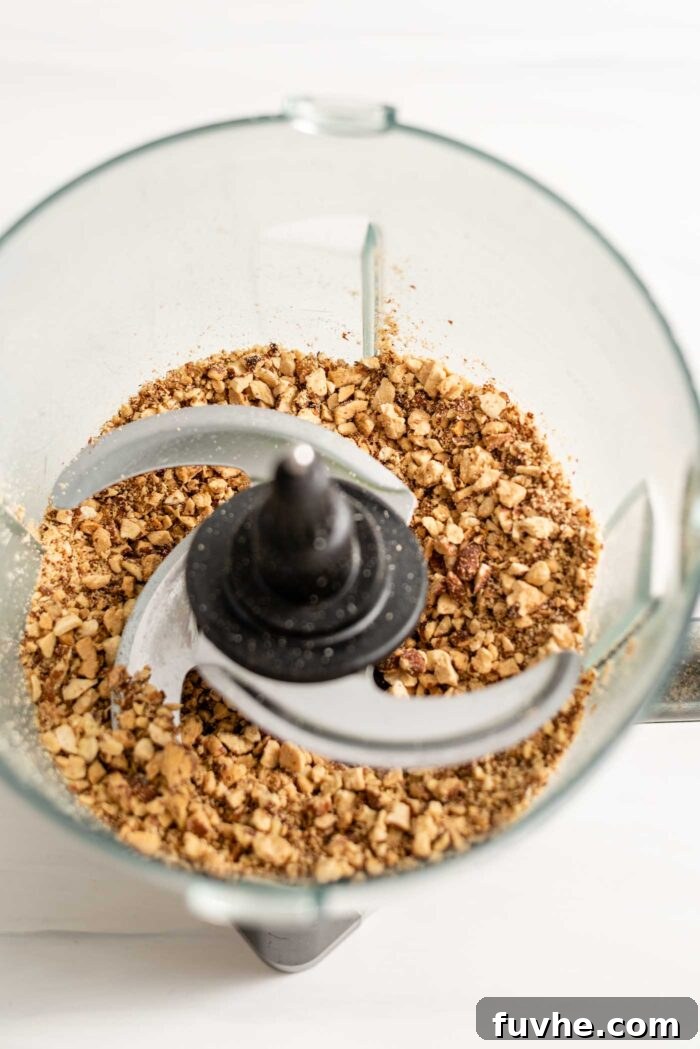
Step 1: Process the Almonds. Begin by adding your raw almonds to the bowl of a high-powered food processor. Process them until they break down into a coarse, grainy flour. It’s perfectly fine to have a few larger chunks; this adds a pleasant texture to the finished bars.
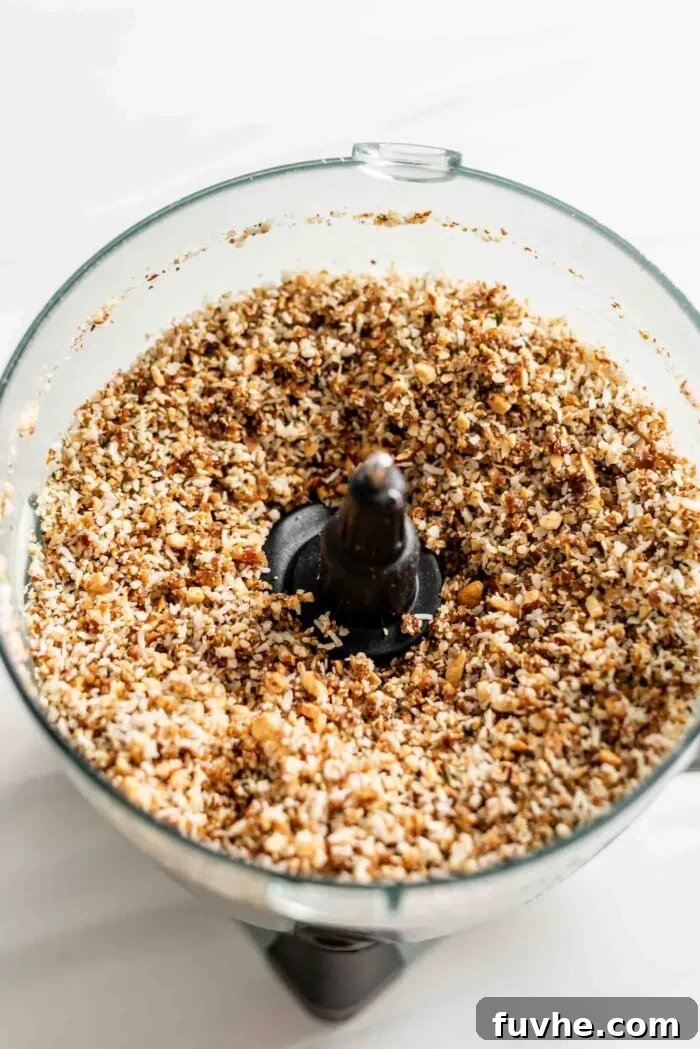
Step 2: Incorporate Dates, Coconut, and Hemp Seeds. Next, add the soft pitted dates, unsweetened shredded coconut, and hemp seeds to the food processor. Continue to process the mixture. It will gradually transform from a fine flour into a crumbly, yet somewhat sticky, mixture.
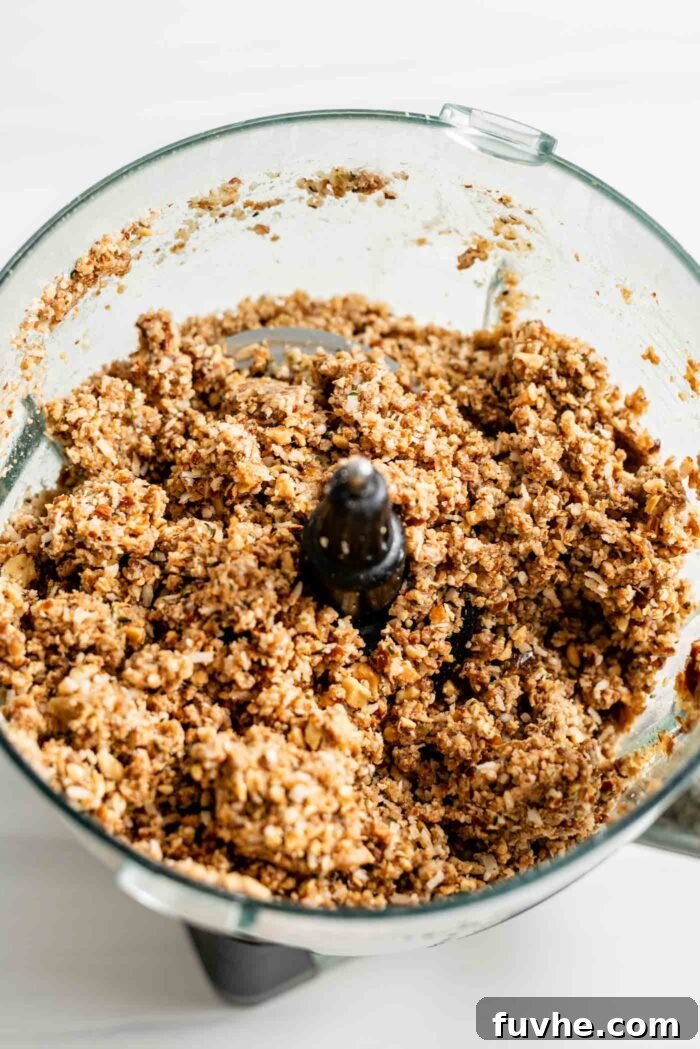
Step 3: Add Remaining Ingredients and Form Dough. Now, add the vanilla protein powder, melted coconut oil, water, and any optional spices like cinnamon and sea salt. Process everything together until a thick, cohesive dough forms. This dough should be sticky enough to hold together when pressed between your fingers.
Recipe Tip: Food Processor Volume
For some smaller food processors, the volume of all ingredients in Step 3 might be too much to blend efficiently. While a powerful processor might handle it by blending on low and scraping down the sides a few times, it can fill the container. If you suspect your food processor is struggling or is too small, transfer the crumbly mixture (from Step 2) into a large mixing bowl. Then, add the remaining ingredients (protein powder, coconut oil, water, spices) and use your hands to thoroughly mix and knead everything together until a uniform, thick dough is formed. This method ensures all ingredients are well combined.
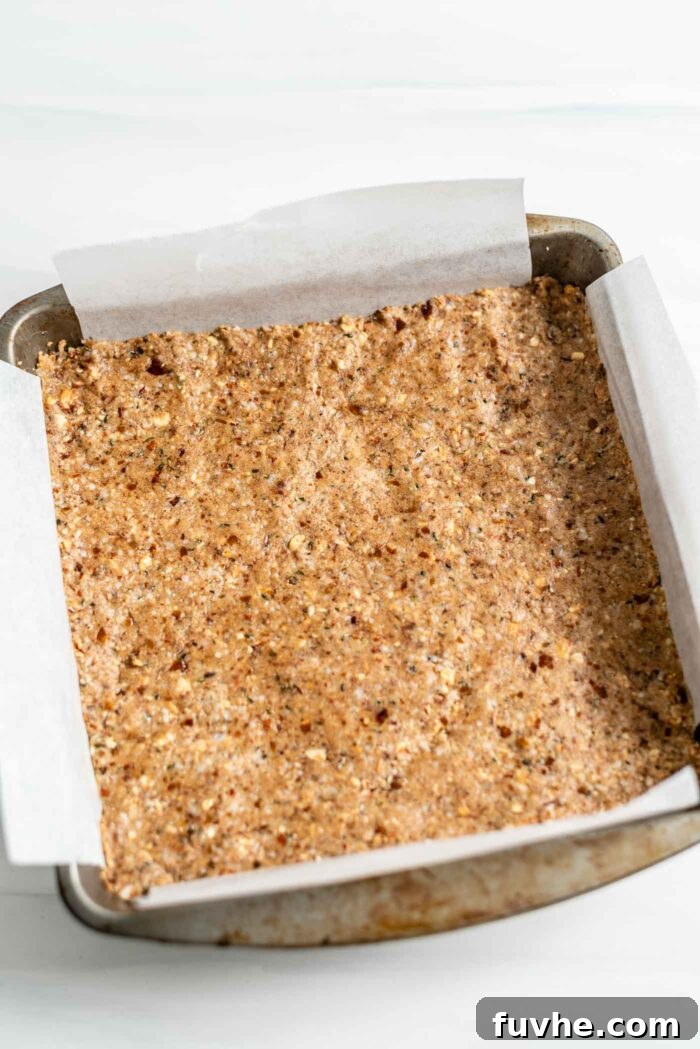
Step 4: Press into Pan & Chill. Line a 7-8 inch square baking pan with parchment paper, leaving an overhang on the sides for easy removal. Transfer the dough into the prepared pan. Using your hands, firmly and evenly press the dough into the pan. Take your time with this step, ensuring it’s compressed well and as flat as possible. A well-pressed base ensures your bars hold their shape beautifully. Place the pan in the freezer for at least one hour to allow the bars to firm up completely.
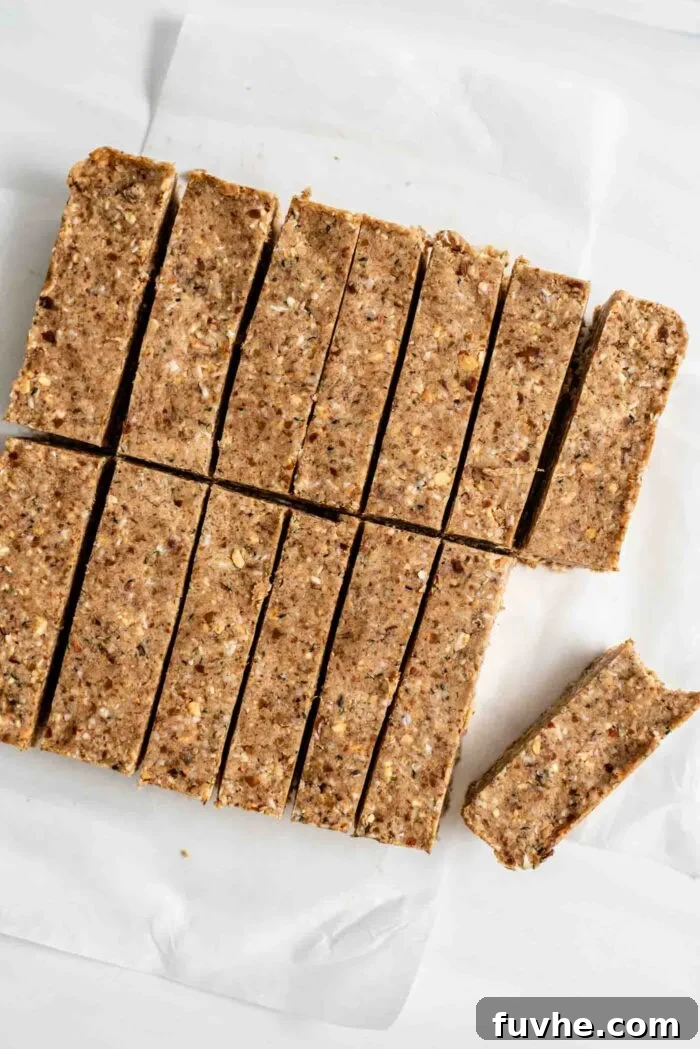
Once thoroughly chilled, lift the slab of protein bar dough out of the pan using the parchment paper overhang. Place it on a cutting board and slice it into 12 evenly sized bars. Now they’re ready to enjoy! These delicious vegan almond coconut protein bars are best stored in an airtight container in the fridge or freezer. They maintain a wonderful chewy texture even when frozen, so you can enjoy them straight from the freezer without needing to thaw them.
Recipe FAQs: Your Questions Answered
While chia seeds and ground flax are excellent sources of nutrients, they don’t quite offer the same texture and binding properties as hemp seeds in this specific recipe. Chia seeds absorb a lot of liquid and can make the bars too dense or gummy. You might be able to replace up to half of the hemp seeds with chia seeds, but for the best texture and flavor, we recommend sticking with hemp. You could also add 2-3 tablespoons of ground flaxseed for an extra boost of fiber and omega-3s, but we wouldn’t advise it as a direct swap for the entire amount of hemp seeds.
These vegan almond coconut protein bars have excellent shelf stability thanks to the natural preservatives like coconut oil. When stored in an airtight container, they will keep well in the fridge for up to 2 weeks. For longer storage, you can freeze them for up to 3 months. They don’t freeze solid, so you can enjoy them straight from the freezer for a quick, chilled snack.
This is a common question! The answer is a bit of a yes and no. This recipe creates a relatively thick and substantial mixture, which can be challenging for some blenders, especially if they are not high-powered. A regular blender might struggle with the volume and density of the ingredients, potentially leading to an inconsistent texture or even damage to your blender.
However, if you have a high-speed blender (like a Vitamix) or a smaller food processor that can’t handle the full volume at once, you can adapt the method. Start by processing the almonds first until finely ground. Then, add the dates, coconut, and hemp seeds and pulse until a crumbly mixture forms. At this point, transfer the mixture to a large mixing bowl. Add the protein powder, melted coconut oil, and water. Use your hands to thoroughly combine and work the mixture into a uniform, pliable dough. This ensures all ingredients are well incorporated without overtaxing your appliance.
The consistency of the dough is key for perfectly holding bars. If your mixture seems too dry and isn’t coming together, add water one tablespoon at a time and process again until it reaches a sticky, pliable dough consistency. The dryness of your dates and protein powder can affect this. If the mixture is too wet or oily, it might be due to overly moist dates or too much coconut oil. Try adding a tablespoon or two of extra protein powder or almond flour and processing until it firms up.
Absolutely! These no-bake almond coconut protein bars are an ideal component for healthy meal prepping. You can make a large batch at the beginning of the week and have convenient, portion-controlled snacks ready to grab and go for days. Their excellent freezer-friendliness means you can even prepare several batches and store them for months, ensuring you always have a nutritious option on hand.
Rated 5 out of 5 stars by 4 voters.
Almond Coconut Hemp Protein Bars
Deryn Macey
10 minutes
1 hour
1 hour
10 minutes
12
bars
Rate Recipe
Print Recipe
Ingredients
- 1 cup raw almonds, 150 g
- 1 cup very tightly packed soft pitted dates, 270 g
- 1 cup hemp seeds, 150 g
- 1 unsweetened shredded coconut, 100 g
- 3/4 cup vanilla pea protein, 75 g
- 1/3 cup melted coconut oil, 70 g
- 1/4 cup water
- 2 tsp cinnamon, optional
- 1/2 tsp sea salt, optional
Instructions
-
Place the raw almonds into a food processor or high-powered blender. Process until they are finely broken down into a coarse, grainy flour. It’s perfectly acceptable to have a few larger pieces for texture.1 cup raw almonds
-
Add the soft pitted dates, unsweetened shredded coconut, and hemp seeds to the food processor. Continue to process the mixture until it forms a cohesive, crumbly mixture that starts to clump together.1 cup very tightly packed soft pitted dates,
1 cup hemp seeds,
1 cup unsweetened shredded coconut -
Add the remaining ingredients: vanilla pea protein, melted coconut oil, water, and optional cinnamon and sea salt. Process everything until a thick, uniform dough forms. The dough should be sticky and hold its shape when pressed. (Refer to the “Recipe Tip: Food Processor Volume” section above if your food processor is struggling).3/4 cup vanilla pea protein,
1/3 cup melted coconut oil,
1/4 cup water,
2 tsp cinnamon,
1/2 tsp sea salt -
Line a 7-8 inch square baking pan with parchment paper, allowing some overhang on the sides. Transfer the dough into the prepared pan and use your hands to firmly press it down, ensuring it is flat and even. Thoroughly pressing the dough is essential for bars that hold together well. Place the pan in the fridge or freezer for a minimum of 1 hour to allow the bars to set.
-
Once chilled and firm, lift the entire block of dough out of the pan using the parchment paper. Place it on a clean cutting board and cut it into 12 equally sized bars. Serve and enjoy your homemade protein bars!
Notes
Storage: To maintain freshness and texture, store your homemade almond coconut protein bars in a sealed, airtight container. They will last for up to 1 week in the refrigerator or up to 3 months in the freezer. They remain chewy even when frozen, making them a perfect grab-and-go snack from the freezer.
Dates: The success of these no-bake bars largely depends on using soft, moist dates, such as Medjool, Sayer, or Deglet Noor. If your dates are dry or firm, it’s crucial to soak them in hot water for about 15 minutes before using. Be sure to drain them very well and pat them dry after soaking to prevent excess moisture in your dough.
Lower-Fat/Calorie Option: For those looking to reduce the fat and calorie content, consider omitting the shredded coconut or hemp seeds. We generally recommend removing the coconut in this instance, as the hemp seeds contribute valuable protein.
Nutrition
Serving:
1
bar
,
Calories:
316
kcal
,
Carbohydrates:
24
g
,
Protein:
11
g
,
Fat:
22
g
,
Fiber:
5
g
,
Sugar:
17
g
Like this recipe? Rate and comment below!