
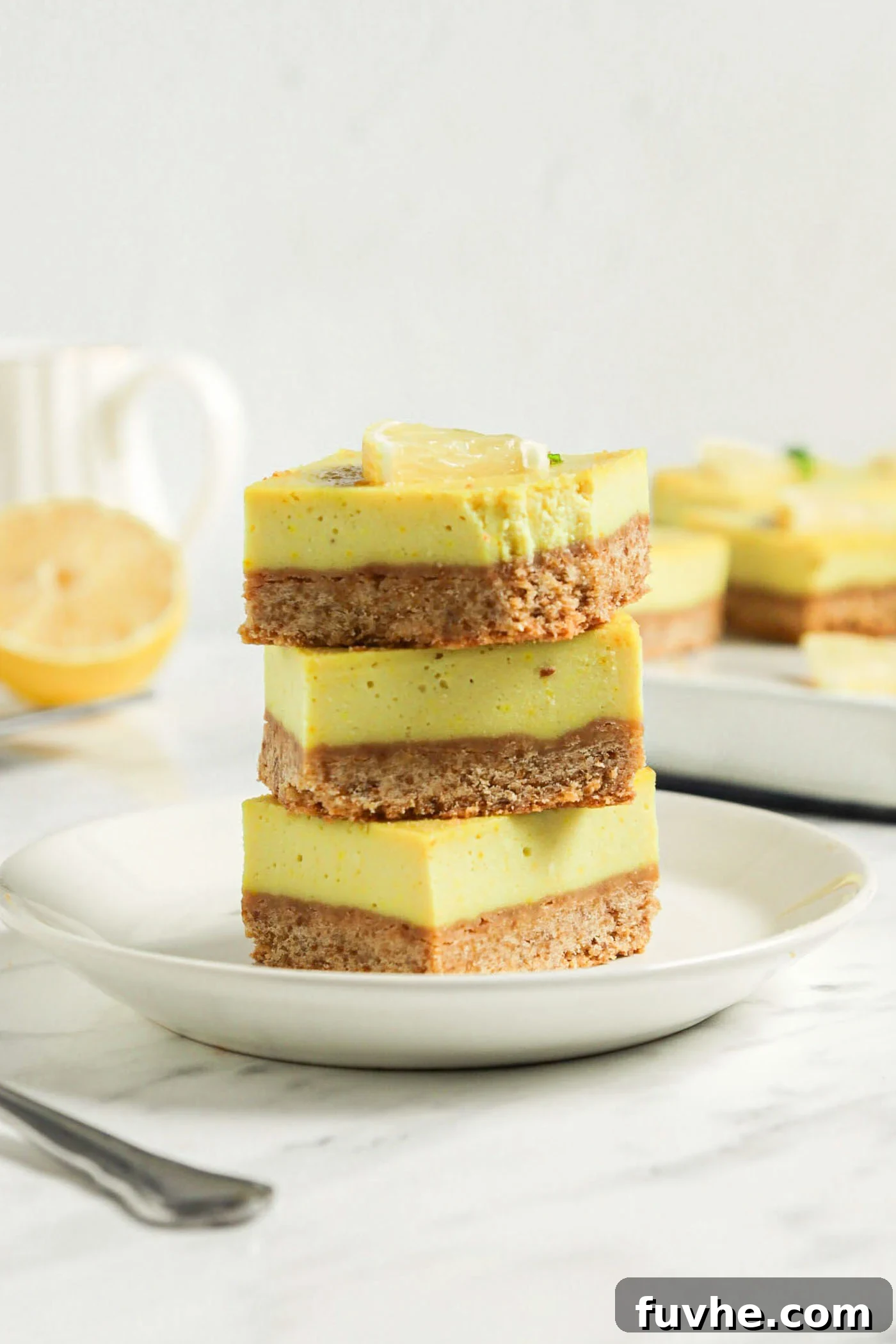
Creamy Vegan Lemon Bars: Your New Favorite Zesty, Sweet Treat
Prepare to tantalize your taste buds with the ultimate **creamy vegan lemon bars**! These delightful treats are a symphony of sweet and zesty flavors, featuring a perfectly buttery shortbread crust generously topped with a rich, vibrant, and tangy lemon curd. Designed to be easy to make, they are a show-stopping dessert perfect for any special occasion, from casual gatherings to elegant celebrations. Get ready to impress with this irresistible dairy-free dessert!
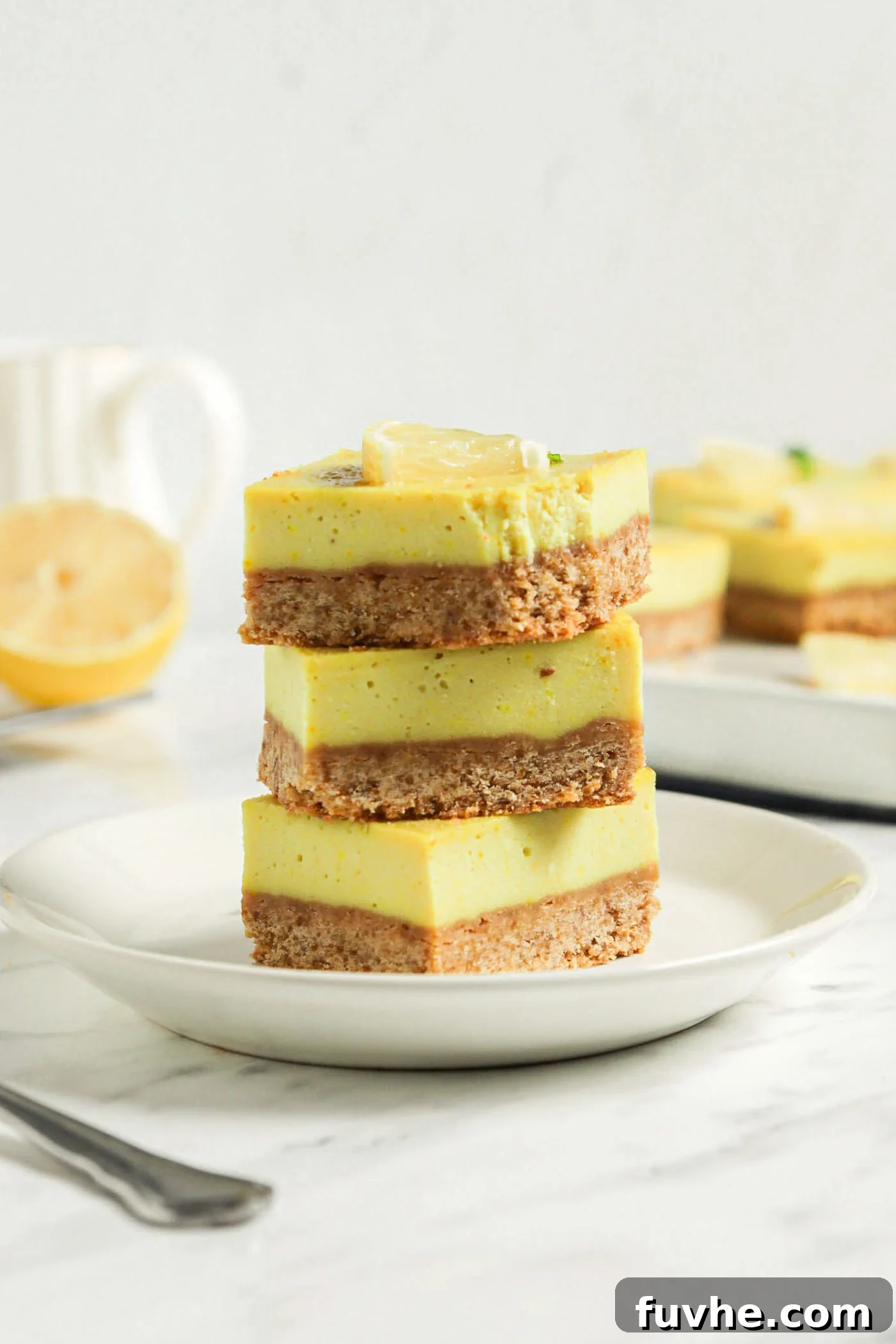
Our recipe transforms simple plant-based ingredients into a truly indulgent experience. The secret to their incredible texture and flavor lies in a few key components: a sturdy, melt-in-your-mouth shortbread base and a lusciously smooth lemon curd. This creamy filling is crafted from soaked raw cashews and rich coconut cream, achieving a decadent consistency without any dairy or eggs. If you’re a true lemon aficionado, you’ll adore how these bars strike the perfect balance between bright tartness and delicate sweetness, making them an irresistible treat that will have everyone asking for more.
For those who can’t get enough of that invigorating citrus taste, we have more delicious lemon-infused treats waiting for you. Be sure to explore our other fantastic recipes like Vegan Lemon Shortbread Cookies for a crisp, melt-in-your-mouth experience, and a wonderfully moist Vegan Lemon Loaf that’s perfect for breakfast or dessert. Each offers a unique way to savor that delightful lemon burst.
Why You’ll Adore These Vegan Lemon Bars (Recipe Features)
These vegan lemon bars aren’t just a dessert; they’re a celebration of flavor and texture, designed with mindful eating in mind. Here’s what makes them an absolute must-try:
- **Completely Vegan and Dairy-Free:** Crafted entirely without animal products, these bars are a dream come true for those following a vegan lifestyle, managing dairy allergies, or simply seeking healthier alternatives. Enjoy a rich dessert free from eggs and traditional butter, embracing pure plant-based goodness.
- **Unforgettable Creamy Texture & Fresh Tangy Flavor:** Prepare for a silky-smooth lemon curd that effortlessly melts in your mouth. The flavor profile is brilliantly bright, wonderfully fresh, and authentically lemony. It strikes a perfect tang that is beautifully balanced, ensuring these bars are never overly sweet but always incredibly satisfying.
- **Perfectly Crispy, Crumbly, Buttery Shortbread Crust:** The foundation of these bars is a shortbread crust that delivers on all fronts – it’s delightfully crispy, crumbly, and carries that rich, comforting buttery taste everyone loves. All this is achieved without any dairy, creating a perfect contrast to the smooth filling.
- **Versatile for Any Occasion:** Their vibrant appearance and irresistible taste make these lemon bars suitable for any event. Whether you’re planning for festive Christmas gatherings, an elegant Mother’s Day brunch, a bright springtime Easter celebration, or just a casual get-together with friends, these bars are always a welcome and impressive addition.
- **Simple & Straightforward Preparation:** Despite their gourmet taste and elegant presentation, these bars are surprisingly easy to make. With clear, step-by-step instructions and readily available ingredients, even novice bakers can confidently achieve perfect, professional-looking results.
- **Made with Wholesome Ingredients:** Utilizing nutritious raw cashews for unparalleled creaminess and abundant fresh lemons for zest and juice, you can feel good about indulging in these delicious treats. They offer a healthier spin on a classic dessert without compromising on flavor.
Essential Ingredients for Your Luscious Vegan Lemon Bars
Creating these exquisite vegan lemon bars requires a thoughtful selection of plant-based ingredients that come together harmoniously to form pure magic. Each component plays a vital role in achieving the perfect flavor, texture, and appearance. Below is a detailed look at the key components and why they’re important for the best results. For the complete list with precise measurements and detailed instructions, please refer to the comprehensive recipe card at the end of this post.
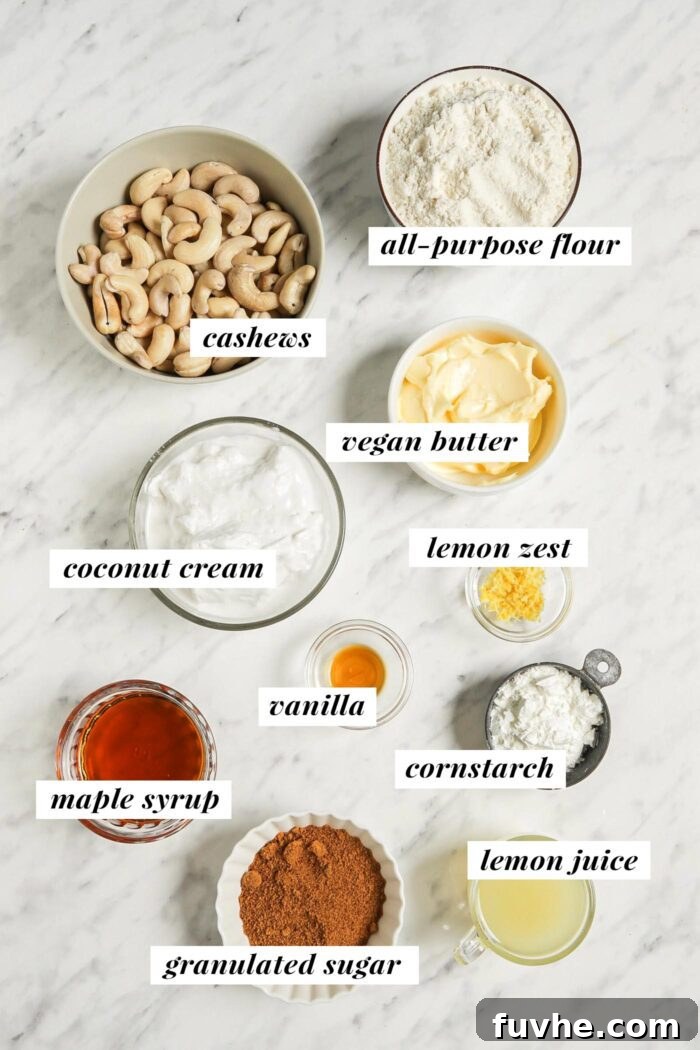
- **Raw Cashews:** These are the unsung heroes of our creamy lemon filling, acting as a superb dairy-free base that provides incredible richness and body. For the best results, always opt for plain, raw cashews without any added oils or salt. Soaking them is an absolutely crucial step for achieving that ultra-smooth, velvety texture in your curd, especially if you don’t have a high-speed blender. They flawlessly replicate the rich mouthfeel that traditionally comes from eggs and dairy butter.
- **Coconut Cream:** This ingredient is instrumental in adding to the luxurious creaminess and richness of the lemon filling. You can easily find canned coconut cream in most grocery stores, typically in the international or baking aisle. For convenience, a good quality canned coconut cream is recommended. Alternatively, you can effortlessly make your own by chilling a can of full-fat coconut milk overnight and then scooping out the thick, solidified cream that separates and rises to the top (refer to the FAQ section for more detailed guidance on this). Always ensure you use full-fat coconut milk or cream for the best consistency and flavor.
- **Cornstarch (or Arrowroot Powder):** This acts as our primary plant-based thickener for the lemon filling, helping it set beautifully into a firm yet tender curd that holds its shape when sliced. If cornstarch isn’t available or if you prefer an alternative, arrowroot powder makes an excellent 1:1 substitute, providing a similar thickening power and a wonderfully clear finish to the filling.
- **Fresh Lemons (Juice & Zest):** These are the heart and soul, the very essence of these bars! You’ll need a generous amount of freshly squeezed lemon juice for that vibrant, unmistakable tang, and finely grated lemon zest for an intense, aromatic citrus flavor that permeates every bite. Using fresh, ripe lemons is absolutely non-negotiable for the most authentic and brightest taste. Plan to have several on hand to ensure you get the required 1/2 cup + 3 tablespoons of juice and 3 teaspoons of finely grated zest. Don’t worry if you’re new to zesting; our FAQ section provides helpful tips on how to properly zest a lemon.
- **Maple Syrup:** As a natural, unrefined sweetener, maple syrup not only imparts a delightful sweetness but also adds a subtle depth of flavor that beautifully complements the bright lemon. Any variety—dark, amber, or light—will work well and contribute its unique notes. However, always ensure you’re using pure maple syrup, not the artificial pancake syrups that lack natural flavor. If needed, agave syrup can be used as a direct 1:1 substitute.
- **Turmeric (for color):** While entirely optional, a tiny pinch (about 1/8 to 1/4 teaspoon) of ground turmeric provides a beautiful, natural sunny yellow hue to the lemon filling, perfectly mimicking the traditional color of lemon bars without the need for artificial dyes. Rest assured, this small amount will not affect the taste of your delicious bars.
- **All-Purpose Flour:** This forms the robust and wonderfully crumbly base of our shortbread crust, giving it that classic texture. While this recipe was meticulously developed using standard all-purpose flour, we understand some may desire a gluten-free option. If you are experienced with gluten-free baking and flour substitutions, you may certainly experiment. However, we cannot guarantee the exact texture, crispness, and overall outcome, as gluten-free flours behave differently. A 1:1 gluten-free baking blend that contains xanthan gum is often a good starting point for substitutions.
- **Granulated Sugar:** Used primarily in the shortbread crust, granulated sugar provides essential sweetness and significantly contributes to the crisp, tender texture of the base. Feel free to use coconut sugar for a slightly deeper, caramel-like flavor, regular cane sugar, or any other granulated sugar you prefer, keeping in mind that the color of the crust might slightly vary with different sugars.
- **Vegan Butter:** This ingredient is absolutely essential for achieving that rich, “buttery” flavor and tender, melt-in-your-mouth texture in the shortbread crust. High-quality vegan butter sticks from brands like Earth Balance are excellent choices for dairy-free baking, but most reputable brands of vegan butter will yield similar delicious results. We have not extensively tested this recipe with coconut oil for the crust, as vegan butter typically provides a more authentic shortbread texture and flavor profile. If you are not strictly vegan, regular dairy butter can be substituted in the crust at a 1:1 ratio.
Easy Step-by-Step Instructions for Perfect Vegan Lemon Bars
Follow these detailed steps closely to create your own batch of irresistible vegan lemon bars. Precision and patience are key to achieving the perfect balance of flavors and textures that will delight every palate.
Before You Begin: Pre-soak Your Cashews! This is a crucial and non-negotiable step for achieving an incredibly smooth and creamy lemon filling. If you possess a powerful high-speed blender (such as a Vitamix or Blendtec), a 4-hour soak in hot water is generally sufficient to soften them. However, if you’re using a standard or less powerful blender, we highly recommend soaking the cashews overnight or for at least 12 hours. This extended soak ensures they soften thoroughly, allowing them to blend into a wonderfully silky, grain-free consistency.
Step 1: Prepare Your Baking Dish & Crust Ingredients. Begin by preheating your oven to 350°F (175°C). Next, prepare your baking pan: line an 8×8 inch baking dish with parchment paper, ensuring that the paper extends over at least two of the edges. These “slings” will prove invaluable later, making it incredibly easy to lift the finished bars cleanly out of the pan after baking and chilling. In a large mixing bowl or the bowl of a food processor, combine all the dry ingredients for the shortbread crust (flour, sugar), then add the softened vegan butter. Mix until a uniform, pliable dough forms that you can easily shape into a ball. If the mixture appears too dry, crumbly, or isn’t coming together well, add an additional 1-2 tablespoons of softened vegan butter, one tablespoon at a time, mixing well after each addition, until the desired moldable consistency is reached.
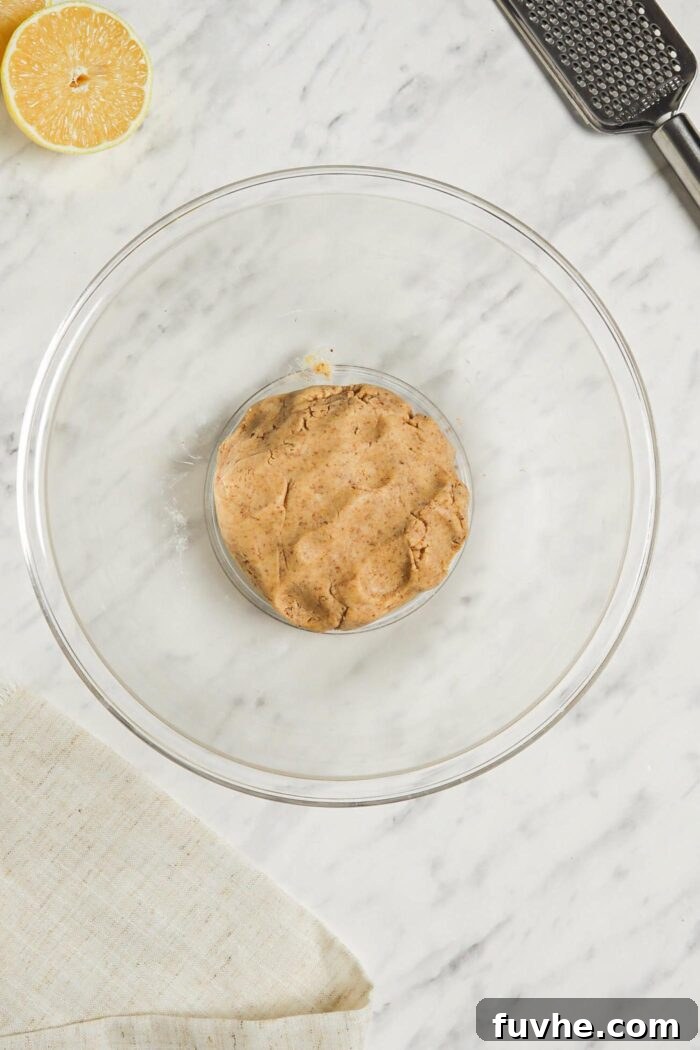
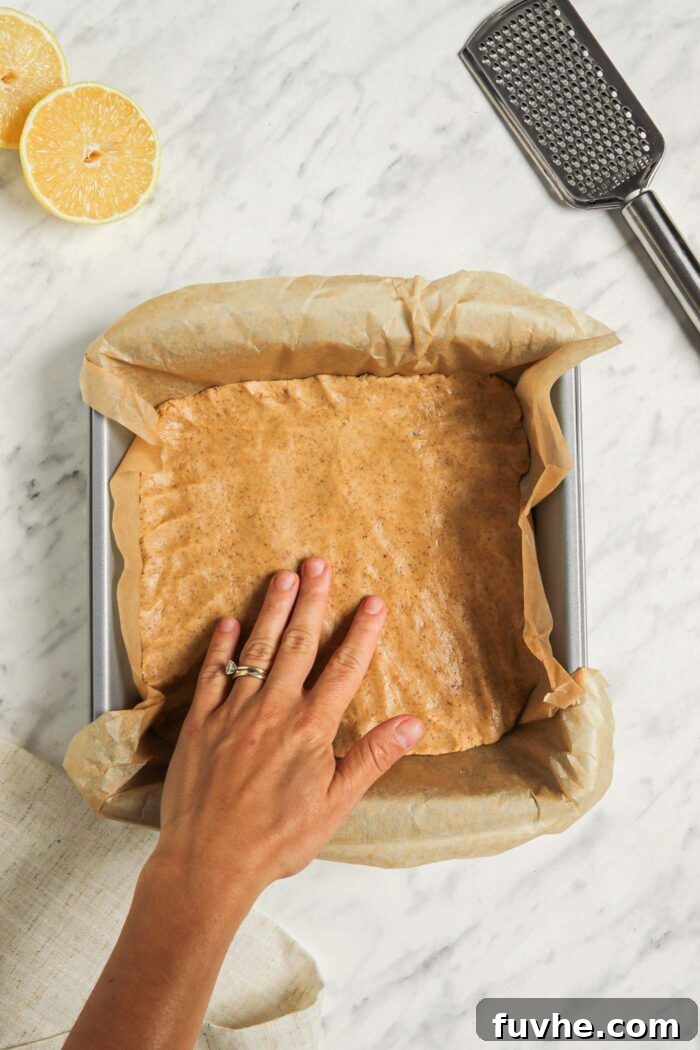
Step 2: Press the Crust into the Pan. Once your shortbread dough is ready, transfer it to the prepared baking dish. Use your hands to firmly and evenly press the dough into the bottom of the pan. Take your time to ensure it reaches all the corners and creates a consistent, compact layer across the entire base. A smooth, even crust is essential for structurally sound and attractive bars that won’t crumble excessively.
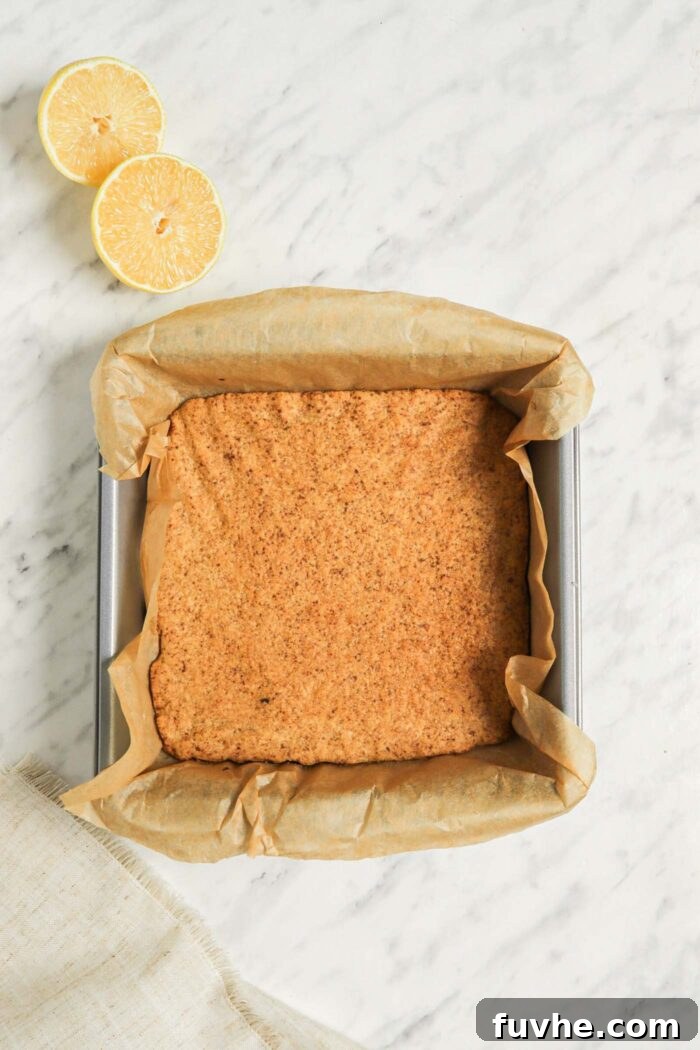
Step 3: Bake and Cool the Crust. Place the baking dish containing the pressed shortbread crust into your preheated oven. Bake for 10-15 minutes, or until the edges turn a beautiful, light golden brown and the crust smells deliciously buttery. Baking the crust first helps achieve that wonderfully crisp shortbread texture that perfectly complements the creamy filling. Once baked, remove it from the oven and allow it to cool completely at room temperature on a wire rack. This crucial cooling step is vital to prevent the warm crust from softening the lemon filling prematurely when combined.
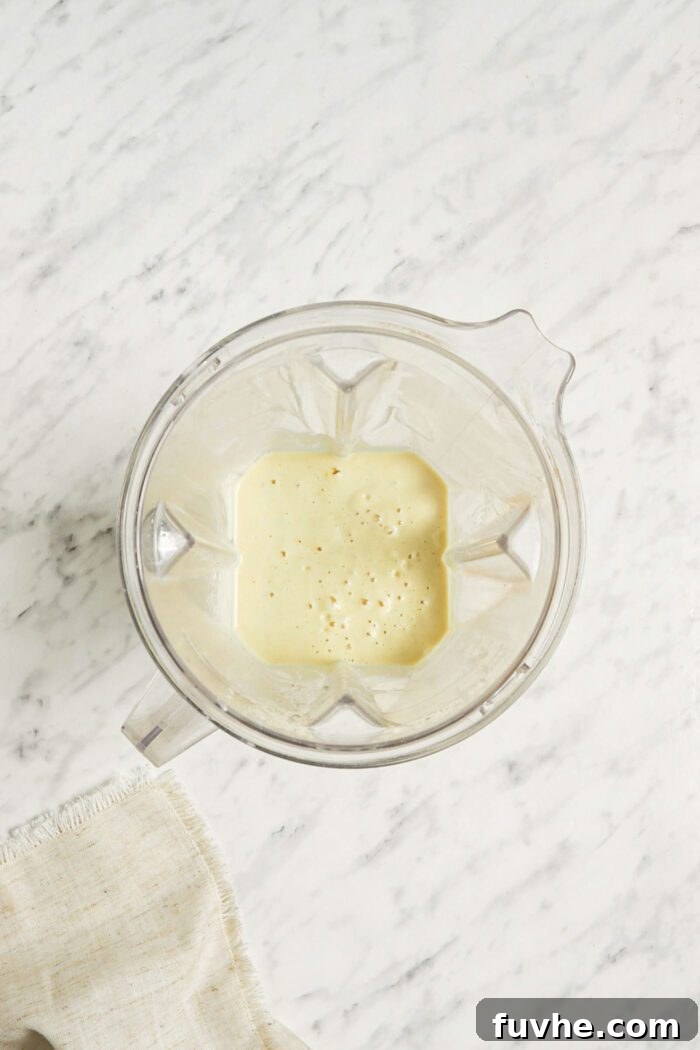
Step 4: Prepare the Creamy Lemon Filling. While your crust patiently cools, you can begin preparing the luscious, vibrant lemon filling. If you turned your oven off after baking the crust, remember to preheat it again to 350°F (175°C). Once the cashews have finished soaking for the recommended time, drain them thoroughly and rinse under cold water. Transfer the drained cashews to your blender (preferably a high-speed one) along with all the other lemon filling ingredients: coconut cream, cornstarch, fresh lemon juice, maple syrup, vanilla extract, lemon zest, and a tiny pinch of turmeric (if using for color). Start blending on a low speed to incorporate ingredients, then gradually increase the speed to high. Continue to blend until the mixture is exceptionally smooth and creamy, with absolutely no grainy cashew pieces remaining. This process may take a few minutes, so be patient. Give the filling a quick taste test; if you desire a more intense lemon flavor, you can add a tiny bit more lemon juice. For a brighter yellow color, incorporate an extra pinch of turmeric.
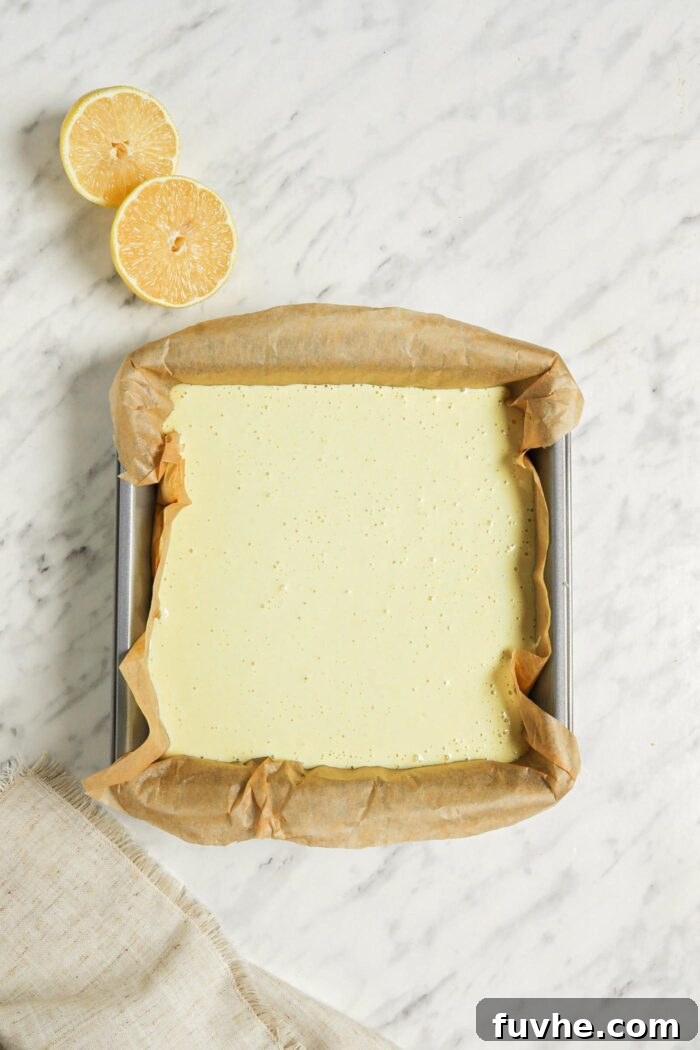
Step 5: Assemble and Bake the Bars. Once your shortbread crust has completely cooled, carefully pour the beautifully smooth and creamy lemon filling mixture directly over it in the baking pan. Gently spread the filling out with a spatula or the back of a spoon to create an even layer across the entire crust. Ensure the filling is uniformly distributed for even baking. Transfer the pan back into the preheated oven.
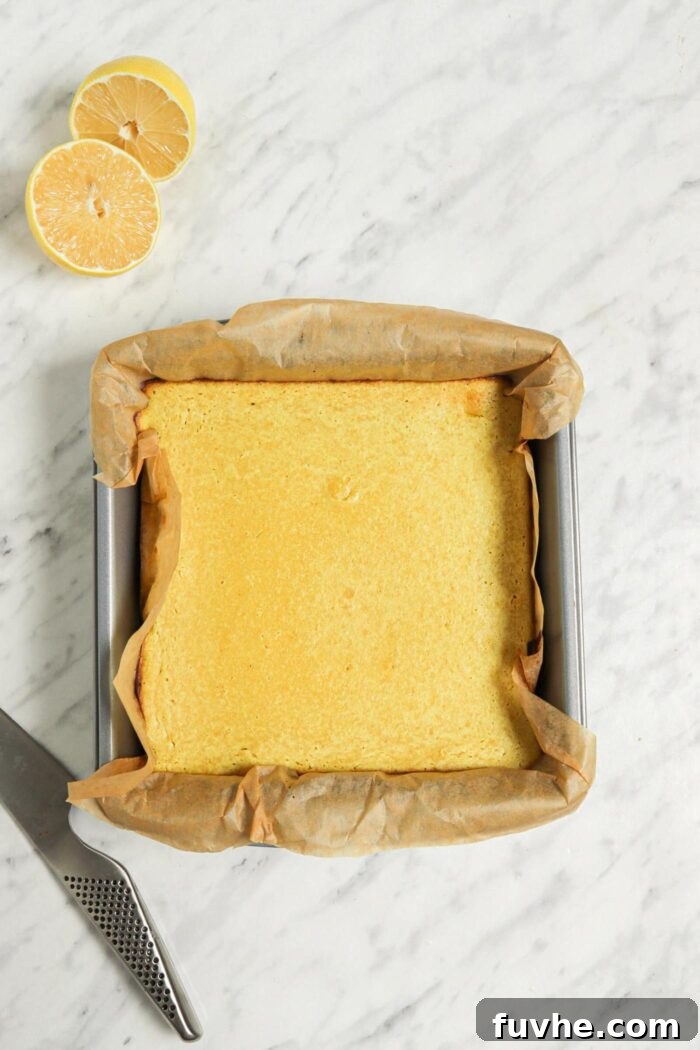
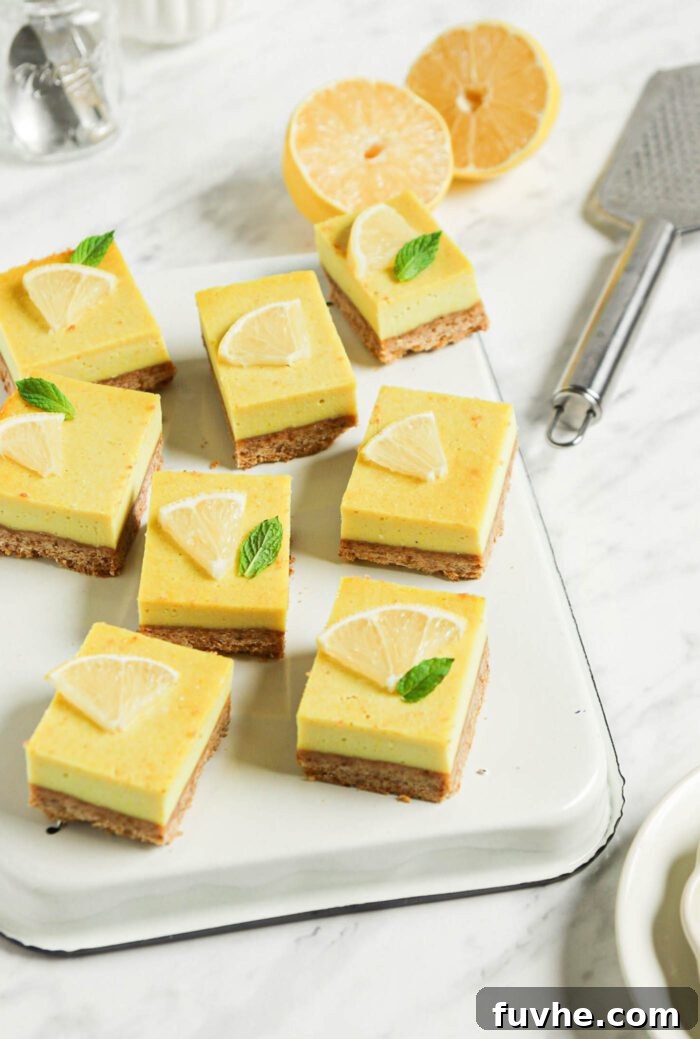
Step 6: Bake Until Set and Chill Thoroughly. Bake the bars in the preheated oven for 20-25 minutes. The filling should appear set and firm around the edges, with only a slight, very subtle jiggle in the very center when the pan is gently shaken. It’s important not to overbake, as the filling will continue to set and firm up significantly as it cools. Once baked, remove the pan from the oven and let the bars cool completely at room temperature on a wire rack. This gradual cooling is essential for them to set properly and prevent cracking. After they’ve reached room temperature, transfer the baking dish to the refrigerator for at least one hour (ideally 2-3 hours or even longer) before carefully slicing and serving. Thorough chilling is absolutely essential for firm, clean cuts and optimal, creamy texture. For an extra touch of elegance, dust with a fine, even layer of sifted powdered sugar just before serving. Enjoy your homemade, perfectly set vegan lemon bars!
Frequently Asked Questions About Vegan Lemon Bars
Here are answers to some common questions you might have while preparing your delicious vegan lemon bars, ensuring you achieve the best possible results:
While you don’t absolutely *have* to use a high-speed blender, it is highly recommended for achieving the absolute creamiest and smoothest lemon filling. Blenders like a Vitamix or Blendtec can pulverize the soaked cashews into an incredibly fine consistency, ensuring a truly silky curd without any texture. If you’re using a standard or less powerful blender, ensure you soak your cashews for at least overnight or for a full 12 hours. This extended soak will soften them thoroughly, making it easier for your blender to achieve that wonderfully silky consistency. Patience with blending time also helps.
You don’t *have* to soak the cashews if you have an extremely powerful, high-speed blender that can pulverize them in seconds. However, we strongly recommend against skipping this step for most home blenders. Unsoaked cashews, even when blended, may result in a slightly grainy or less smooth texture in your finished lemon bars. Soaking is the key to achieving that luxurious, truly creamy mouthfeel that mimics traditional lemon curd. For a “quick soak” method, you can bring the cashews to a boil in a pot of water, then remove from heat and let them soak for about 15 minutes before draining and rinsing. For standard blenders, an overnight soak remains the gold standard.
Lemon zest is crucial for adding intense aromatic lemon flavor without extra liquid. The easiest and most effective way to create fine lemon zest is by using a microplane or a dedicated citrus zester. Gently rub the lemon against the zester, rotating the fruit frequently to remove only the bright yellow outer peel and carefully avoiding the bitter white pith underneath. If you don’t have a specialized zester, the finest grating side of a handheld grater or a box grater can work. For a more rustic, less fine zest, you can carefully slice thin strips of peel from the lemon using a sharp knife, then finely mince them. Aim for 3 teaspoons of finely grated zest for this recipe to ensure a potent citrus punch.
Canned coconut cream is often conveniently available in the international or baking aisle of most well-stocked grocery stores. It’s typically sold in 14 oz (400 mL) cans. You’ll need slightly less than one full can for this recipe, making it a handy ingredient to keep on hand. Any leftover coconut cream can be a wonderful addition to smoothies, curries, oatmeal, or other desserts. If canned coconut cream is difficult to find in your area, you can easily make your own. Simply place two cans of good quality full-fat coconut milk (it’s crucial to avoid “light” versions, as they won’t separate effectively) in the refrigerator overnight. The next day, open the cans without shaking and carefully scoop out the thick, solidified cream that has risen to the top, leaving the watery liquid behind. The leftover coconut water can be saved for soups, smoothies, or other culinary uses.
Absolutely! These vegan lemon bars freeze beautifully, making them an excellent make-ahead dessert for meal prep or future cravings. Once the bars are completely cool and firm from chilling, you have a couple of excellent options for freezing: you can freeze them in a single layer on a baking tray until they are solid, then transfer them to an airtight freezer-safe container or bag. Alternatively, if stacking, place small squares of parchment paper between individual bars within an airtight container to prevent them from sticking together. Properly stored, these bars will maintain their quality in the freezer for 3-4 months. When you’re ready to enjoy them, simply transfer them from the freezer to thaw at room temperature for a few hours or in the refrigerator overnight.
Storage & Freezing Instructions for Ultimate Freshness
Proper storage is essential to keep your vegan lemon bars fresh, delicious, and at their best. Here’s how to store them for maximum enjoyment, whether short-term or long-term:
- **Refrigeration for Short-Term Storage:** Once completely cooled to room temperature and then thoroughly chilled in the refrigerator, store your lemon bars in an airtight container. Keeping them refrigerated not only maintains their freshness and vibrant flavor but also helps significantly maintain their firm, desirable texture. They will remain fresh and delightful for up to 5 days.
- **Freezing for Longer-Term Storage:** For longer-term storage, these vegan lemon bars freeze exceptionally well, making them perfect for future enjoyment or batch baking. Ensure they are fully cooled and chilled before freezing. You can either flash freeze them in a single layer on a baking sheet until solid, then transfer them to an airtight freezer-safe container or bag. Alternatively, if stacking, place individual bars in an airtight container with small squares of parchment paper between each layer to prevent them from sticking together. They will keep beautifully in the freezer for 3-4 months without significant loss of quality.
- **Thawing Frozen Bars:** When you’re ready to indulge in a frozen lemon bar, simply transfer it from the freezer to the refrigerator to thaw overnight. For quicker thawing, you can let it sit at room temperature for an hour or two until it softens to your preferred texture.
More Irresistible Vegan Desserts to Explore
If you’ve fallen in love with these creamy vegan lemon bars, you’re in for even more treats! Explore our curated collection of delicious plant-based dessert recipes that are sure to satisfy any sweet craving. Each recipe is crafted with wholesome ingredients and bursting with flavor, proving that vegan desserts can be both indulgent and satisfying:
- **Vegan Pecan Pie Bars:** These truly amazing gluten-free and vegan pecan bars are an absolute must-try, especially during the holiday season. They feature a rich, gooey pecan filling nestled atop a tender, flaky crust.
- **Vegan Lemon Loaf:** Can’t get enough of that bright, tangy lemon flavor? Add this incredibly moist and fluffy lemon loaf to your baking list. It’s beautifully drizzled with a sweet lemon glaze and offers a delightful citrusy experience perfect for any time of day.
- **No-Bake Lemon Pie Bars:** For a healthier, on-the-go snack or a light dessert, these easy no-bake energy bars are made with just a few simple, whole-food ingredients and perfectly capture the essence of a classic lemon pie.
- **No-Bake Vegan Cheesecake:** Indulge in a wonderfully zesty and unbelievably creamy no-bake lemon cheesecake that is consistently a crowd-pleaser. Its smooth, rich texture and bright flavor make it an instant hit at any gathering.
- **Raw Vegan Carrot Cake:** Experience a truly incredible no-bake carrot cake that’s rich in flavor, spiced to perfection, and complete with a luscious cashew-based “cream cheese” frosting. It’s a wholesome, guilt-free indulgence that tastes utterly decadent!

Classic Vegan Lemon Bars
Creamy vegan lemon bars featuring a sweet and tangy lemon filling over a perfectly buttery shortbread crust. A delightful plant-based dessert!
Prep Time: 4 hours (includes cashew soaking)
Cook Time: 35 minutes
Total Time: 4 hours 35 minutes
Servings: 12 bars
Author: Deryn Macey
Ingredients
For the Crust
- 1 ½ cup (180 g) all-purpose flour
- ⅓ cup (67 g) granulated sugar
- ½ cup (113 g) vegan butter, softened
For the Lemon Filling
- 1 ⅓ cup (250 g) raw cashews, soaked
- 1 cup (235 mL) coconut cream
- 3 tablespoons (25 g) cornstarch
- ½ cup + 3 tablespoons (122 mL) fresh lemon juice
- ⅓ cup (113 g) maple syrup
- 1 teaspoon (5 mL) vanilla extract
- 3 teaspoons lemon zest
- Pinch of turmeric, for color (optional)
Instructions
- Place the raw cashews in a bowl and cover them completely with hot water. Allow them to soak in the refrigerator or covered at room temperature for a minimum of 4 hours, up to overnight (an overnight soak of 12 hours is recommended if you do not have a high-speed blender for the creamiest results).
- When you are ready to proceed with baking, preheat your oven to 350°F (180°C). Prepare an 8×8 inch baking dish by lining it with parchment paper, ensuring the paper extends over at least two edges. This will create “slings” for easy removal of the bars later.
- In a mixing bowl or food processor, combine all the ingredients for the crust: all-purpose flour, granulated sugar, and softened vegan butter. Mix until a moldable dough forms. If the dough appears too dry or crumbly, incorporate an additional 1-2 tablespoons of softened vegan butter, mixing until it comes together easily.
- Using your hands, firmly and evenly press the prepared dough into the bottom of the parchment-lined baking dish, making sure to work it into all the corners for a consistent base.
- Bake the crust for 10-15 minutes, or until it achieves a beautiful golden brown color. Remove from the oven and set aside on a wire rack to cool completely. If you turned your oven off, preheat it again to 350°F (180°C) for the next step.
- Once the cashews have soaked, drain and rinse them thoroughly. Add the drained cashews to a high-speed blender, along with the coconut cream, cornstarch, fresh lemon juice, maple syrup, vanilla extract, lemon zest, and a pinch of turmeric (if using for color). Blend on low, gradually increasing to high, until the mixture is perfectly smooth and creamy, with no grainy cashew pieces remaining. Taste and adjust lemon or turmeric if desired.
- Once the crust has cooled completely, pour the smooth lemon cream mixture evenly on top. Carefully transfer the pan back into the preheated oven.
- Bake the bars for 20-25 minutes, or until the center is set and no longer appears liquid. The edges may be slightly firmer. Allow the bars to cool completely at room temperature, then transfer them to the refrigerator for at least 1 hour (preferably longer) to chill and firm up. Once thoroughly chilled, slice into bars and serve. A light dusting of sifted powdered sugar on top is an optional, elegant finish.
Notes
Store any leftover vegan lemon bars in an airtight container in the refrigerator for up to 5 days. For longer storage, freeze them for 3-4 months. Thaw frozen bars at room temperature for a few hours or in the fridge overnight before enjoying.
Nutrition Information (per bar)
Serving Size: 1 bar
Calories: 186 kcal
Carbohydrates: 19 g
Protein: 4 g
Fat: 11 g
Sodium: 76 mg
Fiber: 1 g
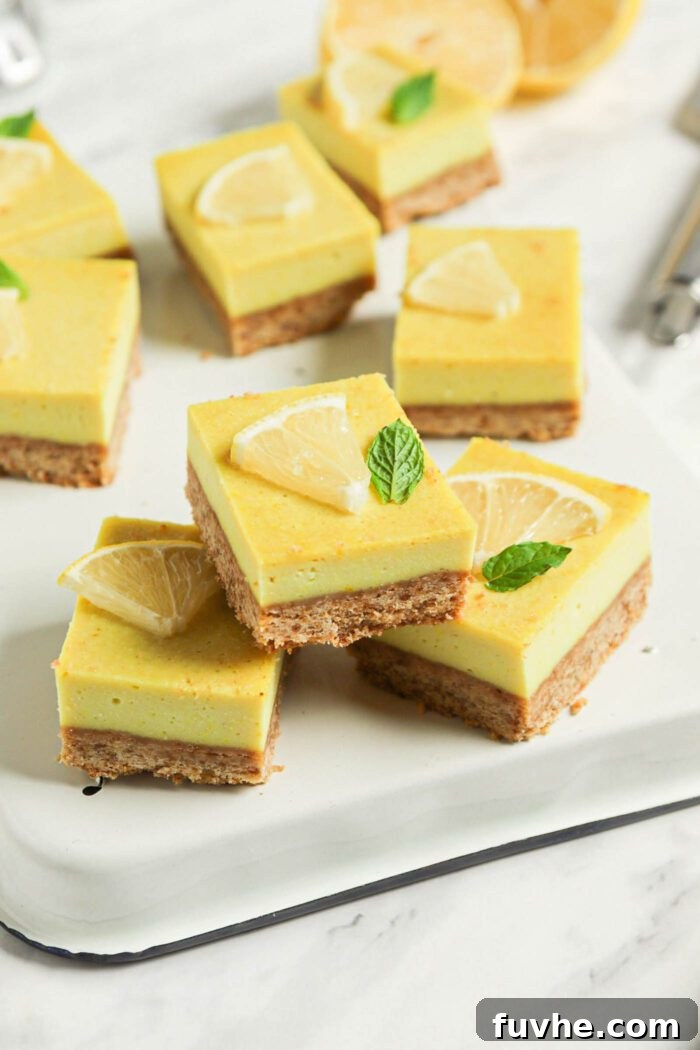
We hope you thoroughly enjoy creating and savoring these delightful **creamy vegan lemon bars**! They embody the perfect blend of zesty citrus, comforting sweetness, and a satisfyingly buttery crunch, all without any dairy or eggs. Whether you’re a seasoned vegan baker or simply looking for a new, refreshing dessert, these bars are sure to become a cherished recipe in your kitchen. Don’t hesitate to experiment with garnishes, such as a delicate dusting of powdered sugar or fresh lemon slices, to make them even more visually appealing and special. Happy baking, and enjoy every vibrant, tangy bite!