

Unlock your full fitness potential with this dynamic and challenging workout, expertly designed to build robust strength and ignite your cardiovascular endurance. This comprehensive routine seamlessly blends heavy compound lifts with high-intensity treadmill intervals, ensuring a holistic approach to your fitness journey. Prepare to push your limits and discover new levels of strength, stamina, and overall athletic performance.
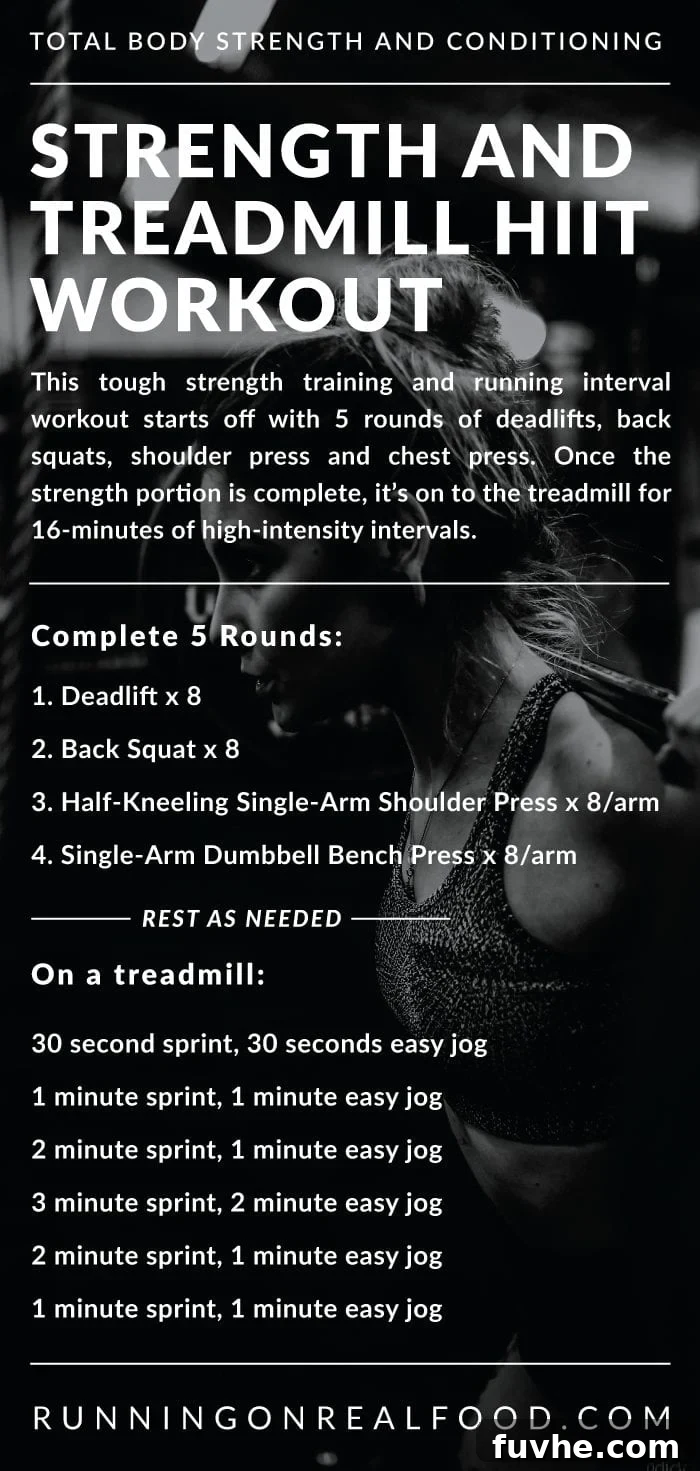
The Ultimate Full-Body Strength & Treadmill HIIT Workout
This meticulously crafted workout is divided into two powerful segments: a foundational strength training circuit and an exhilarating high-intensity interval session on the treadmill. This synergy of strength and cardio is not just about burning calories; it’s about building a more resilient, powerful, and efficient body. You’ll develop functional strength, boost your metabolism, and significantly improve your cardiovascular health, all while challenging both your muscles and your mental grit.
Ideal for intermediate to advanced fitness enthusiasts, this workout promises to be a game-changer for those looking to elevate their training and achieve comprehensive fitness gains. If you’re ready to embrace a routine that delivers maximal results in a time-efficient manner, you’ve found your next challenge.
Why Combine Strength and HIIT? The Synergistic Benefits
Integrating strength training with High-Intensity Interval Training (HIIT) offers a potent combination of benefits that surpass what either discipline can achieve alone. Strength training builds muscle mass, which in turn boosts your resting metabolism, making your body a more efficient fat-burning machine even at rest. It also enhances bone density, improves joint stability, and increases overall functional strength necessary for daily activities and athletic performance.
HIIT, on the other hand, is a master at improving cardiovascular health, increasing VO2 max (your body’s maximum oxygen uptake), and drastically enhancing endurance. The short bursts of intense effort followed by brief recovery periods create an “afterburn effect” (EPOC – Excess Post-exercise Oxygen Consumption), meaning your body continues to burn calories at an elevated rate long after your workout is finished. By combining these two modalities, you create a powerful stimulus for muscle growth, fat loss, improved cardiovascular fitness, and enhanced athletic prowess, leading to a truly well-rounded physique and superior health.
Detailed Strength Training Portion
The first part of this workout focuses on building foundational strength with four compound, full-body movements. These exercises are selected for their effectiveness in recruiting multiple muscle groups, promoting significant strength gains, and contributing to overall muscular development. Perform 4-5 rounds of the following, prioritizing perfect form and controlled movements. Rest as needed between sets and rounds to maintain high quality of execution.
Warm-Up Before You Lift
Before diving into the strength portion, a dynamic warm-up is crucial to prepare your muscles and joints, increase blood flow, and prevent injury. Spend 5-10 minutes on movements like arm circles, leg swings, torso twists, cat-cow stretches, glute bridges, and light cardio such as jogging or jumping jacks. This prepares your body for the demanding lifts ahead.
- Deadlift x 8 Reps: The King of All Exercises
The deadlift is an unparalleled full-body exercise, targeting your entire posterior chain—glutes, hamstrings, and lower back—along with significant core and upper back engagement. It’s a fundamental movement for building raw strength and improving functional fitness.
- Proper Form: Stand with feet hip-width apart, shins close to the barbell. Hinge at your hips and bend your knees to grasp the bar with an overhand or mixed grip, hands just outside your shins. Ensure your back is straight, chest up, and shoulders pulled back. Initiate the lift by driving through your heels, extending your hips and knees simultaneously. Keep the bar close to your body throughout the movement. Squeeze your glutes at the top, avoiding hyperextension. Lower the bar with control by reversing the movement, hinging at the hips first.
- Why 8 Reps? This rep range is excellent for developing both strength and muscle hypertrophy (growth). It allows you to use a challenging weight while still maintaining good form.
- Back Squat x 8 Reps: Foundation for Lower Body Power
The back squat is another cornerstone exercise, primarily targeting the quadriceps, glutes, and hamstrings, while also engaging the core for stability. It’s essential for developing lower body strength, power, and mobility.
- Proper Form: Position the barbell across your upper back, resting on your traps (not your neck). Stand with feet shoulder-width apart, toes slightly pointed out. Initiate the squat by pushing your hips back and bending your knees, as if sitting into a chair. Descend until your thighs are parallel to the floor (or deeper if mobility allows), keeping your chest up and core braced. Drive back up through your heels, extending your hips and knees to return to the starting position. Keep your knees tracking in line with your toes.
- Why 8 Reps? Similar to deadlifts, 8 reps with a challenging weight will build substantial strength and muscle in your legs and glutes.
- Half-Kneeling Single-Arm Dumbbell Press x 8 Reps per Arm: Shoulder Stability and Core Control
This unilateral exercise is fantastic for building shoulder strength, addressing muscle imbalances, and significantly challenging your core stability (anti-rotation). The half-kneeling position ensures a stable base while forcing your core to work harder.
- Proper Form: Kneel on one knee, with the opposite foot flat on the floor in front of you, creating a 90-degree angle at both knees. Hold a dumbbell in the hand corresponding to the knee that is up (e.g., left knee up, left hand holds dumbbell). Keep your torso upright, core braced, and gaze forward. Press the dumbbell straight overhead until your arm is fully extended, then slowly lower it back to the starting position with control. Ensure your body remains stable and doesn’t rotate.
- Why Single-Arm and 8 Reps? Unilateral exercises highlight and correct strength imbalances. 8 reps per arm ensure sufficient time under tension for shoulder strength and hypertrophy, while the single-arm nature intensifies core engagement.
- Single-Arm Dumbbell Bench Press x 8 Reps per Arm: Unilateral Chest Development and Core Engagement
Similar to the half-kneeling press, the single-arm dumbbell bench press challenges your chest, shoulders, and triceps unilaterally, while simultaneously demanding significant core stability. This variation helps to prevent muscular imbalances and strengthens your stabilizing muscles more effectively than a standard bilateral press.
- Proper Form: Lie on a flat bench with your feet firmly planted on the floor. Hold one dumbbell in one hand, with your palm facing forward, arm extended directly above your shoulder. The other arm can be extended out to the side for balance or placed on your stomach. Lower the dumbbell slowly and with control towards the side of your chest, feeling a stretch in your pectoral muscle. Keep your core tight to prevent your body from rotating or lifting off the bench. Press the dumbbell back up to the starting position.
- Why Single-Arm and 8 Reps? This exercise intensely works the chest muscles and supporting stabilizers. The 8-rep range allows for substantial muscle recruitment and development, making it an excellent choice for building a balanced and strong upper body.
Unleashing Cardio Power: Treadmill HIIT Portion
Once you’ve completed your strength circuit, it’s time to transition to the treadmill for a heart-pounding 16 minutes of high-intensity cardio intervals. This portion is designed to skyrocket your cardiovascular fitness, enhance your endurance, and incinerate calories. HIIT challenges your anaerobic and aerobic systems, leading to superior fitness adaptations.
Treadmill HIIT Structure
This interval structure is progressive, starting with shorter, faster bursts and moving to longer, sustained efforts, then tapering back down. This varied approach keeps your body guessing and maximizes your caloric expenditure and fitness gains.
Warm-Up for Cardio
Before launching into sprints, perform a 2-3 minute light jog or brisk walk on the treadmill to further warm up your leg muscles and elevate your heart rate gradually.
- 30 seconds HARD sprint, followed by 30 seconds EASY jog (Recovery)
- 1 minute HARD sprint, followed by 1 minute EASY jog (Recovery)
- 2 minutes HARD sprint, followed by 1 minute EASY jog (Recovery)
- 3 minutes HARD sprint, followed by 2 minutes EASY jog (Recovery)
- 2 minutes HARD sprint, followed by 1 minute EASY jog (Recovery)
- 1 minute HARD sprint, followed by 1 minute EASY jog (Recovery)
Speed Guidelines: The “EASY jog” recovery intervals should be performed at a comfortable, slow pace, typically around 5 mph (8 km/h). This allows your heart rate to come down slightly and prepares you for the next intense burst. For the “HARD sprint” intervals, your speed should be challenging but sustainable for the duration of the interval. Depending on your current fitness level, these speeds may range from 8-14 mph (13-22.5 km/h) or even higher for advanced runners. It’s crucial to push your limits during the hard intervals, aiming for an RPE (Rate of Perceived Exertion) of 8-9 out of 10.
Varying Your Sprint Pace: Remember, not all sprints need to be at the exact same speed. Shorter sprints, such as the 30-second and 1-minute intervals, can and should be performed at a faster, more explosive pace than your longer 2-minute or 3-minute sprints. For those longer bursts, aim for a speed you can sustain with significant effort without completely burning out. Listen to your body, push hard, but always prioritize safety and proper running form.
Maximizing Your Results: Tips for Success
To truly unlock the full potential of this powerful workout and ensure sustainable progress, consider these key strategies:
Progressive Overload
The principle of progressive overload is fundamental to continuous improvement. To get stronger and fitter, you must consistently challenge your body more than it’s accustomed to. For the strength portion, this means gradually increasing the weight you lift, performing more reps with the same weight, adding an extra round, or reducing rest times between sets. For HIIT, increase your sprint speeds, decrease recovery times, or increase the incline on the treadmill.
Form Over Weight and Speed
Never sacrifice proper technique for heavier weights or faster speeds. Incorrect form drastically increases your risk of injury and reduces the effectiveness of the exercise. If your form breaks down, reduce the weight or slow down until you can perform the movement or sprint correctly. Consider watching instructional videos (like those linked) or consulting a qualified trainer for form feedback.
Listen to Your Body and Recover
While challenging yourself is important, ignoring persistent pain or extreme fatigue can lead to overtraining or injury. Rest days are as crucial as workout days for muscle repair and growth. Ensure you’re getting adequate sleep (7-9 hours per night) and incorporating active recovery methods like light stretching, walking, or foam rolling.
Nutrition and Hydration
Fuel your body with a balanced diet rich in whole foods, lean proteins, complex carbohydrates, and healthy fats. Protein is essential for muscle repair and growth, while carbohydrates provide the energy needed for intense workouts. Stay well-hydrated by drinking plenty of water throughout the day, especially before, during, and after your training sessions.
Consistency is Key
Results are not built overnight. Adherence to your workout routine over time is what truly drives progress. Aim to perform this type of combined strength and cardio workout 2-3 times per week, allowing for rest days in between, and observe how your body adapts and transforms.
Cool-Down and Stretch
After completing your treadmill intervals, spend 5-10 minutes cooling down with a slow walk or light jog. Follow this with static stretching, holding each stretch for 20-30 seconds, focusing on major muscle groups worked (quads, hamstrings, glutes, chest, shoulders). This helps improve flexibility and aids in recovery.
This comprehensive strength and treadmill HIIT workout offers a powerful and efficient way to achieve superior fitness. By committing to its structure and applying these maximizing tips, you’re not just working out; you’re building a stronger, faster, and healthier version of yourself. Embrace the challenge, enjoy the journey, and celebrate your progress!
More Workouts to Explore
Looking for additional challenging and effective workout routines? Check out these other great options to keep your fitness journey exciting and diverse:
- 45-Minute EMOM Workout
- 35-Minute Barbell and Treadmill Workout
- 30-Minute Dumbbell EMOM Workout
- 40-Minute Kettlebell and Rowing Workout