
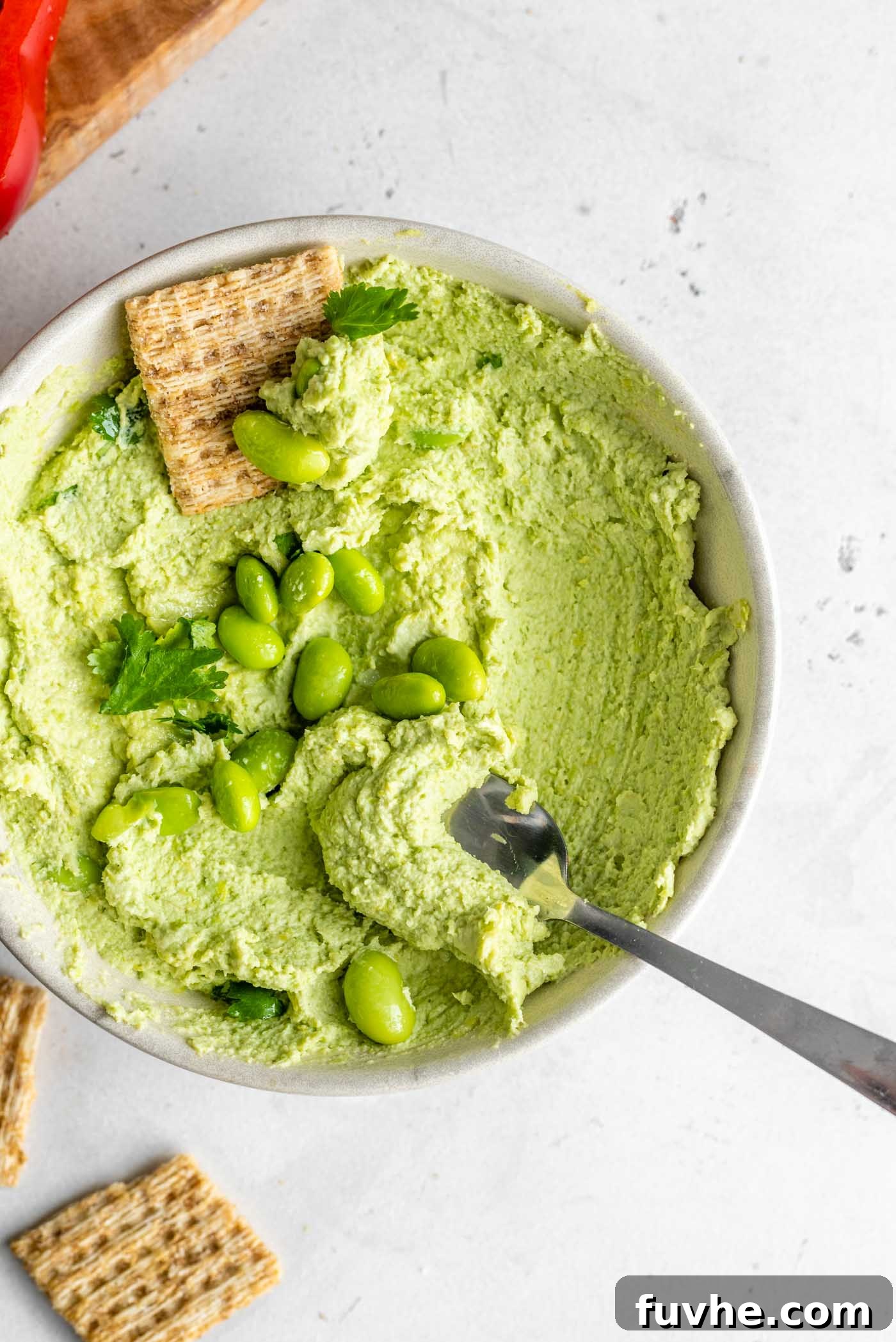
Step into a world of vibrant flavors and unparalleled freshness with our exquisite Edamame Hummus recipe. Ditching the traditional chickpeas, this innovative dip harnesses the creamy texture and sweet, nutty notes of shelled edamame beans, resulting in a stunningly green and incredibly healthy spread. Perfect as a guilt-free snack, a versatile condiment, or a protein-packed addition to any meal, this recipe stands out not only for its unique taste but also for being entirely vegan and oil-free. Get ready to transform your snacking habits and impress your palate with this delightful plant-based creation!
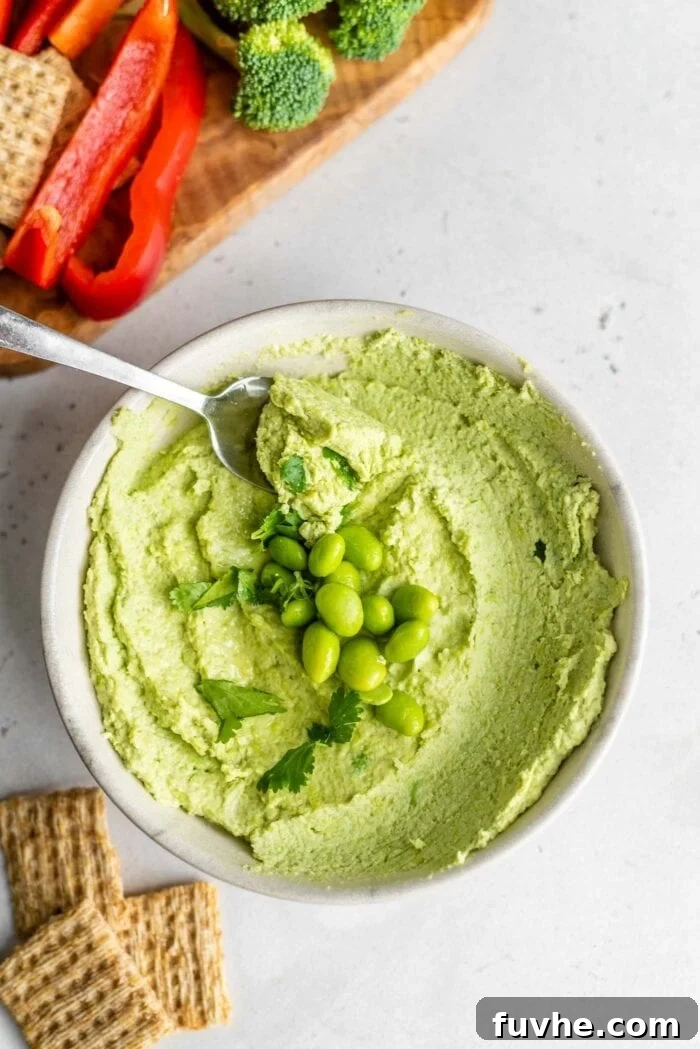
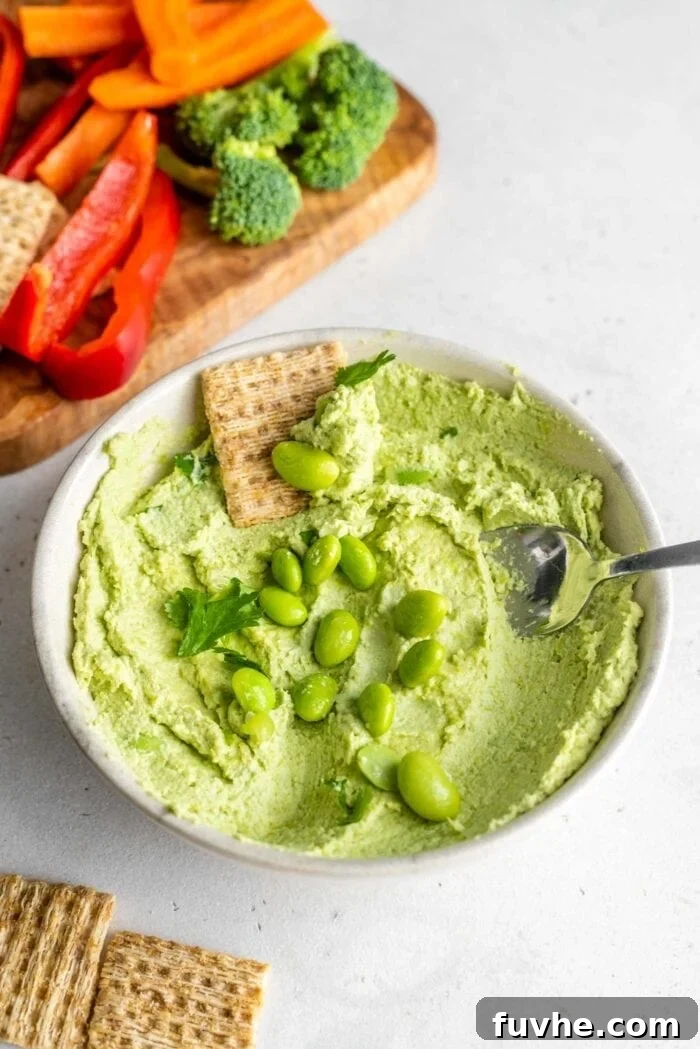
This gorgeous, emerald-green hummus offers a nutritious and delightful alternative to its chickpea counterpart. Its smooth, rich texture makes it an ideal spread for sandwiches and wraps, adding a burst of flavor and a healthful boost to your midday meal. Beyond that, it shines as a dip for crunchy raw vegetables, artisanal crackers, or warm pita bread, inviting you to explore its versatility with every bite. The simplicity of using edamame beans instead of chickpeas opens up a new realm of culinary possibilities, making healthy eating both easy and exciting.
Why Choose Edamame Hummus? A Fresh Twist on a Classic
While traditional hummus holds a beloved place in many hearts, edamame hummus offers a compelling reason to explore new horizons. Its distinct, subtly sweet, and slightly grassy flavor profile provides a refreshing departure from the earthy taste of chickpeas. The vibrant green color alone makes it an eye-catching addition to any spread or plate, instantly elevating the visual appeal of your meal. Beyond aesthetics, edamame brings its own unique set of nutritional advantages to the table, making this hummus not just a tasty alternative but also a powerful one for your health.
Opting for edamame hummus is a fantastic way to diversify your plant-based protein intake and enjoy a dip that feels both familiar and excitingly new. It’s naturally lighter in taste and often in texture, making it particularly refreshing during warmer months or as a palate cleanser. For those looking to avoid common allergens or simply seeking a different flavor experience, edamame hummus presents a delightful and wholesome option that doesn’t compromise on satisfaction or nutritional value.
The Nutritional Powerhouse: Benefits of Edamame
Edamame, young soybeans harvested before they ripen, are a nutritional powerhouse packed with benefits. These small green beans are an excellent source of complete plant-based protein, making this hummus an ideal choice for vegans, vegetarians, and anyone looking to boost their protein intake. Protein is crucial for muscle repair, growth, and overall satiety, helping you feel fuller for longer.
Beyond protein, edamame is rich in dietary fiber, which is essential for digestive health, helps regulate blood sugar levels, and contributes to a healthy gut microbiome. They are also loaded with essential vitamins and minerals, including Vitamin K (important for bone health and blood clotting), Vitamin C (an antioxidant supporting immune function), folate (vital for cell growth and function), iron (crucial for oxygen transport), and magnesium (involved in over 300 enzymatic reactions in the body). Incorporating edamame into your diet through this delicious hummus is a simple yet effective way to harness these incredible health benefits and support your overall well-being.
Crafting Your Edamame Hummus: Simple Ingredients, Amazing Flavor
Creating this flavorful edamame hummus requires only a handful of readily available ingredients, many of which you likely already have in your pantry for a classic hummus recipe. The beauty lies in the simplicity and the quality of each component, which together create a harmonious and unforgettable dip.
Key Ingredients Explained:
- Edamame: The star of our show! We recommend using frozen, shelled edamame for maximum convenience. These young soybeans provide the creamy base and unique, slightly sweet flavor.
- Tahini: This paste made from ground sesame seeds is non-negotiable for authentic hummus. It lends an unmistakable richness, nutty depth, and silkiness to the dip. Choose a high-quality tahini for the best results, one that is smooth and pourable.
- Fresh Lemon Juice: Freshly squeezed lemon juice is crucial for brightness and acidity. It cuts through the richness of the tahini and edamame, balancing the flavors and adding a zesty tang that makes the hummus sing.
- Garlic: A few cloves of fresh garlic are essential for an aromatic punch. Garlic adds depth and a subtle sharpness that complements the other ingredients beautifully.
- Sea Salt: Essential for enhancing all the other flavors. Start with a recommended amount and adjust to your taste preferences.
- Optional Water (or Ice Cubes): While not strictly an “ingredient” in the flavor profile, a splash of cold water or a few ice cubes can be added during blending to achieve an incredibly light and airy, whipped texture.
Unleash Your Creativity: Flavor Variations and Seasonings
One of the joys of making homemade hummus is the endless potential for customization. While our base recipe for edamame hummus is fantastic on its own, it also serves as a perfect canvas for culinary experimentation. Don’t hesitate to personalize your dip with additional spices, fresh herbs, or other exciting add-ins to match your mood or meal.
Here are some ideas to switch up the flavor of your vibrant green hummus:
- Spices: Incorporate 1/2 teaspoon of ground cumin for an earthy warmth, or paprika for a sweet, peppery note. For a Middle Eastern flair, try a pinch of sumac or za’atar. A dash of chili powder can also add a subtle kick.
- Fresh Herbs: Elevate the freshness with 1/2 cup of fresh cilantro, basil, or parsley. Mint can also offer a surprisingly refreshing twist. These herbs not only boost flavor but also enhance the green aesthetic.
- Citrus Boost: Instead of lemon, try fresh lime juice for a slightly different, more tropical acidity. A bit of lemon or lime zest can also intensify the citrusy aroma.
- Bring the Heat: For those who love a spicy kick, add 1/2 teaspoon of cayenne pepper or red pepper flakes. You could even blend in a small piece of fresh jalapeño or serrano pepper for a bolder, fiery flavor.
- Umami Depth: A teaspoon of white miso paste can add a wonderful umami depth and fermented tang, enhancing the savory notes of the edamame.
- Other Add-ins: Consider blending in roasted red peppers for a smoky sweetness, a few sun-dried tomatoes for concentrated flavor, a handful of fresh spinach for an even greener hue and added nutrients, or even half an avocado for extra creaminess and healthy fats.
Preparing Your Edamame: Shelled vs. In-Pod
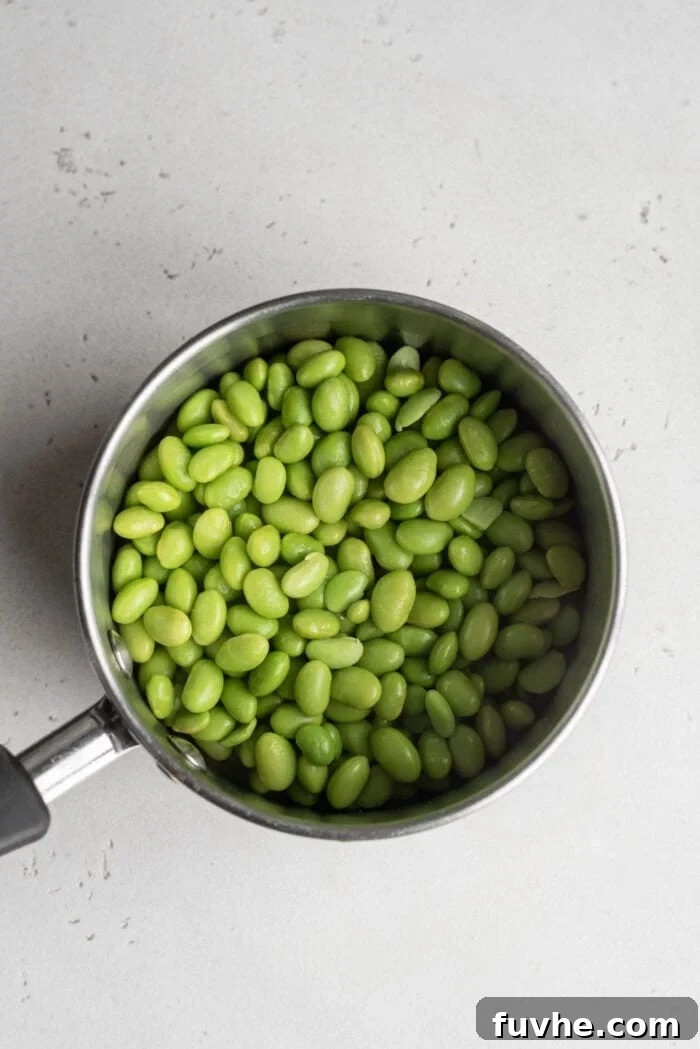
The type of edamame you choose and how you prepare it will impact the ease and speed of your hummus creation. For the ultimate convenience and efficiency, we highly recommend using frozen, shelled edamame. These are readily available in the frozen foods section of most well-stocked grocery stores and Asian markets. Having them on hand means you’re just minutes away from a fresh batch of hummus.
If you opt for frozen, shelled edamame, preparation is incredibly simple:
- Stovetop: Bring a pot of lightly salted water to a boil. Add the frozen edamame and cook for 3-5 minutes, or until tender-crisp.
- Microwave: Place the edamame in a microwave-safe bowl with a splash of water. Cover and microwave on high for 2-3 minutes, stirring halfway through.
- Steamer: Place edamame in a steamer basket over boiling water. Steam for 5-7 minutes until tender.
Once cooked, drain the edamame thoroughly and rinse them with cold water. This step helps to cool them down quickly and maintain their vibrant green color before blending.
While you can certainly use edamame pods, be prepared for a bit of extra work. You’ll need to cook them in their pods first (usually by boiling or steaming for 5-7 minutes), then patiently pop out all the individual beans. This can be a meditative process if you enjoy it, but for a quick and easy hummus, shelled edamame is definitely the way to go.
Step-by-Step Guide: How to Make Perfect Edamame Hummus
Making this delightful edamame hummus is surprisingly simple and quick, requiring minimal effort for maximum flavor. Follow these straightforward steps to create your own batch of vibrant, creamy goodness:
- Cook the Edamame: Begin by cooking your shelled edamame beans. If using frozen, follow the package instructions, which typically involve boiling, steaming, or microwaving for just 3-5 minutes until tender. Once cooked, drain the water completely and rinse the edamame under cold water to cool them down. This helps preserve their bright green color and stops the cooking process.
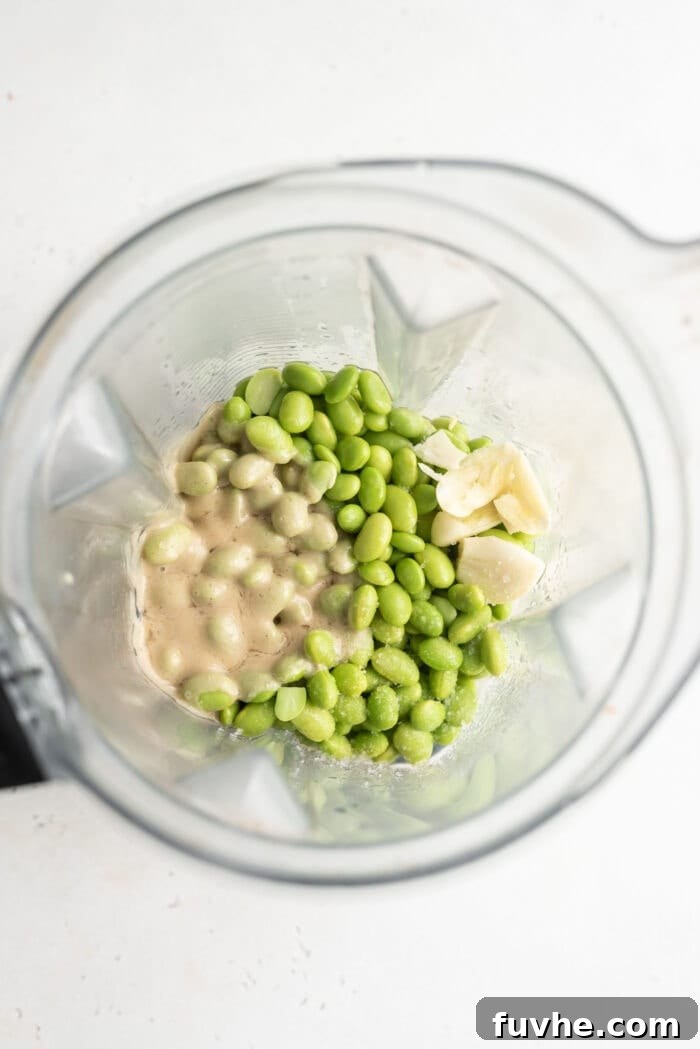
- Combine Ingredients: Transfer the cooked and cooled edamame beans to a high-speed blender or a food processor. Add the tahini, fresh lemon juice, garlic cloves, sea salt, and a pinch of black pepper to the blender.
- Blend Until Smooth: Begin blending on a low speed, gradually increasing the speed as the ingredients start to break down. Stop occasionally to scrape down the sides of the blender or food processor with a spatula, ensuring all ingredients are fully incorporated. Continue blending until the hummus reaches a perfectly smooth and creamy consistency. If your hummus seems too thick, add a tablespoon or two of cold water (or even an ice cube) at a time while blending to achieve your desired texture.
- Taste and Adjust: Once blended, taste the hummus and adjust the seasonings as needed. You might want to add a little more salt, lemon juice, or even a dash of your chosen additional seasonings to perfectly suit your palate.
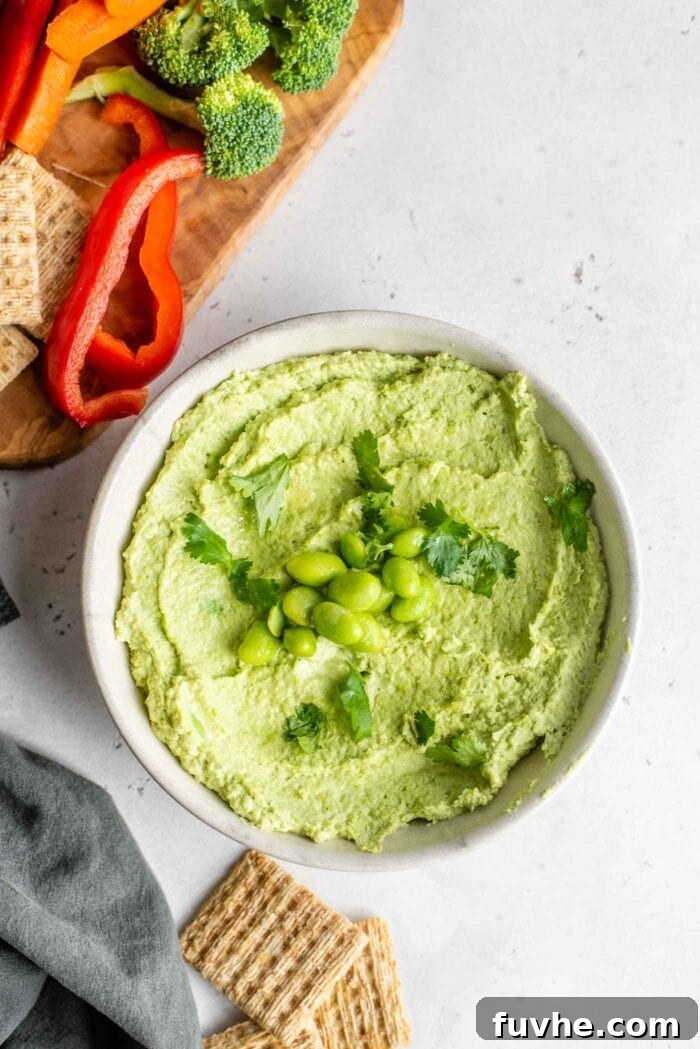
- Serve and Enjoy: Your fresh edamame hummus is now ready to be enjoyed! Transfer it to a serving bowl, garnish with a sprinkle of extra edamame, cilantro, or a drizzle of olive oil (if not strictly adhering to oil-free). It’s best served at room temperature or slightly chilled.
Tips for Achieving Optimal Smoothness:
- High-Speed Blender Advantage: While a food processor works well, a high-speed blender (like a Vitamix) typically yields the smoothest, creamiest hummus with a whipped texture.
- Patience is Key: Don’t rush the blending process. Allow the machine to work for a few minutes, scraping the sides often, to achieve that desirable velvety consistency.
- Ice Water Trick: Adding a few ice cubes or a tablespoon of ice-cold water during the final blending stages can help create an incredibly light and airy hummus, similar to what you’d find in gourmet cafes.
Creative Ways to Enjoy Your Edamame Hummus
Edamame hummus isn’t just a simple dip; it’s a versatile culinary staple that can elevate a wide array of dishes with its fresh flavor, vibrant color, and nutritional punch. Beyond the obvious, there are countless creative ways to incorporate this healthy spread into your daily meals. It’s a fantastic way to boost fiber, protein, and essential nutrients in a delicious and satisfying manner.
As a Dip:
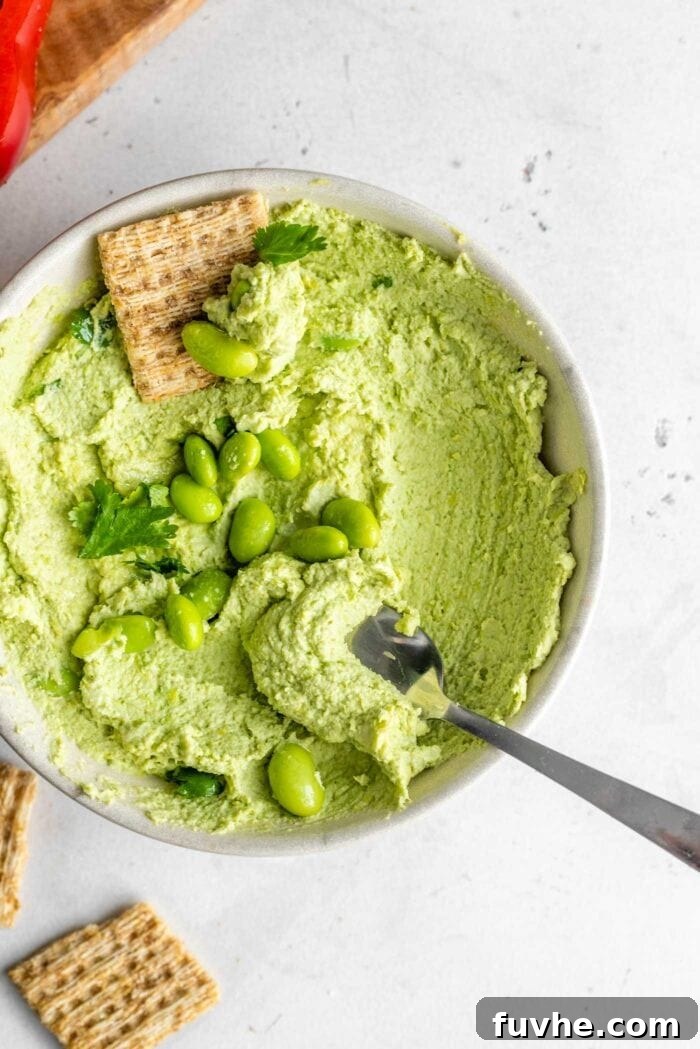
- Fresh Vegetables: Pair it with classic crudités like carrot sticks, cucumber slices, bell pepper strips, celery stalks, cherry tomatoes, or snap peas for a refreshing and healthy snack.
- Crackers & Breads: Serve alongside your favorite whole-grain crackers, toasted pita bread, warm naan, or even gluten-free rice cakes for a delightful appetizer.
- Chips & Pretzels: A lighter alternative to heavy dips for tortilla chips or pretzel bites.
In Sandwiches & Wraps:
- Flavorful Spread: Replace mayonnaise or other spreads with edamame hummus in your sandwiches, wraps, and pitas. It adds a creamy texture and a burst of flavor.
- Power Wraps: Create a delicious and filling wrap by spreading edamame hummus generously, then layering with fresh spinach, alfalfa sprouts, sliced avocado, shredded carrots, and grilled vegetables.
- Burgers & Sliders: Use it as a topping for your favorite veggie burgers or sliders for an extra layer of taste and moisture.
Enhancing Meals:
- Salad Dressing/Base: Thin the hummus slightly with a little water or lemon juice to create a creamy salad dressing. Alternatively, spread a generous layer at the bottom of a bowl before adding your salad ingredients for a rich base. It’s excellent on big, healthy salads or in Buddha bowls.
- Stuffed Vegetables: Use it as a filling for baked sweet potatoes, bell peppers, or even mushrooms, creating a hearty and satisfying main course.
- Mixed Into Grains & Noodles: Stir a dollop of edamame hummus into cooked spaghetti squash, zucchini noodles, or any warm grain bowls (like quinoa or farro) for added creaminess and flavor.
- Avocado Toast Twist: Spread it on toast instead of or in addition to avocado for an extra protein kick and vibrant color.
- Breakfast Bowls: While unconventional, a small dollop can add a savory twist to certain breakfast bowls with roasted vegetables.
Storage and Meal Prep Tips
Making a batch of edamame hummus is perfect for meal prepping and ensures you always have a healthy and delicious snack or condiment ready to go. Proper storage is key to maintaining its freshness, flavor, and vibrant color.
Refrigeration:
- Airtight Container: Once prepared, transfer your edamame hummus to an airtight container. This prevents it from drying out and absorbing odors from other foods in your refrigerator.
- Shelf Life: Stored correctly, homemade edamame hummus will typically stay fresh in the fridge for up to 5-7 days. Always do a quick smell and visual check before consuming if it’s been a few days.
- Prevent Discoloration: While not as prone to browning as traditional hummus (due to chickpeas), a thin layer of olive oil on top of the hummus before sealing the container can sometimes help further prevent oxidation and keep the color vibrant, if you don’t mind adding a touch of oil. For an oil-free approach, ensuring the container is truly airtight is sufficient.
Freezing (Optional, but note texture changes):
- Freezing Suitability: Hummus, including edamame hummus, can be frozen, though its texture might change slightly upon thawing. It may become a bit grainier or less creamy, but it will still be perfectly edible and delicious, especially if blended again after thawing.
- Freezing Method: Spoon the hummus into freezer-safe containers, leaving a little headspace as it may expand slightly. For individual portions, you can freeze it in ice cube trays, then transfer the frozen cubes to a freezer bag once solid.
- Thawing: Thaw frozen hummus in the refrigerator overnight. Once thawed, give it a good stir or a quick blend to restore some of its creaminess. You might need to add a splash of lemon juice or water to achieve the desired consistency.
- Shelf Life in Freezer: Edamame hummus can be stored in the freezer for up to 2-3 months.
Meal Prep Ideas:
- Make a double batch at the beginning of the week to ensure you have plenty for snacks, lunch spreads, and dinner accompaniments.
- Portion out the hummus into small containers with pre-cut veggies for quick, grab-and-go healthy snacks.
- Prepare the edamame hummus and keep it on hand to quickly assemble grain bowls, wraps, or stuffed sweet potatoes throughout the week.
Beyond the Edamame: Exploring Other Hummus Creations
If you’re captivated by the fresh, vibrant taste of this green edamame hummus, you’ll love exploring the diverse world of other homemade hummus recipes. The versatility of this classic dip extends far beyond its traditional chickpea base, offering endless possibilities for unique flavors and colors. Experimenting with different main ingredients and seasonings is a fantastic way to keep your healthy eating exciting and satisfying.
Consider diving into these other delicious hummus recipes:
- Pink Beet Hummus: A stunningly colorful and subtly sweet hummus, packed with the earthy goodness of beets.
- Roasted Red Pepper Hummus: Smoky, sweet, and with a delightful depth of flavor from roasted bell peppers, often with a hint of spice.
- Roasted Garlic Hummus: For the garlic lovers, this creamy hummus features mellow, caramelized roasted garlic for an intensely flavorful experience.
This edamame hummus would also be a fantastic addition to lighten up and enhance your favorite salads and bowls, such as a refreshing Mediterranean Farro Salad, a wholesome Mediterranean Quinoa Salad, or vibrant Roasted Cauliflower Tabouleh Bowls. Its fresh taste and creamy texture complement a wide range of ingredients beautifully, adding an extra layer of nutrition and enjoyment to any meal.
Frequently Asked Questions About Edamame Hummus
As you embark on your journey to making and enjoying edamame hummus, you might have a few questions. Here are answers to some commonly asked queries:
- Is edamame hummus gluten-free? Yes, edamame beans are naturally gluten-free, and as long as all other ingredients (tahini, lemon juice, garlic, salt) are also gluten-free, this hummus is a safe and delicious option for those avoiding gluten.
- Is it good for weight loss? Absolutely! Edamame hummus is an excellent choice for weight management. It’s high in protein and fiber, both of which contribute to satiety, helping you feel full and satisfied, thus potentially reducing overall calorie intake. It’s also naturally oil-free in this recipe, making it lower in fat compared to some store-bought options.
- Can I make it without tahini? While tahini is a key ingredient for classic hummus texture and flavor, you can make an edamame dip without it. The texture will be different – less rich and creamy. You could try replacing tahini with a tablespoon of cashew butter or sunflower seed butter for some creaminess, or simply omit it for a lighter, more bean-forward dip.
- Can I use fresh edamame? Yes, if you can find fresh edamame (either shelled or in pods), you can certainly use them! Just be sure to boil or steam them until tender before blending, following the same principles as with frozen edamame.
- How can I make it spicier? To add more heat, increase the amount of cayenne pepper or red pepper flakes. You could also blend in a small piece of fresh jalapeño, serrano chili, or a dash of hot sauce to taste.
- What if my hummus is too thick or too thin? If your hummus is too thick, gradually add cold water (or an ice cube) a tablespoon at a time while blending until you reach your desired consistency. If it’s too thin, you can try adding a few more edamame beans or a bit more tahini, then blend again.
- What is the best way to serve edamame hummus? Edamame hummus is incredibly versatile. Serve it as a dip with fresh vegetables or pita bread, spread it on sandwiches and wraps, use it as a base for Buddha bowls, or even dollop it onto salads for an extra boost of flavor and nutrition.
Edamame Hummus Recipe
This vibrant and healthy hummus uses edamame instead of chickpeas for a fresh, protein-rich twist on the classic Middle Eastern dip. Enjoy this creamy spread as a delightful dip for raw veggies, a flavorful addition to sandwiches and wraps, on avocado toast, or as a nutritious topping for salads and Buddha bowls. It’s completely vegan and oil-free!
By: Deryn Macey
Prep Time: 10 mins | Cook Time: 5 mins | Total Time: 15 mins
Servings: 2 cups
Ingredients
- 2 cups cooked shelled edamame
- 3 cloves garlic
- 1/4 cup fresh lemon juice
- 1/4 cup tahini (approx. 60g)
- 1 tsp sea salt
- Pinch of black pepper
Instructions
- Cook the edamame according to package instructions. Once cooked, drain thoroughly, rinse with cold water, and add to a high-speed blender or food processor.
- Add the rest of the ingredients (garlic, lemon juice, tahini, sea salt, black pepper) to the blender or food processor. Begin mixing on low speed, gradually increasing.
- Slowly increase the speed, stopping to scrape down the sides as needed, until the hummus is completely smooth and creamy. If it’s too thick, add a tablespoon or two of cold water (or an ice cube) while blending to achieve your desired consistency.
- Enjoy right away with your favorite dippers, or store in an airtight container in the fridge for up to 5 days.
Nutrition Facts
Per serving (2 tbsp): Calories: 40kcal, Carbohydrates: 2g, Protein: 2g, Fat: 2g, Sodium: 147mg, Potassium: 96mg, Fiber: 1g, Sugar: 1g, Vitamin A: 0.2IU, Vitamin C: 3.2mg, Calcium: 16mg, Iron: 0.5mg
This recipe originally published April 27, 2014. It was updated September 2019 with new photos and a slightly revised recipe. The original recipe called for 3 tbsp of olive oil, this was omitted from the revised version to make it oil-free.
In conclusion, this edamame hummus is more than just a recipe; it’s an invitation to explore a healthier, more vibrant approach to snacking and meal preparation. Its delicious flavor, rich nutritional profile, and incredible versatility make it a must-try for anyone seeking plant-based alternatives that are both simple to make and deeply satisfying. Enjoy the journey of bringing this green goodness to your table!