
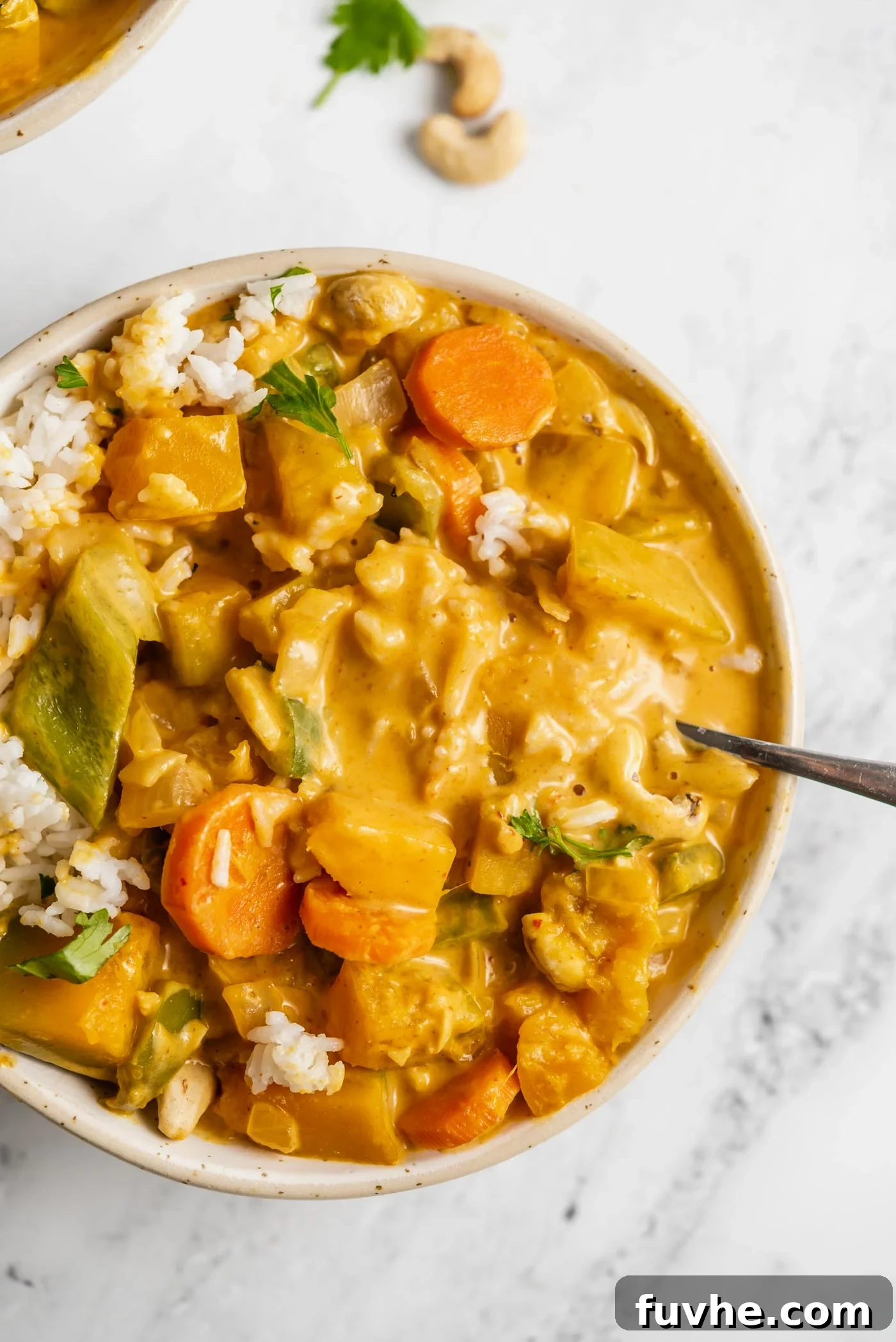
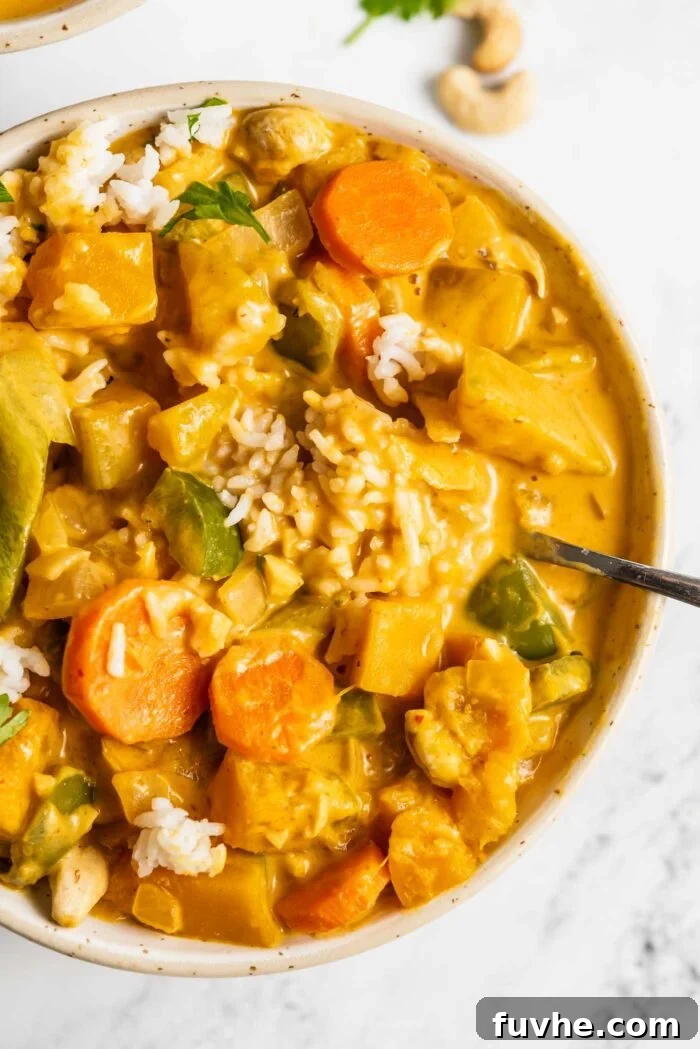
Welcome to a culinary journey that promises warmth, flavor, and incredible nutrition in just 30 minutes. This exceptional **vegan kabocha squash curry** stands out as a healthy, vibrant, and utterly delicious meal, perfect for any night of the week. Forget long hours in the kitchen; this recipe combines the natural sweetness of kabocha squash with an aromatic blend of **fresh vegetables nestled in a rich coconut red curry sauce**, delivering a symphony of sweet, savory, and subtly spicy flavors that will delight your palate.
Kabocha squash, often hailed as the “Japanese pumpkin,” is a true star in this dish. Its dense, naturally sweet flesh transforms into a wonderfully creamy, melt-in-your-mouth texture when cooked, making it an ideal candidate for absorbing the complex flavors of a fragrant curry. While preparing a kabocha squash may seem like a small hurdle, the effort is truly minimal compared to the incredibly rewarding dish that awaits you. Once the squash is prepped, the remaining steps are remarkably quick and straightforward, ensuring you can enjoy a wholesome, gourmet-quality meal with minimal fuss.
Featured Review
⭐⭐⭐⭐⭐
Spectacular! I had gotten a kabocha squash at my local produce stand and needed a recipe since I hadn’t eaten it before. I made the recipe exactly as written and it was seriously one of the best meals I have ever had!! Thank you so much for this recipe; it’s a keeper! I will be making it over and over!Jenny
Beyond its incredible taste, this **kabocha squash curry recipe** is also a powerhouse of nutrition, packed with vitamins, minerals, and plant-based goodness. It’s a testament to how effortlessly healthy eating can be both convenient and exceptionally flavorful. Whether you are a seasoned vegan, looking to incorporate more plant-based meals into your diet, or simply searching for an exciting new recipe to spice up your routine, this curry promises to become a cherished addition to your culinary repertoire.
Why You’ll Adore This Creamy Kabocha Squash Curry
This delightful **kabocha squash curry** consistently earns rave reviews and is a beloved staple in our home. Here are compelling reasons why we believe it will capture your heart and become a go-to dish for you too:
- **Effortlessly Vegan, Gluten-Free, and Oil-Free Options:** Crafted entirely from plant-based ingredients, this curry is naturally vegan. With simple ingredient swaps, it can also be made completely gluten-free (using tamari instead of soy sauce) and oil-free (by sautéing with water or vegetable broth), making it wonderfully adaptable for various dietary preferences and health goals without sacrificing flavor.
- **Deliciously Creamy and Comforting:** The combination of rich coconut milk and the naturally starchy, sweet kabocha squash creates an incredibly creamy texture. Each spoonful delivers a warm, comforting embrace, making it the perfect meal for a cozy evening or a nourishing pick-me-up.
- **Maximizes the Nutritional Power of Kabocha Squash:** Kabocha squash is not only delicious but also incredibly nutritious, boasting high levels of Vitamin A, Vitamin C, and fiber. This recipe makes excellent use of this powerhouse ingredient, showcasing its vibrant flavor and health benefits in a way that’s both enjoyable and satisfying.
- **Exceptional with Rice for Soaking Up Every Drop:** The fragrant, subtly sweet, and spicy coconut curry sauce is practically designed to be served over a bed of fluffy rice. Rice perfectly absorbs every nuance of the sauce, ensuring no drop of the delightful flavor goes to waste and creating a truly satisfying culinary experience.
- **Incredibly Easy to Customize and Adaptable:** This recipe offers fantastic flexibility. Feel free to experiment with other vegetables you have on hand, adjust the spice level to your preference, or add protein sources like chickpeas or tofu. If kabocha isn’t available, you can easily make this recipe with butternut squash, pumpkin, or acorn squash, each offering its own subtle twist to the curry.
If you find yourself loving this particular curry, we highly recommend exploring our Butternut Squash Curry and Chickpea Cauliflower Curry for more delicious plant-based options. And for those with an extra kabocha squash on hand, our warming Kabocha Squash Soup is another fantastic way to enjoy this versatile ingredient. We hope you enjoy every single one!
Essential Ingredients for Your Kabocha Squash Curry
Crafting a truly memorable **kabocha squash curry** begins with understanding the core ingredients and their roles in building the flavor profile. Below is a detailed overview of what you’ll need, along with helpful notes on substitutions to ensure your curry is perfect every time. For precise measurements and the complete list, always refer to the recipe card at the bottom of this post.
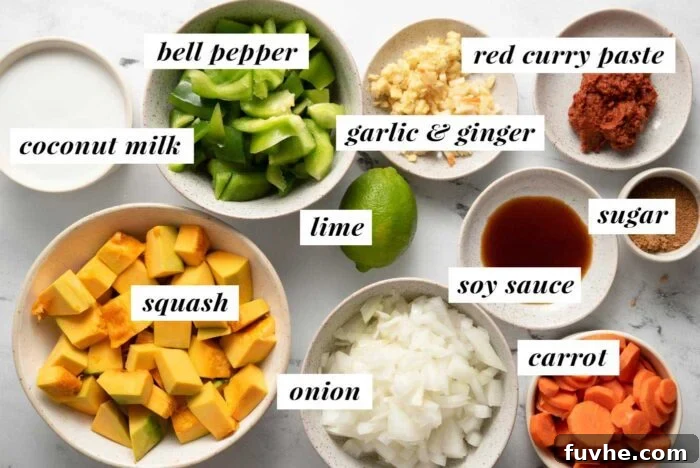
- Fresh Ginger: The pungent, zesty kick of fresh ginger is a cornerstone of this curry’s aromatic foundation. Its bright notes perfectly complement the richness of the coconut milk. If fresh ginger is unavailable, you can substitute with 1 teaspoon of ground ginger, though the fresh version offers a more vibrant flavor.
- Kabocha Squash: You’ll need one medium-sized kabocha squash for this recipe. Its unique dense texture and natural sweetness are what make this curry so special. However, this recipe is highly adaptable; feel free to use butternut squash, acorn squash, or even pumpkin for a similar comforting result. For a different but equally delicious variation, sweet potatoes can also be used, akin to our Sweet Potato Red Lentil Curry. When selecting kabocha, look for one that feels heavy for its size, has dull, deep green skin, and no soft spots.
- Red Curry Paste: This paste is the heart of the curry’s flavor. We typically use Thai Kitchen Red Curry Paste for its balanced profile, but any quality brand you prefer will work beautifully. For a subtle flavor variation, you could also experiment with a yellow curry paste. Be sure to check that your chosen brand is vegan, as some may contain shrimp paste.
- Coconut Milk: The base of our creamy sauce. Both light and full-fat coconut milk are suitable. Opt for full-fat coconut milk for an extra rich, velvety, and luxurious curry that clings beautifully to the squash and vegetables. If you’re aiming to reduce the fat content, light coconut milk yields a wonderfully flavorful result as well, especially since the kabocha squash naturally thickens and adds creaminess as it breaks down.
- Sweetener: A touch of sweetness helps to balance the savory and spicy notes of the curry. Maple syrup, coconut sugar, or brown sugar all work well. Maple syrup offers a subtle caramel note, while coconut and brown sugars provide a deeper, molasses-like sweetness. Choose based on your preference or what you have on hand.
- Soy Sauce: This ingredient adds a crucial layer of umami, deepening the overall flavor of the curry. We recommend using low-sodium soy sauce to better control the saltiness. For a gluten-free option, readily available gluten-free tamari is an excellent substitute, offering the same savory depth.
- Miso Paste: While optional, adding white or yellow miso paste introduces an incredible depth of umami that harmonizes beautifully with the sweetness of the squash. Miso, a fermented soybean paste, brings a complex, savory richness that elevates the curry to another level. White miso is generally milder and sweeter, while yellow miso has a slightly stronger, earthy flavor.
- **Additional Aromatics & Vegetables:** Don’t forget the staples like diced white onion, minced garlic, a vibrant green bell pepper, and crisp carrots. These vegetables not only add texture and color but also contribute their own unique flavors and nutrients to the dish.
- **Vegetable Broth or Water:** Used to adjust the consistency of the curry sauce, ensuring it’s neither too thick nor too thin.
By thoughtfully selecting and combining these ingredients, you’re on your way to creating an irresistibly flavorful and satisfying **vegan kabocha squash curry** that’s sure to impress.
Crafting Your Perfect Kabocha Squash Curry: A Step-by-Step Guide
Creating this delicious **vegan kabocha squash curry** is a straightforward process, designed to bring a gourmet-quality meal to your table efficiently. Follow these clear steps to achieve a perfectly cooked, flavorful curry every time.
Step 1: Prepare Your Ingredients for Seamless Cooking
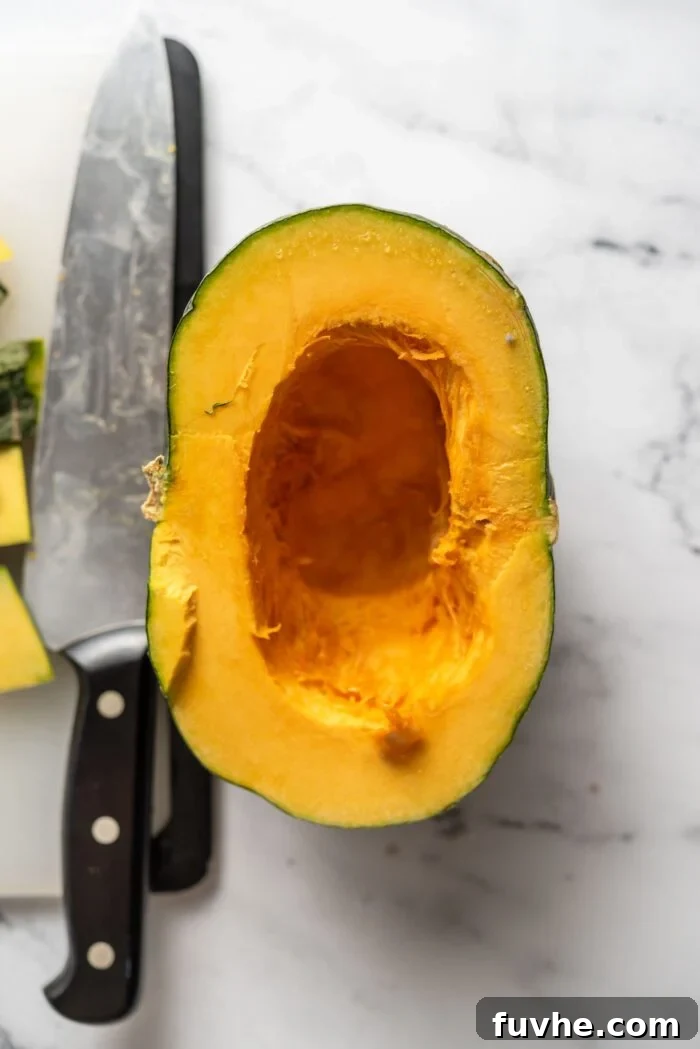
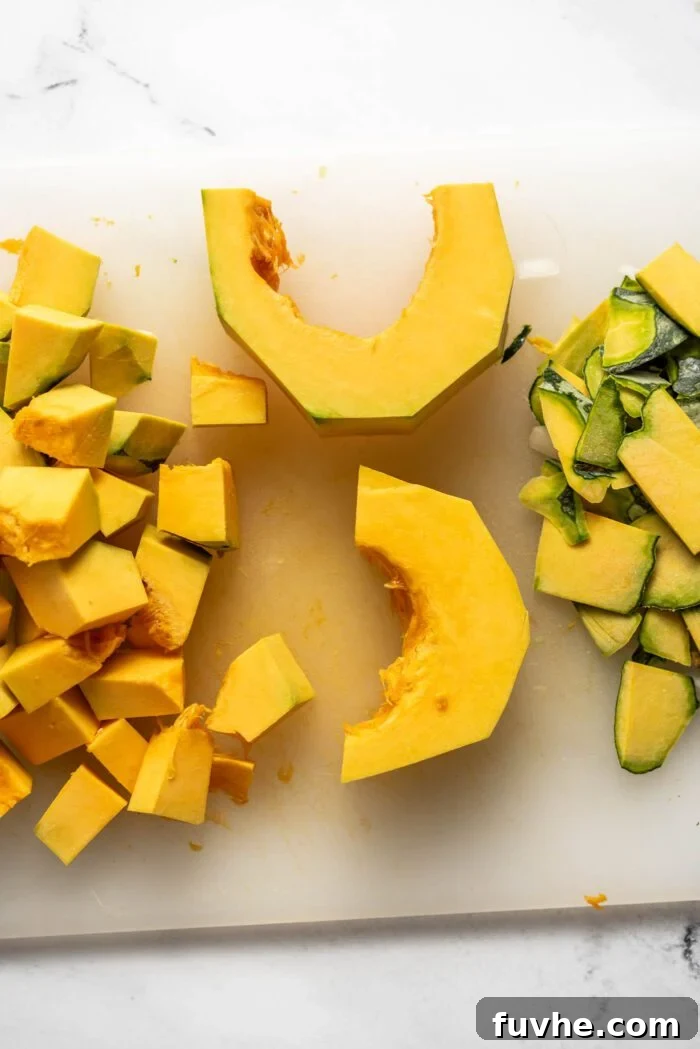
The key to a quick and enjoyable cooking experience, often referred to as “mise en place,” is to have all your ingredients prepped before you start. Begin by tackling the kabocha squash. Carefully cut it in half from top to bottom, then scoop out and discard the seeds and fibrous strands. Next, cut each half into two more manageable pieces. From these pieces, cut wedges, and then, using a sharp knife, carefully remove the tough skin. Finally, cut these wedges into roughly half-inch cubes. Keeping the cubes on the smaller side is crucial for ensuring a quicker and more even cooking time.
While you’re at it, also chop your bell pepper and carrots, and mince the garlic and fresh ginger. Having everything ready means you can proceed through the cooking steps without interruption.
Step 2: Sauté the Aromatics
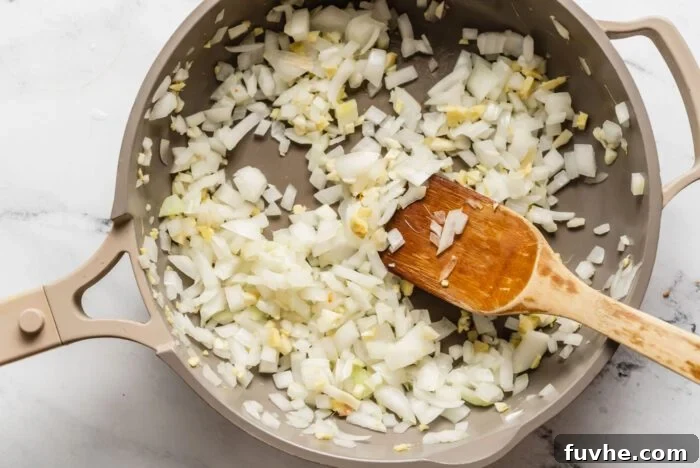
Heat 2 teaspoons of your chosen cooking fat—coconut oil, avocado oil, or olive oil—in a large skillet or Dutch oven over medium heat. For an oil-free version, use water or vegetable broth. Once hot, add the diced onion, minced garlic, and fresh ginger. **Cook them for 4-5 minutes, stirring frequently**, until the onions have softened and become translucent, and the garlic and ginger release their wonderfully fragrant aromas. This step is crucial for building the flavor base of your curry.
Step 3: Bloom the Curry Paste and Add Vegetables
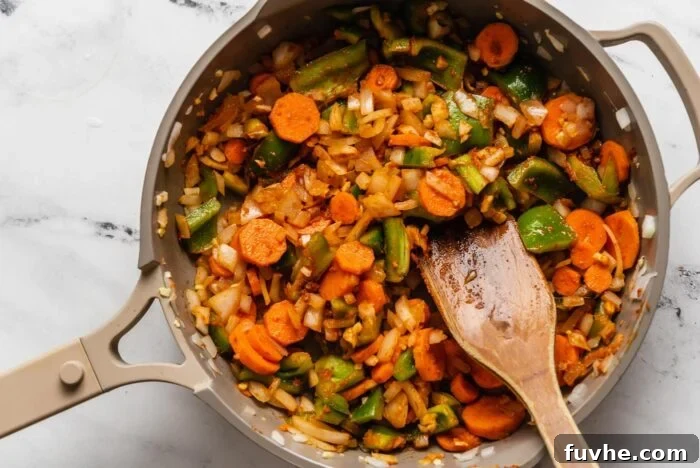
Now, it’s time to introduce the heart of the curry’s flavor. Add the chopped carrots, bell pepper, and the **red curry paste** to the skillet. Stir everything well, ensuring the vegetables are coated in the aromatic paste. Continue to cook for a few more minutes, allowing the curry paste to “bloom” in the heat. This process deepens its flavor and releases its full aromatic potential, contributing to a more robust and complex curry.
Step 4: Simmer to Perfection
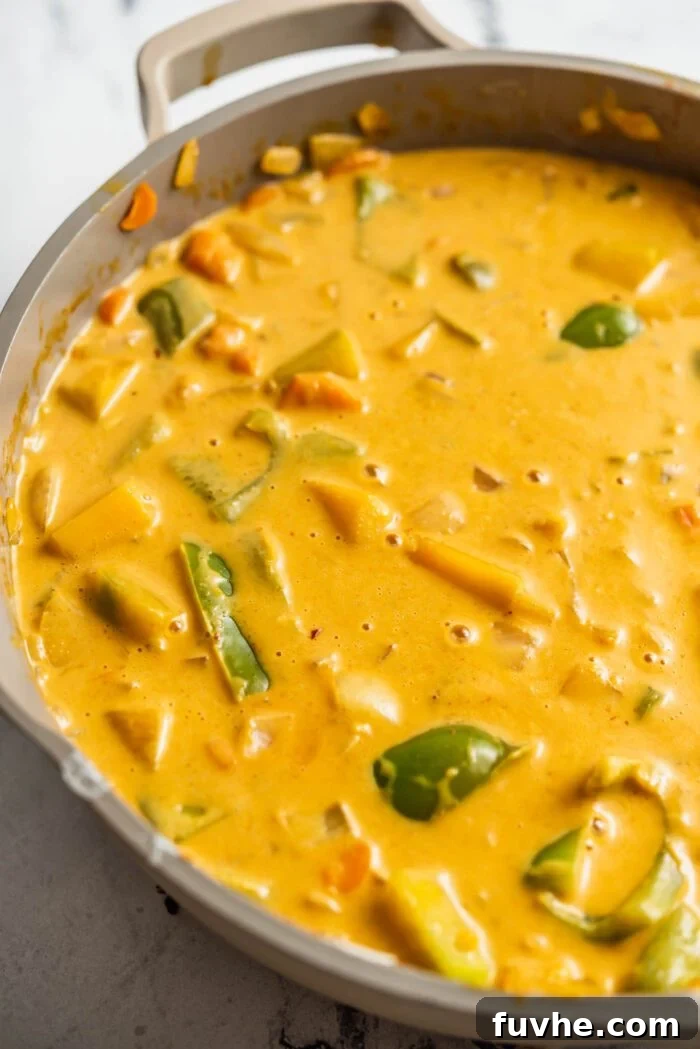
Add the cubed kabocha squash, coconut milk, vegetable broth (or water), sweetener, soy sauce (or tamari), and optional miso paste to the skillet. Stir thoroughly to combine all the ingredients. Bring the mixture to a gentle simmer over low to medium heat. Once simmering, cover the skillet with a lid and **allow it to cook for 10 minutes**. This initial simmer helps the squash begin to soften and allows the flavors to meld.
After 10 minutes, remove the lid and continue to cook for an additional **5-10 minutes, or until the kabocha squash is wonderfully tender** and the curry sauce has begun to thicken to your desired consistency. The squash should be easily pierced with a fork, indicating it’s perfectly cooked and ready to absorb all the delicious flavors.
Finally, once the curry has reached its creamy perfection, serve it hot over a bed of fluffy rice. Enhance the experience with a sprinkle of fresh cilantro, a handful of crunchy cashews or peanuts, and a refreshing squeeze of fresh lime juice for a truly unforgettable **plant-based meal**.
Frequently Asked Questions About Kabocha Squash Curry
Absolutely! While kabocha squash brings a unique sweetness and creamy texture that we adore in this curry, you can certainly experiment with other varieties. Butternut squash, acorn squash, or even sugar pumpkin make excellent substitutes. Each will impart a slightly different flavor profile and texture, but all will result in a delicious and comforting curry. Just ensure they are cut into similarly sized cubes for even cooking.
Yes, enhancing this curry with additional protein is a fantastic idea! For a heartier meal, you can stir in a can of drained and rinsed chickpeas, baked or pan-fried tofu cubes, or even tempeh at the end of the cooking process. Adding them towards the end ensures they warm through without becoming overcooked or mushy, maintaining their texture. Lentils, especially red lentils, can also be incorporated earlier during the simmering phase for added creaminess and protein.
This **kabocha squash curry** is incredibly versatile in how it can be served. Our favorite way is over a bed of fluffy basmati or jasmine rice, which perfectly soaks up the rich coconut curry sauce. However, it’s equally delicious served with any kind of rice (brown rice, wild rice), other grains like quinoa or couscous, or even noodles. You can also enjoy it simply on its own as a hearty stew. For toppings, consider toasted peanuts or cashews for crunch, a generous sprinkle of fresh chopped cilantro for brightness, or a squeeze of fresh lime juice to elevate the flavors.
Our base recipe, using standard red curry paste, is generally quite mild, offering a warm and aromatic flavor rather than intense heat. If you prefer a spicier curry, there are several easy ways to add more kick. You can include 1 small minced serrano pepper or red chili pepper when you sauté the ginger and garlic in Step 2. Alternatively, a simpler method is to stir in about 1/2 to 1 teaspoon of red chili flakes along with the coconut milk in Step 4. Adjust the amount to your personal spice preference.
Absolutely! This **vegan kabocha squash curry** is an excellent choice for meal prepping. The flavors tend to deepen and meld even more wonderfully after a day or two in the fridge. Prepare the full recipe, let it cool completely, then portion it into airtight containers. When you’re ready to eat, simply reheat it gently on the stovetop or in the microwave until thoroughly warm. It’s a perfect grab-and-go option for healthy lunches or quick dinners throughout the week.
Storing and Reheating Your Delicious Leftovers
Ensuring your **kabocha squash curry** stays fresh and delicious for future meals is simple with proper storage techniques. This recipe is fantastic for enjoying as leftovers, as the flavors often deepen overnight.
- **Refrigeration:** Leftovers are best stored in the refrigerator. Allow the curry to cool completely to room temperature before transferring it to an airtight container. It will keep well for up to 5 days. When ready to enjoy, reheat portions on the stovetop over medium-low heat, stirring occasionally, or in the microwave until heated through. If the curry has thickened too much in the fridge, you can add a splash of vegetable broth or water while reheating to reach your desired consistency.
- **Freezing (If Needed):** While this recipe isn’t ideally suited for freezing due to potential changes in the texture of the squash and coconut milk, it can be frozen if necessary. To freeze, ensure the curry is completely cooled. Transfer it to a freezer-safe, airtight container, leaving a little headspace. It can be stored in the freezer for up to 3 months. To thaw, move the container to the refrigerator overnight. Reheat gently on the stovetop, stirring frequently, and be prepared for a slightly softer squash texture upon reheating.
Proper storage allows you to enjoy the comforting flavors of this **vegan kabocha squash curry** days after it’s made, making it a great option for meal planning.
If you try this Kabocha Squash Curry recipe or any other recipe on Running on Real Food, don’t forget to leave a comment and a ⭐⭐⭐⭐⭐ rating in the comment section below. It helps others who are thinking of making the recipe, and I love to hear from you. And don’t forget to tag me on Instagram @runningonrealfood so I can see your creation! Thanks for trying my recipes! – Deryn

Kabocha Squash Curry
Deryn Macey
10 minutes
20 minutes
30 minutes
4
Rate Recipe
Print Recipe
Ingredients
-
2
tsp
coconut oil,
water, broth or another cooking oil of choice (10 mL) -
1
small
white onion,
diced (about 1 cup, 150 g) -
3
cloves
garlic,
minced (15 g) -
1
tbsp
fresh ginger,
minced (10 g) -
3
tbsp
red curry paste,
45 g -
1
green bell pepper,
seeds removed and roughly chopped -
1
heaping cup peeled and chopped carrot,
about 2 carrots, 170 g -
4-5
cups
peeled and cubed kabocha squash,
approx. 600 g -
1 14
oz
can full-fat or light coconut milk -
1
cup
vegetable broth or water,
250 mL -
1
tbsp
coconut sugar,
brown sugar or maple syrup (15 mL) -
1
tbsp
soy sauce or gluten-free tamari,
15 mL -
1-2
tbsp
lime juice,
to taste (15 mL) -
1
tbsp
white miso paste,
optional (15 g)
Instructions
-
Prepare the squash, bell pepper, carrot, garlic, and ginger so you’re ready to go. To prepare the squash, cut it in half from top to bottom, then remove seeds. Cut each half into two chunks. Cut the chunks into wedges and then carefully cut the skin off. Finally, cut the wedges into half-inch cubes (aim for smaller cubes for quicker cooking).
-
Heat 1 tbsp oil, water, or broth in a large skillet or Dutch oven over medium heat. Add the diced onion, minced garlic, and fresh ginger. Sauté for 5-6 minutes until the onion is soft and translucent, and the aromatics are fragrant.
-
Add the chopped carrot, bell pepper, and red curry paste. Stir well to coat the vegetables and paste, and cook for a few more minutes, allowing the curry paste to bloom.
-
Add the cubed kabocha squash, coconut milk, vegetable broth or water, sweetener, soy sauce or tamari, and optional miso paste. Bring the mixture to a low simmer. Cover and cook over low to medium heat for 10 minutes, stirring occasionally to prevent sticking.
-
Remove the lid and continue to cook for another 5-10 minutes, or until the kabocha squash is tender and the curry sauce has thickened to your desired consistency.
-
Serve your delicious kabocha squash curry hot over rice, topped with fresh cilantro and crunchy chopped peanuts or toasted cashews for added texture and flavor.
Notes
**Storage:** Store any leftover curry in a sealed airtight container in the fridge for up to 5 days. Reheat gently on the stovetop over low heat or in the microwave until thoroughly heated through. You may add a splash of broth or water if it has thickened too much.
**Nutrition:** Nutrition facts provided are for light coconut milk. Using full-fat coconut milk will result in approximately 315 calories per serving. Please note that this nutritional information does not include rice or any additional toppings.
Nutrition
Serving:
1
/4 of recipe
,
Calories:
184
kcal
,
Carbohydrates:
25
g
,
Protein:
3
g
,
Fat:
9
g
,
Sodium:
400
mg
,
Fiber:
4
g
,
Sugar:
11
g
Like this recipe? Rate and comment below!
Originally published December 4, 2016.